Tag Archives: reviews

Review – The Help (12a) [2011]

Star Rating: 4.5/5

John F. Kennedy (JFK), President of America (1960-63), proclaimed in 1963 that “moral courage is a more rare commodity than bravery in battle or great intelligence.” He was referring to the civil rights movement in America, when African-Americans, particularly in the south (now known as the ‘Bible-belt’), were discriminated against and did not have the right to vote. The Help magnificently brings to light the inequality that African-Americans suffered in Mississippi in the early-1960s, and that there were some people with the moral courage to put an end to it.

Eugenie ‘Skeeter’ Phelan (Emma Stone) out for a meal with friends, looking fabulous.

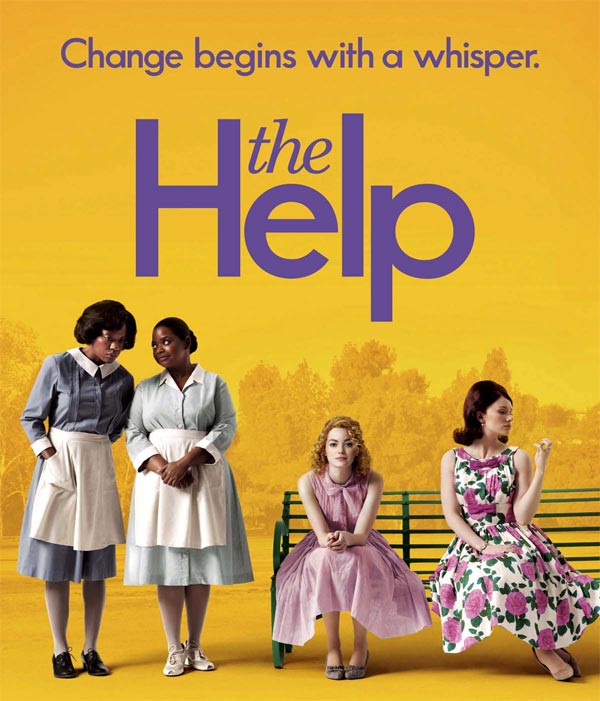
The Help is based on the book with the same title, written by Kathryn Stockett. It is not a true story. The film revolves round the aspiring young author, Eugenie ‘Skeeter’ Phelan (Emma Stone – Ghosts of Girlfriends Past, Friends With Benefits, Birdman). At a time when the civil rights movement is picking speed in America, Skeeter has become uneasy by the way her friends treat their African-American maids, and so decides to write a book about it. She decides to write her book from the angle of the help in order to highlight Caucasian maltreatment to them in the home.

Skeeter approaches Abileen (Viola Davis – Law & Order: Special Victims Unit, Eat, Pray, Love, Extremely Loud & Incredibly Close), the maid of her friend Hilly (Bryce Dallas Howard – The Village, Spiderman 3, 50/50), for her opinion and experiences. Abileen is a middle-aged woman who has spent her entire life raising Caucasian children, almost from birth, only to see them turn into their parents. Despite being initially reluctant to speak out, due to the fear of violent reprisals, Abileen lets Skeeter interview her. Soon, Minny (Octavia Spencer – The Soloist, Herpes Boy, Girls! Girls! Girls!), another African-American maid, tells her stories too. Then, many more do the same to give Skeeter an all-round picture of what life is like for African-American maids in Caucasian homes.

The Help may be a very slow and far-from-intense film; yet, it is powerful and emotive. The movie may not be factual, but it is based on much truth and reflects the period accurately. In the same way that the works of Charles Dickens and Theodore Dostoyevsky are seen to be more representative of their respective eras than historical narratives, so too can The Help be seen in the same vein. Despite a few minor historical inaccuracies, such as segregation, one could probably learn more about the innate levels of Caucasian racism towards African-Americans in the Bible-belt in the 1960s from this film, and the variety of ways it manifested itself, than from most factual history books.
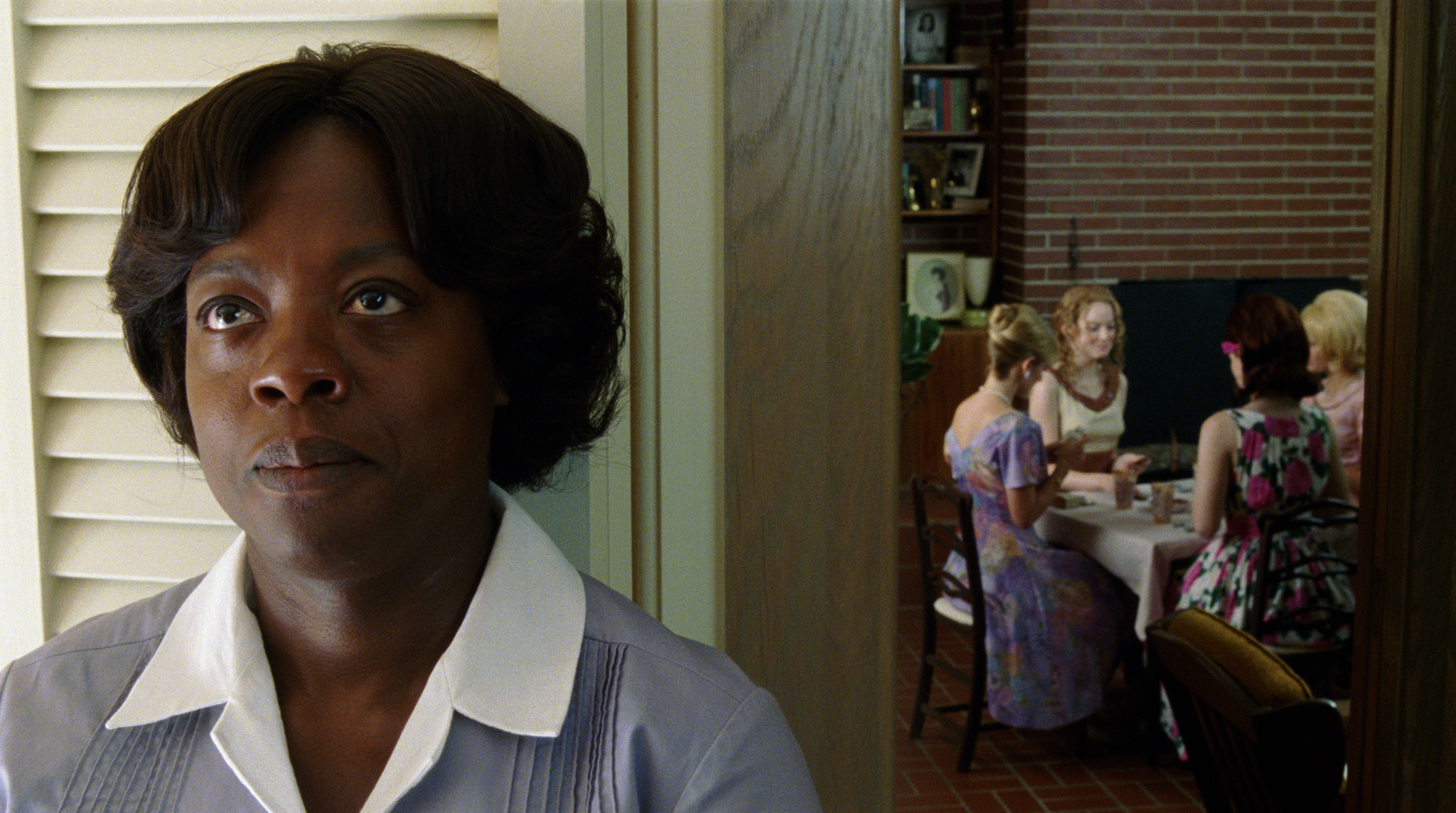
Abileen (Viola Davis) eavesgropping on a conversation wherein she hears a torrent of racism towards African-Americans.

But for a film about racism, The Help is surprisingly honest. It shows all sides to be human, meaning that all the characters, whether Caucasian or African-American, have decent and defective qualities. This should be applauded since it would have been easier for the director, Tate Taylor (Pretty Ugly People), to have made one side inherently ‘good’, the other side inherently ‘bad’, and one or two instances of crossovers as a cheap façade. That Taylor doesn’t do this makes The Help plausible.

The realism of the film, however, would not be possible without the actors putting in exceptional performances. Indeed, the entire cast, and their accents, are flawless. The pretty Emma Stone demonstrates that she can play intelligent roles with vigour, enabling her to grow more beautiful and appealing in the process. Viola Davis performs so well, viewers can empathise with Abileen’s predicament and cry because of her awful experiences.

Octavia Spencer may not make audiences weep like Davis does; nevertheless, she too plays marvellously as the feisty, loud-mouth and funny Minny. Furthermore, one can even appreciate the performances of the horrible, racist women, portrayed by Bryce Dallas Howard, Ahna O’Reilly (Herpes Boy, House Under Siege, Girls! Girls! Girls!), Allison Janney (The West Wing, Pretty Ugly People, A Thousand Words), and the other ladies, or the silly, naive Celia, played by Jessica Chastain (Jolene, The Debt, Take Shelter), as they are all performed with brilliant consistency.
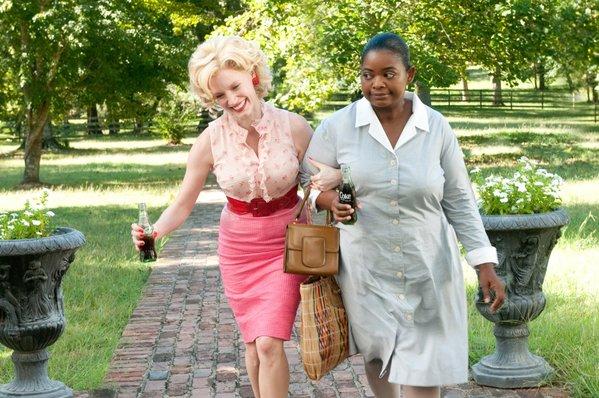
A first day at work for Minny (Octavia Spencer) at the house of the over-excited Celia (Jessica Chastain).

Like the quality of the acting, The Help has been put together superbly. At 146 minutes, the film might feel drawn out, but the choreography has been stitched together smoothly and the cinematography is apt for the locations of the movie. What’s more, the music has been chosen well to enhance the scenes, particularly the heart-rending ones.

All-in-all, The Help might drag, but it is an excellent, touching film. The acting is remarkable and the movie epitomises well the attitudes of people, whether Caucasian or African-American, living in the deep-south of America in the early-1960s. In 1963, JFK proclaimed that the struggle for civil rights “will not be finished in the first 100 days. Nor will it be finished in the first 1,000 days, nor in the life of this administration, nor even perhaps in our lifetimes on this planet. But let us begin.” The Help, therefore, enables us to measure how far we have come in almost fifty years because of people like JFK and Skeeter who had the moral courage to start changing people’s attitudes towards African-Americans.

PG’s Tips
Review – The Ides of March (15) [2011]

Star Rating: 4/5

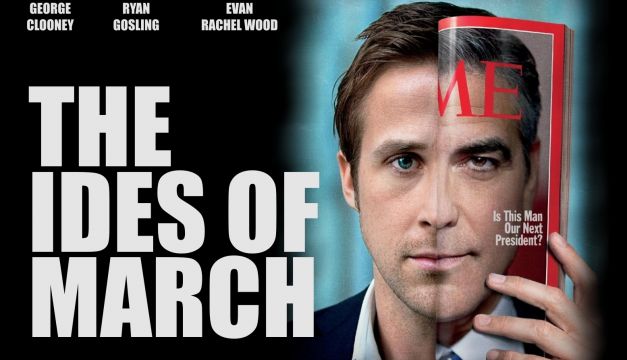
During the campaign to become the President of America, the public and the media tend to focus so greatly on the candidates and their running-mates that the people behind the campaigns frequently fade into the background. The Ides of March, in fascinating fashion, reveals some of the darker arts that go on behind the scenes in presidential races, and why a term synonymous with the assassination date of Julius Caesar is so apt.

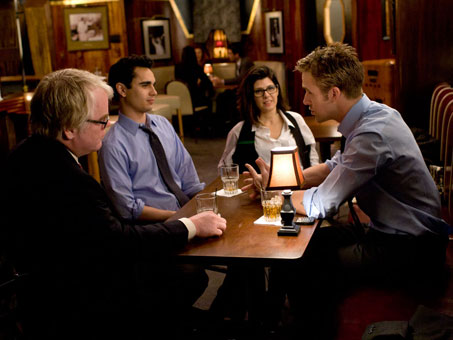
The main men behind Morris’ campaign, Paul (Philip Seymour Hoffman), Ben (Max Minghella) and Steven (Ryan Gosling), sitting and discussing the campaign with the journalist, Ida (Marisa Tomei).

The Ides of March is not a true story. But much of the film, directed by George Clooney (Confessions of a Dangerous Mind, Good Night, And Good Luck, Leatherheads), is based round the unsuccessful run of Clooney’s father, Nick Clooney, for Congress in 2004. The movie centres round Steven (Ryan Gosling – Fracture, Drive, The Big Short), a relatively young and idealistic Junior Campaigns Manager for the Governor of Pennsylvania, Mike Morris (George Clooney – Michael Clayton, The American, Gravity). Morris is in the running for the Democrat presidential nomination, and is up against Senator Ted Pullman (Michael Mantell – A.I. Artificial Intelligence, Ocean’s Thirteen, Ca$h). To gain the necessary number of Democrat delegates for nomination, Steven and his boss, Paul (Philip Seymour Hoffman – Capote, Mission Impossible III, The Master), attempt to court Senator Thompson (Jeffrey Wright – Casino Royale, Source Code, Extremely Loud and Incredibly Close), who holds the delegates for Ohio, a key state for nomination.

However, Tom Duffy (Paul Giamatti – Saving Private Ryan, Cinderella Man, 12 Years A Slave), Pullman’s Campaign Manager, has secretly made an agreement with Thompson, offering the Senator the position of Secretary of State in exchange for his endorsement. For Steven and Paul, the agreement must be broken at any cost. Simultaneously, Duffy pulls a trick or two of his own, with Steven in the thick of it. Thus, the campaign backstabbing begins.

The plot for The Ides of March is not particularly fast-moving, but it is interesting and revelatory. Certain aspects of the storyline might go too far (as some of the scandals would be almost impossible to keep hushed up with the current hawk-like media), but over-all it is plausible. Indeed, it is believable that some campaigners would betray their loyalties for personal gain, hence the film’s title being so fitting.

The pretty intern, Molly (Evan Rachel-Wood), out for a drink with Steven.

Paul and Duffy, the characters played by Philip Seymour Hoffman and Paul Giamatti, respectively, epitomise the modern day Marcus Brutus, the friend-turned-assassin of Caesar. Both, Hoffman and Giamatti, play the ruthless sort of individuals who would use underhand tactics to ensure that their candidate would come to the fore.

Without being outstanding, both actors play very well. Moreover, their characters teach Steven a lesson in the malicious nature of political campaigns and politics in general too. If one leaves the cinema with a bad taste in their mouths about politics, this might reflect the director’s disillusionment with the industry after his father’s failed campaign. Could Steven’s experiences in The Ides of March divulge some of what happened to Nick Clooney in 2004?

Regardless, Steven’s actor, Ryan Gosling, gives a solid performance in the lead role. The changes he goes through, as events around him get nasty, are praiseworthy. It also gives Steven’s personality a third, survival-type dimension that makes his character credible. Yet, Gosling is far from brilliant; he lets himself down when Steven’s with Molly (Evan Rachel-Wood – Thirteen, The Wrester, True Blood), the cute, just-out-of-college intern. Their conversations are, at times, painful to watch, and their exclusion would have benefitted the film.

Surprisingly, George Clooney has only a limited role in The Ides of March. As ever, Clooney’s character, Mike Morris, is smooth-talking and suave (smug as well). But how many times has Clooney churned out this sort of performance? In saying that, Governor Morris also has a shady side, which gives him depth and virtually certifies him as a real (morally dubious) politician. Still though, Clooney’s performance here is one we expect from him, and is, therefore, nothing exceptional.

Governor Mike Morris (George Clooney), looking very presidential, addressing an audience as part of his campaign to become the leader of the free world.

Clooney’s ability to act, direct, produce, and screen-write vary in quality. The directing and the production are fine, even if there is an unexpected amount of silence before and during scenes. The way the movie has been choreographed might seem peculiar as well, since discussions frequently begin a while before the people come together in the scene. That does not make it bad, just unusual. The same is true for the music, which Clooney probably did not use enough to his advantage to enhance scenes or uplift viewers, unlike The King’s Speech.

Nevertheless, Clooney has written the dialogue very well. It may not be on a par with The Social Network, The King’s Speech or True Grit; yet, it is always apt for the scenarios without being melodramatic.

On the whole, The Ides of March is a very decent film about an indecent industry. The world of presidential campaigns is one that often goes unreported, and this movie sheds light (or darkness) upon it. Above-all, just like its title, The Ides of March exposes the ruthless, double-crossing nature of politics and political campaigns, and why it is perhaps not an industry for nice, honest people.

PG’s Tips

Review – Contagion (12a) [2011]

Star Rating: 2/5

In the Middle Ages, pestilence and plague were semi-regular occurrences. Every fifteen years or so, the grim reaper would appear in the form of the Black Death and scythe down a not insignificant percentage of populations across Europe. Again, in 1918, after World War I (WWI), the world was struck by another form of pestilence: the ‘Spanish Flu’, which killed one percent of the then-world population. Despite being over-all quite poor, Contagion shows us once more that mankind is still not immune to new diseases and viruses.

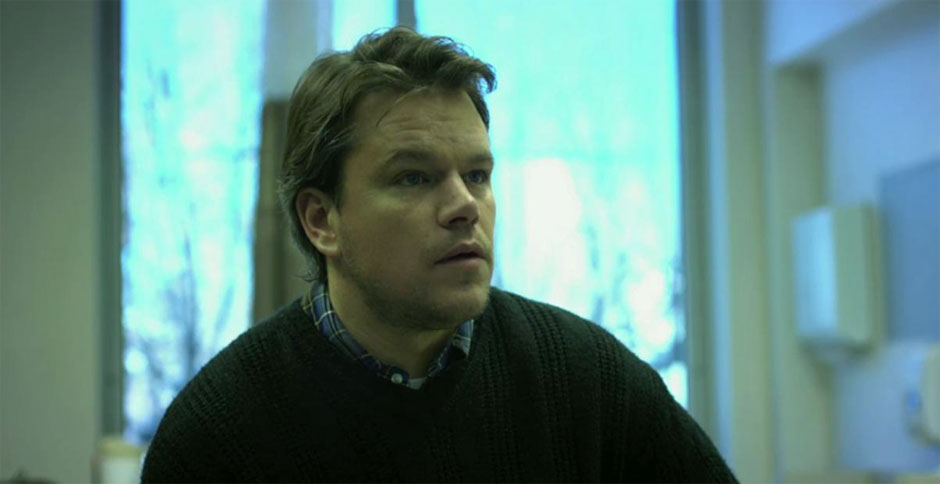
Mitch (Matt Damon) in shock after suddenly losing his wife to the epidemic.

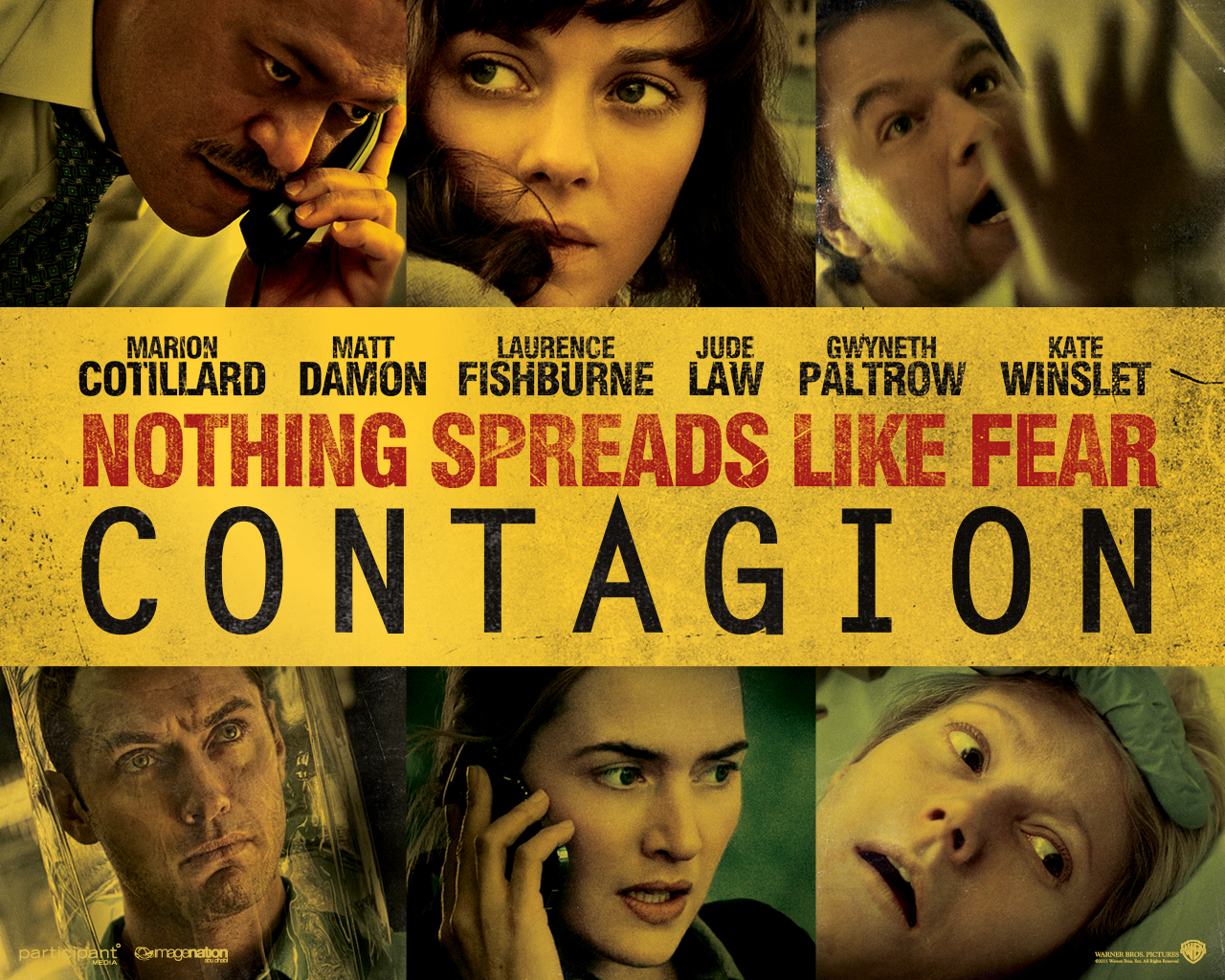
Contagion is a medical thriller about a virus that rapidly spreads across the world. The first known death in America is that of Beth Emhoff (Gwyneth Paltrow – Se7en, Shakespeare In Love, The Avengers Assemble), who returns home to her family and husband, Mitch (Matt Damon – True Grit, The Adjustment Bureau, Elysium), from a trip to Hong Kong only to have a seizure and die soon afterwards. Rapidly, more people become infected. There is no cure for the virus either, and around one in four people are expected to become infected. (Although, one in three people who become infected are expected to survive.)

Scientists, from across the world, led by Atalanta-based Dr. Ellis Cheevers (Laurence Fishburne – Apocalypse Now, The Matrix I-III, Man of Steel) and his team, work hard to find an antidote. Dr. Erin Mears (Kate Winslet – Titanic, The Reader, Steve Jobs) uses her knowledge to try and slow down the spread of the virus, whilst working in the field. Dr. Leonara Orantes (Marion Cotillard – Public Enemies, Midnight In Paris, The Dark Knight Rises) works with a team in Hong Kong to establish where the virus came from in order to facilitate the creation of an antidote.

But until an antidote has been tested sufficiently and is safe, nothing can be distributed. In the meantime, indirectly egged-on by a conspiratorially-inclined blogger called Alan Krumwiede (Jude Law – Enemy At The Gates, The Holiday, Side Effects), social order breaks down.

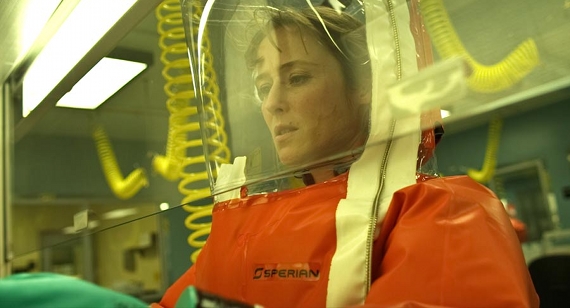
Dr. Ally Hextall (Jennifer Ehle), a scientist under Dr. Ellis Cheevers, working hard in the laboratory to try and create an antidote.

The plot for Contagion has been done in a documentary style, similar to Cloverfield (albeit, without the camera wobbling). This entails that one watches the effects of the virus upon people and societies over a series of days. One images that the director, Steven Soderburgh (Erin Brockovich, Ocean’s Eleven & Ocean’s Twelve, Side Effects), did this to give the film a more realistic feel. If so, he succeeds. As a corollary of the realism, the speed at which the virus transmits and kills people has the impact of frightening the audience (in probably the same way that bubonic plague used to terrify people in Medieval times). Also, the timing of the chaos that subsequently unfolds, as a result of panic by those who have not yet been infected, seems quite natural. It is quite conceivable for law and order to collapse under the pressures that Contagion puts forward.

However, many aspects of the storyline are either left unexplained or fall by the wayside, which undermines the film considerably. Moreover, as the movie has no central protagonist, one cannot build any sympathy or empathy (or care) for any of the characters. Worse, the dialogue, at times, sounds contrived (if not risible) and none of the actors play particularly well. Even the normally excellent Kate Winslet, Marion Cotillard, Laurence Fishburne and Matt Damon do not do themselves justice here.

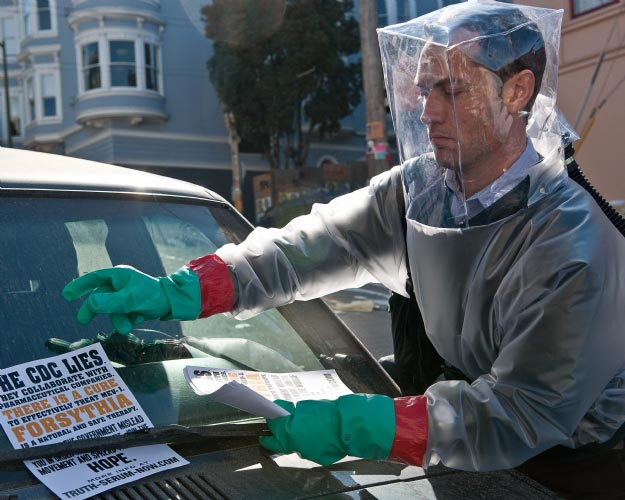
Allan Krumwiede (Jude Law), wearing a ridiculous ‘wannabe’ Buzz Lightyear outfit so he doesn’t contract the virus, spreading his new-found insight about why the government has not distributed the cure as yet onto a random car.

Due to the lack of a dominant performer, the audience may struggle to maintain interest in the film. At 106 minutes, Contagion is an average length for a movie; yet, viewers may find themselves yawning or looking at their watches (long) before it is over, which is never a good sign for a film. Not even the music, which adopts a standard fast beat for much of the movie, has the ability to keep the audience’s eyes concentrated on the screen for long.

On the whole, Contagion has many deficient features, as several of the sub-stories are forgotten about and there is a distinct lack of a central and well-defined character. Nevertheless, Contagion appears scarily realistic and shows us that, irrespective of how advanced medical treatment may be, humanity is still potentially defenceless against new and ever-mutating epidemics.

PG’s Tips

Review – Red State (18) [2011]

Star Rating: 3/5

When one arranges a one night stand with someone they have not met in person via the internet (especially from a dodgy website), one is never certain if he/she is going to be a victim of a scam or something worse. Red State, whilst not about the pros and cons of adult-dating websites, illustrates the potential risks involved.

Travis, Jarod and Billy-Ray reading a message from Jarod's phone. The thee of them are so happy that they are (finally) going to end their 'loser status' by breaking their virginities.

Red State is loosely-based on the Westboro Baptist Church, which Louis Theroux has done two documentaries on. Set in the ‘bible-belt’ of America, three social misfits – Travis (Michael Angarano – Almost Famous, 24: Day 6, Noah’s Ark: The New Beginning), Billy-Ray (Nicholas Braun – Love At First Hiccup, Chalet Girl, Neighbourhood Watch) and Jarod (Kyle Gallner – The Haunting in Connecticut, A Nightmare on Elm Street, Jennifer’s Body) – have organised, via an internet chat-room, for the three of them to enjoy, together, the pleasures of Sara (Melissa Leo – Frozen River, The Fighter, Predisposed). Little do they know, though, that Sara is a part of the Five Point Church, a cultist Christian sect. After driving to her caravan, Sara uses this as an opportunity to capture the three teenagers and bring them to the church to be ‘tried’ for homosexuality, a crime punishable by death for this sect.

The cops soon learn that the church has the boys. Led by Joseph Keenan (John Goodman – The Big Lebowski, Monsters, Inc., The Artist), the cops intend to take the compound by storm, leading to a bloody confrontation.

Red State is a strangely gripping, highly unpredictable film, and has some surprisingly intelligent humour (which would have been so much funnier had not all of the jokes been used in the trailer). At 88 minutes, the movie is short, so audiences are unlikely to lose focus; especially, since the last half an hour is virtually a shoot out.

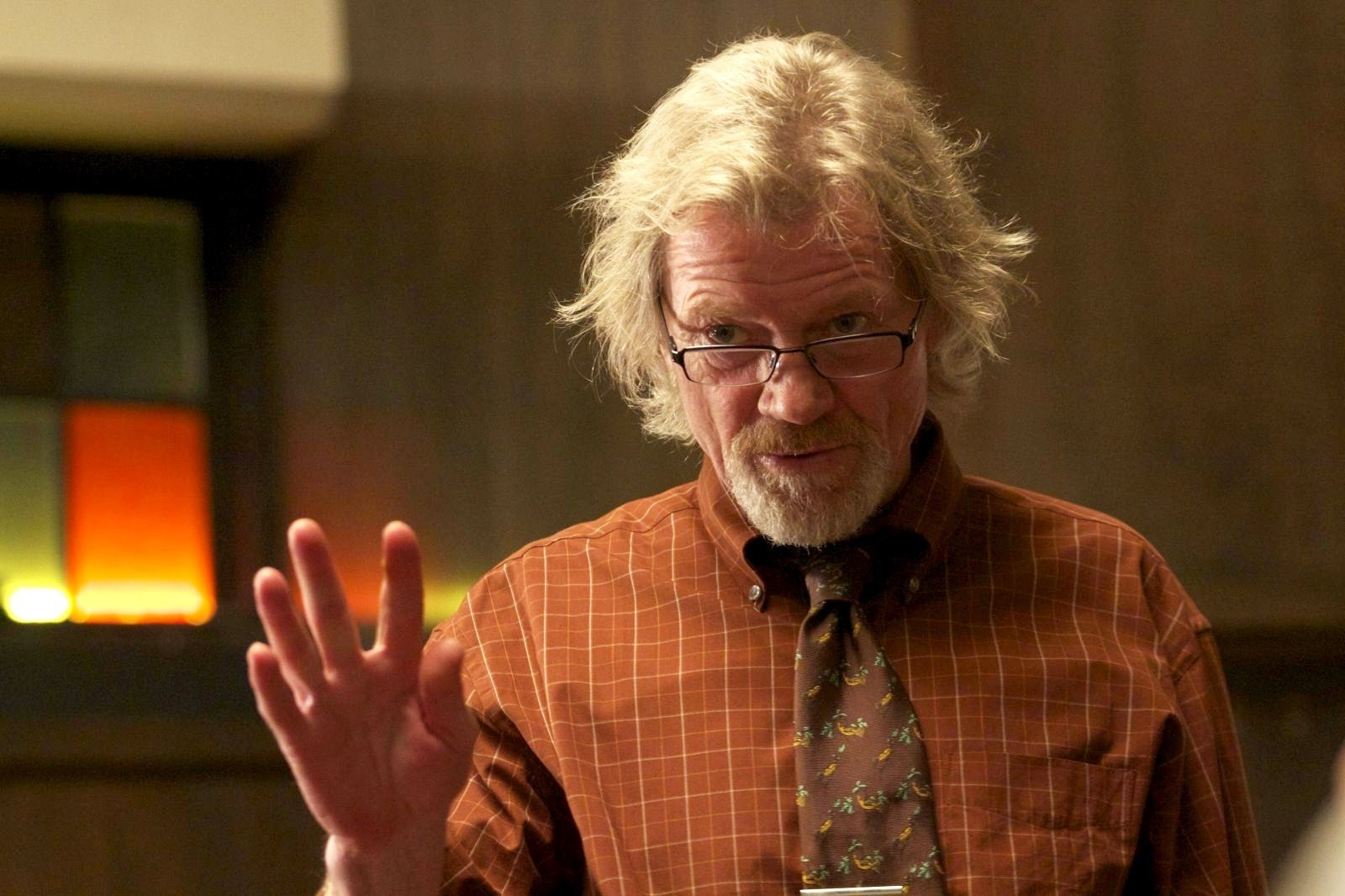
Pastor Abin Cooper (Michael Parks) addressing his congregation, who hang on to his every word as if he is Jesus's modern day reincarnation.

Whilst gunfire and explosions uphold (or regain) the attention of the viewers, it is the acting of two members of the supporting cast, Melissa Leo and Michael Parks (From Dusk Till Dawn, Kill Bill I & II, Argo), that make Red State worth watching. After her Oscar-winning performance in The Fighter, Leo gives another fantastic performance as one of the mad members of the church. As Sara, the fanaticism in Leo’s eyes is frightening, as is her belief in the cult. Parks, playing Pastor Abin Cooper, also plays very well, even if he is not spectacular. The passion he shows for the ideals of the church (without bursting into laughter) could easily make one believe that he is crazy in real life.

The rest of the cast are pathetic. The acting from the three social oddballs is atrocious, and the dialogue between them is just as bad. The amount of swearing, before and during captivity, is disgraceful. That the dialogue between them may reflect the language used by teenagers in ‘middle America’ or elsewhere is not the point. As a consequence of this, and their general performances throughout the film, viewers are unlikely to feel any empathy towards their characters.

Indeed, audiences are unlikely to come away feeling empathy for any of the characters, regardless of what they may think of the acting. In Red State, no-one is portrayed as a ‘good guy’, even the cops that are sent in to deal with the hostage situation. As one watches the melee unfold, one is likely to wonder if events like this actually take place in America, or if this is just a gross and gory exaggeration of the truth; for this film does not shy away from graphic bloodshed.

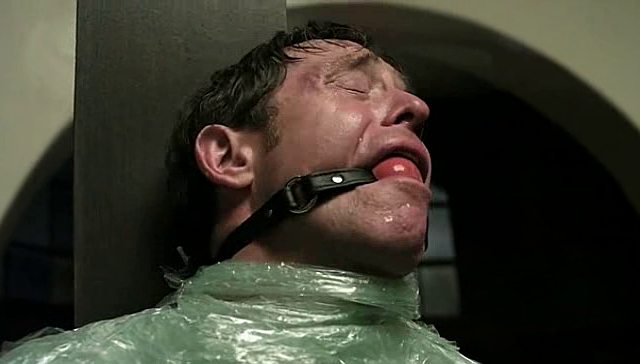
A man (Cooper Thornton) given a 'fair trial' for the 'crime' of homosexuality before the members of the church.

Although one may find the amount of violence a trifle unnecessary (not that that is grounds for criticism), one will almost certainly feel that the film needs better production. The choreography is appalling to the point of amateur, since many of the scenes jerk into place rather than smoothly link. Just as sloppy are the special effects, which appear painted in as an afterthought by the director, Kevin Smith (Dogma, Clerks II, Zack & Miri Make A Porno). The music may not be awful, but it is certainly nothing noteworthy either.

Over-all, Red State is an oddly enjoyable movie. Many aspects of the film are pitiable, but the performances of Melissa Leo and Michael Parks save the movie from near disaster. That there are people in real life who believe in similar ideals as zealously as members of the Five Point Church gives Red State some chilling realism. Moreover, the film may even have a (strong) message: don’t arrange a one night stand on the internet without knowing who you’re getting into bed with.

PG’s Tips
Review – Friends With Benefits (15) [2011]

Star Rating: 3/5

Six months ago, the light-hearted No Strings Attached came out. It starred Natalie Portman and Ashton Kutcher, and explored the idea of whether or not friends could have sexual relations devoid of emotion. Friends With Benefits deals again with this issue, just with better jokes and more sex.

Dylan and Jamie making their pact to have 'no emotions, just sex.'

Friends With Benefits centres round Jamie (Mila Kunis – Family Guy, Black Swan, Oz: The Great and Powerful) and Dylan (Justin Timberlake – Alpha Dog, The Social Network, In Time), both of whom are ‘emotionally damaged’ after being dumped by their respective boyfriend and girlfriend. Jamie is a head-hunter, who flies Dylan over from LA to New York to recruit him for the advertising firm, GQ. No sooner does Dylan get off the plane, the two of them strike up a friendship that soon goes beyond the borders of a platonic relationship. The question is: can they keep it up without falling for one another?

The storyline is enjoyable and far from intense. Friends With Benefits is filled with sex scenes, but lacks the volume of nudity seen in Love & Other Drugs. However, just like in No Strings Attached, Friends With Benefits becomes predictable and a little cliché by the end (as is to be expected from a romantic comedy). Even the key song of the film, the normally very pleasant Closing Time by Semisonic, feels a little overused and cheesy by the end.

Dylan's sister, Annie (Jenna Elfman). She cannot believe that her brother is not going out with Jamie.

Over-all, director-producer, Will Gluck (Easy A, Fired Up!), has put the film together nicely. There are some corny moments and conveniences in the plot, but it could have been so much worse, as The Back-Up Plan and Valentine’s Day illustrate. Likewise, the dialogue and the acting are not terrible either. There is some good banter between the appealing Jamie and Dylan, which will make the audience laugh. The humour in Friends With Benefits may lack the sophistication of that in One Day; nevertheless, it is not slapstick.

Out of the two main characters, Mila Kunis steals the show. Indeed, she is the star of the movie. Not only is Kunis strikingly attractive (even in the mornings after a steamy night), her character, Jamie, has a fun and lively personality that is the envy of single men (and possibly some married ones too). Additionally, when Jamie needs to be severe or upset, Kunis makes it look genuine. This is not the case with Justin Timberlake. Playing the young, up-coming, smooth-talking manager, he does just fine. Yet, when he attempts to be serious he looks like a petulant child not getting his way.

Dylan and Jamie going for a walk in the park.

The characters and the storyline in Friends With Benefits have their flaws. Both of the key players lack depth; as does the rest of the cast, with perhaps the exception of Dylan’s father (Richard Jenkins – Changing Lanes, Burn After Reading, The Cabin in the Woods). Moreover, the movie does not adequately explain why Dylan and Jamie are ‘emotionally screwed up’. (Then again, this is a romantic comedy. What was one expecting?)

For those who enjoyed No Strings Attached, there is little doubt that they will enjoy Friends With Benefits too. The latter film is fun and, in Jamie (Mila Kunis), has a girl that is the stuff of dreams. Furthermore, the movie has some amusing jokes, and enables the audience to switch off whilst watching two good-looking people making out with one another regularly. Whether one will come out believing that a friend with benefits is possible is another matter.

PG’s Tips
Review – One Day (12a) [2011]

Star Rating: 3/5

Romantic comedies (better known as ‘chick flicks’), such as Ghosts of Girlfriends Past and He’s Just Not That Into You, tend to be sweet, sentimental (cringe-worthy) and predictable. One Day is nothing of the kind, and has a twist that few will see coming. (Don’t worry, no spoilers in this review.)

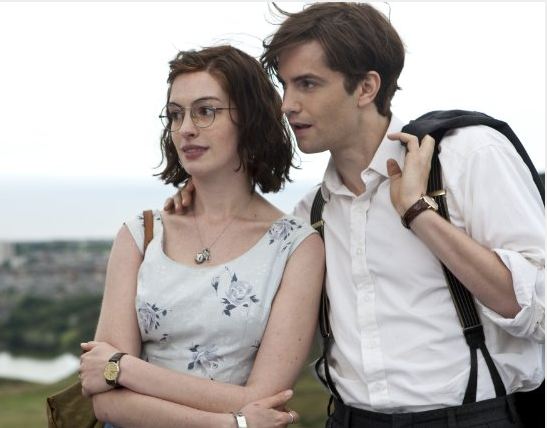
Dexter and Emma, with those geeky 1980s-glasses, out on a countryside walk on that fateful day in 1989, when their bewildering relationship started.

One Day is based on the book by David Nichols. Set in grim and rainy England, the storyline revolves round the self-obsessed Dexter (Jim Sturgess – The Other Boleyn Girl, The Way Back, Ashes) and the innocent, geeky-looking Emma (Anne Hathaway – Bride Wars, Rio, The Dark Knight Rises), two individuals who are hopelessly (and, to some extent, tragically) in love with one another, but decide to be ‘friends’ rather than lovers. Dexter and Emma get with one another on the 15th July 1989, the day of their graduation from university, and decide to keep in contact. They write and call one another quite regularly, and meet up for their ‘anniversary’ every year on the same day for years, sustaining a varying relationship, despite moving on with their lives.

The film’s plot may not be entirely faithful to the book. Nevertheless, the movie is absorbing and not difficult to follow, even if one occasionally forgets which year he/she is in. One Day is captivating primarily because it does not have the feel of a predictable romantic comedy. One never knows what direction the (dismaying) relationship between Dexter and Emma will take. In addition, Emma’s intelligent, wry humour is very amusing, and distinctively unlike the standard slap-stick comedy that is habitual in ‘chick flicks’.

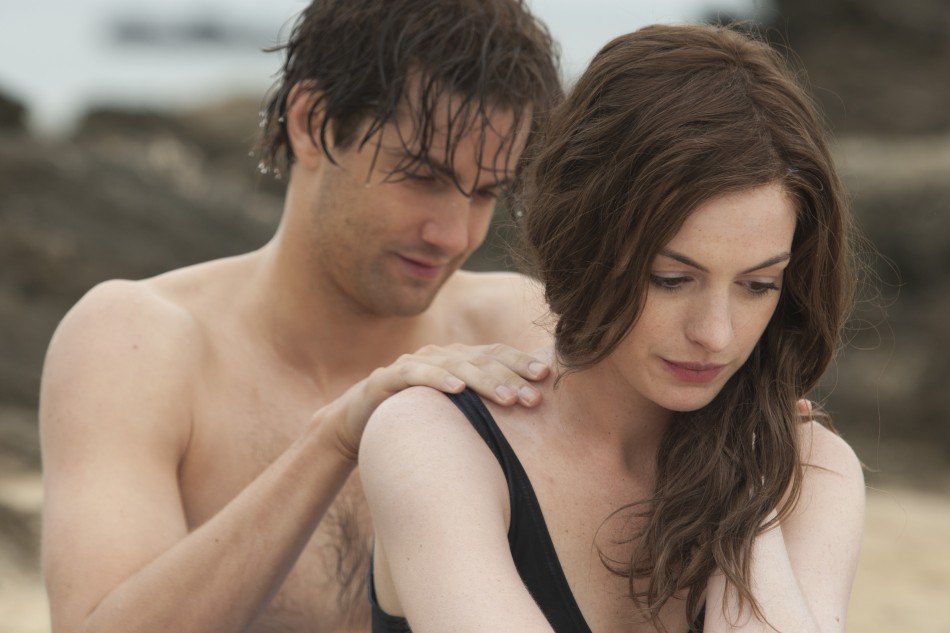
Dexter getting touchy with Emma, as he rubs suncream into her back on their ‘anniversary’.

Playing Dexter and Emma, Jim Sturgess and Anne Hathaway, respectively, do themselves no harm. But Sturgess’s character, Dexter, is far from the most challenging of roles. The same can be said for Hathaway’s character, Emma. Additionally, Hathaway’s Yorkshire accent may fluctuate between a Leeds-based one, a Scottish one, and a posh-English one, but on the whole it is acceptable.

Yet, even though Sturgess and Hathaway perform decently enough throughout One Day, there is little character depth and almost no character development throughout the film. This means that Dexter and Emma hardly change or mature in twenty-odd years. (Then again, in reality nor do most people.) It is the same for the other members of the cast too, such as the goofy Ian (Rafe Spall – Kidulthood, Hot Fuzz, Anonymous) and the bimbo Tara (Amanda Fairbank-Hynes – An Education, Monte Carlo, Tinker, Tailor, Soldier, Spy). This is a shame for the actors, as the script (despite already being laid out in a book) simply isn’t good enough and does not give them the adequate tools to make the movie unique.

As remarkable as it may seem that the characters remain virtually the same throughout One Day, the same can be said for Emma’s hairstyle and fashion sense. Both look like they’re locked in the era of Saved By The Bell. By the mid-2000s, she looks wholly anachronistic. The same can be said for Ian too. Surely the director, Lone Scherfig (Wilbur Wants to Kill Himself, An Education), noticed this whilst making the film? Evidently not.

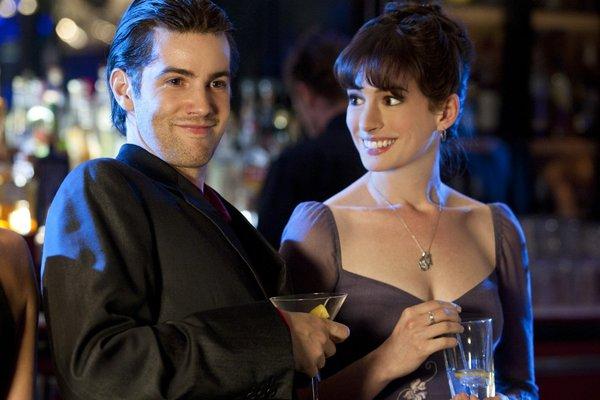
Dexter and Emma, both looking glamorous, catching up with one another years later.

Other noticeable faults with One Day are that it feels rushed and, in places, poorly put together. The film may have to cover two decades in the space of 107 minutes, but that is not an excuse for scenes not being stitched well together. Furthermore, some of the music adopted appears badly chosen and does not fit with the scenes at all.

One Day is far from the norm for a romantic comedy. The film has its flaws and could have been much more, but Sturgess and Hathaway perform well enough with what they are given to make it worthwhile viewing. For One Day is witty, entertaining and unpredictable. Wait for the twist.

PG’s Tips
Review – Conan the Barbarian (15) [2011]

Star Rating: 3/5

Zack Snyder’s 300 was the ultimate guy’s film. The movie, essentially, was a two-hour blood bath, as 300 Spartans defended their ancient homeland against a million-strong Persian army during the Battle of Thermopylae (approximately 494 BC). Although devoid of the (inaccurate) historical elements, Conan the Barbarian should be put into the same category of film.

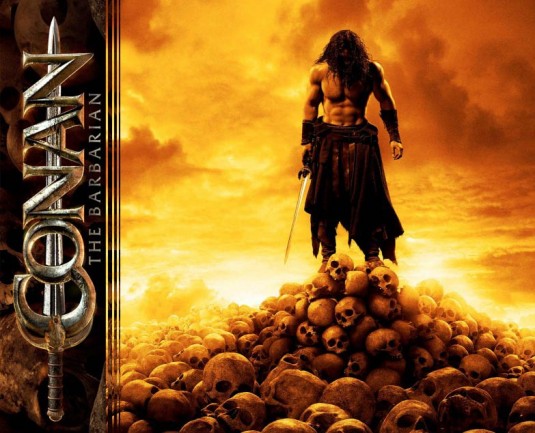
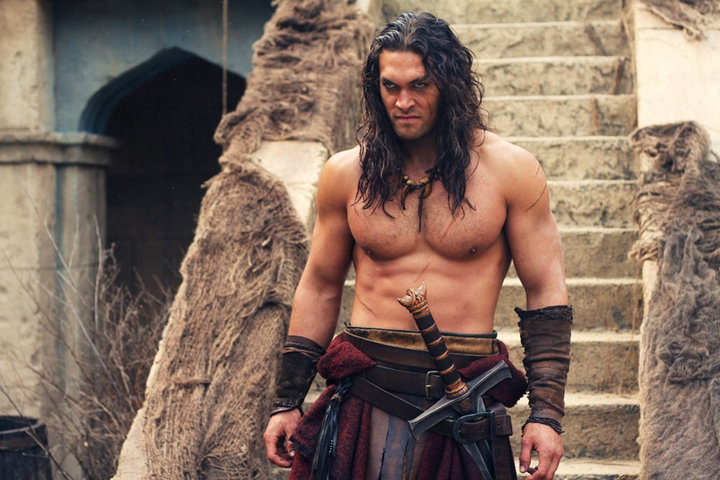
Conan, a beast of a man, relaxed and waiting for his opponent to make the first move, before he slaughtering him.

Conan the Barbarian is loosely based on the novel by Robert E. Howard, and is a remake of the 1982 film starring Arnold Schwarzenegger. Set in an alternate world called Hyborea (which looks much like Earth in medieval times), the movie centres round Conan, the eponymous character. As a young boy, Conan (Leo Howard – G.I. Joe: Rise of the Cobra, Shorts, Logan) is trained in the ways of the Samarian warrior cult by his father, Corin (Ron Perlman – Tangled, Season of the Witch, The Riot).

But not long into the movie, Corin is killed before his young son by Khalar Zym (Stephen Lang – Public Enemies, Avatar, Officer Down), a megalomaniac determined upon conquering all of Hyborea and reviving his dead wife. Khalar Zym will achieve these feats by putting back together all of the lost pieces of the Mask of Acheron. In time, Khalar also realises that he needs to sacrifice the last of the ‘pure blood’ of the sorcerers of Acheron, Tamara (Rachel Nichols – G.I. Joe: Rise of the Cobra, Star Trek, The Loop), to unleash the mask’s powers in order to take over the world. The balance of Hyborea rests in the sword-wielding abilities of the fully grown, muscular Conan (Jason Mamoa – Baywatch, Game of Thrones, Batman v Superman: Dawn of Justice), who is hell-bent on punishing those who killed his father.

Despite the strange names, the plot for Conan the Barbarian is not difficult to follow. Its rushed introduction has a Lord of the Rings-like feel to it, while the breaking up of the mask reminds one of Voldemort making Horcruxes of his soul in the Harry Potter series.

The villain, Khalar Zym, played by Stephen Lang, the trigger-happy military commander in Avatar.

Aside from this, the movie flows smoothly, and at just under two hours it is the right length for this type of film. Viewers are unlikely to become bored; after-all, a scene rarely goes by without someone (or a handful of people) being slashed to death by the merciless Conan. Just like in 300, there is no shortage of blood spilt by the heroes or villains. (And just like in 300, it beggars belief that in combat the protagonists do not wear armour and live to tell the tale.)

There is little sophistication in Conan the Barbarian’s storyline. Sometimes the simplicity is even comical. (Since when was child birth as trouble-free as sticking a knife into a womb and pulling out a baby, whilst looking away?) Similarly, the director, Marcus Nispel (The Texas Chainsaw Massacre, Friday the 13th, Pacemaker), does not attempt to make the characters anything but two-dimensional (which is not such a bad thing considering the nature of the film). As a result, the acting is far from memorable, and the dialogue is as risible as it was in the virtual disaster movie Season of the Witch.

The acting and the dialogue, though, were never going to be the most noteworthy aspects of Conan the Barbarian. Rather, the movie’s success was also going to lie in the action scenes and the special effects. In both respects, the film does not let the audience down. All the actors look like they were well drilled in swordplay, while imagination and care were certainly put into the CGI.

Marique (Rose McGowan), the witch-daughter of Khalar Zym, who helps her father find the last of the ‘pure blood’ of the sorcerors of Acheron.

Additionally, the music score is not terrible either. Even if it sounds much like a combined take-off from The Lord of the Rings and Pirates of the Caribbean, the music aids many of the scenes. In some instances, it gives the film the complexity that the acting, dialogue and plot sorely lack.

On the whole, Conan the Barbarian is as straightforward as its title. Just like with 300, Conan the Barbarian is very much a guy’s film. For it has a hulk of a main character, plenty of action, blood, and well-designed CGI. Yes, it has many noticeable and laughable defects, but viewers are unlikely to be bothered by them and will not go home disappointed.

PG’s Tips
Review – The Inbetweeners Movie (15) [2011]


Star Rating: 3.5/5

When A-Levels are finished in England, it is almost a tradition for a group of friends to relax and go on a party-fuelled holiday to Ibiza, the Costa del Sol, or other similar hotspots. (Those who don’t go on this sort of holiday very often wish they had.) The Inbetweeners Movie epitomises such a holiday in crude and hilarious fashion, as well as why one would want to go on a holiday like that once more (at least).

The crew walking down a street filled with bars and clubs, almost drooling at the abundance of scantily dressed girls.

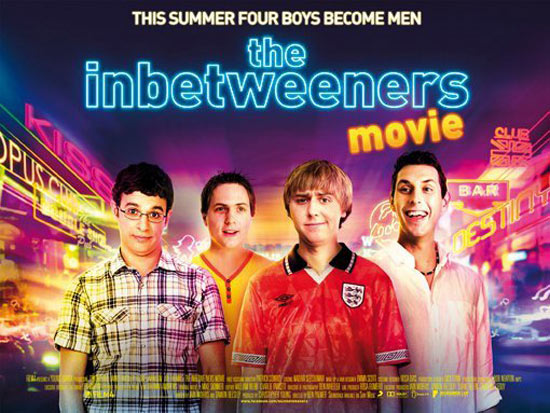
The film continues where the television series, The Inbetweeners, left off. It centres round the four oddballs of the year, Will ‘socially awkward’ Mckenzie (Simon Bird – The Inbetweeners II), Simon ‘need to get over Carly’ Cooper (Joe Thomas – The Inbetweeners II), Neil ‘gormless’ Sutherland (Blake Harrison – The Inbetweeners II), and Jay ‘teller of tall tales’ Cartwright (James Buckley – The Inbetweeners II), wanting to do what every other ‘normal’ eighteen year old does after finishing high school. The crew decide to go on a (cool) holiday to Crete to get (in the wise words of Jay) ‘gash, booze, girls and sex’ many times over (plus enable Simon to finally get over Carly). As always though with this particular group of social misfits, the holiday does not go quite the way Jay envisages.

The plot is simple and amusing, if a little cliché at times. (The only real surprise is how much male nudity there is relative to female nudity.) At just over 90 minutes, the film is the right length for a comedy. What is most impressive is that The Inbetweeners Movie maintains its stamina right the way through, without descending into vulgarity, like the American Pie series. Often with comedies, such as Along Came Polly, Bruce Almighty and The Proposal, they lose steam and are unable to keep audiences laughing for the duration of the film. This was always going to be a challenge for The Inbetweeners Movie. How ever difficult it is to keep viewers in hysterics for twenty minutes, doing it for four and a half times as long was bound to be immensely challenging. That the film manages to do this is a credit to the script writers, Iain Morris and Damon Beesley, as well as the actors. To emphasise this feat, one should watch The Simpsons Movie, which failed to transform itself successfully into a similar-length film.

The crew getting conned into going into a ‘cool’ club, by a decent-looking, skimpily dressed girl.

Unsurprisingly, the acting by the four main characters is just as brilliant and entertaining; and the dialogue is as juvenile, yet as sharp, as it was throughout the TV series. (The fact that Simon Bird and James Buckley were nominated for BAFTA-awards in 2008 for their performances as Will and Jay, respectively, in the first series speaks volumes.) Whilst they all make fun of each other, they also show how much they care for one another as true friends should. Additionally, the new characters in the movie generally add something worthwhile to the movie; especially, Will’s dad (Anthony Head – Buffy the Vampire Slayer, Sweeney Todd: The Demon Barber of Fleet Street, The Iron Lady) and Jane (Lydia Rose Bewley – The Inbetweeners II). Would many large women sign up for a role that was solely designed to make fun of their size? Good on Bewley for doing it with professionalism and humour!

The boys doing what all ‘normal’ people do, and drinking (God-knows what Jay put in that bowl) to excess.

The setting for the movie is as well thought out as the script. It captures the atmosphere of a holiday town just as it is in real life (almost satirically). On the one hand, there are the luxury(ish) family hotels, the sandy beaches, and the pleasant restaurants. And, on the other hand, there are the cheap and nasty, run-down hotels; grotty backstreets; and unpleasant individuals, who always seem to appear at these places. In addition, the party areas in the town are portrayed well too, with groups of scantily dressed girls walking up and down the streets; good-looking girls (also dressed skimpily) advertising for a cheap bar or club that is bereft of customers; people vomiting on the streets after a night of heavy drinking; and guys, pumped up with testosterone, making out with girls on the streets, amongst other things.

Over-all, The Inbetweeners Movie adapts remarkably from a TV show to a film. It is filled with crude and intelligent jokes that will leave viewers in hysterics for most of the film, ensuring that they forgive conveniences in the plot. The film will also make the audience wish that they could go back to being eighteen and on holiday again after exams.

PG’s Tips
Review – The Devil’s Double (18) [2011]

Star Rating: 3/5

It is common for dictators and those close to them to have doubles (look-alikes), so that they can be in two places at once. (Not to mention making it harder for their opponents to assassinate them). But what exactly do ‘doubles’ do with their days? Well, The Devil’s Double gives viewers a brutal hint.

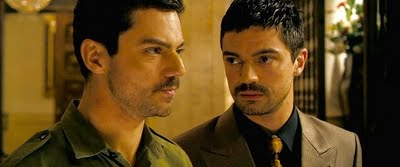
Latif with Uday before he has some minor surgery. Thw two men bear a striking resemblance. After surgery, the two men could be identical twins.

The film is based on the true (but embellished) story of how Latif Yahia (Dominic Cooper – Tamara Drewe, Captain America: The First Avenger, My Week With Marilyn) became a look-alike for Uday Hussein (also Dominic Cooper), the son of Saddam Hussein, the President (dictator) of Iraq, 1979-2003. The film is set between the late-1980s (during the latter years of the Iran-Iraq War, 1980-88) and up to December 1996.

Latif bears a striking resemblance to Uday. After some nasty threats and lashes, Latif agrees to become Uday’s double. Subsequently, Latif, to his disgust (and knowing that he could be shot on a whim at any moment), enters into Uday’s world of sadism, debauchery, drugs and murder. At what point will the ‘nice guy’ Latif draw the line?

The Devil’s Double makes for some gripping, if horrific, viewing. But, most noticeably, the film does not have much of a storyline. More often than not, scene after scene is just Latif following Uday to witness the latter’s next appalling act. Surprisingly though, this does not make the film any less absorbing to watch.

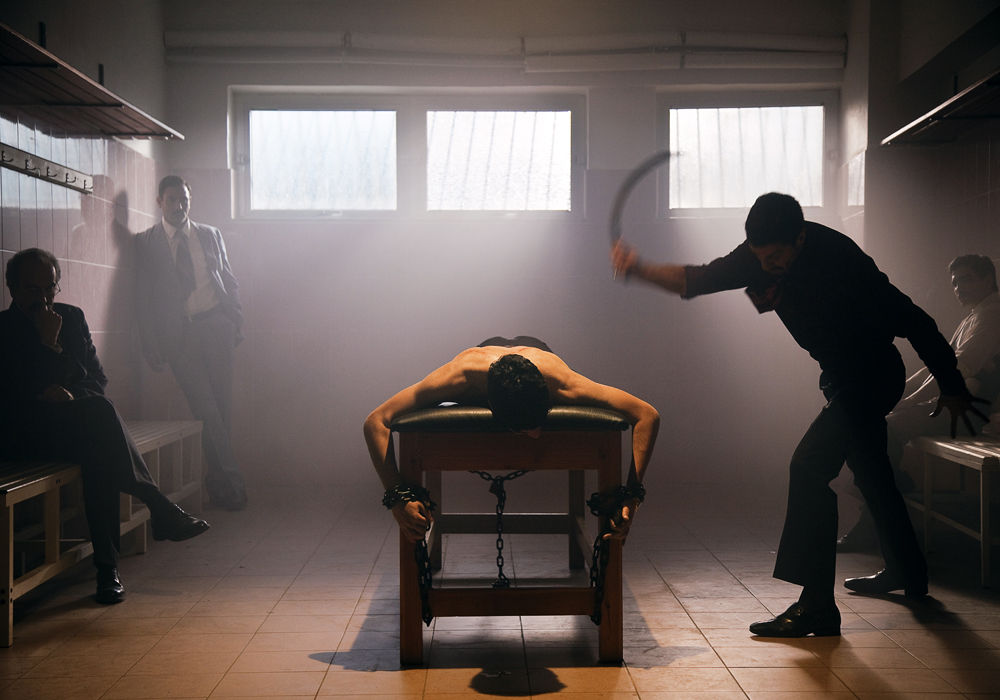
Latif being punished for not initially agreeing to become Uday's double.

The key reason for the movie being so engrossing is Dominic Cooper. The choreography may be jerky; the music may sound cheap and not totally in sync with the scenes; and the women may look distinctly Western and non-Arabic. Yet, particularly as Uday, Cooper makes the audience feel that their money has not been wasted. As Uday, Cooper plays an insane (in the true sense of the word), volatile, spoilt brat with an insatiable appetite for alcohol, drugs, women (of all ages) and malice. In almost every scene, Uday appears drunk, high and unpredictable. Uday makes us feel uneasy every time he appears on screen, which is a testament to Cooper’s acting abilities.

There is no doubt that Cooper plays well as Uday. But his performance is not quite in the same league as Christian Bale’s in The Fighter. This is because in The Devil’s Double, Uday is not given a third dimension. Also, from the film, one has little idea what Uday’s upbringing was like, or what his relationship was like with his father (which was apparently not great) and mother (whom he was supposedly close to), amongst other things. This is a real pity, as this could have shown Uday in a chillingly human light, as opposed to the animal that he is portrayed to be throughout the movie.

Whilst as Uday, Cooper is impressive, he is less so as Latif. This might be because Latif is too nice and normal relative to Uday. Nevertheless, one does not feel much sympathy for Latif, or his predicament. In this respect, Cooper could have done better. Then again, just as Uday has not been given much depth, nor has Latif. This is not Cooper’s fault. Rather, it is the fault of the director, Lee Tamahori (Die Another Day, xXx 2: The Next Level, Next), who should have given his two main characters more depth, even at the expense of making the film a little longer. At only 106 minutes, he had the time to do this.

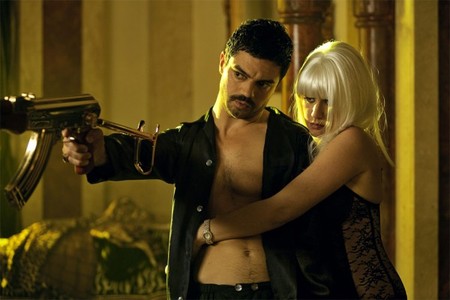
A common sight throughout the film - Uday holding a gun threateningly, with a girl (or two) around his waist. The girl here is Serrab (Ludivine Sagnier), supposedly his favourite.

Just as Uday and Latif lack complexity, so too do the other characters in The Devil’s Double, such as Munem (Raad Rawi – The Kingdom, Green Zone, Conan the Barbarian) and Kamel Hannah (Mem Ferda – Revolver, Legacy: Black Ops, Ill Manors), who are supposedly part of Saddam’s cruel regime. Too many of them, though, appear as ‘good guys in bad positions,’ which could not have been true. Repressive governments don’t exist because they’re packed with ‘good people’ under an ‘evil’ despot. Rather, they survive because they’re filled with murderous psychopaths, who are given positions to abuse (until they become victims of the system, of course). By doing this, Tamahori shamefully forsakes the chance to illustrate the true realities of Saddam Hussein’s Iraq to the detriment of the movie.

All-in-all, The Devil’s Double may be crude and the epitome of its own title, but it gives us a glimpse of what life as a double to a nasty, sadistic individual could be like. Almost by himself, Dominic Cooper, playing two very different people, makes this utterly brutal film worth watching. The Devil’s Double is not one for the feint-hearted, and will leave even the strongest of people feeling uncomfortable by the end.

PG’s Tips

Review – Sarah’s Key (12a) [2011]

Star Rating: 4/5

<<guest review by KJF>>

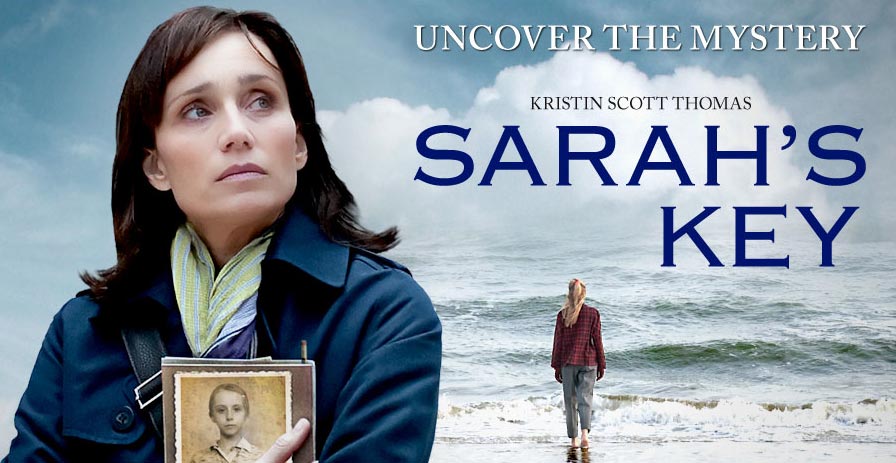
Sarah’s Key, directed by Gilles Paquet-Brenner (Pretty Things, Payoff, Walled In), is a powerful study of the impact of the Holocaust on one person’s life. Julia Jarmond (Kristin Scott-Thomas – Four Weddings and a Funeral, Nowhere Boy, Tell No One) is an American journalist living in Paris and married into a well-to-do French Family, with a teenage daughter. About to inherit a flat from her husband’s family, she gradually discovers that the flat has an unpleasant history – that it once belonged to a Jewish family until they were forcibly evicted and rounded-up by officials of the Nazi-collaborationist Vichy regime on 16th July 1942.

Julia (Kristin Scott-Thomas) make alarming discoveries about the past.

The film operates on two narrative levels – Julia’s own revelations in the present, coupled with the fate of that family seen through the eyes of 10 year-old Sarah Starzynski (Melusine Mayance – Ricky). Whereas some films that employ a multi-narrative focus can become confusing to the viewer, skilful editing allows the story here to be told in a straightforward and effective way.

Sarah’s story is truly a harrowing one. Before the French police can see them, she locks her younger brother in a bedroom cupboard, taking the key with her and determined to come back. She and her parents are taken to the sports stadium, the Velodrome d’hiver, which for three days became a makeshift concentration camp for thousands of Jews, until they were transferred to other internment facilities.

Without operating on a massive budget, Paquet-Brenner allows the viewer to be immersed in this terrible situation, providing a shocking snapshot of life within the ‘Vel d’hiver’ – the appalling sanitary conditions, the lack of space and the awful uncertainty faced by all the internees as they awaited their fate. There is occasional bravery and foolhardiness, as one inmate carries out a daring escape. Sarah’s fate, and the travails she has to endure are also portrayed with a hard-hitting immediacy. She and her parents are transferred to the Beane-la-Rolande camp outside Paris. After being separated from her parents, who are sent unknowingly to Auschwitz, she and another child escape the camp. Sarah finally achieves a kind of freedom.

But even in later life, she is haunted by the events of the past. Mayance plays Sarah with enormous charisma – we are totally engrossed in her fate. Charlotte Poutrel who plays Sarah in later life imbues her with both moving dignity and tangible personal trauma.

Sarah (Melusine Mayance) in happier times.

Meanwhile in the present, Julia faces her own struggles and is forced to re-evaluate her own life as she asks questions that her in-laws would prefer were not asked, representing the general unease felt in some areas of French society about the events of the 1940s.She also faces up to the reality of her unhappy marriage – she becomes pregnant, which her husband, preoccupied by work, is painfully indifferent about. She goes on a personal quest to find out more about the fate of Sarah and her family, which leads her to New York and Italy where she finally meets Sarah’s son, played by Aidan Quinn (Blink, Legends of the Fall, Unknown), who knows little of his mother’s fate.

Next year is the 70th anniversary of the round-up of French Jews, which has also prompted another film on the subject, La Rafle (The Round-Up). There, the narrative is squarely based in the 1940s and has more of a documentary-style feel as scenes depicting Hitler and Himmler, and machinations of the Vichy authorities are run alongside the awful fate of the Jewish families. That leads to an informative and disturbing film, but somewhat distant. Here the pain and stoicism Scott-Thomas portrays in her performance provides an intensely personal and unifying emotional core to the film. As the fate of Sarah unfolds for her, so it does for us, staying with us long after the cinema has been left.

KJF