Category Archives: Drama

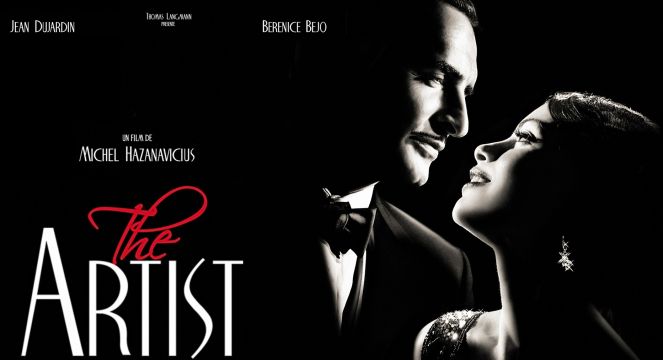
Review – The Artist (PG) [2012]

Star Rating: 5/5

In recent years, Hollywood has been dominated by films with colossal amounts of special effects, outrageous action scenes, and sequels to entertain viewers. Quality acting (the very factor that enables actors to win the prestigious awards) has seemingly become secondary to the aforementioned features for movies. Refreshingly, the French drama, The Artist, in outstanding fashion, illustrates that audiences can still be wooed by a relic of the past: a silent movie.
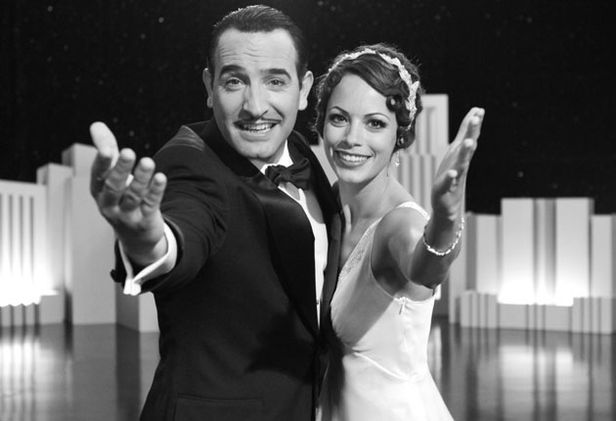
George Valentin (Jean Dujardin) and Peppy Miller (Bérénice Bejo) dancing together for a film. The two actors have great chemistry on set.

The Artist is set in Hollywood between the late 1920s and the early 1930s. It is about George Valentin (Jean Dujardin – OSS 117: Cairo, Nest of Spies, OSS 117: Lost In Rio, The Wolf of Wall Street), a man who has starred in many silent films throughout his acting career. Now though, George is being told by his boss, Al Zimmer (John Goodman – Pope Joan, Red State, 10 Cloverfield Lane), that the times are changing and that cinema audiences want dialogue and fresh faces. (‘Fresh meat’ as Zimmer calls it.)

The fresh faces include an upcoming young, pretty woman called Peppy Miller (Bérénice Bejo – A Knight’s Tale, Prey, The Scapegoat), who had been randomly photographed with George. Rapidly, she is replacing him. Between her and the Wall Street Crash of October 1929, George’s world is rapidly falling apart. He has to adapt to the times, something he’s loathe to do, or he faces the axe.

The Artist’s plot is straightforward and surprisingly easy to follow. Despite the lack of dialogue, one always understands the situation. The performances from the cast throughout the movie are brilliant. Jean Dujardin plays magnificently as the proud and stubborn actor, who is unwilling to be pragmatic. Bérénice Bejo is superb as the ambitious young actress. John Goodman plays well as the ruthless boss, who realises that public opinion has changed. Penelope Ann Miller (Kindergarten Cop, Blonde Ambition, Saving Lincoln) performs commendably as George’s trophy wife, who has no desire to be with a man whose best years are seemingly behind him. James Cromwell (The Green Mile, 24: Day 6, Still) does a fine job of being George’s loyal valet. And George’s dog, which is linked to him seemingly telepathically, adds a cute, sentimental aspect to the storyline.
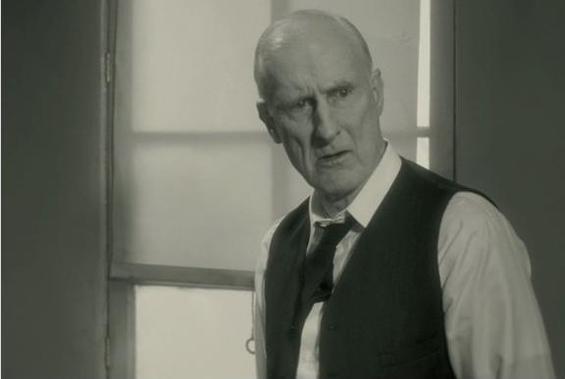
Clifton (James Cromwell), looking concerned for his master, George.

But the brilliance of the acting is very different from other exceptional performances, such as Colin Firth’s in The King’s Speech or Christian Bale’s in The Fighter. Remarkably, using body language and emotion, the actors stunningly demonstrate that words are not necessarily needed to portray human relationships and circumstances. Director Michel Hazanavicius (OSS 117: Cairo, Nest of Spies, OSS 117: Lost In Rio, The Players) does occasionally use bubbles of words to explain the context, which help, but they’re infrequent and hardly worth a mention.

If anything, it is not the words on the screen that aids the audience, but the music. The score greatly aids viewers to empathise with the characters. The 1920s-style music may not be like the enchanting scores of The Lord of the Rings or Inception, but it always captures the mood of the characters in The Artist. Whenever their temperament changes, so does the music to enhance the scene.

The magnitude of the acting and the music are more noteworthy considering that The Artist is a small budget film, which has close to no special effects and action. It is such a wonderful contrast to the (hideous) amount of computer generated images (CGI) and explosions used in most blockbusters today, such as Transformers III and Captain America. Consequently, The Artist feels cleaner and is more pleasant to watch. (Indeed, The Artist almost makes one want to beg Hollywood to fund more movies with fewer special effects and loud bangs.)
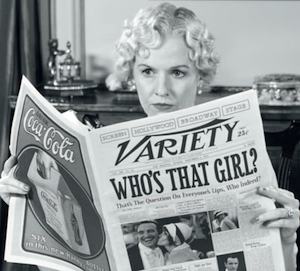
Doris (Penelope Ann Miller), George’s wife, disgusted with her husband for being photographed in the papers with a younger, more beautiful woman than herself.

Similarly, the movie has no breathtaking landscapes to charm viewers, like in The Way Back or True Grit. The Artist though captures its era magnificently, from the clothes the characters wear; to their hairstyles (Bérénice Bejo looks strikingly similar to Marion Cotillard in Midnight In Paris); to their cars; to their cameras; to the interior designs of their houses (which have some resemblance to the First-Class rooms and halls in the sunken Titanic). One could perhaps criticise the film for not depicting the Great Depression of the 1930s adequately. Yet, this was not the purpose of the film either, so one should not blame the director on this matter.

On the whole, The Artist is a work of art. It brings us back to pure cinema and makes viewers realise that when a film has acting of such phenomenal quality, then dialogue, special effects and action are not absolutely necessary to make an entertaining and dazzling film.

PG’s Tips

Review – Shame (18) [2012]

Star Rating: 3/5

Few would consider having an active sex-life to be a bad thing. But what if one were to suffer from a compulsive need for sex? Such a problem exists in society. Shame, despite its faults and gloominess, illustrates the torment that this syndrome can cause people.

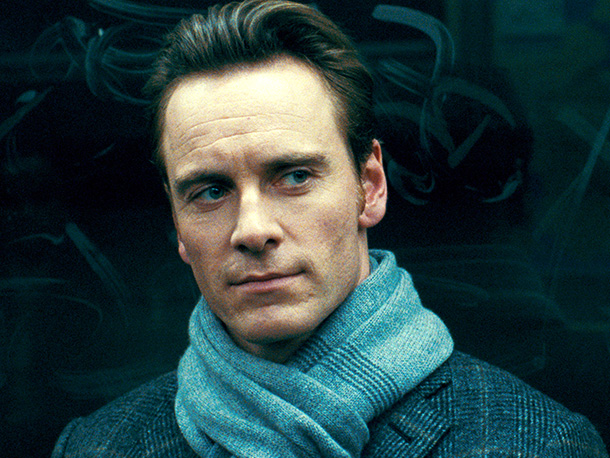
Brandon (Michael Fassbender) eying up a girl on the train like a predator.

The film centres round Brandon (Michael Fassbender – 300, X-Men: First Class, Prometheus), a high-flying manager or executive (in a job that is not defined), who cannot control his urge for sex. In his nice, relatively up-market flat in New York City, he hires prostitutes/escorts or watches pornography endlessly. At work, he watches pornography (to the extent of having his hard-drive removed because it’s filled with viruses) before going to the bathroom to masturbate. Every woman he sets eyes upon is a potential victim of his insatiable lust.

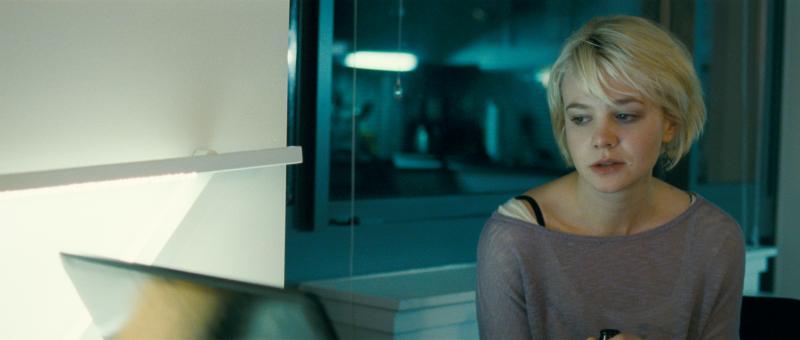
Yet, none of this appears to make Brandon any happier. Soon his sister, Sissy (Carey Mulligan – An Education, Wall Street II: Money Never Sleeps, Suffragette) comes to stay at his apartment, bringing out the worst in his frustrations and temper.

Shame’s plot is simple, but morbid. The mental torture that Brandon suffers from is excruciating (despite having an addiction that many would consider to be pleasurable). Unlike with Oscar Wilde’s Dorian Gray, played by Ben Barnes in the 2009 film, there is no enjoyment in sex for Brandon (or deal with the devil for that matter). Sex is just a constant, agonising thirst that can never be quenched. The threesome scene near the end reveals the degree of pain this addiction causes him. (Although, how Brandon maintains his stamina for so much sex is quite remarkable. One wonders if there are enough hours in the day for work, exercise and all of that sex.)

Sissy (Carey Mulligan) sitting in her brother’s apartment in need of attention. That’s when she notices her brother’s laptop…

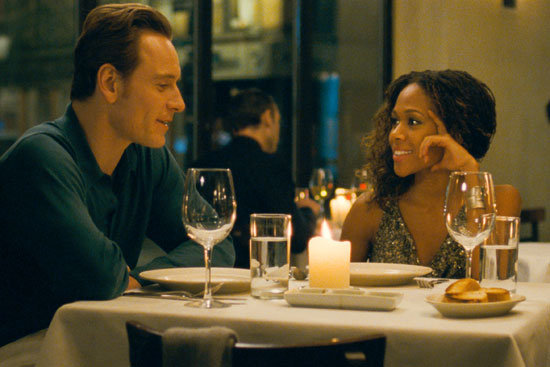
Brandon’s drug-like compulsion for sex and pornography has also come to seemingly destroy any chance of him having a relationship too. When he tries one with Marianne (Nicole Beharie – American Violet, The Express, The Last Fall), a pretty, young work-mate, he finds himself incapable. This is because the idea of love in sex has become an anathema to him.

Yet, apart from Brandon’s uncontrollable lust, Shame’s storyline loses direction quickly. This makes the film’s 101 minutes seem (frustratingly) like it will go on indefinitely. The plot also fails to explain Brandon’s background, as well as badly under-developing his relationships with his messed-up, needy sister; with his amiable and attractive fellow employee; and with his married, but embarrassingly desperate boss, David (James Badge Dale – 24: Day 3, The Departed, The Grey).

If the storyline (even with the explicit sex scenes) doesn’t hold the audience’s attention, Michael Fassbender’s performance certainly will. Fassbender delivers an excellent display that is as intense as it is brave and consistent. His green eyes stare at women like a hawk-bird to its prey. They also hint at an anger and pain, a deep shame, buried within Brandon that he refuses to recognise or counter. Does he do this because his syndrome is apparently humiliating and a taboo subject in society?

Fassbender might be the stand-out performer of the movie, but none of the supporting cast play badly. Carey Mulligan again gives a solid account of herself. She has a very different character here to the ones she played in Wall Street II: Money Never Sleeps and Never Let Me Go. Nonetheless, she demonstrates that she can play a whiny, emotionally-deficient, unstable girl, craving affection, with equal plausibility. Similarly, despite their short and limited roles, neither Nicole Beharie nor James Badge Dale damage their reputations with their performances in Shame.

Brandon out with Marianne (Nicole Beharie), seemingly enjoying her company. But has he told her about his compulsive disorder?

The impressiveness of the acting is enhanced when considering that director Steve McQueen (Hunger, 12 Years A Slave) takes long-held shots for much of the film. Many of the scenes have no breaks or changes in camera angles. This style of filming demands immense concentration from the actors. That they make their acts look natural is credible and significant.

McQueen’s other noticeable technique in Shame is to use silence and little music to ram home to viewers Brandon’s loneliness and internal agony. When McQueen does adopt music, it is generally the main soundtrack which is comprised of long-held notes by stringy instruments and a subtle fast-beat. The main theme tune may lack Requiem For A Dream’s soundtrack’s feel of a crisis that is spiralling out of control, but it helps to compound Brandon’s lack of self-worth and his sense of self-hatred.

Over-all, Shame passably explores a problem that is not discussed much or recognised in present-day society. (After-all, one might think, how could having sex regularly be the cause of a major psychological disorder? It should be the other way round, right?) Shame has its deficiencies, it might appear directionless, and it might make for depressing viewing. Nevertheless, Michael Fassbender’s brilliant and courageous performance forces one to empathise with Brandon’s suffering and self-harm, as well as obliges one to appreciate what the syndrome can do to people in general.

PG’s Tips
Review – The Iron Lady (12a) [2012]

Star Rating: 3/5

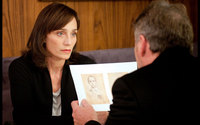
Dementia is a cruel infliction that eats away at what an individual once was. (Lady) Margaret Thatcher, British Prime Minister 1979-90, was a formidable and highly intelligent woman in her day. Yet, rather than focus on her prime, The Iron Lady highlights the crippling effects that the illness has had on Lady Thatcher in her more recent years.

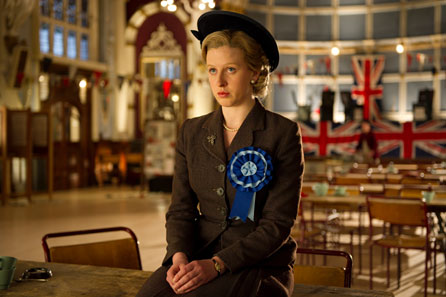
‘Young Margaret’ (Alexandra Roach) standing for election in Dartford (in 1951). She was then the only female Conservative candidate across the country.

The film is about Lady Thatcher (when young played by Alexandra Roach – Private Peaceful; when middle-aged and old played by Meryl Streep – Sophie’s Choice, The Devil Wears Prada, Suffragette), elderly and suffering from delusions and dementia, glimpsing back, at random, at the happy and distressing moments of her life, before she attends the ceremony of the unveiling of her portrait at the Prime Minister’s house.

The movie’s plot is simple, but is not necessarily easy to follow. This is because whenever Lady Thatcher looks back into the past, she does not do so in chronologically and there is nothing to inform viewers of the year they’re watching. Even for those who are historically fine-tuned, this can be confusing. Factually, The Iron Lady is generally accurate; yet, there are several brushes of artistic license in the movie, such as the timing of Denis Thatcher’s (when young played by Harry Lloyd – Jane Eyre, A Game of Thrones, Junk; when old played by Jim Broadbent – Gangs of New York, Harry Potter VI & VII(ii), Cloud Atlas) proposal.

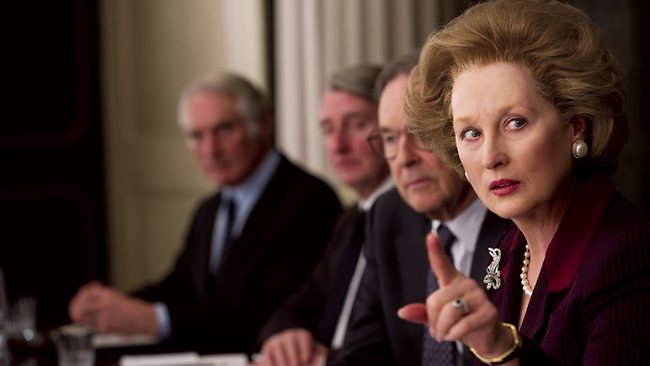
Thatcher, as Prime Minister, in a cabinet meeting, telling a colleague that it is not his time to speak.

More than anything, the storyline’s approach undermines Lady Thatcher. It undermines her as a person, her ideology (the idea that the individual should not depend upon the state and that he/she should determine his/her destiny), and all that she did for the country and for women across the world. First, at 105 minutes, The Iron Lady is too short, since more time was needed for director Phyllida Lloyd (Mama Mia!, Macbeth) to have adequately visualised Thatcher’s life before and after she became a politician. Second, for a woman who sacrificed so much for politics, the film stresses astoundingly little on Thatcher’s rise to the premiership, as well as her time in ten Downing Street and her fall from office. That much of her time in office in the movie is dominated by her hardline policies towards cutting public spending; beating back rioters; and the wars against Argentina, over the Falkland Islands, and the IRA (terrorism), has a familiar chime, as if Ms. Lloyd was trying to (not-so-subtly) force her own views of the current Coalition government upon viewers. Third, to have Lady Thatcher remembering her life via flashbacks, among delusions of her late husband was callous and insensitive; especially, as the former Prime Minister is still alive. If anything, it makes even those who despise Lady Thatcher pity her. (Whoever would have thought that the die-hards on the Left would feel sympathy for Thatcher?)

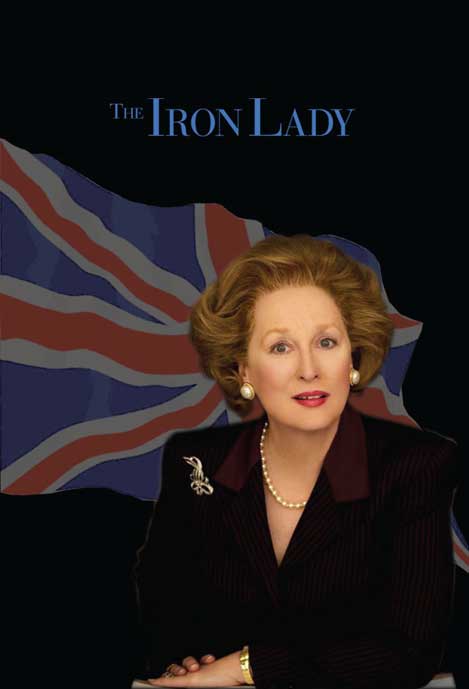
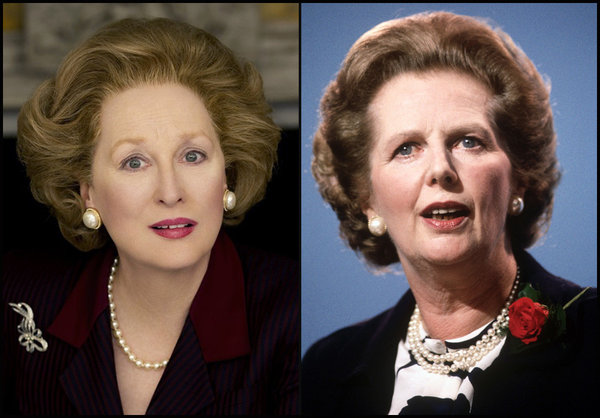
Irrespective of the plot, there is an exceptional performance from Meryl Streep, which makes The Iron Lady worth watching in and of itself. Throughout the movie, Streep seemingly morphs into Lady Thatcher to the extent that one is likely to forget that they’re not watching the real person.

Thatcher in her heyday (right), and Meryl Streep (left) as the brilliant look-alike.

It is a shame for Streep that the supporting cast cannot match her display. Alexandra Roach, as ‘young Margaret’, is distinctly average, as are the two actors who play Denis Thatcher, Harry Lloyd and Jim Broadbent. The rest of the cast, particularly Anthony Head (Buffy The Vampire Slayer, The Inbetweeners Movie, Ghost Rider II: Spirit of Vengeance) and Richard Grant (Twelfth Night, Corpse Bride, Zambezia), impersonating Thatcher’s ministers Geoffrey Howe and Michael Heseltine, respectively, play poorly with the little time they have on screen. Head and Grant do not capture their characters’ personalities accurately. Both actors appear as cowardly critics (with eyes brimming with hawkish ambition) of their leader’s policies at times of supposed crises, and Grant also fails to give Heseltine the ego that drove him to resign as Defence Minister in 1986 and challenge for party leadership in 1990.

All-in-all, Margaret Thatcher was a formidable individual in her day. She was, and still is, a highly polarising figure for many a reason. Therefore, one would expect a biographic film to be about her achievements and shortcomings as a leader, and perhaps a bit about her legacy too. Yet, The Iron Lady shows relatively little of these, preferring instead to let us watch and pity an elderly lady no longer in complete control of her mind. Despite a phenomenal performance from Streep, the film would be an insult to any human being, let alone one of the calibre of Lady Thatcher.

PG’s Tips

Review – Take Shelter (15) [2011]

Star Rating: 2.5/5

Often, when it comes to a descent into insanity, one is clueless that he/she is no longer behaving in a ‘normal’ way (whatever that means); it is only those around the ‘crazy’ individual that are aware of his/her madness. This is apparent in films like Shutter Island and Black Swan. The drama Take Shelter, despite being lame in comparison to those aforementioned movies, deals interestingly with the opposite.

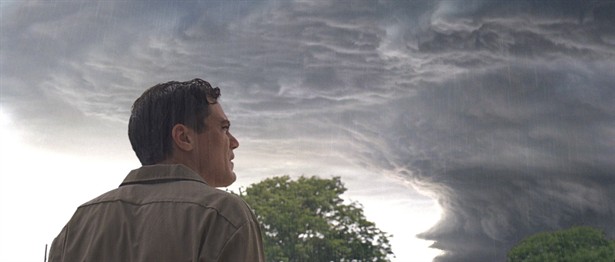
Curtis (Michael Shannon) looking at some dark storm clouds with concern. This is what convinces him to build a storm shelter, even if he cannot afford it.

Based in a small town in Ohio, Curtis (Michael Shannon – Vanilla Sky, Machine Gun Preacher, Man of Steel), a man in his middle-thirties, is a construction-site worker. He may live in a decent-sized house and his life might ostensibly look like it is going well, but behind the scenes things are not so rosy. Curtis’s relationship with his wife, Sam (Jessica Chastain – The Debt, The Help, Coriolanus), has become strained due to some financial difficulties, as well as emotional stresses concerning their deaf daughter, Hannah (Tova Stewart).

Soon, Curtis starts having apocalyptic nightmares and visions of a gas storm that will destroy the town and its inhabitants. Fearing for his family, he builds an impenetrable storm shelter. The trouble for Curtis is that no-one else is concerned about this impending storm, and his mother, Sarah (Kathy Baker – Edward Scissorhands, Machine Gun Preacher, Against The Wall), was diagnosed with paranoid schizophrenia in her early thirties. Curtis is aware of this and worries that he is suffering from the same mental illness. But is this the case?

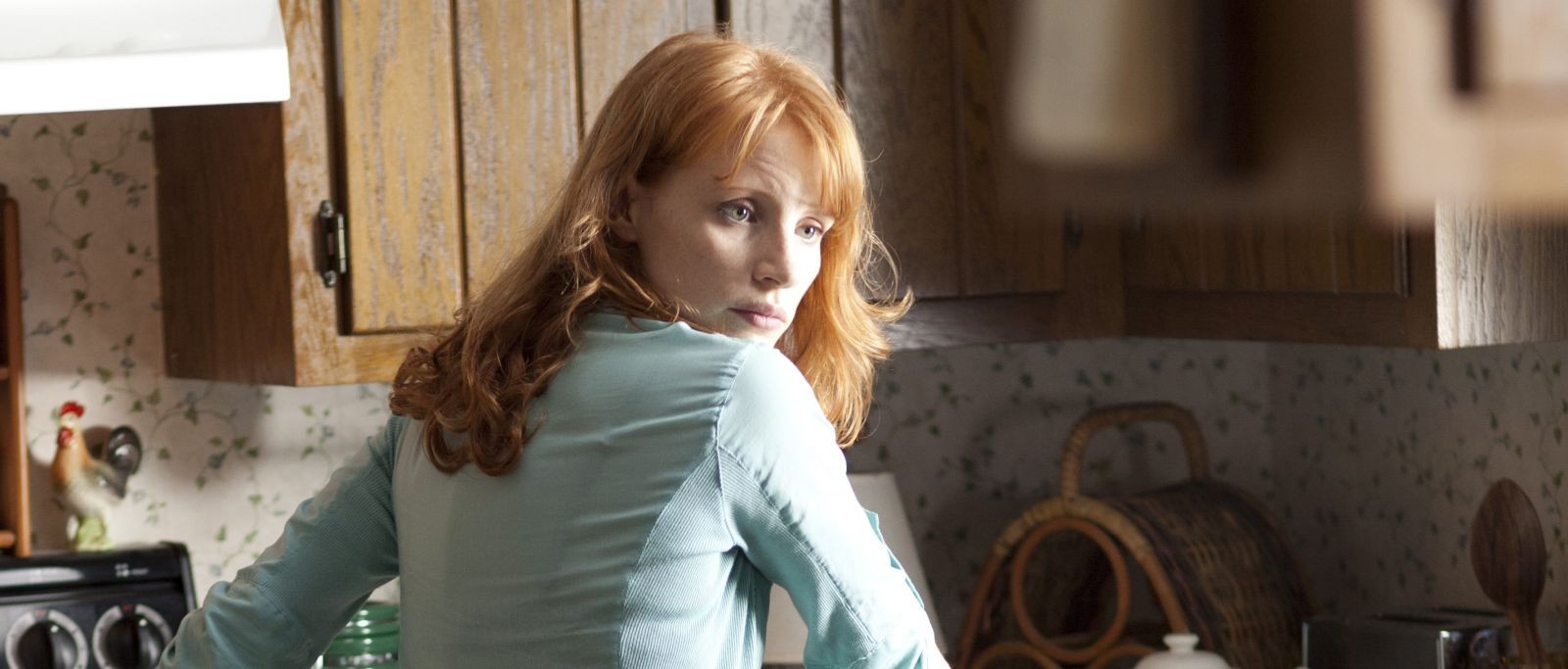
Sam (Jessica Chastain) makng breakfast for her family. She wonders why her husband has become so distant to her in recent times.

The plot for Take Shelter is simple and easy to follow. Audiences will have little difficulty in differentiating when they’re watching reality and Curtis’s dreams, since the dreams tend to be darker than real world (yet surprising not disturbing). However, as a result of needing to fix the film round Curtis, the director, Jeff Nichols (Shotgun Stories, Mud), focuses too greatly upon Curtis at the expense of the other main characters, Sam and Hannah. Indeed, neither Sam’s nor Hannah’s problems are even touched upon, which has the consequence of making them virtually irrelevant to the storyline. This is bizarre and undermines the movie’s realism.

Furthermore, Take Shelter is slow-paced and some parts of the plot go by the way side, such as Sam’s need for (breast?) implants (which would have been a good opportunity to delve into some of Sam’s insecurities), whilst the ending is a cheap stunt to make one rethink the entire movie. Also, considering the music throughout is either an ominous, yet anticipatory, beat or a boding-doom thud, one waits expectantly for the climax, like in Black Swan, or for the revelatory twist, such as in Shutter Island. But it never arrives, which is extremely frustrating.

Viewer’s frustration is likely to be exacerbated by the film’s length. At 121 minutes Take Shelter is quite long, and the movie feels longer still because of the artistic style that Nichols has employed. In theory, there is nothing wrong with this style, but for a film about psychological disorders it may not have been the most sensible method to choose. Too many scenes have little action or dialogue, and when there is dialogue it can often have prolonged gaps and be devoid of emotion. The lack of outburst from any of the two main adult characters seems odd too (and perhaps improbable) considering the emotional strains and financial pressures that they’re under. Maybe if Nichols had taken inspiration from the emotive drama, Revolutionary Road, Take Shelter would have been considerably better.

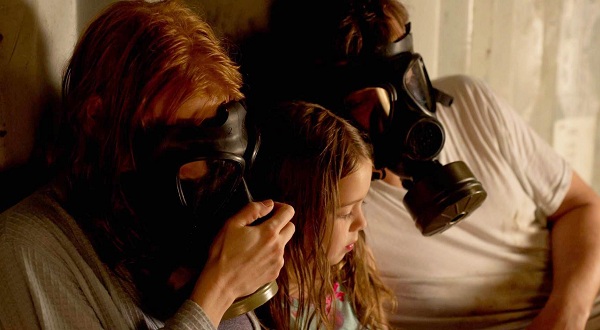
The family in the shelter after hearing the storm siren. Such is Curtis’s paranoia that he even bought his family the most up-to-date gas masks in the case of a storm.

In Revolutionary Road, Frank (Leonardo Dicaprio) and April (Kate Winslet) had depth and the power to make audiences empathise with their respective feelings and predicaments. In contrast, here, Michael Shannon and Jessica Chastain perform with a remarkable lack of intensity, plus there appears to be no love or antipathy between the married couple (even though they constantly remind us of their love for each other). The acting is not poor and it gets better as the film goes on; yet, it is a far cry from the exceptional performances in any of the aforementioned movies.

Over-all, Take Shelter shows us that people with psychological disorders can realise, to a limited extent, that they are veering towards ‘insanity.’ It is just irritating that the film is quite uneventful, tedious and lacks the strong performances necessary to put it on a par with Black Swan or Revolutionary Road.

PG’s Tips
Review – The Help (12a) [2011]

Star Rating: 4.5/5

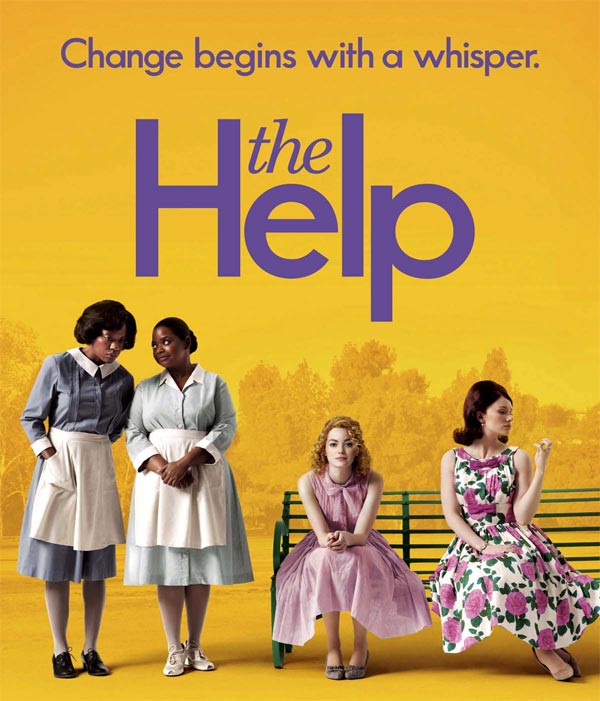
John F. Kennedy (JFK), President of America (1960-63), proclaimed in 1963 that “moral courage is a more rare commodity than bravery in battle or great intelligence.” He was referring to the civil rights movement in America, when African-Americans, particularly in the south (now known as the ‘Bible-belt’), were discriminated against and did not have the right to vote. The Help magnificently brings to light the inequality that African-Americans suffered in Mississippi in the early-1960s, and that there were some people with the moral courage to put an end to it.

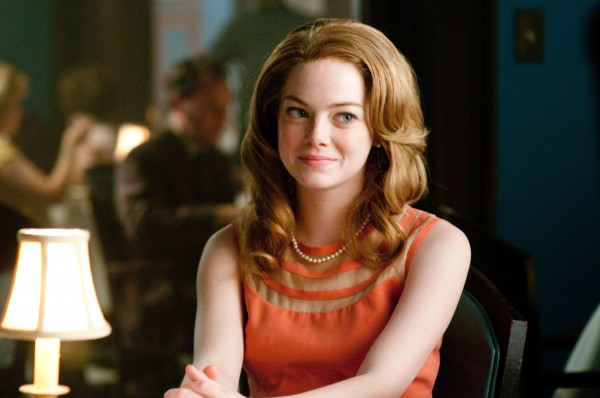
Eugenie ‘Skeeter’ Phelan (Emma Stone) out for a meal with friends, looking fabulous.

The Help is based on the book with the same title, written by Kathryn Stockett. It is not a true story. The film revolves round the aspiring young author, Eugenie ‘Skeeter’ Phelan (Emma Stone – Ghosts of Girlfriends Past, Friends With Benefits, Birdman). At a time when the civil rights movement is picking speed in America, Skeeter has become uneasy by the way her friends treat their African-American maids, and so decides to write a book about it. She decides to write her book from the angle of the help in order to highlight Caucasian maltreatment to them in the home.

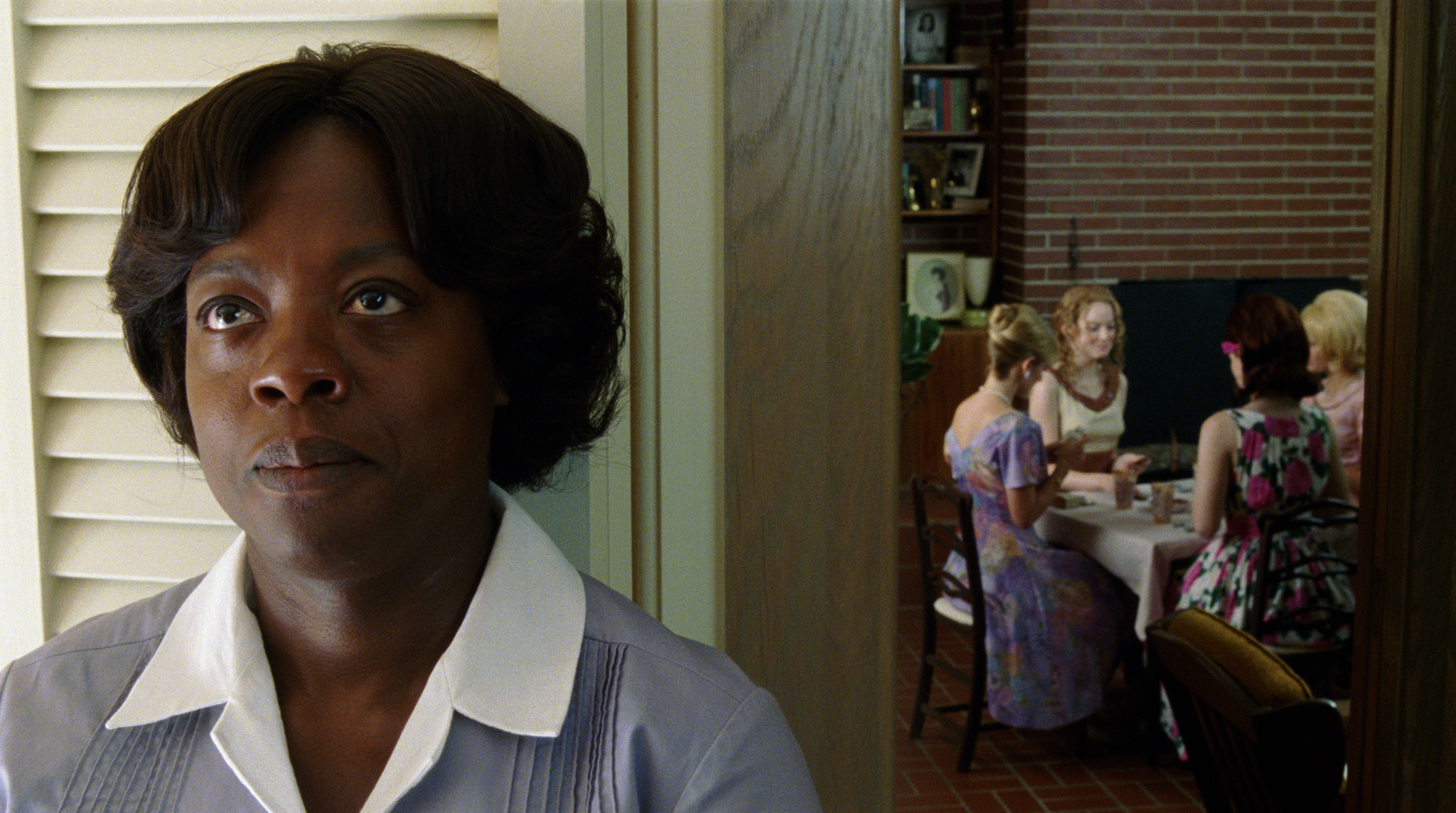
Skeeter approaches Abileen (Viola Davis – Law & Order: Special Victims Unit, Eat, Pray, Love, Extremely Loud & Incredibly Close), the maid of her friend Hilly (Bryce Dallas Howard – The Village, Spiderman 3, 50/50), for her opinion and experiences. Abileen is a middle-aged woman who has spent her entire life raising Caucasian children, almost from birth, only to see them turn into their parents. Despite being initially reluctant to speak out, due to the fear of violent reprisals, Abileen lets Skeeter interview her. Soon, Minny (Octavia Spencer – The Soloist, Herpes Boy, Girls! Girls! Girls!), another African-American maid, tells her stories too. Then, many more do the same to give Skeeter an all-round picture of what life is like for African-American maids in Caucasian homes.

The Help may be a very slow and far-from-intense film; yet, it is powerful and emotive. The movie may not be factual, but it is based on much truth and reflects the period accurately. In the same way that the works of Charles Dickens and Theodore Dostoyevsky are seen to be more representative of their respective eras than historical narratives, so too can The Help be seen in the same vein. Despite a few minor historical inaccuracies, such as segregation, one could probably learn more about the innate levels of Caucasian racism towards African-Americans in the Bible-belt in the 1960s from this film, and the variety of ways it manifested itself, than from most factual history books.

Abileen (Viola Davis) eavesgropping on a conversation wherein she hears a torrent of racism towards African-Americans.

But for a film about racism, The Help is surprisingly honest. It shows all sides to be human, meaning that all the characters, whether Caucasian or African-American, have decent and defective qualities. This should be applauded since it would have been easier for the director, Tate Taylor (Pretty Ugly People), to have made one side inherently ‘good’, the other side inherently ‘bad’, and one or two instances of crossovers as a cheap façade. That Taylor doesn’t do this makes The Help plausible.

The realism of the film, however, would not be possible without the actors putting in exceptional performances. Indeed, the entire cast, and their accents, are flawless. The pretty Emma Stone demonstrates that she can play intelligent roles with vigour, enabling her to grow more beautiful and appealing in the process. Viola Davis performs so well, viewers can empathise with Abileen’s predicament and cry because of her awful experiences.

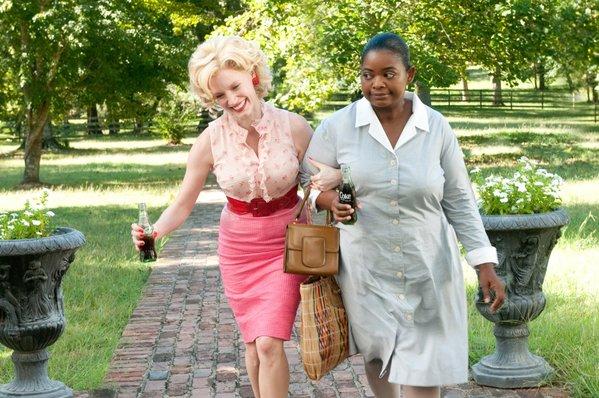
Octavia Spencer may not make audiences weep like Davis does; nevertheless, she too plays marvellously as the feisty, loud-mouth and funny Minny. Furthermore, one can even appreciate the performances of the horrible, racist women, portrayed by Bryce Dallas Howard, Ahna O’Reilly (Herpes Boy, House Under Siege, Girls! Girls! Girls!), Allison Janney (The West Wing, Pretty Ugly People, A Thousand Words), and the other ladies, or the silly, naive Celia, played by Jessica Chastain (Jolene, The Debt, Take Shelter), as they are all performed with brilliant consistency.

A first day at work for Minny (Octavia Spencer) at the house of the over-excited Celia (Jessica Chastain).

Like the quality of the acting, The Help has been put together superbly. At 146 minutes, the film might feel drawn out, but the choreography has been stitched together smoothly and the cinematography is apt for the locations of the movie. What’s more, the music has been chosen well to enhance the scenes, particularly the heart-rending ones.

All-in-all, The Help might drag, but it is an excellent, touching film. The acting is remarkable and the movie epitomises well the attitudes of people, whether Caucasian or African-American, living in the deep-south of America in the early-1960s. In 1963, JFK proclaimed that the struggle for civil rights “will not be finished in the first 100 days. Nor will it be finished in the first 1,000 days, nor in the life of this administration, nor even perhaps in our lifetimes on this planet. But let us begin.” The Help, therefore, enables us to measure how far we have come in almost fifty years because of people like JFK and Skeeter who had the moral courage to start changing people’s attitudes towards African-Americans.

PG’s Tips
Review – The Ides of March (15) [2011]

Star Rating: 4/5

During the campaign to become the President of America, the public and the media tend to focus so greatly on the candidates and their running-mates that the people behind the campaigns frequently fade into the background. The Ides of March, in fascinating fashion, reveals some of the darker arts that go on behind the scenes in presidential races, and why a term synonymous with the assassination date of Julius Caesar is so apt.

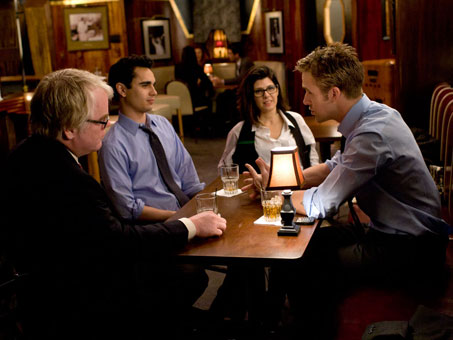
The main men behind Morris’ campaign, Paul (Philip Seymour Hoffman), Ben (Max Minghella) and Steven (Ryan Gosling), sitting and discussing the campaign with the journalist, Ida (Marisa Tomei).

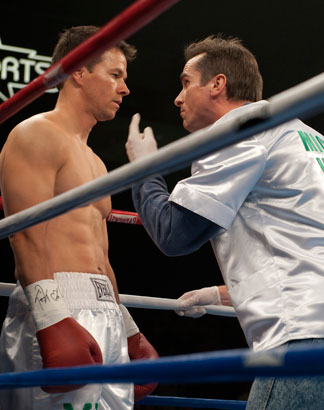
The Ides of March is not a true story. But much of the film, directed by George Clooney (Confessions of a Dangerous Mind, Good Night, And Good Luck, Leatherheads), is based round the unsuccessful run of Clooney’s father, Nick Clooney, for Congress in 2004. The movie centres round Steven (Ryan Gosling – Fracture, Drive, The Big Short), a relatively young and idealistic Junior Campaigns Manager for the Governor of Pennsylvania, Mike Morris (George Clooney – Michael Clayton, The American, Gravity). Morris is in the running for the Democrat presidential nomination, and is up against Senator Ted Pullman (Michael Mantell – A.I. Artificial Intelligence, Ocean’s Thirteen, Ca$h). To gain the necessary number of Democrat delegates for nomination, Steven and his boss, Paul (Philip Seymour Hoffman – Capote, Mission Impossible III, The Master), attempt to court Senator Thompson (Jeffrey Wright – Casino Royale, Source Code, Extremely Loud and Incredibly Close), who holds the delegates for Ohio, a key state for nomination.

However, Tom Duffy (Paul Giamatti – Saving Private Ryan, Cinderella Man, 12 Years A Slave), Pullman’s Campaign Manager, has secretly made an agreement with Thompson, offering the Senator the position of Secretary of State in exchange for his endorsement. For Steven and Paul, the agreement must be broken at any cost. Simultaneously, Duffy pulls a trick or two of his own, with Steven in the thick of it. Thus, the campaign backstabbing begins.

The plot for The Ides of March is not particularly fast-moving, but it is interesting and revelatory. Certain aspects of the storyline might go too far (as some of the scandals would be almost impossible to keep hushed up with the current hawk-like media), but over-all it is plausible. Indeed, it is believable that some campaigners would betray their loyalties for personal gain, hence the film’s title being so fitting.

The pretty intern, Molly (Evan Rachel-Wood), out for a drink with Steven.

Paul and Duffy, the characters played by Philip Seymour Hoffman and Paul Giamatti, respectively, epitomise the modern day Marcus Brutus, the friend-turned-assassin of Caesar. Both, Hoffman and Giamatti, play the ruthless sort of individuals who would use underhand tactics to ensure that their candidate would come to the fore.

Without being outstanding, both actors play very well. Moreover, their characters teach Steven a lesson in the malicious nature of political campaigns and politics in general too. If one leaves the cinema with a bad taste in their mouths about politics, this might reflect the director’s disillusionment with the industry after his father’s failed campaign. Could Steven’s experiences in The Ides of March divulge some of what happened to Nick Clooney in 2004?

Regardless, Steven’s actor, Ryan Gosling, gives a solid performance in the lead role. The changes he goes through, as events around him get nasty, are praiseworthy. It also gives Steven’s personality a third, survival-type dimension that makes his character credible. Yet, Gosling is far from brilliant; he lets himself down when Steven’s with Molly (Evan Rachel-Wood – Thirteen, The Wrester, True Blood), the cute, just-out-of-college intern. Their conversations are, at times, painful to watch, and their exclusion would have benefitted the film.

Surprisingly, George Clooney has only a limited role in The Ides of March. As ever, Clooney’s character, Mike Morris, is smooth-talking and suave (smug as well). But how many times has Clooney churned out this sort of performance? In saying that, Governor Morris also has a shady side, which gives him depth and virtually certifies him as a real (morally dubious) politician. Still though, Clooney’s performance here is one we expect from him, and is, therefore, nothing exceptional.

Governor Mike Morris (George Clooney), looking very presidential, addressing an audience as part of his campaign to become the leader of the free world.

Clooney’s ability to act, direct, produce, and screen-write vary in quality. The directing and the production are fine, even if there is an unexpected amount of silence before and during scenes. The way the movie has been choreographed might seem peculiar as well, since discussions frequently begin a while before the people come together in the scene. That does not make it bad, just unusual. The same is true for the music, which Clooney probably did not use enough to his advantage to enhance scenes or uplift viewers, unlike The King’s Speech.

Nevertheless, Clooney has written the dialogue very well. It may not be on a par with The Social Network, The King’s Speech or True Grit; yet, it is always apt for the scenarios without being melodramatic.

On the whole, The Ides of March is a very decent film about an indecent industry. The world of presidential campaigns is one that often goes unreported, and this movie sheds light (or darkness) upon it. Above-all, just like its title, The Ides of March exposes the ruthless, double-crossing nature of politics and political campaigns, and why it is perhaps not an industry for nice, honest people.

PG’s Tips
Review – Midnight In Paris (12a) [2011]

Star Rating: 3/5

<<guest review by KJF>>

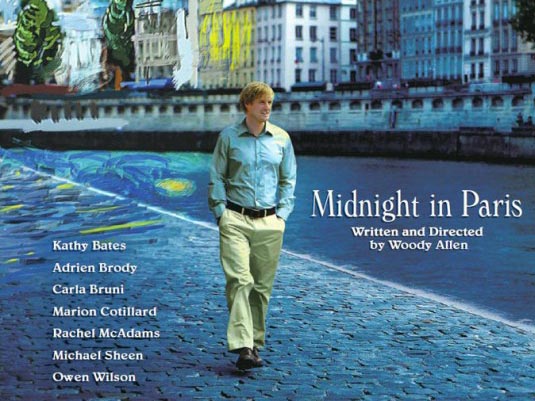
Woody Allen’s popularity at the Box Office has waned of late; some of his recent films didn’t even get a UK distribution. The glory days of Annie Hall and Manhattan seem a long time ago. This, however, is set to change with his delightful romantic fantasy, Midnight In Paris. Owen Wilson (The Royal Tennenbaums, The Wedding Crashers, Little Fockers) plays Gil, a screenwriter who has given up the day-job to write The Big Novel. He’s spending time in Paris with his high-maintenance fiancé, Inez (Rachel McAdams – Mean Girls, The Notebook, State of Play), and her parents, all the while looking for inspiration. Wandering the streets late at night, Gil finds himself transported back to the Parisian world of the 1920s .

Gil (Owen Wilson), Inez (Rachel McAdams) and friends getting a drawn-out talk by Paul (Michael Sheen) in ‘modern day’ Paris.

Allen’s film is a loving homage to Paris. The opening scenes are wordless shots of the city’s famous sites, accompanied by a jazz soundtrack. It also has gentle digs at the tourist culture it has spawned, particularly the behaviour of Americans in Paris: the brash types who just want to shop, eat and don’t bother attempting to learn the language, or know-alls who like to preen around celebrated cultural artefacts and spout off all they know. The latter is wonderfully encapsulated in Michael Sheen’s (The Deal, The Queen, Frost/Nixon) performance as the pompous academic, Paul.

When Gil finds himself in the 1920s, almost everyone he encounters is a famous face from the time. In fact, Allen unleashes a whole parade of illustrious writers and artists from the period, along with a series of knowing in-jokes as they interact with Gil. There’s, for instance, a brooding Ernest Hemingway (Corey Stoll – Law & Order:LA),  a youthful F. Scott Fitzgerald (Tom Hiddleston – ArchipelagoThor, The Avengers Assemble). Gil even gets the majestic Gertrude Stein (Kathy Bates – Misery, Titanic, Alice) to read a draft of his novel. This is overall a wonderful set-up, and Wilson travels through it with engagingly wide-eyed delight. It does occasionally feel a bit schematic as we are introduced from one artistic type to the next, without finding out that much about them. The 1920s scenes, though, are joyously shot whether we’re led through the wonderfully nourish streets or experiencing the lovingly realised parties, full of dancing and Cole Porter songs.

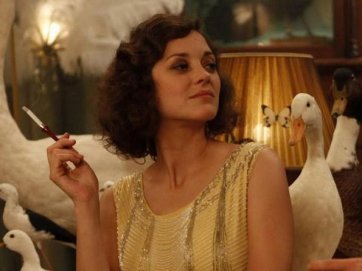
Gil also comes across the beautiful Adriana. She’s played by Marion Cotillard (La Vie en Rose, Inception, Contagion) playing another variant on the ‘dream woman’ as seen in Inception. Naturally he falls in love with her, and finds himself conflicted between the ironically ‘old world’ of 2010 and the beautiful ‘golden age’ of the 1920s.

Adriana (Marion Cotillard), one of the wonders of Paris in the 1920s.

As if just to dazzle us with famous names of the past wasn’t enough, Allen drops into a film a living famous name, in the shape of Carla Bruni, wife of the current French President, Nicholas Sarkozy. She cameos as a rather restrained museum guide. A little casting quirk, which is delightful to spot, but doesn’t add much to the story.

Are Gil’s time-travel exploits just occurring in his head as he seeks to find himself a direction in life? Is the theme of the film that we are all seeking our own personal ‘golden ages’? We are left to ponder these questions. Yet, the journey Allen conjures up is so infectiously entertaining that in the end they don’t really matter.

KJF

Review – Warrior (15) [2011]

Star Rating: 3.5/5

The trailer for Warrior gives the movie the air of another-The Fighter. The comparison is quite natural; both films appear, ostensibly, to be about fighters in a ring. But for many reasons Warrior cannot be equated with the excellent The Fighter.

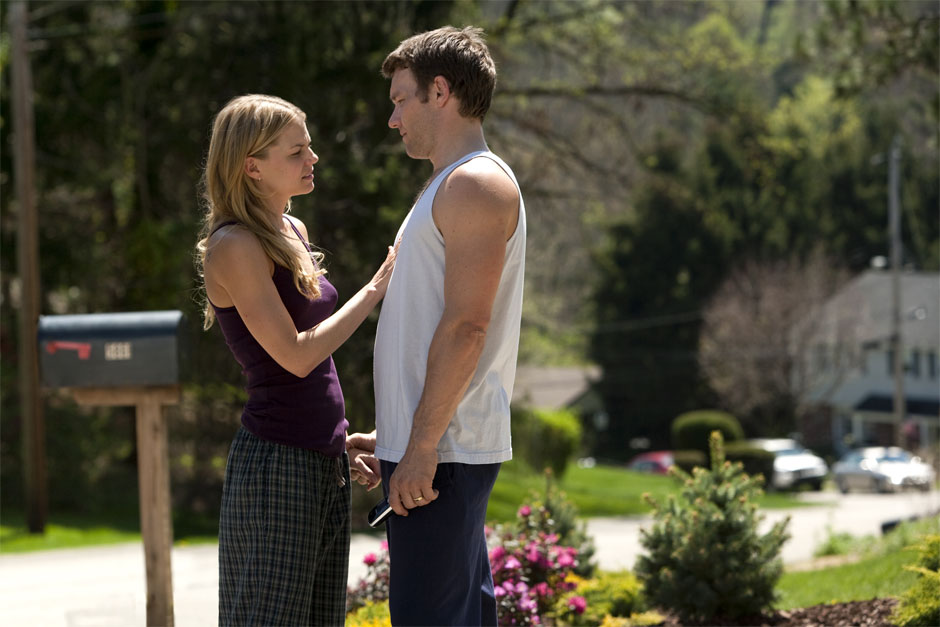
Tess (Jennifer Morrison) with her husband, Brendan (Joel Edgerton), discussing the idea of him fighting again.

Warrior is about two estranged and very different brothers, Brendan (Joel Edgerton – Animal Kingdom, Wish You Were Here, Zero Dark Thirty) and Tommy (Tom Hardy – Bronson, Tinker Tailor Soldier Spy, This Means War), who compete in a mixed martial arts competition. Brendan is a former fighter, but now married to the pretty Tess (Jennifer Morrison – Mr. & Mrs. Smith, Star Trek, Knife Fight), and a high-school teacher by trade. He and his wife are struggling with debts, and the bank is threatening to evict them from their home. Such is their plight, Brendan hires a personal trainer, Frank (Frank Grillo – Minority Report, Mother’s Day, End of Watch), and returns to the ring to make some money.

Tommy enters the competition for different reasons. Tommy has returned home from army duty in Iraq, and needs to be cleaned up from his pill-taking, alcoholic lifestyle. Using his now-sober father, Paddy (Nick Nolte – The Thin Red Line, Hotel Rwanda, The Gangster Squad), who was a boxer in his day, as his trainer, Tommy gets in shape for the competition.

Whilst simple, Warrior’s plot is (painfully) slow. The film is 140 minutes long, and it could feel a lot longer for those who become bored with the movie’s sluggish pace. Also, the last hour becomes predictable and cliché. Some thought that The Fighter became ‘too Hollywood’ by the end. There might be some truth in that; nevertheless that movie is based on a true story, so it cannot, to an extent, be helped. This is not the case for Warrior, meaning it has no excuse for becoming cliché.

Brendan making his comeback in the ring.

Moreover, there are inconsistencies in the storyline, which become ridiculous during the fighting scenes. The background of the main characters, despite being hinted at often, is also (irritatingly) not explained. By the end of the movie, one is no closer to understanding why the brothers became estranged from each other, and their father.

Warrior’s storyline may have its flaws, but the dialogue is very well written and feels realistic. This is aided by the main actors delivering strong and convincing performances. As Brendan, Joel Edgerton does a fine and consistent job, playing a level-headed and resilient man, despite his understandable stresses. No-one would realise that Edgerton is Australian either from this performance, as his soft Pittsburgh accent remains intact throughout the film.

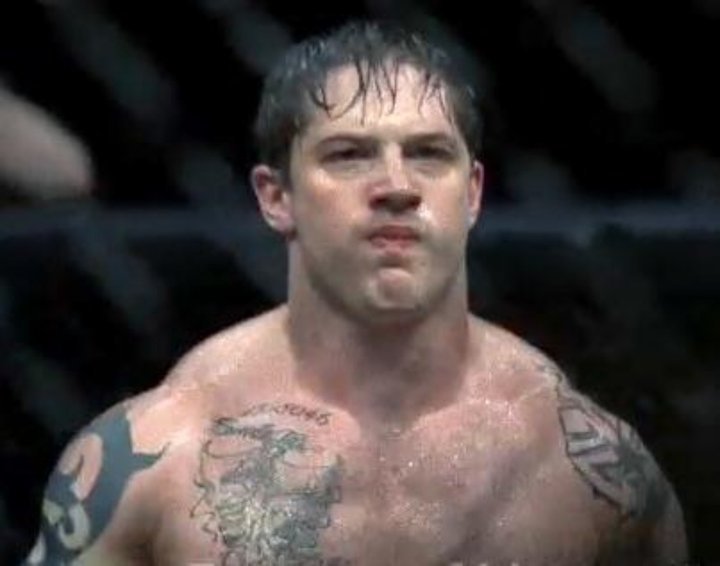
Similarly, no-one would know that Tom Hardy is English from Warrior. As Tommy, Hardy admirably plays a troubled, insecure and aloof individual, who gets through his days by drinking and taking drugs. Tommy may not be a kind character, but the way he walks with his head down, and the dark circles under his eyes are indicative of his internal difficulties.

It is a shame for Hardy (and Edgerton for that matter) that their characters’ backgrounds are not dealt with, because that would have, perhaps, enhanced their respective characters from two-and-a-half to three dimensions. Furthermore, for Hardy, playing a drug addict draws (unfair) parallels with Christian Bale’s Oscar-winning performance in The Fighter. In this proxy fight before they go head-to-head in The Dark Knight Rises, as Bane and Batman, respectively, it is the latter who comes out on top. This is because Hardy has a less-challenging role as the lazy, slurring stoner, whilst Bale played the demanding crazy, brimming-with-energy crack addict.

The leading actors give worthwhile performances in Warrior, and the same can be said for the supporting cast, particularly Nick Nolte and Jennifer Morrison, even if they vary slightly in quality. Nolte, playing a reforming alcoholic who has found Jesus, plays very well when on screen. When he shows emotion, one does genuinely empathise with Paddy’s predicament (even if he has brought most of his problems upon himself). Surprisingly, one does not feel similarly vis-à-vis Morrison’s character, Tess. This is partly because Tess has not been given much personality, and because Morrison doesn’t make one feel the desperate nature of Tess’s situation.

The younger brother, Tommy (Tom Hardy), at the tournament. His muscular frame suggests that he’s ready to take on anyone.

Lastly, director Gavin O’Connor (Tumbleweeds, Miracle, Pride & Glory) has put Warrior together quite well. The scenes flow smoothly one after the other, but the choice of music is perplexing. For much of the first half of the film, there is little music (which is fine); yet, the second half is filled with a bizarre mix of standard boxing music and a Beethoven symphony. Beethoven and martial arts are a curious mix.

All-in-all, Warrior is an agonisingly slow film and pitiably cliché. It has acting of great quality, but by not elucidating upon the characters properly O’Connor misses the chance for his movie to be potentially nominated for awards. The Fighter had no such deficiencies. One nil to Batman.

PG’s Tips

Review – Sarah’s Key (12a) [2011]

Star Rating: 4/5

<<guest review by KJF>>

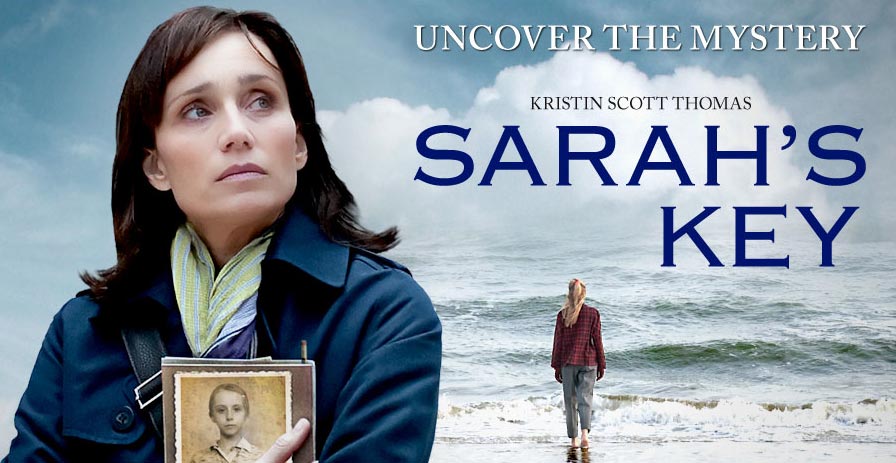
Sarah’s Key, directed by Gilles Paquet-Brenner (Pretty Things, Payoff, Walled In), is a powerful study of the impact of the Holocaust on one person’s life. Julia Jarmond (Kristin Scott-Thomas – Four Weddings and a Funeral, Nowhere Boy, Tell No One) is an American journalist living in Paris and married into a well-to-do French Family, with a teenage daughter. About to inherit a flat from her husband’s family, she gradually discovers that the flat has an unpleasant history – that it once belonged to a Jewish family until they were forcibly evicted and rounded-up by officials of the Nazi-collaborationist Vichy regime on 16th July 1942.

Julia (Kristin Scott-Thomas) make alarming discoveries about the past.

The film operates on two narrative levels – Julia’s own revelations in the present, coupled with the fate of that family seen through the eyes of 10 year-old Sarah Starzynski (Melusine Mayance – Ricky). Whereas some films that employ a multi-narrative focus can become confusing to the viewer, skilful editing allows the story here to be told in a straightforward and effective way.

Sarah’s story is truly a harrowing one. Before the French police can see them, she locks her younger brother in a bedroom cupboard, taking the key with her and determined to come back. She and her parents are taken to the sports stadium, the Velodrome d’hiver, which for three days became a makeshift concentration camp for thousands of Jews, until they were transferred to other internment facilities.

Without operating on a massive budget, Paquet-Brenner allows the viewer to be immersed in this terrible situation, providing a shocking snapshot of life within the ‘Vel d’hiver’ – the appalling sanitary conditions, the lack of space and the awful uncertainty faced by all the internees as they awaited their fate. There is occasional bravery and foolhardiness, as one inmate carries out a daring escape. Sarah’s fate, and the travails she has to endure are also portrayed with a hard-hitting immediacy. She and her parents are transferred to the Beane-la-Rolande camp outside Paris. After being separated from her parents, who are sent unknowingly to Auschwitz, she and another child escape the camp. Sarah finally achieves a kind of freedom.

But even in later life, she is haunted by the events of the past. Mayance plays Sarah with enormous charisma – we are totally engrossed in her fate. Charlotte Poutrel who plays Sarah in later life imbues her with both moving dignity and tangible personal trauma.

Sarah (Melusine Mayance) in happier times.

Meanwhile in the present, Julia faces her own struggles and is forced to re-evaluate her own life as she asks questions that her in-laws would prefer were not asked, representing the general unease felt in some areas of French society about the events of the 1940s.She also faces up to the reality of her unhappy marriage – she becomes pregnant, which her husband, preoccupied by work, is painfully indifferent about. She goes on a personal quest to find out more about the fate of Sarah and her family, which leads her to New York and Italy where she finally meets Sarah’s son, played by Aidan Quinn (Blink, Legends of the Fall, Unknown), who knows little of his mother’s fate.

Next year is the 70th anniversary of the round-up of French Jews, which has also prompted another film on the subject, La Rafle (The Round-Up). There, the narrative is squarely based in the 1940s and has more of a documentary-style feel as scenes depicting Hitler and Himmler, and machinations of the Vichy authorities are run alongside the awful fate of the Jewish families. That leads to an informative and disturbing film, but somewhat distant. Here the pain and stoicism Scott-Thomas portrays in her performance provides an intensely personal and unifying emotional core to the film. As the fate of Sarah unfolds for her, so it does for us, staying with us long after the cinema has been left.

KJF

Review – The Fighter (15) [2011]

Star Rating: 4.5/5

‘Why do we fall down, Bruce? So we can learn to pick ourselves up.’ Thomas Wayne may have asked his son this question in Batman Begins; yet, the question (and subsequent answer) is an equally valid motto for another excellent movie: The Fighter.

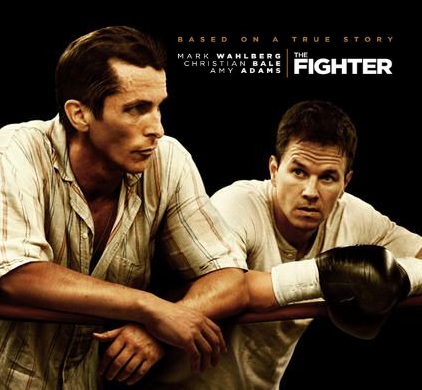
The Fighter is based on a true story. Mickey Ward (Mark Wahlberg – The Lovely Bones, The Italian Job, We Own The Night) comes from a deprived area in Lowell, Massachusetts. He is a street-sweeper by trade and an aspiring boxer on the side, struggling to make an honest buck. Mickey has been taught everything he knows by his older brother, Dickey (Christian Bale – The Machinist, The Dark Knight, 3:10 To Yuma), who is an ex-boxer that never quite made it big. In recent times, Dickey has become a crack-addict. As much as he is Mickey’s best aid, Dickey is also his brother’s greatest liability. Mickey’s mother and manager, Alice (Melissa Leo – Hide and Seek, Conviction, Red State), as well as the rest of this family (possibly minus his father), are not much better either.

Mickey does and, simultaneously, does not have the right kind of support. His confidence is low; he hasn’t done well in his previous fights. He’s struggling. It’s only after he meets Charlene (Amy Adams – Catch Me If You Can, Enchanted, The Master), a not unattractive college drop-out with little going for her; takes a battering against a boxer with twenty pounds more muscle on him; and after he recovers from a broken hand, that Mickey’s fortunes begin to change for the positive. But it does not come without an immense amount of hard work and sacrifice.

The plot may not move at breakneck speed, but it is still quite inspiring and entertaining. The quality of the acting by Mark Wahlberg, Amy Adams and Christian Bale is undoubtedly the best feature of the film. Due to Wahlberg’s performance, one has little difficulty empathising with Mickey. Wahlberg wonderfully captures the timidity of a humble person that suffers from low confidence and dejection, without being melodramatic. Likewise, Wahlberg maintains his character’s dignity admirably when he regains his self-assurance. This is no easy feat. Why Wahlberg was not nominated for an Oscar is a mystery.

One who was nominated for an Oscar is Amy Adams. Here, she plays the role of Mickey’s highly supportive girlfriend splendidly. Charlene has her issues as well, buttressing Adams’ performance because it makes her act more realistically. The only thing that works against Adams is that Charlene does not have an overly challenging personality. This may stop Adams from an Oscar triumph.

The same cannot be said for Christian Bale’s acting in The Fighter. In arguably his finest performance yet, Bale outshines his co-stars. When he’s not on-screen, one almost wishes him to return as he is that good. One could feasibly believe that Bale is a drug-addict from this movie, such is the intensity and energy he puts into the role. (And this is saying something for a man who has played many diverse roles extremely well throughout his career.) If he wins an Oscar for Best Supporting Actor, it will be fully justified.

The cast could not have acted so well without brilliant scripts. For this, credit must go to the script-writer, Scott Silver (8 Mile), and the director, David O. Russell (Three Kings). The scripts may not be as elegant and witty as that in The King’s Speech, or as intelligent as that in True Grit. Still, the dialogue between the characters in The Fighter is indicative of the environment from which Mickey, Dickey and Charlene come from, and, therefore, gives the movie a greater sense of realism.

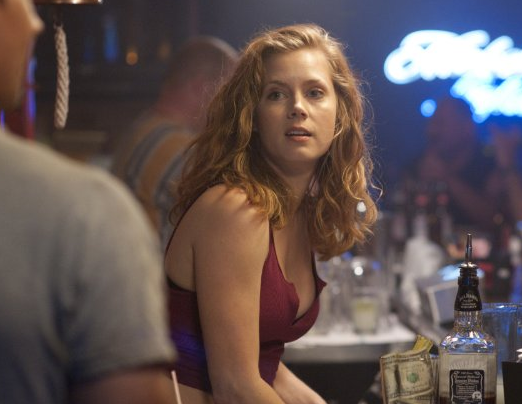
Charlene (Amy Adams) at the bar where she meets Mickey.

If one were to be ruthless, one could argue that the choreography and the music in The Fighter were not as sublime as the above films. Some scenes did not flow as smoothly as they could have done; and, with regards to the feel-good factor, the music here was not as uplifting as the scores in The King’s Speech. Similarly, it is also a shame for the director that the cinematography could not have been as beautiful as in other films (for example The Way Back), since The Fighter is shot in depressing neighbourhoods. This should not, theoretically, take anything away from the film. Nevertheless, seeing miserable areas is not as aesthetically pleasing as picturesque landscapes. Again though, this is being very harsh (and semi-unfair) on the director.

All-in-all, The Fighter, despite some minor defects, is a fantastic film and has a cast worthy of their nominations; Bale particularly so. The movie also has plenty of moral messages. It illustrates how bad environments can hinder one’s progress and shows us the possible results of drug addiction. But most importantly of all, The Fighter emphasises that when one gets knocked down by life’s challenges, one has to learn how to stand up again and fight on.

PG’s Tips