Tag Archives: film

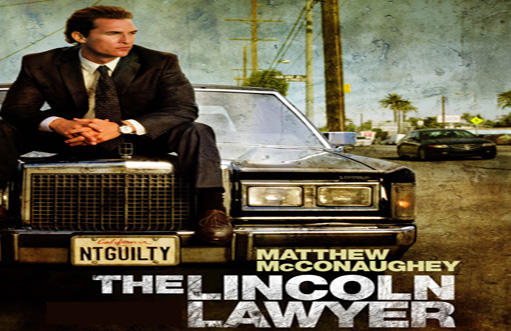
Review – The Lincoln Lawyer (15) [2011]

Star Rating: 4/5

There have not been many legal-thrillers made in recent years. The Reader and The Social Network are two that spring to mind. The Lincoln Lawyer is not, over-all, as good as those two films, but it certainly gives one value for money.

The Lincoln Lawyer is based on the book by Michael Connelly. It is about a smooth-talking, alcoholic defence lawyer, Mick Haller (Matthew McConaughey – Ghosts of Girlfriends Past, How To Lose A Guy In Ten Days, The Wolf of Wall Street), whose job is to keep criminals on the street. He’s quite good at it too – and knows it – which is why Lewis (Ryan Phillippe – Cruel Intentions, Breach, Flags of our Fathers), a thirty-two year old man from a wealthy family, demands that Mick represent him. Lewis has been charged with violent assault and rape against a prostitute; although, Lewis is adamant that he has been set up. Yet, no sooner does Mick agree to represent Lewis when things begin to get murky and twisted.

The prostitute giving Lewis her address, before he allegedly beats her up and rapes her at knife-point.

For a film that is dominated by courtrooms and legal technicalities, The Lincoln Lawyer is surprisingly interesting even to those who care little for the law. The plot is gripping and relatively simple to follow, provided the viewer is concentrating. At times, one may wonder which law-case Mick is referring to. The storyline also has a couple of flaws and things always seem to work out coincidentally well for Mick (as they tend to do for main characters in films), but not to the extent that the movie becomes ridiculous by any stretch of the imagination.

The plot is aided by very good choreography and a dialogue that is generally well-written. The director, Brad Furman (The Take), and the script-writer, John Romano (Intolerable Cruelty, Prodigy), have certainly done their homework and appear to have quite a solid knowledge of American federal law as well as Californian state law. (I do not know enough about such matters to be able to pass a proper judgement. I can only get a feel for the American legal system based on what has been said throughout the film.) There are a handful of sensationalist lines that obviously would not be said in a real court; yet, this does not take too much away from the script’s over-all quality.
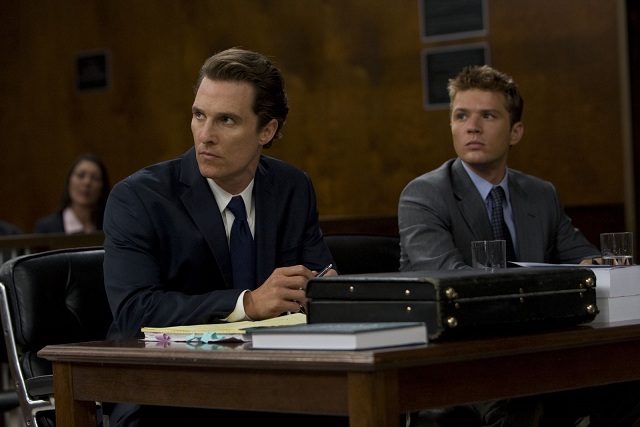
Mick representing Lewis in court.

The script’s main beneficiary is Matthew McConaughey. McConaughey plays very well as a conceited barrister. (One should be aware that a common theme in movies is to make the main character look good by placing him/her next to or against weaker actors. In The Lincoln Lawyer, particularly in the courtroom scenes, McConaughey comes up against a less competent barrister than himself. The director also gives McConaughey the last word in the vast majority of the scenes, which makes him stand out more than he should.) Although McConaughey’s performance is not quite worthy of an Oscar nomination due to a lack of depth in Mick’s character; he illustrates that he is versatile and far from doomed to solely play hopeless-romantic roles like the one he did in How To Lose A Guy In Ten Days.

Without a doubt, McConaughey outshines Ryan Phillippe, the main supporting actor in The Lincoln Lawyer. Philippe does an alright and competent job; but has not really enhanced his reputation as an actor much here. Just like in Cruel Intentions, he plays here a spoilt rich kid needing to get his way. In all of his films, including Breach (wherein he plays a spy), Philippe conveys the same passion. In addition, he has the same scrunched-up facial expression that does him no favours. In Philippe’s defence, one can argue that he is not given the tools or the time to express himself in order to make the audience empathise with Lewis’ situation. But this is not a convincing argument; especially considering that Melissa Leo won an Oscar for Best Supporting Actress after having less time on the screen in The Fighter than Phillippe did here.

All-in-all, The Lincoln Lawyer is certainly worth watching. It is entertaining and, seemingly, portrays the American legal world quite accurately; despite being a little theatrical on occasions. Indeed, by the end one should leave the movie feeling very satisfied.

PG’s Tips
Review – The Adjustment Bureau (12a) [2011]

Star Rating: 2/5

Some critics proclaimed that The Adjustment Bureau was a fine amalgam between the Bourne series and Inception. Well, it bears no resemblance to either film. Moreover, it is a poorly executed movie in just about every sense.

The Adjustment Bureau begins with Congressman, David Norris (Matt Damon – The DepartedTrue Grit, Contagion), running for a seat in the Senate. On election night, he goes to the toilet to prepare a speech when he bumps into Elise (Emily Blunt – The Devil Wears Prada, Young Victoria, The Wolfman). Attraction is instant, but Elise leaves without giving David her contact details.

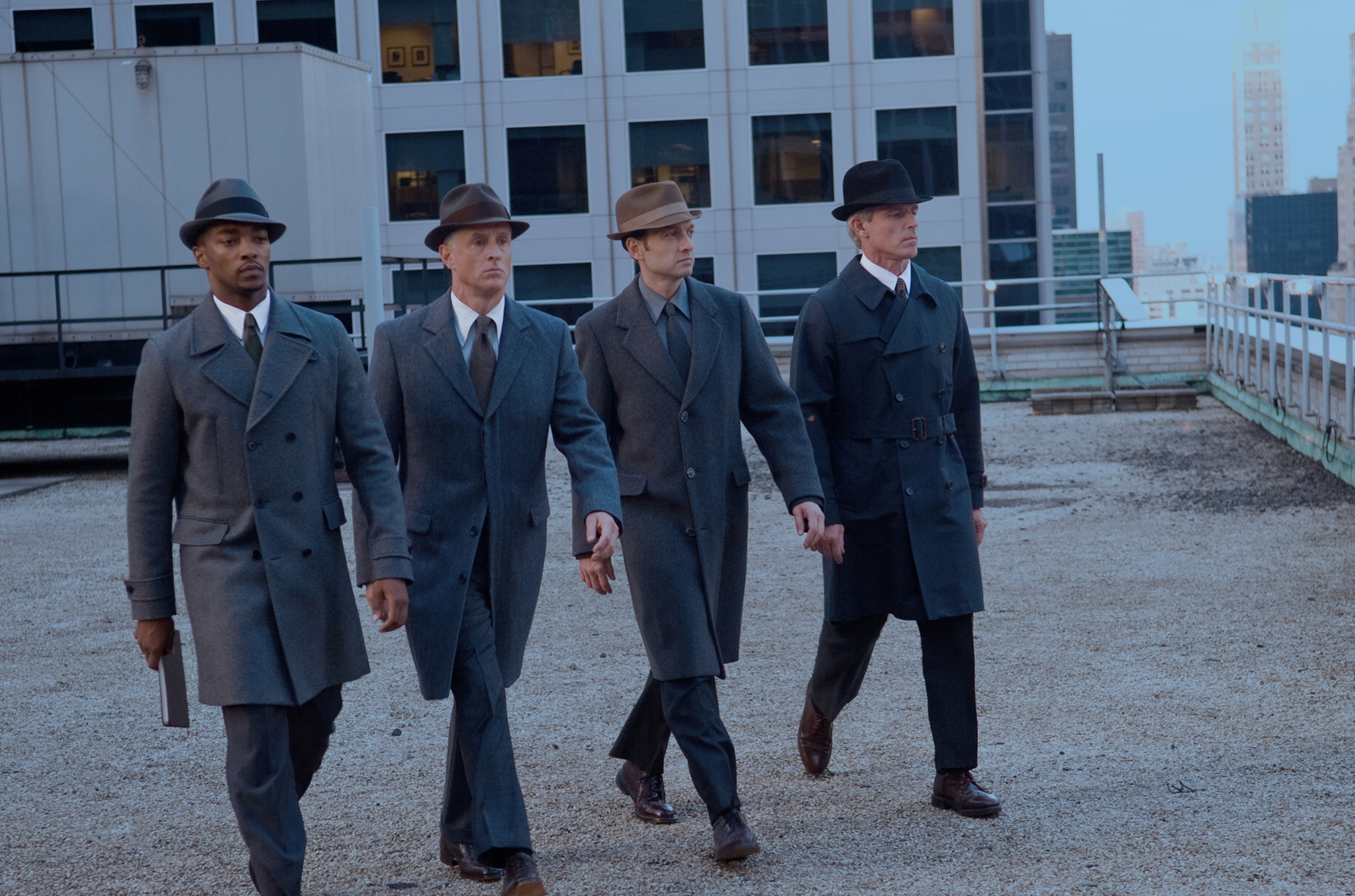
The agents who work for the Chairman. It is their job to 'adjust' peoples' fates to ensure they fit in with the Chairman's grand design for humanity.

Coincidentally, soon afterward in the film, they meet again on the bus; and this time David acquires her number. Yet, after leaving her, David comes across some people he was not expecting to meet. These men are agents who ‘adjust’ people’s futures in order to follow the plans set forth by the Chairman (God?). They inform David that he was not supposed to have met Elise for a second time and that he can never see her again. But David is determined to be with Elise; even if it means forfeiting his political ambitions. This, in turn, sets him on a collision course with powers greater than mankind.

The plot for this movie rapidly descends into a cliché love-story that tests the patience of those who believed that they were going to watch something a little more original and intellectually stimulating. The director, George Nolfi, to some extent tries to play to a more academic-minded audience by including the debate of free-will vs. God’s divine master-plan in the film. (Although, if anyone thinks that this debate is new, let’s bear in mind that it has been discussed regularly since the Middle Ages or, even more likely, since the Bible was written.) Yet, by only dealing with this debate vis-à-vis the love-story, Nolfi has ensured that all highly complex discourse on the subject appears only at a superficial level. It could have and should have been done better; especially when one bears in mind that this is the same man who wrote a well-crafted script for The Bourne Ultimatum.

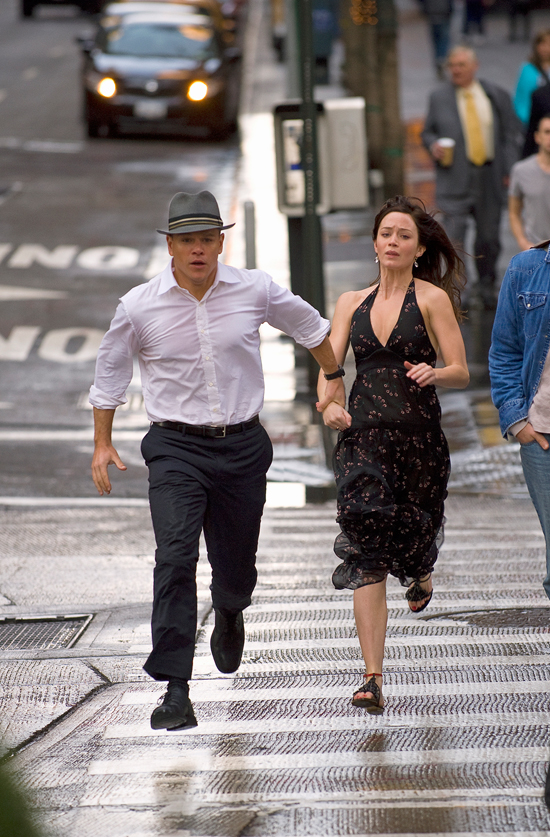
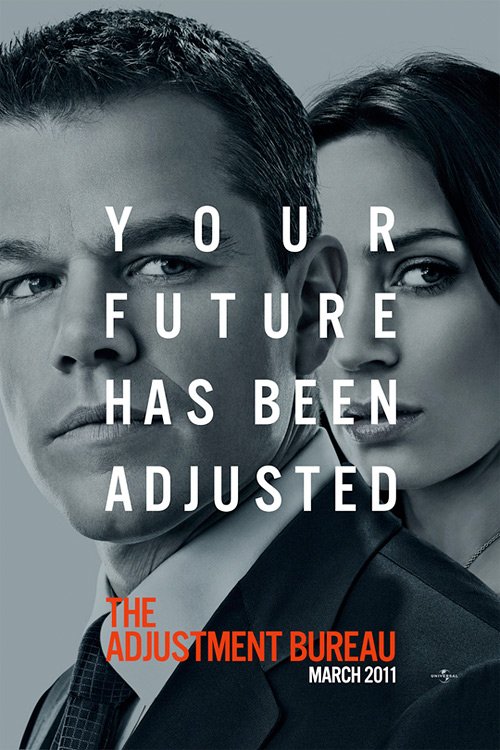
David and Elise running frantically from the Chairman's agents so that they can be together.

Alike the debate, the dialogue is equally vain throughout The Adjustment Bureau. The acting is not much better either. Matt Damon gives his role a decent punt. Nevertheless, one questions why he chose to do this role in the first place. For the lesser known Emily Blunt, it is obvious why she has been chosen. But apart from looking pretty and having an over-all good physique, her performance is little better than her showing in the dreadful film, The Wolfman. Indeed, if it were not for her above-mentioned featured, plus her striking blue eyes and wonderful English accent; it is hard to see how she will ever be able to reach the dizzying heights that Natalie Portman has achieved in recent times.

The rest of the cast, particularly the Chairman’s agents, are woeful. Similarly, the special effects are pitiable because they look unreal. (Special effects have to at least give the façade of looking like they might be genuine.) The cinematography is not worth commenting upon as it is virtually non-existent. The choreography, on the other hand, has been pieced together smoothly, which enables the viewer to follow the plot easily.

How The Adjustment Bureau has been advertised as ‘Bourne meets Inception’ is beyond belief and nothing more than a marketing con. The Adjustment Bureau looks like it has been done on the cheap. It may try to be intelligent; yet that does not mean that it warrants comparisons to the aforementioned high-class films. The Adjustment Bureau needs a more original storyline; plus better acting, dialogue, special effects and care as a starting-point before it can be put into in the same bracket as the Bourne series or Inception.

PG’s Tips

Review – Unknown (15) [2011]

Star Rating: 3/5

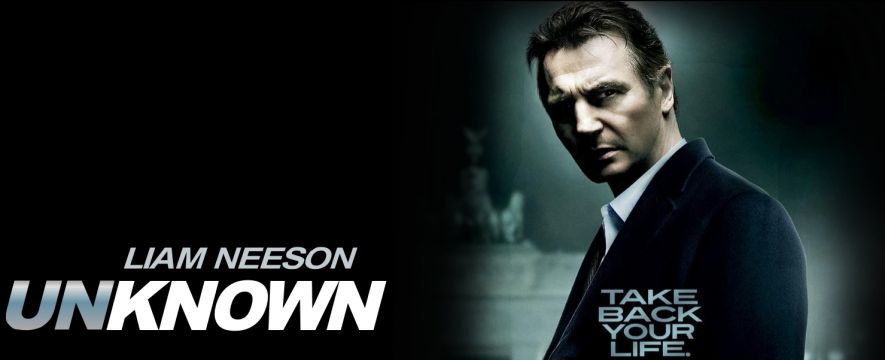
After viewing the trailer for Unknown, one gets the impression that they’ve seen this type of action film before. One knows the movie won’t be great, but will probably be worth the watch. On this premise, Unknown does not let the audience down.

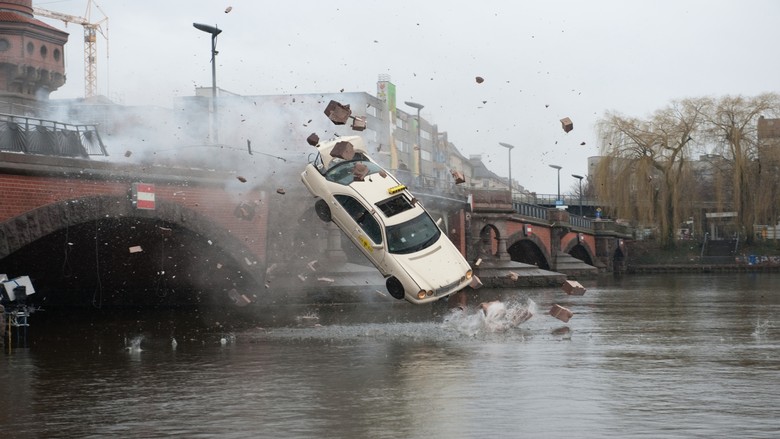
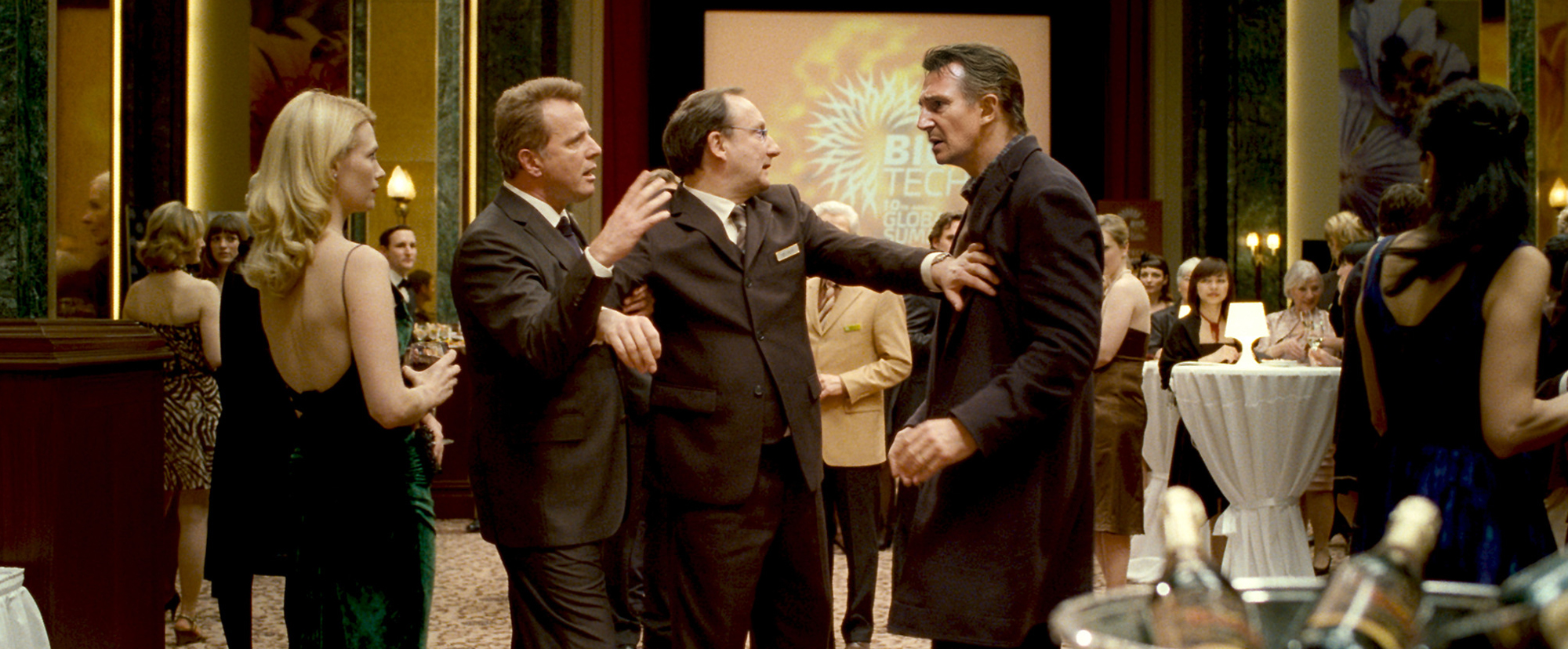
The car crash that leaves Dr. Martin Harris, played by Liam Neeson, in a coma for four days.

The film revolves around Dr. Martin Harris (Liam Neeson – Schindler’s List, Star Wars I, The Dark Knight Rises), a researcher/lecturer who is in Berlin for a conference, with his wife, Liz (January Jones – Madmen, American Pie: The Wedding, Anger Management). Martin realises, once he’s at the hotel he’s due to stay at, that he has left a suitcase at the airport. On his way back to the airport, an accident occurs. A fridge-freezer falls out of the van in front of the cab. The cab driver, Gina (Diane Kruger – Troy, National Treasure I & II, Inglorious Basterds), swerves out of the way; but loses control of the vehicle. The car smashes into a boundary on a bridge and crashes into the lake.

When Martin wakes up, he’s in hospital after spending four days in a coma. No-one has come to look for him, including his wife. Martin releases himself early from hospital so as to find Liz. However, when he finds her, she maintains that she’s never seen him; plus she is with another man who also claims to be Dr. Martin Harris (Aiden Quinn – Wild Child, Legends of the Fall, Frankenstein). Without ID ‘the real’ Dr. Martin Harris has no way of proving his identity. To compound matters for the ‘real Martin’, he soon discovers that people are after him and he has no clue why.

The plot for Unknown is entertaining and fast paced, despite having many loose-ends. It also has car chases so far-fetched that those in The Fast And The Furious series may not look so ridiculous anymore. The twist is not unpredictable either, but this does not ruin the film.

The ‘real Dr. Martin Harris’ being taken away by security after his wife, Liz, claims that she doesn’t recognise him.

The quality of the acting is about as good as the storyline. Liam Neeson plays decently enough as usual; although this is far from his most challenging role. As January Jones and Aiden Quinn don’t appear much on screen, it’s hardly fair to judge them. The same can be said for Bruno Gantz (who plays Adolf Hitler in Downfall; The Reader) and Frank Llangela (Superman Returns, Frost/Nixon, Wall Street 2).

The only other actor with a notable role in Unknown is Diane Kruger. Despite looking pretty (and skinny) throughout the movie, her Bosnian accent is hardly plausible. It is interesting that the director, Jaume Collet-Serra (Orphan, House of Wax, Goal II: Living The Dream), chose to play her as a Bosnian when filming in her native country. Then again, one does suppose that actors are paid to act. If that is the case then Kruger’s performance is not much better than her Bosnian accent. It is also hard to imagine one behaving in the way Gina does; especially once she grasps the reality of Martin’s situation.

All in all, Unknown is a distinctly average movie that is fun and entertaining. It is a light film devoid of complexity and quality; yet, filled with action and a solid performance from Liam Neeson.

PG’s Tips

Review – The Fighter (15) [2011]

Star Rating: 4.5/5

‘Why do we fall down, Bruce? So we can learn to pick ourselves up.’ Thomas Wayne may have asked his son this question in Batman Begins; yet, the question (and subsequent answer) is an equally valid motto for another excellent movie: The Fighter.

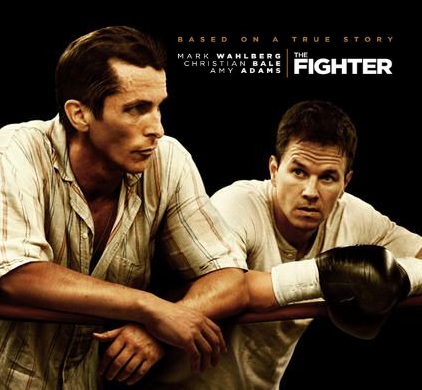
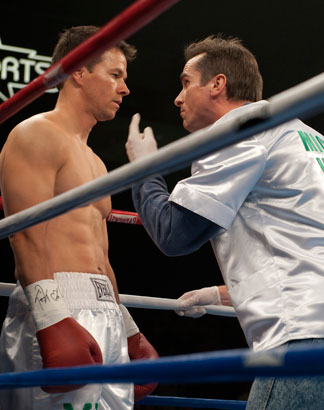
The Fighter is based on a true story. Mickey Ward (Mark Wahlberg – The Lovely Bones, The Italian Job, We Own The Night) comes from a deprived area in Lowell, Massachusetts. He is a street-sweeper by trade and an aspiring boxer on the side, struggling to make an honest buck. Mickey has been taught everything he knows by his older brother, Dickey (Christian Bale – The Machinist, The Dark Knight, 3:10 To Yuma), who is an ex-boxer that never quite made it big. In recent times, Dickey has become a crack-addict. As much as he is Mickey’s best aid, Dickey is also his brother’s greatest liability. Mickey’s mother and manager, Alice (Melissa Leo – Hide and Seek, Conviction, Red State), as well as the rest of this family (possibly minus his father), are not much better either.

Mickey does and, simultaneously, does not have the right kind of support. His confidence is low; he hasn’t done well in his previous fights. He’s struggling. It’s only after he meets Charlene (Amy Adams – Catch Me If You Can, Enchanted, The Master), a not unattractive college drop-out with little going for her; takes a battering against a boxer with twenty pounds more muscle on him; and after he recovers from a broken hand, that Mickey’s fortunes begin to change for the positive. But it does not come without an immense amount of hard work and sacrifice.

The plot may not move at breakneck speed, but it is still quite inspiring and entertaining. The quality of the acting by Mark Wahlberg, Amy Adams and Christian Bale is undoubtedly the best feature of the film. Due to Wahlberg’s performance, one has little difficulty empathising with Mickey. Wahlberg wonderfully captures the timidity of a humble person that suffers from low confidence and dejection, without being melodramatic. Likewise, Wahlberg maintains his character’s dignity admirably when he regains his self-assurance. This is no easy feat. Why Wahlberg was not nominated for an Oscar is a mystery.

One who was nominated for an Oscar is Amy Adams. Here, she plays the role of Mickey’s highly supportive girlfriend splendidly. Charlene has her issues as well, buttressing Adams’ performance because it makes her act more realistically. The only thing that works against Adams is that Charlene does not have an overly challenging personality. This may stop Adams from an Oscar triumph.

The same cannot be said for Christian Bale’s acting in The Fighter. In arguably his finest performance yet, Bale outshines his co-stars. When he’s not on-screen, one almost wishes him to return as he is that good. One could feasibly believe that Bale is a drug-addict from this movie, such is the intensity and energy he puts into the role. (And this is saying something for a man who has played many diverse roles extremely well throughout his career.) If he wins an Oscar for Best Supporting Actor, it will be fully justified.

The cast could not have acted so well without brilliant scripts. For this, credit must go to the script-writer, Scott Silver (8 Mile), and the director, David O. Russell (Three Kings). The scripts may not be as elegant and witty as that in The King’s Speech, or as intelligent as that in True Grit. Still, the dialogue between the characters in The Fighter is indicative of the environment from which Mickey, Dickey and Charlene come from, and, therefore, gives the movie a greater sense of realism.

Charlene (Amy Adams) at the bar where she meets Mickey.

If one were to be ruthless, one could argue that the choreography and the music in The Fighter were not as sublime as the above films. Some scenes did not flow as smoothly as they could have done; and, with regards to the feel-good factor, the music here was not as uplifting as the scores in The King’s Speech. Similarly, it is also a shame for the director that the cinematography could not have been as beautiful as in other films (for example The Way Back), since The Fighter is shot in depressing neighbourhoods. This should not, theoretically, take anything away from the film. Nevertheless, seeing miserable areas is not as aesthetically pleasing as picturesque landscapes. Again though, this is being very harsh (and semi-unfair) on the director.

All-in-all, The Fighter, despite some minor defects, is a fantastic film and has a cast worthy of their nominations; Bale particularly so. The movie also has plenty of moral messages. It illustrates how bad environments can hinder one’s progress and shows us the possible results of drug addiction. But most importantly of all, The Fighter emphasises that when one gets knocked down by life’s challenges, one has to learn how to stand up again and fight on.

PG’s Tips

Review – Paul (15) [2011]

Star Rating: 1/5

Films involving aliens are usually slammed by critics for a reason. Granted, normally such movies are about alien invasions rather than comedies. Paul might be a comedy; but it still deserves as much ridicule as every other alien invasion movie that has gone awry.

Paulis about Graeme (Simon Pegg – Shaun of the Dead, Hot Fuzz, Mission: Impossible IV – Ghost Protocol) and Clive (Nick Frost – Shaun of the Dead, Hot Fuzz, Snow White and the Huntsman), two lame, comic-book, sci-fi nerds who are on a caravan road-trip of the west-coast of America. They intend to see the locations of sightings of UFOs and other weird events that have taken place in America, which they’ve read about. The trip is seemingly going according to plan, when they stumble across a stereo-typical looking alien. His name is Paul and he has a thick Californian accent (voice by Seth Rogen – Donnie Darko, Knocked Up, Steve Jobs). Paul is rude; he smokes and behaves like a douche.

Within a short time, Paul asks Graeme and Clive if they can help him reach the place where his spaceship will pick him up. The two men (so thrilled to meet an alien after reading so much about them over the years) agree; even if it does take them off-course. Yet, no sooner have they agreed when they learn that the cops, notably Llorenzo Zoil (Jason Bateman – Smokin’ Aces, Forgetting Sarah Marshall, Hancock), are following them in order to capture the alien.

The main characters, including Ruth (Kristen Wiig), far left, and Tara (Blythe Danner), far right, looking up at the bright lights in the night sky. Is it the spaceship to take Paul home?

The storyline may sound entertaining and amusing; but it is far from either. The acting from the entire cast is pathetic, and few of the jokes are funny. Although most people would not imagine an alien to behave like Paul does; the humour is shallow. Paul frequently resorts to swearing in a vain attempt to make people laugh. In addition, the other main characters rarely force a smile from the audience. They are so sad and odd that one finds it hard to identify with them.

The acting and dialogue are definitely the worst parts of the film. The choreography is quite decent, but nothing of note. As for the special effects and cinematography: let’s not go down there. They may not be as bad as other aspects of the movie; but, still, one would be surprised if the director, Greg Mottola (Superbad, Adventureland), recognised that such things existed after watching a film like Paul.

In short, Paul is an early candidate for disaster movie of the year. It has no redemptive features; and, above-all, as a comedy, the film fails to do its prime duty: to make the audience laugh.

PG’s Tips

Review – True Grit (15) [2011]

Star Rating: 5/5

Less than four years since they made the Oscar-winning No Country For Old Men, the Coen brothers, Ethan and Joel (A Simple Man, Burn After Reading), have returned to the ‘cowboy genre’ with a bang (pardon the pun). No Country For Old Men was a brilliant film. True Grit is even better.

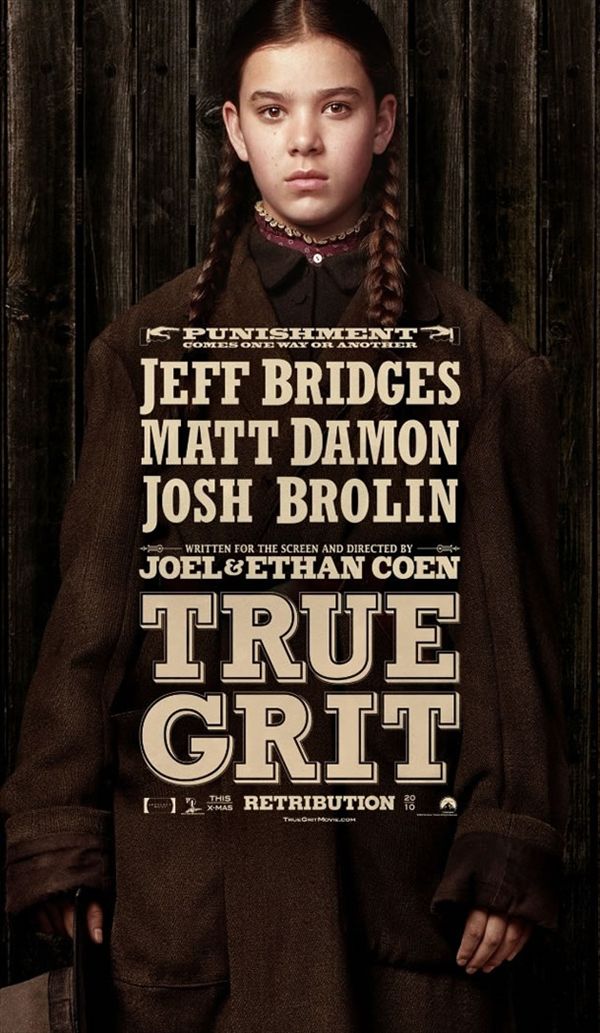
The plot for True Grit is quite straightforward. Based in a small town in Midwest America in the late-nineteenth century, Tom Chaney (Josh Brolin – No Country For Old Men, Wall Street 2, American Gangster) killed Frank Ross in cold murder. Frank’s extremely intelligent, precocious fourteen-year-old daughter, Mattie (Hailee Steinfeld), is determined to have her father’s death avenged. After the local law enforcement agency refuses to chase Chaney, Mattie employs Rooster (Jeff Bridges – Crazy Heart, The Big Lebowski, Seventh Son), a drunk and ruthless cowboy to find Chaney.

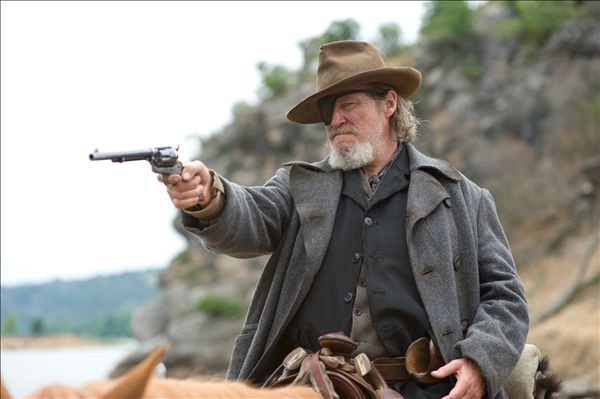
A drunk Rooster, played by Jeff Bridges, trying to shoot accurately on the back of a horse.

As Mattie strikes a deal with Rooster; Laboeuf (Matt Damon – The Bourne Identity, The Departed, Invictus), a dumb but wily Texan Ranger emerges. Laboeuf also wants Chaney. The latter is wanted in Texas for the murder of a senator. Despite some differences on where Chaney should be tried (Mattie wants him to be put to justice in her town, while Laboeuf needs to bring him back to Texas or else he won’t get paid), Mattie, Rooster and Laboeuf head off together in search of their man.

If the storyline does not make one believe that True Grit should have been a five-star film, the flawless and Oscar-worthy acting certainly will. Jeff Bridges splendidly captures the attitude, habits and language of an aging, drunk-but-funny, Midwest, trigger-happy cowboy. Similarly, Matt Damon illustrates that being a far-from-bright ranger on a horseback comes just as naturally to him as being the secret agent, Jason Bourne.

Yet, the performances of Bridges and Damon are cast into the shadows by that of Steinfeld. If the star of No Country For Old Men was the frighteningly serene villain with red-rimmed-eyes, played by Javier Bardem, then Steinfeld is the stand-out entertainer of True Grit. Mattie’s ability to understand the complexities of law; her ability to see through people as if they were opaque, plus her witty tongue are all down to the proficiency of Steinfeld. It almost beggar’s belief that Mattie was played by a fourteen-year-old! Indeed, one will struggle to witness a more assured and mature performance from someone of her age over the coming decade.

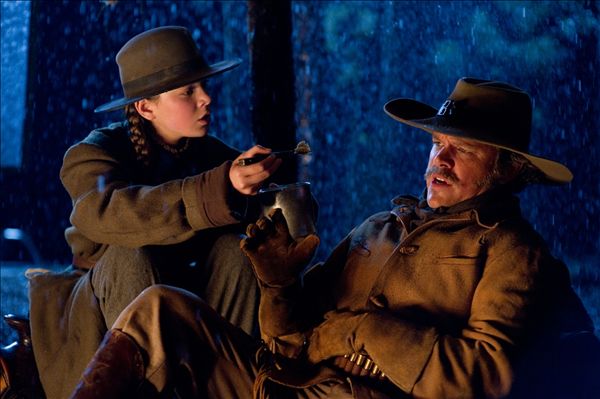
Mattie attempting to feed the ill-tempered Laboeuf beside a campfire one night.

The acting, however, would not be half as impressive if the characters would have been without well-written scripts. They might have got away with it provided they’d have just maintained strong Midwest accents (like Russell Crowe and Christian Bale did in 3:10 To Yuma); but the three main actors do more than that in this movie. Bridges, Damon and Steinfeld adopt a dialogue that one can realistically imagine ‘Middle Americans’ once using (or even still use in some places today). That there are no lapses whilst they talk in this semi-alien tongue makes their performances all the more remarkable.

The magnificent acting and dialogue are matched by the choreography, music and landscapes throughout the film. Each scene smoothly slots in, one after another, without interruption. In addition, the music is always fitting for the scene; as are the differing sceneries the Coen brothers have employed, showing us that Midwest America is more than just a desert with a dozens of cacti.

In short, True Grit is a model of a film and a realistic portrayal of how cowboys used to go about their business. One does not need to be a fan of Western-style movies to appreciate that from the directing; to the production; to the writing of the screenplay and the music scores; to the acting, True Grit is as close to perfect as a film can be.

PG’s Tips

Review – Sanctum 3D (15) [2011]

Star Rating: 3.5/5

Sanctum had the potential to be a disaster to the point when the cast, director and producers alike would have attempted to revise the fact that they had been apart of the film. But Sanctum is not a catastrophe movie and it is surprisingly gripping.

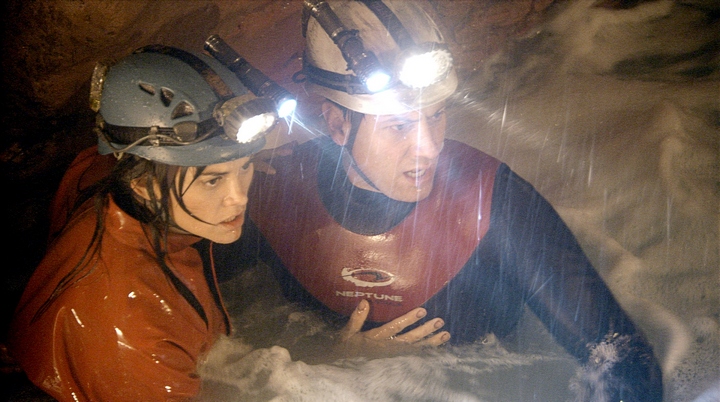
Victoria and Carl begin to panic as they realise that they are trapped and the cave is flooding.

The film is ‘inspired’ by true events. (What this means is anyone’s guess.) A group of cave divers attempt to see the last unknown, underwater cave in the world in Papa New Guinea. The divers, led by Carl the manager (Ioan Gruffudd – Titanic, King Arthur, Fantasic Four I & II), Frank (Richard Roxburgh – Mission Impossible 2, Moulin Rouge, Van Helsing), Josh (Rhys Wakefield – Home and Away, The Black Balloon), George (Dan Wyllie – Chopper, Animal Kingdom) and Victoria (Alice Parkinson – Where The Wild Things Are, X-Men Origins: Wolverine, The Pacific) are slowly but surely revealing the depths of the cave. That is until a storm breaks out above them. Before they know it, the cave is flooding. They are trapped. The only way out is down. Down, through previously unexplored areas.

The plot for Sanctum is simple and fairly predictable. We know that not everyone is going to survive, so it is just a question of who is next to fall. Yet, because the acting is terribly wooden and the dialogue is poor; it is hard to empathise or like any of the main characters. Their predicaments, and the way they behave in certain situations, seem quite realistic. Under such circumstances, survival is the only thing that matters. Everything else goes by the wayside and there is no time for sentiment. Nevertheless, the more the main characters try to be serious, the more pitifully amusing they become. (Also, why is it that the ‘good guys’ in the film never need food or water; but the ‘bad guys’ do?)

Carl, left, and Frank, right, stay still for a moment to let the others catch up. Behind them, one gets a glimpse of the awesome underwater scenery that is prevalent throughout the film.

The acting, though, was never going to be Sanctum’s attraction. As a thriller, one hopes to feel one’s heart pounding against the chest. While the film takes a bit of time to get going (even though the film is not particularly long), Sanctum achieves this. That the characters go through tight spaces underwater makes one feel claustrophobic; unsettling one almost to the point of panic. (Especially if one does not like being stuck in a small space.)

The 3D feature of the movie has the further effect of making the audience feel as trapped as Frank, Carl, Josh, George and Victoria. This is in no small part due to the executive producer, James Cameron (Titanic, Avatar I, II & III). Just like in his last film, Avatar, Cameron successfully exploits the 3D effects to make one feel like they are in the predicament of those they are watching. In addition, his 3D images of the caves are stunning; seductive enough to make one believe that the potentially fatal dangers of cave digging/exploring are non-hazardous and worthwhile.

Arguably, the visuals and the 3D effects in Sanctum, to a degree, make up for what is lacking in the acting department. The director, Alister Grierson (Kokoda: 39th Battalion), and Cameron make the most out of a bland storyline; and turn it into an unexpectedly entertaining and nerve-shredding movie.

PG’s Tips

Review – Season of the Witch (15) [2011]

Star Rating: 1.5/5

When one goes to see films like Solomon Kane, The Kingdom of Heaven or Eragon, one invariably goes with low expectations: the lower the expectations, the less chance of disappointment (even if you enjoy the genre). Season of the Witch very much comes into this bracket of poor films wherein one has to aim low in order for it to be remotely worth watching.

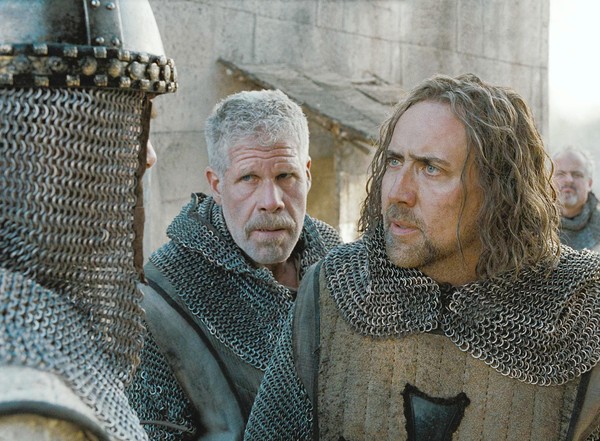
Felson (Ron Perlman) and Behmen (Nicholas Cage) as knights of the Church telling a fellow crusader of their intention to quit the fight against the Muslims.

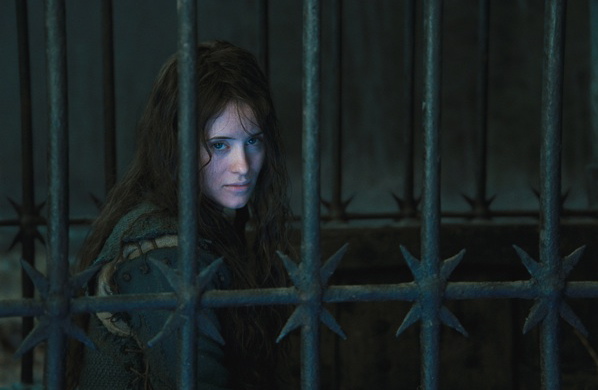
The movie is set between the thirteenth and fourteenth centuries in Europe, during the time of the Crusades. Behmen (Nicolas Cage – Face/Off, Con Air, Joe) and Felson (Ron Perlman – Hellboy I & II, Conan The Barbarian) are knights fighting for Christ and God against the Muslims until they become disillusioned with the Church. Subsequently, they desert and go back to Austria. But on their return, they find the towns and villages ravaged by bubonic plague. It is said that a witch (Claire Foy – Little Dorrit) has brought this affliction upon the land; for wherever she goes, so does the contagious disease.

It is decided by the local cleric that the witch must be taken to another town to be tried by the most learned priests in the country. The cleric believes that by charging her with witchcraft, God will end the plague. Thus, it is up to Behmen and Felson to take her to this town. A handful of others join them. But the road is dangerous and few have ever ridden it. (Fewer still have returned to tell the tale.) And with the witch travelling with them, unforeseen problems will arise.

The plot is probably a little more entertaining than that. But whether the storyline is the basis for the film’s entertainment is doubtful. The special effects (if one can call them that) throughout Season of the Witch are appalling. Likewise is the acting and the dialogue. Arguably, the thick American accents of Nicolas Cage and Ron Perlman, despite being in medieval Europe, epitomise the pathetic and comic nature of the film’s production.

Despite these, there are aspects of Season of the Witch that give the film amateurish respectability. The sarcastic humour/banter between Behmen and Felson makes for some amusement; especially, when their wry remarks are aimed at the corruption of the Church. Similarly, the witch’s devilish smile keeps one guessing whether she is actually a witch or a mere victim of a medieval witch-hunt.

The witch (Claire Foy) is caged up as she is transported to her trial. There are few who doubt that she’s not guilty of spreading the epidemic to wherever she turns up.

The historical features of the film are also quite accurate. Whilst Behmen and Felson are undoubtedly fictional characters, the battles they fought in are not. Additionally, the director, Dominic Sena (Gone in Sixty Seconds, Swordfish), has shown medieval villages and towns for what they really were: crap-holes. Very often, Hollywood glosses over these details by making towns and villages appear relatively clean, and by making the inhabitants of such places look happy. In Season of the Witch, there is none of this. Sewage, smoke, rubbish, mud, dirt, rats, plague and misery are part of everyday life for the folks here (just like it was for our ancestors) and are well detailed. Indeed, after seeing some of these scenes, one can understand why the Black Death used to spread like wildfire until hygiene became the general consensus.

Over-all, one can put together a long list of reasons for why not to see Season of the Witch. The film has very little saving grace. For those who don’t like the genre, one may struggle to justify finishing the movie. For those who do enjoy the genre, one is left to laugh at how poorly it has been produced. However, that and very low expectations are what saves Season of the Witch from total disaster.

PG’s Tips

Review – 127 Hours (15) [2011]

Star Rating: 4/5

‘Caught between a rock and a hard place’ – we’ve all heard the metaphor at some point in our lives. Usually, it is adopted at a moment of indecisiveness or prevarication. For some of people, the phrase may even define their personality. But in July 2003, Aron Ralston discovered its literal meaning and 127 Hours brings to light his remarkable story in great detail.

Aron, played by James Franco, enjoying a stroll in the Grand Canyon. Little does he know that a slight loss of balance is going to change his life forever.

In the summer heat, Aron Ralston (James Franco – Spiderman I, II & III, Your Highness) goes for a cycle and a hike in the Grand Canyon. Since Aron is a guide, he knows the terrain well. He climbs, jumps and walks around as if he owns the place until a small slip sends him tumbling several metres down a narrow gap in the ground. Worse, a boulder falls with Aron and virtually cements his arm between it and the rocky wall. Aron is stuck and very-much alone. He has little food and water, and no means of contacting the outside world. For one hundred and twenty-seven hours (over five days), Aron remains there until the fear of death forces him to make the painful sacrifice of cutting off his trapped arm with a mere pen-knife (and no anaesthetic!) so as to carry on living.

The plot may sound uneventful as more than an hour of the film is based round a man stuck in a still, but frightening situation. Yet, that is far from true. One watches with anticipation what Aron will do in an attempt to move the bolder. Indeed, some of the innovations he comes up with are very intelligent. That he does these things without the use of a hand makes them all the more impressive.

However, 127 Hours would not be half as decent if it were not for James Franco. Franco illustrates here that he has matured as an actor since his semi-pitiful displays in the Spiderman movies. In this film, it is almost solely up to him to keep the audience stimulated for over ninety minutes, and he easily achieves this. Franco superbly portrays Aron before and, especially, after the fall. The all-too-real look of horror in his eyes when he initially realises the depth of his predicament is one that few will forget in a hurry. The different stages he goes through, before doing the unthinkable, are also very interesting.

Franco’s performance is utterly realistic and the tribute for giving him this platform must go to the director, Danny Boyle (Slumdog Millionaire, The Beach, Trance). One scene in particular, although gory to the point of making one want to vomit (unless one is used to watching the Saw series), is done exceptionally well and with graphic detail.

Aron feeling down and helpess as he can’t move the boulder that has trapped his right arm.

Yet, Boyle also lets himself down a bit. One needs to be brave to make a film like this (especially if he/she wants to make a handsome profit); but, unfortunately, Boyle lacked the courage of Rodrigo Cortés, the director of Buried (which is literally about Ryan Reynolds in a coffin for ninety-odd minutes with a lighter and a mobile phone.) By putting in music and other noises whilst Aron is jammed, Boyle takes away some of the realism in 127 Hours because this would not have happened.

Another criticism of the movie is that one never gets a sense of just how long, boring and lonely it must have been for Aron during those one hundred and twenty-seven hours. One may see the sun rise and fall a few times, or watch Aron gradually run out of water or reminisce over and over again about the mistakes he’s made in his life; but this only captures the length of time he was stuck there for on a superficial level.

Nevertheless, despite these flaws, 127 Hours is entertaining and Franco’s acting fully justifies the nominations that he’s been lined up for. The movie is also truthful and has a nice pseudo-religious dimension to it. Above-all, 127 Hours shows us that, even when caught between a rock and a hard place, mankind’s resilience is extraordinary.

PG’s Tips

Review – The Next Three Days (12a) [2011]

Star Rating: 2.5/5

I’ve heard that some men will die (or kill) for their woman (metaphorically, at least). However, I’ve never heard anyone say that they’ll study every weakness in the government’s prison system in order to get their lover out of jail. There is probably a reason for it and The Next Three Days illustrates why this might be the case.

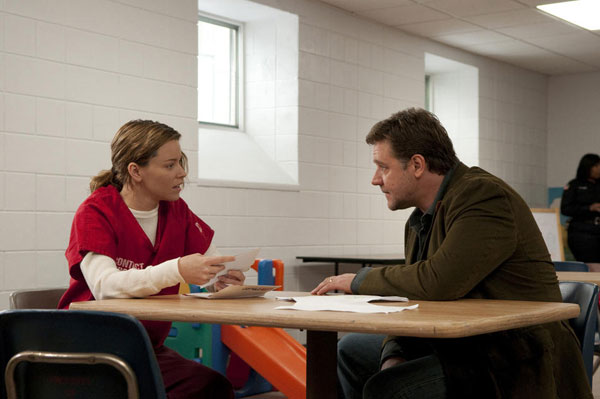
John, being a good husband, visits his wife in prison.

Early on in the film, Lara (Elizabeth Banks – Zack and Miri make a Porno, Spiderman IIII), is arrested by the police and sentenced to jail for life for murdering her boss. This leaves John (Russell Crowe – Gladiator, A Beautiful Mind, Les Misérables), her husband and philosophy teacher/lecturer, to look after their son, Luke. Convinced that his wife is innocent, John seeks the advice of Damon (Liam Neeson – Schindler’s List, Star Wars I, Unknown), a man who has escaped from prison a staggering seven times, to find out a way of getting Lara out illegally. John learns from Damon what he must do to free her and how difficult it will be to beat the counter-measures the state-police have in place to stop escapees from running beyond their reach. For three years, John plans every step and waits for the right moment to strike.

Whilst perhaps a little far-fetched for it to be realistic, the plot makes for The Next Three Days to be full of pulsating tension. Yet, it fails to deliver on this for much of the movie. Part of this is because the fast-beating music is inadequate and, mostly, incorrectly timed. Additionally, the film is too long. There is no need for it to last two hours and twenty minutes. If it would have been half an hour shorter, it would have made for a much better film as only the last forty-five minutes is particularly interesting.

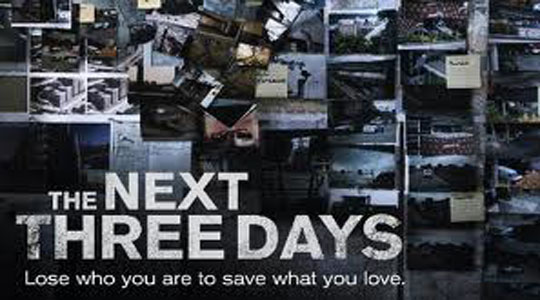
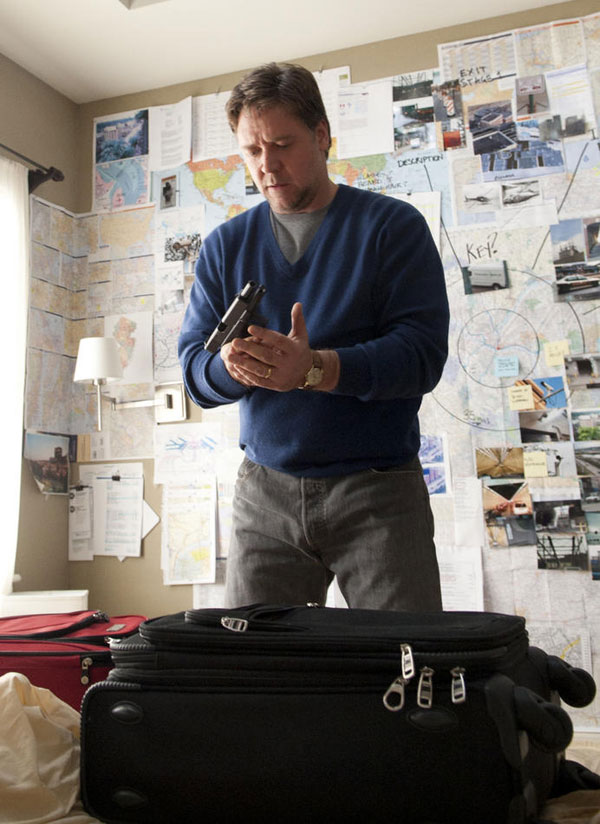
The plans are complete and John, loading up his James Bond-like pistol, is ready to put them into effect to save his wife from a life-time behind bars.

The storyline has its exciting moments; but there are many holes in it. One cannot help but ask oneself why John’s work as a teacher is not affected by his excessive (or, rather, obsessive) workings at day and night? Or why no-one notices his plans to free his wife from prison which are on a wall in a room in his house? Or why John never questions his own sanity? Also, escaping is not an end in of itself. One still has to go with mundane, daily chores after escaping. But, unfortunately, the director, Paul Haggis (Million Dollar Baby, Casino Royale, The Quantum of Solace), does not deal with these issues.

Despite the gaps in the plot, the actors do not do their credentials harm. Indeed, the acting is consistently average throughout the movie: neither especially bad nor great. Nor are they ever tested, which is a bit of a shame because it could have added another dimension (and possibly a realistic element) to the storyline. Instead, we have to watch Russell Crowe kill the dregs of society to give the film some (cheesy) action in a vain attempt for entertainment.

Thus, all in all, The Next Three Days is a disappointment. Whilst, at first glance, the film may look thrilling, if unoriginal (after-all, how many times have we seen a movie about a prison breakout?); it is not as fascinating as it should have been. It might also explain why there is no colloquial expression for someone to free another person from jail. It is far simpler just to say you’ll die (or kill) for them.

PG’s Tips