Category Archives: Book based

Review – My Week With Marilyn (15) [2011]

Star Rating: 2.5/5

Upon seeing the title My Week With Marilyn, one would think it was about a week that an individual spent alone with the mother of all blondes. Yet, the title, like Marilyn Monroe herself, is deceiving. The film is interestingly about Marilyn, and the person behind the icon who, in her day, took Hollywood by storm.

Colin Clark (Eddie Redmayne) taking Lucy (Emma Watson) on a date. Soon Lucy has to compete for Colin’s affection with someone far more glamorous.

The movie is based on true events and on the diary that a twenty-three year man wrote about his week-long affair with Marilyn when she came to England to shoot the film The Prince & The Showgirl in 1957. Colin Clark (Eddie Redmayne – The Other Boleyn Girl, Black Death, Les Misérables) is an Eton-educated young adult, who wants to make his living as a film director, despite his parents’ disapproval. Shortly after moving to London, he gets a job as a third-assistant director, otherwise known as a ‘go-getter’, to Sir Lawrence Olivier (Kenneth Branagh – Henry V, Valkyrie, Wallander) as the latter acts and shoots the film, The Prince & The Showgirl. The movie stars Marilyn Monroe (Michelle Williams – Brokeback Mountain, Shutter Island, Oz: The Great & The Powerful) as Elsie.

Marilyn is problematical on set, which tries Olivier’s patience considerably. As she is frequently late for filming, Olivier regularly sends Colin to find out if she is ill or not. It is from this that a week long relationship develops between an awe-struck Colin and Marilyn.

The plot for My Week With Marilyn is straightforward. The pace of the film moves surprisingly quickly, as the scenes change one after the one rapidly. Yet, the storyline doesn’t really go anywhere. Consequently, the movie fast becomes tedious, making the ninety-nine minutes appear (aggravatingly) longer. That the dialogue, for the most part, is quite contrived does not aid the film either.
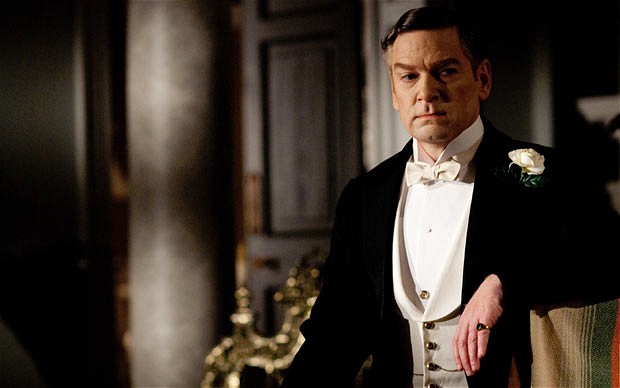
Sir Lawrence Olivier (Kenneth Branagh) impatiently waiting for the perennially late Marilyn Monroe before he can begin filming. Frustration frequently gets the better of him.

Nevertheless, there are some strong performances in My Week With Marilyn, such as Judi Dench (Shakespeare In Love, Notes On A Scandal, Skyfall), Michelle Williams and Kenneth Branagh. Whilst Dench, as ever, plays her standard M-/Queen Elizabeth-type role with authority, Williams captures Marilyn Monroe brilliantly, highlighting her character’s insecurities, her alcohol and drug addictions, and her unhappy marriage with the author, Arthur Miller (Dougray Scott – Deep Impact, Mission: Impossible II, Last Passenger). Yet, at the same time, Williams also shows Marilyn to be witty, intelligent and encapsulating. From Williams’ performance, one can easily see why Marilyn was the sex-object of her day, captivating to watch and far from dumb.

In a similarly decent display, Branagh illustrates the reasons for why Olivier made the movie, The Prince & The Showgirl in 1957. Fearing that the British film industry was falling behind Hollywood (and trying to revive his own acting career), bringing in Marilyn was his way of trying to deal with the problem. Olivier’s apparent exasperation with Marilyn was not born out of her tardiness on set, but rather by his own fears that he was ‘past it’ (and that Marilyn was the glamorous future). Again, Branagh portrays all of this solidly, if not with excellence.

However, whilst the acting from those three characters is worth watching, the same cannot be said for Eddie Redmayne, Emma Watson (Harry Potter I-VII(ii), The Perks Of Being A Wallflower) and Dominic Cooper (Captain America: The First Avenger, The Devil’s Double, Abraham Lincoln: Vampire Hunter).  As the central character, Redmayne gives a weak performance. One does not believe that Colin is in awe of Marilyn throughout the film (much less that he’d worship the ground she walks on), which is a terrible failure on Redmayne’s behalf considering what the movie’s supposed to be about.

Marilyn Monroe (Michelle Williams) playing up to her English audience by doing her trademark pose. No doubt, her fans were dumbstruck by it.

Likewise, Watson (again) flatters to deceive. Her character in the film may not be the inflexible rod that is Hermione Grainger in the Harry Potter series; nevertheless, Watson still comes across as uptight and two-dimensional. (Although, the lack of depth could be attributed more to director Simon Curtis than her.) As for Cooper, his performance as Marilyn’s aid is a great dip in comparison to his displays in The Devil’s Double. In that movie, there was intensity and consistency to his performances as Uday Hussein and Latif Yahia, not least in the Arabic accent. In My Week With Marilyn, Cooper’s character is pathetically shallow and his American accent is poor, often reverting to his normal English, south-London accent.

The acting may vary in quality, but one aspect of the film that cannot be questioned is the character’s 1950s-style clothing, hairstyles and gear. Nothing looks out of place, especially the ridiculously large cameras that the journalists carry. (Whether movie stars were harassed by the populous and the media in the 1950s like they are today is dubious. Then again, Marilyn was not the average celebrity either.)

Over-all, My Week With Marilyn is oddly fast-moving but dull; boring even. The bright spot for the film is undoubtedly Michelle Williams’s reincarnation of Marilyn Monroe. Williams brings forth all the troubles and qualities that her character possessed, illustrating that those who thought (or still think) that Marilyn was nothing more than an air-headed blonde were the real fools.

PG’s Tips
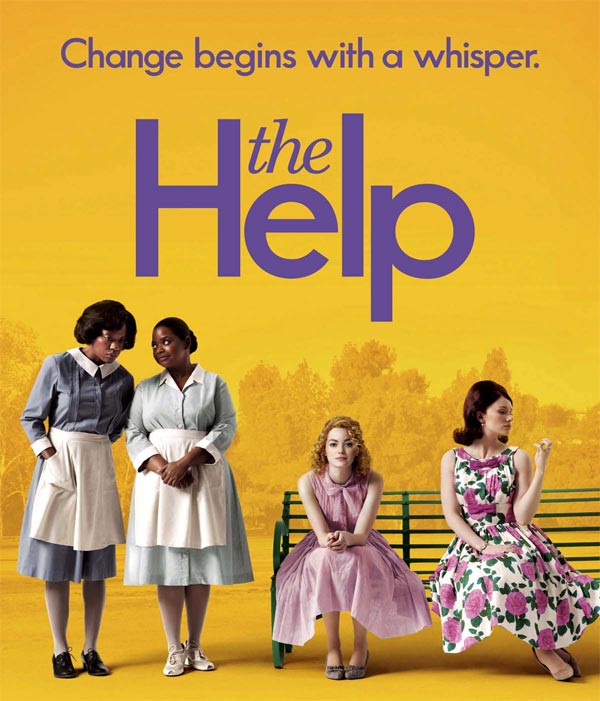
Review – The Help (12a) [2011]

Star Rating: 4.5/5

John F. Kennedy (JFK), President of America (1960-63), proclaimed in 1963 that “moral courage is a more rare commodity than bravery in battle or great intelligence.” He was referring to the civil rights movement in America, when African-Americans, particularly in the south (now known as the ‘Bible-belt’), were discriminated against and did not have the right to vote. The Help magnificently brings to light the inequality that African-Americans suffered in Mississippi in the early-1960s, and that there were some people with the moral courage to put an end to it.

Eugenie ‘Skeeter’ Phelan (Emma Stone) out for a meal with friends, looking fabulous.

The Help is based on the book with the same title, written by Kathryn Stockett. It is not a true story. The film revolves round the aspiring young author, Eugenie ‘Skeeter’ Phelan (Emma Stone – Ghosts of Girlfriends Past, Friends With Benefits, Birdman). At a time when the civil rights movement is picking speed in America, Skeeter has become uneasy by the way her friends treat their African-American maids, and so decides to write a book about it. She decides to write her book from the angle of the help in order to highlight Caucasian maltreatment to them in the home.

Skeeter approaches Abileen (Viola Davis – Law & Order: Special Victims Unit, Eat, Pray, Love, Extremely Loud & Incredibly Close), the maid of her friend Hilly (Bryce Dallas Howard – The Village, Spiderman 3, 50/50), for her opinion and experiences. Abileen is a middle-aged woman who has spent her entire life raising Caucasian children, almost from birth, only to see them turn into their parents. Despite being initially reluctant to speak out, due to the fear of violent reprisals, Abileen lets Skeeter interview her. Soon, Minny (Octavia Spencer – The Soloist, Herpes Boy, Girls! Girls! Girls!), another African-American maid, tells her stories too. Then, many more do the same to give Skeeter an all-round picture of what life is like for African-American maids in Caucasian homes.

The Help may be a very slow and far-from-intense film; yet, it is powerful and emotive. The movie may not be factual, but it is based on much truth and reflects the period accurately. In the same way that the works of Charles Dickens and Theodore Dostoyevsky are seen to be more representative of their respective eras than historical narratives, so too can The Help be seen in the same vein. Despite a few minor historical inaccuracies, such as segregation, one could probably learn more about the innate levels of Caucasian racism towards African-Americans in the Bible-belt in the 1960s from this film, and the variety of ways it manifested itself, than from most factual history books.

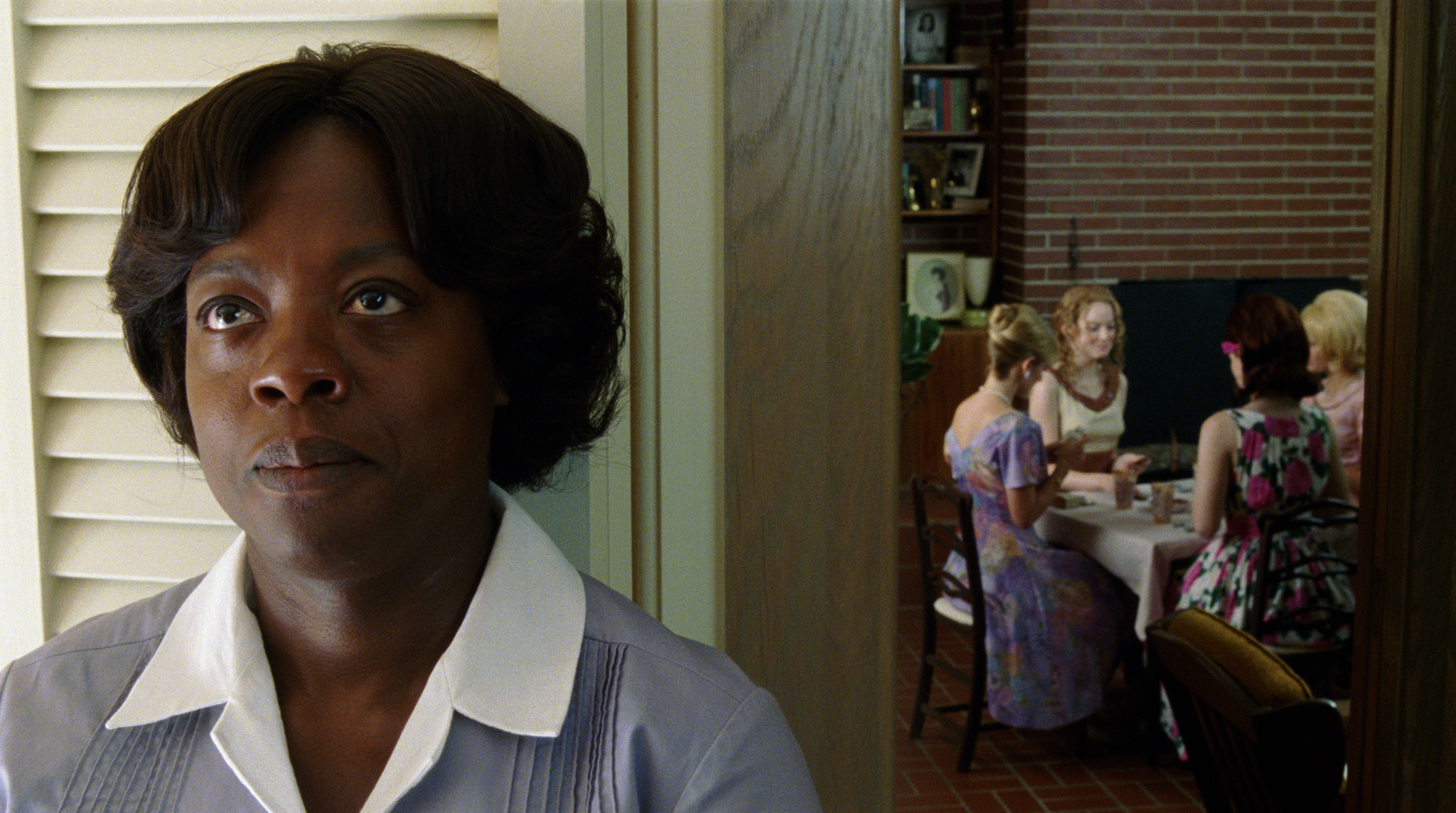
Abileen (Viola Davis) eavesgropping on a conversation wherein she hears a torrent of racism towards African-Americans.

But for a film about racism, The Help is surprisingly honest. It shows all sides to be human, meaning that all the characters, whether Caucasian or African-American, have decent and defective qualities. This should be applauded since it would have been easier for the director, Tate Taylor (Pretty Ugly People), to have made one side inherently ‘good’, the other side inherently ‘bad’, and one or two instances of crossovers as a cheap façade. That Taylor doesn’t do this makes The Help plausible.

The realism of the film, however, would not be possible without the actors putting in exceptional performances. Indeed, the entire cast, and their accents, are flawless. The pretty Emma Stone demonstrates that she can play intelligent roles with vigour, enabling her to grow more beautiful and appealing in the process. Viola Davis performs so well, viewers can empathise with Abileen’s predicament and cry because of her awful experiences.

Octavia Spencer may not make audiences weep like Davis does; nevertheless, she too plays marvellously as the feisty, loud-mouth and funny Minny. Furthermore, one can even appreciate the performances of the horrible, racist women, portrayed by Bryce Dallas Howard, Ahna O’Reilly (Herpes Boy, House Under Siege, Girls! Girls! Girls!), Allison Janney (The West Wing, Pretty Ugly People, A Thousand Words), and the other ladies, or the silly, naive Celia, played by Jessica Chastain (Jolene, The Debt, Take Shelter), as they are all performed with brilliant consistency.

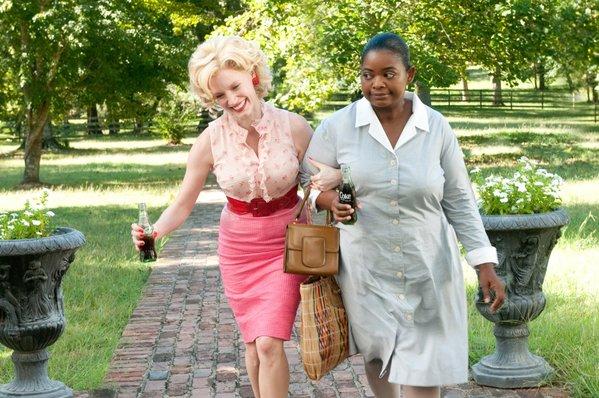
A first day at work for Minny (Octavia Spencer) at the house of the over-excited Celia (Jessica Chastain).

Like the quality of the acting, The Help has been put together superbly. At 146 minutes, the film might feel drawn out, but the choreography has been stitched together smoothly and the cinematography is apt for the locations of the movie. What’s more, the music has been chosen well to enhance the scenes, particularly the heart-rending ones.

All-in-all, The Help might drag, but it is an excellent, touching film. The acting is remarkable and the movie epitomises well the attitudes of people, whether Caucasian or African-American, living in the deep-south of America in the early-1960s. In 1963, JFK proclaimed that the struggle for civil rights “will not be finished in the first 100 days. Nor will it be finished in the first 1,000 days, nor in the life of this administration, nor even perhaps in our lifetimes on this planet. But let us begin.” The Help, therefore, enables us to measure how far we have come in almost fifty years because of people like JFK and Skeeter who had the moral courage to start changing people’s attitudes towards African-Americans.

PG’s Tips

Review – Tinker Tailor Soldier Spy (15) [2011]

Star Rating: 4/5

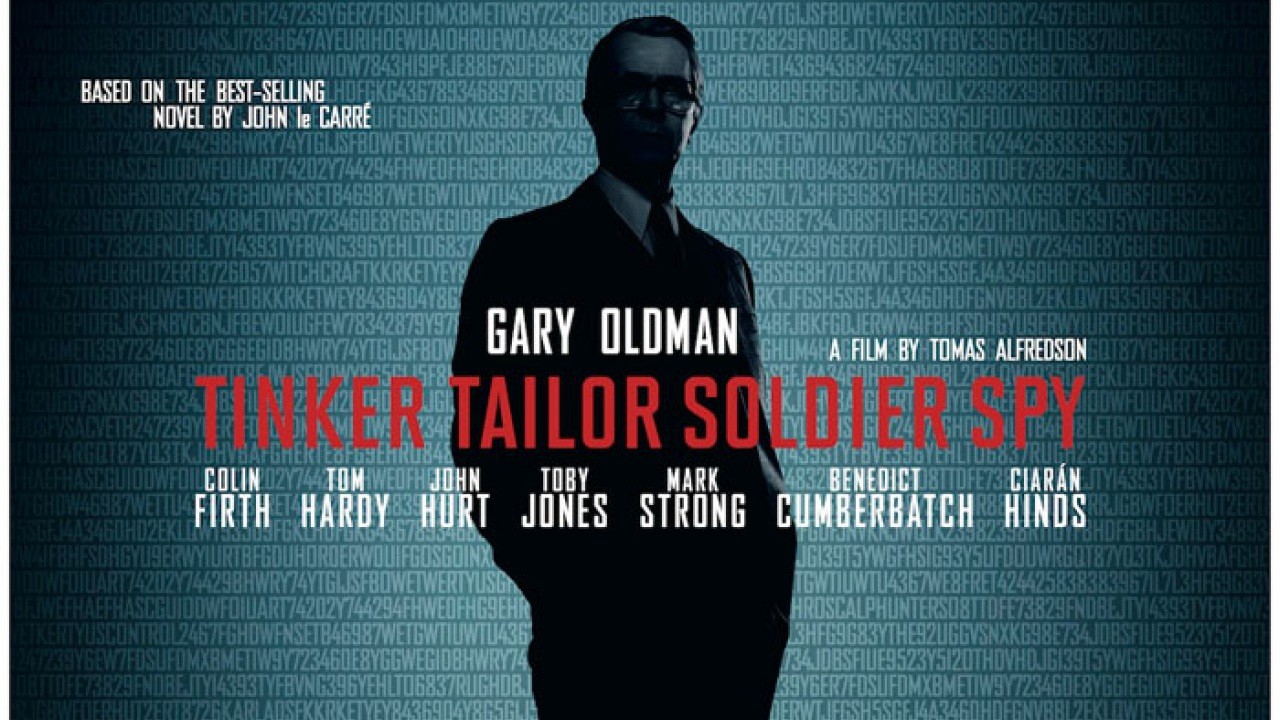
The Bourne series, 24 and Munich, in their different ways, show audiences that the world of the secret services is a murky one, where mistrust and paranoia are rife. Tinker Tailor Soldier Spy (TTSS) may not be a standard catch-and-shoot the bad guy thriller. Nevertheless, with a star-studded cast, TTSS is an excellent, if puzzling, portrayal of the nature of the top echelons of the secret services.

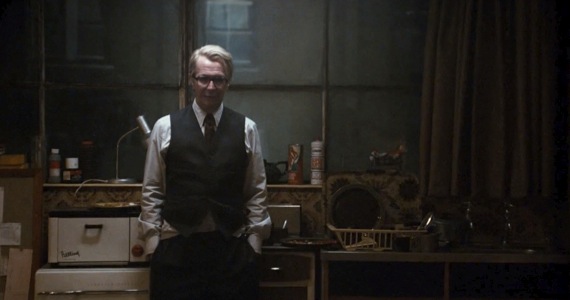
George Smiley (Gary Oldman), adopting his standard pose, explains a few things to his assistant, Peter Guillam, in one of the secret places where they do their work.

TTSS is based on the novel by John Le Carré, who worked for the best part of 20 years in MI5 and MI6; the movie is also a shortened remake of the 1979 TV series. TTSS is set in early-1970s Britain, during the Cold War. There is a mole in the ‘Circus’, the MI6 internal nickname for the highest levels of the British intelligence services. Someone is giving classified information to a Soviet agent called Polyakov (Konstantin Khabenskiy – Wanted). But who is it?

Control (John Hurt – V For Vendetta, Harry Potter VII(i) & VII(ii), Immortals) brings back his former colleague, George Smiley (Gary Oldman – Air Force One, Harry Potter III-V & VII(ii), The Dark Knight Rises), from retirement in order to discover who is behind the leak. But Smiley and his personal assistant, Peter Guillam (Benedict Cumberbatch – Atonemment, Star Trek II, The Hobbit II), must do their work in secret. This is to make sure that the other members of the ‘Circus’ – Percy Alleline (Toby Jones – Frost/Nixon, Captain America: The First Avenger, Snow White and the Huntsman), Bill Hayden (Colin Firth – The Importance of Being Earnest, The King’s Speech, Before I Go To Sleep), Roy Bland (Ciarán Hinds – Munich, Harry Potter VII(ii), The Debt) and Toby Esterhase (David Denick – War Horse, The Girl with the Dragon Tattoo) – don’t find out what they’re up to. Any one of them could be the traitor.

The plot for TTSS may sound straight forward, but it is not. Rather, it is slow and very confusing. The movie is also hard to follow because it does not follow a linear timeframe. Viewers are rarely certain if they’re watching the past or the present. Moreover, the director, Tomas Alfredson (Let The Right One In), does not give the complete context of the story; for example, there is no hint of the five Cambridge pro-Soviet traitors that riddles the book.

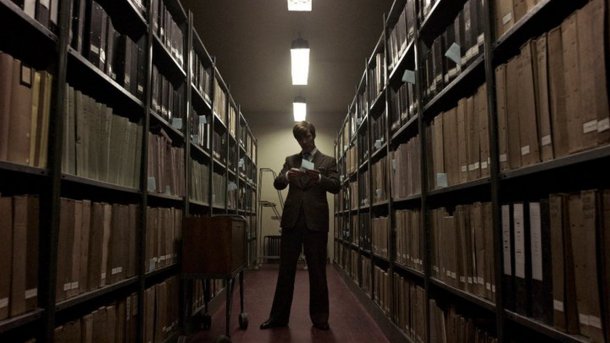
Peter Guillam (Benedict Cumberbatch) looking through files to find information on the mole.

This is not to say that Alfredson has made a bad film. On the contrary, the slowness of TTSS is, arguably, a reflection of the world of espionage, which Le Carré, who assisted in the movie’s production, understands so well. Seen in this light, even the many seemingly pointless short, silent scenes of Smiley going into a room or a house on his own have a purpose, since they give TTSS a greater feel for the workings of MI6.

In addition, the brilliant acting throughout the movie aids our understanding of the type of people that tend to be at the top echelons of the secret services. A lecturer of mine at university told me that Hilter’s military intelligence chief (and double-agent), Wilhelm Canaris, upheld a persona to make it seem to others that he was not on the ball. In a similar vein, all the men in the ‘Circus’ in TTSS have their manufactured character guises. No-one in the film has this more than Smiley. In the lead role, the ever-sound Gary Oldman plays Smiley exceptionally well. Whilst no James Bond, Oldman never loses his concentration as Smiley; he always remains head-down, calm and monotonous, yet perspicacious, even when there is emotion stirring within him. It is a shame for Oldman that many subtleties of Smiley’s character, from the book and the TV series, have been taken out by Alfredson.

All of the supporting cast suffer from the same problems. Everyone plays very well, but since the film is only 127 minutes (and may seem longer to those not enjoying it), there is not enough time for all of the nine main characters, including Jim Prideaux (Mark Strong – Kick-Ass, The Eagle, Zero Dark Thirty) and Ricki Tarr (Tom Hardy – Layer Cake, Inception, Warrior), to have real depth. To the cast’s credit, none of them appear shallow on screen, and some of them are given the time to express themselves to a degree.

Ricki Tarr (Tom Hardy) as the active secret agent on the streets to help find people who may be connected to the mole.

The impressive acting is matched by the settings throughout TTSS. From the clothes; to the hairstyles; to the cars; to the fax machines (and lack of mobile phones); to the smoking, everything has the appearance of the late-1960s/early-1970s. Remarkably, nothing is out of place.

The music used throughout the film is, perhaps, the exception to this. While the music is not of its era, its strangeness, more often than not, enhances the confounding plot and the tension in some of the scenes.

TTSS is not a conventional spy/secret-agent thriller. The film moves at a measured pace and is very confusing to the extent that one may go home without having completely understood the movie. One may even need to be a fan of this niche genre to truly appreciate it. Yet, with fantastic acting – particularly from Gary Oldman – TTSS depicts its era and the underhandedness of the inner workings of the top levels of the secret services down to a tee.

PG’s Tips

Review – The Skin I Live In (15) [2011]

Star Rating: 4/5

For a psychological thriller to be worth its while, it invariably has to venture into disturbing realms to the extent that one wonders what sort of a person came up with the ideas. This was arguably the case with Martin Scorsese’s Shutter Island and Darren Aranofsky’s Requiem For A Dream and Black Swan. The Skin I Live In, despite being very different to the above-mentioned films, successfully takes us once again into this unsettling territory.

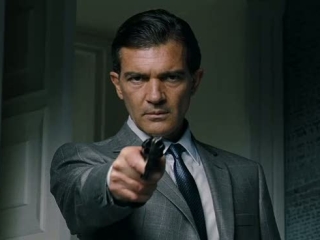
Dr. Robert Ledgard (Antonio Banderas) giving the classic 007 pose.

The Skin I Live In (La Piel Que Habito) is a Spanish film, based on Thierry Jonquet’s book, Tarantula. The movie centres round Dr. Robert Ledgard (Antonio Banderas – The Mask of Zorro, Shrek I-IV, Puss In Boots), a genius but deeply troubled plastic surgeon, who specialises in (unethical) skin repair and enhancement. After his teenage daughter, Norma (Blanca Suárez – Shiver, Cowards, The Pelayos), is raped by a boy her own age, called Vicente (Jan Cornet – The Night of the Brother, Camino, Red Lights), Robert decides to kidnap Vicente and punish him. But what does Robert plan to do with Vicente? Does the former wish to use the latter as his laboratorial guinea pig? Or does Robert have something more distressing in mind?

The plot is intelligent and absorbing, with a very unnerving twist. (Don’t worry, no spoilers in this review.) Yet, the storyline suffers from a general lack of clarity. First, one has difficulty knowing which year he/she is watching. Scenes may roll into one another smoothly, but the film skips regularly back and forth over a six year period in a confusing way. Second, one is never sure of Robert’s intentions, even by the end.

Moreover, there are some loose-ends in the plot, and other parts of it are left without purpose or proper explanation, such as the sub-story near the beginning about Robert’s half-brother, Zeca (Roberto Álamo – Football Days, Take My Eyes). Arguably, the reason for the lack of clarity is because the director, Pedro Almodóvar (Talk To Her, Volver, Mina), has gone for a more artistic-style of film, like Lost In Translation and The American. This means that there is relatively little dialogue throughout The Skin I Live In. Instead, one has to figure out the message of the scene via, at times, ambiguous expressions and body-language, particularly from the main character, Robert.

Robert after finding his daughter, Norma (Blanca Suárez), raped.

Playing Robert, the James Bond-/George Clooney-esq Banderas is without doubt the star of the film. In a superb display, Banderas exemplifies an intelligent, stony-faced man filled with tragedy, spite and (perturbing) ambition. No other member of the cast comes close to his level of performance. Marisa Paredes (All About My Mother, The Devil’s Backbone, Mina) may not do a bad job playing Robert’s mother, Marilia. But Marilia lacks the depth of Robert’s personality, which is revealed when she is given the chance to explain herself during a heart-to-heart with the gorgeous Vera (Elena Anaya – Talk To Her, Van Helsing, Room In Rome). Similarly, Elena Anaya, Jan Corbit and Roberto Álamo suffer from the same problems, and aren’t given ample time to express themselves. This, just like aspects of the plot, is to the movie’s detriment.

The quality of some of the acting lets the film down; yet, the same cannot be said for the music. It might sound unconventional and strange, but apart from the one scene with techno music (which is completely out of place) the music achieves Almodóvar’s ambition of giving the scene an ominous and tense feel. (One strike at high a piano key every few seconds; one hit of the drum over the same amount of time; and regular short, sharp notes from string-instruments are not classic ways of building eeriness or tension. Then again, it makes a refreshing change from tacky horror films, like Scream and The Eye, which adopt unbearably long notes from string-instruments, followed by a sudden crescendo to make viewers jump out of their skin.)

Robert's captive, Vicente (Jan Cornet), chained to a wall and drinking from a bucket.

Just as the music sounds odd throughout The Skin I Live In, so too are the aesthetics. Robert’s stunning mansion-cum-residency for his ‘patients’ is filled with large paintings of naked people, with unnaturally round heads and no faces. Just by seeing these, one gets the impression that Robert has some weird tastes long before the film comes to its mentally repelling and horrifying conclusion.

Ultimately, The Skin I Live In has its drawbacks and could have been less confusing. Nevertheless, Antonio Banderas performs brilliantly; and the unconventional nature of the film and the unusual storyline make for psychosomatically disturbing viewing. To Almodóvar’s credit, the film is not just a spin-off of an Aranofsky movie, and adds something new to the genre. Still though, just like with other psychological thrillers, by the end of The Skin I Live In one is likely to question the (in)sanity of the man who put this film together.

PG’s Tips

Review – One Day (12a) [2011]

Star Rating: 3/5

Romantic comedies (better known as ‘chick flicks’), such as Ghosts of Girlfriends Past and He’s Just Not That Into You, tend to be sweet, sentimental (cringe-worthy) and predictable. One Day is nothing of the kind, and has a twist that few will see coming. (Don’t worry, no spoilers in this review.)

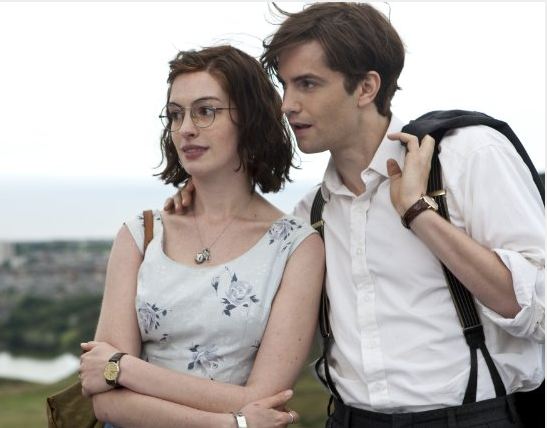
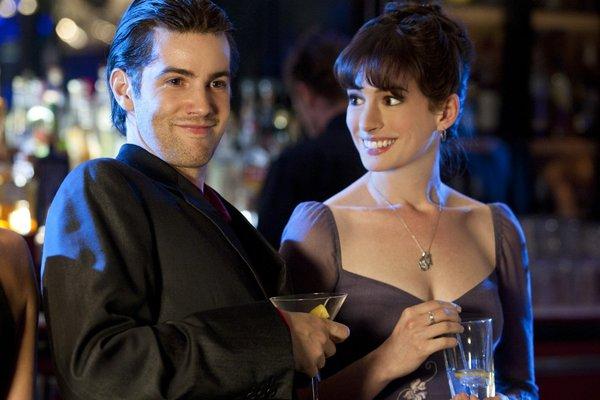
Dexter and Emma, with those geeky 1980s-glasses, out on a countryside walk on that fateful day in 1989, when their bewildering relationship started.

One Day is based on the book by David Nichols. Set in grim and rainy England, the storyline revolves round the self-obsessed Dexter (Jim Sturgess – The Other Boleyn Girl, The Way Back, Ashes) and the innocent, geeky-looking Emma (Anne Hathaway – Bride Wars, Rio, The Dark Knight Rises), two individuals who are hopelessly (and, to some extent, tragically) in love with one another, but decide to be ‘friends’ rather than lovers. Dexter and Emma get with one another on the 15th July 1989, the day of their graduation from university, and decide to keep in contact. They write and call one another quite regularly, and meet up for their ‘anniversary’ every year on the same day for years, sustaining a varying relationship, despite moving on with their lives.

The film’s plot may not be entirely faithful to the book. Nevertheless, the movie is absorbing and not difficult to follow, even if one occasionally forgets which year he/she is in. One Day is captivating primarily because it does not have the feel of a predictable romantic comedy. One never knows what direction the (dismaying) relationship between Dexter and Emma will take. In addition, Emma’s intelligent, wry humour is very amusing, and distinctively unlike the standard slap-stick comedy that is habitual in ‘chick flicks’.

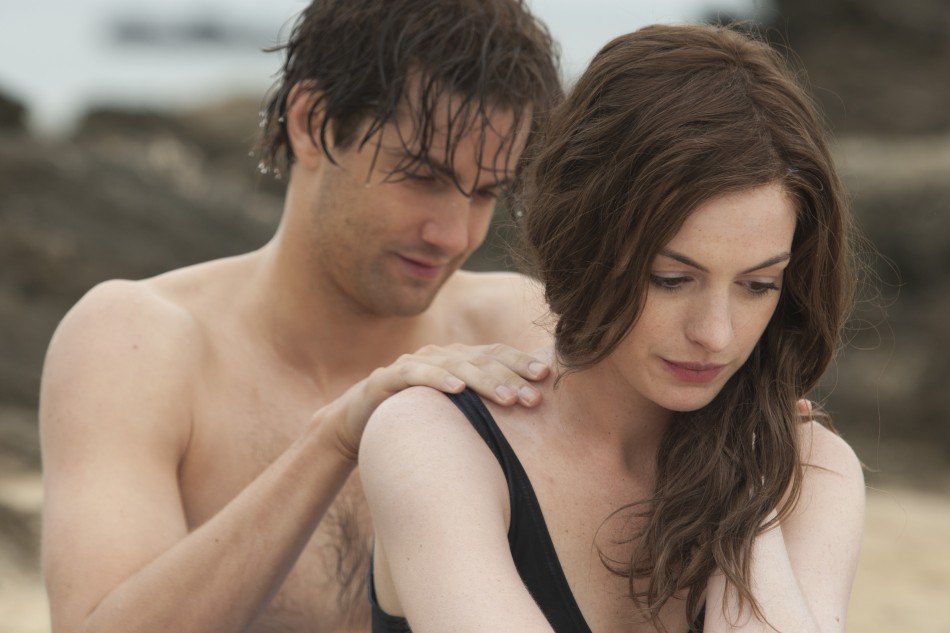
Dexter getting touchy with Emma, as he rubs suncream into her back on their ‘anniversary’.

Playing Dexter and Emma, Jim Sturgess and Anne Hathaway, respectively, do themselves no harm. But Sturgess’s character, Dexter, is far from the most challenging of roles. The same can be said for Hathaway’s character, Emma. Additionally, Hathaway’s Yorkshire accent may fluctuate between a Leeds-based one, a Scottish one, and a posh-English one, but on the whole it is acceptable.

Yet, even though Sturgess and Hathaway perform decently enough throughout One Day, there is little character depth and almost no character development throughout the film. This means that Dexter and Emma hardly change or mature in twenty-odd years. (Then again, in reality nor do most people.) It is the same for the other members of the cast too, such as the goofy Ian (Rafe Spall – Kidulthood, Hot Fuzz, Anonymous) and the bimbo Tara (Amanda Fairbank-Hynes – An Education, Monte Carlo, Tinker, Tailor, Soldier, Spy). This is a shame for the actors, as the script (despite already being laid out in a book) simply isn’t good enough and does not give them the adequate tools to make the movie unique.

As remarkable as it may seem that the characters remain virtually the same throughout One Day, the same can be said for Emma’s hairstyle and fashion sense. Both look like they’re locked in the era of Saved By The Bell. By the mid-2000s, she looks wholly anachronistic. The same can be said for Ian too. Surely the director, Lone Scherfig (Wilbur Wants to Kill Himself, An Education), noticed this whilst making the film? Evidently not.

Dexter and Emma, both looking glamorous, catching up with one another years later.

Other noticeable faults with One Day are that it feels rushed and, in places, poorly put together. The film may have to cover two decades in the space of 107 minutes, but that is not an excuse for scenes not being stitched well together. Furthermore, some of the music adopted appears badly chosen and does not fit with the scenes at all.

One Day is far from the norm for a romantic comedy. The film has its flaws and could have been much more, but Sturgess and Hathaway perform well enough with what they are given to make it worthwhile viewing. For One Day is witty, entertaining and unpredictable. Wait for the twist.

PG’s Tips
Review – Conan the Barbarian (15) [2011]

Star Rating: 3/5

Zack Snyder’s 300 was the ultimate guy’s film. The movie, essentially, was a two-hour blood bath, as 300 Spartans defended their ancient homeland against a million-strong Persian army during the Battle of Thermopylae (approximately 494 BC). Although devoid of the (inaccurate) historical elements, Conan the Barbarian should be put into the same category of film.

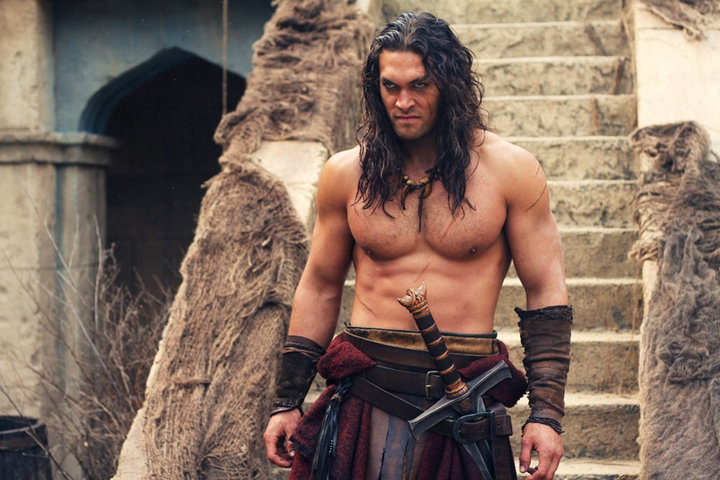
Conan, a beast of a man, relaxed and waiting for his opponent to make the first move, before he slaughtering him.

Conan the Barbarian is loosely based on the novel by Robert E. Howard, and is a remake of the 1982 film starring Arnold Schwarzenegger. Set in an alternate world called Hyborea (which looks much like Earth in medieval times), the movie centres round Conan, the eponymous character. As a young boy, Conan (Leo Howard – G.I. Joe: Rise of the Cobra, Shorts, Logan) is trained in the ways of the Samarian warrior cult by his father, Corin (Ron Perlman – Tangled, Season of the Witch, The Riot).

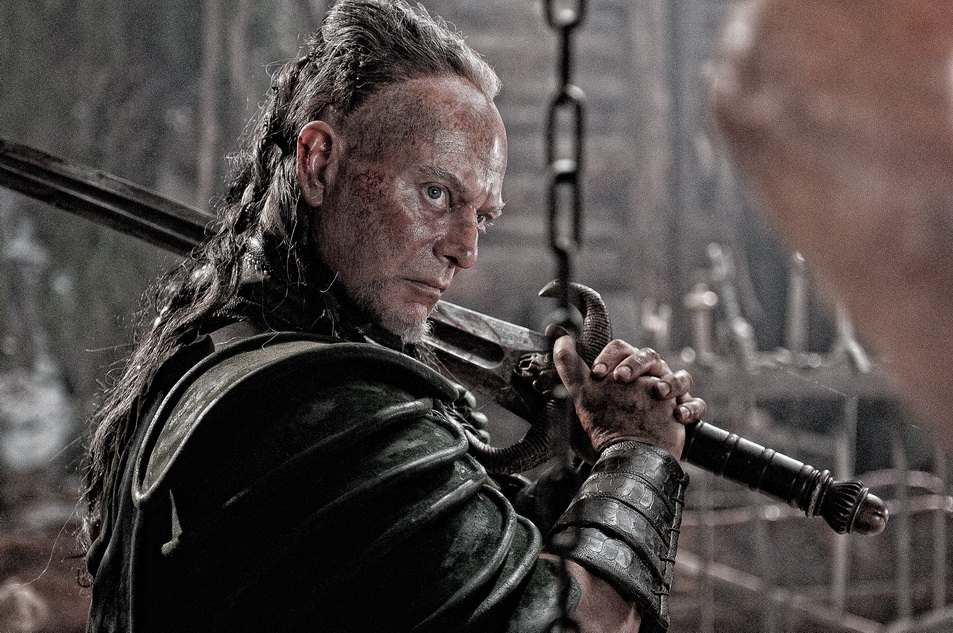
But not long into the movie, Corin is killed before his young son by Khalar Zym (Stephen Lang – Public Enemies, Avatar, Officer Down), a megalomaniac determined upon conquering all of Hyborea and reviving his dead wife. Khalar Zym will achieve these feats by putting back together all of the lost pieces of the Mask of Acheron. In time, Khalar also realises that he needs to sacrifice the last of the ‘pure blood’ of the sorcerers of Acheron, Tamara (Rachel Nichols – G.I. Joe: Rise of the Cobra, Star Trek, The Loop), to unleash the mask’s powers in order to take over the world. The balance of Hyborea rests in the sword-wielding abilities of the fully grown, muscular Conan (Jason Mamoa – Baywatch, Game of Thrones, Batman v Superman: Dawn of Justice), who is hell-bent on punishing those who killed his father.

Despite the strange names, the plot for Conan the Barbarian is not difficult to follow. Its rushed introduction has a Lord of the Rings-like feel to it, while the breaking up of the mask reminds one of Voldemort making Horcruxes of his soul in the Harry Potter series.

The villain, Khalar Zym, played by Stephen Lang, the trigger-happy military commander in Avatar.

Aside from this, the movie flows smoothly, and at just under two hours it is the right length for this type of film. Viewers are unlikely to become bored; after-all, a scene rarely goes by without someone (or a handful of people) being slashed to death by the merciless Conan. Just like in 300, there is no shortage of blood spilt by the heroes or villains. (And just like in 300, it beggars belief that in combat the protagonists do not wear armour and live to tell the tale.)

There is little sophistication in Conan the Barbarian’s storyline. Sometimes the simplicity is even comical. (Since when was child birth as trouble-free as sticking a knife into a womb and pulling out a baby, whilst looking away?) Similarly, the director, Marcus Nispel (The Texas Chainsaw Massacre, Friday the 13th, Pacemaker), does not attempt to make the characters anything but two-dimensional (which is not such a bad thing considering the nature of the film). As a result, the acting is far from memorable, and the dialogue is as risible as it was in the virtual disaster movie Season of the Witch.

The acting and the dialogue, though, were never going to be the most noteworthy aspects of Conan the Barbarian. Rather, the movie’s success was also going to lie in the action scenes and the special effects. In both respects, the film does not let the audience down. All the actors look like they were well drilled in swordplay, while imagination and care were certainly put into the CGI.

Marique (Rose McGowan), the witch-daughter of Khalar Zym, who helps her father find the last of the ‘pure blood’ of the sorcerors of Acheron.

Additionally, the music score is not terrible either. Even if it sounds much like a combined take-off from The Lord of the Rings and Pirates of the Caribbean, the music aids many of the scenes. In some instances, it gives the film the complexity that the acting, dialogue and plot sorely lack.

On the whole, Conan the Barbarian is as straightforward as its title. Just like with 300, Conan the Barbarian is very much a guy’s film. For it has a hulk of a main character, plenty of action, blood, and well-designed CGI. Yes, it has many noticeable and laughable defects, but viewers are unlikely to be bothered by them and will not go home disappointed.

PG’s Tips
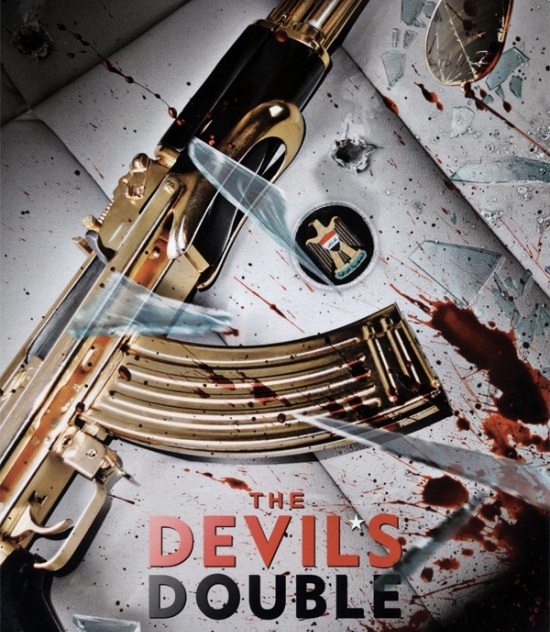
Review – The Devil’s Double (18) [2011]

Star Rating: 3/5

It is common for dictators and those close to them to have doubles (look-alikes), so that they can be in two places at once. (Not to mention making it harder for their opponents to assassinate them). But what exactly do ‘doubles’ do with their days? Well, The Devil’s Double gives viewers a brutal hint.

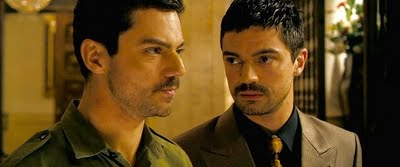
Latif with Uday before he has some minor surgery. Thw two men bear a striking resemblance. After surgery, the two men could be identical twins.

The film is based on the true (but embellished) story of how Latif Yahia (Dominic Cooper – Tamara Drewe, Captain America: The First Avenger, My Week With Marilyn) became a look-alike for Uday Hussein (also Dominic Cooper), the son of Saddam Hussein, the President (dictator) of Iraq, 1979-2003. The film is set between the late-1980s (during the latter years of the Iran-Iraq War, 1980-88) and up to December 1996.

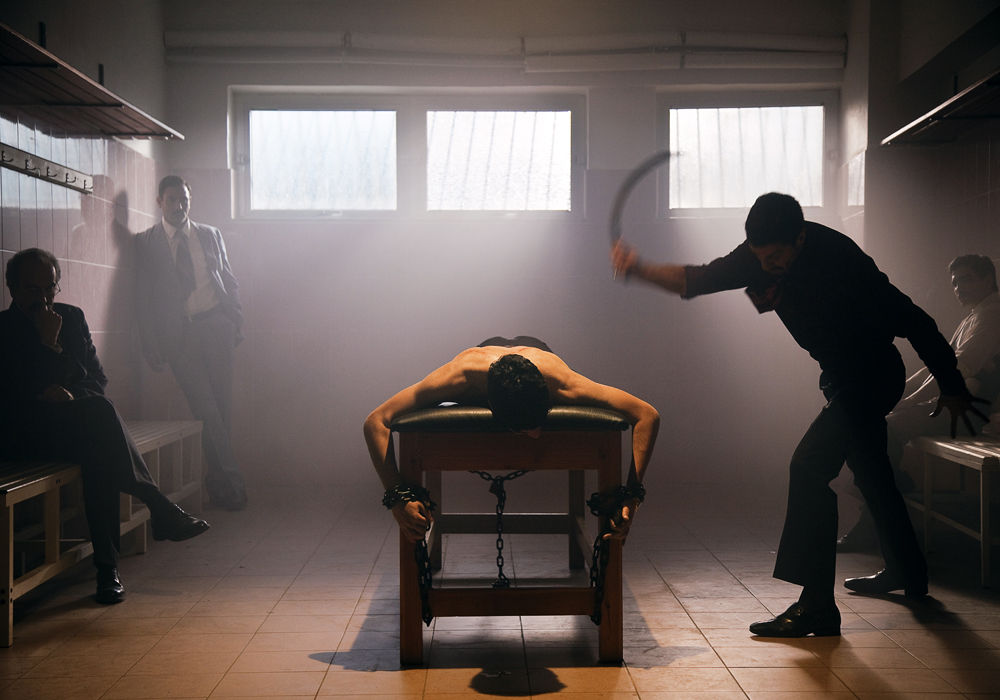
Latif bears a striking resemblance to Uday. After some nasty threats and lashes, Latif agrees to become Uday’s double. Subsequently, Latif, to his disgust (and knowing that he could be shot on a whim at any moment), enters into Uday’s world of sadism, debauchery, drugs and murder. At what point will the ‘nice guy’ Latif draw the line?

The Devil’s Double makes for some gripping, if horrific, viewing. But, most noticeably, the film does not have much of a storyline. More often than not, scene after scene is just Latif following Uday to witness the latter’s next appalling act. Surprisingly though, this does not make the film any less absorbing to watch.

Latif being punished for not initially agreeing to become Uday's double.

The key reason for the movie being so engrossing is Dominic Cooper. The choreography may be jerky; the music may sound cheap and not totally in sync with the scenes; and the women may look distinctly Western and non-Arabic. Yet, particularly as Uday, Cooper makes the audience feel that their money has not been wasted. As Uday, Cooper plays an insane (in the true sense of the word), volatile, spoilt brat with an insatiable appetite for alcohol, drugs, women (of all ages) and malice. In almost every scene, Uday appears drunk, high and unpredictable. Uday makes us feel uneasy every time he appears on screen, which is a testament to Cooper’s acting abilities.

There is no doubt that Cooper plays well as Uday. But his performance is not quite in the same league as Christian Bale’s in The Fighter. This is because in The Devil’s Double, Uday is not given a third dimension. Also, from the film, one has little idea what Uday’s upbringing was like, or what his relationship was like with his father (which was apparently not great) and mother (whom he was supposedly close to), amongst other things. This is a real pity, as this could have shown Uday in a chillingly human light, as opposed to the animal that he is portrayed to be throughout the movie.

Whilst as Uday, Cooper is impressive, he is less so as Latif. This might be because Latif is too nice and normal relative to Uday. Nevertheless, one does not feel much sympathy for Latif, or his predicament. In this respect, Cooper could have done better. Then again, just as Uday has not been given much depth, nor has Latif. This is not Cooper’s fault. Rather, it is the fault of the director, Lee Tamahori (Die Another Day, xXx 2: The Next Level, Next), who should have given his two main characters more depth, even at the expense of making the film a little longer. At only 106 minutes, he had the time to do this.

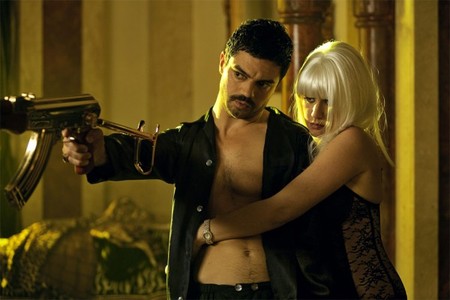
A common sight throughout the film - Uday holding a gun threateningly, with a girl (or two) around his waist. The girl here is Serrab (Ludivine Sagnier), supposedly his favourite.

Just as Uday and Latif lack complexity, so too do the other characters in The Devil’s Double, such as Munem (Raad Rawi – The Kingdom, Green Zone, Conan the Barbarian) and Kamel Hannah (Mem Ferda – Revolver, Legacy: Black Ops, Ill Manors), who are supposedly part of Saddam’s cruel regime. Too many of them, though, appear as ‘good guys in bad positions,’ which could not have been true. Repressive governments don’t exist because they’re packed with ‘good people’ under an ‘evil’ despot. Rather, they survive because they’re filled with murderous psychopaths, who are given positions to abuse (until they become victims of the system, of course). By doing this, Tamahori shamefully forsakes the chance to illustrate the true realities of Saddam Hussein’s Iraq to the detriment of the movie.

All-in-all, The Devil’s Double may be crude and the epitome of its own title, but it gives us a glimpse of what life as a double to a nasty, sadistic individual could be like. Almost by himself, Dominic Cooper, playing two very different people, makes this utterly brutal film worth watching. The Devil’s Double is not one for the feint-hearted, and will leave even the strongest of people feeling uncomfortable by the end.

PG’s Tips

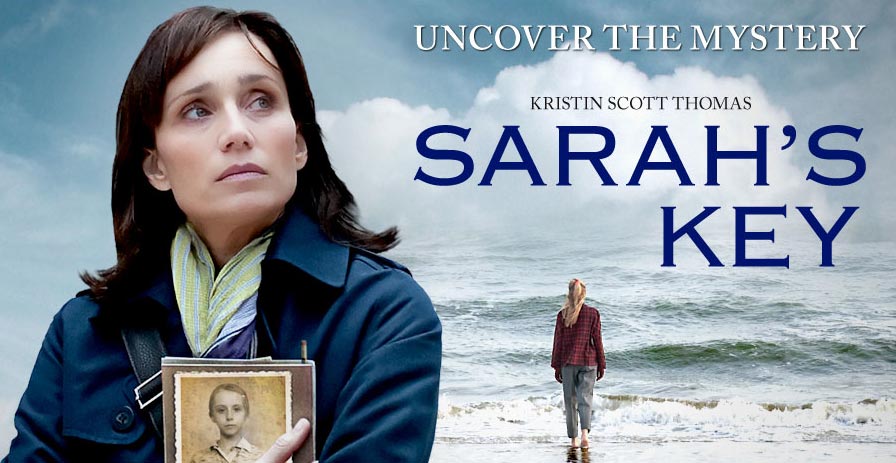
Review – Sarah’s Key (12a) [2011]

Star Rating: 4/5

<<guest review by KJF>>

Sarah’s Key, directed by Gilles Paquet-Brenner (Pretty Things, Payoff, Walled In), is a powerful study of the impact of the Holocaust on one person’s life. Julia Jarmond (Kristin Scott-Thomas – Four Weddings and a Funeral, Nowhere Boy, Tell No One) is an American journalist living in Paris and married into a well-to-do French Family, with a teenage daughter. About to inherit a flat from her husband’s family, she gradually discovers that the flat has an unpleasant history – that it once belonged to a Jewish family until they were forcibly evicted and rounded-up by officials of the Nazi-collaborationist Vichy regime on 16th July 1942.

Julia (Kristin Scott-Thomas) make alarming discoveries about the past.

The film operates on two narrative levels – Julia’s own revelations in the present, coupled with the fate of that family seen through the eyes of 10 year-old Sarah Starzynski (Melusine Mayance – Ricky). Whereas some films that employ a multi-narrative focus can become confusing to the viewer, skilful editing allows the story here to be told in a straightforward and effective way.

Sarah’s story is truly a harrowing one. Before the French police can see them, she locks her younger brother in a bedroom cupboard, taking the key with her and determined to come back. She and her parents are taken to the sports stadium, the Velodrome d’hiver, which for three days became a makeshift concentration camp for thousands of Jews, until they were transferred to other internment facilities.

Without operating on a massive budget, Paquet-Brenner allows the viewer to be immersed in this terrible situation, providing a shocking snapshot of life within the ‘Vel d’hiver’ – the appalling sanitary conditions, the lack of space and the awful uncertainty faced by all the internees as they awaited their fate. There is occasional bravery and foolhardiness, as one inmate carries out a daring escape. Sarah’s fate, and the travails she has to endure are also portrayed with a hard-hitting immediacy. She and her parents are transferred to the Beane-la-Rolande camp outside Paris. After being separated from her parents, who are sent unknowingly to Auschwitz, she and another child escape the camp. Sarah finally achieves a kind of freedom.

But even in later life, she is haunted by the events of the past. Mayance plays Sarah with enormous charisma – we are totally engrossed in her fate. Charlotte Poutrel who plays Sarah in later life imbues her with both moving dignity and tangible personal trauma.

Sarah (Melusine Mayance) in happier times.

Meanwhile in the present, Julia faces her own struggles and is forced to re-evaluate her own life as she asks questions that her in-laws would prefer were not asked, representing the general unease felt in some areas of French society about the events of the 1940s.She also faces up to the reality of her unhappy marriage – she becomes pregnant, which her husband, preoccupied by work, is painfully indifferent about. She goes on a personal quest to find out more about the fate of Sarah and her family, which leads her to New York and Italy where she finally meets Sarah’s son, played by Aidan Quinn (Blink, Legends of the Fall, Unknown), who knows little of his mother’s fate.

Next year is the 70th anniversary of the round-up of French Jews, which has also prompted another film on the subject, La Rafle (The Round-Up). There, the narrative is squarely based in the 1940s and has more of a documentary-style feel as scenes depicting Hitler and Himmler, and machinations of the Vichy authorities are run alongside the awful fate of the Jewish families. That leads to an informative and disturbing film, but somewhat distant. Here the pain and stoicism Scott-Thomas portrays in her performance provides an intensely personal and unifying emotional core to the film. As the fate of Sarah unfolds for her, so it does for us, staying with us long after the cinema has been left.

KJF

Review – Harry Potter & The Deathly Hallows: Part II 3D (12a) [2011]

Star Rating: 3.5/5

So, after more than 1,048 mostly tedious minutes, the boy wizard, Harry Potter, finally comes face to face with his arch nemesis, Lord Voldemort, in this epic final volume of the Harry Potter series. Better than the previous seven films by a considerable distance (not that that is much of a feat), Harry Potter & The Deathly Hallows: Part II reaches all expectations in predictable fashion.

Neville Longbottom (Matthew Lewis) secretly leading Harry, Hermione and Ron back into Hogwarts.

Part II follows on from where Harry Potter & The Deathly Hallows: Part I finished off. Harry (Daniel Radcliffe – Harry Potter I-VII(i), The Woman In Black), Hermione (Emma Watson – Harry Potter I-VII(i), My Week With Marilyn) and Ron (Rupert Grint – Harry Potter I-VII(i)) must find and destroy the remaining Horcruxes. Only by wiping them out will the trio weaken Voldemort (Ralph Fiennes – Harry Potter IV, V & VII(i), Prince of Egypt, Coriolanus) sufficiently for Harry to stand a chance of defeating him, especially now that the former is armed with the powerful Elder Wand.

But the journey to locate the Horcruxes – not to mention battling it out with the fearsome villains – is fraught with perils. All will end where it began for the staff and pupils of Hogwarts: the school itself. What cost will Harry have to pay for finishing the task set for him by his deceased tutor, Albus Dumbledore (Michael Gambon – Harry Potter III-VII(i), Ali G Indahouse, The King’s Speech)?

Unlike Part I, the plot for Part II moves at a decent pace without being intense. (Although, one is subconsciously urging the film to quicken so he/she can see how the final duel plays out.) There are flaws in the storyline; however, it would be unfair to criticise director David Yates (Harry Potter III-VII(i)) for these because he has a duty to accurately follow the book, written by JK Rowling, that the film is based upon. Indeed, Yates would have been chastised if he had dared not kept to the book almost to the letter.

Voldemort, Belatrix (Helena Bonham Carter – Suffragette) and Lucius Malfoy (Jason Isaacs) leading the Death Eaters to the perimeter of Hogwarts, ready to lay siege to the school.

Whilst the plot cannot be criticised, the acting certainly can. Once again, the majority of the cast flatter to deceive. One can clearly see that the position for Hogwarts, besieged by Voldemort and the Death Eaters, is dire for much of the movie. But because the acting is by Radcliffe, Watson and Grint is so poor it is hard to empathise with the situation. (The lack of a moving music score does not help either.) Moreover, if Harry’s return to Hogwarts was supposed to inspire hope in the beleaguered school’s pupils and staff, Radcliffe fails miserably to achieve this. (If one thinks back to how well the actors portray the desperate situations in The Two Towers and The Return of the King – parts II & III of The Lord of the Rings series, – or how much confidence Aragorn, played by Viggo Mortensen, arouses in the peoples of Rohan and Gondor just by his presence, it becomes embarrassing to compare the acting by the cast of those two films to that of Harry Potter & The Deathly Hallows: Part II.) And what’s with those spontaneous kisses in the midst of combat? Viewing such kisses was awful and cringe-worthy in Pirates of the Caribbean III: At World’s End, and (unsurprisingly) watching them here was just as awful and cringe-worthy. Yates must have been aware of this, so why did he do it? Surely, there were better places to stick in the smooches than at a time when someone’s head could have been zapped into oblivion?

Voldemort

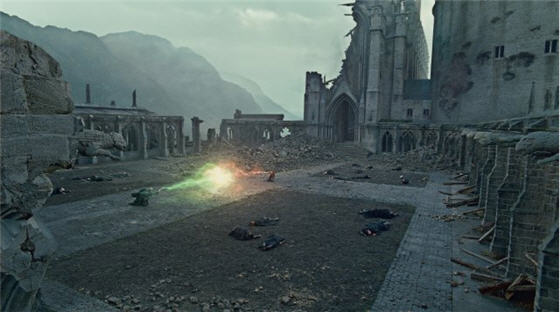
Voldemort and Harry battling it out one last time with their wands in the ruins of Hogwarts.

Nonetheless, the acting was never going to be the most important aspect of Part II. The success of the film was always going to hinge on the CGI and the final duel between Harry and Voldemort. Neither of these let the viewers down and are highly impressive. What’s more, the 3D adds considerably to the spectacle.

So, the Harry Potter series concludes with aplomb. If the acting by the protagonists would have been better, Harry Potter & The Deathly Hallows: Part II may have rivalled The Return of the King. Still though, in Part II, one is treated to a feast of CGI as well as an epic duel that ensures eyes remain glued to the screen. Harry Potter fans and non-fans alike have waited ten years for Harry to face Voldemort. Few will go home disappointed. Finales do not often end on such a high.

PG’s Tips
Review – The Lincoln Lawyer (15) [2011]

Star Rating: 4/5

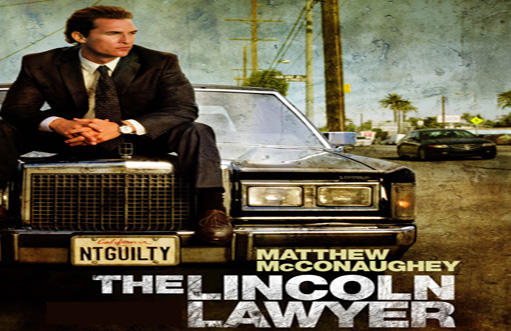
There have not been many legal-thrillers made in recent years. The Reader and The Social Network are two that spring to mind. The Lincoln Lawyer is not, over-all, as good as those two films, but it certainly gives one value for money.

The Lincoln Lawyer is based on the book by Michael Connelly. It is about a smooth-talking, alcoholic defence lawyer, Mick Haller (Matthew McConaughey – Ghosts of Girlfriends Past, How To Lose A Guy In Ten Days, The Wolf of Wall Street), whose job is to keep criminals on the street. He’s quite good at it too – and knows it – which is why Lewis (Ryan Phillippe – Cruel Intentions, Breach, Flags of our Fathers), a thirty-two year old man from a wealthy family, demands that Mick represent him. Lewis has been charged with violent assault and rape against a prostitute; although, Lewis is adamant that he has been set up. Yet, no sooner does Mick agree to represent Lewis when things begin to get murky and twisted.

The prostitute giving Lewis her address, before he allegedly beats her up and rapes her at knife-point.

For a film that is dominated by courtrooms and legal technicalities, The Lincoln Lawyer is surprisingly interesting even to those who care little for the law. The plot is gripping and relatively simple to follow, provided the viewer is concentrating. At times, one may wonder which law-case Mick is referring to. The storyline also has a couple of flaws and things always seem to work out coincidentally well for Mick (as they tend to do for main characters in films), but not to the extent that the movie becomes ridiculous by any stretch of the imagination.

The plot is aided by very good choreography and a dialogue that is generally well-written. The director, Brad Furman (The Take), and the script-writer, John Romano (Intolerable Cruelty, Prodigy), have certainly done their homework and appear to have quite a solid knowledge of American federal law as well as Californian state law. (I do not know enough about such matters to be able to pass a proper judgement. I can only get a feel for the American legal system based on what has been said throughout the film.) There are a handful of sensationalist lines that obviously would not be said in a real court; yet, this does not take too much away from the script’s over-all quality.

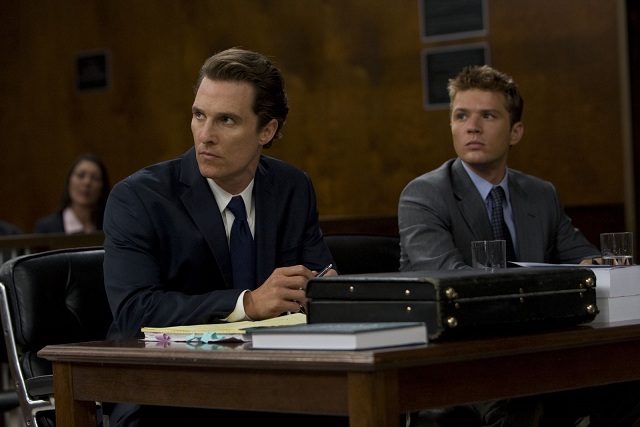
Mick representing Lewis in court.

The script’s main beneficiary is Matthew McConaughey. McConaughey plays very well as a conceited barrister. (One should be aware that a common theme in movies is to make the main character look good by placing him/her next to or against weaker actors. In The Lincoln Lawyer, particularly in the courtroom scenes, McConaughey comes up against a less competent barrister than himself. The director also gives McConaughey the last word in the vast majority of the scenes, which makes him stand out more than he should.) Although McConaughey’s performance is not quite worthy of an Oscar nomination due to a lack of depth in Mick’s character; he illustrates that he is versatile and far from doomed to solely play hopeless-romantic roles like the one he did in How To Lose A Guy In Ten Days.

Without a doubt, McConaughey outshines Ryan Phillippe, the main supporting actor in The Lincoln Lawyer. Philippe does an alright and competent job; but has not really enhanced his reputation as an actor much here. Just like in Cruel Intentions, he plays here a spoilt rich kid needing to get his way. In all of his films, including Breach (wherein he plays a spy), Philippe conveys the same passion. In addition, he has the same scrunched-up facial expression that does him no favours. In Philippe’s defence, one can argue that he is not given the tools or the time to express himself in order to make the audience empathise with Lewis’ situation. But this is not a convincing argument; especially considering that Melissa Leo won an Oscar for Best Supporting Actress after having less time on the screen in The Fighter than Phillippe did here.

All-in-all, The Lincoln Lawyer is certainly worth watching. It is entertaining and, seemingly, portrays the American legal world quite accurately; despite being a little theatrical on occasions. Indeed, by the end one should leave the movie feeling very satisfied.

PG’s Tips