Category Archives: Based on Real Events

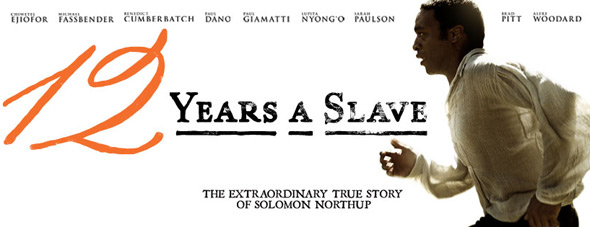
Review – 12 Years A Slave (15) [2014]

12 Years a Slave - header2

Star Rating: 4.5/5

Director:

  • Steve McQueen – Hunger, Shame

Cast:

Music Composer:

It is with great relief and pride that state-sponsored slavery has been consigned to history in the West and in most other parts of the world. From ancient times through to the mid-20th century, enforcers of slave-based systems at times demonstrated the worst aspects of human nature. Despite America’s ideology of freedom and democracy for all peoples, the country started off with a terrible stain on its record due to the racially-aggravated slave-based system that was predominantly practised in the South of the country. Steve McQueen’s 12 Years A Slave brilliantly gives us a window into the harrowing world of the treatment black people suffered at the hands of white slave masters in the South before the Thirteenth Amendment came into force in 1865.
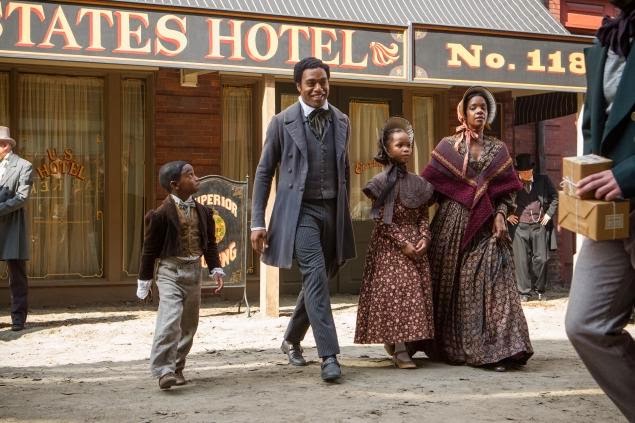
Solomon (Chiwetel Ejiofor), as a free man, with his family in New York.

Solomon (Chiwetel Ejiofor), as a free man, with his family in New York.

12 Years A Slave is based on the true story and memoirs of Solomon Northup (Chiwetel Ejiofor). Born and raised in New York as a free man, Solomon is invited by two ‘artists’ to share his skills with the violin and make some good money by playing in Washington DC.

But after making some money in the capital, Solomon is drugged one night and wakes up in chains in a dank underground cell. Despite his protestations of being a free man, Solomon is shipped to the South and sold into slavery.

Somehow, Solomon must stay alive, maintain his dignity, and return to New York to see his wife and two children again.

12 Years A Slave is a powerful, tear-jerking and distressing film from the off. Nothing by way of raw brutality is left out to illustrate how badly black people were treated under slavery. By starting the film with Solomon in slavery, having all his moments as a free man via flashbacks, Steve McQueen immediately enables audiences to sympathise and pity Solomon’s situation.

Sometimes (to be really pedantic) in order to rub salt into Solomon’s sorrowful predicament, the film indulges itself a little. This has the dual effect of giving Solomon so much screen time that it is as if the world revolves around him (especially due to the fairly long scene sequences that McQueen favours); and it pads out the movie’s running time to 134 minutes by putting in scenes that have no material effect on the plot. But these minor criticisms should not undermine the effectiveness of 12 Years A Slave.

Epps (Michael Fassbender), the nastiest of all the slave owners, shouting crazily at an enslaved Solomon, tormenting him.

Epps (Michael Fassbender), the nastiest of all the slave owners, shouting crazily at an enslaved Solomon, tormenting him.

The movie, however, would only be half as potent if it were not for the great performances from all the cast members, but in particular from Chiwetel Ejiofor and Michael Fassbender. Ejiofor captures the anger and the despair of his character. Moreover, he portrays the sheer willpower of Solomon to survive with (some of) his dignity intact splendidly. Whenever Solomon looks back at the life that was taken from him, viewers cannot help but feel Solomon’s pain, and credit must be given to Ejiofor for enabling audiences to feel such strong emotions.

On the flip side, Fassbender also makes viewers feel strong sentiments with his performance as Edwin Epps, the ‘N*****-Breaker’ as his character is proudly nicknamed. It would have been easy for Fassbender to fall into the trap of a pornographic nastiness (as Ramsey Snow from Game of Thrones and the villains in Hostel and The Human Centipede all gleefully jump into). But by Fassbender playing Epps as an eccentric and quasi-comical human being, with problems of his own, Fassbender provides us with a powerful performance of a sadistic, yet troubled soul that feels entirely natural under the circumstances.

Fassbender can be seen to represent some of the worst facets of slave owners (and humanity in general when given licence). Nevertheless, 12 Years A Slave makes a point to show audiences that some slave owners were not as bad as Epps, and that they lived in fear of men like Epps and their own henchmen because of it.
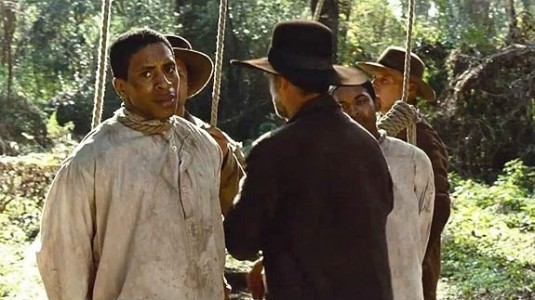
Black slaves hung for the crime of running away from their cruel masters, and to deter others from trying to do the same.

Black slaves hung for the crime of running away from their cruel masters, and to deter others from trying to do the same.

Being afraid, of course, does not excuse keeping slaves or their actions. But as honest as the film is regarding the cruelty of the slave-system in the South, it is equally honest about why some people, who would have probably been good citizens in the free North, perhaps did not do enough (or anything at all) to help bring down the system. Steve McQueen must be applauded for this, like he should be for virtually everything else in this movie, as it would have been easy to inaccurately portray all slave owners as the Devil incarnate.

Over-all, 12 Years A Slave can be best summed up in the words of one of the actors in the film: “amazing… and none of it good.” Through outstanding performances from the cast, the film powerfully reveals the horrors and brutality of the slave-based system in the South of America in the mid-nineteenth century. One is likely to leave the film feeling numb and distressed, but also with the knowledge that not all the slave owners were wicked and that good men like President Abraham Lincoln put an end to the reprehensible system almost 150 years ago.

PG’s Tips
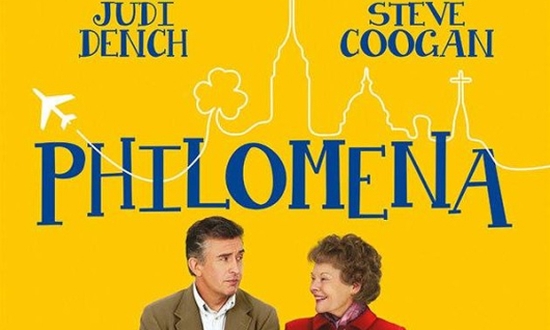
Review – Philomena (12a) [2013]

Philomena - title banner

Star Rating: 3.5/5

Director:

  • Stephen Frears – The Queen, Tamara Drewe, Untitled Lance Armstrong Biopic

Cast:

  • Judi Dench – Shakespeare In LoveMy Week With Marilyn, Skyfall, The Best Exotic Marigold Hotel I & IISpectre
  • Michelle Fairley – The Others, Harry Potter VII(i), Game of Thrones, Ironclad II
  • Steve Coogan – Tropic Thunder, What Maisie Knew, Northern Soul
  • Sophie Kennedy Clark – Dark Shadows, Nymphomaniac
  • Sean Mahon – Line of Fire, Reign of the Gargoyles, Dark Shadows
  • Charlie Murphy – Love/Hate, 71, Northmen: A Viking Saga

Music Composer:

Take Shelter, My Week With Marilyn and Shadow Dancer had solid premises and the potential to be very good films. Alas, they all shared the characteristics of being flat, lacking in character development, and running out of steam long before the end. It resulted in their latter scenes being overly predictable or trite, or both. Similarly, despite being a decent film, Philomena suffers from the same traits.

Young Philomena (Sophie Kennedy Clark) holding her son tightly in the sole hour a day that she is given free time at the nunnery.

Young Philomena (Sophie Kennedy Clark) holding her son tightly in the sole hour a day that she is given free time at the nunnery.

Philomena is a British drama set in 2003. The movie is based on the true story of how an elderly Irish lady, Philomena Lee (when young, played by Sophie Kennedy Clark; when old, by Judy Dench), came to find her son, Anthony (when adult, played by Sean Mahon).

Anthony was taken away from Philomena in the 1950s when he was a toddler by the nuns at a Catholic nunnery, while Philomena lived there as punishment for her sin of becoming pregnant outside of wedlock. But now she has the help of a journalist in Martin Sixsmith (Steve Coogan), who has just lost his job as a Labour government advisor and a BBC reporter. He wants to write a story that will reinvigorate his career (as a Russian history author of all things) and helps Philomena to find out what happened to her son.

Philomena’s storyline is straightforward, logical and saddening, yet done with wittiness and dignity. The film wastes little time in getting the two main actors on screen together and moving them in the right direction, which is positive. Quaint Ireland is portrayed in a genial, green way, with cheerful locals down at the local pubbie, while a nasty side of the country is shed light upon by revealing some of the crimes of Catholic nunneries. (Naturally, the particular nunnery involved claim that Philomena distorts the truth and is misleading. As they would.)

Yet, Philomena rapidly feels tired, which is disappointing as one expects more from it. The movie is only 98 minutes long, but it feels longer. All the best jokes are in the trailer, so they lose their panache when said in the film. But in general the humour, which is far from dumb or slapstick, lacks the cutting edge of Woody Allen’s recent Blue Jasmine.

Philomena in her senior years (played by Judi Dench) talking about her past with Martin Sixsmith (Steve Coogan) in the Irish countryside.

Philomena in her senior years (played by Judi Dench) talking about her past with Martin Sixsmith (Steve Coogan) in the Irish countryside.

Moreover, Philomena has little character development and, like My Week With Marilyn, none of the characters seem to go anywhere either. This is despite the characters and the movie taking the correct (and predictable) steps towards the film’s (inevitable) conclusion, which is a strange and an unrewarding sensation as a viewer.

The lack of character arches is a real pity as some of the characters had the potential to be very interesting. Consequently, the acting lacks meat, even though all of the performances are good. Judi Dench is fine as the quirkily charming, if socially odd Philomena in her old age. But Dench’s performance is undermined by the fact that no-one believes she’s Irish. It does not help that Dench’s accent in the film flips between that of a Dubliner and the Queen’s English. In addition, as Dench is playing a role not too dissimilar to many of her past performances, audiences are invariably reminded that she’s English (in case they needed any reminding).

Steve Coogan plays decently as the disillusioned (and discourteous) man trying to find his way again after becoming unemployed in middle age. And Michelle Fairley, playing in a very different role to the dutiful Lady Catelyn Stark in Game of Thrones, gives a good and amusing performance (with the little screen time she has) in her native Irish accent as the ruthless editor, manipulating all the facts that Martin Sixsmiths relays to her in order to create a more enticing story for her newspaper.

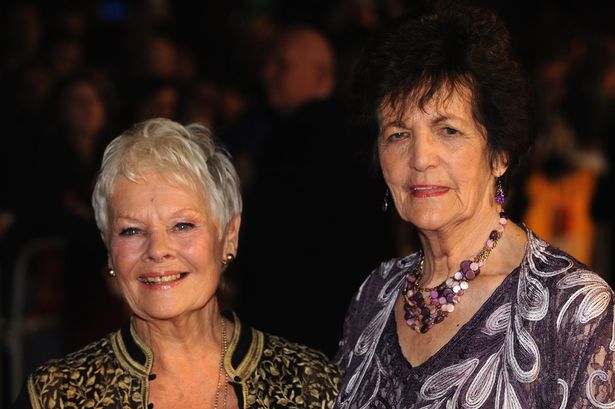
Judi Dench (left) with the real Philomena Lee (right) at the premier.

Judi Dench (left) with the real Philomena Lee (right) at the premier.

However, arguably the best performance of the film is from Sophie Kennedy Clark, as the young Philomena. In spite of the harsh living conditions in the nunnery, Clark demonstrates a mother’s true happiness when she holds her young son in her arms, as well as a mother’s brokenness when her son is taken away. Like Fairley, Clark is not in the film for very long. But the scenes with her on screen are the only emotional ones in this otherwise quite dull movie.

All-in-all, Philomena is a fine film. The movie provides audiences with a decent insight into the mean, inner workings of Catholic nunneries in Ireland in the 1950s, and has a good cast that deliver their lines well enough. Yet, Philomena lacks energy and runs out of puff long before its running time is over. Likewise, the film’s humour, general flatness, and lack of character development makes viewers feel like they’re cutting meat with a blunt knife. All the key ingredients to Philomena should have been sharper and more engaging as the film’s premise is a fascinating one.

PG’s Tips
Review – Captain Phillips (12a) [2013]

Captain Phillips - title banner

Star Rating: 4/5

Director:

  • Paul Greengrass – Resurrected, Green Zone, Bourne II-III & V

Cast:

  • Tom Hanks – Philadelphia, Toy Story I-III, Saving Mr Banks
  • Catherine Keener – The 40-Year-Old Virgin, Into The Wild, Nailed
  • Barkhad Abdi – Eye In The Sky
  • Barkhad Abdirahman
  • Faysal Ahmed
  • Mahat M Ali
  • Michael Churnus – Love & Other Drugs, Men In Black III, Glass Chin
  • David Warshofsky – Public Enemies, Unstoppable, Now You See Me
  • John Megaro – The Big Short

Music Composer:

Piracy at sea is nothing new. Ships have been hijacked since the dawn of time and the problem is still rife in many parts of the world today. Paul Greengrass’ Captain Phillips shows us superbly what it can feel like when a ship gets taken over by a gang with guns.

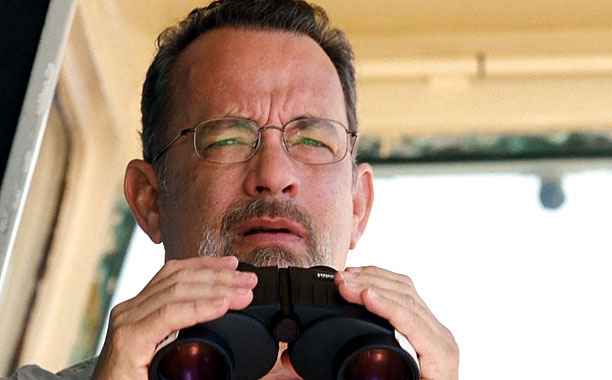
Captain Phillips (Tom Hanks) on the look out for pirates... and worried by how quickly they're advancing toward his ship.

Captain Phillips (Tom Hanks) on the look out for pirates… and worried by how quickly they’re advancing toward his ship.

Captain Phillips is based on the true story which occurred in 2009 and the book, which came out the following year called A Captain’s Duty: Somali Pirates, NAVY seals, and Dangerous Days at Sea by Captain Richard Phillips, himself. The film is about when the Maersk Alabama, a large cargo ship, is seized by Somali pirates near the Horn of Africa, and the crew are taken hostage.

The plot for Captain Phillips is straightforward, grounded and gets to the crux within 20 of its 134 minute running time. From them on the film is tense; so tense, one’s heart pounds in sync with the background beats, and one’s arms shake almost as much. Also, as the film is long, one feels as if the situation is being drawn out in real time. This is despite no lawyers appearing in the film, and little attention given to events behind the scenes in instances of hostages at sea (unlike the very good Danish film, A Hijacking).

The pirates on their little speed boat, eager to seize Maersk Alabama and gain a reward for it back in Somalia.

The pirates on their little speed boat, eager to seize Maersk Alabama and gain a reward for it back in Somalia.

That Somali piracy is a current and serious issue enhances the horror of the situation for Captain Rich Phillips and his crew, and the close up shots (Greengrass’ trademark) enable viewers to see the fear of captain and crew at hand. Although, there is a law suit presently being waged against Captain Phillips, claiming that the movie does not portray events aboard the Maersk Alabama in the run up and during the hijacking truthfully, the film feels (for the most part) chillingly realistic. Some may argue that the realism becomes less convincing as the movie goes on; for example, neither captain nor crew complain of hunger throughout the ordeal. But in the main, Captain Phillips seems sincere, irrespective of the outcome of the lawsuit.

Captain Phillips’ genuineness is helped by the pirates looking bloody scary and behaving in a frenzied fashion. Tom Hanks is likely to gain much of the plaudits come Oscar season, and his display is absolutely brilliant as the heroic (though this point is legally being disputed) and beleaguered captain; indeed, the grimmer the situation becomes, the better Hanks performs. However, the actors playing the pirates do just as much, if not more, to make the film as thrilling (stressful) as it is, since viewers are never sure how the pirates are going to react to movement on the ship, or outside of it.

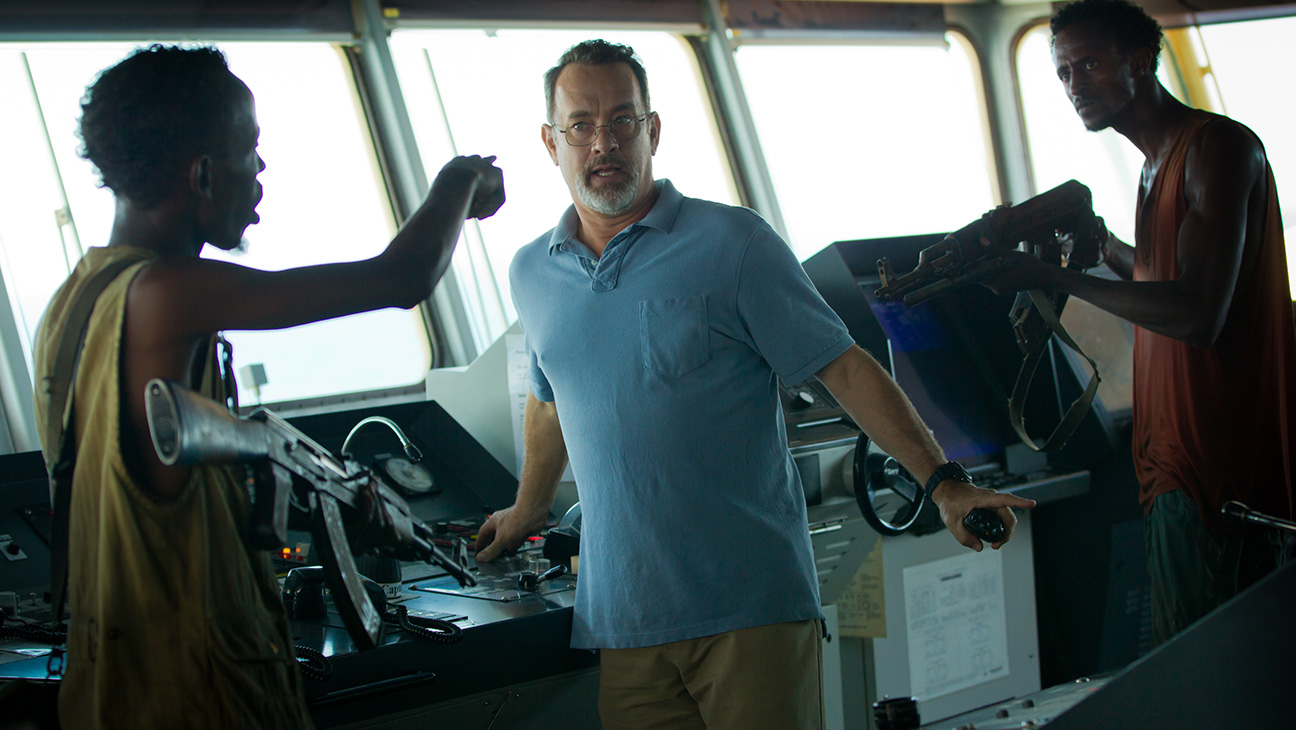
The pirates, having taken the ship and Captain Phillips hostage, telling the captain that they're in charge.

The pirates, having taken the ship and Captain Phillips hostage, telling the captain that they’re in charge.

What is quite remarkable is that the film makes us empathise with the pirates’ predicament. Barkhad Abdi, Barkhad Abdirahman, Faysal Ahmed and Mahat M Ali, the four men playing the pirates (lacking all the glamour and savvy of Johnny Depp’s Captain Jack Sparrow or Geoffrey Rush’s Captain Barbossa from Pirates of the Caribbean I-IV), show us why some Somalis turn to piracy, as well as the problems that await them should they return home without large sums of money, or at least with a great bargaining chip to acquire large amounts of money. One almost comes to pity the pirates’ plight… but for the small matter of them holding a crew (and Tom Hanks) hostage.

All-in-all, Captain Phillips is a nerve-shredding, finger-biting thriller. Granted, the film almost exclusively focusses upon events on the ship and little else. But the movie is grounded and, regardless of its factual accuracy, it feels honest in every respect. Furthermore, Captain Phillips makes viewers experience the terror of modern-day pirates seizing a vessel at sea.

PG’s Tips

Review – Gilad Shalit: The Interview (N/A) [2013]

Gilad Shalit interview title banner

Star Rating: 3.5/5

Cast:

  • Gilad Shalit (himself)
  • Noam Shalit (himself)
  • Aviva Shalit (herself)
  • Hadas Shalit (herself)
  • Yoel Shalit (himself)

(This is documentary was shown at an exclusive showing in accordance with an event. It has not been widely released or given a rating by the BBFC.)

For anyone Jewish, Israeli, or otherwise who followed the Gilad Shalit situation, 18th October 2011 was an emotional day. In Israel, it is said that no-one worked and the entire population was glued to the TV. For after almost five and a half years in Hamas captivity, following his abduction in June 2006, an asserted international campaign led by his father, and hard negotiations, Private Gilad Shalit became the first Israeli soldier to return home pale, skinny and alive in exchange for 1,027 Palestinian prisoners. This low-budget Israeli documentary, produced and aired almost exclusively for Israeli TV, gives us an insight into Gilad’s life during his illegal incarceration and how he is getting on with life since being released.

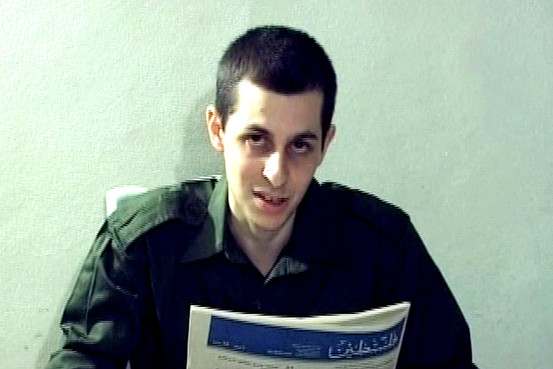
Gilad Shalit, looking pale and gaunt whilst in captivity, wherein he was not allowed to go outside for five and a half years.

Gilad Shalit, looking pale and gaunt whilst in captivity, wherein he was not allowed to go outside for five and a half years.

The documentary is only 40-45 minutes long and skips back and forth between Gilad’s time in captivity and events subsequently. Since there is no footage of Gilad’s day to day life in the hell-hole underground cell that he was forbidden to leave whilst in captivity, interviews with Gilad since returning home (smiling and with the colour having returned to his face) are our only insight into what his life was like.

The empathy one feels for Gilad is heart-breaking as he tells us his monotonous life in the lonely cell. He kept to a schedule and refused to let himself lie on his bed and just think, since that filled him with despair. The schedule often comprised of playing games with himself, such as bundling up shirts/socks into a ball and seeing how many times he could throw it into a basket/bin in a row.

However, as Gilad’s time in captivity went on, he tells us that his captors gave him a TV and a radio (how nice of them), watched games of sport with him, and played chess with him, which all helped to make the time go a little faster. Furthermore, Gilad says that occasionally Hamas broke the monotony by making him record a video or write a letter. Sometimes these were released, as the video in September 2009 testifies, and on other occasions they were not; although, his captors never told him either way.

Gilad Shalit on the day of his release, walking alongside his relieved father, Noam (right), and Prime Minister Bibi Netanyahu (left).

Gilad Shalit on the day of his release, walking alongside his relieved father, Noam (right), and Prime Minister Bibi Netanyahu (left).

Yet, it is not just Gilad’s time in captivity that is touching, but how he felt in the days leading up to his release, wherein he says (with some humour) that he hardly slept because he was so nervous, fearing it would all go wrong; and how he has fared in trying to rebuild himself since coming home. After rarely speaking to anyone regularly for years, one can only imagine how hard it must have been for him to re-adapt into a social scene again. Interestingly, Gilad claims that one of the worst aspects of coming out is that he feels left behind since his friends and family had moved on with their lives, whilst he hadn’t.

Moreover, Gilad talks fondly of when he went to New York and saw the Statue of Liberty, the symbol of freedom personified, which he believes is symbolic of his life. But his trip also revealed another side of him: a desire to lead a normal life. Gilad is a painfully shy person and being a celebrity sits uncomfortably with his character, even though he knows it is something he has to live with.

Simultaneously throughout the documentary, we are given the perspective of Gilad’s mother and father, Aviva and Noam. Noam appears stern before the cameras. He says little but his determination to bring his son home is evident in his expression, as is his relief on the day of Gilad’s return. Gilad’s mother, though, is different. She weeps and prays for him while in captivity, and cries with joy afterward when he is home and returning to good health.

Gilad Shalit, as he looks today. Although skinny, he looks happy and healthy.

Gilad Shalit, as he looks today. Although skinny, he looks happy and healthy.

Over-all, the documentary is simple, short, and moving. The film covers many fascinating areas about Gilad before and after the events of 18th October 2011 from his angle and that of other members of the Shalit family. The documentary does not discuss the Israeli-Palestinian conflict or re-open the debate about whether the price paid for Gilad’s release was worth it. Nor does it deal with any Post Traumatic Stress Disorders that Gilad may suffer from, or how Gilad feels toward his captors. This is understandable. The first is not something Gilad can answer objectively, and the latter two are personal matters and would be insensitive to ask. (And even if the issues were raised, they most probably could not be aired for political reasons.) In some ways, it is a shame that these topics are not raised. Arguably, they would have made the documentary more interesting.

Nevertheless, the documentary deals with almost all other issues and makes one’s eyes well with water. This is because the story of Gilad Shalit is such an affecting one. It’s a miracle he returned home alive. Two years have passed since his release and he seems to be making the right steps toward a full recovery. Please God he can go on to fulfil his potential. He deserves it!

PG’s Tips
Review – The Gatekeepers (15) [2013]

The Gstekeepers - title banner2

Star Rating: 4/5

Director:

  • Dror Merah – Sharon

Cast:

  • Avraham Shalom Ben-Dor
  • Yaacov Peri
  • Carmi Gillon
  • Ami Ayalon
  • Avi Dichter
  • Yuval Diskin

Music Composer:

  • Regis Baillet
  • Jerome Chassagnard

There is great interest in the media regarding the Israeli-Palestinian conflict. Much of this interest focusses on the social and political aspect of the conflict. However, little regard is given to the security angle. Dror Merah’s Oscar-nominated The Gatekeepers explores this particular viewpoint superbly with openness and maturity.

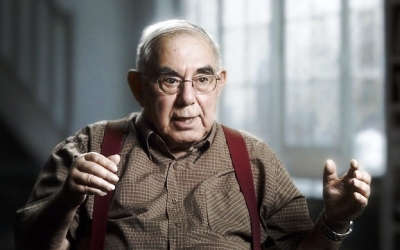
Avraham Shalom, the most morally dubious of the six men, explaining his view on the 300 bus hijacking in 1984.

Avraham Shalom, the most morally dubious of the six men, explaining his view on the 300 bus hijacking in 1984.

The Gatekeepers is an Israeli documentary about the Shin Bet, the Israeli domestic intelligence-gathering security agency. Merah explains the role of the Shin Bet by interviewing six of the most recent heads of the organisation, including Avraham Shalom Ben-Dor (1981-86), Yaacov Peri (1988-94), Carmi Gillon (1994-96), Ami Ayalon (1996-2000), Avi Dichter (2000-05) and Yuval Diskin (2005-11). The documentary explores seven themes and analyses some contentious incidents and events between the 1980s and the 2000s, and how the Shin Bet dealt with them through a mixture of interviews and digital-reconstructions.

The Gatekeepers is an intellectually heavy film that deals with numerous controversial events. Merah does not shy away from asking his interviewees difficult questions, and the answers are unexpectedly candid on a range of incidents and events, such as what happened to the terrorists who hijacked the 300 bus in 1984; the mistakes the Shin Bet have made regarding targeted assassinations; the organisation’s lack of awareness vis-à-vis Jewish terrorism in the run-up to Prime Minister Yitzchak Rabin’s assassination in November 1995; and the lack of foresight regarding the Second Intifada between 2000-04, among many other issues.

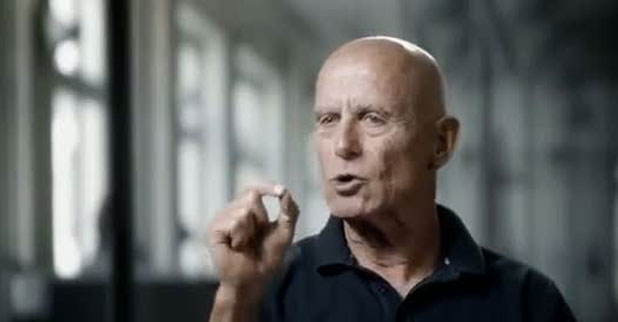
Ami Ayalon, the most passionate of the six men, giving a political opinion on Israel's current security situation.

Ami Ayalon, the most passionate of the six men, giving a political opinion on Israel’s current security situation.

That the interviewees are who they are entails that one takes their opinions seriously. Much of what they say is deep, thought-provoking and utterly relevant to the Israeli-Palestinian conflict today. For them, invariably, moral and ethical conundrums were not merely academic debates, but life and death decisions that had to be made in minutes if they were lucky, but usually in seconds.

Having to make such decisions (of varying legality) on a regular basis, it would be easy to believe that these six men are so desensitised to taking life and abusing the law that they are now socio-psychopaths and virtually inhuman. But what is astonishing is that all six men have a burdening conscience. They are all extremely conscientious of the powers that they once held in the Shin Bet, and that their actions (or omissions) cost and saved lives.

However, while the former heads of Shin Bet give a political view or two (after-all, it would be impossible for them not to), the political context of their work is mostly absent from The Gatekeepers. This is understandable because to explore the politics of the Arab-Israeli conflict in any kind of depth would take much longer than the documentary’s 101 minutes. Yet, for anyone who does not know anything about Israel, the Israeli-Palestinian crisis, and the wider Middle East, The Gatekeepers is likely to be hard going, since he/she would have little idea as to why Israel invaded southern Lebanon in 1982, or why the Oslo Accords were signed in 1994, or what led to the outbreak of the Second Intifada in 2000, among other matters.

Avi Dichter, the most recent head of Shin Bet to be interviewed.

Avi Dichter, the most recent head of Shin Bet to be interviewed.

Nevertheless, regardless of whether one does or doesn’t know much about the Israeli-Palestinian conflict, one is unlikely to come out of the film thinking highly of either the Israelis or the Palestinians. The six former heads of the Shin Bet spare no-one from culpability, whether it be the politicians or the peoples.

Over-all, The Gatekeepers is a stimulating, if morbid, portrayal of what the Shin Bet has done and the problems that the organisation continues to face on a regular basis. The six former heads of the organisation are remarkably frank and honest about their deeds, and demonstrate how responsible they feel for their actions and omissions, as well as for the events that happened under their watch. But one thing the six men do not is believe that the Shin Bet’s efforts to safeguard the Jewish state from threats of violence and terrorism will be lessening any time soon.

PG’s Tips
Review – Zero Dark Thirty (15) [2013]

Zero Dark Thirty - title banner2

Star Rating: 3.5/5

Director:

  • Kathryn Bigelow – The Loveless, The Weight of Water, The Hurt Locker

Cast:

Music Composer:

When it comes to films about historical events, like Titanic, The Assassination of Jesse James by the Coward Robert Ford and Lincoln, one knows how they will end before even starting them. Yet, such movies can be just as, if not more entertaining and gripping than movies where one does not know what is going to happen. The same is true for the arresting Zero Dark Thirty, which also sends out a potent message to America’s enemies.

The film is a politico-historical drama based around real events. ‘Zero dark thirty’ is a military codename for half past midnight, and it is the time that the operation to kill Osama Bin Laden took place on the night of 1st/2nd May 2011 in Abbottabad, Pakistan.

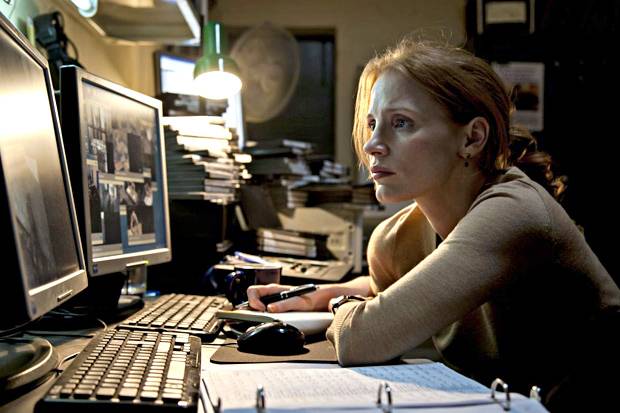
Maya (Jessica Chastain), baggy-eyed as she watches countless interrogations of detainees in her attempts to find a lead to Osama Bin Laden's location.

Maya (Jessica Chastain), baggy-eyed as she watches countless interrogations of detainees in her attempts to find a lead to Osama Bin Laden’s location.

Zero Dark Thirty is all about the CIA’s attempts to find the world’s most wanted man following his masterminding of the terrorist attack on the Twin Towers on 11th September 2011, and his subsequent vanishing. The film is an unhurried, yet captivating thriller that does not feel like it is 157 minutes long. Like with The Hurt Locker, it has a grounded feel, and therefore lacks the hyperbole and surrealism of 24. Even the ending mirrors this mood, which is rare and noteworthy for Hollywood.  It is too early to know how true Zero Dark Thirty is to the reality, but it feels like a realistic and fair representation of events. First, it illustrates how dangerous it is for Americans to be in Afghanistan/Pakistan, thereby emphasising how heroic they are being out there. Second, it demonstrates some of the difficulties CIA agents face operating in the field, trying to unearth information about their targets (who have multiple identities and never seem to stay in the same place twice). Third, the movie shows the CIA adopting dubious torture methods and degrading treatment upon suspected and actual terrorists in undisclosed locations in their desperate bid to find leads on Bin Laden.

There has been much controversy over Kathryn Bigelow’s depiction of torture adopted by US personnel in 2002 and afterward (when it was officially outlawed). Arguably, the film enables Bigelow to reveal her anti-American/anti-war bias again, like she did so painfully in the critically-acclaimed The Hurt Locker. Yet, it is doubtful that she glorifies torture here. Instead, she lets viewers decide for themselves, in a similar vein to Rendition, if torture is ever necessary or useful, which is an intelligent way of kicking off a moral debate on an important and current subject.

CIA agent Dan (Jason Clarke) arguing with his and Maya's boss, Joseph (Kyle Chandler), as he tries to help Maya in anyway he can.

CIA agent Dan (Jason Clarke, right) arguing with his and Maya’s boss, Joseph (Kyle Chandler, left), as he tries to help Maya in anyway he can.

But what is even more striking than the portrayal of ‘enhanced interrogations’ in Zero Dark Thirty is how the film has painted the War on Terror as merely Osama Bin Laden. Yes, he is the figurehead of modern-day Jihadi terrorism and his death is a symbolic hammer-blow to the cause. But by 2011 it is dubious how influential Bin Laden was to the pursuit of world Jihadism, due to the emergence of numerous Al-Qaeda splinter groups, such as Al-Aqaeda in the Arabian Peninsula (AQAP) and Al-Shabaab, among others. Yet, these other terrorist groups are barely given a mention, which is strange considering the security threat they pose to the world.

Additionally, Zero Dark Thirty does not explore, even for the sake of context, the complex and conflicting relationships between America, Afghanistan and Pakistan, not to mention the contradictory nature of the Pakistani state itself. (Anyone remember David Cameron saying that Pakistan looks “both ways” on terrorism?)

However, if one can ignore the lack of political background, one can enjoy strong performances from all the cast. At the forefront, is Jessica Chastain, who demonstrates, for the first time, that she can play a leading role just as solidly as she can a supporting one when given the chance. Her single-minded character, Maya, is given the central task of finding Bin Laden. Maya might get her way sometimes in a contrived manner for reasons of plot, but Chastain looks so natural in the role, and the way Maya changes under the circumstances is indicative of Chastain’s talent.

Patrick (Joel Edgerton) enjoying banter with his marine companions before leading them to into combat to kill Bin Laden.

Patrick (Joel Edgerton) enjoying banter with his marine companions before leading them to into combat to kill Bin Laden.

Maya’s solemnity is in mild contrast to her two main colleagues, the tough-yet-amusing Dan (Jason Clarke) and the bitchy Jessica (Jennifer Ehle). Both Clarke and Ehle play well, and are more empathetic than Maya. Nevertheless, they are both outshone by Chastain’s performance.

Over-all, Zero Dark Thirty is a sincere and honest attempt to recreate the finding and killing of Osama Bin Laden. That one knows how the movie will end is irrelevant, as it is an engrossing and tense watch. The film might be devoid of much of the current context vis-à-vis the War on Terror, and it might be overly-simplified; yet, what it lacks on those fronts, it makes up for in compelling performances, not least from Jessica Chastain. Furthermore, Zero Dark Thirty sends out a stark message to America’s enemies: it doesn’t matter where they hide or for how long they hide, America will find them and bring them to justice.

PG’s Tips
Review – Lincoln (12a) [2013]

Lincoln - title banner

Star Rating: 4/5

Director:

  • Steven Spielberg – Saving Private Ryan, War Horse, Indiana Jones I-V

Cast:

  • Daniel Day-Lewis – Gangs of New York, There Will Be Blood, Nine
  • Sally Field – Mrs Doubtfire, ER, The Amazing Spider-Man I & II
  • Joseph Gordon-Levitt – The Dark Knight Rises, Looper, Sin City II
  • Tommy Lee Jones – No Country For Old Men, Captain America: The First Avenger, Emperor, Bourne V
  • Jackie Earle Haley – Watchmen, Shutter Island, Robocop
  • David Strathairn – LA Confidential, The Whistleblower, The Bourne Ultimatum & Legacy
  • James Spader – Boston Legal, The Office, By Virtue Fall
  • David Oyelowo – The Last King of Scotland, Rise of the Planet of the Apes, The HelpInterstellar
  • Michael Stuhlberg – Steve Jobs

Music Composer:

  • John Williams – Star Wars I-VI, War Horse, Indiana Jones I-V

All democratically-elected state leaders, whether they are presidents or prime ministers, have an ambition for reaching their respective position. For some, it is about power and/or aggrandisement; for others, it is about putting their names down in the history books. But for an exceptional few, it is about being uniquely in the right place at the right time and enabling their ideologies and actions to make them stand out from among their peers. President Abraham Lincoln (1860-65) belongs to the last category, and Steven Spielberg’s admirable biopic, Lincoln, illustrates why this is the case.

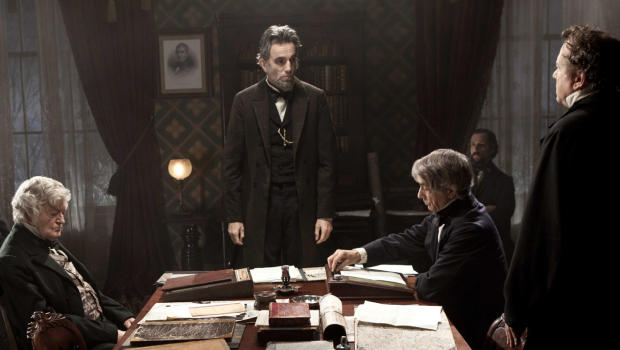
President Lincoln (Daniel Day-Lewis) forcefully telling his cabinet that he intends to proceed with the amendment and that they must help him.

President Lincoln (Daniel Day-Lewis) forcefully telling his cabinet that he intends to proceed with the amendment and that they must help him.

Lincoln revolves round events in America during January 1865. At the time, no-one was certain as to how long the Civil War (1861- April 1865) would continue. The Unionists, led by President Lincoln (Daniel Day-Lewis) and the armies of the north, are in a strong position. But the rebel Confederacy, led by Jefferson Davis and the armies of the south, are not about to surrender either.

The latter’s resolve is further stiffened upon hearing that, despite the war raging on, President Lincoln intends to push through Congress the highly contentious Thirteenth Amendment (the abolition of slavery) before the legislature ends its session at the beginning of February. The Confederacy’s hatred of black people and their slavery-based economy cannot allow for it. But will their attempts to block the proposed amendment succeed?

Lincoln’s storyline is intelligent; yet, slightly lacking in depth and, at 150 minutes, drawn out. Despite being potentially confusing for someone who has no knowledge of the era, the political wranglings going on behind the scenes throughout the film are great to watch because they are amusing and appear realistic. They also indicate that there was more than an element of corruption in American politics in the 1860s. (Then again, does The Ides of March show us that American politics is significantly different today?)

Moreover, the debates on slavery and freedom throughout Lincoln are intellectually stimulating. In the present era, it defies belief to learn that President Lincoln was a ‘radical,’ even among his key allies, for wanting the abolition of slavery. The Thirteenth Amendment was a measure that America (apparently) wasn’t yet ready for in 1865 (almost sixty years after Britain and France had abolished the Slave Trade, and four years after Tsar Alexander II had passed the emancipation of serfdom in Russia).

However, one only has to read Harriet Beecher Stowe’s 1852 novel, Uncle Tom’s Cabin, to realise that Lincoln fails to illustrate the inherent racism towards black people that existed even among abolitionists. Similarly, the movie says nothing of the four Union states that permitted slavery, which is strange as those four states could have been portrayed as a thorn in President Lincoln’s side.

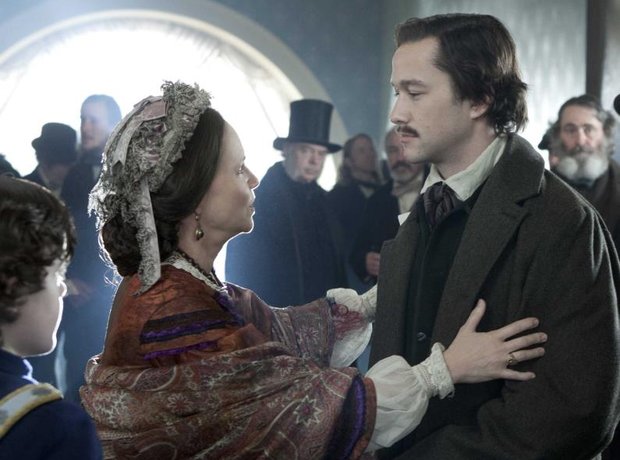
Mary Lincoln (Sally Field) welcoming home her eldest son, Robert (Joseph Gordon-Levitt).

Mary Lincoln (Sally Field) welcoming home her eldest son, Robert (Joseph Gordon-Levitt).

Furthermore, the film only deals seriously with two issues: the amendment and the Civil War. While they understandably dominated Lincoln’s presidency, surely there were other matters for the president to consider, such as the annual budget and foreign relations? None of these are ever mentioned, which has the indirect effect of making President Lincoln appear almost two-dimensional.

But to say that the ex-president was anything less than a highly-complex and gifted man serves to undermine him, and Daniel Day-Lewis exemplifies this with a performance of remarkable consistency. He captures the former president’s quirkiness, social awkwardness and witty humour fantastically, as well as his indefatigable zeal and reason for his ideals.

Day-Lewis undoubtedly dominates Lincoln, but that does not mean that the supporting cast should be ignored. With the exception of Joseph Gordon-Levitt, who is average at best and whose role, as the ex-president’s son, Robert Lincoln, could easily have been shelved, Sally Field as the ex-president’s worrisome and frenzied wife, Mary Lincoln; Tommy Lee Jones as the savvy Republican Congressman, Thaddeus Stevens; David Strathairn as the cautious Secretary of State, William Seward; Jackie Earle Haley as Alexander Stephens, the racist Vice-President of the rebel Confederacy; and even James Spader, as the underhand Mr. Bilbo (no, not Baggins) are all superb.

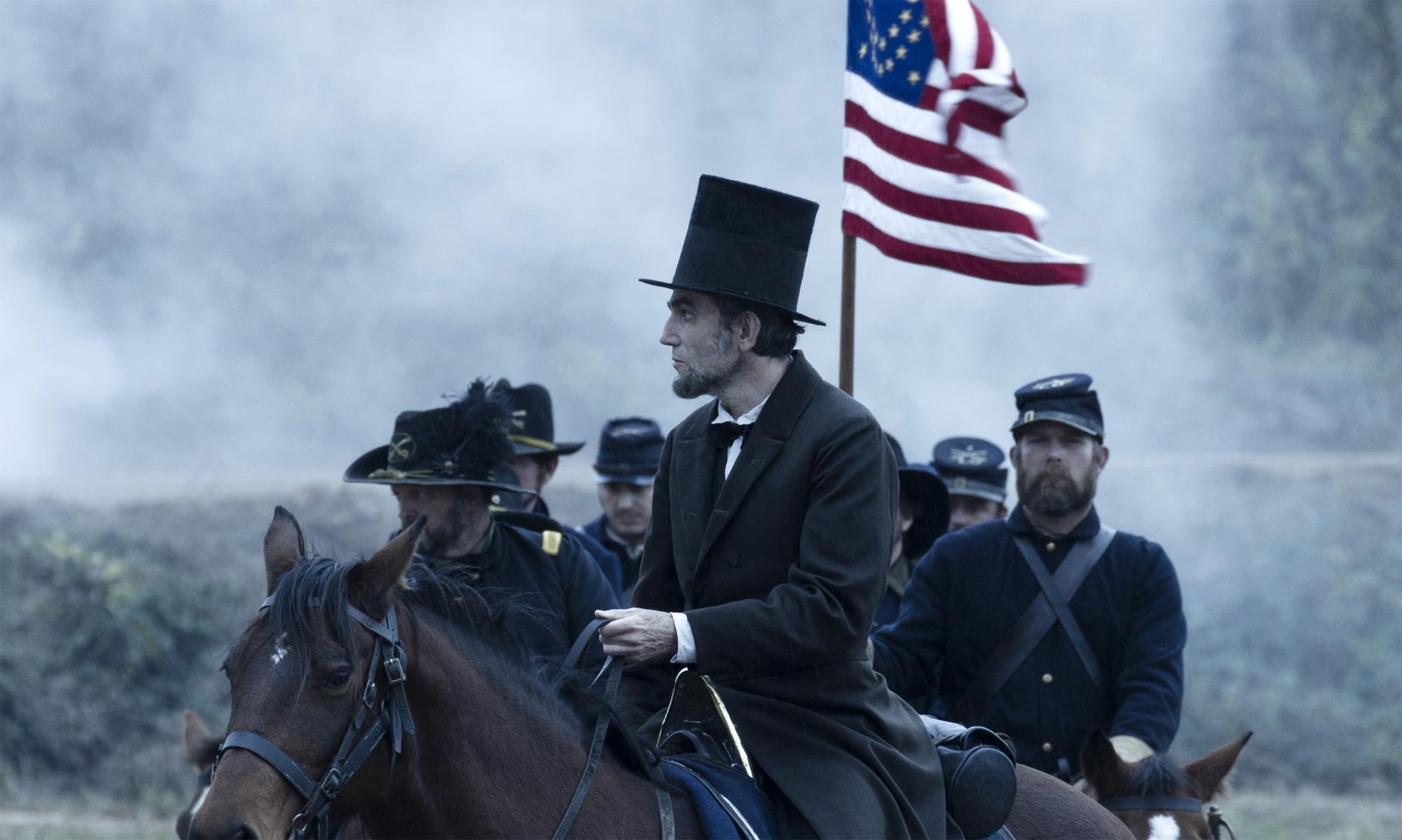
President Lincoln exploring the aftermath of a battlefield, knowing that his decisions have cost many Americans their lives.

President Lincoln exploring the aftermath of a battlefield, knowing that his decisions have cost many Americans their lives.

Equally good are the costume and make-up designs, which truly bring the 1860s to life. Likewise, John Williams should be praised for writing a soundtrack that does not sound remotely like Star Wars, Home Alone or Indiana Jones. Indeed, Williams’ score here is more subtle in nature. It adds a touching element to Lincoln that makes the movie that bit more poignant when it matters most.

Over-all, Lincoln is a venerable film with clever dialogue, a beautiful set and enchanting acting. The movie might be a little long and simplifies some of the historical issues, but this should not negate that President Lincoln was one of the rare few leaders who have managed, almost single-handedly, to change the course of history. He understood the uniqueness of his epoch and acted upon his conscience, despite knowing the storm it would cause (as well as unknowingly making him pay the ultimate price for it). Lincoln demonstrates all of this wonderfully and shows us why President Abraham Lincoln is rightly regarded as the archetypal president that so many of his successors have tried (and often failed) to emulate.

PG’s Tips
Review – The Imposter (15) [2012]

Star Rating: 4.5/5

Director:

  • Bart Layton – Breakout, Banged Up Abroad

Cast:

  • Adam O’Brian
  • Anna Ruben – Eternal, The Fallow Field
  • Frédéric Bourdin (himself)
  • Beverley Dollarhide (herself, Nicolas’ mother)
  • Carey Gibson (herself, Nicholas’ sister)
  • Codey Gibson (himself, Nicholas’ brother-in-law)
  • Charlie Parker (himself, FBI official)
  • Nancy Fisher (herself, FBI official)

The disappearance of children is nothing new, as Changeling and the case of Madeleine McCann can attest. Vanishing children is a deeply disturbing part of society and one that is not as rare as good people would like it to be. In the case of Nicholas Barclay, however, there were a series of unusual twists that would be too far-fetched for a soap opera. In brilliant fashion, The Imposter sheds light on this peculiar affair.

Nicholas Barclay, aged thirteen. This picture was taken shortly before he disappeared without trace after playing basketball with friends.

The Imposter is a documentary-style film about the vanishing of Nicholas Barclay in San Antonio, Texas, in June 1993. After no news for more than four years, in November 1997 the Barclay family received a call from Spain telling them that Nicholas had been found. Yet, when ‘Nicholas’ returned to America, he was no longer fair-skinned, blond-haired and blue-eyed. Rather, he had dark Arabic features, brown eyes, looked older than sixteen, and spoke with a distinctly French accent.

Nevertheless, the Barclay family took him in. They looked after him as if he were part of the family, unaware that ‘Nicholas’ was really Frédéric Bourdin (played by Adam O’Brian to depict ‘Nicholas’ when young).

The Imposter is a surprisingly gripping film that feels significantly shorter than its 99 minutes. Despite being neither a drama nor a thriller nor a horror movie, the film is dramatic, thrilling and unnerving (indeed, more so than many thrillers and horror movies). This is because The Imposter has been put together magnificently by Bart Layton by predominantly using old film footage of the actual events; few re-enactments, all of which are grounded; eerie music that gives the film an odd air of surrealism; and question-less interviews with the living members of the Barclay family, embassy officials and FBI-agents involved in the case, as well as Frédéric Bourdin, himself.

Frédéric Bourdin, whilst being interviewed during the film. Even though he is thirty-eight now and balding, with his dark features it is still incredible to believe that he managed to fool the Barclay family, the Spanish authorities, American embassy officials, and some FBI agents into thinking that he was Nicholas Barclay in 1997.

By putting the cameras directly in front of the interviewees, Layton has cleverly made the audience feel as if they are interviewing the cast themselves. Moreover, as the interviews and the storyline follow a logical/chronological order, viewers are able to feel a rare intimacy with the interviewees as well as with the events as and when they unfold.

Layton has also given each member of the cast a fair amount of time to explain his/her reasoning. This ensures that one can understand and empathise with the characters for why they behaved and reacted in the way they did.

That is not to say that all questions arising from the case are satisfactorily answered in The Imposter. (I won’t go into them as that would spoil the film.) It is also bizarre that little is mentioned of Nicholas’ older brother Jason, who died mysteriously of a drug overdose in 1998 not long after meeting ‘Nicholas.’ Surely, Layton could have interviewed some of Jason’s friends (assuming he had any) to get Jason’s side of the story or to get an idea of the sort of relationship Nicholas had with his older brother?

‘Nicholas’ (Adam O’Brian) back in school after returning from Spain. Did it not occur to Nicholas’ friends and teachers that he looked darker than he should have done and much older than a sixteen year old boy?

But the lingering question throughout the movie is: how did Nicholas’s mother, Beverley, not realise that it was not her son who arrived from Spain? Or, alternatively, did she know that ‘Nicholas’ wasn’t her son, yet played along with it for other reasons? It seems somewhat implausible that a mother, regardless of her intelligence, would fail to recognise her son in an instant, as Christine Collins (played superbly by Angelina Jolie) conversely illustrated in Changeling.

All-in-all, The Imposter elucidates admirably upon the weird ‘reappearance’ of Nicholas Barclay. The film powerfully makes one feel close to the events in an impressive, yet utterly unsettling way. This is not merely because of Bart Layton’s bold and well-executed documentary-style approach to the movie. It is because The Imposter is a non-dramatised true story, and deals with a disconcerting issue that is very pertinent to present-day society.

PG’s Tips
Review – Titanic 3D (12a) [2012; originally released in 1997]

Star Rating: 4/5

A century has passed since the White Star Line’s ‘unsinkable’ Titanic sank on her maiden voyage, taking down 1,503 souls with her to the watery abyss. It was a tragedy, but one that still fascinates people for so many reasons. The absorbing 1997 film, re-released in 3D for the centenary of the disaster, embodies why this is the case.

Titanic’s bow at the bottom of the Atlantic Ocean. Looks little more than a ghost ship now, with rusticles giving it an eerie feel.

Titanic centres round two central characters who board the ship as it takes off from Southampton for New York in April 1912. Rose (when old, played by Gloria Stuart; when young, played by Kate Winslet – Revolutionary Road, Contagion, Steve Jobs) is the daughter of a bankrupt aristocrat and is travelling in the luxuries of first-class. Against Rose’s will, her mother, Ruth (Frances Fisher – The Roommate, The Lincoln Lawyer, The Silent Thief), has set her up to marry Caledon ‘Cal’ Hockley (Billy Zane – Back to the Future I-II, The Roommate, The Employer), a wealthy businessman, to relieve the family of their crippling debts.

Jack (Leonardo DiCaprio – Revolutionary Road, Inception, The Wolf of Wall Street), on the other hand, is a dirt-poor artist journeying in third-class. After spending time in a variety of European cities, he is returning to America for a better life.

Whilst on the decks, Jack spots Rose on the higher levels and is instantly taken by her beauty. Yet, it is not until Rose is on the verge of jumping off the vessel’s stern that they meet. Jack urges her not to plunge to her death in the freezing waters and she follows his advice.

Subsequently, much to the envy of Cal, love blossoms between Jack and Rose… Until a cold, cloudless night when Titanic, running at full steam, strikes an iceberg.

For a film that is predominantly about a love story, Titanic is surprisingly gripping and abetted by a powerful music score, written by James Horner. Astonishingly, the film does not feel like it’s three hours and fifteen minutes long, since director/producer James Cameron (Alien, Avatar I-II, Sanctum) uses the time cleverly.

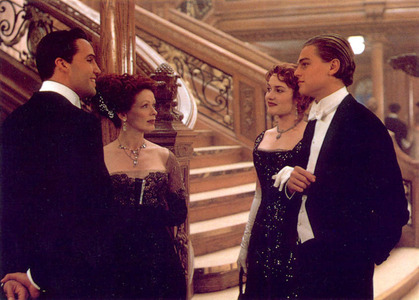
Cal (Billy Zane) and Ruth (Frances Fisher) reluctantly welcome Jack (Leonardo DiCaprio) to dinner in the glorious, first-class dining hall. Rose (Kate Winslet) accompanies him, drawing the ire of her fiancé and mother.

For the two hours or so before Titanic suffers its fatal wound, Cameron ensures viewers believe the false sense of security that passengers undoubtedly felt aboard the ‘unsinkable’ ship (even though audiences know the ship’s doomed fate), and gives the characters a (clichéd) 1912-societal role, depth and humour to maintain one’s interest.

Moreover, Cameron makes the vessel hit the iceberg with (approximately) an hour and a half to go. With Thomas Andrews (Victor Garber – Legally Blonde, Milk, Argo) stating that Titanic has less than two hours afloat, it feels like one watches the ship keel in real time, instead of in a quick, artificial manner. This not only means viewers can realise the anarchy that gripped the ship as she went under; it enables one to appreciate the heroics of individuals on the night, such as the officers who sent out distress signals until Titanic’s power failed, and the life-boat stewards, like William Murdoch (who has been incorrectly portrayed as a murderer by Cameron) and Harold Lowe (Ioan Gruffudd – Fantastic I-II, Sanctum, Mariah Mundi and the Midas Box), who lowered as many boats and got as many people into them as possible, amidst the chaos.

And because Cameron has so much time, he also properly shows us the cowardice of others, like Bruce Ismay (Jonathan Hyde – The Mummy, The Tailor of Panama, Spooks), who wanted headlines so badly he imperilled the ship he named (ironically immortalising Titanic), and Edward J. Smith (Bernard Hill – The Lord of the Rings II-III, Valkyrie, Paranorm), the reckless and dithering captain, who at least had the dignity to go down with the vessel.

On the whole, the actors play their parts well, particularly Kate Winslet (even though she recently came out saying that her acting could have been better and she has a point), Frances Fisher, Gloria Stuart, Billy Zane and Kathy Bates (Misery, Midnight In Paris, Starbright), as the ‘unsinkable’ Molly Brown.

However, the cast’s performances are often undermined by risible dialogue. The worst offender, by a distance, is Leonardo DiCaprio. (Not that Winslet does herself much credit by shrieking “Jack” frequently.) DiCaprio’s ability to spew out contrived lines in a desperate voice is almost an embarrassment to the victims of the disaster.

Dialogue may not be one of Cameron’s specialities (Avatar illustrated that), but as a director he cannot be questioned. The impeccable way Titanic has been filmed and flows are testimony to this. That the movie’s set is huge and that one hardly notices the numerous special effects give clout to this (apart from a couple of poor CGI shots of the bow’s nose).

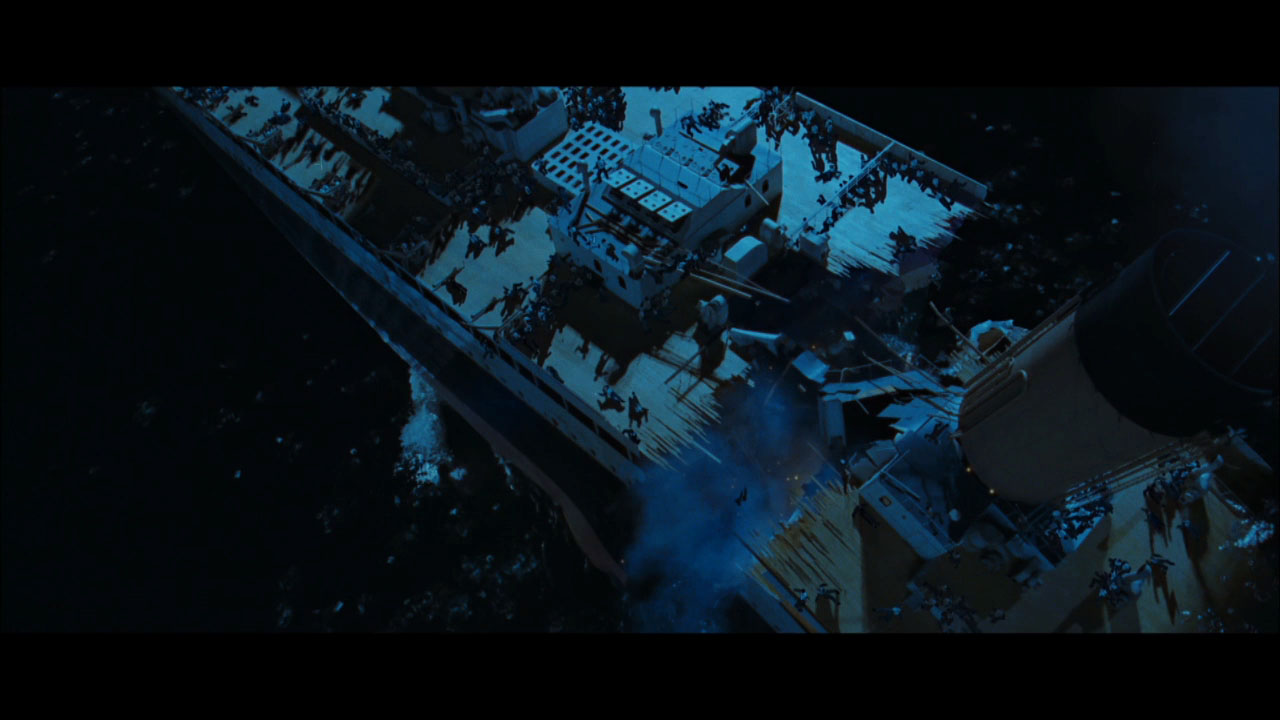
After sounding like a wounded animal as water flooded the bow and lower levels, the weight of the ship’s stern finally takes its toll on the vessel, breaking it in two.

Alas, the 3D does not effectively aid the film. It is not that effort hasn’t been put in. Rather, Titanic is not the type of film wherein the 3D can enhance scenes much, other than when people are falling from the stern as the giant propellers rise monstrously from the water.

All-in-all, Titanic is an enchanting film that gives us a window into a by-gone era. The film brilliantly details many of the complexities of early-twentieth century society, with moving music and special effects that are as magnificent as the ship that left Southampton. But the movie also does the tragedy justice, pointing out the valour of some and the pusillanimity of others. This is why the fate of the ‘unsinkable’ ship will forever have the power to captivate.

PG’s Tips
Review – In Darkness (15) [2012]

Star Rating: 4.5/5

In Jerusalem’s Holocaust Memorial Museum, Yad VaShem, there is a section honouring the Righteous Gentiles/the Righteous Among The Nations. During World War II (WWII), it is known that almost twenty-four thousand non-Jewish people risked their lives in Nazi-occupied Europe to hide and save Jews from Hitler’s murderous Final Solution. Leopold/Poldek Socha was one such courageous individual. In a powerful but unflattering portrayal of Poldek, the Jews he saved, and the era, In Darkness commemorates the bravery of this unconventional hero.

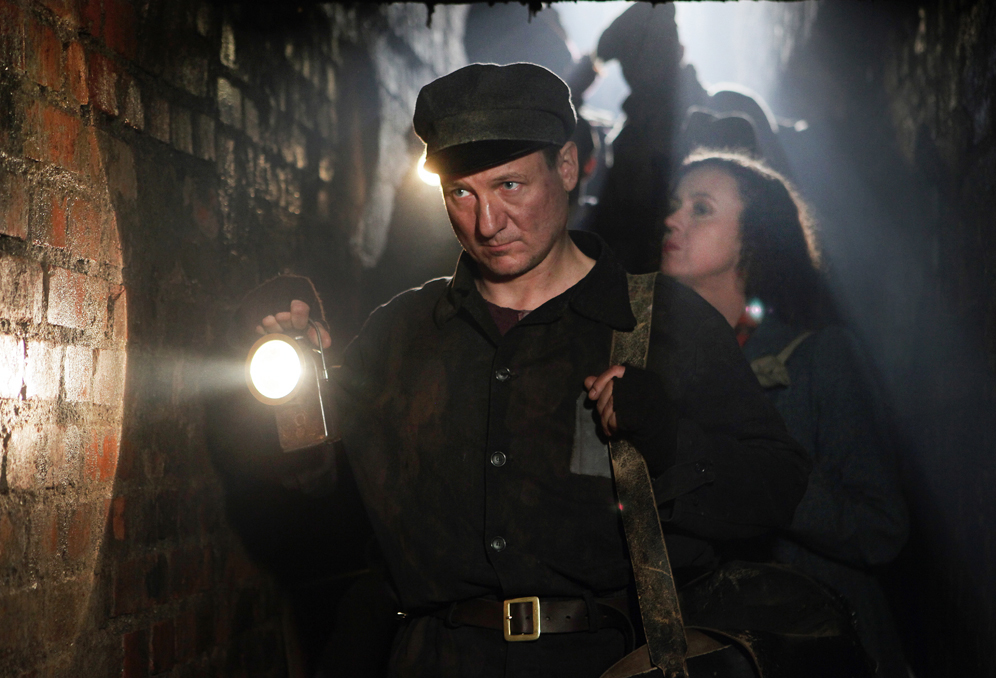
Poldek Socha (Robert Wieckiewicz) leads thirteen Jews through the caverns of the stinking sewers to find them a safe haven from their Nazi persecutors.

In Darkness is a low-budget Polish film that centres round Poldek Socha (Robert Wieckiewicz – The Dark House, Zero, Lech Walesa), a Polish sewer worker in Lvov. Using his extensive knowledge of the town’s sewer system, he hides thirteen Jews in the sewers just before the Lvov Ghetto is liquidated by the Nazis. For fourteen months, Poldek cares for his Jews. He brings them food and other essentials, until the Soviets liberate Lvov in July 1943, when he leads them to safety.

The storyline for In Darkness is straightforward and well put together. At 145 minutes, the film might seem a little long and repetitive, but the distressing nature of the movie ensures that it is not tedious at all.

The intensity of the Jew-hatred, the noise of rapid firing machine-guns and the sight of brutality against innocent people creates an intimidating atmosphere. Like tension in a string, one can feel the Jews’ fear of the Nazis and the local Polish population. The darkness of the sewers and the shaking of the camera enhance the film’s edginess by making the movie seem claustrophobic. At times, notably when Poldek moves the Jews from one excrement-running tunnel to another, the movie becomes almost unbearable to watch.

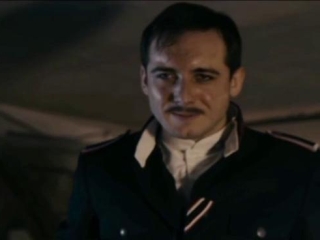
Poldek's friend, Bortnik (Michal Zurawski). Bortnik is the feared leader of the Ukrainian Nazis in Lvov.

Yet, the ending is probably the most awful and poignant part of the film. As the euphoria of saving the thirteen Jews is at its height, one learns how Poldek died and what was said at his funeral. It should leave anyone with decency sickened! Alas, it’s as unsurprising as it is shocking; a reflection of the profound levels of antisemitism in pre- and post-WWII Poland.

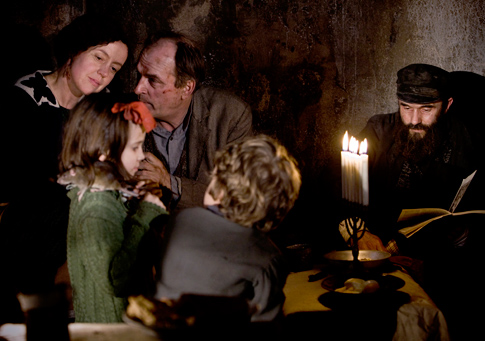
But was Poldek not part of the same society? In Darkness sheds light on his personality and shows him to be a very different kind of hero to Oscar Schindler (played superbly by Liam Neeson in the brilliant 1993 film, Schindler’s List). Whilst Schindler was the dashing businessman who became horrified by the Nazis’ treatment of the Jews, Poldek was not handsome and was quite indifferent to the cruelty dished out by the Nazis. Indeed, director Agnieszka Holland (The Secret Garden, The Wire) reveals on numerous occasions during the film that Poldek was just an ordinary man doing his mundane job and held deep-rooted antisemitic views.

It is not even clear why Poldek ends up hiding and saving the thirteen Jews. Is it because they pay him nicely, so he can afford jewellery for his wife, Wanda (Kinga Preis – The Dark House)? Is it because Poldek knows the unspeakable fate that awaits him and his family if he informs the authorities of the Jews? Or is it out of a sense of moral righteousness? Perhaps not even Poldek, himself, knew. Robert Wieckiewicz vividly captures Poldek’s constant vacillations, as well as his fear of being found out by the local Poles and the Nazis, both of which are always eager to turn in more Jews and their collaborators.

They may be holed up in the dank sewers, but the Jews still manage to celebrate the festival of Hannukkah right under the noses of the Nazis.

Although the cast play very well, Poldek, the people of Lvov and the Nazis are all given critical depictions throughout the movie. But what is more interesting is that Holland has not left the terrified Jews off the hook either. She shows them to be people who are grateful and ungrateful to Poldek; treacherous and edgy among themselves; plus lustful, amongst other things. Hence, In Darkness portrays the thirteen Jews as real people, feeling the pressures of their situation. Again, this is a stark contrast to the Jews in Schindler’s List and other Holocaust movies, like The Pianist or The Boy With The Striped Pyjamas, which depicts them as models of immaculate behaviour.

Over-all, In Darkness is an exceptional but harrowing film. It not only enables us to understand the period, it forces us to experience the torment that the thirteen Jews in the sewers endured for fourteen months. Above-all, In Darkness points out why Poldek Socha should be immortalised among the Righteous Gentiles in Yad VaShem. Despite his antisemitic sentiments and morally dubious reasons for initially hiding the Jews, he showed himself to be a hero. Not a fashionable hero like Oscar Schindler, but one who was willing to stand up to evil and put his, and his family’s, life on the line to save innocent people. Amen!

PG’s Tips