Category Archives: Thriller

Review – Trance (15) [2013]

Trance - title banner

Star Rating: 3.5/5

Director:

Cast:

Music Composer:

  • Rick Smith – Breaking and Entering

Psychological thrillers, by their nature, are puzzling and mess with one’s mind. Inception, Shutter Island and Black Swan all did this with varying levels of charm, appeal and success. Danny Boyle’s impressive and sexy Trance adds something new to this testing sub-genre.
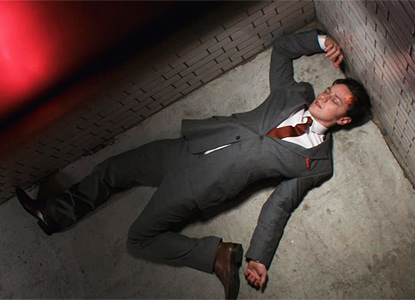
Simon (James McAvoy), unconscious after being bashed on the head by a batton. As a result, he cannot remember what he did with the painting.

Simon (James McAvoy), unconscious after being bashed on the head by a batton. As a result, he cannot remember what he did with the painting.

  Trance centres round Simon (James McAvoy), who works for a London-based company that auctions expensive paintings. The company has a security system in place to prevent the paintings from getting stolen, and Simon is part of the system.

However, when Franck (Vincent Cassel) leads a gang to steal a precious painting during an auction, the painting disappears. Simon, the last person to have handled the painting before its disappearance, was smacked on the head while he removed the painting. Since then, he has developed amnesia and so he can’t remember where he put the painting. In a desperate bid to find the painting, Franck decides that Simon must go to Elizabeth Lamb (Rosario Dawson), a hypnotherapist. Elizabeth believes that by hypnotising Simon, she can get him to recollect the location of the painting.

Trance’s plot is clever and innovative. The film is fast-paced from the off, intense, violent and engaging. It is complex and confusing too, since it constantly does back and forth in time, unravelling what happened to the painting as well as explaining the various (and sinister) motivations of the characters. Moreover, and similar to Black Swan, one is never sure in Trance when one is watching reality or a dream (or a memory or a possible memory). All of this keeps viewers firmly on their toes because no-one can be sure as to where the film is going.

Simon undergoing hypnotherapy with Dr. Elizabeth Lamb (Rosario Dawson) in an attempt to regain his memory regarding the painting.

Simon undergoing hypnotherapy with Dr. Elizabeth Lamb (Rosario Dawson) in an attempt to regain his memory regarding the painting.

Although, it is dubious as to whether Trance’s storyline actually makes sense. Again, this is not novel to the sub-genre: it is uncertain whether the plots for The Machinist or Shutter Island added up (but no-one would argue that those were atrocities to cinema, like Sucker Punch or The Lady In the Water); while Fight Club and Inception demanded that one see them twice (at least) before being able to appreciate (or understand) those movies, and few had reason to complain about those excellent films either. Perhaps, the latter is true for Trance. However, there are some quite significant plot issues that could undermine the film and its realism (if one believes in the effectiveness of hypnotism/hypnotherapy, of course), but these are not going to be discussed here as they would spoil the thrill for those who haven’t seen the movie.

The force of Trance’s storyline is matched by the three main (and more or less only) cast members; James McAvoy in particular. Far from his relaxed demeanour as Charles Xavier/Professor X in X-Men: First-Class, his performance as Simon resembles that of his (brilliant but crazed) stage performance as MacBeth. Nothing illustrates this similitude more than the intensity in Simon’s bombardier blue eyes, as the hypnotherapy, combined with his own problems take effect on him.

Similarly, Vincent Cassel and Rosario Dawson play well, but not with the same power as McAvoy. As Franck, Cassel does a decent job as a shady, amoral character. Yet, it is hard to classify him as the villain here since there is no-one who is particularly good in Trance (some people are just much worse than others). But if one does view Franck as the main antagonist, then one may not feel entirely satisfied with Cassel’s performance because he does not possess the look or the flair to make himself a dangerous villain on screen, unlike the cunning Liam Neeson in Batman Begins/The Dark Knight Rises, or the terrifying Michal Zurawski in In Darkness, or the flamboyant Javier Bardem in Skyfall.
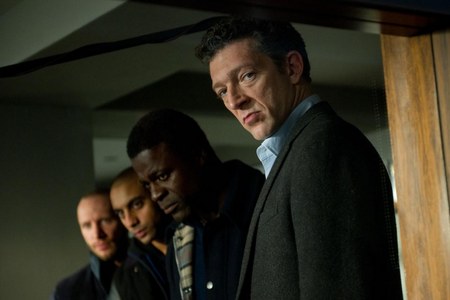
Franck (Vincent Cassel), furtherst right, keeping a worryingly close eye on Simon's treatement, with his group of thugs alongside him to illustrate the consequences for Simon if he fails to shake off his amnesia.

Franck (Vincent Cassel), furtherst right, keeping a worryingly close eye on Simon’s treatment, with his group of thugs at his side to illustrate the consequences for Simon if he fails to shake off his amnesia.

While as Elizabeth the hypnotherapist, the stunning Dawson wonderfully holds her patients (as well as the audience) under her spell, as if ravishingly embodying the psychological thrill of the movie and the sub-genre in one attempt.

Over-all, Trance is a mind-bending and gripping film that is a worthy addition to the sub-genre of psychological thrillers. The movie has its flaws, but to a limited extent these should be disregarded because Boyle’s film is original, appealing and stylish. Furthermore, like all noteworthy psychological thrillers, Trance takes one out of one’s comfort zone and, to its credit, keeps one in thought long after the film has ended.

PG’s Tips
Review – Side Effects (15) [2013]

Side Effects - title banner

Star Rating: 4/5

Director:

  • Steven Soderbergh – Traffic, Contagion, Behind the Candelabra

Cast:

  • Rooney Mara – A Nightmare On Elm Street, The Social Network, Her
  • Channing Tatum – The Eagle,White House Down21 & 22 Jump Street
  • Jude Law – The Imaginarium of Dr. Parnassus, Contagion, Dom Hemingway
  • Catherine Zeta-Jones – Traffic, Playing For Keeps, Red II
  • Vinessa Shaw – The Hills Have Eyes, 3:10 to Yuma, Siren
  • James Martinez – Gravity, The Sessions, An Artist’s Emblem

Music Composer:

Before taking medication, one has an idea that for all the positives of the medicine there is likely to be negative implications. These are better known as side effects, and doctors should always make their patients aware of them for reasons of liability. Side Effects, Steven Soderbergh’s second medical thriller in the space of eighteen months, soundly illustrates some of medicines’ many snags as well as the trouble doctors could find themselves in if they don’t make their patients aware of them.

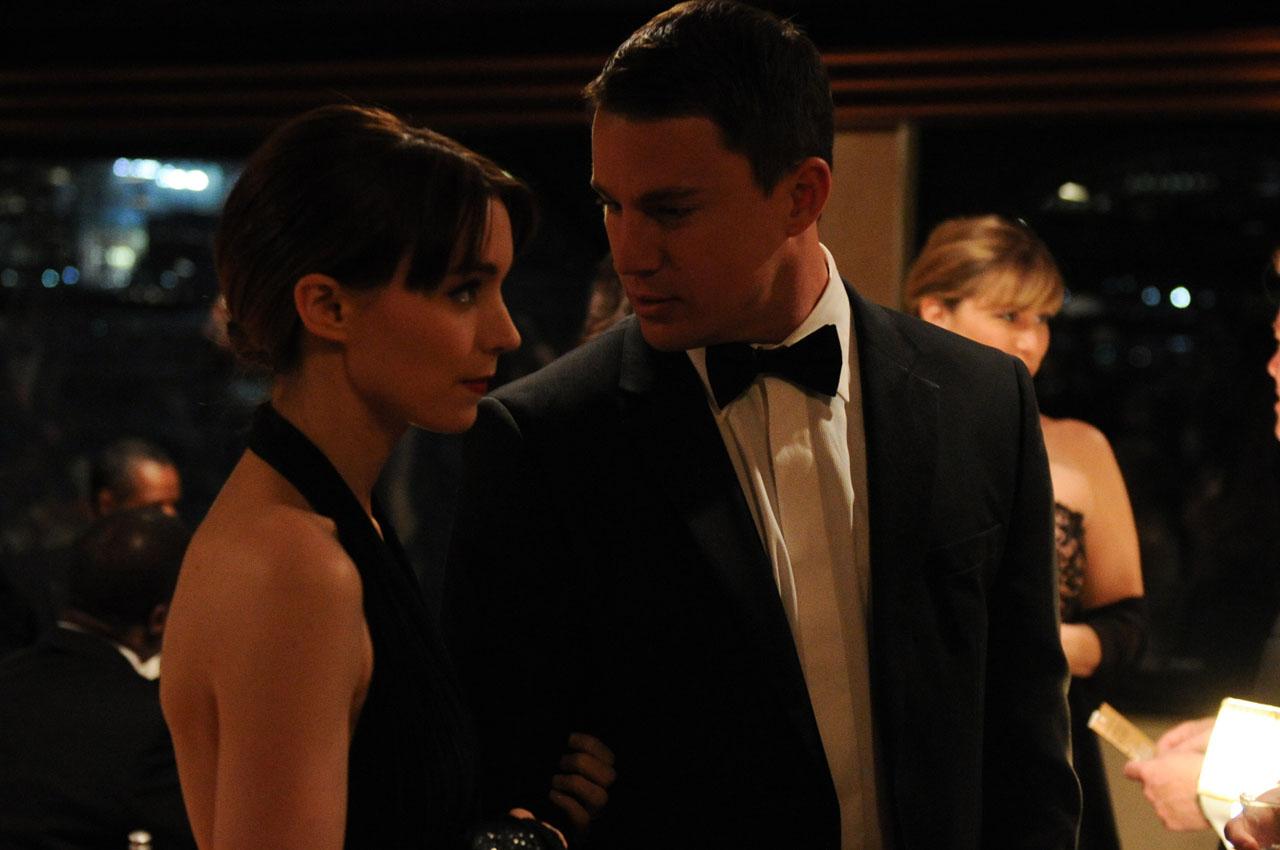
Martin (Channing Tatum) and Emily (Rooney Mara) looking like an aesthetically perfect couple, dressed smartly at a friend's party.

Martin (Channing Tatum) and Emily (Rooney Mara) looking like an aesthetically perfect couple, dressed smartly at a friend’s party.

Side Effects more or less begins with Martin (Channing Tatum) coming out of prison to be reunited with his wife, Emily (Rooney Mara). Emily, however, seemingly suffers from depression and other self-esteem issues, and appears unable to cope with life. So, after attempting suicide, she meets Dr. John Banks (Jude Law), who prescribes her a series of drugs to make her feel better, after consulting with Dr. Victoria Siebert (Catherine Zeta-Jones), Emily’s previous doctor.

The drugs work initially for Emily. But then the side effects kick in. And with consequences for Emily, Martin and Dr. Banks.

Side Effects is a slow-paced medical thriller that is mysterious and gripping for its apt 106 minute running time. Although the plot has several contrived moments, all of these are explained reasonably well, so the film does not feel like a patch-work for lazy script-writing. What’s more, the film has a generally unsettling ambience and leads to an unexpected conclusion that is most welcome.

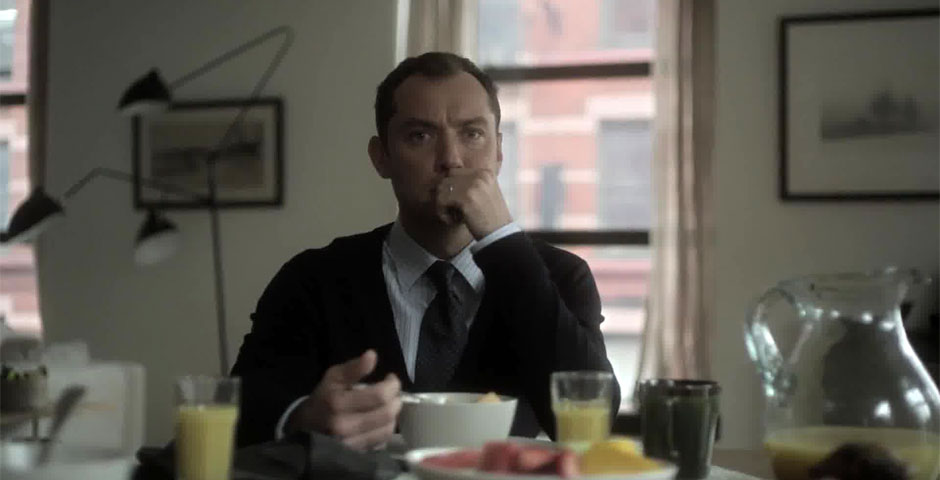
Dr. John Banks (Jude Law) chewing his breakfast, wondering how his world has turned upside down due to Emily's reaction to the drugs he prescribed her.

Dr. John Banks (Jude Law) chewing his breakfast, wondering how his world has turned upside down due to Emily’s reaction to the drugs he prescribed her.

In part, the disquieting atmosphere of Side Effects is due to the strange, yet thought-provoking music that is virtually on tape-loop during the movie. The other reason is due to good dialogue and acting, not least from Rooney Mara in the lead role. Invariably, her character seems to be permanently on a medically-prescribed drug or suffering from a drug’s drawback; in particular, the latter, and Mara plays it all troublingly well.

Surprisingly, Jude Law, as the doctor in danger of losing his career, performs decently too. He might show little compassion toward his wife, Deirdre (Vinessa Shaw), and son, but Law is certainly considerably better here than he is in (the mind-numbing) The Holiday and in Contagion, wherein he adopts a laughable Australian accent. (As if anyone would believe that Jude Law were Australian!)

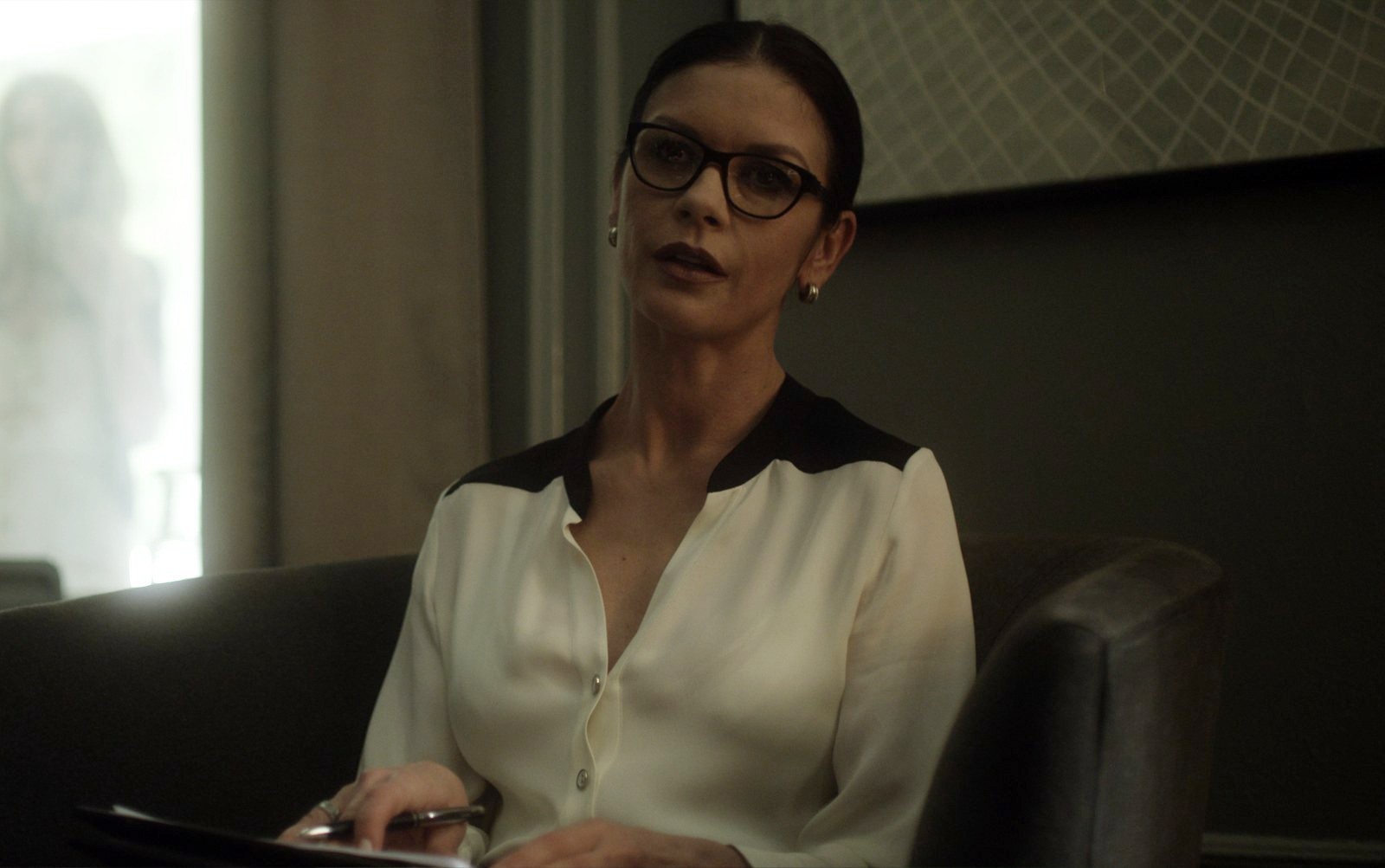
The beautilful and manipulative, Dr. Victoria Siebert (Catherine Zeta-Jones), unaware that someone is looking at her through the window.

The beautilful and manipulative, Dr. Victoria Siebert (Catherine Zeta-Jones), unaware that someone is looking at her through the window.

Channing Tatum, in his comfort-zone as the handsome and charming husband, gives a standard demonstration of his acting skills, while Catherine Zeta-Jones, as arguably the villain of the movie, is just as cunning and classily appealing as she was a decade ago in Intolerable Cruelty.

Thus, Side Effects is an enjoyable film that is likely to take viewers by surprise. Granted, it has plot conveniences, yet one is likely to forgive the movie for these as the storyline is intelligent and keeps audiences in suspense. Furthermore, one is likely to be more wary of the downside of certain medications after watching the film; and doctors, if they did not already, are likely to become paranoid about being sued by their patients for prescribing them medications with foreseeable and unforeseeable side effects.

PG’s Tips
Review – Stoker (18) [2013]

Stoker - title banner2

Star Rating: 2.5/5

Director:

  • Chan-Wook Park – Sympathy For Mr. Vengeance, Oldboy, Lady Vengeance

Producers:

  • Ridley Scott – Body of Lies, Prometheus, Welcome to the Punch
  • (The late) Tony Scott – The Taking of Pelham 123, Unstoppable, Out of the Furnace

Cast:

  • Nicole Kidman – Eyes Wide Shut, Rabbit Hole, Before I Go To Sleep
  • Mia Wasikowska – Defiance, Alice In Wonderland, The Double
  • Matthew Goode – Match Point, Watchmen, Belle
  • Jacki Weaver – The Five-Year Engagement, Silver Linings Playbook, Haunt
  • Phyllis Somerville – Little Children, The Curious Case of Benjamin Button, The Double
  • Lucas Till – X-Men: First Class, Battle: Los Angeles, X-Men: Days of Future Past
  • Alden Ehrenreich – Twixt, Beautiful Creatures, Running Wild

Music Composer:

What is the purpose of film trailers and movie marketing campaigns? The answer might seem ostensibly obvious: to whet people’s appetites to buy cinema tickets and, eventually, to entice them to buy DVDs. While this understandably keeps the wheels of the Hollywood machine spinning, does this mean that trailers and marketing campaigns should give too much of a film’s plot away and/or misrepresent a movie in the interests of money? Indeed, some of Stoker’s problems stem from its trailer and its advertisements.

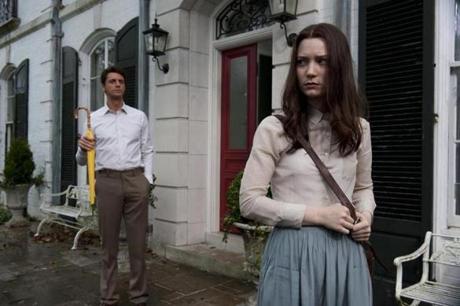
Charlie (Matthew Goode) watching look like a stalker as his niece, India (Mia Wasikowska), walks to school.

Charlie (Matthew Goode) watching look like a stalker as his niece, India (Mia Wasikowska), walks to school.

Stoker begins with the death of Richard Stoker (Dermot Mulroney). Not long after his funeral, Richard’s daughter, India (Mia Wasikowska), learns that her father had a creepy brother, Charlie (Matthew Goode), and that he will be moving into the house. He has been invited to stay by India’s unstable mother, Evelyn (Nicole Kidman). But no sooner does Charlie arrive, people start to disappear, and this has a troubling effect upon India.

One may think that the above discloses too much of the Stoker’s gripping, but strange and purposeless plot. Yet, the above gives away less than the trailer. If anything, like with those for 2012 and The Hobbit I: An Unexpected Journey, Stoker’s trailer portrays the movie’s storyline more succinctly in just under two and a half minutes than the actual film does in 98 minutes. Thus, far from attracting people to see Stoker, the trailer ensures that viewers don’t need to pay to see the movie. Doesn’t that defeat the purpose of the trailer?

Charlie looking disturbingly interested in his niece as he helps her play the piano.

Charlie looking disturbingly interested in his niece as he helps her play the piano.

Worse, Stoker has been promoted as an ‘erotic thriller.’ However, this is misdirection, at best, and misrepresentation, at worst. This is because there’s (sadly) not nearly enough eroticism in the film to justify its selling-point (and this is not just in comparison to steamy erotic thrillers like Eyes Wide Shut and Basic Instinct II). This means that (the promoters have cynically done their job and that) Stoker can only disappoint people who were misled about the nature of the film.

That is not to say that audiences won’t enjoy Stoker’s (few) merits. The music is eerie and unsettling, mirroring Matthew Goode’s unnerving (if narrowly more than one-dimensional) performance. Nicole Kidman is very good, if under-employed, as the unbalanced and irresponsible mother, stuffed with triteness. And Mia Wasikowska plays quite well, too, in a bizarre and paradoxical role as the coming-of-age daughter, without giving viewers any reason to empathise with her character. The rest of the cast, including Jacki Weaver, as aunty Gwendolyn; Phyllis Somerville, as the cook; Lucas Till, as one of the school bullies; and Alden Ehrenreich, as India’s friend, among others, add so little to the plot that they might as well not have bothered agreeing to be part of the project.

India brushing her mother's hair. Evelyn (Nicole Kidman) almost does not know where she is after waking up in the middle of the night drunk, as usual.

India brushing her mother’s hair. Evelyn (Nicole Kidman) almost does not know where she is after waking up in the middle of the night drunk, as usual.

If the oddness of the storyline and performances do not keep audiences on their toes, Stoker’s setting has the ability to keep them guessing as to what era the film is meant to be set in. By deduction, one can work out that the film is meant to be based in 2012. While there might be flat-screen televisions in some of the rooms of the Stoker household, the house itself looks like it is from either (or a mixture of) the 1950s or the early 1990s. Moreover, India might employ a modern hairstyle, but the clothes she wears hint at a 1950s theme, if not earlier. One could argue that this helps to give the movie a more bizarre ambience, which, to a limited extent, it does. Yet, there is a fine balance between doing this and getting it wrong, and in the case of Stoker, it looks as if director Chan-Wook Park could not make up his mind as to what epoch he wanted to set the film in.

Over-all, Stoker is a peculiar blend of weirdness and captivation that had the potential to be so much better. The acting is average and there are numerous flaws and predictabilities in the storyline. Nevertheless, more than anything, the film’s problems are due to its trailer and the advertising campaign that accompanied the movie. Considering how interesting Stoker’s trailer looks, and that the film was billed as an ‘erotic thriller,’ one goes away from the movie feeling let down and that Park missed a great opportunity to make something different and potentially special.

PG’s Tips

Review – Zero Dark Thirty (15) [2013]

Zero Dark Thirty - title banner2

Star Rating: 3.5/5

Director:

  • Kathryn Bigelow – The Loveless, The Weight of Water, The Hurt Locker

Cast:

Music Composer:

When it comes to films about historical events, like Titanic, The Assassination of Jesse James by the Coward Robert Ford and Lincoln, one knows how they will end before even starting them. Yet, such movies can be just as, if not more entertaining and gripping than movies where one does not know what is going to happen. The same is true for the arresting Zero Dark Thirty, which also sends out a potent message to America’s enemies.

The film is a politico-historical drama based around real events. ‘Zero dark thirty’ is a military codename for half past midnight, and it is the time that the operation to kill Osama Bin Laden took place on the night of 1st/2nd May 2011 in Abbottabad, Pakistan.

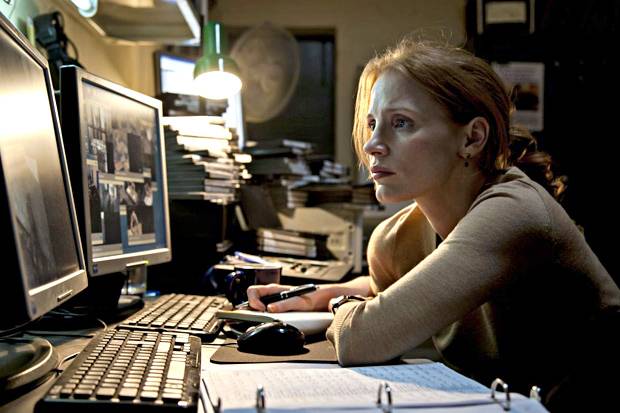
Maya (Jessica Chastain), baggy-eyed as she watches countless interrogations of detainees in her attempts to find a lead to Osama Bin Laden's location.

Maya (Jessica Chastain), baggy-eyed as she watches countless interrogations of detainees in her attempts to find a lead to Osama Bin Laden’s location.

Zero Dark Thirty is all about the CIA’s attempts to find the world’s most wanted man following his masterminding of the terrorist attack on the Twin Towers on 11th September 2011, and his subsequent vanishing. The film is an unhurried, yet captivating thriller that does not feel like it is 157 minutes long. Like with The Hurt Locker, it has a grounded feel, and therefore lacks the hyperbole and surrealism of 24. Even the ending mirrors this mood, which is rare and noteworthy for Hollywood.  It is too early to know how true Zero Dark Thirty is to the reality, but it feels like a realistic and fair representation of events. First, it illustrates how dangerous it is for Americans to be in Afghanistan/Pakistan, thereby emphasising how heroic they are being out there. Second, it demonstrates some of the difficulties CIA agents face operating in the field, trying to unearth information about their targets (who have multiple identities and never seem to stay in the same place twice). Third, the movie shows the CIA adopting dubious torture methods and degrading treatment upon suspected and actual terrorists in undisclosed locations in their desperate bid to find leads on Bin Laden.

There has been much controversy over Kathryn Bigelow’s depiction of torture adopted by US personnel in 2002 and afterward (when it was officially outlawed). Arguably, the film enables Bigelow to reveal her anti-American/anti-war bias again, like she did so painfully in the critically-acclaimed The Hurt Locker. Yet, it is doubtful that she glorifies torture here. Instead, she lets viewers decide for themselves, in a similar vein to Rendition, if torture is ever necessary or useful, which is an intelligent way of kicking off a moral debate on an important and current subject.

CIA agent Dan (Jason Clarke) arguing with his and Maya's boss, Joseph (Kyle Chandler), as he tries to help Maya in anyway he can.

CIA agent Dan (Jason Clarke, right) arguing with his and Maya’s boss, Joseph (Kyle Chandler, left), as he tries to help Maya in anyway he can.

But what is even more striking than the portrayal of ‘enhanced interrogations’ in Zero Dark Thirty is how the film has painted the War on Terror as merely Osama Bin Laden. Yes, he is the figurehead of modern-day Jihadi terrorism and his death is a symbolic hammer-blow to the cause. But by 2011 it is dubious how influential Bin Laden was to the pursuit of world Jihadism, due to the emergence of numerous Al-Qaeda splinter groups, such as Al-Aqaeda in the Arabian Peninsula (AQAP) and Al-Shabaab, among others. Yet, these other terrorist groups are barely given a mention, which is strange considering the security threat they pose to the world.

Additionally, Zero Dark Thirty does not explore, even for the sake of context, the complex and conflicting relationships between America, Afghanistan and Pakistan, not to mention the contradictory nature of the Pakistani state itself. (Anyone remember David Cameron saying that Pakistan looks “both ways” on terrorism?)

However, if one can ignore the lack of political background, one can enjoy strong performances from all the cast. At the forefront, is Jessica Chastain, who demonstrates, for the first time, that she can play a leading role just as solidly as she can a supporting one when given the chance. Her single-minded character, Maya, is given the central task of finding Bin Laden. Maya might get her way sometimes in a contrived manner for reasons of plot, but Chastain looks so natural in the role, and the way Maya changes under the circumstances is indicative of Chastain’s talent.

Patrick (Joel Edgerton) enjoying banter with his marine companions before leading them to into combat to kill Bin Laden.

Patrick (Joel Edgerton) enjoying banter with his marine companions before leading them to into combat to kill Bin Laden.

Maya’s solemnity is in mild contrast to her two main colleagues, the tough-yet-amusing Dan (Jason Clarke) and the bitchy Jessica (Jennifer Ehle). Both Clarke and Ehle play well, and are more empathetic than Maya. Nevertheless, they are both outshone by Chastain’s performance.

Over-all, Zero Dark Thirty is a sincere and honest attempt to recreate the finding and killing of Osama Bin Laden. That one knows how the movie will end is irrelevant, as it is an engrossing and tense watch. The film might be devoid of much of the current context vis-à-vis the War on Terror, and it might be overly-simplified; yet, what it lacks on those fronts, it makes up for in compelling performances, not least from Jessica Chastain. Furthermore, Zero Dark Thirty sends out a stark message to America’s enemies: it doesn’t matter where they hide or for how long they hide, America will find them and bring them to justice.

PG’s Tips
Review – Skyfall (12a) [2012]

Star Rating: 3.5/5

Director:

  • Sam Mendes – American Beauty, Road To Perdition, Revolutionary RoadSpectre

Cast:

Music Composer:

The 1990s was a pretty decent era for James Bond. Goldeneye, Tomorrow Never Dies and The World Is Not Enough were all very acceptable Bond films. But then, in 2002, Die Another Die ruined it all. Subsequently, MGM, the owners of the 007 franchise, completely changed the direction of Bond to make it more original, as Casino Royale (2006) and The Quantum of Solace demonstrate. Skyfall cleverly continues this trend, but not without hitches.

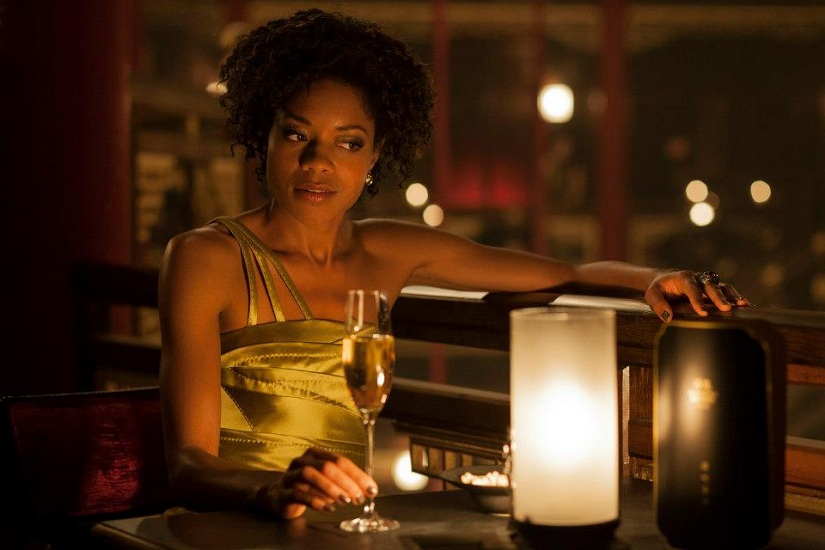
The stunning and enigmatic Sévérine (Bérénice Malohe). Her style and dangerous background make her an apt fit for Bond’s affections.

Skyfall begins with M (Judi Dench) coming under intense pressure to resign, following a failed mission in Turkey. After meeting with Gareth Mellory (Ralph Fiennes), the British Intelligence and Security Committee Chairman, M discovers that the computer in her office in MI6 has been hacked and a bomb explodes in MI6 headquarters. M subsequently turns to her secret agents, Eve (Naomi Harris) and James Bond (Daniel Craig), who is suffering from psychological problems following events in Turkey, to find out who was behind the attack.

There is much to admire about Skyfall. That a significant proportion of it is filmed in Britain is bold; it gives us a hint at how MI6 might work in the event of war on British soil; and the last scene of the movie is very clever. Also, for the first 100 minutes or so, the plot is logical and intelligent. Cyber-terrorism is a very current issue, and director Sam Mendes conveys the threat well.

It is just a shame that the last 44 minutes drag and has only a tenuous link to the first part of the film. Indeed, it renders the purpose of going to exotic Shanghai pointless (not that that was ever more than a cynical attempt to tap into the Chinese market) and, worse, it throws up plagiarism issues with the exceptionally magnificent Batman Begins.

Eve (Naomi Harris) dressed classily, while in the midst of an MI6 operation.

Moreover, Skyfall appears to be torn in several directions. Sir Ian Fleming wrote James Bond as a satire on the British secret service. Yet, because MGM now want Bond to be more grounded (and even bleed), the fundamental element of 007 has been lost. Additionally, if MGM truly want to make Bond plausible, they should look toward Tinker Tailor Soldier Spy and Shadow Dancer, and remove the Expendables-/Mission: Impossible-style stunts and action scenes. Those always look ridiculous and undermine all attempts at realism. (Besides, those scenes have become so clichéd that one is unlikely to miss them.)

The change of direction for 007 movies has also greatly impacted upon the appearance and character of James Bond, himself. Nevertheless, it is not Craig’s blond hair and lighter features that differentiate him from his predecessors, Roger Moore and Pearce Brosnan. Rather, it is his black humour, as well as his lack of suave and touché lines. That is not to say that Craig performs badly as the Bond he’s been asked to perform; actually, he’s rather good. But that doesn’t make him seem any more like the James Bond of old.

Yet, it is not just Craig’s Bond that has been given a new lease of life; the villains have too. Silva, embraced whole-heartedly and delightfully by the Oscar-winning Javier Bardem, is by far the most flamboyant and hilarious Bond baddie. However, it is blatantly obvious that Sam Mendes drew his inspiration from the villains in Christopher Nolan’s The Dark Knight (and he didn’t need to spell it out in an interview either). Mendes should have been aware that stepping onto the haloed territory of the Joker and, to a lesser extent, Two-Face is like trying to win a game of ice-hockey while skating on thin ice. Can anyone really say with conviction that Bardem’s Silva was on a par with Heath Ledger’s Joker?

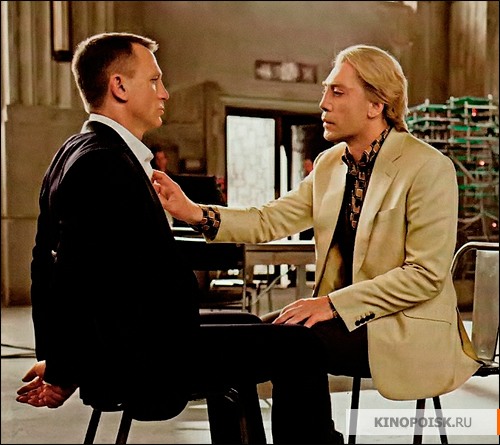
The blond-haired villain, Silva (Javier Bardem), teases Bond, while the latter is tied up. Haven’t we seen such a scenario before?

Craig and Bardem aside, the performances from Ralph Fiennes and Judi Dench are typically strong and down to earth. The same can be said for Ben Whishaw, who plays the young, new Q with much spirit and humour to make himself, potentially, the long-term successor to the late Desmond Llewelyn.

Conversely, Naomi Harris, as Eve, never convinces that she’s a secret agent, unlike Jessica Chastain in The Debt or Julia Roberts in Duplicity. Harris’ Eve also lacks chemistry with Craig’s Bond. Maybe both of those things are deliberate, but if that is true then MI6 would never have sent her into the field, thereby revealing another flaw in the movie’s attempt at realism.

All-in-all, Skyfall is not a bad film and continues the interesting trend of Casino Royale and The Quantum of Solace. Skyfall has intelligence and a cast that does justice to the more credible, if unconventional direction that MGM have taken Bond toward. This does not mean that the film is problem-free, aside from being too long and recycling parts of Nolan’s Dark Knight Trilogy. No, if MGM truly wish for 007 to depart from the approach of the 1990s Bond films, they must not stand half-way as they have here: they must make James Bond chillingly realistic.

PG’s Tips
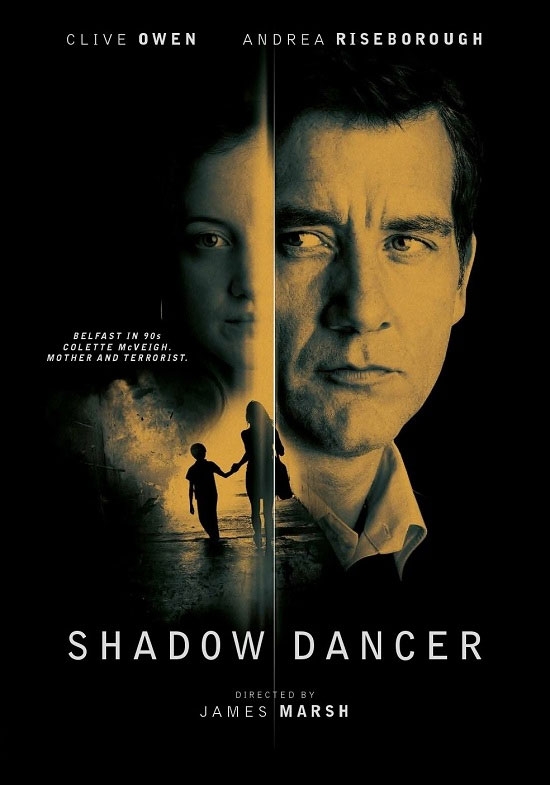
Review – Shadow Dancer (15) [2012]

Star Rating: 3.5/5

Director:

  • James Marsh – Man on Wire, Project Nim

Cast:

  • Andrea Riseborough – Brighton Rock, W.E.Birdman
  • Clive Owen – Derailed, Inside Man, Blood Ties
  • Gillian Anderson – The X-Files, Johnny English Reborn, Mr Morgan’s Last Love
  • Aiden Gillen – Game of Thrones, The Dark Knight Rises, Calvary
  • David Wilmot – Intermission, The Guard, Calvary
  • Dohmnall Gleeson – Never Let Me Go, Harry Potter VII(i) & VII(ii)Ex Machina
  • Brid Brennan

Last year’s Tinker Tailor Soldier Spy (TTSS) was a wonderful example of the capabilities of the British Film Institute (BFI). The acting, the dialogue and the settings were noteworthy, plus it gave audiences a true sense of the machinations of the British secret services. Similarly, in Shadow Dancer, the BFI has come up again with another quite impressive film about the murky world of intelligence and underground movements.

Collette (Andrea Riseborough) waiting somewhat apprehensively to speak with Kevin Mulville, one of the most senior activists in the IRA’s ‘military wing.’

Shadow Dancer is based in Belfast between 1993-94, at the time of the Anglo-Irish Treaty, and revolves round Collette (Andrea Riseborough). She is an Irish Republican Army (IRA) activist, who gets arrested for attempting to blow up Mile End underground station in London.

Her interrogator from MI5, Mac (Clive Owen), gives her a stark choice: either face prison and the loss of her son, or become an informant. Mac believes she is a useful person since she has close ties to the most important people in the IRA’s ‘military wing,’ in particular with its leader, Gerry Adams (Aiden Gillen), and his henchman, Kevin Mulville (David Wilmot). Reluctantly, Collette agrees.

Shadow Dancer is a slow-moving, tense thriller. In the same vein as TTSS and Harry Brown, the settings are gritty, non-theatrical and reflective of the era which help to set the tone of the film; in this case, some late-eighties hair-styles and the cream-coloured, box-like computers. Yet, unlike the two aforementioned films, Shadow Dancer runs out of steam, turning to an eclectic mix of predictability and vagueness that undermines much of what is good about the movie.

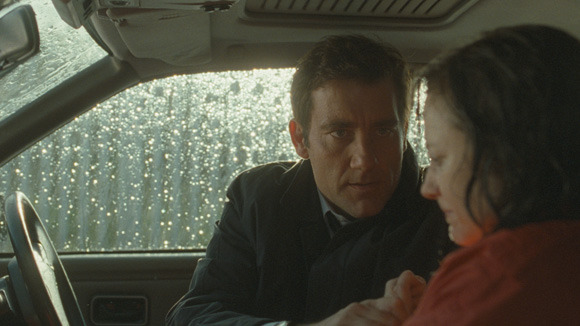
Collette meeting with her MI5 boss, called Mac (Clive Owen), to discuss the IRA’s latest plans.

Aided by a well-written, realistic script and solid acting, Shadow Dancer illustrates the tough life of a militant activist and the dangers of being a double-timer for a movement like the IRA. This is all exemplified astoundingly by Andrea Riseborough as the vulnerable Collette. Without doubt, Riseborough is the star of the film and enhances her growing reputation, after emerging as the only actor to come out unscathed from W.E., the atrocity directed by Madonna. Riseborough makes us empathise with Collette’s difficult and mentally-strenuous situation without appearing weak or cowardly. And her Northern Irish accent is flawless. All of this is no small achievement.

Furthermore, Collette’s position in the IRA enables viewers to see the men and women of the IRA’s ‘military wing’ for what they are. While it shows instances of their malevolence, it also has the effect of humanising them, especially Gerry Adams. (Aiden Gillen, with no less distinction, playing a quieter and much less charming role than as Lord ‘Littlefinger’ Petyr Baelish, the king’s slimy and untrustworthy advisor, in Game of Thrones.)

Moreover, Collette’s situation allows audiences to gain an understanding of the IRA’s internal disagreements over the treaty, between the ‘military wing and the ‘political wing,’ the latter headed by Ian Gilmour (Stuart Graham).

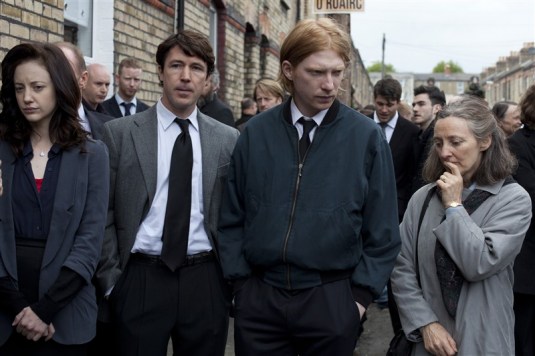
Collette looking on sadly at a funeral, standing alongside with Gerry Adams (Aiden Gillen), her brother Connor (Dohmnall Gleeson), and her mother (played by Brid Brennan). The red haired man in the background.

Yet, surprisingly, Shadow Dancer does not do the same for the inner workings of the British secret services, vis-à-vis the IRA. Whereas TTSS was layered with intrigue, Shadow Dancer falls into a (depressing) cliché wherein Mac plays the ‘good operative,’ since he backs the main character, in contrast to Kate (played by a steely Gillian Anderson), his main (villain-like) adversary, who has an ulterior motive and isn’t given the time to justify herself.

All-in-all, Shadow Dancer is another worthwhile movie made by the BFI. Like TTSS and Harry Brown, it has a grounded and harsh feel that is only lightened by the remarkable performance of Andrea Riseborough. It is just a pity for Riseborough that Shadow Dancer’s storyline lacks the complexity and plausibility that is so striking about her display.

PG’s Tips

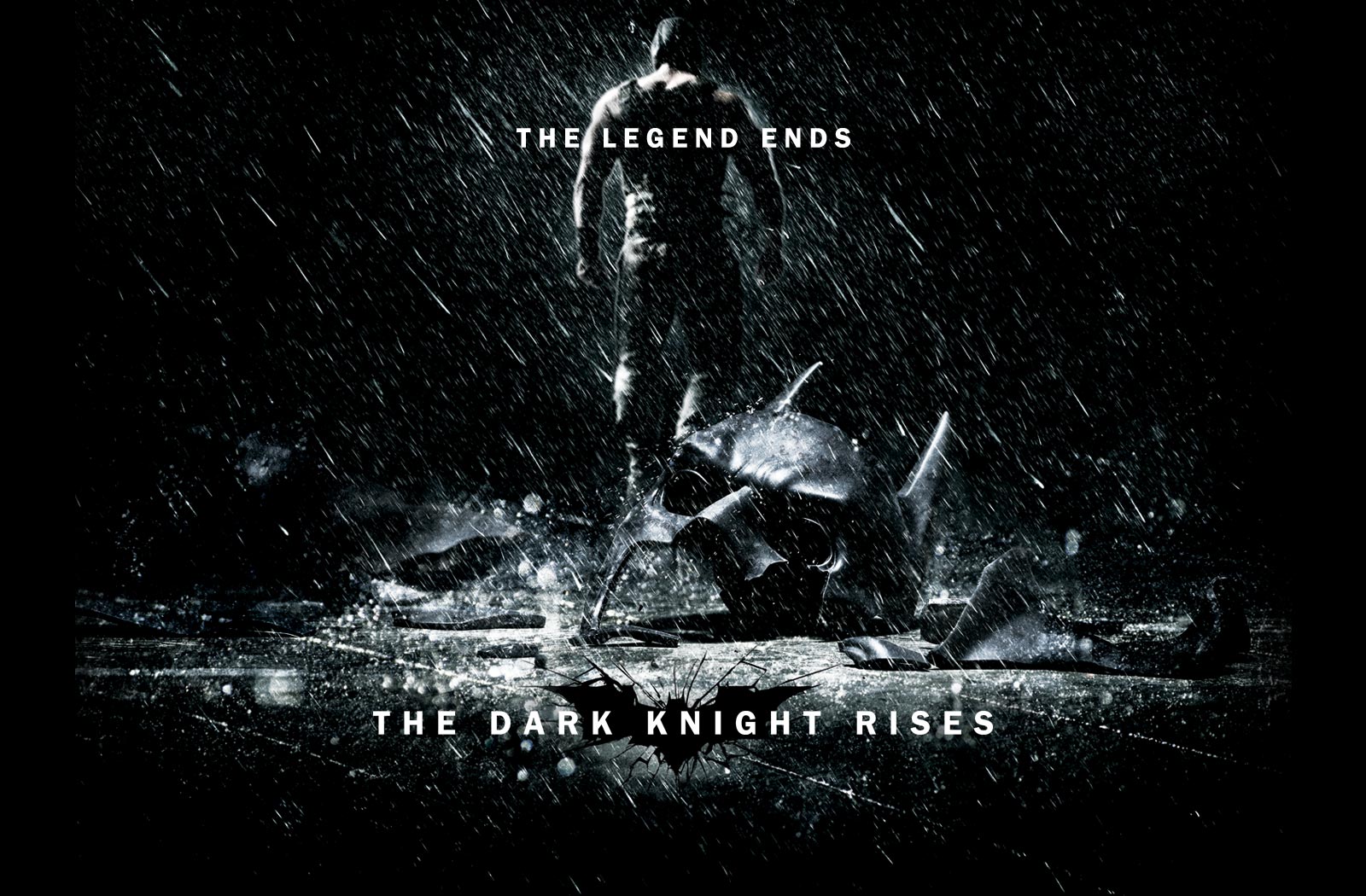
Review – The Dark Knight Rises (12a) [2012]

Star Rating: 5/5

Director:

Cinematographer:

Cast:

Music Composer:

Once in a decade, perhaps, are audiences treated to a trilogy wherein the three films are not only worthy of five stars each, but also raise the bar over the movie that preceded it. Ten years ago, it was Peter Jackson’s The Lord of the Rings, which culminated beautifully in the epic The Return of the King. Now, it is the turn of Christopher Nolan and his Dark Knight Legend saga, which has climaxed spectacularly with The Dark Knight Rises.

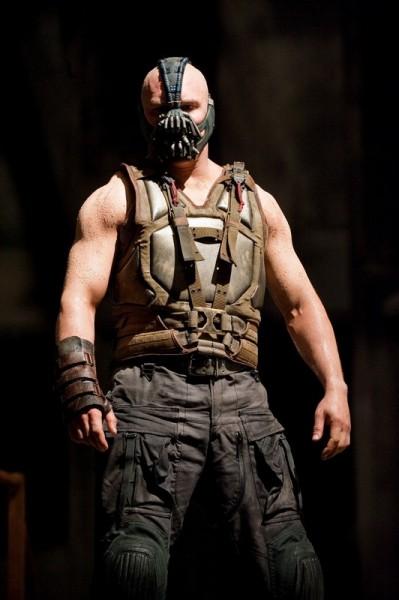
The monstrous-looking, hulking Bane (Tom Hardy). Ra’s Al Ghul’s successor intends to finish off Gotham once and for all, forcing Batman to come out of his virtual retirement.

Eight years have passed since Bruce Wayne/Batman (Christian Bale) defeated the Joker, killed the District Attorney, Harvey Dent, and disappeared. Since then, Gotham has branded Batman an enemy, after he took responsibility for Dent’s crimes to uphold the reputation of the ‘White Knight.’ Whilst away from his former exploits, Bruce has been a recluse, investing some of his considerable wealth in peaceful nuclear energy and the Wayne Foundation, where he uses the expertise of Miranda Tate (Marion Cotillard) to good effect.

However, Gotham now faces a new threat. The League of Shadows has returned and is led by the masked, super-strong Bane (Tom Hardy), who is out to destroy Gotham and Batman with it. After Commissioner James Gordon (Gary Oldman) is wounded trying to take out Bane, leaving the police almost solely in the hands of the young idealist officer, John Blake (Joseph Gordon-Levitt), Bruce feels that the time has come to don the bat-gear again. But how will Gotham take to his return? And what will Batman do with the criminal Selina Kyle/Catwoman (Anne Hathaway), who has a mysterious interest in Wayne Manor and Wayne Enterprise?

Rises’ plot might be slow-moving for the first hour and it certainly requires great levels of concentration for the entire 164 minutes; yet, the film is intellectually-stimulating, absorbing and multi-layered. It also builds up to a stunning, well-thought-through climax, ensuring that those who give the movie their full attention will be rewarded.

One of the most satisfying aspects of the storyline is that Nolan cleverly links Rises with Batman Begins and The Dark Knight, the two previous instalments in the series. He does this by making the caped crusader rise to a new mental and physical challenge, which is a direct result of his prior victory over the League of Shadows; and by illustrating the relevance of Batman and Harvey Dent as symbols of hope against injustice and corruption. (Not to mention demonstrating how susceptible the fabrics of society are to implosion when the symbols are smashed.)

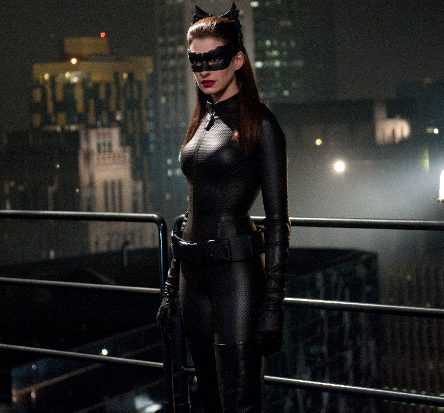
Selina Kyle (Anne Hathaway) wearing her figure-revealing ‘cat’ outfit while she steals what she needs at night and fights her way out of trouble.

Furthermore, Nolan intelligently incorporated genuine, present-day issues and analogies into the previous two films to make them relatable to the epoch. He does it again in Rises. Like in The Dark Knight, he throws in moral and ethical dilemmas here to illustrate just how tough and messy decisions can be for our political leaders (in the war on terror). And, like in Batman Begins, Nolan underlines how sophisticated, scientific technology can be used as weapons. In the first film in the series, it was the dangers of microwave emitters. In the third, it’s the threat posed by ‘peaceful’ nuclear programs (Iran) and what happens should they fall into the wrong hands.

Arguably, Rises lacks a character with the charisma of the Joker, especially as he is Batman’s traditional nemesis. Nevertheless, the astuteness of the plot and the excellence of the cast make up for this absence. Christian Bale superbly reveals the psychological torment and the multifaceted nature of Bruce Wayne that makes all other comic-book based protagonists, such as those in Fantastic Four, The Avengers Assemble and Spiderman appear immature and superficial by comparison; Anne Hathaway looks as eye-catching in tightly-fitted latex as she plays; Michael Caine again gives a touching performance as Alfred, Bruce’s wise fatherly butler, as does Morgan Freeman as the humorous Lucius Fox, the head of Wayne Enterprise; and, lastly, Tom Hardy is terrifying as Bane.

Just as Nolan did with the villains Scarecrow, the Joker and Two-Face in the other movies, he’s turned Bane from a pantomime fool (as was seen in the unwatchable 1997 Batman & Robin) into a complex and sinister character, with a distressing backstory. It is not merely Bane’s brute strength and intelligence that’s scary, it’s also the glint of frightening fanaticism in his eyes which was probably last seen with Ayatollah Khomeini, the late leader of the 1979 Iranian Revolution.

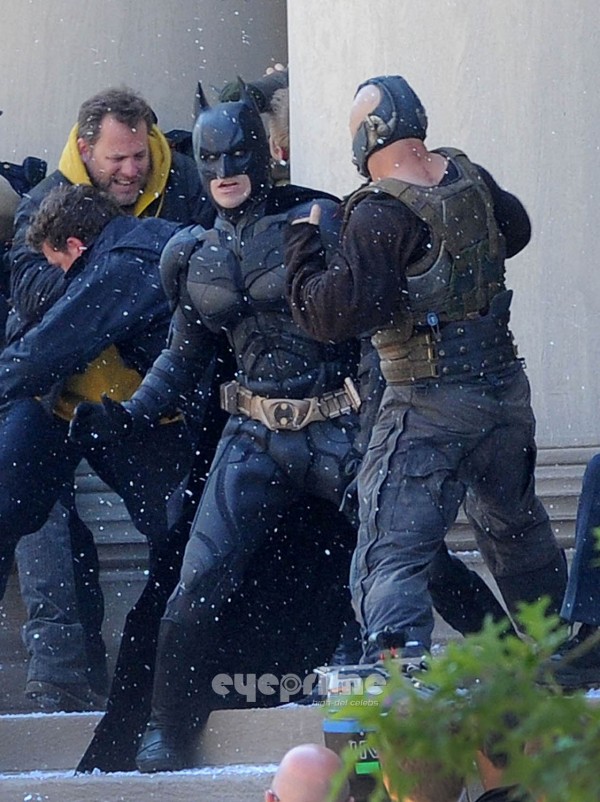
Batman (Christian Bale), with renewed vigour, battling it out with Bane to save Gotham from destruction.

While the actors do their parts splendidly, so too do the special effects team and Hans Zimmer. The effects look so real, viewers have to remind themselves that CGI was used. Similarly, the score may not be as grand or uplifting as the one composed by Howard Shore for The Lord of the Rings; nonetheless, the dark disposition of Rises entails that Zimmer’s gothic-style music is apt and augments the scenes exponentially.

Over-all, The Dark Knight Rises is an engrossing and special conclusion to an exceptional trilogy. Christopher Nolan has transformed the Batman story from a joke into a dark and very human tale that has relevance to the current era, making all other comic-book based movies seem light and casual in contrast. Once more, Nolan has used intelligence and a phenomenal cast to outdo himself in the same way that Peter Jackson did almost a decade ago. Heaven knows, it might be another ten years before we see a series of such brilliance again.

PG’s Tip

Review – The Avengers Assemble 3D (12a) [2012]

Star Rating: 4/5

The Hulk, Iron Man I & II, Thor and Captain America: The First Avenger were all made to ready audiences for The Avengers Assemble, the culmination of Marvel’s superhero comic-books turned movies. But could throwing together a bunch of supernaturally-gifted souls work in practice? The Avengers Assemble demonstrates the folly of those who doubted the project.

Nick Fury (Samuel L. Jackson) at SHIELD, puts the Avengers Initiative into motion to save (or avenge) the world from Loki.

The film kicks off with Loki (Tom Hiddleston – Thor, Midnight In Paris, Black Wings Has My Angel) opening up a portal to Earth. After seizing control of the minds of Clint Barton/Hawkeye (Jeremy Renner – The Town, Mission Impossible IV, Mission: Impossible V) and the scientist Erik Selvig (Stellen Skarsgard – Angels & Demons, Thor, Romeo & Juliet), Loki steals the Tesseract, the translucent and supernaturally-powerful cube that belongs to King Odin of Asgard.

Fearing the worst for Earth, Nick Fury (Samuel L. Jackson – Star Wars I-III, Iron Man I-II, Captain America II), the director of SHIELD, reactivates the ‘Avengers Initiative’ to bring together a group supernaturally gifted individuals to save the world against foes beyond man’s conventional capacity. Natasha Romanov/Black Widow (Scarlett Johansson – The Prestige, Iron Man I-II, Her), Bruce Banner/the Hulk (Mark Ruffalo – Shutter Island, The Kids Are Alright, Thanks For Sharing), Tony Stark/Iron Man (Robert Downey Jr. – Iron Man I-III, Sherlock Holmes I-II, Due Date), Steve Rogers/Captain America (Chris Evans – Fantastic Four I-II, Captain America: The First Avenger, Captain America II) and Thor (Chris Hemsworth – Star Trek, Thor, Snow White and The Huntsman) all answer the call.

Despite their differences, the group must co-operate in order to defeat the onslaught upon Earth that Loki shall unleash with the power of the Tesseract behind him.

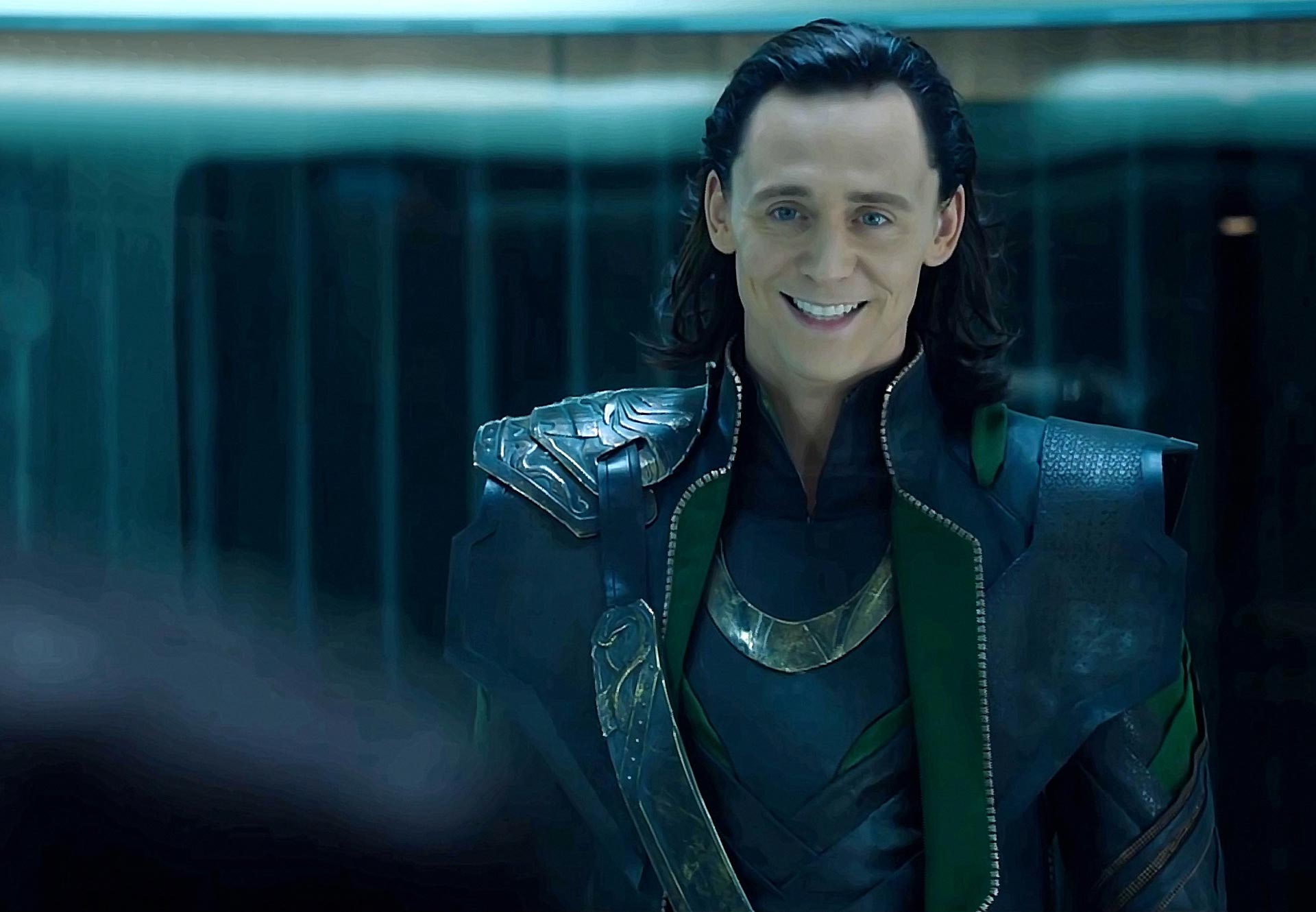
The villain, Loki (Tom Hiddleston), smirking as he tells Nick Fury that nothing can stop his plans from coming to fruition.

There is nothing remotely complex, original or realistic about the storyline for The Avenger’s Assemble. Nevertheless, it is greatly entertaining. It has plenty of action scenes and an amusing clash of egos (of Godly proportion) between Thor and Iron Man.

Without being a comedy, the film is littered with banter and jokes. This is because (thankfully), like in This Means War, none of the actors in The Avengers Assemble take their roles earnestly. Bruce Banner and Tony Stark would have looked utterly preposterous if they had tried to seriously discuss astrophysics before turning into a green beast or donning an iron costume.

The Hulk and Iron Man might be the most dominant characters in the film, but director Joss Whedon gives each member of the cast a chance to shine. He gives them all a back story as well. This does not mean that the protagonists in The Avengers Assemble are any less divorced from the society that they have promised to defend; and nor does it mean that they have the depth of the Bruce Wayne of Christopher Nolan’s Batman trilogy or some of the mutants in X-Men: First Class, such as Charles Xavier, Erik Lehnsherr and Raven. Yet, it ensures that Whedon’s comic-book heroes are not mere kick-busters in ludicrous outfits either.

The Avengers in action. Captain America, the all-American hero wearing the stars and stripes, leads the group as they attempt to defend the world from the metal monsters coming from outer-space.

Irrespective, though, of whether the narcissistic Tony Stark has come to like his assistant, Pepper Potts (Gwyneth Paltrow – Iron Man I-III, Contagion, Thanks For Sharing), as much as he likes himself, or if Bruce Banner explains the injustices that have led to him turning into a green monster when he gets angry, the special effects are consistently brilliant throughout The Avengers Assemble. Again, there is little new to behold (the highly destructive flying caterpillars have become standard among alien invasion movies since last year’s Transformers III), but the effects assist the action scenes remarkably well. Even the 3D works a treat!

Over-all, The Avengers Assemble is a thoroughly entertaining and humorous movie. It has an affable group of protagonists, who all seem to have great chemistry on set, plus fantastic fighting scenes and superb special effects. The film might not be original or complex, and it certainly has no deep moral message. Yet, The Avengers Assemble is everything that a light-hearted, comic-book, superhero movie should be. Bring on the sequel!

PG’s Tips

Review – Titanic 3D (12a) [2012; originally released in 1997]

Star Rating: 4/5

A century has passed since the White Star Line’s ‘unsinkable’ Titanic sank on her maiden voyage, taking down 1,503 souls with her to the watery abyss. It was a tragedy, but one that still fascinates people for so many reasons. The absorbing 1997 film, re-released in 3D for the centenary of the disaster, embodies why this is the case.

Titanic’s bow at the bottom of the Atlantic Ocean. Looks little more than a ghost ship now, with rusticles giving it an eerie feel.

Titanic centres round two central characters who board the ship as it takes off from Southampton for New York in April 1912. Rose (when old, played by Gloria Stuart; when young, played by Kate Winslet – Revolutionary Road, Contagion, Steve Jobs) is the daughter of a bankrupt aristocrat and is travelling in the luxuries of first-class. Against Rose’s will, her mother, Ruth (Frances Fisher – The Roommate, The Lincoln Lawyer, The Silent Thief), has set her up to marry Caledon ‘Cal’ Hockley (Billy Zane – Back to the Future I-II, The Roommate, The Employer), a wealthy businessman, to relieve the family of their crippling debts.

Jack (Leonardo DiCaprio – Revolutionary Road, Inception, The Wolf of Wall Street), on the other hand, is a dirt-poor artist journeying in third-class. After spending time in a variety of European cities, he is returning to America for a better life.

Whilst on the decks, Jack spots Rose on the higher levels and is instantly taken by her beauty. Yet, it is not until Rose is on the verge of jumping off the vessel’s stern that they meet. Jack urges her not to plunge to her death in the freezing waters and she follows his advice.

Subsequently, much to the envy of Cal, love blossoms between Jack and Rose… Until a cold, cloudless night when Titanic, running at full steam, strikes an iceberg.

For a film that is predominantly about a love story, Titanic is surprisingly gripping and abetted by a powerful music score, written by James Horner. Astonishingly, the film does not feel like it’s three hours and fifteen minutes long, since director/producer James Cameron (Alien, Avatar I-II, Sanctum) uses the time cleverly.

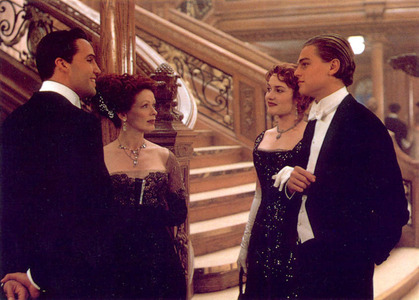
Cal (Billy Zane) and Ruth (Frances Fisher) reluctantly welcome Jack (Leonardo DiCaprio) to dinner in the glorious, first-class dining hall. Rose (Kate Winslet) accompanies him, drawing the ire of her fiancé and mother.

For the two hours or so before Titanic suffers its fatal wound, Cameron ensures viewers believe the false sense of security that passengers undoubtedly felt aboard the ‘unsinkable’ ship (even though audiences know the ship’s doomed fate), and gives the characters a (clichéd) 1912-societal role, depth and humour to maintain one’s interest.

Moreover, Cameron makes the vessel hit the iceberg with (approximately) an hour and a half to go. With Thomas Andrews (Victor Garber – Legally Blonde, Milk, Argo) stating that Titanic has less than two hours afloat, it feels like one watches the ship keel in real time, instead of in a quick, artificial manner. This not only means viewers can realise the anarchy that gripped the ship as she went under; it enables one to appreciate the heroics of individuals on the night, such as the officers who sent out distress signals until Titanic’s power failed, and the life-boat stewards, like William Murdoch (who has been incorrectly portrayed as a murderer by Cameron) and Harold Lowe (Ioan Gruffudd – Fantastic I-II, Sanctum, Mariah Mundi and the Midas Box), who lowered as many boats and got as many people into them as possible, amidst the chaos.

And because Cameron has so much time, he also properly shows us the cowardice of others, like Bruce Ismay (Jonathan Hyde – The Mummy, The Tailor of Panama, Spooks), who wanted headlines so badly he imperilled the ship he named (ironically immortalising Titanic), and Edward J. Smith (Bernard Hill – The Lord of the Rings II-III, Valkyrie, Paranorm), the reckless and dithering captain, who at least had the dignity to go down with the vessel.

On the whole, the actors play their parts well, particularly Kate Winslet (even though she recently came out saying that her acting could have been better and she has a point), Frances Fisher, Gloria Stuart, Billy Zane and Kathy Bates (Misery, Midnight In Paris, Starbright), as the ‘unsinkable’ Molly Brown.

However, the cast’s performances are often undermined by risible dialogue. The worst offender, by a distance, is Leonardo DiCaprio. (Not that Winslet does herself much credit by shrieking “Jack” frequently.) DiCaprio’s ability to spew out contrived lines in a desperate voice is almost an embarrassment to the victims of the disaster.

Dialogue may not be one of Cameron’s specialities (Avatar illustrated that), but as a director he cannot be questioned. The impeccable way Titanic has been filmed and flows are testimony to this. That the movie’s set is huge and that one hardly notices the numerous special effects give clout to this (apart from a couple of poor CGI shots of the bow’s nose).

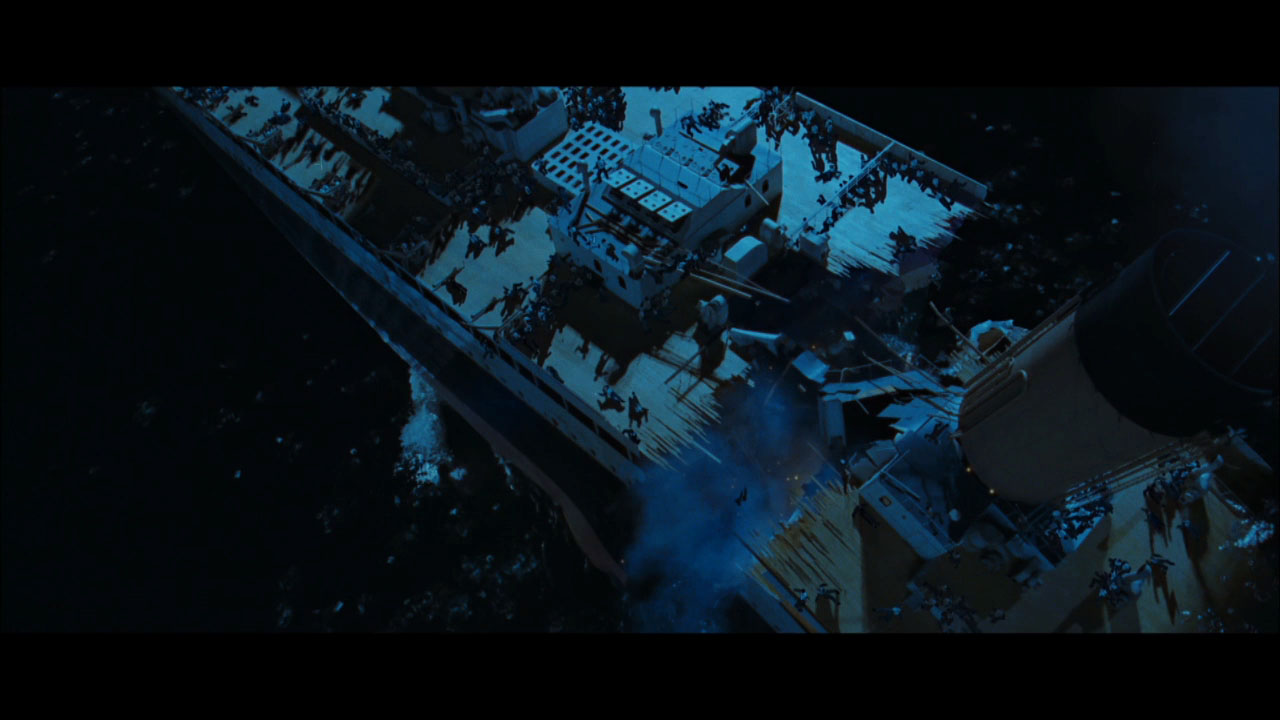
After sounding like a wounded animal as water flooded the bow and lower levels, the weight of the ship’s stern finally takes its toll on the vessel, breaking it in two.

Alas, the 3D does not effectively aid the film. It is not that effort hasn’t been put in. Rather, Titanic is not the type of film wherein the 3D can enhance scenes much, other than when people are falling from the stern as the giant propellers rise monstrously from the water.

All-in-all, Titanic is an enchanting film that gives us a window into a by-gone era. The film brilliantly details many of the complexities of early-twentieth century society, with moving music and special effects that are as magnificent as the ship that left Southampton. But the movie also does the tragedy justice, pointing out the valour of some and the pusillanimity of others. This is why the fate of the ‘unsinkable’ ship will forever have the power to captivate.

PG’s Tips

Review – The Hunger Games (12a) [2012]

Star Rating: 3/5

Over the last decade, there have been a multitude of reality TV shows/series targeted for children and teenagers. Big Brother, The X Factor and The Apprentice are three such programmes that have gripped the nation, despite becoming sterile in recent years. Based on a similar, yet darker premise, The Hunger Games entertains its audience prior to running for too long.

Katniss (Jeniffer Lawrence) hunting in the woods to find food for her family, wherein she meets her childhood friend, Gale (Liam Hemsworth).

The Hunger Games is based on the book with the same title by Suzanne Collins. It’s based in a dystopian, post-apocalyptic country called Panem, which was once territory in North America. As punishment for a people’s rebellion, each one of the twelve now-impoverished districts has to put forward their boys and girls, between the ages of twelve to eighteen, to compete in a tournament called the Hunger Games. At random, one boy and one girl are chosen to compete in the games, which are watched by thousands throughout the country. The tournament, controlled by a repressive leadership, is a fight to see who will survive. Only one, out of the twenty-four chosen, will return home.

After her younger sister, Primrose (Willow Shields), is picked to compete in the tournament, 16-year-old Katniss (Jennifer Lawrence – Winter’s Bone, X-Men: First Class, X-Men: Days of Future Past) volunteers to take her sister’s place. Katniss has spent years illegally hunting with her friend, Gale (Liam Hemsworth – Knowing, The Last Song, Independence Day II: Resurgence), for food in the woods outside of District 12. Now, taken to the affluent capital for pre-tournament training, along with Peeta (Josh Hutcherson – The Polar Express, The Kids Are Alright, Red Dawn), Katniss must use her skills and learn other arts from her mentors, Haymitch (Woody Harrelson – No Country For Old Men, Friends With Benefits, Seven Psychopaths) and Cinna (Lenny KravitzThe Rugrats Movie, Precious, The Blind Bastard Club), to survive the games.

The plot for the film is quite accurate to the book, despite missing the Avox sub-plot and changing the skin-colour of some of the characters, such as Katniss and Rue (Amandla Stenberg – Texas Killing Fields, Colombiana).

Katniss’s main opponent in the games, Cato (Alexander Ludwig). He is vicious and ruthless.

Nonetheless, The Hunger Games is an interesting movie, not least due to its brutal, Orwellian premise. (Note how down-trodden and miserable the common people are in comparison to the powerful elites.) Moreover, the film offers a refreshing change to the fantasy/science-fiction genre by having an outwardly tough, mentally-strong woman in a combatant role as the lead character (unlike the feeble Bella from the Twilight series).

However, at 142 minutes, The Hunger Games is far too long. A movie needs to be something special to hold its audience for that length of time, and The Hunger Games loses its viewers almost as soon as Katniss enters the tournament. One feels little suspense during the games, and one also feels that Katniss is never in real danger (unlike in Game of Thrones, where one never knows how long any of the characters will live).

Furthermore, the film lacks the violence it deserves. In 2000, a Japanese film with a comparable theme, called Battle Royale, was released. (Suzanne Collins denies being influenced by the movie.) That film acquired an 18-rating, due to the vicious content. But, just as The X-Factor has to adhere to rules so minors can watch it (even if Christina Aguilera and Rihanna stuck two fingers up to those in 2010), director Gary Ross (Pleasantville, Seabiscuit, The Free State of Jones) had to make the violent aspects of The Hunger Games implicit to the movie’s detriment. It makes the film less realistic; and, by merely shaking the camera, Ross makes the fight scenes hard to follow.

Fighting for one’s life in a forest is what the games are about. Yet, Katniss appears remarkably relaxed throughout. One only has to watch Vietnam War films, such as Apocalypse Now and Platoon, to realise soldiers’ edginess whilst in the jungle. Katniss, though, not only sleeps well, she’s even willing to help out others (seemingly unbothered that they could kill her when she’s not looking or asleep). It is astonishing that for someone so mentally hard, she’s unwilling to do what’s necessary to survive.

Despite Katniss’s inherent contradictions, Jennifer Lawrence gives a credible performance as the lead character (who always looks lovely and clean after rolling around in the dirt). Likewise, Donald Sutherland (The Italian Job, The Eagle, Sofia), as the pitiless President Snow; and Woody Harrelson, as the alcoholic mentor, also perform decently. But the rest of the cast, including Josh Hutcherson, as the wimpy Peeta; Stanley Tucci (The Devil Wears Prada, Captain America: The First Avenger, The Company You Keep), as Caesar Flickerman, the daft-smiling hand of the president; and Alexander Ludwig (The Seeker: The Dark Is Rising), as Cato, Katniss’s nasty and fierce opponent in the games, give pathetic, one-dimensional displays.

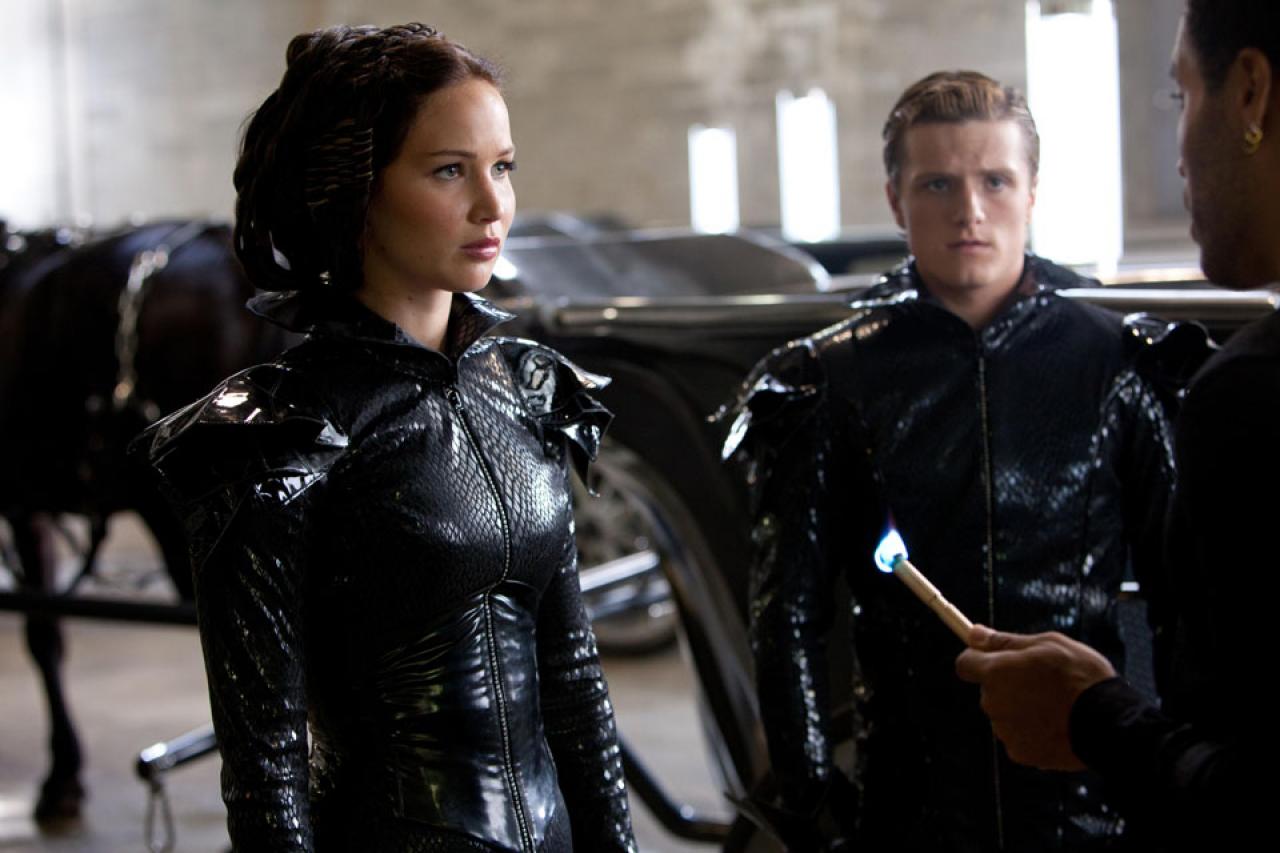
Katniss, looking much like Tulisa Contostavlos, in tightly-fitted leather, training before the games with Peeta (Josh Hutcherson). She and him are receiving advice from Cinna (Lenny Kravitz) on how to beat Cato and his gang.

It is a shame that most of the actors give poor performances. The movie has been put together nicely, James Howard (Love And Other Drugs, The Tourist, Snow White And The Huntsman) has composed a respectable score, and the special effects are brilliant. Panem’s capital has been wonderfully constructed and is a sight to behold.

All-in-all, The Hunger Games has a strong, but flawed, main character, with an intriguing, 1984-like basis to a reality TV show. But, ultimately, the movie has been hamstrung to cater to children and teenagers. Consequently, it is predictable and, like most reality TV shows/series, the film peters out before it ends.

PG’s Tips