Tag Archives: film

Review – Man of Steel (12a) [2013]

Man of Steel - title banner

Star Rating: 2.5/5

Director:

Producer:

  • Christopher Nolan – The Prestige, Inception, The Dark Knight I-III, Transcendence

Cast:

Music Composer:

Zack Snyder, who became a major film director following 300, is renowned for making movies that are pleasing on the eye, but have little by way of substance. Watchmen attempted to be profound without much success, and the less said about Sucker Punch the better. But could the input of the exceptional Christopher Nolan give Snyder the tools to change his ways and make the reboot of Superman, Man of Steel, a masterpiece?
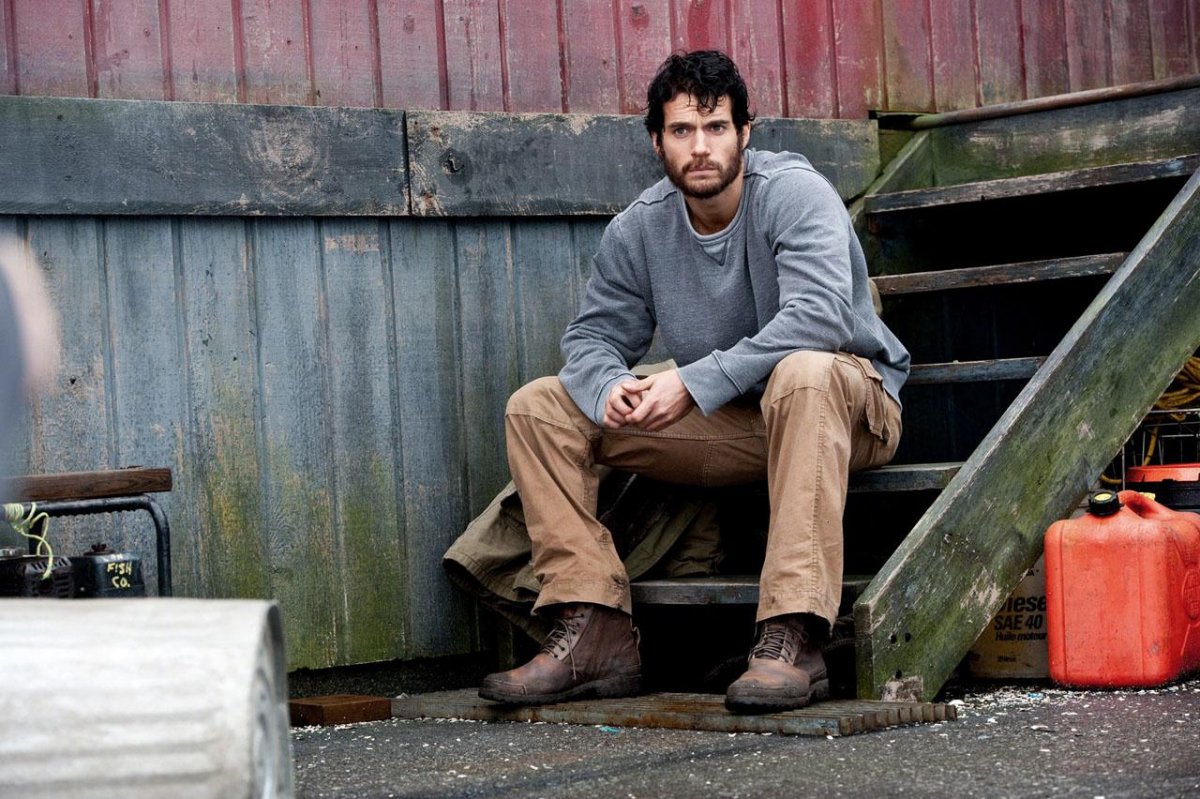
Clarke Kent (Henry Cavill) working as a blue-collar worker, unsure as to who he really is or where his life is taking him.

Clarke Kent (Henry Cavill) working as a blue-collar worker, unsure as to who he really is or where his life is taking him.

  Man of Steel begins with Jor’El (Russell Crowe) sending his baby son, Kal-El to Earth before Krypton implodes. On Earth, Kal-El grows up as Clarke Kent (Henry Cavill) in America, aware of his strengths, yet uncertain as to who he is.

However, when General Zod (Michael Shannon) threatens Earth with destruction unless they hand over the ‘alien among the people,’ Clarke learns of his past and that he must confront his father-on-Krypton’s enemy.

Man of Steel begins in an interesting way by briefly showing audiences the politics on Krypton and why the planet foundered. It is accompanied by some stunning special effects to give viewers a true feel for the nature of the planet itself, including how babies are born, which bears a striking resemblance to how people are formed in Aldous Huxley’s A Brave New World.

Following the prologue of Krypton’s self-destruction, the film goes back and forth, illustrating Clarke Kent’s confusion throughout his life, in the wake of him becoming Superman. The most interesting aspect of this development is when Clarke’s father-on-Earth, Jonathan Kent (Kevin Costner), asks/advises Clarke on the sort of man he wants to grow up to be. This attempts to give Clarke a third dimension, as well as some much needed depth to Man of Steel.
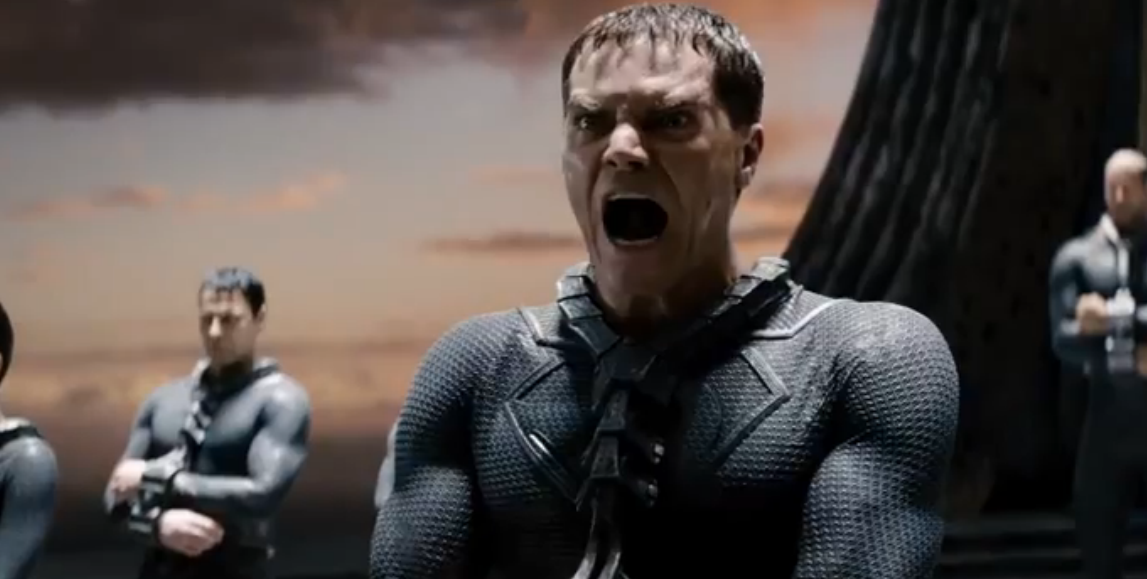
General Zod (Michael Shannon) declaring his strategy on Krypton.

General Zod (Michael Shannon) declaring his strategy on Krypton.

Alas, the movie otherwise lacks complexity and has the feel of Snyder’s Watchmen and, particular, Sucker Punch. Worse, as Snyder makes his eponymous character to be a God-like superhero, there is no sense of peril when watching Superman fight. Consequently, the half-dozen Matrix-style action scenes go on for far too long they become repetitive and boring quickly.

Length, in general, is a problem for Man of Steel. At 143 minutes, it is tediously long, especially as the plot only really starts when General Zod threatens Earth about an hour and fifteen minutes into the movie.

Furthermore, Man of Steel is not assisted by the characters. Although they’re all derived from the comic books, none of them are particularly interesting. That is not to say that the actors do a bad job with what they’re given, but the material does not allow them to excel. Henry Cavill fits the build and is adequate as Superman. But Superman lacks the charisma of Tony Stark/Iron Man or the multi-faceted personality of Bruce Wayne that Nolan superbly exploited in his Dark Knight Trilogy. Superman, in short, is just a traditional (ordinary) hero. The good, moral hero has been done to death, and viewers are right to demand more from filmmakers on this matter, even if the character is strictly in accordance with the comic books.

Similarly, Michael Shannon does a decent job as General Zod. Yet, Zod is more or less an old school, stereotypical villain, which is not interesting anymore. Kevin Costner and Russell Crowe playing as Clarke’s two fathers have the simplest roles in the film, but they are the most interesting characters by a distance (although Crowe’s part for much of the storyline is a deus ex machina, which is very frustrating).
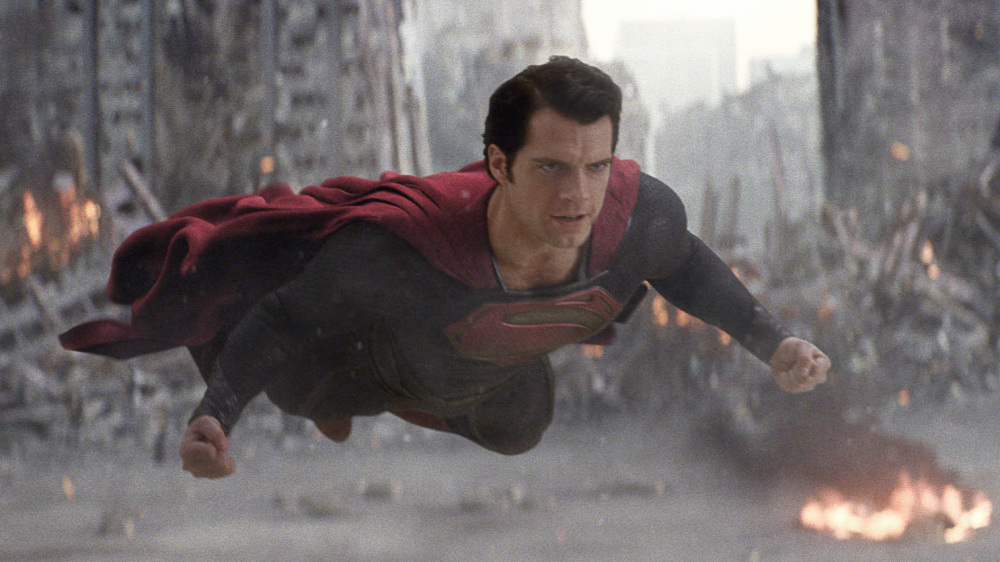
Superman, flying in to save the city and the people from General Zod.

Superman, flying in to save the city and the people from General Zod.

Unusually, however, Amy Adams does not do herself justice as the journalist, Lois Lane. Whenever Lois speaks about Clarke’s supernatural/alien powers, Adams does not look like she believes in what she is saying, even though she attempts sincerity. (Then again, it is hard to criticise Adams on this matter, since the more serious one tries to be when talking about supernatural forces or aliens, the more laughable it appears.) And, strangely, the music by Hans Zimmer sounds average and unmemorable, which is most unusual for him, and that probably sums up Man of Steel.

Over-all, Man of Steel has a few stimulating ideas and some fantastic CGI that is worth seeing alone. However, the ideas are under-employed, and much of the film, including the major fight scenes are monotonous and boring. Thus, Man of Steel lacks what made Christopher Nolan’s Batman movies so engrossing, and it disappointingly bears the hallmarks of Zack Snyder’s films: all gloss and no substance.

PG’s Tips

Review – Iron Man III (12a) [2013]

Iron Man 3 - title banner

Star Rating 2.5/5

Director:

  • Shane Black – Lethal Weapon I-IV, Kiss Kiss Bang Bang, Doc Savage

Cast:

Music Composer:

  • Brian Tyler – Battle: Los Angeles, The Expendables I & II, Now You See Me

In The Avengers Assemble, Tony Stark (Robert Downey Jr.) showed his true colours by stating that he is a “genius, billionaire, playboy, philanthropist.” Indeed, one who has read the Marvel comic-books, or seen Iron Man I & II and The Avengers Assemble, or all of them, knows that Stark thinks highly of himself. But from the trailer of Iron Man III, it appeared that one would see the vulnerable side of Tony Stark for a change. Is this the case?

Tony Stark (Robert Downey Jr.) up at night, working on his numerous projects which he occupies himself with, since he cannot sleep.

Tony Stark (Robert Downey Jr.) up at night, working on his numerous projects which he occupies himself with, since he cannot sleep.

Iron Man III begins with a flashback to New Year’s Eve 1999/2000 when Tony Stark, with scientists Maya (Rebecca Hall) and Aldrich Killian (Guy Pearce), rejects an offer to invest in Extremis, an organisation that deals with experimental treatment to regenerate human limbs that have been severed.

Thirteen/fourteen years later, Stark is having nightmares about the alien invasion that occurred the previous year in The Avengers Assemble. He is suffering from insomnia and anxiety, whilst trying to love Pepper Potts (Gwyneth Paltrow). Yet, the Mandarin (Ben Kingsley) is wreaking havoc upon America with a string of terrorist attacks, using advanced weapons. Soon, he destroys Stark’s house, many of his Iron Man suits, and effectively sends Stark into the wilderness. Stark must find a way back and stop the Mandarin from unleashing more chaos, or else America will fall.

Iron Man III revolves round Tony Stark, and his quick, funny/brash responses. On the periphery, there is a plot (of some sort), some Transformers-style action scenes, plenty of explosions and fire-power, as well as sophisticated special effects in abundance. The problem is that audiences have seen all of these already, and it is starting to get very tedious.

At 133-minutes, Iron Man III is a long film that disappointingly doesn’t add anything new to the series. Worse, after 30 minutes the plausibility of the storyline ceases to exist, and it lazily goes from one plot contrivance to the next. If that doesn’t illustrate Shane Black’s contempt for the audience, the last scene renders all but the first 30 minutes of the movie as a waste of time. Couldn’t Black have just cut out all of the excess baggage and got straight to the chase? (Or, alternatively, forged a plot that actually works?)

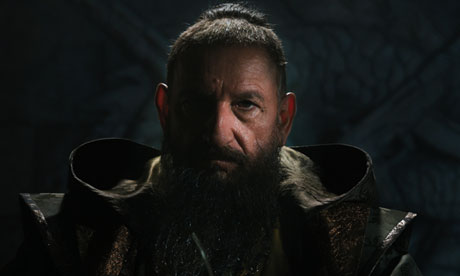
The Mandarin (Ben Kingsley), looking and preaching much like Osama Bin Laden, in a broadcast threatening to destory America if the country does not change its ways.

The Mandarin (Ben Kingsley), looking and preaching much like Osama Bin Laden, in a broadcast threatening to destory America if the country does not change its ways.

Iron Man III also suggests that the franchise is starting to suffer from the issues that are synonymous with other series, like Pirates of the Caribbean, Die Hard, and Fast and the Furious: notably, going on too long, laziness, repetitiveness, and going back in time to make (semi-)viable storylines. The very fact that Iron Man III starts by going back in time should set alarm bells ringing in one’s mind. If the franchise has not bothered until now to mention important things that the key character has done, why should viewers believe that they are significant?

With the exceptions of young Ty Simpkins, who is cute and amusing, and Ben Kingsley, who is brilliant as the terrifying (Osama Bin Laden-like) Mandarin, the rest of the cast could not be more two-dimensional if they tried. Robert Downey Jr. plays the same energetic, narcissistic character (himself) as he did in Iron Man I & II (not to mention in The Avengers Assemble, Sherlock Holmes I & II, and Due Date). Yes, Stark is smart, sharp and impertinent, and Downey Jr. does this well (as we know he can). But, in Iron Man III, Downey Jr. was meant to display his character suffering from insomnia and panic attacks. One is hard-pressed to find an instance of Stark genuinely looking like he was suffering from such problems, which is poor on Downey Jr.’s behalf. It is a shame, too, because one might have seen Downey Jr. actually challenging himself for a change.

Gwyneth Paltrow, playing as Stark’s secretary, is little more than a one-dimensional, pointless blonde doll. Despite loving a man who loves himself more than he loves her (or anyone else for that matter), it is difficult to empathise with Pepper as she is so bland.

Stark in a broken Iron Man suit and in the winter wilderness of Tennessee. How will he ever get back if he is to save the country he has sworn to protect?

Stark in a broken Iron Man suit and in the winter wilderness of Tennessee. How will he ever get back if he is to save the country he has sworn to protect?

Rebecca Hall’s performance suffers from similar problems as Maya’s character is not especially interesting, nor well defined, and her importance to the plot is dubious at best. Don Cheadle plays decently enough in his simple role as Stark’s (patient) understudy. Guy Pearce once again plays another egotistical, two-dimensional individual (he’s making a habit of this following his roles in The Count of Monte Cristo, The King’s Speech and Justice). At least, though, the cosmetic department did a fantastic job on him. In the first scene, Pearce is unrecognisable, which is a great contrast to Stark failing to even have bags under his eyes when (supposedly) suffering from major sleep deprivation. Would it have been so hard to have put eye shadow under Downey Jr.’s eyes?

Over-all, Iron Man III is much the same as the previous two Iron Man films. It follows Tony Stark being Tony Stark; Stark flies and fights in his Iron Man costume; and there are special effects galore that one’s seen before. The movie tries to show us some of Stark’s weaknesses, but fails miserably at this and the attempts at doing so are feeble. Moreover, the laziness of the entire production suggests that the franchise is drained of ideas and lost for care.

PG’s Tips

Review – The Gatekeepers (15) [2013]

The Gstekeepers - title banner2

Star Rating: 4/5

Director:

  • Dror Merah – Sharon

Cast:

  • Avraham Shalom Ben-Dor
  • Yaacov Peri
  • Carmi Gillon
  • Ami Ayalon
  • Avi Dichter
  • Yuval Diskin

Music Composer:

  • Regis Baillet
  • Jerome Chassagnard

There is great interest in the media regarding the Israeli-Palestinian conflict. Much of this interest focusses on the social and political aspect of the conflict. However, little regard is given to the security angle. Dror Merah’s Oscar-nominated The Gatekeepers explores this particular viewpoint superbly with openness and maturity.

Avraham Shalom, the most morally dubious of the six men, explaining his view on the 300 bus hijacking in 1984.

Avraham Shalom, the most morally dubious of the six men, explaining his view on the 300 bus hijacking in 1984.

The Gatekeepers is an Israeli documentary about the Shin Bet, the Israeli domestic intelligence-gathering security agency. Merah explains the role of the Shin Bet by interviewing six of the most recent heads of the organisation, including Avraham Shalom Ben-Dor (1981-86), Yaacov Peri (1988-94), Carmi Gillon (1994-96), Ami Ayalon (1996-2000), Avi Dichter (2000-05) and Yuval Diskin (2005-11). The documentary explores seven themes and analyses some contentious incidents and events between the 1980s and the 2000s, and how the Shin Bet dealt with them through a mixture of interviews and digital-reconstructions.

The Gatekeepers is an intellectually heavy film that deals with numerous controversial events. Merah does not shy away from asking his interviewees difficult questions, and the answers are unexpectedly candid on a range of incidents and events, such as what happened to the terrorists who hijacked the 300 bus in 1984; the mistakes the Shin Bet have made regarding targeted assassinations; the organisation’s lack of awareness vis-à-vis Jewish terrorism in the run-up to Prime Minister Yitzchak Rabin’s assassination in November 1995; and the lack of foresight regarding the Second Intifada between 2000-04, among many other issues.

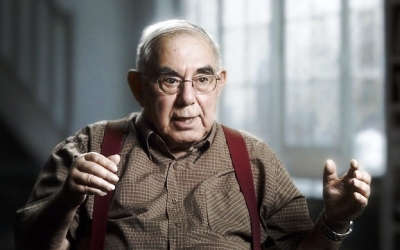
Ami Ayalon, the most passionate of the six men, giving a political opinion on Israel's current security situation.

Ami Ayalon, the most passionate of the six men, giving a political opinion on Israel’s current security situation.

That the interviewees are who they are entails that one takes their opinions seriously. Much of what they say is deep, thought-provoking and utterly relevant to the Israeli-Palestinian conflict today. For them, invariably, moral and ethical conundrums were not merely academic debates, but life and death decisions that had to be made in minutes if they were lucky, but usually in seconds.

Having to make such decisions (of varying legality) on a regular basis, it would be easy to believe that these six men are so desensitised to taking life and abusing the law that they are now socio-psychopaths and virtually inhuman. But what is astonishing is that all six men have a burdening conscience. They are all extremely conscientious of the powers that they once held in the Shin Bet, and that their actions (or omissions) cost and saved lives.

However, while the former heads of Shin Bet give a political view or two (after-all, it would be impossible for them not to), the political context of their work is mostly absent from The Gatekeepers. This is understandable because to explore the politics of the Arab-Israeli conflict in any kind of depth would take much longer than the documentary’s 101 minutes. Yet, for anyone who does not know anything about Israel, the Israeli-Palestinian crisis, and the wider Middle East, The Gatekeepers is likely to be hard going, since he/she would have little idea as to why Israel invaded southern Lebanon in 1982, or why the Oslo Accords were signed in 1994, or what led to the outbreak of the Second Intifada in 2000, among other matters.

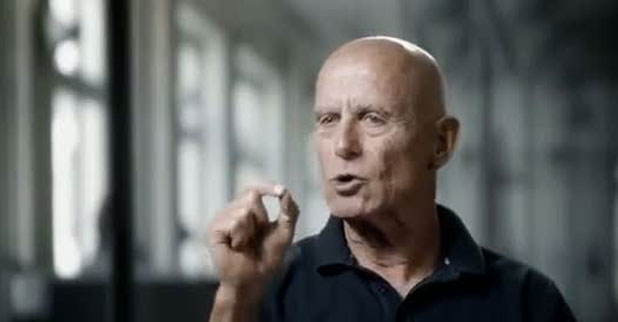
Avi Dichter, the most recent head of Shin Bet to be interviewed.

Avi Dichter, the most recent head of Shin Bet to be interviewed.

Nevertheless, regardless of whether one does or doesn’t know much about the Israeli-Palestinian conflict, one is unlikely to come out of the film thinking highly of either the Israelis or the Palestinians. The six former heads of the Shin Bet spare no-one from culpability, whether it be the politicians or the peoples.

Over-all, The Gatekeepers is a stimulating, if morbid, portrayal of what the Shin Bet has done and the problems that the organisation continues to face on a regular basis. The six former heads of the organisation are remarkably frank and honest about their deeds, and demonstrate how responsible they feel for their actions and omissions, as well as for the events that happened under their watch. But one thing the six men do not is believe that the Shin Bet’s efforts to safeguard the Jewish state from threats of violence and terrorism will be lessening any time soon.

PG’s Tips

Review – Trance (15) [2013]

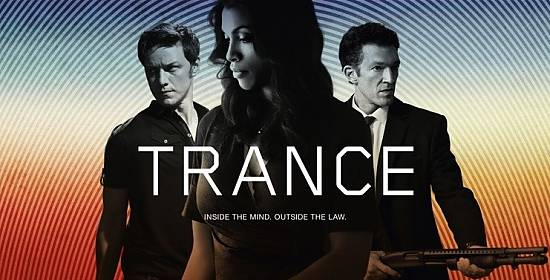
Trance - title banner

Star Rating: 3.5/5

Director:

Cast:

Music Composer:

  • Rick Smith – Breaking and Entering

Psychological thrillers, by their nature, are puzzling and mess with one’s mind. Inception, Shutter Island and Black Swan all did this with varying levels of charm, appeal and success. Danny Boyle’s impressive and sexy Trance adds something new to this testing sub-genre.

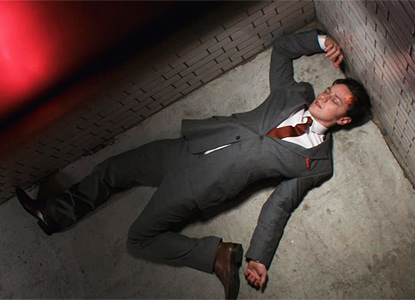
Simon (James McAvoy), unconscious after being bashed on the head by a batton. As a result, he cannot remember what he did with the painting.

Simon (James McAvoy), unconscious after being bashed on the head by a batton. As a result, he cannot remember what he did with the painting.

  Trance centres round Simon (James McAvoy), who works for a London-based company that auctions expensive paintings. The company has a security system in place to prevent the paintings from getting stolen, and Simon is part of the system.

However, when Franck (Vincent Cassel) leads a gang to steal a precious painting during an auction, the painting disappears. Simon, the last person to have handled the painting before its disappearance, was smacked on the head while he removed the painting. Since then, he has developed amnesia and so he can’t remember where he put the painting. In a desperate bid to find the painting, Franck decides that Simon must go to Elizabeth Lamb (Rosario Dawson), a hypnotherapist. Elizabeth believes that by hypnotising Simon, she can get him to recollect the location of the painting.

Trance’s plot is clever and innovative. The film is fast-paced from the off, intense, violent and engaging. It is complex and confusing too, since it constantly does back and forth in time, unravelling what happened to the painting as well as explaining the various (and sinister) motivations of the characters. Moreover, and similar to Black Swan, one is never sure in Trance when one is watching reality or a dream (or a memory or a possible memory). All of this keeps viewers firmly on their toes because no-one can be sure as to where the film is going.

Simon undergoing hypnotherapy with Dr. Elizabeth Lamb (Rosario Dawson) in an attempt to regain his memory regarding the painting.

Simon undergoing hypnotherapy with Dr. Elizabeth Lamb (Rosario Dawson) in an attempt to regain his memory regarding the painting.

Although, it is dubious as to whether Trance’s storyline actually makes sense. Again, this is not novel to the sub-genre: it is uncertain whether the plots for The Machinist or Shutter Island added up (but no-one would argue that those were atrocities to cinema, like Sucker Punch or The Lady In the Water); while Fight Club and Inception demanded that one see them twice (at least) before being able to appreciate (or understand) those movies, and few had reason to complain about those excellent films either. Perhaps, the latter is true for Trance. However, there are some quite significant plot issues that could undermine the film and its realism (if one believes in the effectiveness of hypnotism/hypnotherapy, of course), but these are not going to be discussed here as they would spoil the thrill for those who haven’t seen the movie.

The force of Trance’s storyline is matched by the three main (and more or less only) cast members; James McAvoy in particular. Far from his relaxed demeanour as Charles Xavier/Professor X in X-Men: First-Class, his performance as Simon resembles that of his (brilliant but crazed) stage performance as MacBeth. Nothing illustrates this similitude more than the intensity in Simon’s bombardier blue eyes, as the hypnotherapy, combined with his own problems take effect on him.

Similarly, Vincent Cassel and Rosario Dawson play well, but not with the same power as McAvoy. As Franck, Cassel does a decent job as a shady, amoral character. Yet, it is hard to classify him as the villain here since there is no-one who is particularly good in Trance (some people are just much worse than others). But if one does view Franck as the main antagonist, then one may not feel entirely satisfied with Cassel’s performance because he does not possess the look or the flair to make himself a dangerous villain on screen, unlike the cunning Liam Neeson in Batman Begins/The Dark Knight Rises, or the terrifying Michal Zurawski in In Darkness, or the flamboyant Javier Bardem in Skyfall.

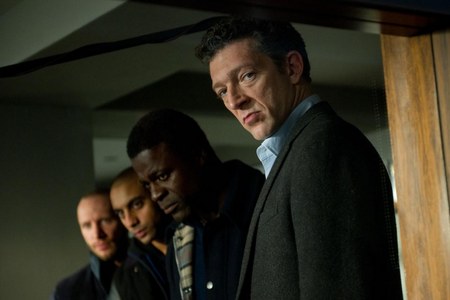
Franck (Vincent Cassel), furtherst right, keeping a worryingly close eye on Simon's treatement, with his group of thugs alongside him to illustrate the consequences for Simon if he fails to shake off his amnesia.

Franck (Vincent Cassel), furtherst right, keeping a worryingly close eye on Simon’s treatment, with his group of thugs at his side to illustrate the consequences for Simon if he fails to shake off his amnesia.

While as Elizabeth the hypnotherapist, the stunning Dawson wonderfully holds her patients (as well as the audience) under her spell, as if ravishingly embodying the psychological thrill of the movie and the sub-genre in one attempt.

Over-all, Trance is a mind-bending and gripping film that is a worthy addition to the sub-genre of psychological thrillers. The movie has its flaws, but to a limited extent these should be disregarded because Boyle’s film is original, appealing and stylish. Furthermore, like all noteworthy psychological thrillers, Trance takes one out of one’s comfort zone and, to its credit, keeps one in thought long after the film has ended.

PG’s Tips

Review – Side Effects (15) [2013]

Side Effects - title banner

Star Rating: 4/5

Director:

  • Steven Soderbergh – Traffic, Contagion, Behind the Candelabra

Cast:

  • Rooney Mara – A Nightmare On Elm Street, The Social Network, Her
  • Channing Tatum – The Eagle,White House Down21 & 22 Jump Street
  • Jude Law – The Imaginarium of Dr. Parnassus, Contagion, Dom Hemingway
  • Catherine Zeta-Jones – Traffic, Playing For Keeps, Red II
  • Vinessa Shaw – The Hills Have Eyes, 3:10 to Yuma, Siren
  • James Martinez – Gravity, The Sessions, An Artist’s Emblem

Music Composer:

Before taking medication, one has an idea that for all the positives of the medicine there is likely to be negative implications. These are better known as side effects, and doctors should always make their patients aware of them for reasons of liability. Side Effects, Steven Soderbergh’s second medical thriller in the space of eighteen months, soundly illustrates some of medicines’ many snags as well as the trouble doctors could find themselves in if they don’t make their patients aware of them.

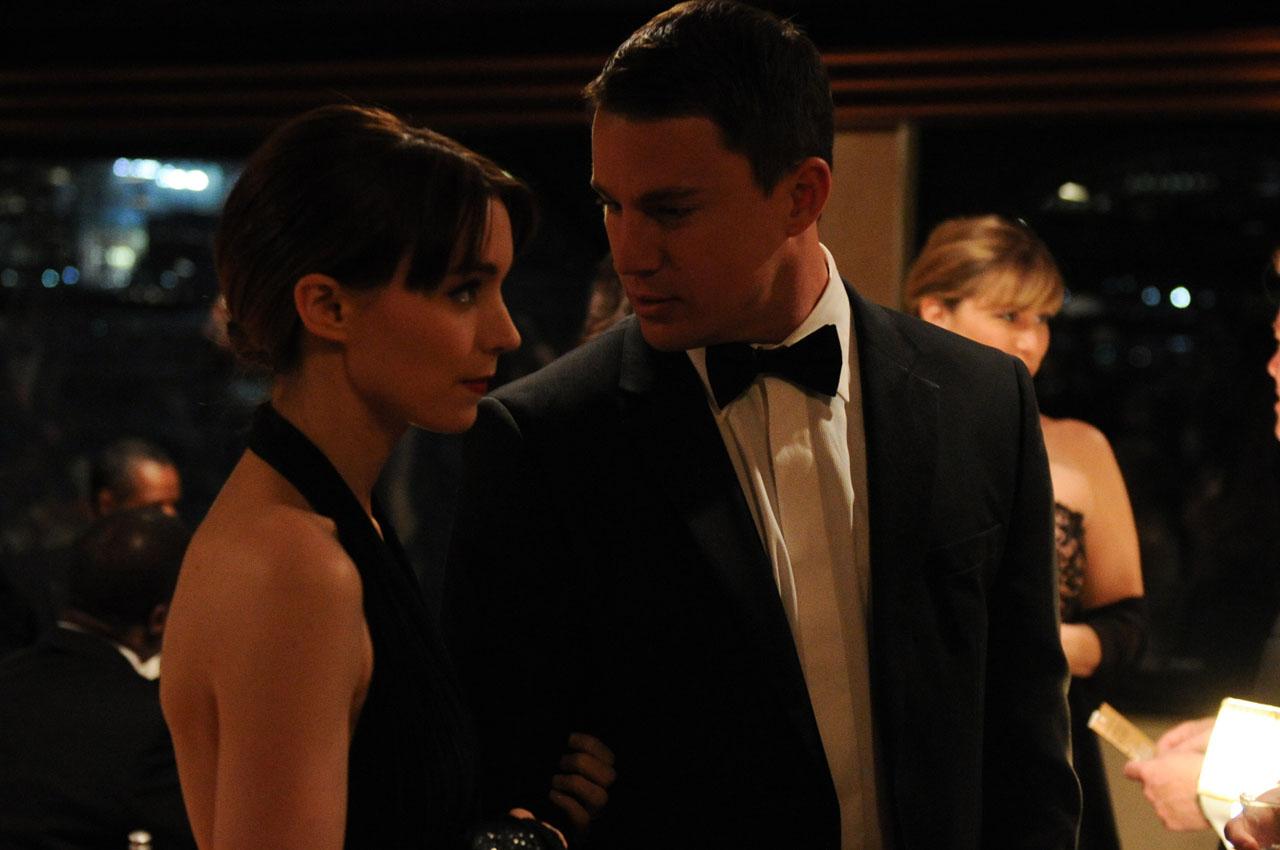
Martin (Channing Tatum) and Emily (Rooney Mara) looking like an aesthetically perfect couple, dressed smartly at a friend's party.

Martin (Channing Tatum) and Emily (Rooney Mara) looking like an aesthetically perfect couple, dressed smartly at a friend’s party.

Side Effects more or less begins with Martin (Channing Tatum) coming out of prison to be reunited with his wife, Emily (Rooney Mara). Emily, however, seemingly suffers from depression and other self-esteem issues, and appears unable to cope with life. So, after attempting suicide, she meets Dr. John Banks (Jude Law), who prescribes her a series of drugs to make her feel better, after consulting with Dr. Victoria Siebert (Catherine Zeta-Jones), Emily’s previous doctor.

The drugs work initially for Emily. But then the side effects kick in. And with consequences for Emily, Martin and Dr. Banks.

Side Effects is a slow-paced medical thriller that is mysterious and gripping for its apt 106 minute running time. Although the plot has several contrived moments, all of these are explained reasonably well, so the film does not feel like a patch-work for lazy script-writing. What’s more, the film has a generally unsettling ambience and leads to an unexpected conclusion that is most welcome.

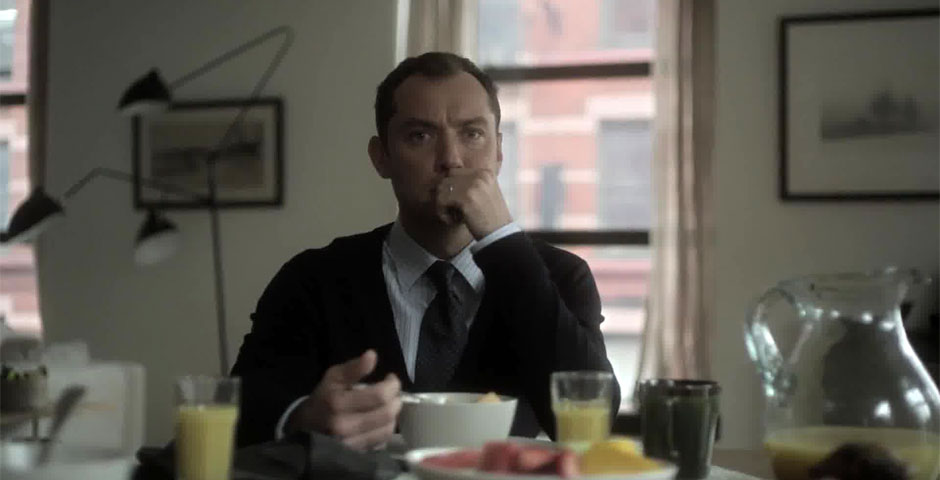
Dr. John Banks (Jude Law) chewing his breakfast, wondering how his world has turned upside down due to Emily's reaction to the drugs he prescribed her.

Dr. John Banks (Jude Law) chewing his breakfast, wondering how his world has turned upside down due to Emily’s reaction to the drugs he prescribed her.

In part, the disquieting atmosphere of Side Effects is due to the strange, yet thought-provoking music that is virtually on tape-loop during the movie. The other reason is due to good dialogue and acting, not least from Rooney Mara in the lead role. Invariably, her character seems to be permanently on a medically-prescribed drug or suffering from a drug’s drawback; in particular, the latter, and Mara plays it all troublingly well.

Surprisingly, Jude Law, as the doctor in danger of losing his career, performs decently too. He might show little compassion toward his wife, Deirdre (Vinessa Shaw), and son, but Law is certainly considerably better here than he is in (the mind-numbing) The Holiday and in Contagion, wherein he adopts a laughable Australian accent. (As if anyone would believe that Jude Law were Australian!)

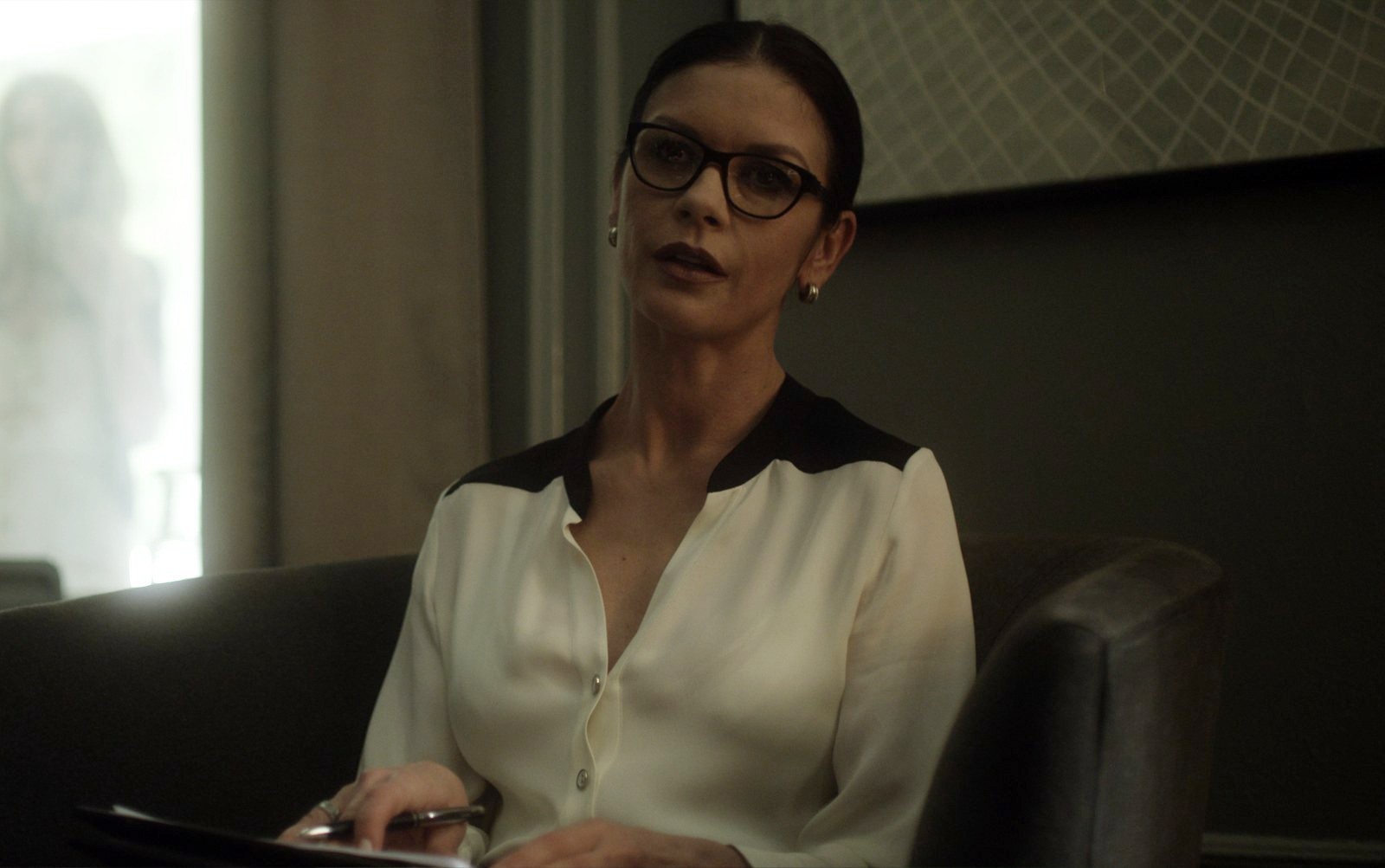
The beautilful and manipulative, Dr. Victoria Siebert (Catherine Zeta-Jones), unaware that someone is looking at her through the window.

The beautilful and manipulative, Dr. Victoria Siebert (Catherine Zeta-Jones), unaware that someone is looking at her through the window.

Channing Tatum, in his comfort-zone as the handsome and charming husband, gives a standard demonstration of his acting skills, while Catherine Zeta-Jones, as arguably the villain of the movie, is just as cunning and classily appealing as she was a decade ago in Intolerable Cruelty.

Thus, Side Effects is an enjoyable film that is likely to take viewers by surprise. Granted, it has plot conveniences, yet one is likely to forgive the movie for these as the storyline is intelligent and keeps audiences in suspense. Furthermore, one is likely to be more wary of the downside of certain medications after watching the film; and doctors, if they did not already, are likely to become paranoid about being sued by their patients for prescribing them medications with foreseeable and unforeseeable side effects.

PG’s Tips

Review – Stoker (18) [2013]

Stoker - title banner2

Star Rating: 2.5/5

Director:

  • Chan-Wook Park – Sympathy For Mr. Vengeance, Oldboy, Lady Vengeance

Producers:

  • Ridley Scott – Body of Lies, Prometheus, Welcome to the Punch
  • (The late) Tony Scott – The Taking of Pelham 123, Unstoppable, Out of the Furnace

Cast:

  • Nicole Kidman – Eyes Wide Shut, Rabbit Hole, Before I Go To Sleep
  • Mia Wasikowska – Defiance, Alice In Wonderland, The Double
  • Matthew Goode – Match Point, Watchmen, Belle
  • Jacki Weaver – The Five-Year Engagement, Silver Linings Playbook, Haunt
  • Phyllis Somerville – Little Children, The Curious Case of Benjamin Button, The Double
  • Lucas Till – X-Men: First Class, Battle: Los Angeles, X-Men: Days of Future Past
  • Alden Ehrenreich – Twixt, Beautiful Creatures, Running Wild

Music Composer:

What is the purpose of film trailers and movie marketing campaigns? The answer might seem ostensibly obvious: to whet people’s appetites to buy cinema tickets and, eventually, to entice them to buy DVDs. While this understandably keeps the wheels of the Hollywood machine spinning, does this mean that trailers and marketing campaigns should give too much of a film’s plot away and/or misrepresent a movie in the interests of money? Indeed, some of Stoker’s problems stem from its trailer and its advertisements.

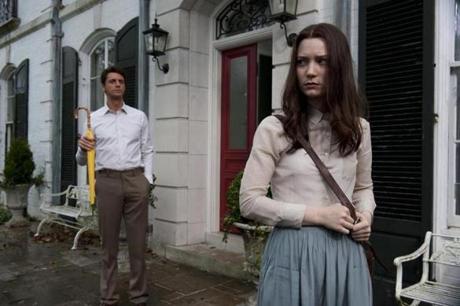
Charlie (Matthew Goode) watching look like a stalker as his niece, India (Mia Wasikowska), walks to school.

Charlie (Matthew Goode) watching look like a stalker as his niece, India (Mia Wasikowska), walks to school.

Stoker begins with the death of Richard Stoker (Dermot Mulroney). Not long after his funeral, Richard’s daughter, India (Mia Wasikowska), learns that her father had a creepy brother, Charlie (Matthew Goode), and that he will be moving into the house. He has been invited to stay by India’s unstable mother, Evelyn (Nicole Kidman). But no sooner does Charlie arrive, people start to disappear, and this has a troubling effect upon India.

One may think that the above discloses too much of the Stoker’s gripping, but strange and purposeless plot. Yet, the above gives away less than the trailer. If anything, like with those for 2012 and The Hobbit I: An Unexpected Journey, Stoker’s trailer portrays the movie’s storyline more succinctly in just under two and a half minutes than the actual film does in 98 minutes. Thus, far from attracting people to see Stoker, the trailer ensures that viewers don’t need to pay to see the movie. Doesn’t that defeat the purpose of the trailer?

Charlie looking disturbingly interested in his niece as he helps her play the piano.

Charlie looking disturbingly interested in his niece as he helps her play the piano.

Worse, Stoker has been promoted as an ‘erotic thriller.’ However, this is misdirection, at best, and misrepresentation, at worst. This is because there’s (sadly) not nearly enough eroticism in the film to justify its selling-point (and this is not just in comparison to steamy erotic thrillers like Eyes Wide Shut and Basic Instinct II). This means that (the promoters have cynically done their job and that) Stoker can only disappoint people who were misled about the nature of the film.

That is not to say that audiences won’t enjoy Stoker’s (few) merits. The music is eerie and unsettling, mirroring Matthew Goode’s unnerving (if narrowly more than one-dimensional) performance. Nicole Kidman is very good, if under-employed, as the unbalanced and irresponsible mother, stuffed with triteness. And Mia Wasikowska plays quite well, too, in a bizarre and paradoxical role as the coming-of-age daughter, without giving viewers any reason to empathise with her character. The rest of the cast, including Jacki Weaver, as aunty Gwendolyn; Phyllis Somerville, as the cook; Lucas Till, as one of the school bullies; and Alden Ehrenreich, as India’s friend, among others, add so little to the plot that they might as well not have bothered agreeing to be part of the project.

India brushing her mother's hair. Evelyn (Nicole Kidman) almost does not know where she is after waking up in the middle of the night drunk, as usual.

India brushing her mother’s hair. Evelyn (Nicole Kidman) almost does not know where she is after waking up in the middle of the night drunk, as usual.

If the oddness of the storyline and performances do not keep audiences on their toes, Stoker’s setting has the ability to keep them guessing as to what era the film is meant to be set in. By deduction, one can work out that the film is meant to be based in 2012. While there might be flat-screen televisions in some of the rooms of the Stoker household, the house itself looks like it is from either (or a mixture of) the 1950s or the early 1990s. Moreover, India might employ a modern hairstyle, but the clothes she wears hint at a 1950s theme, if not earlier. One could argue that this helps to give the movie a more bizarre ambience, which, to a limited extent, it does. Yet, there is a fine balance between doing this and getting it wrong, and in the case of Stoker, it looks as if director Chan-Wook Park could not make up his mind as to what epoch he wanted to set the film in.

Over-all, Stoker is a peculiar blend of weirdness and captivation that had the potential to be so much better. The acting is average and there are numerous flaws and predictabilities in the storyline. Nevertheless, more than anything, the film’s problems are due to its trailer and the advertising campaign that accompanied the movie. Considering how interesting Stoker’s trailer looks, and that the film was billed as an ‘erotic thriller,’ one goes away from the movie feeling let down and that Park missed a great opportunity to make something different and potentially special.

PG’s Tips

Review – Mama (15) [2013]

Mama - title banner

Star Rating 2.5/5

Director:

Executive Producer:

Cast:

  • Jessica Chastain – The Debt, Take Shelter, Coriolanus, The Help, Zero Dark ThirtyInterstellar
  • Nikolaj Coster-Waldau – Headhunters, Game of Thrones, Oblivion
  • Megan Charpentier – Jennifer’s Body, Red Riding Hood, Resident Evil: Retribution, Never Ever
  • Isabelle Nélisse
  • Jane Moffat – Alphas, Come Dance With Me, An Enemy
  • Javier Botet – Rec I-III, As Luck Would Have It, Al Final Todos Mueren
  • Daniel Kash – The Dresden Files, Alphas, Split Decision

Music Composer:

  • Fernandez Velázquez – The Orphanage, Devil, The ImpossibleA Monster Calls

The Woman in Black and The Possession are testament not only to the tiredness, comical and abysmal nature of the horror genre, they also signal that ghost stories and films about possessive/evil spirits have been done so many times that they seem to no longer be capable of scaring audiences. Despite being a notch up from most other recent horror movies, Mama does little to alter this view.

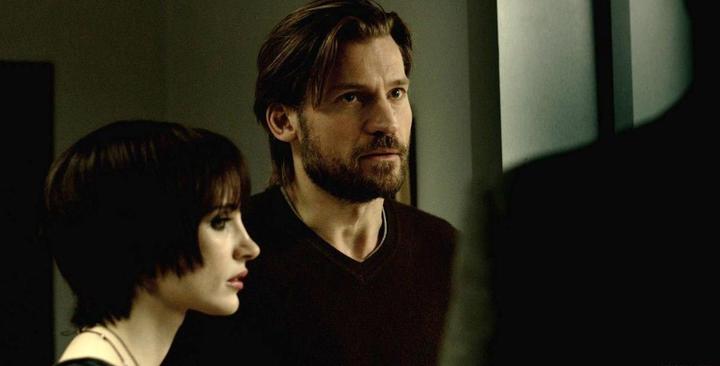
Annabel (Jessica Chastain) and Lucas (Nikolaj Coster-Waldau) talking with Dr. Dreyfuss. Lucas is determined to foster his late-brother's daughters, despite their problems.

Annabel (Jessica Chastain) and Lucas (Nikolaj Coster-Waldau) talking with Dr. Dreyfuss. Lucas is determined to foster his late-brother’s daughters, despite their problems.

  Mama begins with the mysterious death of Jeffrey (Nikolaj Coster-Waldau) in a cabin in the woods, leaving his two very young daughters, Victoria (Megan Charpentier) and Lily (Isabelle Nélisse), to seemingly fend for themselves. But were they alone?

  Five years later, the two girls are found, looking like wild barbarians, and are sent to live with their uncle, Lucas (also Nikolaj Coster-Waldau), and his rock-chick girlfriend, Annabel (Jessica Chastain). But something else has come with Victoria and Lily; something they call ‘Mama.’

As far as horror films go, the plot for Mama is actually not bad for the first 60 of the movie’s 100 minute running time. The film may not be particularly frightening, despite a few jumpy moments, but at least it can make one’s heart-rate speed up a bit at times (which is almost novel for horror films these days).

But, disappointingly, Mama loses its way at the hour mark. Subsequently, it descends into the normal clichés and follies that are symptomatic of the genre: parts of the plot get thrown by the wayside; plot threads don’t add up; and the parts of the storyline that do work become so contrived that they might as well not work. Worse, long before the end, even the things that made the film tense and jittery lose that ability.

Annabel concerned by what devilry has come with Victoria and Lily, and is now in the house.

Annabel concerned by what devilry has come with Victoria and Lily, and is now in the house.

The key reason for why Mama can sustain viewer’s interest for as long as it does is due to the acting and the dialogue. For once, both are acceptable by anyone’s standard (and not just in comparison to the acting and dialogue in abominations like Jennifer’s Body and The Wolfman). Unsurprisingly, Jessica Chastain holds her all as the lead character, albeit in a far more casual manner than in Zero Dark Thirty, and makes conversations about evil spirits seem mundane and normal, which is not as easy as one would think (as The Woman in Black and The Possession attest). The two young girls also perform unexpectedly decently. Lily’s behaviour is particularly weird and unsettling, yet Isabelle Nélisse makes it look nothing out of the ordinary due to her character’s peculiar circumstances.

Indeed, the only actor who is somewhat disappointing is Nikolaj Coster-Waldau, and for no fault of his own. Lacking the smugness of Jaime ‘the Kingslayer’ Lannister from Game of Thrones, Coster-Waldau does alright with what he is given. But his role is quite minimal and modest, meaning that his talents are largely wasted in Mama. The rest of the cast, including Jane Moffat, as Jean, Lucas’ sister, and Daniel Kash, as the suspicious Dr. Dreyfuss, have even less to do than Coster-Waldau, rendering their value to the film close to irrelevant.

However, the person with arguably the most irrelevant impact upon Mama is Guillermo Del Toro. Was he solely made executive producer to enable debutant director Andrés Muschietti to ride on the coat-tails of his 2006 Oscar-nominated Pan’s Labyrinth? Well, that and to dupe people (like me) into the cinema most probably.

There is little doubt that Mama is not a par with Pan’s Labyrinth, but it has its own music and that should be commended. The music lacks the power, depth and variety of the scores in The Lion King, The Dark Knight Rises and Lincoln, and it might be limited in range too, but at least it does not recycle the standard stringy music (followed by a sudden crescendo) that is sadly all too common in horror movies.

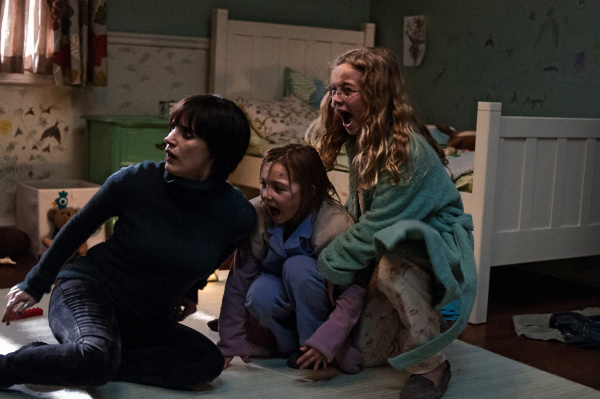
Annabel with Lily and Victoria, as they realise, with horror, that 'Mama' has come to pay them a visit.

Annabel with Lily and Victoria, as they realise, with horror, that ‘Mama’ has come to pay them a visit.

  The same can roughly be said for the special effects in Mama as well. They’re not bad and, initially, whatever ‘Mama’ is can make one feel like something is crawling underneath one’s skin (which is a good thing!). But this wears out soon enough, making the effects little more than an unpleasant, immaterial sight.

  Overall, Mama is not a terrible horror film and is certainly better in every respect than The Woman in Black and The Possession. Mama shoots itself in the foot after an hour, so to speak, but at any rate, it has some suspense with passable acting and dialogue, and curious music. Nevertheless, even with all of the above and a new director, Mama underlines the exhaustion and lack of innovation in the paranormal-inclined horror genre, which has been going on for too long.

PG’s Tips

Review – Zero Dark Thirty (15) [2013]

Zero Dark Thirty - title banner2

Star Rating: 3.5/5

Director:

  • Kathryn Bigelow – The Loveless, The Weight of Water, The Hurt Locker

Cast:

Music Composer:

When it comes to films about historical events, like Titanic, The Assassination of Jesse James by the Coward Robert Ford and Lincoln, one knows how they will end before even starting them. Yet, such movies can be just as, if not more entertaining and gripping than movies where one does not know what is going to happen. The same is true for the arresting Zero Dark Thirty, which also sends out a potent message to America’s enemies.

The film is a politico-historical drama based around real events. ‘Zero dark thirty’ is a military codename for half past midnight, and it is the time that the operation to kill Osama Bin Laden took place on the night of 1st/2nd May 2011 in Abbottabad, Pakistan.

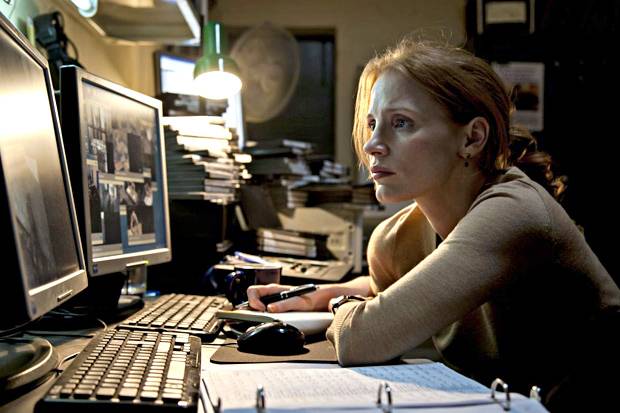
Maya (Jessica Chastain), baggy-eyed as she watches countless interrogations of detainees in her attempts to find a lead to Osama Bin Laden's location.

Maya (Jessica Chastain), baggy-eyed as she watches countless interrogations of detainees in her attempts to find a lead to Osama Bin Laden’s location.

Zero Dark Thirty is all about the CIA’s attempts to find the world’s most wanted man following his masterminding of the terrorist attack on the Twin Towers on 11th September 2011, and his subsequent vanishing. The film is an unhurried, yet captivating thriller that does not feel like it is 157 minutes long. Like with The Hurt Locker, it has a grounded feel, and therefore lacks the hyperbole and surrealism of 24. Even the ending mirrors this mood, which is rare and noteworthy for Hollywood.  It is too early to know how true Zero Dark Thirty is to the reality, but it feels like a realistic and fair representation of events. First, it illustrates how dangerous it is for Americans to be in Afghanistan/Pakistan, thereby emphasising how heroic they are being out there. Second, it demonstrates some of the difficulties CIA agents face operating in the field, trying to unearth information about their targets (who have multiple identities and never seem to stay in the same place twice). Third, the movie shows the CIA adopting dubious torture methods and degrading treatment upon suspected and actual terrorists in undisclosed locations in their desperate bid to find leads on Bin Laden.

There has been much controversy over Kathryn Bigelow’s depiction of torture adopted by US personnel in 2002 and afterward (when it was officially outlawed). Arguably, the film enables Bigelow to reveal her anti-American/anti-war bias again, like she did so painfully in the critically-acclaimed The Hurt Locker. Yet, it is doubtful that she glorifies torture here. Instead, she lets viewers decide for themselves, in a similar vein to Rendition, if torture is ever necessary or useful, which is an intelligent way of kicking off a moral debate on an important and current subject.

CIA agent Dan (Jason Clarke) arguing with his and Maya's boss, Joseph (Kyle Chandler), as he tries to help Maya in anyway he can.

CIA agent Dan (Jason Clarke, right) arguing with his and Maya’s boss, Joseph (Kyle Chandler, left), as he tries to help Maya in anyway he can.

But what is even more striking than the portrayal of ‘enhanced interrogations’ in Zero Dark Thirty is how the film has painted the War on Terror as merely Osama Bin Laden. Yes, he is the figurehead of modern-day Jihadi terrorism and his death is a symbolic hammer-blow to the cause. But by 2011 it is dubious how influential Bin Laden was to the pursuit of world Jihadism, due to the emergence of numerous Al-Qaeda splinter groups, such as Al-Aqaeda in the Arabian Peninsula (AQAP) and Al-Shabaab, among others. Yet, these other terrorist groups are barely given a mention, which is strange considering the security threat they pose to the world.

Additionally, Zero Dark Thirty does not explore, even for the sake of context, the complex and conflicting relationships between America, Afghanistan and Pakistan, not to mention the contradictory nature of the Pakistani state itself. (Anyone remember David Cameron saying that Pakistan looks “both ways” on terrorism?)

However, if one can ignore the lack of political background, one can enjoy strong performances from all the cast. At the forefront, is Jessica Chastain, who demonstrates, for the first time, that she can play a leading role just as solidly as she can a supporting one when given the chance. Her single-minded character, Maya, is given the central task of finding Bin Laden. Maya might get her way sometimes in a contrived manner for reasons of plot, but Chastain looks so natural in the role, and the way Maya changes under the circumstances is indicative of Chastain’s talent.

Patrick (Joel Edgerton) enjoying banter with his marine companions before leading them to into combat to kill Bin Laden.

Patrick (Joel Edgerton) enjoying banter with his marine companions before leading them to into combat to kill Bin Laden.

Maya’s solemnity is in mild contrast to her two main colleagues, the tough-yet-amusing Dan (Jason Clarke) and the bitchy Jessica (Jennifer Ehle). Both Clarke and Ehle play well, and are more empathetic than Maya. Nevertheless, they are both outshone by Chastain’s performance.

Over-all, Zero Dark Thirty is a sincere and honest attempt to recreate the finding and killing of Osama Bin Laden. That one knows how the movie will end is irrelevant, as it is an engrossing and tense watch. The film might be devoid of much of the current context vis-à-vis the War on Terror, and it might be overly-simplified; yet, what it lacks on those fronts, it makes up for in compelling performances, not least from Jessica Chastain. Furthermore, Zero Dark Thirty sends out a stark message to America’s enemies: it doesn’t matter where they hide or for how long they hide, America will find them and bring them to justice.

PG’s Tips

Review – Les Misérables (12a) [2013]

Les Mis - title banner2

Star Rating: 4/5

Director:

Cast:

At the beginning of 2012, audiences were treated to the silent film, The Artist. It was unexpectedly charming and something different in an age of formulaic, clichéd blockbusters. A year on, and audiences are treated to something different once again in the form of the marvellous Les Misérables.

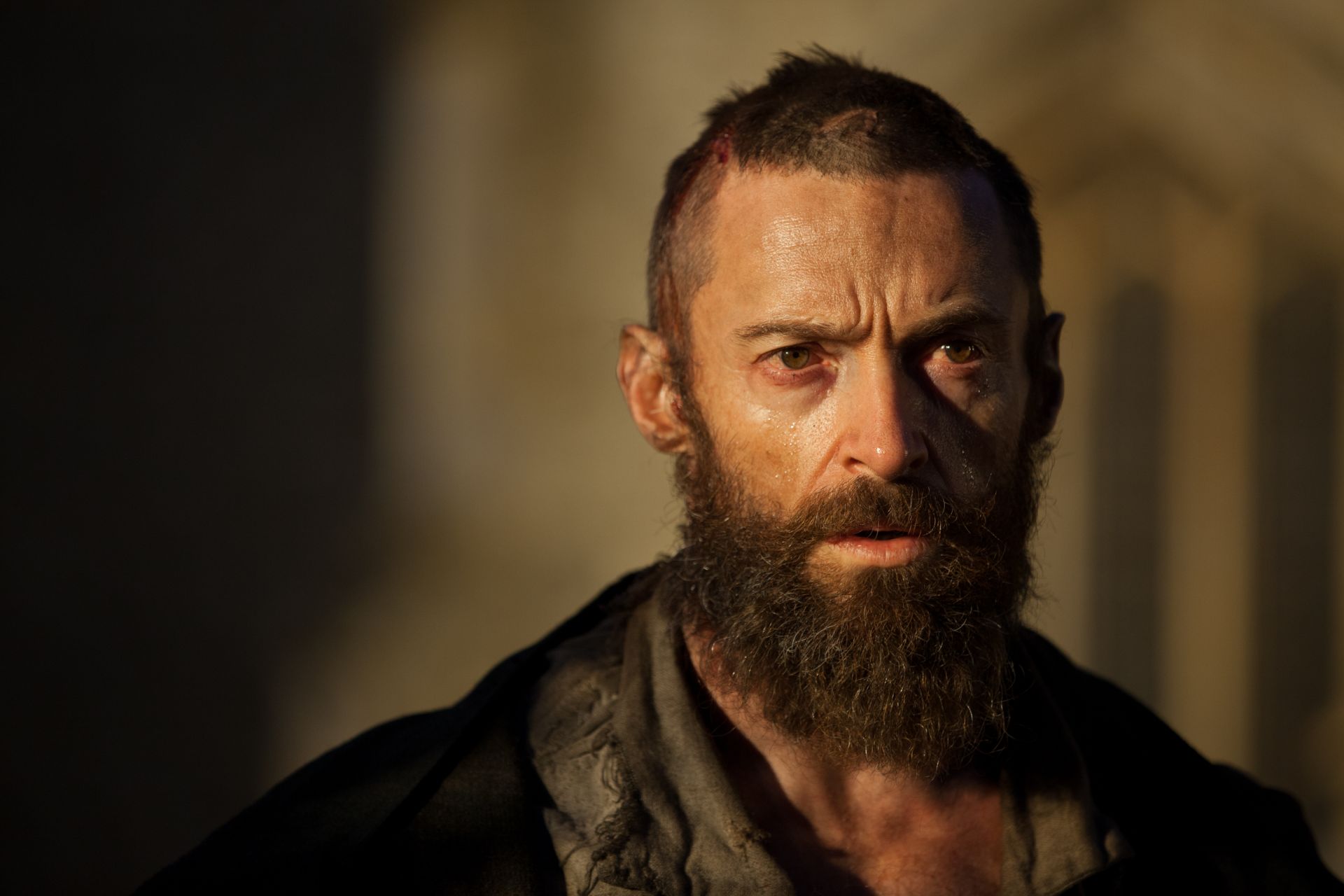
Jean Valjean (Hugh Jackman), looking like a scraggy vagabond, as a convicted criminal about to be released on parole.

Jean Valjean (Hugh Jackman), looking like a scraggy vagabond, as a convicted criminal about to be released on parole.

The storyline is based upon the 1862 historical-fiction novel by Victor Hugo and the subsequent theatre production. It loosely centres round Jean Valjean (Hugh Jackman) and Javier (Russell Crowe). Jean Valjean is a convicted man, who breaks his parole and seemingly vanishes in his bid to start a new life. Javier, the Inspector, upon discovering what Jean Valjean has done, is determined to find Prisoner 24601 and bring him to justice.

The plot for Les Misérables is more detailed and layered than that, especially as it has a large cast all with roles to play before the story ends. Unlike the stage version, the film does a good job of keeping the narrative understandable and easy to follow, despite having to take out chunks from the book. This is no small achievement, considering that more or less the entire movie is sung. Credit should rightly go to Tom Hooper for this, as well as for successfully turning a theatrical play into an Oscar-nominated film. (It should be borne in mind that The Woman In Black was the last time a director attempted to translate a play into a movie, and the less said about that film the better!)

However, in spite of Hooper cutting out sections of the book, the film still seems too long and somehow bloated at 158 minutes. The Artist, it should be noted, is only 100 minutes and, consequently, does not feel over-stuffed. Part of the reason for why Les Misérables feels this way is due to the numerous sub-plots taking place throughout the story, many of which have only questionable importance to its outcome.

Inspector Javier (Russell Crowe), wearing almost the identical garb of the former (and now fallen) Emperor Napoleon Bonaparte I, on the lookout for Jean Valjean.

Inspector Javier (Russell Crowe), wearing almost the identical garb of the former (and now fallen) Emperor Napoleon Bonaparte I, on the lookout for Jean Valjean.

Yet, more significantly, does the story actually matter? When one watches Les Misérables in the theatre, one is more likely to be awed by the music and the mechanics of the stage, than taken in by the (slightly contrived) narrative. But the movie does not have an innovatively-devised podium. Additionally, it suffers from a cast that, while stellar in name, generally lack the powerful vocals of their stage counterparts.

Russell ‘wannabe-Napoleon Bonaparte’ Crowe and Hugh Jackman, the two leading men, are particularly guilty of this. It is not that their performances are bad, it is just painfully obvious that they are actors first and singers a distant second. One might argue that this is what Hooper desired as he claimed to want the vocals ‘raw’ and conversational, rather than melodramatic. (Then again, he could have been saying this as a defence of his cast, in hindsight, after realising that he should have used stage actors instead of Crowe and Jackman.)

Also, the more one sees and hears the supporting cast, the more Crowe and Jackman are shown up; in particular, against Anne Hathaway. Hathaway, as Fantine, might look pale and terribly thin with her skin, bone and flesh emaciated a la Natalie Portman in Black Swan, but she most certainly can sing. In Rio I, Hathaway showed that she can sing well and nicely. But in Les Misérables she takes her talents to a new level, acquiring immense vigour in her voice, despite clearly lacking in nourishment.

No-one else looks starved like her, but Eddie Redmayne and Samantha Barks, as the rebel Marius and Éponine, respectively, have very good voices; Amanda Seyfried, as Cosette, illustrates that she’s a better singer than actor (and that she can exist without her incongruous pink lip-gloss, unlike in the medieval-themed Red Riding Hood); while Sacha Baron Cohen and Helena Bonham Carter, as Thénardier and Madame Thénardier, respectively, show us that they may not have noteworthy vocals, but that they can still make us laugh whilst in tune.

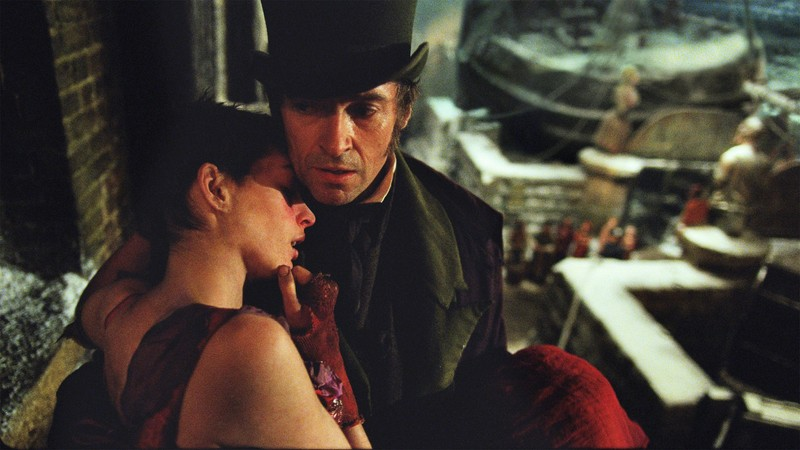
Jean Valjean, now all cleaned up and living a new life under a false name, holding a poorly street-woman, who just so happens to be Fantine (Anne Hathaway).

Jean Valjean, now all cleaned up and living a new life under a false name, holding a poorly street-woman, who just so happens to be Fantine (Anne Hathaway).

Yet, if one is truly bothered about the singing not being up to scratch with the stage performers, one can still admire the sceneries and the visuals. Cinema, as opposed to theatre, is not limited by the area of a stage (however impressive the mechanics of it may be), and Hooper uses this to his advantage to give viewers a true feel for the (miserable) neighbourhoods that our characters come from in a way that the theatre perhaps can’t convey as deeply.

All-in-all, Les Misérables is very impressive theatrical production-cum-film. The cast’s vocals may not be as strong as those actors on the stage, and the movie lacks some of the charms of the theatre. Nevertheless, like The Artist, Les Misérables is something different, and it should be celebrated that an operatic-style film can be delivered in such a superb and entertaining manner.

PG’s Tips
Review – Lincoln (12a) [2013]

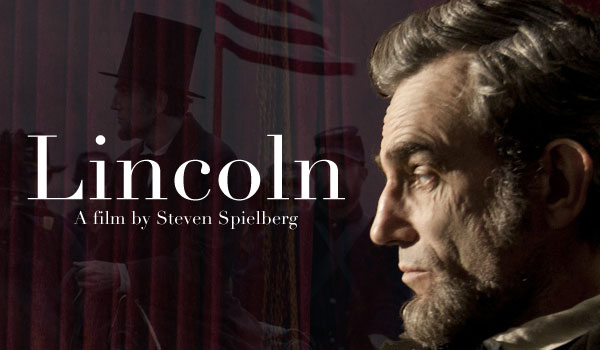
Lincoln - title banner

Star Rating: 4/5

Director:

  • Steven Spielberg – Saving Private Ryan, War Horse, Indiana Jones I-V

Cast:

  • Daniel Day-Lewis – Gangs of New York, There Will Be Blood, Nine
  • Sally Field – Mrs Doubtfire, ER, The Amazing Spider-Man I & II
  • Joseph Gordon-Levitt – The Dark Knight Rises, Looper, Sin City II
  • Tommy Lee Jones – No Country For Old Men, Captain America: The First Avenger, Emperor, Bourne V
  • Jackie Earle Haley – Watchmen, Shutter Island, Robocop
  • David Strathairn – LA Confidential, The Whistleblower, The Bourne Ultimatum & Legacy
  • James Spader – Boston Legal, The Office, By Virtue Fall
  • David Oyelowo – The Last King of Scotland, Rise of the Planet of the Apes, The HelpInterstellar
  • Michael Stuhlberg – Steve Jobs

Music Composer:

  • John Williams – Star Wars I-VI, War Horse, Indiana Jones I-V

All democratically-elected state leaders, whether they are presidents or prime ministers, have an ambition for reaching their respective position. For some, it is about power and/or aggrandisement; for others, it is about putting their names down in the history books. But for an exceptional few, it is about being uniquely in the right place at the right time and enabling their ideologies and actions to make them stand out from among their peers. President Abraham Lincoln (1860-65) belongs to the last category, and Steven Spielberg’s admirable biopic, Lincoln, illustrates why this is the case.

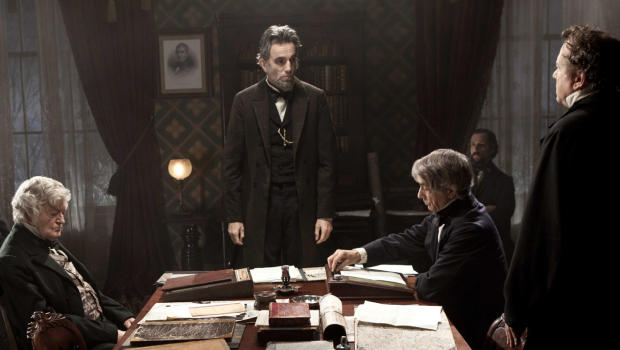
President Lincoln (Daniel Day-Lewis) forcefully telling his cabinet that he intends to proceed with the amendment and that they must help him.

President Lincoln (Daniel Day-Lewis) forcefully telling his cabinet that he intends to proceed with the amendment and that they must help him.

Lincoln revolves round events in America during January 1865. At the time, no-one was certain as to how long the Civil War (1861- April 1865) would continue. The Unionists, led by President Lincoln (Daniel Day-Lewis) and the armies of the north, are in a strong position. But the rebel Confederacy, led by Jefferson Davis and the armies of the south, are not about to surrender either.

The latter’s resolve is further stiffened upon hearing that, despite the war raging on, President Lincoln intends to push through Congress the highly contentious Thirteenth Amendment (the abolition of slavery) before the legislature ends its session at the beginning of February. The Confederacy’s hatred of black people and their slavery-based economy cannot allow for it. But will their attempts to block the proposed amendment succeed?

Lincoln’s storyline is intelligent; yet, slightly lacking in depth and, at 150 minutes, drawn out. Despite being potentially confusing for someone who has no knowledge of the era, the political wranglings going on behind the scenes throughout the film are great to watch because they are amusing and appear realistic. They also indicate that there was more than an element of corruption in American politics in the 1860s. (Then again, does The Ides of March show us that American politics is significantly different today?)

Moreover, the debates on slavery and freedom throughout Lincoln are intellectually stimulating. In the present era, it defies belief to learn that President Lincoln was a ‘radical,’ even among his key allies, for wanting the abolition of slavery. The Thirteenth Amendment was a measure that America (apparently) wasn’t yet ready for in 1865 (almost sixty years after Britain and France had abolished the Slave Trade, and four years after Tsar Alexander II had passed the emancipation of serfdom in Russia).

However, one only has to read Harriet Beecher Stowe’s 1852 novel, Uncle Tom’s Cabin, to realise that Lincoln fails to illustrate the inherent racism towards black people that existed even among abolitionists. Similarly, the movie says nothing of the four Union states that permitted slavery, which is strange as those four states could have been portrayed as a thorn in President Lincoln’s side.

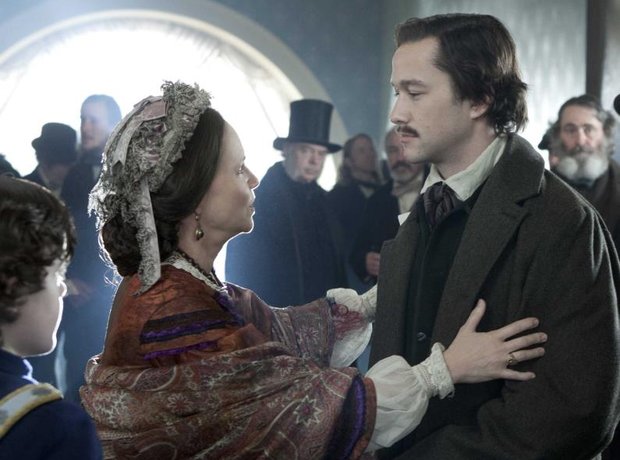
Mary Lincoln (Sally Field) welcoming home her eldest son, Robert (Joseph Gordon-Levitt).

Mary Lincoln (Sally Field) welcoming home her eldest son, Robert (Joseph Gordon-Levitt).

Furthermore, the film only deals seriously with two issues: the amendment and the Civil War. While they understandably dominated Lincoln’s presidency, surely there were other matters for the president to consider, such as the annual budget and foreign relations? None of these are ever mentioned, which has the indirect effect of making President Lincoln appear almost two-dimensional.

But to say that the ex-president was anything less than a highly-complex and gifted man serves to undermine him, and Daniel Day-Lewis exemplifies this with a performance of remarkable consistency. He captures the former president’s quirkiness, social awkwardness and witty humour fantastically, as well as his indefatigable zeal and reason for his ideals.

Day-Lewis undoubtedly dominates Lincoln, but that does not mean that the supporting cast should be ignored. With the exception of Joseph Gordon-Levitt, who is average at best and whose role, as the ex-president’s son, Robert Lincoln, could easily have been shelved, Sally Field as the ex-president’s worrisome and frenzied wife, Mary Lincoln; Tommy Lee Jones as the savvy Republican Congressman, Thaddeus Stevens; David Strathairn as the cautious Secretary of State, William Seward; Jackie Earle Haley as Alexander Stephens, the racist Vice-President of the rebel Confederacy; and even James Spader, as the underhand Mr. Bilbo (no, not Baggins) are all superb.

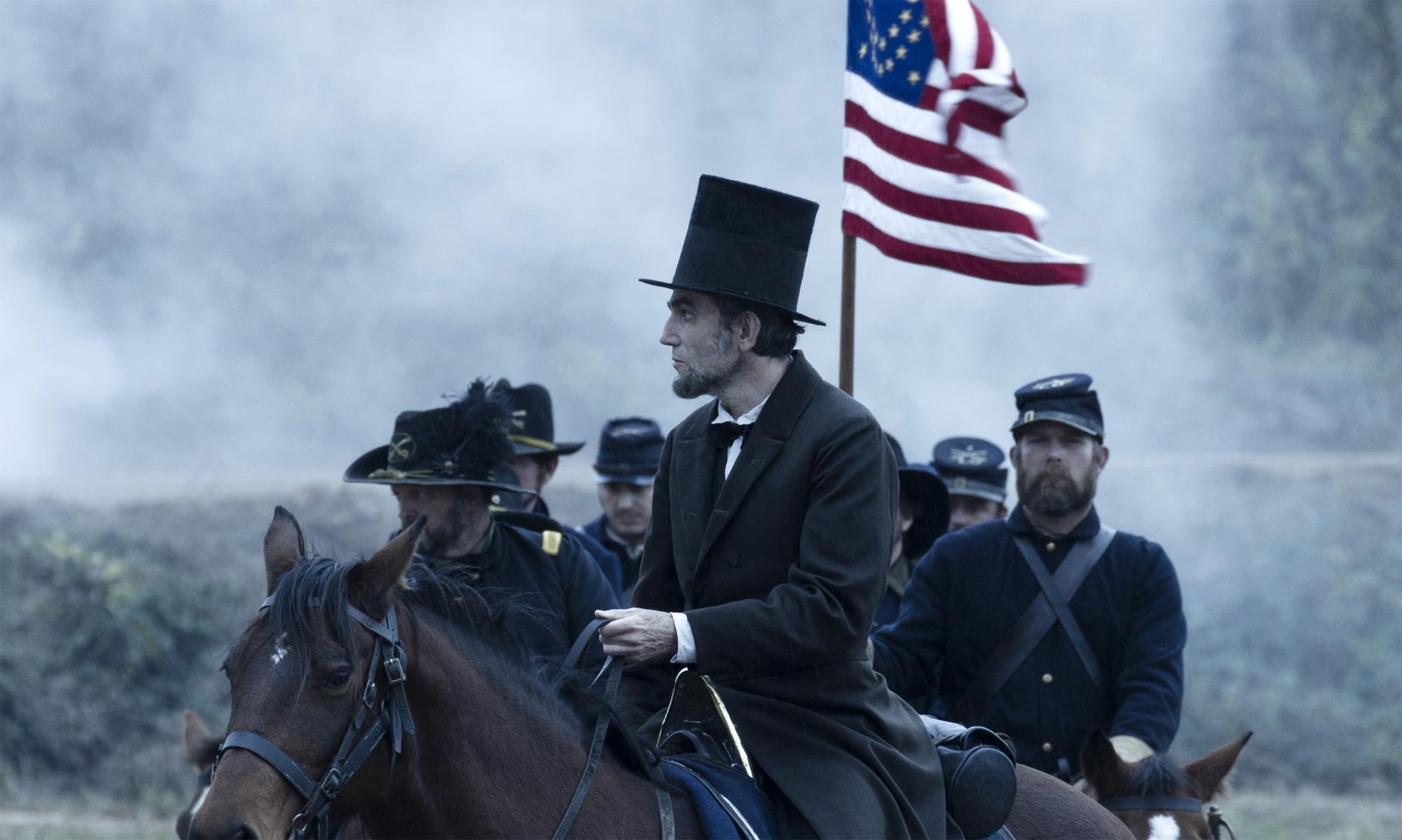
President Lincoln exploring the aftermath of a battlefield, knowing that his decisions have cost many Americans their lives.

President Lincoln exploring the aftermath of a battlefield, knowing that his decisions have cost many Americans their lives.

Equally good are the costume and make-up designs, which truly bring the 1860s to life. Likewise, John Williams should be praised for writing a soundtrack that does not sound remotely like Star Wars, Home Alone or Indiana Jones. Indeed, Williams’ score here is more subtle in nature. It adds a touching element to Lincoln that makes the movie that bit more poignant when it matters most.

Over-all, Lincoln is a venerable film with clever dialogue, a beautiful set and enchanting acting. The movie might be a little long and simplifies some of the historical issues, but this should not negate that President Lincoln was one of the rare few leaders who have managed, almost single-handedly, to change the course of history. He understood the uniqueness of his epoch and acted upon his conscience, despite knowing the storm it would cause (as well as unknowingly making him pay the ultimate price for it). Lincoln demonstrates all of this wonderfully and shows us why President Abraham Lincoln is rightly regarded as the archetypal president that so many of his successors have tried (and often failed) to emulate.

PG’s Tips