Tag Archives: movie

Review – Gravity 3D (15) [2013]

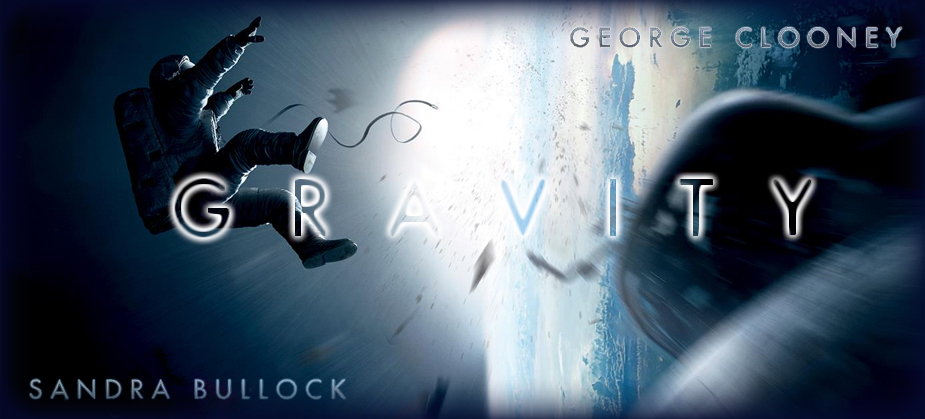
Gravity - title banner2

Star Rating: 4/5

Director:

  • Alfonso Cuarón – Love In The Time of Hysteria, Harry Potter III, Children of Men

Cast:

  • Sandra Bullock – Crash, Premonition, The Blind Side, Minions
  • George Clooney – Syriana, The American, The Ides of March, The Monuments Men
  • Ed Harris – A Beautiful Mind, The Way Back, Man On A Ledge, Frontera

Music Composer:

  • Steven Price – Attack The Block, The World’s EndFury

Movies that have delved into the realms of outer space have usually fallen somewhere in the triangle of the sublime, the ridiculous and the farcical. Avatar, Star Wars I-VI, and Lost In Space give credence to this (erratic) trinity in varying ways. Among the spaceships, the ray-gun shoot-outs, and the convergence with antenna-eyed or raptor-style aliens, there has been little room (ironically) for realism in a film set in space. Until now. It may have none of the above, but Gravity gives us a true and uncomfortable feel for what it is like to be outside of the Earth’s atmosphere.
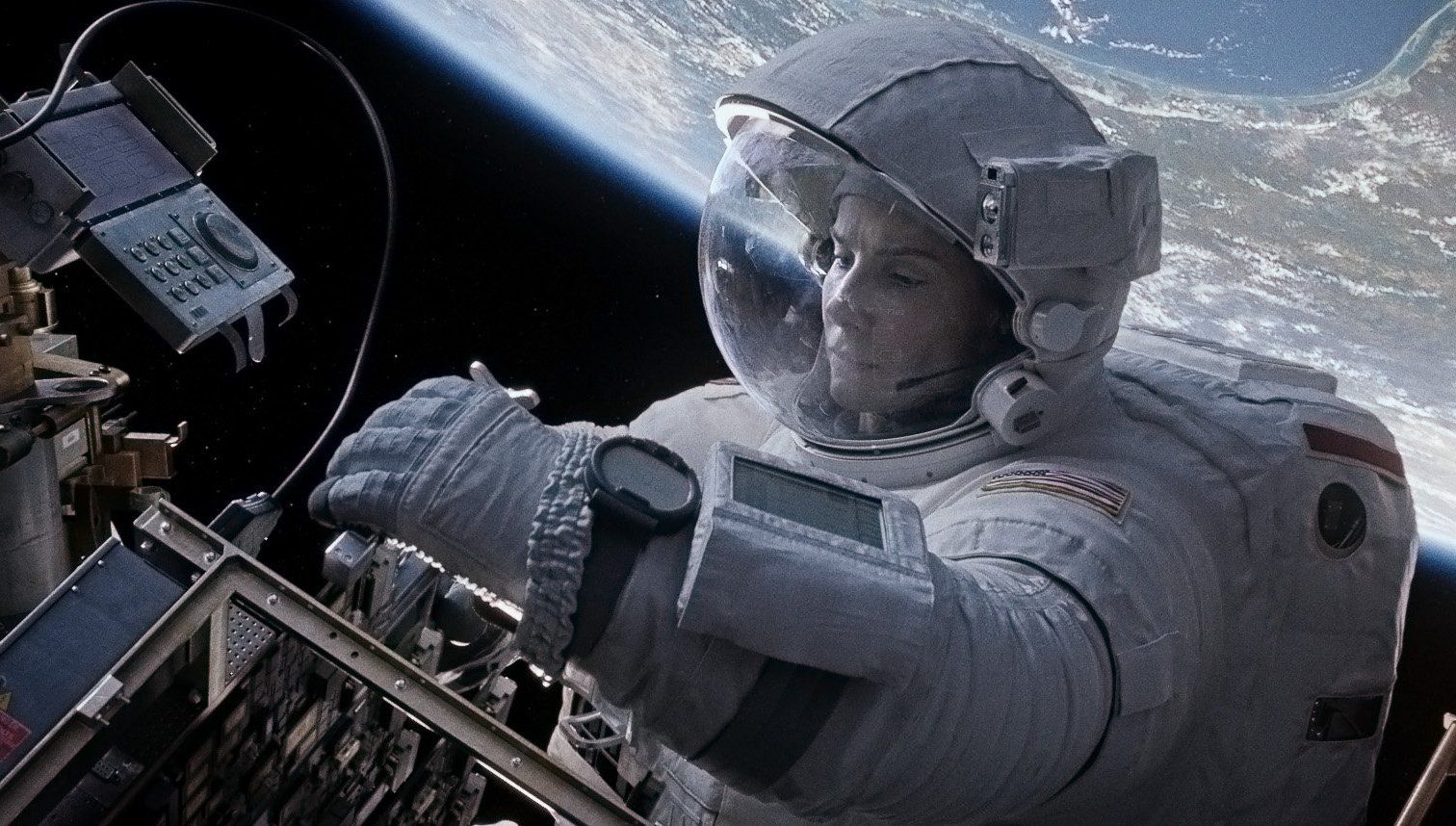
Dr. Ryan Stone (Sandra Bullock) making some repairs to the shuttle in view of Earth.

Dr. Ryan Stone (Sandra Bullock) making some repairs to the shuttle in view of Earth.

Gravity centres round Dr. Ryan Stone (Sadra Bullock), a Mission Specialist. She is on her first expedition into space, led by Matt (George Clooney), a veteran on his last voyage into space. Dr. Stone is making repairs to the shuttle that she and Matt are flying with, when debris from an explosion on a Russian satellite smashes into their shuttle. With the shuttle damaged irreparably, Dr. Stone must find another shuttle if she wishes to return to Earth.

That is essentially the storyline for Gravity. One problem with the plot is that the film uses up its central premise within 30 of its 91 minute running time. This means that for the last hour, the movie recycles itself instead of flesh-eating alien invasions or putting inter-galactic arsenals to the test.

But for those who would rather see another Star Wars, Prometheus or Elysium, do not lose faith. Gravity is very engaging. It has moments of knuckle-whitening tension, amplified by the fast beat, gradual crescendo and sudden silence of the music; all whilst our main character tries to reach another space vessel before her oxygen runs out. In respect of tension, the movie is similar to Sanctum; only in Gravity, Alfonso Cuarón’s directing style increases one’s ability to empathise with the protagonists’ predicament.

Predominantly, the film is seen through Dr. Stone’s eyes (or rather her space-helmet), as she swims around in the boundless, atmosphere-less blackness. Without a centre of gravity, the movie enables viewers to appreciate what it’s like to be in space, rotating endlessly unless one can find something to hold onto. And unlike (the lamentable) Lost In Space, Gravity gives audiences a genuine taste for how scary it would be to get lost in space and to lose contact with the only people who might be able to find you.
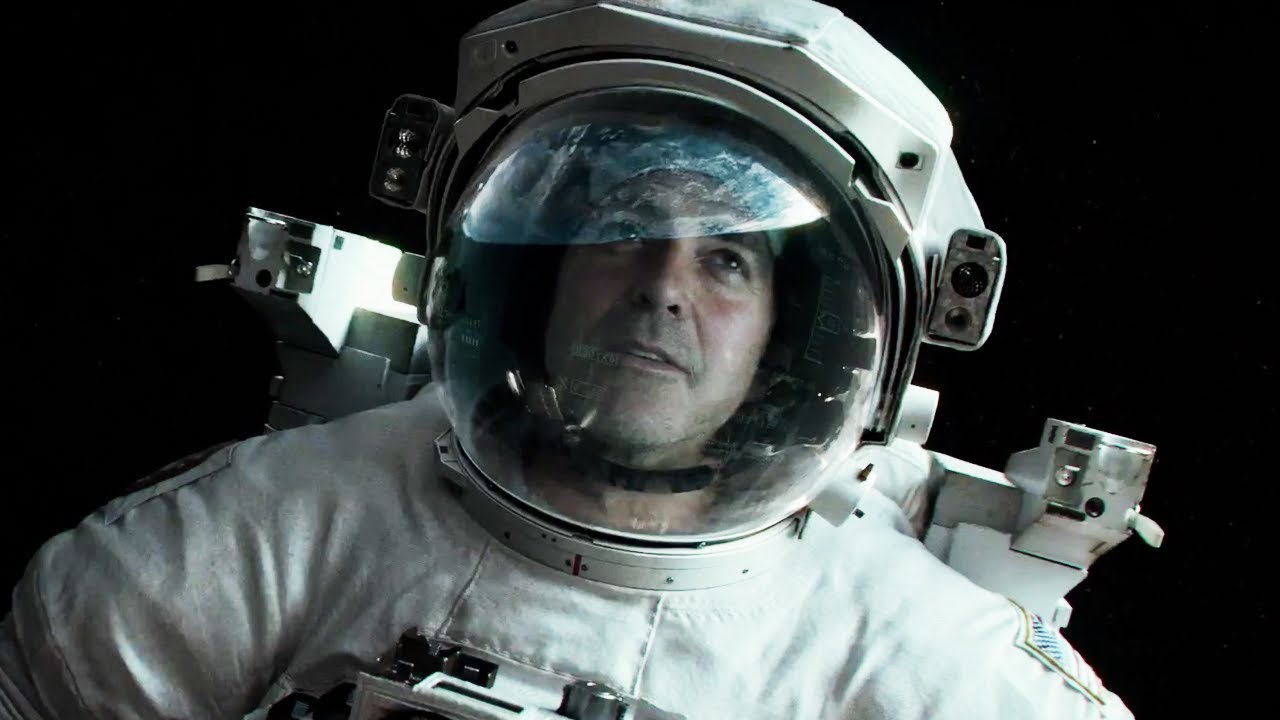
Matt (George Clooney), from behind his space helmet, gazing and admiring Earth, amidst the peace of outer space.

Matt (George Clooney), from behind his space helmet, gazing and admiring Earth, amidst the peace of outer space.

In part, one feels the depth of this horror because of Sandra Bullock’s energetic performance. Her character is almost always in panic (as any human being would be in her situation) and this exacerbates Dr. Stone’s (somewhat) complex personality. Due to an unhappy episode in her past, we see her mindset switch from despair to a willingness to live on (and vice-versa) repeatedly. This is something which viewers can relate to on a human level, and it was very important that Bullock achieved this feat. For much of Gravity, she is alone on screen, and if she had failed to show Dr. Stone’s personality to the full, audiences would likely have stopped caring about her.

The only other significant character in the film is Matt, played by George Clooney. And Clooney (surprise surprise) plays himself again as the smooth-talking, handsome wise-head, who goes and comes back (for plot convenience) to give sage advice. That is not to say that Clooney performs his role badly. It is just that we have seen this too many times already.

Bullock and Clooney aside, Gravity is remarkably consistent with its depiction of reality in space. Too often in (bad) films, one sees/hears characters breathing and talking in space. Here, however, there is none of that nonsense! The only time one hears sounds is through the space suit’s microphone, which is so refreshing (and illustrates that not all filmmakers have the paucity of knowledge of physics as Sidney Furie, the director of the rightly-maligned Superman IV: The Quest For Peace.)
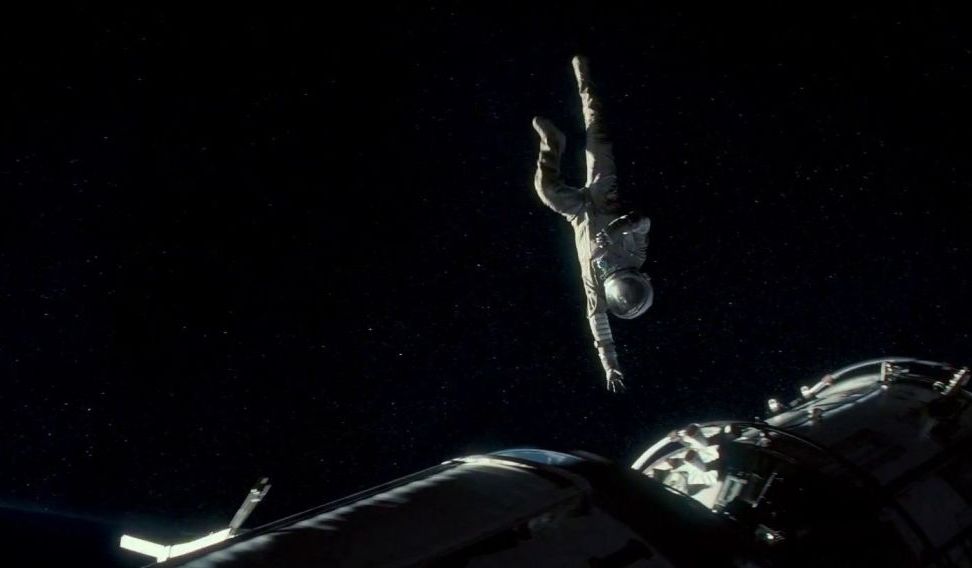
Dr. Stone trying to grip a bar on the shuttle, or else she could be find herself adrift in the endless, empty abyss of space surrounding her.

Dr. Stone trying to grip a bar on the shuttle, or else she could be find herself adrift in the endless, empty abyss of space surrounding her.

Moreover, audiences are treated to stunning visual effects. The emptiness that is outer space, in all its wonder, is shown to be disconcertingly large. What’s more, the 3D (for once) enhances the visual experience, even more so than it did in Avatar and Star Trek II: Into Darkness. In Gravity, when debris flies at Dr. Stone, one jerks one’s head out of the way, believing he/she will otherwise be hit! Considering how often the 3D does little more than darken the film and add a couple more quid to the cinema ticket, one must applaud Cuarón for augmenting the experience in a positive and noteworthy way.

Over-all, Gravity is a great demonstration of what being in outer space feels like. That the film has no alien encounters or futuristic ray-gun fights gives the film an ironically grounded dimension that has been sorely lacking in so many other movies that have ventured into space. Due to Sandra Bullock’s great acting, the extraordinary level of consistency regarding the physics of space, the amazing special effects and the 3D, Cuarón has treated us to outer space’s awe-inspiring massiveness, as well as how frightening space can be when out there, lost.

PG’s Tips
Review – Blue Jasmine (12a) [2013]

Blue Jasmine - title banner

Star Rating: 4.5/5

Director:

Cast:

  • Cate Blanchett – The Lord of the Rings I-III, The Aviator, Notes On A Scandal, The Hobbit I, II & III
  • Alec Baldwin – Pearl Harbour, The Aviator, The Departed, Still Alice
  • Sally Hawkins – Layer Cake, An Education, Great Expectations, Godzilla
  • Andrew Dice Clay – Whatever It Takes, Foolish, Point Doom, Entourage
  • Bobby Carnavale – The Bone Collector, Snakes On A Plane, Parker, Imagine
  • Peter Saarsgard – Rendition, An Education, Orphan, Pawn Sacrifice
  • Daniel Jenks
  • Max Rutherford

Midnight In Paris was a renaissance for Woody Allen. After half a decade without making a decent film, Midnight In Paris won him another Oscar for Best Writing. More importantly, the film reminded us of his talents. Blue Jasmine continues Allen’s re-emergence as a brilliant film director and script writer.

Jasmine (Cate Blanchett), dressed to stun, and living the good life with her husband, Hal (Alec Baldwin), and so-called friends.

Jasmine (Cate Blanchett), in stunning garb, living the good life with her husband, Hal (Alec Baldwin), and their (so-called) friends.

Blue Jasmine centres round the fine-looking Jasmine (Cate Blanchett), who is struggling to come to terms with how her life has turned upside down. From living the glamorous life with her former husband, Hal (Alec Baldwin), in New York, Jasmine takes a few steps down in the world and moves in with her adopted sister, Ginger (Sally Hawkins). Ginger lives in a small, cluttered apartment in San Francisco with her two sons from her previous marriage to Augie (Andrew Dice Clay), whilst doing a menial day-job and having a relationship with the loutish Chili (Bobby Carnavale).

With Jasmine’s situation hardly to her liking, she finds it difficult to sort herself out. In fact, after so many years of living the high life without doing or needing to do a day’s work, Jasmine is in the midst of a nervous breakdown that worsens with every passing day.

Blue Jasmine’s storyline is simple and well thought through. In a typical Allen way, like Midnight In Paris, Blue Jasmine skips back and forth between the (dour) present and the (glitzy) not-too-distant past, dishing us out with the necessary revelations at the opportune moments about why Jasmine left New York and Hal. This style may seem confusing at first. But one adapts to it quite quickly, and soon enough the movie’s approach becomes formulaic and predictable; not that these take anything away from the film.

Ginger (Sally Hawkins) and Augie (Andrew Dice Clay), Jasmine's low-class adopted sister and brother-in-law. Jasmine and Ginger are so different, it is hard to believe that they were brought up by the same parents.

Ginger (Sally Hawkins) and Augie (Andrew Dice Clay), Jasmine’s low-class adopted sister and brother-in-law. Jasmine and Ginger are so different, it is hard to believe that they were brought up by the same parents.

Blue Jasmine is intelligent, well-written and surprisingly amusing. Despite taking a detailed and dispiriting view on serious matters like cheating, fraud and (to an under-employed extent) people trying to make ends meet, the movie is littered with wry and cutting humour that many people, rich or poor, can empathise with and find funny. That Blue Jasmine is only 98 minutes long works in the film’s favour too. It answers all of its own questions efficiently and does not drag (unlike blockbuster bore-fests, such as Transformers III, Prometheus and Man of Steel).

Unquestionably, Blue Jasmine‘s script is superb and delivered with panache by the cast. Cate Blanchett’s performance is the most magnetic of them all. Blanchett encapsulates Jasmine’s ability to look wonderful, yet never be far from looking like a nervous wreck; to enjoy her lifestyle, yet turn a blind eye to the things she doesn’t want to see; and to be a melodramatic alcoholic about her existence, yet lie pathologically when she sniffs a chance to escape it. That Blanchett pulls this off so as to make Jasmine’s character (and breakdown) seem realistic, much like Joaquin Phoenix did in The Master, is noteworthy. One only has to look at how Natalie Portman’s (Oscar winning) breakdown in Black Swan became farcical by the end to realise the remarkableness of Blanchett’s skills, and that is without needing to compare it to Robert Downey Jr.’s feigned attempt at a nervous breakdown in Iron Man III.

While Blanchett is likely to take most of the plaudits for Blue Jasmine, the supporting cast play their parts to make the film noteworthy too. Sally Hawkins exemplifies an (immature) younger sibling, filled with inferiority-complexes, believing that none of her mother’s good genes were passed on to her. Alec Baldwin typifies a smooth-talking (slimy) businessman that has echoes of Bernie Madoff. Bobby Carnavale portrays a coarse, blue-collar working, beer-drinking, lad’s man in a down to earth manner. And Andrew Dice Clay plays the embittered (and somewhat broken), former husband well enough, although, he’s hardly in the movie; and when he does appear, he always has something significant to add to the plot that has a semi-contrived feel.

Jasmine, looking terrible after losing her wealth and status, looking like she's on the verge of a nervous breakdown.

Jasmine, looking terrible after losing her wealth and status, looking like she’s on the verge of a nervous breakdown.

The only characters who are not detailed are Ginger’s two children, Matthew (Daniel Jenks) and Johnny (Max Rutherford). These two add little to the story, which begs the question of why they are in the film. A similar argument could be made toward the music that Allen adopts. The movie is set within the last decade, but the music sounds like it is from between the 1930s-50s, which is an odd choice as it appears out of place. But none of these issues should detract from what is otherwise a great film.

All-in-all, Woody Allen’s Blue Jasmine is a smart, satisfying and entertaining movie about sombre issues. With a magnificent and engaging central character, and a convincing supporting cast, Allen’s excellent script is delivered with great sincerity and sardonic humour. Above-all, Blue Jasmine confirms Allen’s renaissance and cements his position as one of the best film directors and script writers that Hollywood has at its disposal. Long may the rebirth continue!

PG’s Tips

Review – The Wolverine (12a) [2013]

The Wolverine - title banner

Star Rating: 2/5

Director:

  • James Mangold – Girl, Interrupted, 3:10 To Yuma, Knight & Day, Three Little Words

Cast:

  • Hugh Jackman – X-Men I-III, X-Men Origins: Wolverine, Les Misérables, X-Men: Days of Future Past
  • Famke Janssen – Goldeneye, X-Men I-III, Taken I-II, In The Woods
  • Rilo Fukushima
  • Tao Okamoto
  • Hiroyuki Sanada – The Last Samurai, Rush Hour III, The Railway Man
  • Svetlana Khodchenkova – No Love In The City, Tinker Tailor Soldier Spy, The Royal Killer

Music Composer:

Troubled productions can take on many forms. The Wolfman needed to reshoot scenes after completing filming; Transformers II: Revenge of the Fallen did not have script three weeks before filming; and Margaret had numerous post-production problems that led to the movie coming out six years after it was shot. Suffice to say, all of these movies were a mess when they arrived at cinemas. The same is true for The Wolverine, which had a change of director and several delays at pre-production stages.

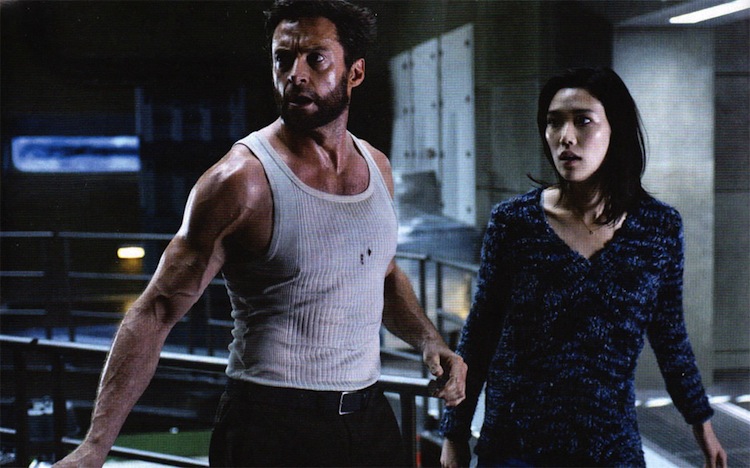
Logan/Wolverine (Hugh Jackman) running with Mariko (Tao Okamoto), trying to protect her from assassins working for... well that's anyone's guess.

Logan/Wolverine (Hugh Jackman) running with Mariko (Tao Okamoto), trying to protect her from assassins working for… well that’s anyone’s guess.

The Wolverine follows on from events in X3: The Last Stand. Logan/Wolverine (Hugh Jackman) is traumatised from having killed his lover, Jean Grey (Famke Janssen), and he spends his time nomadically walking around.

One night, he stumbles into a bar and meets Yukio (Rilo Fukushima), a random Japanese girl who has been trying to find him for a year. Yukio tells Logan that Shingen (Hiroyuki Sanada), someone Logan apparently saved at Nagasaki as the nuclear bomb went off in August 1945, is dying and wishes to see him one more time before he dies. Reluctantly, Logan agrees to go to Japan for a day to grant Shingen his wish.

But upon arrival, the paralysed Shingen informs Logan that he can end his immortality and pain. Logan declines. Shingen then begs Logan to protect his granddaughter, Mariko (Tao Okamoto), the heir to his company and fortune, from others wishing to kill her to seize everything for themselves, to which again Logan reluctantly agrees.

As is often the case with films with major production problems, The Wolverine’s dialogue is senseless and the plot is all over the place. A flashing red light should immediately go off in one’s mind upon realising that the film takes place after events in 2006’s panned X3, warning viewers of the train-wreck ahead. And also, when has it ever been mentioned in any of the other X-Men films that Logan spent time in Japan during World War II and survived a nuclear bomb? These oh so small details are merely the starting point for the film’s problems. That the film does not even bother to explain why Logan was in Japan/Nagasaki in 1945 or what his relationship with Shingen was in the first place merely adds to the sense that the movie lost its way long before filming started.

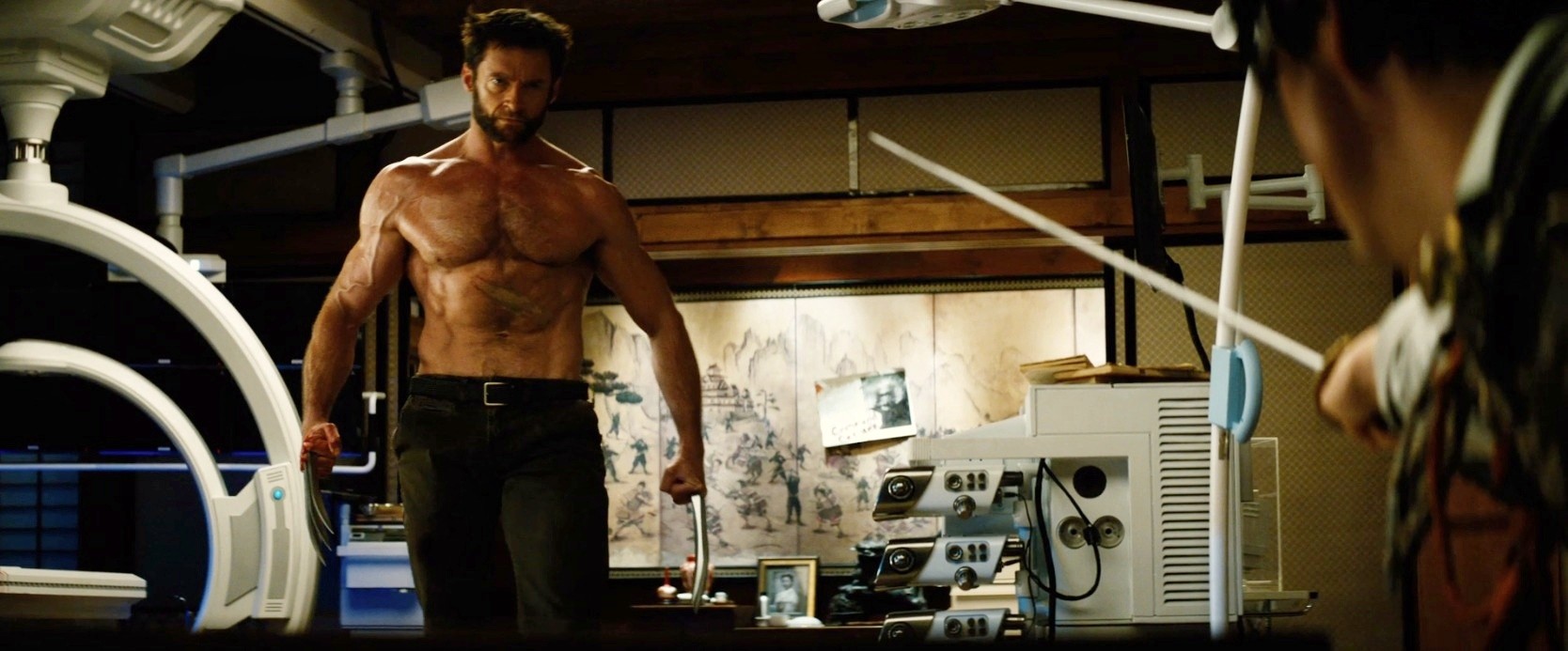
Logan with his claws out ready to fight a nameless, Japanese sword-wielding baddie.

Logan with his claws out ready to fight a nameless, Japanese sword-wielding baddie.

Yet, what is probably most disappointing about The Wolverine is that it feels like an irrelevant sideshow throughout its 126 minutes of running time and adds nothing to Logan’s personal story. 2009’s X-Men Origins: Wolverine might have been (rightly) ridiculed by fans and critics alike, but at least it showed audiences (albeit badly) how Logan acquired metal claws and why he has blanks in his memory.

The only positive aspect of The Wolverine’s storyline is Logan’s trauma. One must praise James Mangold for making Logan keep his psychological problem. But a trauma is a little bit more than half a dozen flashbacks to a deceased loved one. That the film doesn’t explore other angles of Logan’s psychological issues hints that the trauma was the idea of Darren Aranofsky, a specialist in films focussing on psychological problems and the initial director of The Wolverine, and that James Mangold carried on with the idea without having any real clue as to how to develop it.

Contending with this mess of a movie, Hugh Jackman does not do a bad job as the eponymous character. Whilst his performance is nothing special, Jackman at least makes us believe that the invincible Logan is suffering internally. Undoubtedly, Jackman is the film’s saving grace. The leading Japanese male actors do little more than shoot and swing swords (because that’s all Japanese men can do apparently), and the leading female actresses Rilo Fukushima and Tao Okamoto have no chemistry on set with Jackman/Logan and barely have an expression between them. Perhaps this is because Fukushima and Okamoto aren’t even actresses! They’re models (reminding us all of Rosie Huntington-Whiteley’s dreadful performance in Transformers III). Why couldn’t James Mangold find some qualified Japanese or Japanese-American actresses to do the jobs? What possible excuse is there for this?

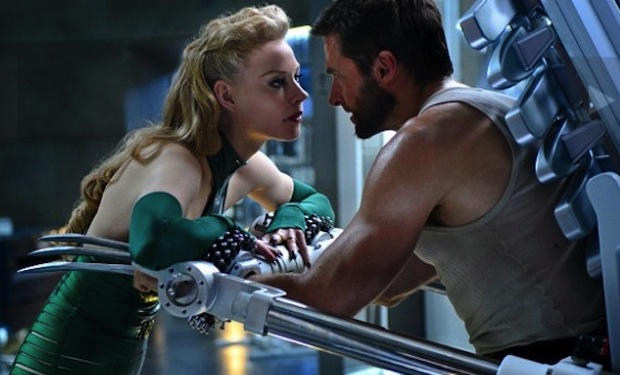
Logan attempting to fend off the allure/threat of the sexy Viper (Svetlana Khodchenkova), one of several ambiguously-motivated, peripheral villains in the film.

Logan attempting to fend off the allure/threat of the sexy Viper (Svetlana Khodchenkova), one of several ambiguously-motivated, peripheral villains in the film.

One may argue that viewers do not go to see films like The Wolverine (or Transformers II) for the acting, but rather for the action and the special effects. If that is the case, The Wolverine won’t frustrate such people since there is a plethora of decent-looking (if inconsequential) fight scenes that fill the time. But it has all been seen and done before in the previous X-Men movies, making the fighting pointless and tedious.

All-in-all, The Wolverine’s troubles behind the scenes are reflected in the film’s end result. The plot goes to nowhere; the script makes no sense; the cast (with the exception of Hugh Jackman) are wooden; and the special effects and action scenes fail to flatter. Thus, but for the fact that the film is about Wolverine, arguably X-Men’s most well-known superhero, The Wolverine might as well as have been thrown in the bin.

PG’s Tips
Review – Man of Steel (12a) [2013]

Man of Steel - title banner

Star Rating: 2.5/5

Director:

Producer:

  • Christopher Nolan – The Prestige, Inception, The Dark Knight I-III, Transcendence

Cast:

Music Composer:

Zack Snyder, who became a major film director following 300, is renowned for making movies that are pleasing on the eye, but have little by way of substance. Watchmen attempted to be profound without much success, and the less said about Sucker Punch the better. But could the input of the exceptional Christopher Nolan give Snyder the tools to change his ways and make the reboot of Superman, Man of Steel, a masterpiece?

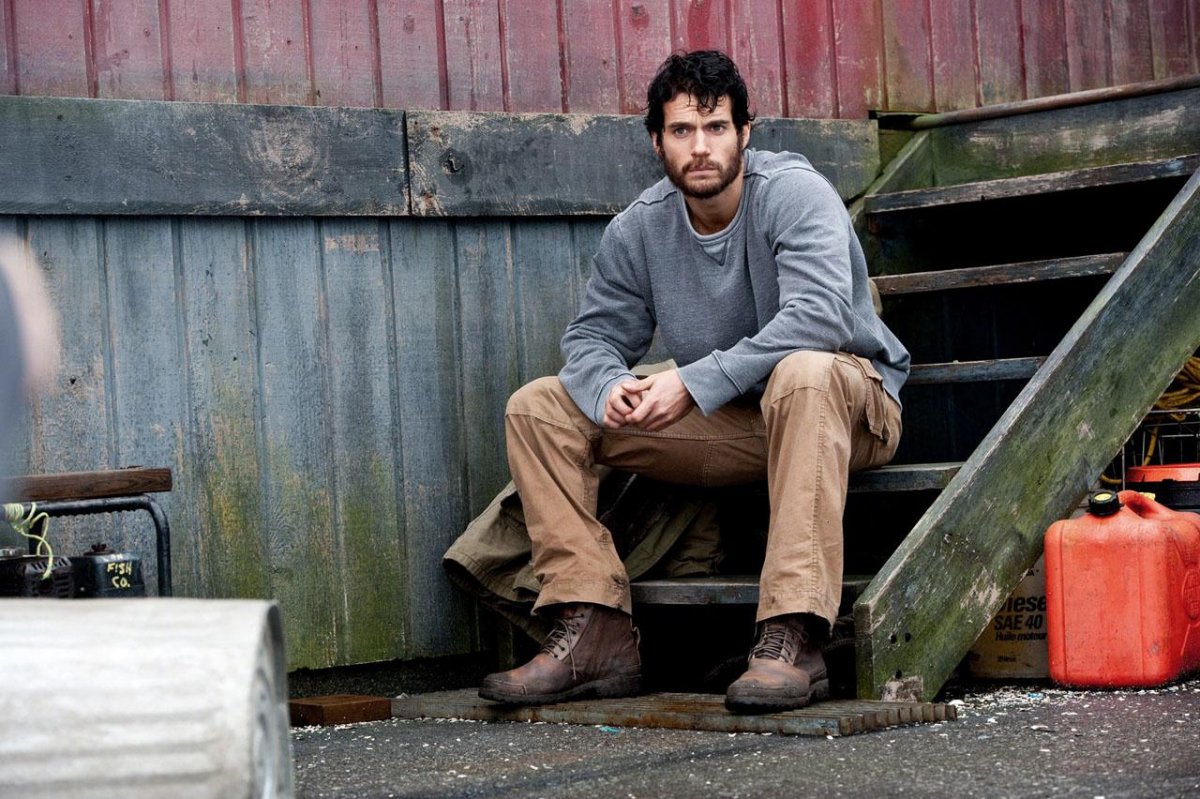
Clarke Kent (Henry Cavill) working as a blue-collar worker, unsure as to who he really is or where his life is taking him.

Clarke Kent (Henry Cavill) working as a blue-collar worker, unsure as to who he really is or where his life is taking him.

  Man of Steel begins with Jor’El (Russell Crowe) sending his baby son, Kal-El to Earth before Krypton implodes. On Earth, Kal-El grows up as Clarke Kent (Henry Cavill) in America, aware of his strengths, yet uncertain as to who he is.

However, when General Zod (Michael Shannon) threatens Earth with destruction unless they hand over the ‘alien among the people,’ Clarke learns of his past and that he must confront his father-on-Krypton’s enemy.

Man of Steel begins in an interesting way by briefly showing audiences the politics on Krypton and why the planet foundered. It is accompanied by some stunning special effects to give viewers a true feel for the nature of the planet itself, including how babies are born, which bears a striking resemblance to how people are formed in Aldous Huxley’s A Brave New World.

Following the prologue of Krypton’s self-destruction, the film goes back and forth, illustrating Clarke Kent’s confusion throughout his life, in the wake of him becoming Superman. The most interesting aspect of this development is when Clarke’s father-on-Earth, Jonathan Kent (Kevin Costner), asks/advises Clarke on the sort of man he wants to grow up to be. This attempts to give Clarke a third dimension, as well as some much needed depth to Man of Steel.

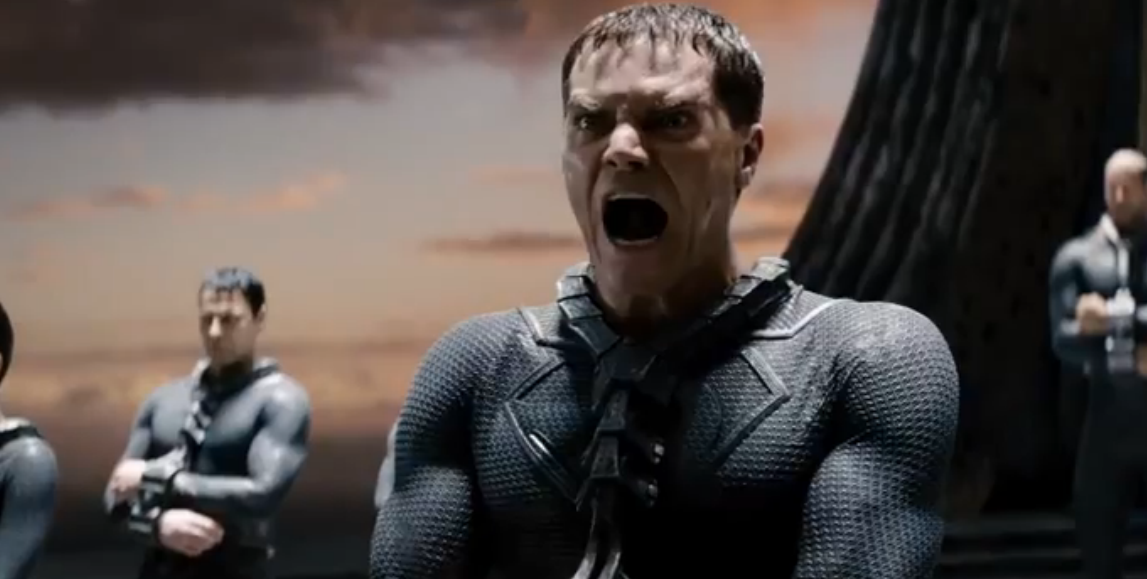
General Zod (Michael Shannon) declaring his strategy on Krypton.

General Zod (Michael Shannon) declaring his strategy on Krypton.

Alas, the movie otherwise lacks complexity and has the feel of Snyder’s Watchmen and, particular, Sucker Punch. Worse, as Snyder makes his eponymous character to be a God-like superhero, there is no sense of peril when watching Superman fight. Consequently, the half-dozen Matrix-style action scenes go on for far too long they become repetitive and boring quickly.

Length, in general, is a problem for Man of Steel. At 143 minutes, it is tediously long, especially as the plot only really starts when General Zod threatens Earth about an hour and fifteen minutes into the movie.

Furthermore, Man of Steel is not assisted by the characters. Although they’re all derived from the comic books, none of them are particularly interesting. That is not to say that the actors do a bad job with what they’re given, but the material does not allow them to excel. Henry Cavill fits the build and is adequate as Superman. But Superman lacks the charisma of Tony Stark/Iron Man or the multi-faceted personality of Bruce Wayne that Nolan superbly exploited in his Dark Knight Trilogy. Superman, in short, is just a traditional (ordinary) hero. The good, moral hero has been done to death, and viewers are right to demand more from filmmakers on this matter, even if the character is strictly in accordance with the comic books.

Similarly, Michael Shannon does a decent job as General Zod. Yet, Zod is more or less an old school, stereotypical villain, which is not interesting anymore. Kevin Costner and Russell Crowe playing as Clarke’s two fathers have the simplest roles in the film, but they are the most interesting characters by a distance (although Crowe’s part for much of the storyline is a deus ex machina, which is very frustrating).

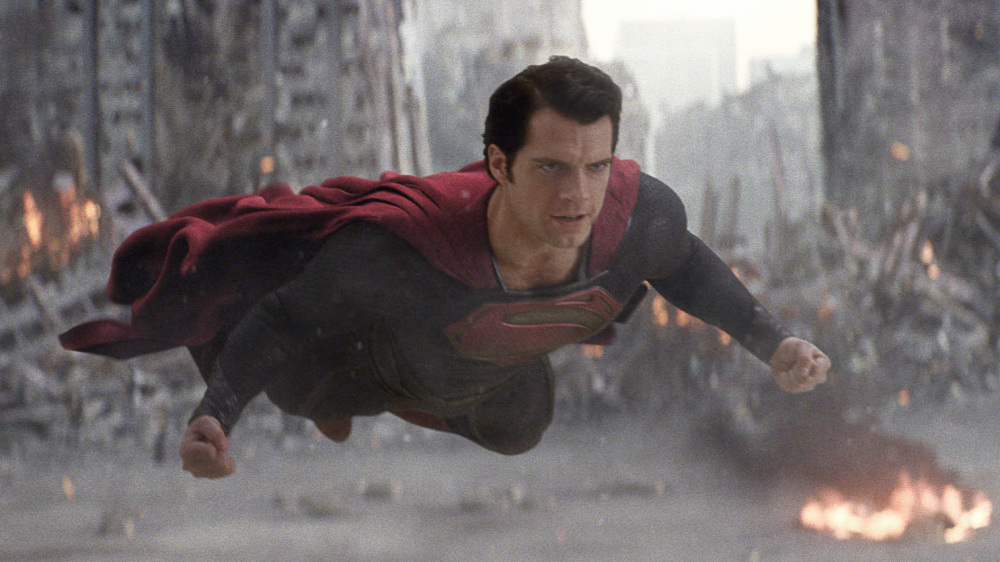
Superman, flying in to save the city and the people from General Zod.

Superman, flying in to save the city and the people from General Zod.

Unusually, however, Amy Adams does not do herself justice as the journalist, Lois Lane. Whenever Lois speaks about Clarke’s supernatural/alien powers, Adams does not look like she believes in what she is saying, even though she attempts sincerity. (Then again, it is hard to criticise Adams on this matter, since the more serious one tries to be when talking about supernatural forces or aliens, the more laughable it appears.) And, strangely, the music by Hans Zimmer sounds average and unmemorable, which is most unusual for him, and that probably sums up Man of Steel.

Over-all, Man of Steel has a few stimulating ideas and some fantastic CGI that is worth seeing alone. However, the ideas are under-employed, and much of the film, including the major fight scenes are monotonous and boring. Thus, Man of Steel lacks what made Christopher Nolan’s Batman movies so engrossing, and it disappointingly bears the hallmarks of Zack Snyder’s films: all gloss and no substance.

PG’s Tips

Review – Iron Man III (12a) [2013]

Iron Man 3 - title banner

Star Rating 2.5/5

Director:

  • Shane Black – Lethal Weapon I-IV, Kiss Kiss Bang Bang, Doc Savage

Cast:

Music Composer:

  • Brian Tyler – Battle: Los Angeles, The Expendables I & II, Now You See Me

In The Avengers Assemble, Tony Stark (Robert Downey Jr.) showed his true colours by stating that he is a “genius, billionaire, playboy, philanthropist.” Indeed, one who has read the Marvel comic-books, or seen Iron Man I & II and The Avengers Assemble, or all of them, knows that Stark thinks highly of himself. But from the trailer of Iron Man III, it appeared that one would see the vulnerable side of Tony Stark for a change. Is this the case?

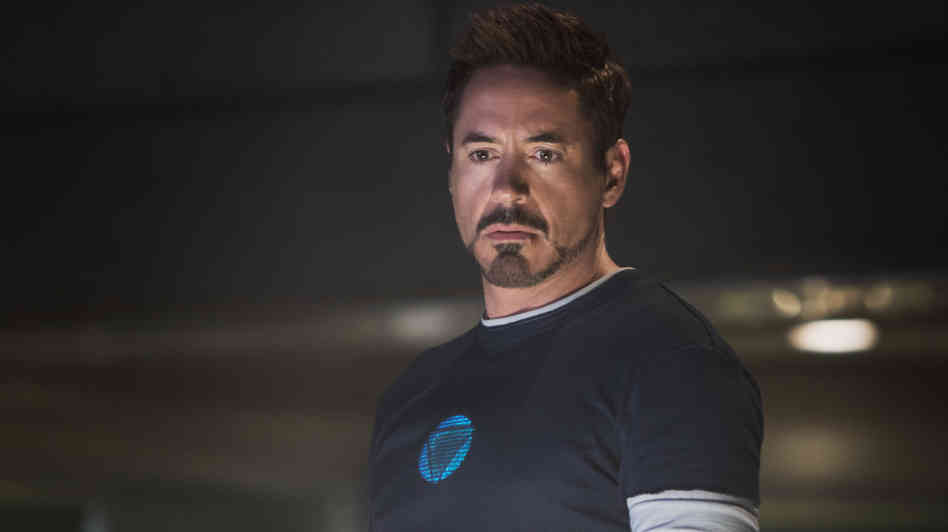
Tony Stark (Robert Downey Jr.) up at night, working on his numerous projects which he occupies himself with, since he cannot sleep.

Tony Stark (Robert Downey Jr.) up at night, working on his numerous projects which he occupies himself with, since he cannot sleep.

Iron Man III begins with a flashback to New Year’s Eve 1999/2000 when Tony Stark, with scientists Maya (Rebecca Hall) and Aldrich Killian (Guy Pearce), rejects an offer to invest in Extremis, an organisation that deals with experimental treatment to regenerate human limbs that have been severed.

Thirteen/fourteen years later, Stark is having nightmares about the alien invasion that occurred the previous year in The Avengers Assemble. He is suffering from insomnia and anxiety, whilst trying to love Pepper Potts (Gwyneth Paltrow). Yet, the Mandarin (Ben Kingsley) is wreaking havoc upon America with a string of terrorist attacks, using advanced weapons. Soon, he destroys Stark’s house, many of his Iron Man suits, and effectively sends Stark into the wilderness. Stark must find a way back and stop the Mandarin from unleashing more chaos, or else America will fall.

Iron Man III revolves round Tony Stark, and his quick, funny/brash responses. On the periphery, there is a plot (of some sort), some Transformers-style action scenes, plenty of explosions and fire-power, as well as sophisticated special effects in abundance. The problem is that audiences have seen all of these already, and it is starting to get very tedious.

At 133-minutes, Iron Man III is a long film that disappointingly doesn’t add anything new to the series. Worse, after 30 minutes the plausibility of the storyline ceases to exist, and it lazily goes from one plot contrivance to the next. If that doesn’t illustrate Shane Black’s contempt for the audience, the last scene renders all but the first 30 minutes of the movie as a waste of time. Couldn’t Black have just cut out all of the excess baggage and got straight to the chase? (Or, alternatively, forged a plot that actually works?)

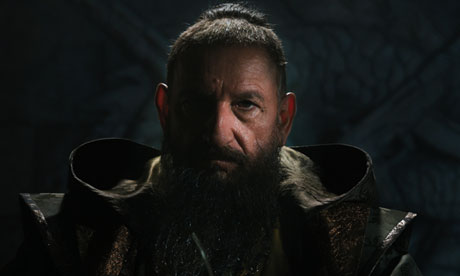
The Mandarin (Ben Kingsley), looking and preaching much like Osama Bin Laden, in a broadcast threatening to destory America if the country does not change its ways.

The Mandarin (Ben Kingsley), looking and preaching much like Osama Bin Laden, in a broadcast threatening to destory America if the country does not change its ways.

Iron Man III also suggests that the franchise is starting to suffer from the issues that are synonymous with other series, like Pirates of the Caribbean, Die Hard, and Fast and the Furious: notably, going on too long, laziness, repetitiveness, and going back in time to make (semi-)viable storylines. The very fact that Iron Man III starts by going back in time should set alarm bells ringing in one’s mind. If the franchise has not bothered until now to mention important things that the key character has done, why should viewers believe that they are significant?

With the exceptions of young Ty Simpkins, who is cute and amusing, and Ben Kingsley, who is brilliant as the terrifying (Osama Bin Laden-like) Mandarin, the rest of the cast could not be more two-dimensional if they tried. Robert Downey Jr. plays the same energetic, narcissistic character (himself) as he did in Iron Man I & II (not to mention in The Avengers Assemble, Sherlock Holmes I & II, and Due Date). Yes, Stark is smart, sharp and impertinent, and Downey Jr. does this well (as we know he can). But, in Iron Man III, Downey Jr. was meant to display his character suffering from insomnia and panic attacks. One is hard-pressed to find an instance of Stark genuinely looking like he was suffering from such problems, which is poor on Downey Jr.’s behalf. It is a shame, too, because one might have seen Downey Jr. actually challenging himself for a change.

Gwyneth Paltrow, playing as Stark’s secretary, is little more than a one-dimensional, pointless blonde doll. Despite loving a man who loves himself more than he loves her (or anyone else for that matter), it is difficult to empathise with Pepper as she is so bland.

Stark in a broken Iron Man suit and in the winter wilderness of Tennessee. How will he ever get back if he is to save the country he has sworn to protect?

Stark in a broken Iron Man suit and in the winter wilderness of Tennessee. How will he ever get back if he is to save the country he has sworn to protect?

Rebecca Hall’s performance suffers from similar problems as Maya’s character is not especially interesting, nor well defined, and her importance to the plot is dubious at best. Don Cheadle plays decently enough in his simple role as Stark’s (patient) understudy. Guy Pearce once again plays another egotistical, two-dimensional individual (he’s making a habit of this following his roles in The Count of Monte Cristo, The King’s Speech and Justice). At least, though, the cosmetic department did a fantastic job on him. In the first scene, Pearce is unrecognisable, which is a great contrast to Stark failing to even have bags under his eyes when (supposedly) suffering from major sleep deprivation. Would it have been so hard to have put eye shadow under Downey Jr.’s eyes?

Over-all, Iron Man III is much the same as the previous two Iron Man films. It follows Tony Stark being Tony Stark; Stark flies and fights in his Iron Man costume; and there are special effects galore that one’s seen before. The movie tries to show us some of Stark’s weaknesses, but fails miserably at this and the attempts at doing so are feeble. Moreover, the laziness of the entire production suggests that the franchise is drained of ideas and lost for care.

PG’s Tips

Review – Trance (15) [2013]

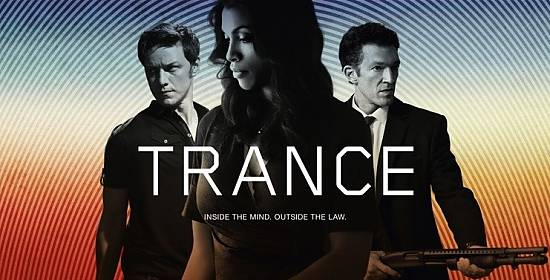
Trance - title banner

Star Rating: 3.5/5

Director:

Cast:

Music Composer:

  • Rick Smith – Breaking and Entering

Psychological thrillers, by their nature, are puzzling and mess with one’s mind. Inception, Shutter Island and Black Swan all did this with varying levels of charm, appeal and success. Danny Boyle’s impressive and sexy Trance adds something new to this testing sub-genre.

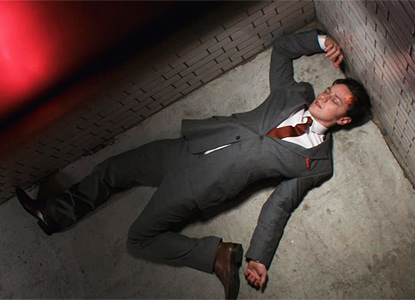
Simon (James McAvoy), unconscious after being bashed on the head by a batton. As a result, he cannot remember what he did with the painting.

Simon (James McAvoy), unconscious after being bashed on the head by a batton. As a result, he cannot remember what he did with the painting.

  Trance centres round Simon (James McAvoy), who works for a London-based company that auctions expensive paintings. The company has a security system in place to prevent the paintings from getting stolen, and Simon is part of the system.

However, when Franck (Vincent Cassel) leads a gang to steal a precious painting during an auction, the painting disappears. Simon, the last person to have handled the painting before its disappearance, was smacked on the head while he removed the painting. Since then, he has developed amnesia and so he can’t remember where he put the painting. In a desperate bid to find the painting, Franck decides that Simon must go to Elizabeth Lamb (Rosario Dawson), a hypnotherapist. Elizabeth believes that by hypnotising Simon, she can get him to recollect the location of the painting.

Trance’s plot is clever and innovative. The film is fast-paced from the off, intense, violent and engaging. It is complex and confusing too, since it constantly does back and forth in time, unravelling what happened to the painting as well as explaining the various (and sinister) motivations of the characters. Moreover, and similar to Black Swan, one is never sure in Trance when one is watching reality or a dream (or a memory or a possible memory). All of this keeps viewers firmly on their toes because no-one can be sure as to where the film is going.

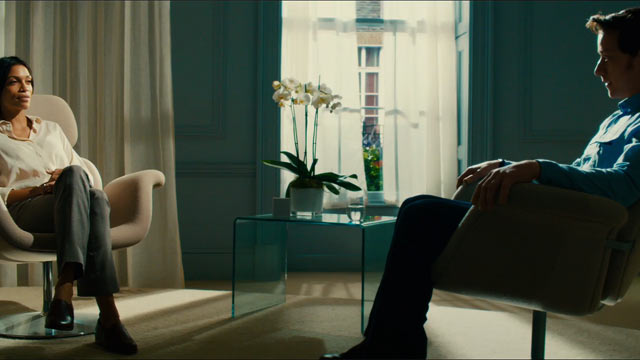
Simon undergoing hypnotherapy with Dr. Elizabeth Lamb (Rosario Dawson) in an attempt to regain his memory regarding the painting.

Simon undergoing hypnotherapy with Dr. Elizabeth Lamb (Rosario Dawson) in an attempt to regain his memory regarding the painting.

Although, it is dubious as to whether Trance’s storyline actually makes sense. Again, this is not novel to the sub-genre: it is uncertain whether the plots for The Machinist or Shutter Island added up (but no-one would argue that those were atrocities to cinema, like Sucker Punch or The Lady In the Water); while Fight Club and Inception demanded that one see them twice (at least) before being able to appreciate (or understand) those movies, and few had reason to complain about those excellent films either. Perhaps, the latter is true for Trance. However, there are some quite significant plot issues that could undermine the film and its realism (if one believes in the effectiveness of hypnotism/hypnotherapy, of course), but these are not going to be discussed here as they would spoil the thrill for those who haven’t seen the movie.

The force of Trance’s storyline is matched by the three main (and more or less only) cast members; James McAvoy in particular. Far from his relaxed demeanour as Charles Xavier/Professor X in X-Men: First-Class, his performance as Simon resembles that of his (brilliant but crazed) stage performance as MacBeth. Nothing illustrates this similitude more than the intensity in Simon’s bombardier blue eyes, as the hypnotherapy, combined with his own problems take effect on him.

Similarly, Vincent Cassel and Rosario Dawson play well, but not with the same power as McAvoy. As Franck, Cassel does a decent job as a shady, amoral character. Yet, it is hard to classify him as the villain here since there is no-one who is particularly good in Trance (some people are just much worse than others). But if one does view Franck as the main antagonist, then one may not feel entirely satisfied with Cassel’s performance because he does not possess the look or the flair to make himself a dangerous villain on screen, unlike the cunning Liam Neeson in Batman Begins/The Dark Knight Rises, or the terrifying Michal Zurawski in In Darkness, or the flamboyant Javier Bardem in Skyfall.

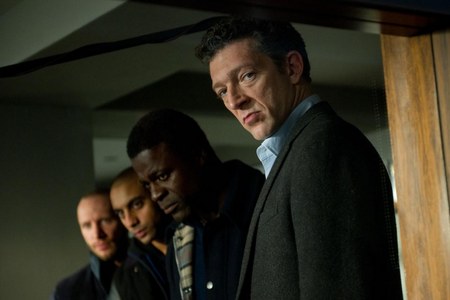
Franck (Vincent Cassel), furtherst right, keeping a worryingly close eye on Simon's treatement, with his group of thugs alongside him to illustrate the consequences for Simon if he fails to shake off his amnesia.

Franck (Vincent Cassel), furtherst right, keeping a worryingly close eye on Simon’s treatment, with his group of thugs at his side to illustrate the consequences for Simon if he fails to shake off his amnesia.

While as Elizabeth the hypnotherapist, the stunning Dawson wonderfully holds her patients (as well as the audience) under her spell, as if ravishingly embodying the psychological thrill of the movie and the sub-genre in one attempt.

Over-all, Trance is a mind-bending and gripping film that is a worthy addition to the sub-genre of psychological thrillers. The movie has its flaws, but to a limited extent these should be disregarded because Boyle’s film is original, appealing and stylish. Furthermore, like all noteworthy psychological thrillers, Trance takes one out of one’s comfort zone and, to its credit, keeps one in thought long after the film has ended.

PG’s Tips
Review – Lincoln (12a) [2013]

Lincoln - title banner

Star Rating: 4/5

Director:

  • Steven Spielberg – Saving Private Ryan, War Horse, Indiana Jones I-V

Cast:

  • Daniel Day-Lewis – Gangs of New York, There Will Be Blood, Nine
  • Sally Field – Mrs Doubtfire, ER, The Amazing Spider-Man I & II
  • Joseph Gordon-Levitt – The Dark Knight Rises, Looper, Sin City II
  • Tommy Lee Jones – No Country For Old Men, Captain America: The First Avenger, Emperor, Bourne V
  • Jackie Earle Haley – Watchmen, Shutter Island, Robocop
  • David Strathairn – LA Confidential, The Whistleblower, The Bourne Ultimatum & Legacy
  • James Spader – Boston Legal, The Office, By Virtue Fall
  • David Oyelowo – The Last King of Scotland, Rise of the Planet of the Apes, The HelpInterstellar
  • Michael Stuhlberg – Steve Jobs

Music Composer:

  • John Williams – Star Wars I-VI, War Horse, Indiana Jones I-V

All democratically-elected state leaders, whether they are presidents or prime ministers, have an ambition for reaching their respective position. For some, it is about power and/or aggrandisement; for others, it is about putting their names down in the history books. But for an exceptional few, it is about being uniquely in the right place at the right time and enabling their ideologies and actions to make them stand out from among their peers. President Abraham Lincoln (1860-65) belongs to the last category, and Steven Spielberg’s admirable biopic, Lincoln, illustrates why this is the case.

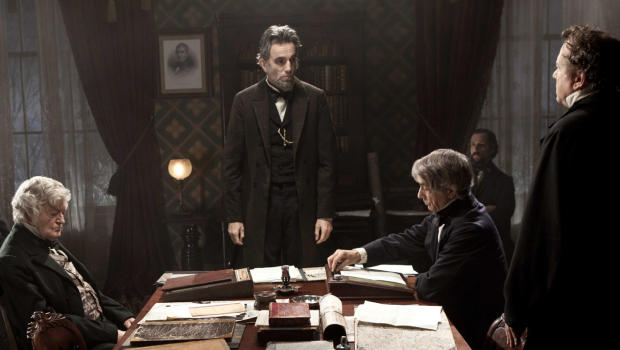
President Lincoln (Daniel Day-Lewis) forcefully telling his cabinet that he intends to proceed with the amendment and that they must help him.

President Lincoln (Daniel Day-Lewis) forcefully telling his cabinet that he intends to proceed with the amendment and that they must help him.

Lincoln revolves round events in America during January 1865. At the time, no-one was certain as to how long the Civil War (1861- April 1865) would continue. The Unionists, led by President Lincoln (Daniel Day-Lewis) and the armies of the north, are in a strong position. But the rebel Confederacy, led by Jefferson Davis and the armies of the south, are not about to surrender either.

The latter’s resolve is further stiffened upon hearing that, despite the war raging on, President Lincoln intends to push through Congress the highly contentious Thirteenth Amendment (the abolition of slavery) before the legislature ends its session at the beginning of February. The Confederacy’s hatred of black people and their slavery-based economy cannot allow for it. But will their attempts to block the proposed amendment succeed?

Lincoln’s storyline is intelligent; yet, slightly lacking in depth and, at 150 minutes, drawn out. Despite being potentially confusing for someone who has no knowledge of the era, the political wranglings going on behind the scenes throughout the film are great to watch because they are amusing and appear realistic. They also indicate that there was more than an element of corruption in American politics in the 1860s. (Then again, does The Ides of March show us that American politics is significantly different today?)

Moreover, the debates on slavery and freedom throughout Lincoln are intellectually stimulating. In the present era, it defies belief to learn that President Lincoln was a ‘radical,’ even among his key allies, for wanting the abolition of slavery. The Thirteenth Amendment was a measure that America (apparently) wasn’t yet ready for in 1865 (almost sixty years after Britain and France had abolished the Slave Trade, and four years after Tsar Alexander II had passed the emancipation of serfdom in Russia).

However, one only has to read Harriet Beecher Stowe’s 1852 novel, Uncle Tom’s Cabin, to realise that Lincoln fails to illustrate the inherent racism towards black people that existed even among abolitionists. Similarly, the movie says nothing of the four Union states that permitted slavery, which is strange as those four states could have been portrayed as a thorn in President Lincoln’s side.

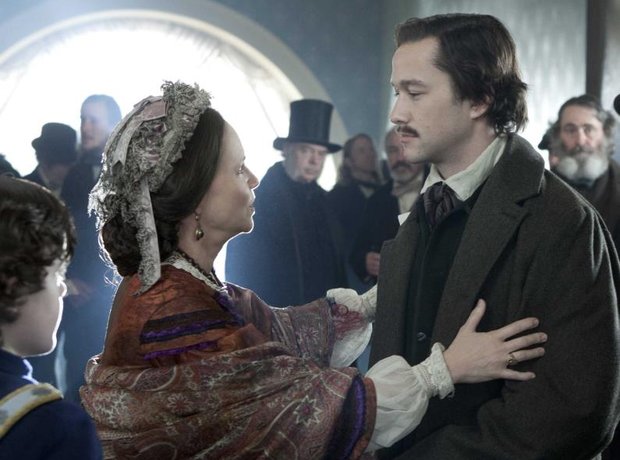
Mary Lincoln (Sally Field) welcoming home her eldest son, Robert (Joseph Gordon-Levitt).

Mary Lincoln (Sally Field) welcoming home her eldest son, Robert (Joseph Gordon-Levitt).

Furthermore, the film only deals seriously with two issues: the amendment and the Civil War. While they understandably dominated Lincoln’s presidency, surely there were other matters for the president to consider, such as the annual budget and foreign relations? None of these are ever mentioned, which has the indirect effect of making President Lincoln appear almost two-dimensional.

But to say that the ex-president was anything less than a highly-complex and gifted man serves to undermine him, and Daniel Day-Lewis exemplifies this with a performance of remarkable consistency. He captures the former president’s quirkiness, social awkwardness and witty humour fantastically, as well as his indefatigable zeal and reason for his ideals.

Day-Lewis undoubtedly dominates Lincoln, but that does not mean that the supporting cast should be ignored. With the exception of Joseph Gordon-Levitt, who is average at best and whose role, as the ex-president’s son, Robert Lincoln, could easily have been shelved, Sally Field as the ex-president’s worrisome and frenzied wife, Mary Lincoln; Tommy Lee Jones as the savvy Republican Congressman, Thaddeus Stevens; David Strathairn as the cautious Secretary of State, William Seward; Jackie Earle Haley as Alexander Stephens, the racist Vice-President of the rebel Confederacy; and even James Spader, as the underhand Mr. Bilbo (no, not Baggins) are all superb.

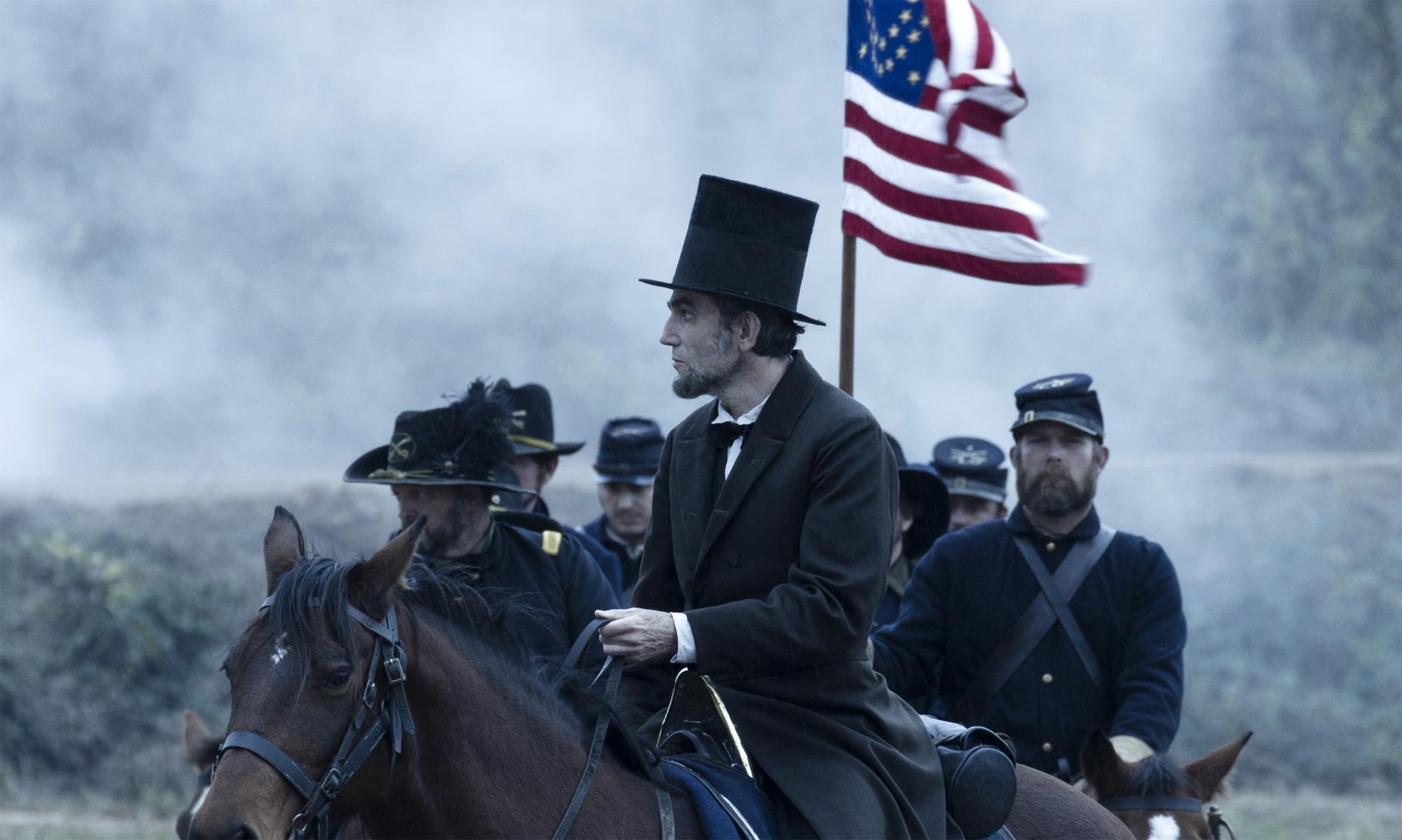
President Lincoln exploring the aftermath of a battlefield, knowing that his decisions have cost many Americans their lives.

President Lincoln exploring the aftermath of a battlefield, knowing that his decisions have cost many Americans their lives.

Equally good are the costume and make-up designs, which truly bring the 1860s to life. Likewise, John Williams should be praised for writing a soundtrack that does not sound remotely like Star Wars, Home Alone or Indiana Jones. Indeed, Williams’ score here is more subtle in nature. It adds a touching element to Lincoln that makes the movie that bit more poignant when it matters most.

Over-all, Lincoln is a venerable film with clever dialogue, a beautiful set and enchanting acting. The movie might be a little long and simplifies some of the historical issues, but this should not negate that President Lincoln was one of the rare few leaders who have managed, almost single-handedly, to change the course of history. He understood the uniqueness of his epoch and acted upon his conscience, despite knowing the storm it would cause (as well as unknowingly making him pay the ultimate price for it). Lincoln demonstrates all of this wonderfully and shows us why President Abraham Lincoln is rightly regarded as the archetypal president that so many of his successors have tried (and often failed) to emulate.

PG’s Tips

Review – Rust And Bone (15) [2012]

Star Rating: 3.5/5

Director:

  • Jacques Audiard – Read My Lips, The Beat That My Heart Skipped, A Prophet

Cast:

Music Composer:

In August 2012, London held the Paralympics event. More than anything, the paralympians illustrated that people with crippling injuries can be full of life and can excel in the face of much adversity. Yet, the tournament did not display the hardships that such people face on a daily basis. Rust and Bone does so, and in a particularly gritty and unglamorous way.

Ali (Matthias Schoenaerts) giving his young son, Sam (Armand Verdure), a piggy-back. Ali, however, is not necessary the most responsible of parents.

Rust and Bone is a French film based on the book by Craig Davidson with the same title. The movie centres round Alain (Matthias Schoenaerts), a man of dubious morality, who is seemingly in sole custody of his young son, Sam (Armand Verdure). As Alain is unemployed, he leaves Belgium to go to live with his sister, Anna (Corinne Masiero), in the Antibes, where he hopes to find work. Using his skills as a former bare-fist boxer, he gets a job as a bouncer at a nightclub.

There, Alain meets a drunken Stephanie (Marion Cotillard), a killer-whale stunt trainer. After she falls over and cuts herself badly outside the club, he takes her home. Yet, it is not until Stephanie loses both her legs when a stunt goes horribly wrong that she and him form a close relationship.

Rust and Bone is a 120-minute unhurried, art-house film with a very serious atmosphere. Much of the movie is played out in under-privileged dismal areas, akin to those in Harry Brown. The aesthetics, as well as the silence (with the exception of the loud and brash Katy Perry song, Firework, for the Killer Whale stunts) emphasise the severity of the movie’s tone.

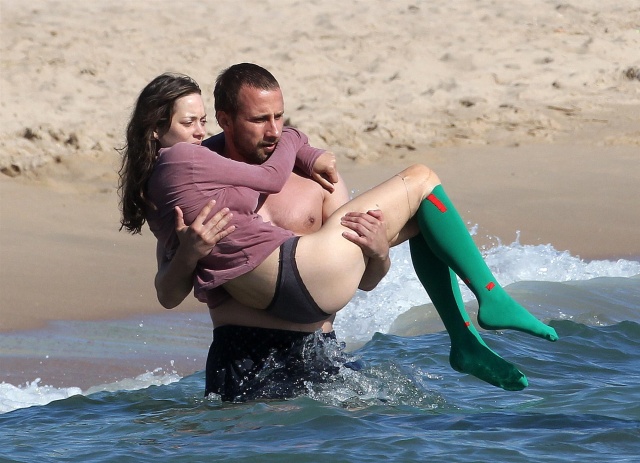
Ali carrying Stephanie (Marion Cotillard) into the sea, following her crippling injury, wherein she had to have her legs amupatated from the knee.

The stark manner of Rust and Bone is reflected in the generally unpleasant characters in the film. Due to a lack of action or intrigue in the plot, the movie relies heavily on the characters, and the relationships that they have with one another, to maintain viewers’ interests. This is not an issue, per se, but as none of the characters are particularly amiable, it is hard for one to truly empathise with their situations.

Alain, for one, is a scummy and untrustworthy individual, with a violent side as well. Indeed, if it were not for his (almost) wonderful treatment toward Stephanie after her injury, Alain would have no redemptive qualities and would be utterly detestable. Despite the nature of Alain’s character, though, credit must go Matthias Schoenaerts. It would have been easy for Schoenaerts to turn Alain into a stereotypical thug. Yet, Schoenaerts doesn’t do this. Rather, he makes Alain unlikeable, but at the same time human, realistic and understandable, which is far from a simple task.

Similarly, Marion Cotillard does a good job as Stephanie, an ordinary girl coming to terms with a crippling injury. Cotillard’s performance in the wheel-chair leaves out nothing, including the struggle of doing something as mundane as making a coffee or going to the bathroom. Cotillard truly makes viewers sympathise with Stephanie’s predicament. Furthermore, and arguably what makes Rust and Bone so unique is that director Jacques Ardiard is not scared to have Stephanie discuss (and perform) sex or swimming in the sea. By doing these, and making Stephanie feel better for it, Audiard demonstrates that Stephanie, and anyone else with a crippling injury for that matter, is a human being. It is a tribute to Cotillard’s skills that she is able to illustrate Stephanie’s feelings so naturally, and without it seeming odd either.

Stephanie looking good and enjoying herself in a nightclub, demonstrating that amputatees know how to have a good time like the rest of us.

Unlike with Schoenaerts and Cotillard, it is hard to overly praise or fault the rest of the cast for their performances. Since the film is dominated by Alain and Stephanie, and how their relationship develops, Armand Verdure, Corinne Masiero and Bouli Lanners (who plays as Martial, Alain’s friend and part-mentor, who is also a gambler of unofficial violent sports among the underclasses) are not given much time on screen. What little we see of them shows us, plausibly, that they are normal people with problems, facing the issues that normal people face, while living in a terrible area.

Over-all, Rust and Bone is a slow-paced and sombre film, but an impressive one in its own right. The movie may not be shot in aesthetically pleasing places, and it may not contain particularly nice characters either. Nevertheless, the film does not do what the authorities of the London 2012 Paralympic games did, and shy away from tackling the harsh realities that arise from crippling injuries. Marion Cotillard’s Stefanie embodies how difficult it can be for people with such injuries to pick themselves up. What’s more, Cotillard’s performance emphasises that a little support from even the most improbable of individuals can help to steer an injured person onto the path of becoming more comfortable with their new and forced lifestyle.

PG’s Tips
Review – Skyfall (12a) [2012]

Star Rating: 3.5/5

Director:

  • Sam Mendes – American Beauty, Road To Perdition, Revolutionary RoadSpectre

Cast:

Music Composer:

The 1990s was a pretty decent era for James Bond. Goldeneye, Tomorrow Never Dies and The World Is Not Enough were all very acceptable Bond films. But then, in 2002, Die Another Die ruined it all. Subsequently, MGM, the owners of the 007 franchise, completely changed the direction of Bond to make it more original, as Casino Royale (2006) and The Quantum of Solace demonstrate. Skyfall cleverly continues this trend, but not without hitches.

The stunning and enigmatic Sévérine (Bérénice Malohe). Her style and dangerous background make her an apt fit for Bond’s affections.

Skyfall begins with M (Judi Dench) coming under intense pressure to resign, following a failed mission in Turkey. After meeting with Gareth Mellory (Ralph Fiennes), the British Intelligence and Security Committee Chairman, M discovers that the computer in her office in MI6 has been hacked and a bomb explodes in MI6 headquarters. M subsequently turns to her secret agents, Eve (Naomi Harris) and James Bond (Daniel Craig), who is suffering from psychological problems following events in Turkey, to find out who was behind the attack.

There is much to admire about Skyfall. That a significant proportion of it is filmed in Britain is bold; it gives us a hint at how MI6 might work in the event of war on British soil; and the last scene of the movie is very clever. Also, for the first 100 minutes or so, the plot is logical and intelligent. Cyber-terrorism is a very current issue, and director Sam Mendes conveys the threat well.

It is just a shame that the last 44 minutes drag and has only a tenuous link to the first part of the film. Indeed, it renders the purpose of going to exotic Shanghai pointless (not that that was ever more than a cynical attempt to tap into the Chinese market) and, worse, it throws up plagiarism issues with the exceptionally magnificent Batman Begins.

Eve (Naomi Harris) dressed classily, while in the midst of an MI6 operation.

Moreover, Skyfall appears to be torn in several directions. Sir Ian Fleming wrote James Bond as a satire on the British secret service. Yet, because MGM now want Bond to be more grounded (and even bleed), the fundamental element of 007 has been lost. Additionally, if MGM truly want to make Bond plausible, they should look toward Tinker Tailor Soldier Spy and Shadow Dancer, and remove the Expendables-/Mission: Impossible-style stunts and action scenes. Those always look ridiculous and undermine all attempts at realism. (Besides, those scenes have become so clichéd that one is unlikely to miss them.)

The change of direction for 007 movies has also greatly impacted upon the appearance and character of James Bond, himself. Nevertheless, it is not Craig’s blond hair and lighter features that differentiate him from his predecessors, Roger Moore and Pearce Brosnan. Rather, it is his black humour, as well as his lack of suave and touché lines. That is not to say that Craig performs badly as the Bond he’s been asked to perform; actually, he’s rather good. But that doesn’t make him seem any more like the James Bond of old.

Yet, it is not just Craig’s Bond that has been given a new lease of life; the villains have too. Silva, embraced whole-heartedly and delightfully by the Oscar-winning Javier Bardem, is by far the most flamboyant and hilarious Bond baddie. However, it is blatantly obvious that Sam Mendes drew his inspiration from the villains in Christopher Nolan’s The Dark Knight (and he didn’t need to spell it out in an interview either). Mendes should have been aware that stepping onto the haloed territory of the Joker and, to a lesser extent, Two-Face is like trying to win a game of ice-hockey while skating on thin ice. Can anyone really say with conviction that Bardem’s Silva was on a par with Heath Ledger’s Joker?

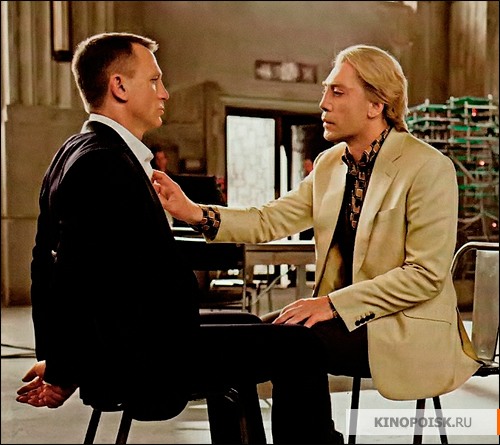
The blond-haired villain, Silva (Javier Bardem), teases Bond, while the latter is tied up. Haven’t we seen such a scenario before?

Craig and Bardem aside, the performances from Ralph Fiennes and Judi Dench are typically strong and down to earth. The same can be said for Ben Whishaw, who plays the young, new Q with much spirit and humour to make himself, potentially, the long-term successor to the late Desmond Llewelyn.

Conversely, Naomi Harris, as Eve, never convinces that she’s a secret agent, unlike Jessica Chastain in The Debt or Julia Roberts in Duplicity. Harris’ Eve also lacks chemistry with Craig’s Bond. Maybe both of those things are deliberate, but if that is true then MI6 would never have sent her into the field, thereby revealing another flaw in the movie’s attempt at realism.

All-in-all, Skyfall is not a bad film and continues the interesting trend of Casino Royale and The Quantum of Solace. Skyfall has intelligence and a cast that does justice to the more credible, if unconventional direction that MGM have taken Bond toward. This does not mean that the film is problem-free, aside from being too long and recycling parts of Nolan’s Dark Knight Trilogy. No, if MGM truly wish for 007 to depart from the approach of the 1990s Bond films, they must not stand half-way as they have here: they must make James Bond chillingly realistic.

PG’s Tips
Review – Snow White and the Huntsman (12a) [2012]

Star Rating: 2.5/5

Hollywood has a thing for bastardising stories. With varying enjoyment, films like Troy, Kingdom of Heaven and Eragon all had little to do with their original narratives to the extent that one might be surprised that their respective creators bothered to keep the right names for the characters. Similarly, Snow White and the Huntsman might be entertaining, but it has little to do with the German folklore tale, ‘Snow White and the Seven Dwarves’, that was first written down by Brothers Grimm in 1812.

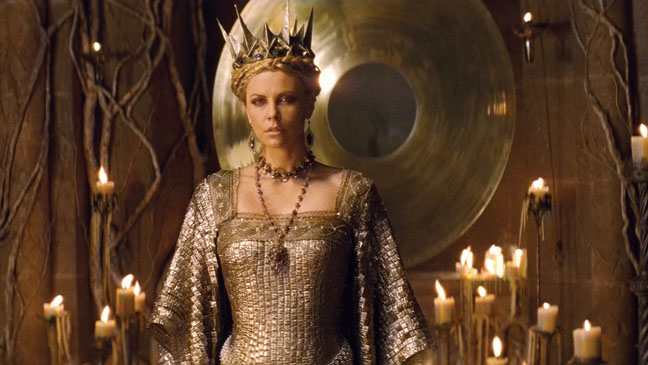
Queen Ravenna, in all her splendour, furious to learn that there is one fairer than her.

The film opens with three drops of blood falling onto snow after Queen Eleanor (Liberty Ross – Thinly Veiled, W.E.) pricks herself. Eleanor is praying for a beautiful and fair daughter with raven-black hair, and the strength of a red rose against snow. Yet, not long after she gets her wish and gives birth to Snow White (when young played by Raffey Cassidy – Dark Shadows; when of age played by Kristen Stewart – Twilight I-V, On The Road, Still Alice), Eleanor dies. Shortly afterward, King Magnus (Noah Huntley – The Chronicles of Narnia I, Your Highness, Jappeloup) marries Ravenna (Charlize Theron – Monster, Prometheus, Hancock I & II), a woman with terrible supernatural powers to keep her forever looking young and strikingly attractive.

No sooner is the king betrothed to Ravenna she usurps the throne and locks up her young step-daughter. As the years go by, Queen Ravenna regularly turns to her magic mirror to remind herself that she is the fairest of them all. That is, until one day when the mirror tells her that Snow White is fairer. It is then that Ravenna orders her brother, Finn (Sam Spruell – The Hurt Locker, Defiance, Enemy of Man), to bring her the imprisoned princess.

But it is then that Snow White escapes, fleeing to the Dark Forest where Ravenna has no power. So Ravenna hires Eric the Huntsman (Chris Hemsworth – Thor I & II, The Avengers Assemble, Red Dawn) to find and kill her…

Snow White and the Huntsman is an enjoyable movie. Set in a medieval-like world (even though the story originates from around the eighteenth-century), the sceneries are fitting, and the towns and villages, not to mention their inhabitants, are filthy in a realistic way for the period.

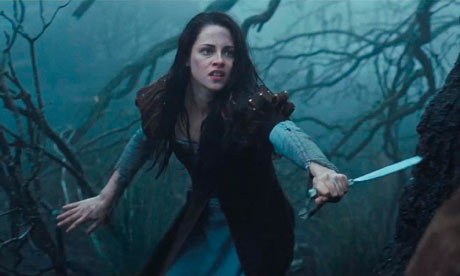
Snow White, wet and filthy, trying to defend herself against Eric the Huntsman in the Dark Forest.

Nevertheless, the plot has as much accuracy to the Grimm Brother’s tale as Patroclus does being Achilles’ cousin in Troy (when he is meant to be his lover) and Arya having reddish-brown hair in Eragon (when she is meant to have raven-black hair). Indeed, Snow White and the Huntsman has a multitude of storyline deviations, such as Queen Eleanor shedding three drops of blood (since that comes from another folklore story, called ‘Snow White and Rose Red’) and the huntsman being hired by the evil queen to find Snow White (since in ‘Snow White and the Seven Dwarves’ he helps Snow White escape to the Dark Forest to save her from Ravenna).

Ravenna as the ‘evil queen’ is one of many clichéd characters in the film. On screen, Ravenna rules in a typically cruel manner and is invariably screeching wicked commands at her advisers; Snow White is an idyllic (dull) angel who hardly knows how to hold a knife, let alone kill someone with it; the huntsman is the stupid, axe-wielding, drunken lout turned noble protector of the princess; and the seven dwarves (at least that stays true to the original story) are almost as one-dimensional as in the 1937 Disney cartoon animation.

Thor… Eric the Huntsman ready to bury his axe into anyone attempting to hurt Snow White.

Due to the lack of depth in all of the characters, the cast has little room to show their talents. Oscar-winner Charlize Theron gives a distinctly ordinary performance as Ravenna; Sam ‘Anders Breivik lookalike’ Spruell is nothing short of wimpish and pitiful; Kristen Stewart gives a stronger performance than she does in the Twilight saga, but she only ever has one expression on her face throughout the film, and her pre-battle speech is laughably appalling; Chris Hemsworth’s display is ostensibly the same as his hammer-swinging one in Thor and The Avengers Assemble, just with a humorous Scottish accent and minus the overt arrogance; and Ian McShane (The Golden Compass, Pirates of the Caribbean IV, Jack the Giant Killer), Bob Huskins (Hook, Made In Dagenham, Aleksander Rouge), Ray Winstone (The Departed, Edge of Darkness, The Sweeney), Nick Frost (Shaun of the Dead, Paul, Cuban Fury) and Toby Jones (Tinker Tailor Soldier Spy, The Hunger Games, The Girl) are all funny as the gruff dwarves, but they pale in comparison to Peter Dinklage’s performance as the deeply complex, witty Tyrion Lannister from Game of Thrones.

All-in-all, Snow White and the Huntsman is an enjoyable film with decent settings and an attractive cast. The actors might give average performances and the characters they portray might be over-simplistic caricatures of good and evil, but it is the movie’s drift away from the original tale that is most striking. Just like with The Iliad, the history of the Third Crusades, and Eragon, Hollywood has shredded a good story in an attempt to make it fit a narrative supposedly more suitable to modern day audiences with a derisible outcome.

PG’s Tips