Author Archives: pgtipsonfilms

Review – Season of the Witch (15) [2011]

Star Rating: 1.5/5

When one goes to see films like Solomon Kane, The Kingdom of Heaven or Eragon, one invariably goes with low expectations: the lower the expectations, the less chance of disappointment (even if you enjoy the genre). Season of the Witch very much comes into this bracket of poor films wherein one has to aim low in order for it to be remotely worth watching.
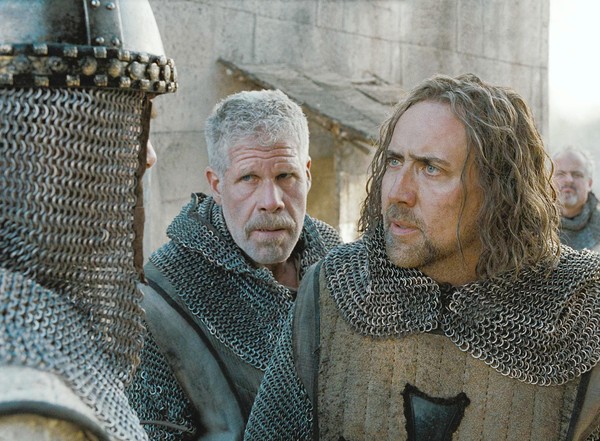
Felson (Ron Perlman) and Behmen (Nicholas Cage) as knights of the Church telling a fellow crusader of their intention to quit the fight against the Muslims.

The movie is set between the thirteenth and fourteenth centuries in Europe, during the time of the Crusades. Behmen (Nicolas Cage – Face/Off, Con Air, Joe) and Felson (Ron Perlman – Hellboy I & II, Conan The Barbarian) are knights fighting for Christ and God against the Muslims until they become disillusioned with the Church. Subsequently, they desert and go back to Austria. But on their return, they find the towns and villages ravaged by bubonic plague. It is said that a witch (Claire Foy – Little Dorrit) has brought this affliction upon the land; for wherever she goes, so does the contagious disease.

It is decided by the local cleric that the witch must be taken to another town to be tried by the most learned priests in the country. The cleric believes that by charging her with witchcraft, God will end the plague. Thus, it is up to Behmen and Felson to take her to this town. A handful of others join them. But the road is dangerous and few have ever ridden it. (Fewer still have returned to tell the tale.) And with the witch travelling with them, unforeseen problems will arise.

The plot is probably a little more entertaining than that. But whether the storyline is the basis for the film’s entertainment is doubtful. The special effects (if one can call them that) throughout Season of the Witch are appalling. Likewise is the acting and the dialogue. Arguably, the thick American accents of Nicolas Cage and Ron Perlman, despite being in medieval Europe, epitomise the pathetic and comic nature of the film’s production.

Despite these, there are aspects of Season of the Witch that give the film amateurish respectability. The sarcastic humour/banter between Behmen and Felson makes for some amusement; especially, when their wry remarks are aimed at the corruption of the Church. Similarly, the witch’s devilish smile keeps one guessing whether she is actually a witch or a mere victim of a medieval witch-hunt.
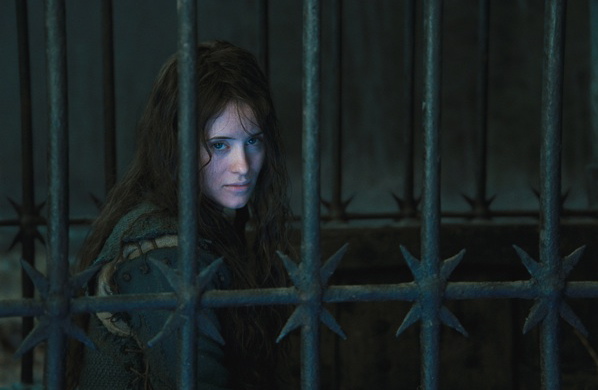
The witch (Claire Foy) is caged up as she is transported to her trial. There are few who doubt that she’s not guilty of spreading the epidemic to wherever she turns up.

The historical features of the film are also quite accurate. Whilst Behmen and Felson are undoubtedly fictional characters, the battles they fought in are not. Additionally, the director, Dominic Sena (Gone in Sixty Seconds, Swordfish), has shown medieval villages and towns for what they really were: crap-holes. Very often, Hollywood glosses over these details by making towns and villages appear relatively clean, and by making the inhabitants of such places look happy. In Season of the Witch, there is none of this. Sewage, smoke, rubbish, mud, dirt, rats, plague and misery are part of everyday life for the folks here (just like it was for our ancestors) and are well detailed. Indeed, after seeing some of these scenes, one can understand why the Black Death used to spread like wildfire until hygiene became the general consensus.

Over-all, one can put together a long list of reasons for why not to see Season of the Witch. The film has very little saving grace. For those who don’t like the genre, one may struggle to justify finishing the movie. For those who do enjoy the genre, one is left to laugh at how poorly it has been produced. However, that and very low expectations are what saves Season of the Witch from total disaster.

PG’s Tips

Review – 127 Hours (15) [2011]

Star Rating: 4/5

‘Caught between a rock and a hard place’ – we’ve all heard the metaphor at some point in our lives. Usually, it is adopted at a moment of indecisiveness or prevarication. For some of people, the phrase may even define their personality. But in July 2003, Aron Ralston discovered its literal meaning and 127 Hours brings to light his remarkable story in great detail.

Aron, played by James Franco, enjoying a stroll in the Grand Canyon. Little does he know that a slight loss of balance is going to change his life forever.

In the summer heat, Aron Ralston (James Franco – Spiderman I, II & III, Your Highness) goes for a cycle and a hike in the Grand Canyon. Since Aron is a guide, he knows the terrain well. He climbs, jumps and walks around as if he owns the place until a small slip sends him tumbling several metres down a narrow gap in the ground. Worse, a boulder falls with Aron and virtually cements his arm between it and the rocky wall. Aron is stuck and very-much alone. He has little food and water, and no means of contacting the outside world. For one hundred and twenty-seven hours (over five days), Aron remains there until the fear of death forces him to make the painful sacrifice of cutting off his trapped arm with a mere pen-knife (and no anaesthetic!) so as to carry on living.

The plot may sound uneventful as more than an hour of the film is based round a man stuck in a still, but frightening situation. Yet, that is far from true. One watches with anticipation what Aron will do in an attempt to move the bolder. Indeed, some of the innovations he comes up with are very intelligent. That he does these things without the use of a hand makes them all the more impressive.

However, 127 Hours would not be half as decent if it were not for James Franco. Franco illustrates here that he has matured as an actor since his semi-pitiful displays in the Spiderman movies. In this film, it is almost solely up to him to keep the audience stimulated for over ninety minutes, and he easily achieves this. Franco superbly portrays Aron before and, especially, after the fall. The all-too-real look of horror in his eyes when he initially realises the depth of his predicament is one that few will forget in a hurry. The different stages he goes through, before doing the unthinkable, are also very interesting.

Franco’s performance is utterly realistic and the tribute for giving him this platform must go to the director, Danny Boyle (Slumdog Millionaire, The Beach, Trance). One scene in particular, although gory to the point of making one want to vomit (unless one is used to watching the Saw series), is done exceptionally well and with graphic detail.

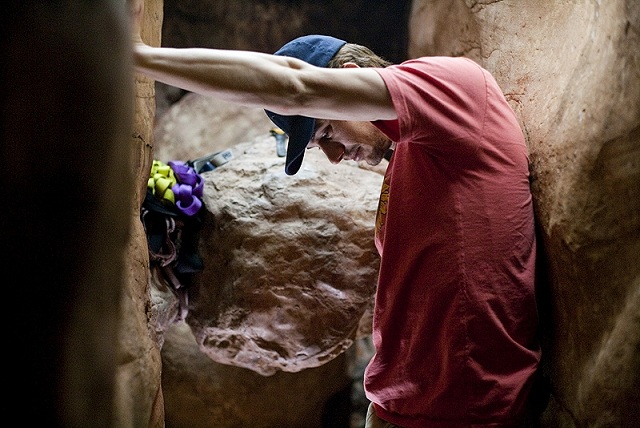
Aron feeling down and helpess as he can’t move the boulder that has trapped his right arm.

Yet, Boyle also lets himself down a bit. One needs to be brave to make a film like this (especially if he/she wants to make a handsome profit); but, unfortunately, Boyle lacked the courage of Rodrigo Cortés, the director of Buried (which is literally about Ryan Reynolds in a coffin for ninety-odd minutes with a lighter and a mobile phone.) By putting in music and other noises whilst Aron is jammed, Boyle takes away some of the realism in 127 Hours because this would not have happened.

Another criticism of the movie is that one never gets a sense of just how long, boring and lonely it must have been for Aron during those one hundred and twenty-seven hours. One may see the sun rise and fall a few times, or watch Aron gradually run out of water or reminisce over and over again about the mistakes he’s made in his life; but this only captures the length of time he was stuck there for on a superficial level.

Nevertheless, despite these flaws, 127 Hours is entertaining and Franco’s acting fully justifies the nominations that he’s been lined up for. The movie is also truthful and has a nice pseudo-religious dimension to it. Above-all, 127 Hours shows us that, even when caught between a rock and a hard place, mankind’s resilience is extraordinary.

PG’s Tips

Review – The Next Three Days (12a) [2011]

Star Rating: 2.5/5

I’ve heard that some men will die (or kill) for their woman (metaphorically, at least). However, I’ve never heard anyone say that they’ll study every weakness in the government’s prison system in order to get their lover out of jail. There is probably a reason for it and The Next Three Days illustrates why this might be the case.

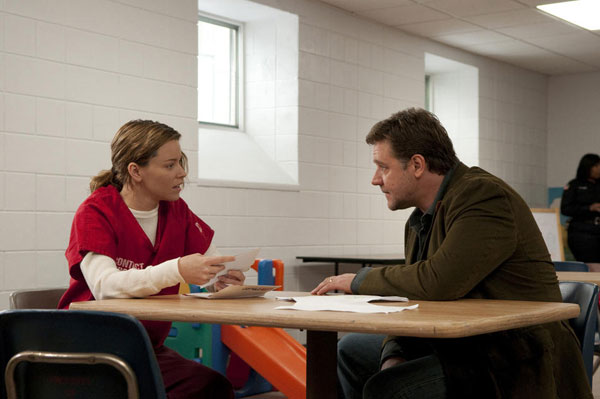
John, being a good husband, visits his wife in prison.

Early on in the film, Lara (Elizabeth Banks – Zack and Miri make a Porno, Spiderman IIII), is arrested by the police and sentenced to jail for life for murdering her boss. This leaves John (Russell Crowe – Gladiator, A Beautiful Mind, Les Misérables), her husband and philosophy teacher/lecturer, to look after their son, Luke. Convinced that his wife is innocent, John seeks the advice of Damon (Liam Neeson – Schindler’s List, Star Wars I, Unknown), a man who has escaped from prison a staggering seven times, to find out a way of getting Lara out illegally. John learns from Damon what he must do to free her and how difficult it will be to beat the counter-measures the state-police have in place to stop escapees from running beyond their reach. For three years, John plans every step and waits for the right moment to strike.

Whilst perhaps a little far-fetched for it to be realistic, the plot makes for The Next Three Days to be full of pulsating tension. Yet, it fails to deliver on this for much of the movie. Part of this is because the fast-beating music is inadequate and, mostly, incorrectly timed. Additionally, the film is too long. There is no need for it to last two hours and twenty minutes. If it would have been half an hour shorter, it would have made for a much better film as only the last forty-five minutes is particularly interesting.

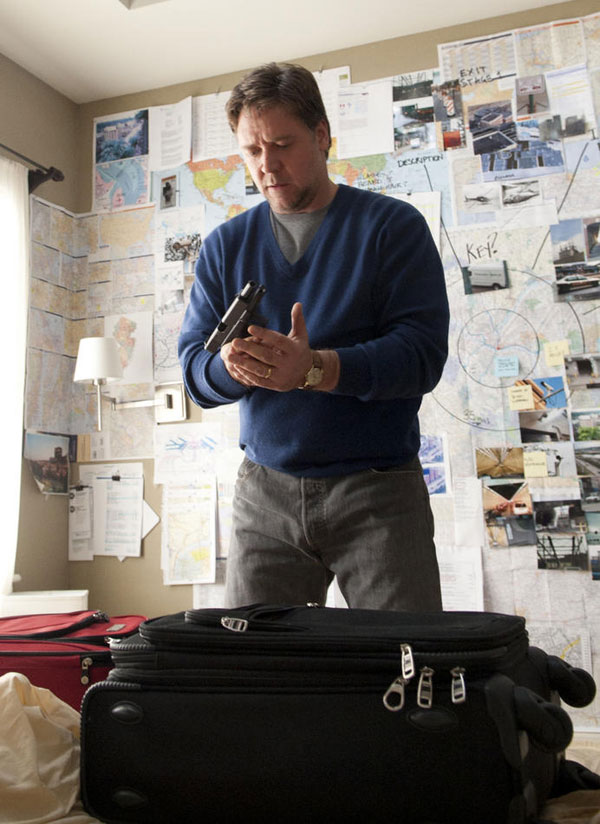
The plans are complete and John, loading up his James Bond-like pistol, is ready to put them into effect to save his wife from a life-time behind bars.

The storyline has its exciting moments; but there are many holes in it. One cannot help but ask oneself why John’s work as a teacher is not affected by his excessive (or, rather, obsessive) workings at day and night? Or why no-one notices his plans to free his wife from prison which are on a wall in a room in his house? Or why John never questions his own sanity? Also, escaping is not an end in of itself. One still has to go with mundane, daily chores after escaping. But, unfortunately, the director, Paul Haggis (Million Dollar Baby, Casino Royale, The Quantum of Solace), does not deal with these issues.

Despite the gaps in the plot, the actors do not do their credentials harm. Indeed, the acting is consistently average throughout the movie: neither especially bad nor great. Nor are they ever tested, which is a bit of a shame because it could have added another dimension (and possibly a realistic element) to the storyline. Instead, we have to watch Russell Crowe kill the dregs of society to give the film some (cheesy) action in a vain attempt for entertainment.

Thus, all in all, The Next Three Days is a disappointment. Whilst, at first glance, the film may look thrilling, if unoriginal (after-all, how many times have we seen a movie about a prison breakout?); it is not as fascinating as it should have been. It might also explain why there is no colloquial expression for someone to free another person from jail. It is far simpler just to say you’ll die (or kill) for them.

PG’s Tips

Review – The King’s Speech (12a) [2011]

Star Rating: 4.5/5

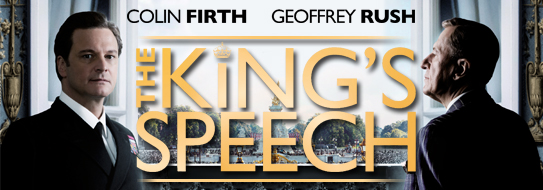
The term ‘born for greatness’ is one often used to describe the life of king. Nevertheless, it is a vague term: one that does not give a remote hint to the strains and struggles that comes with achieving great feats. The King’s Speech illustrates a form of such a challenge with the brilliance of a masterpiece.

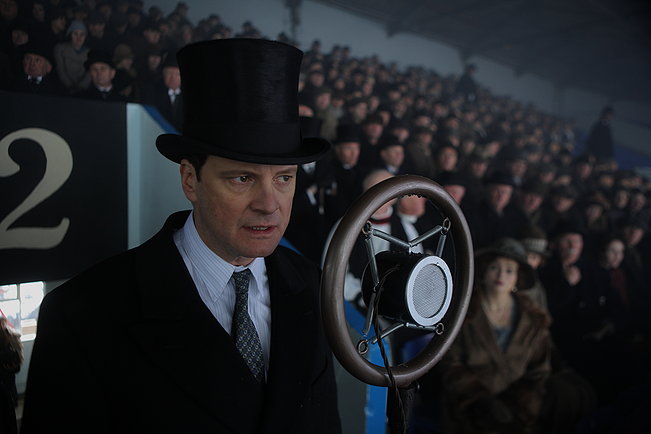
Bertie, played by Colin Firth, gives a speech at Wembley in the mid-1920s that goes awry due to his stammer.

The film centres on Bertie (Colin Firth – Bridget Jones’ Diary, Dorian Gray, Tinker Tailor Soldier Spy), the future King George VI of Britain (1936-52), who has a terrible stammer, and how he must overcome this stammer in order to compete with the other great orators of his era, such as Sir Winston Churchill and Adolf Hitler. When it becomes clear that his older brother, David (Guy Pearce – Memento, The Hurt Locker, Prometheus), the future King Edward VIII (abdicated in 1936), would rather marry Wallis Simpson (Eve Best), a twice-divorced American woman, than take up the throne, the necessity for Bertie to speak more eloquently becomes paramount. After-all, he is next in line.

After trying several therapists for years, Bertie turns to Lionel Logue (Geoffrey Rush – Pirates of the Caribbean I-IV, Shakespeare In Love) and his unconventional methods to help solve the problem. By taking us through stage-by-stage of Logue’s methods, the director, Tom Hooper (The Damned United, Les Misérables), ensures that we see Bertie’s tremendous struggle to complete a sentence without stuttering (something seemingly so effortless for the majority of us). However, we would not be able to realise just how frustrating and aggravating it must have been for Bertie if it weren’t for the exceptional performance of Colin Firth. Never before has an Adam’s Apple been so over-worked or scrutinised as in The King’s Speech.

Yet, it is not just Bertie’s consistent stammering that makes Firth’s act so memorable, but also how it affects Bertie’s general behaviour. Throughout the movie, the future George VI suffers from chronic diffidence. His speech impediment affects everything from the way he walks, talks and looks at people; to his need for emotional support from his wife, Elizabeth (Helena Bonham Carter – Fight Club, Harry Potter V, VI, VII(i) & VII(ii), Alice in Wonderland, Les Misérables), the future Queen Elizabeth II’s mother. And this does not even include his bad temper or his fears; most notably, public speaking. In a first-class display, Firth captures Bertie’s dread superbly as well as his character’s comprehension of the responsibilities of a monarch.

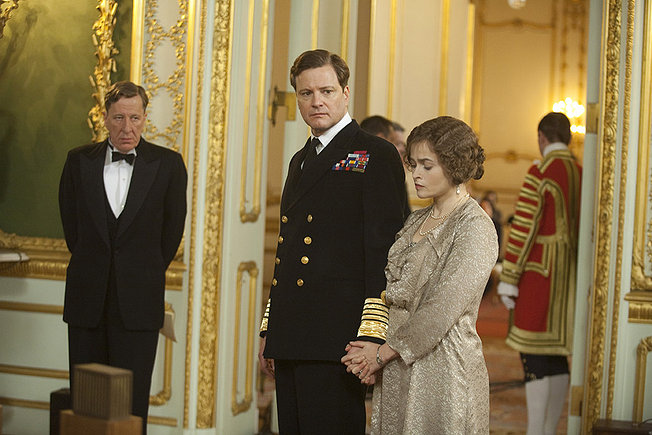
Anxiety reigns supreme as Lionel Logue (Geoffrey Rush), George VI and Elizabeth (Helena Bonham Carter) wait for the king to give his big speech not long after Britain declared war on Germany on 3rd September 1939.

Firth is undoubtedly the stand-out performer of the movie. But that is not to say that Geoffrey Rush or Helena Bonham Carter do the film a disservice. On the contrary, they play their roles very well: the former as the tolerant therapist with a wry sense of humour, who understands how best to deal with the king’s stammer; and the latter, as the supportive wife of a man who feels that he must triumph against all odds in order to carry out his duty as king.

Alas, The King’s Speech does not touch upon the gastric problem that Bertie endured throughout his life. It also wrongly portrays the relationship between Bertie and David. (Not to mention the one between Elizabeth and David too.) Since the film is based on real events (as opposed to a book or an urban legend), historical accuracy is important and is slightly lacking in the movie, even if it is regarding a relatively minor part of the story.

This, though, should not take too much away from The King’s Speech. The film is simple, original and outstanding. In addition, it is funny (albeit in a very English way) and engaging. The acting is fitting for Oscar nominations, and Firth’s ability to make us feel the pain that Bertie’s stammer caused him is right up there with the greatest of performances. That there is no fairytale ending to the film gives The King’s Speech greater credit and more than a twinkle of realism: it makes us appreciate how and why King George VI managed to win over the affections of millions across the world.

PG’s Tips

Review – The Way Back (12a) [2010]

Star Rating: 3/5

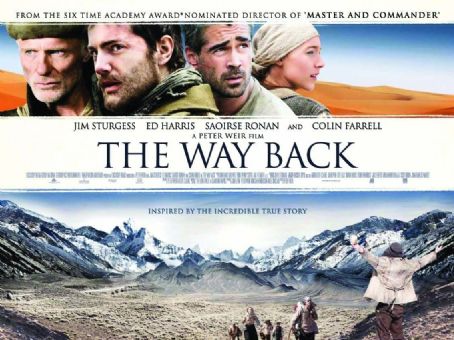
Travelling can often be long and boring, regardless of whether it is on a bus down the road or on an aeroplane across the world. Alas, despite one heck of a trek, one feels much the same whilst sitting through The Way Back.

The film is based on true events as described in the book, The Long Walk, by Slawomir Rawicz. (The book, however, has recently been proven to be a work of fiction.) The story centres on six men, who escaped from a Siberian gulag in the winter of 1940 and made their way south to India on foot. The distance alone sounds daunting to even the most determined of souls. The inhospitable terrain and harsh weather conditions make the task Herculean, if not outright impossible.

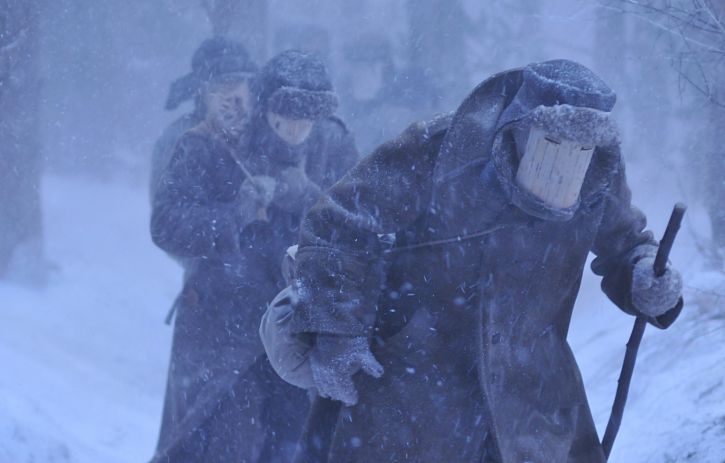
Janusz, played by Jim Sturgess, leads the way through the fierce snow storm. The blizzard is so strong they have to cover their faces in order to see where they're going.

The director, Peter Weir (Master and Commander: The Far Side of the World, The Truman Show, Gallipoli) certainly captures the difficulties the heroes face. From the bitingly cold, white desert of Siberia to the scorching heat of the Mongolian/Chinese one, the struggle to keep on going is vividly portrayed. The lack of food and water is a constant problem. Hunger, thirst, cold and skin problems are a constant reminder of the fragility of mankind against unforgiving mother-nature.

Yet, throughout the movie, one wonders what the goals of the main characters are. Once they have escaped, then what? One gets the impression that escaping from the gulag is the end in and of itself; which, of course, it cannot be.

An even greater travesty for The Way Back is that, whilst the acting is generally good, the key characters do not develop. Worse, Weir fails to make us empathise with the heroes. With the exceptions of the American ‘Mister’ Smith (Ed Harris – A Beautiful Mind, A History of Violence), the criminal Valka (Colin Farrell – Phone Booth, Miami Vice, SWAT), and Irena (Saoirse Ronan – Atonement, The Lovely Bones) for being a woman; the other characters do not stand out: Janusz (Jim Sturgess – Legend of the Guardians: The Owls of Ga’Hoole, 21, One Day), Tomasz (Alexandru Potocean – 4 Months, 3 Weeks, 2 Days, The Paper will be Blue), Zoran (Dragos Bucur – Tuesday After Christmas, The Godmother) and Andrei (Dejan Angelov – Scorpius Gigantus, Until Death) all seem to merge into the same kind-hearted character. Whilst benevolence in such situations is to be admired, it makes it hard to differentiate them; especially as they all look the same dirty, scraggy outlaws.

The accents are also disappointing. Apart from with Colin Farrell, there is little consistency in the actors’ Slavic accents. (Ed Harris uses his American accent throughout the film so is exempt from criticism.) For some of the time, their accents are surprisingly good. But just as one starts to believe that they could actually be Polish or Russian (depending upon where they claim to be from in the vast USSR), out pops their real accents to undo it all. One would have thought that an experienced director, like Weir, would have noticed this during filming. Evidently not.

The party have to endure seemingly endless baron planes during their trek. The baking-hot, sandy deserts of Mongolia and China are just as cruel as snowy Siberia.

Another noticeable thing about the main characters is that none of them make an attempt to violate Irena. This is more than a tad surprising considering that some of these men had been in the gulags for years, and so would not have had the company of a woman for equally as long. Also, bearing in mind the Red Army’s behaviour in Eastern Europe in the latter part of World War II, the characters’ disinterest in Irena appears wholly inaccurate within the historical context. (Not that I am condoning rape amongst former gulag prisoners, of course.)

One thing the film gets right, historically, is the way the gulags were run. Hardened criminals were virtually given carte blanche to terrorise other inmates; especially if they were political prisoners. In addition, the topography throughout the movie, which the National Geographic channel helped to choose, is wonderful.

However, whilst one can appreciate picturesque landscapes, a film that lasts more than two hours has to give its audience more to enjoy than mere terrain. Although The Way Back had to be long to ensure the audience grasps the extent of the distance the main characters walked; not enough happens to them to sustain the viewers’ interest and concentration. Ironically, one comes out of this film thinking that, despite witnessing a journey from Siberia to India, they had not seen much.

PG’s Tips

Review – The Chronicles of Narnia: The Voyage of the Dawn Treader (PG) [2010]

Star Rating: 3/5

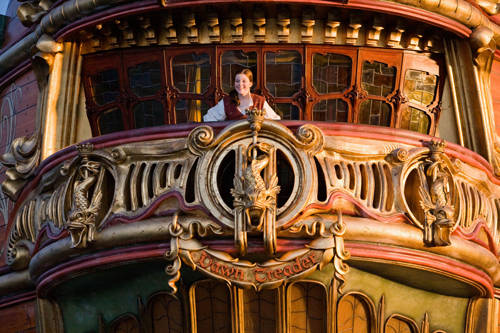
The Chronicles of Narnia series is much like Ronseal, the woodstain/wood-die product.  The Narnia series does ‘exactly what it says on the tin’ and the third instalment in the series, The Voyage of the Dan Treader, is no different.

Unlike in the first film (The Lion, The Witch and The Wardrobe) and the second one (Prince Caspian), Edmund (Skandar Keynes – Narnia series) and Lucy (Georgie Henley – Narnia series) return to the world of Narnia without Peter (William Moseley – Narnia series) and Susan (Anna Popplewell – The Girl with the Pearl Earring, Narnia Series).The latter two are too old for another adventure. In their stead, Lucy’s and Edmund’s obnoxious cousin Eustace (Will Poulter – Son of Rambow, The Revenant) enters the fray.

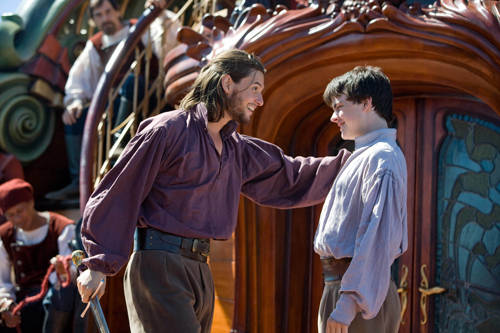
King Caspian and Edmund are delighted to see one another again. Caspian will need Edmund’s ability to wield a sword if he is to emerge victorious once more.

This time, Edmund, Lucy and Eustace have been sent back to Narnia to join King Caspian (Ben Barnes – Prince Caspian, Dorian Gray, Seventh Son) on board the king’s ship, the Dawn Treader. Caspian is on a quest to find the seven lost swords and banish the evil that resides on a dark island far away… as well as within themselves. For how the main characters evade their various temptations will be equally as tough as acquiring the swords.

The plot for The Voyage of the Dawn Treader is meant for children, so it’s easy to follow and far from complex. Although almost two hours long, neither a child nor an adult is likely to be bored throughout the movie. Indeed, the film is entertaining.

Yet, aside from the entertainment value, the acting and the dialogue are so bad it makes the three main characters in the Harry Potter series seem decent. (Anyone who’s read my review of the Deathly Hallows: Part I, will know what I think of them.) Keynes and Henley have failed to grow into Edmund and Lucy respectively over the years; whilst Barnes’ acting seems to get worse every time he appears on screen.

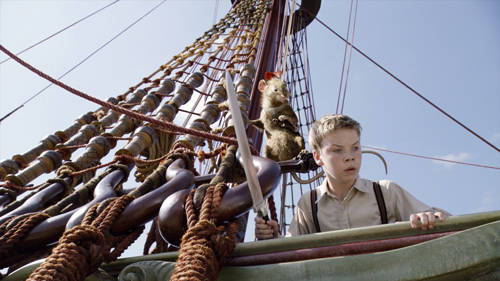
Eustace holding a sword on the Dawn Treader as he attempts to defeat Reepicheep the mouse. These two are undoubtedly these two most hilarious characters in the film.

Arguably, the exceptions to this are Poulter’s performance as Eustace and the mouse, Reepicheep (voice by Simon Pegg – Hot Fuzz, Star Trek). Eustace, despite being annoying and an unbearably difficult young boy, who detests being in Narnia almost to the bitter end, is actually quite funny. (Whether he’d be quite so funny if one had to look after him in real life is another matter.) Reepicheep, as a professional ‘swordsmouse’ that never shuts up, is similarly amusing.

Additionally, unlike in the Harry Potter films and The Lord of the Rings trilogy, the special effects here are nothing special. This is disappointing because there is little reason for the director, Michael Apted (The World is Not Enough, Enigma), to have done them poorly; other than, perhaps, a lack of enthusiasm for the project.

Then again, children are not really going to notice such details. Nor are they going to care if the acting or the dialogue is terrible. They just want to see a fun film they can follow and enjoy. The Voyage of the Dawn Treader, like the two other films in the franchise, fulfils this criterion. That it is watchable for adults is a bonus.

PG’s Tips

Review – The Tourist (12a) [2010]

Star Rating: 3.5/5

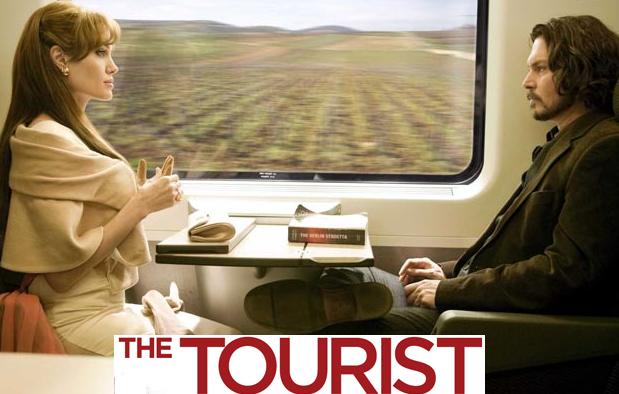
When a guy generally sits on a train (or a bus or an aeroplane for that matter), he hopes and prays that a drop-dead gorgeous girl sits either next to or opposite him. Alas, this generally does not happen. Similarly, when two or more star actors combine for a film, the movie usually does not live up to its expectations. The Tourist is a casualty of this syndrome.

Nevertheless, Frank (Johnny Depp – Pirates of the Caribbean I, II, III & IV, Sweeney Todd, Alice In Wonderland), a single and simple maths teacher from Wisconsin, has a dream come true at the start of the film when the stunning Elise (Angelina Jolie – Salt, Wanted, Mr. & Mrs. Smith) sits opposite him on a train to Venice. Better still, she is interested in him. Unfortunately for Frank (if there is such a thing as ‘misfortune’ in this scenario), Elise is being followed by Scotland Yard and by Reginald Shaw (Steven Berkoff – A Clockwork Orange, The Girl with the Dragon Tattoo), a murderous mafia boss. Both parties are after her husband, Alexander. Elise intends to use Frank as a decoy, to dupe the authorities and Shaw into believing that Frank is her husband.

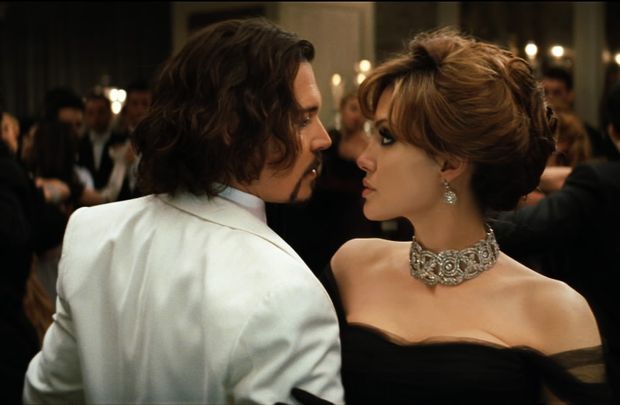
Depp and Jolie gazing at one another as they dance at a ball. When it comes to glamour, there is only one winner.

Frank has no idea about any of this. As Frank, Depp plays a very different character to the intense, weird roles that he has done in previous films. (Think the barber in Sweeney Todd or Willy Wonker in Charlie In The Chocolate Factory.) In The Tourist, Depp plays a bumbling fool, who is in shock that a woman as striking as Elise would want him. Frank is totally infatuated with Elise throughout the movie and Depp does well to constantly remind us of this without being cringe-worthy. Not only is he nervous and uncertain of himself around her; whenever Elise speaks of her husband, one sees a twinkle of crushing depression form in Frank’s eyes as well as a lump develop in his throat. As a result, one has nothing but empathy for Frank: there are few things more gut-wrenching than going out with a girl and having to listen to her talk about how much she loves someone else; especially if you fancy her.

However, as good as Depp is, Jolie outclasses him. As Elise, Jolie plays a cunning, strong-willed and intimidatingly beautiful, high-class woman. The way she dresses, walks and talks (the English accent, last heard when Jolie starred as Lara Croft in Tomb Raider, definitely adds to the appeal) make her the object of fascination throughout the film. That we are unsure for more or less the whole film whose side she’s on ensures she is an enigma. This is far from frustrating. Rather, this has the effect of increasing Elise’s/Jolie’s attractiveness several times over.

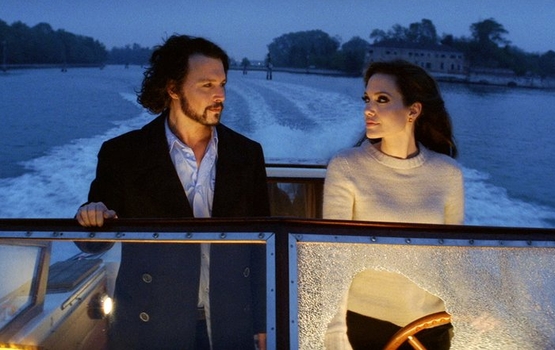
Depp and Jolie enjoying Venice's romantic charm as they take an evening boat ride.

Whilst Depp and Jolie play very well, the plot is nothing special and has holes in it that must be taken with a pinch of salt. Although the storyline is quite entertaining and full of twists (some of which are quite predictable); at times, particularly in the middle of the film, it can be a bit dull. If one were harsh, one could even go so far as to argue that it is not the storyline but the two main characters that keep the audience interested. That is never a good sign for a movie.

The choice of Venice for a location is a refreshing change. This film could easily have been shot in any of the over-used major cities in films (like London, New York, LA, Paris or Rome amongst many others). Yet, Venice has its unique allure, which is quite well captured throughout the film. The movie also reveals other not-so-wonderful aspects of Venice, and Italy in general, such as corruption within the police. But that is beside the point.

All in all, The Tourist is a tad disappointing. The actors and the charm of Venice undoubtedly make up for many of the shortfalls in the plot. Yet, even if the storyline has its flaws for much of the film, the ending is a different matter altogether. The ending is nothing short of brilliance and will leave one feeling very satisfied indeed.

PG’s Tips

Review – The American (15) [2010]

Star Rating: 2/5

When one thinks of a spy film, the Bourne series, Munich and Salt spring to mind. Those movies were action packed and fast-paced; and in Salt, one at least watches Angelina Jolie wearing tightly fitted costumes and doing all kinds of interesting stunts and kicks. The American, on other hand, has little of these qualities; and George Clooney (From Dusk Til Dawn, Ocean’s Eleven, The Ides of March), playing the role of an American spy in Italy, fails to appeal to the audience in the same way that Matt Damon, Eric Bana and Jolie do in their respective films.

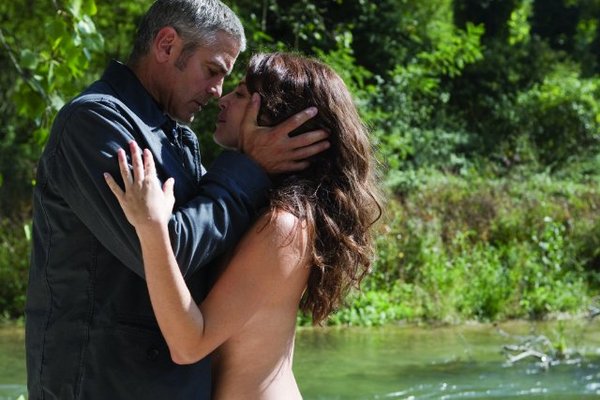
Clooney making out with Violente Placido at a picturesque and secluded stream.

In saying that, the director, Anton Corbijn (Control), has deliberately gone for a very different type of spy film relative to other recent movies within the genre. He has gone for an artistic film. One is forced to admire the beautiful Italian sceneries as well as tolerate the silence that dominates much of the film. The lack of dialogue in The American is reminiscent to Francis Coppola’s Lost In Translation. Consequently, there are numerous (and arguably pointless) scenes of Clooney alone, saying nothing. A lot of the time, the same is true when Clooney is with people. Questions asked to him are often left unanswered, which is poor-show from Corbijn.

Clooney, refreshingly, is not his usual charming self in The American. He cuts a sombre and lonely person throughout much of the film. Even in scenes when he is with people, like when he is with the priest having religious conversations or when he is with the escort/prostitute, Clara (Violenta Placido), Clooney is almost always distant, cold and unable to speak his mind. One imagines this could be indicative of spies in general: they can’t reveal their real jobs as that would most likely endanger their lives, their mission and their country. Occasionally, we see the paranoia that goes through the mind of a spy; for example, the constant look over the shoulder. But Clooney does not capture a spy’s paranoia as well as the actors in Munich do, which is a shame for him. That is not to say that Clooney does a bad job in this film. But devoid of a script, not to mention his smooth-tongue and amiable smile, he is not the same actor.

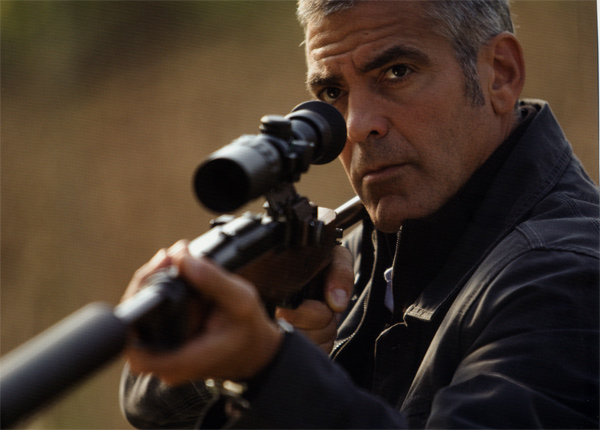
Clooney holding a rifle with a silencer as he practices his shooting accuracy.

Still, Clooney is one of the few bright spots in The American. (Other decent aspects include the gorgeous women he meets and sleeps with.) Irritatingly, the storyline, if there is one at all, has no context. Throughout the film, one wonders: why Clooney is in this small town in Italy; who he’s working for; who he’s targeting; and if he is an asset or a liability to his organisation. If the plot were fast-moving, Corbijn might have gotten away with this. But as it is slow, the movie is disinteresting and boring.

What’s more, The American is not especially entertaining. It does not matter how picturesque the Italian landscapes are or if some of the paranoia’s of being a spy are illustrated; a film’s first job is to entertain. Thus, Corbijn has let down Clooney as well as his audience.

PG’s Tips

Review – Unstoppable (12a) [2010]

Star Rating: 4/5

A film about a runaway freight train was never going to be a classic. Like The Taking of Pelham 123, Speed and Gone in Sixty Seconds, to mention three of countless such films, one could only hope that this film would be entertaining and nerve-racking. It is both!

When I first saw the trailer for Unstoppable, it reminded me of an episode from Thomas The Tank Engine, entitled The Runaway. As a kid, seeing Thomas steaming away without his driver and fireman made my heart pound every time. Except, this film is not about a little tank engine with two coaches running down a harmless train line. Unstoppable is based on true events about an unmanned monster freight-train, half a mile long, travelling at such a speed it can demolish anything in its wake. Worse, it is coupled to wagons containing highly inflammable/explosive materials, going through populated areas and heading straight towards a curve at Stanton, a densely populated town in southern Pennsylvania. Worse still, a group of school-children heading for a field trip, are on the same line as the runaway train heading for a collision!

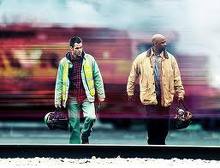
Will and Frank on a siding trying to work out how they are going to stop the train

If the situation is not enough to put one on edge; the director, Tony Scott (Top Gun, The Taking of Pelham 123, Stoker), constantly changes scenes back and forth during conversations between officials, managers and the main characters to induce further panic into the audience. The fast-beats, the crescendos and the sudden silences ensure that viewers will never take their eyes of the screen.

Unlike the plot and the music, the acting is not as dramatic. Indeed, one thing that should be noted is how un-melodramatic and realistic the acting is. Frank (Denzel Washington – American Gangster, The Inside Man) and Will (Chris Pine – Star Trek I & II, This Means War), as normal railway drivers, do not have the most challenging of roles. Yet, they play them well without reverting to cringe-worthy clichés. Despite understanding the gravity of the situation, and reacting to it in the best way they feel they can; Frank and Will spare some time for banter and heart-to-heart conversations. After-all, what else can they do in their train’s cabin whilst they hurry along the line to try and catch the monster freight-train?

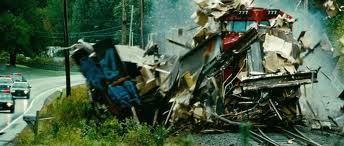
Nothing gets in the way of the monster runaway train.

The realism of their roles is similarly reflected by the behaviour of their manager, Connie (Rosario Dawson – Sin City, Trance), who wants to save as many lives as possible; and her boss, Galvin (Kevin Dunn – Transformers), who has several factors to take into account, such as commercial, financial, damage to infrastructure and, lastly, human life. Connie and Galvin are constantly on the phone to one another (as well as to Frank), trying to solve the problem as to how to stop the train. Whilst on the phone, they speak in a relatively cordial manner; off the phone, the number of expletives they shout about one another is both realistic and funny. Indeed, one could imagine this occurring in an office in an under-pressure situation.

The realistic elements to the film, the music and the plot make for easy and entertaining viewing. By no means is Unstoppable a five-star film; but one’s adrenaline will be doing overtime long before the end of the movie.

PG’s Tips

Review – Harry Potter & The Deathly Hallows: Part I (12a) [2010]

Star Rating: 3/5

Harry Potter and the Deathly Hallows, the seventh and final part of the Harry Potter series (albeit split into two films), was going to have to be a climactic masterpiece if it was to reach the unrealistic expectations of fans and critics alike. That it looked darker and more ominous than the previous six films merely added to the hype.

Film seven kicks off where the sixth film, Harry Potter and the Half-Blood Prince, left off. The time has come for Hogwarts’ prodigal apprentice, Harry Potter (Daniel Radcliffe – Harry Potter I-VII(ii), The Woman In Black), to leave the comforts of his school. Now, he must find and vanquish the Hawcruxes, since this is the only way he will have a chance of defeating his eternal nemesis: the ever-more-powerful Dark Lord, Voldemort (Ralph Fiennes – Schindler’s List, The Reader, Harry Potter IV, V & VII(ii)). Joining Harry will be the young spell-mistress of her generation, Hermione Grainger (Emma Watson – Harry Potter I-VII(ii), My Week With Marilyn); and their goofy friend and below-average wizard, Ron Weasely (Rupert Grint – Harry Potter I-VII(ii)).

Against them stands an awesome array of Voldemort’s allies, including Belatrix (Helena Bonham Carter – Fight Club, Harry Potter V-VII(ii), The King’s Speech), the Death Eaters, Professor Snape (Alan Rickman – Die Hard, Harry Potter I-VII(ii), Alice in Wonderland), Draco Malfoy (Tom Felton – The Borrowers, Harry Potter I-VII(ii), Rise of the Planet of the Apes) and his father, Lucius Malfoy (Jason Isaacs – The Patriot, Green Zone, Harry Potter II, IV, V, VII(ii)); not to mention countless others who are willing to assist the Dark Lord with his evil plans. Voldemort aside, these are the same villains who killed Albus Dumbledore, Harry’s master, in the previous film. Now, it is up to the precocious, but unready Harry to somehow deal with them as they relentlessly hound him.

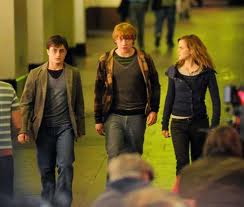
Harry, Ron and Herminone working out where to next in their search for the Hawcruxes

How Harry and his friends were going to take on the villains was always going to be the key to the plot. But the plot is slow. At times, it is tedious to the point of disinteresting. (Unless, of course, you are a die-hard fan of which I am not.) Just like in the Half-Blood Prince, the director, David Yates (Harry Potter IIIVII(ii)), focuses more on the relationship between Harry, Hermione and Ron rather than the storyline. Again, the film is dominated by the ever-worsening sexual tension/frustration that the three main characters suffer. (One almost wants them to do it and get it over with just so the story can move on.)

But this is not the only thing that Harry, Hermione and Ron have to endure. They look lost away from their safe bubble-world of Hogwarts. Tiredness and helplessness is never far from their faces. But aside from this, the quality of the acting from the three main actors is, in general, far from great. Radcliffe and Grint remain more or less the same poor, two-dimensional characters they’ve always been. Emma Watson, at least, gives a slightly more mature performance than in previous films. She also has more of a leading role this time around; possibly even eclipsing Radcliffe. But apart from looking pretty, the role of Hermione still does not come overtly naturally to Watson. She tries too hard and takes herself too seriously.

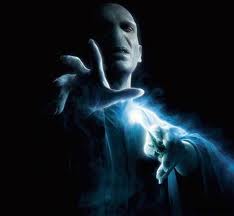
Voldemort, the Dark Lord, unleashes some of his frightening dark powers. It is a pity that we see so little of him throughout the film.

In contrast, the villains do not take themselves seriously. For most other films, this would be a source of ridicule for the actors. However, Fiennes, Carter and Rickman skilfully pull off their roles. The great shame is how little they appear on-screen. This is a tragedy, since the Deathly Hallows should be about the villains as much as Harry. One even sees more of the Ministry of Magic, whose interior looks like a larger and more advance form of the Houses of Parliament (with a superficial Orwellian/1984 feel); and Lucius Malfoy’s mansion, which appears to be a real-life version of the enchanted castle in Disney’s Beauty and the Beast, than the villains.

The choreography of these and other places, plus the special effects throughout the film are well done. Indeed, they are so good one could mistake the computer generated images (CGI) for being real. This is no mean feat for a fantasy film. Many films, and not just from this genre, fall at this hurdle.

The scenery throughout the movie is equally as impressive and well chosen; whether it is of a forest, a hill-top or an open plain. The landscape and weather always seem to fit in effortlessly with the mood of the scene. Yet, unlike for example in the Lord of the Rings, the landscapes and the choreography are not equalised in the Deathly Hallows by the quality of the acting or the grip of the plot. By the end, one only has a rough idea as to how the ‘Deathly Hallows’ is even relevant to the story.

However, despite these flaws, does Part I leave us wanting to see Part II? Without a doubt: yes. After-all, we have followed Harry for so long how could we possibly miss out on witnessing his duel of destiny with Voldemort?

PG’s Tips