
Author Archives: pgtipsonfilms

Review – Gilad Shalit: The Interview (N/A) [2013]

Gilad Shalit interview title banner

Star Rating: 3.5/5

Cast:

  • Gilad Shalit (himself)
  • Noam Shalit (himself)
  • Aviva Shalit (herself)
  • Hadas Shalit (herself)
  • Yoel Shalit (himself)

(This is documentary was shown at an exclusive showing in accordance with an event. It has not been widely released or given a rating by the BBFC.)

For anyone Jewish, Israeli, or otherwise who followed the Gilad Shalit situation, 18th October 2011 was an emotional day. In Israel, it is said that no-one worked and the entire population was glued to the TV. For after almost five and a half years in Hamas captivity, following his abduction in June 2006, an asserted international campaign led by his father, and hard negotiations, Private Gilad Shalit became the first Israeli soldier to return home pale, skinny and alive in exchange for 1,027 Palestinian prisoners. This low-budget Israeli documentary, produced and aired almost exclusively for Israeli TV, gives us an insight into Gilad’s life during his illegal incarceration and how he is getting on with life since being released.

Gilad Shalit, looking pale and gaunt whilst in captivity, wherein he was not allowed to go outside for five and a half years.

Gilad Shalit, looking pale and gaunt whilst in captivity, wherein he was not allowed to go outside for five and a half years.

The documentary is only 40-45 minutes long and skips back and forth between Gilad’s time in captivity and events subsequently. Since there is no footage of Gilad’s day to day life in the hell-hole underground cell that he was forbidden to leave whilst in captivity, interviews with Gilad since returning home (smiling and with the colour having returned to his face) are our only insight into what his life was like.

The empathy one feels for Gilad is heart-breaking as he tells us his monotonous life in the lonely cell. He kept to a schedule and refused to let himself lie on his bed and just think, since that filled him with despair. The schedule often comprised of playing games with himself, such as bundling up shirts/socks into a ball and seeing how many times he could throw it into a basket/bin in a row.

However, as Gilad’s time in captivity went on, he tells us that his captors gave him a TV and a radio (how nice of them), watched games of sport with him, and played chess with him, which all helped to make the time go a little faster. Furthermore, Gilad says that occasionally Hamas broke the monotony by making him record a video or write a letter. Sometimes these were released, as the video in September 2009 testifies, and on other occasions they were not; although, his captors never told him either way.

Gilad Shalit on the day of his release, walking alongside his relieved father, Noam (right), and Prime Minister Bibi Netanyahu (left).

Gilad Shalit on the day of his release, walking alongside his relieved father, Noam (right), and Prime Minister Bibi Netanyahu (left).

Yet, it is not just Gilad’s time in captivity that is touching, but how he felt in the days leading up to his release, wherein he says (with some humour) that he hardly slept because he was so nervous, fearing it would all go wrong; and how he has fared in trying to rebuild himself since coming home. After rarely speaking to anyone regularly for years, one can only imagine how hard it must have been for him to re-adapt into a social scene again. Interestingly, Gilad claims that one of the worst aspects of coming out is that he feels left behind since his friends and family had moved on with their lives, whilst he hadn’t.

Moreover, Gilad talks fondly of when he went to New York and saw the Statue of Liberty, the symbol of freedom personified, which he believes is symbolic of his life. But his trip also revealed another side of him: a desire to lead a normal life. Gilad is a painfully shy person and being a celebrity sits uncomfortably with his character, even though he knows it is something he has to live with.

Simultaneously throughout the documentary, we are given the perspective of Gilad’s mother and father, Aviva and Noam. Noam appears stern before the cameras. He says little but his determination to bring his son home is evident in his expression, as is his relief on the day of Gilad’s return. Gilad’s mother, though, is different. She weeps and prays for him while in captivity, and cries with joy afterward when he is home and returning to good health.

Gilad Shalit, as he looks today. Although skinny, he looks happy and healthy.

Gilad Shalit, as he looks today. Although skinny, he looks happy and healthy.

Over-all, the documentary is simple, short, and moving. The film covers many fascinating areas about Gilad before and after the events of 18th October 2011 from his angle and that of other members of the Shalit family. The documentary does not discuss the Israeli-Palestinian conflict or re-open the debate about whether the price paid for Gilad’s release was worth it. Nor does it deal with any Post Traumatic Stress Disorders that Gilad may suffer from, or how Gilad feels toward his captors. This is understandable. The first is not something Gilad can answer objectively, and the latter two are personal matters and would be insensitive to ask. (And even if the issues were raised, they most probably could not be aired for political reasons.) In some ways, it is a shame that these topics are not raised. Arguably, they would have made the documentary more interesting.

Nevertheless, the documentary deals with almost all other issues and makes one’s eyes well with water. This is because the story of Gilad Shalit is such an affecting one. It’s a miracle he returned home alive. Two years have passed since his release and he seems to be making the right steps toward a full recovery. Please God he can go on to fulfil his potential. He deserves it!

PG’s Tips
Review – Blue Jasmine (12a) [2013]

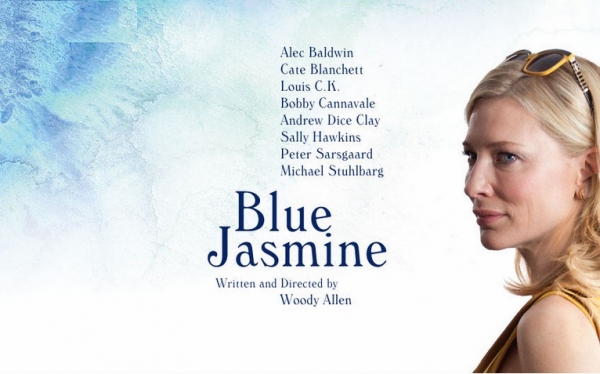
Blue Jasmine - title banner

Star Rating: 4.5/5

Director:

Cast:

  • Cate Blanchett – The Lord of the Rings I-III, The Aviator, Notes On A Scandal, The Hobbit I, II & III
  • Alec Baldwin – Pearl Harbour, The Aviator, The Departed, Still Alice
  • Sally Hawkins – Layer Cake, An Education, Great Expectations, Godzilla
  • Andrew Dice Clay – Whatever It Takes, Foolish, Point Doom, Entourage
  • Bobby Carnavale – The Bone Collector, Snakes On A Plane, Parker, Imagine
  • Peter Saarsgard – Rendition, An Education, Orphan, Pawn Sacrifice
  • Daniel Jenks
  • Max Rutherford

Midnight In Paris was a renaissance for Woody Allen. After half a decade without making a decent film, Midnight In Paris won him another Oscar for Best Writing. More importantly, the film reminded us of his talents. Blue Jasmine continues Allen’s re-emergence as a brilliant film director and script writer.

Jasmine (Cate Blanchett), dressed to stun, and living the good life with her husband, Hal (Alec Baldwin), and so-called friends.

Jasmine (Cate Blanchett), in stunning garb, living the good life with her husband, Hal (Alec Baldwin), and their (so-called) friends.

Blue Jasmine centres round the fine-looking Jasmine (Cate Blanchett), who is struggling to come to terms with how her life has turned upside down. From living the glamorous life with her former husband, Hal (Alec Baldwin), in New York, Jasmine takes a few steps down in the world and moves in with her adopted sister, Ginger (Sally Hawkins). Ginger lives in a small, cluttered apartment in San Francisco with her two sons from her previous marriage to Augie (Andrew Dice Clay), whilst doing a menial day-job and having a relationship with the loutish Chili (Bobby Carnavale).

With Jasmine’s situation hardly to her liking, she finds it difficult to sort herself out. In fact, after so many years of living the high life without doing or needing to do a day’s work, Jasmine is in the midst of a nervous breakdown that worsens with every passing day.

Blue Jasmine’s storyline is simple and well thought through. In a typical Allen way, like Midnight In Paris, Blue Jasmine skips back and forth between the (dour) present and the (glitzy) not-too-distant past, dishing us out with the necessary revelations at the opportune moments about why Jasmine left New York and Hal. This style may seem confusing at first. But one adapts to it quite quickly, and soon enough the movie’s approach becomes formulaic and predictable; not that these take anything away from the film.

Ginger (Sally Hawkins) and Augie (Andrew Dice Clay), Jasmine's low-class adopted sister and brother-in-law. Jasmine and Ginger are so different, it is hard to believe that they were brought up by the same parents.

Ginger (Sally Hawkins) and Augie (Andrew Dice Clay), Jasmine’s low-class adopted sister and brother-in-law. Jasmine and Ginger are so different, it is hard to believe that they were brought up by the same parents.

Blue Jasmine is intelligent, well-written and surprisingly amusing. Despite taking a detailed and dispiriting view on serious matters like cheating, fraud and (to an under-employed extent) people trying to make ends meet, the movie is littered with wry and cutting humour that many people, rich or poor, can empathise with and find funny. That Blue Jasmine is only 98 minutes long works in the film’s favour too. It answers all of its own questions efficiently and does not drag (unlike blockbuster bore-fests, such as Transformers III, Prometheus and Man of Steel).

Unquestionably, Blue Jasmine‘s script is superb and delivered with panache by the cast. Cate Blanchett’s performance is the most magnetic of them all. Blanchett encapsulates Jasmine’s ability to look wonderful, yet never be far from looking like a nervous wreck; to enjoy her lifestyle, yet turn a blind eye to the things she doesn’t want to see; and to be a melodramatic alcoholic about her existence, yet lie pathologically when she sniffs a chance to escape it. That Blanchett pulls this off so as to make Jasmine’s character (and breakdown) seem realistic, much like Joaquin Phoenix did in The Master, is noteworthy. One only has to look at how Natalie Portman’s (Oscar winning) breakdown in Black Swan became farcical by the end to realise the remarkableness of Blanchett’s skills, and that is without needing to compare it to Robert Downey Jr.’s feigned attempt at a nervous breakdown in Iron Man III.

While Blanchett is likely to take most of the plaudits for Blue Jasmine, the supporting cast play their parts to make the film noteworthy too. Sally Hawkins exemplifies an (immature) younger sibling, filled with inferiority-complexes, believing that none of her mother’s good genes were passed on to her. Alec Baldwin typifies a smooth-talking (slimy) businessman that has echoes of Bernie Madoff. Bobby Carnavale portrays a coarse, blue-collar working, beer-drinking, lad’s man in a down to earth manner. And Andrew Dice Clay plays the embittered (and somewhat broken), former husband well enough, although, he’s hardly in the movie; and when he does appear, he always has something significant to add to the plot that has a semi-contrived feel.

Jasmine, looking terrible after losing her wealth and status, looking like she's on the verge of a nervous breakdown.

Jasmine, looking terrible after losing her wealth and status, looking like she’s on the verge of a nervous breakdown.

The only characters who are not detailed are Ginger’s two children, Matthew (Daniel Jenks) and Johnny (Max Rutherford). These two add little to the story, which begs the question of why they are in the film. A similar argument could be made toward the music that Allen adopts. The movie is set within the last decade, but the music sounds like it is from between the 1930s-50s, which is an odd choice as it appears out of place. But none of these issues should detract from what is otherwise a great film.

All-in-all, Woody Allen’s Blue Jasmine is a smart, satisfying and entertaining movie about sombre issues. With a magnificent and engaging central character, and a convincing supporting cast, Allen’s excellent script is delivered with great sincerity and sardonic humour. Above-all, Blue Jasmine confirms Allen’s renaissance and cements his position as one of the best film directors and script writers that Hollywood has at its disposal. Long may the rebirth continue!

PG’s Tips
Review – Elysium (15) [2013]

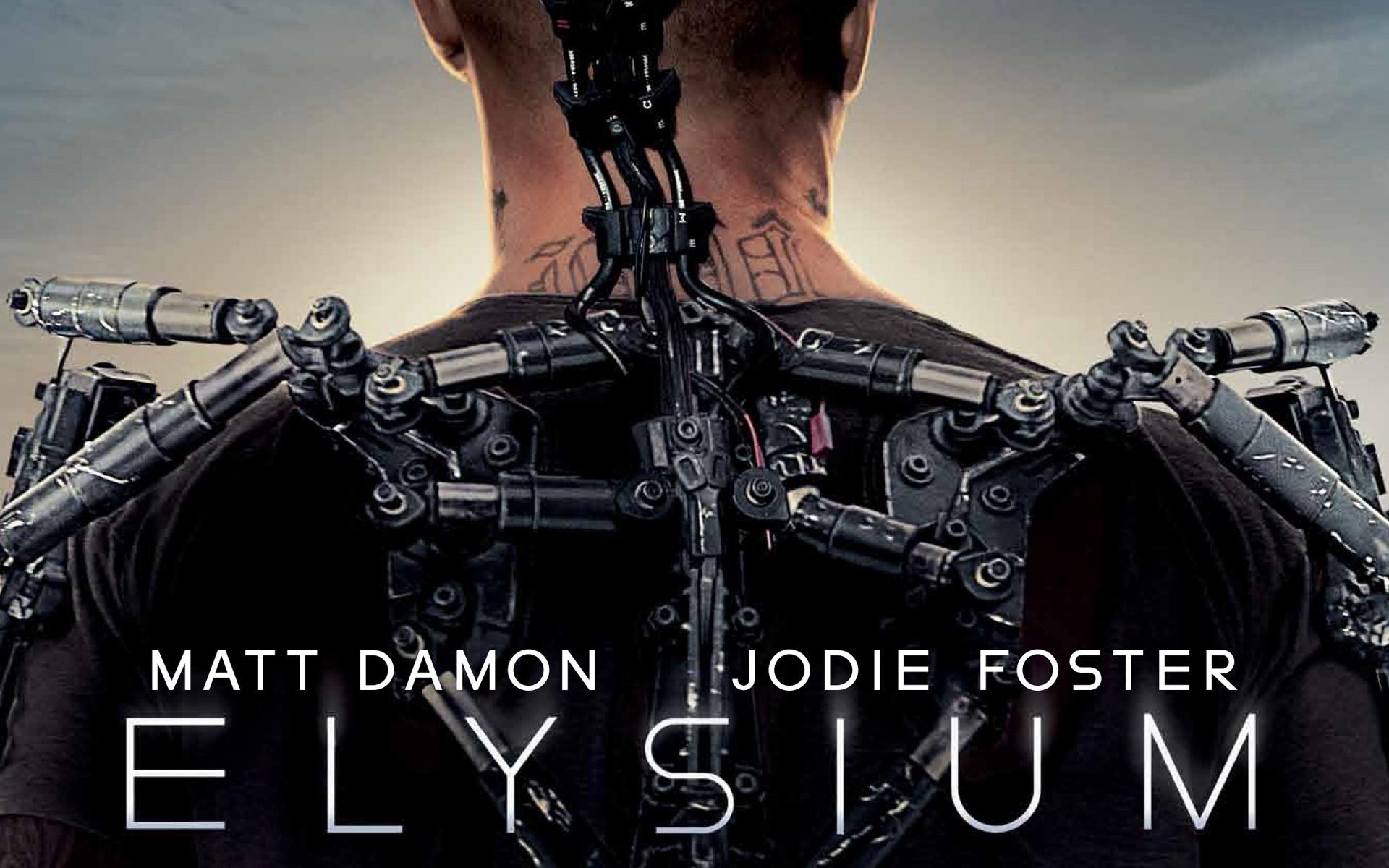
Elysium - title banner

Star Rating: 2.5/5

Director:

  • Neil Blomkamp – District 9, Chappie

Cast:

  • Matt Damon – True Grit, The Adjustment Bureau, ContagionInterstellar
  • Jodie Foster – The Silence of the Lambs, Flightplan, Carnage
  • Alice Braga – I Am Legend, The Rite, Kill Me Three Times
  • Diego Luna – The Terminal, Criminal, Milk
  • William Fichtner – Crash, The Dark Knight, Teenage Mutant Ninja Turtles
  • Sharlto Copley – District 9, The A-Team, Chappie
  • Emma Tremblay – The Judge

Music Composer:

  • Ryan Aman

Science fiction films set in the future have a knack for painting a bleak picture for humanity. That is, until an American hero decides that he’s had enough and rips up the regime as he knows it. In I Am Legend, a cure for cancer led to a mutation that practically wiped out humanity, bar Will Smith who tried to save mankind; in In Time, the poor scrounged in squalor in confined areas until their short-lived clocks ran out, while the rich lived forever in their luxurious areas, until Justin Timberlake broke the system; and in Oblivion, a victorious war against aliens led to the Earth being uninhabitable, until Tom Cruise saved it. Elysium also portrays a depressing picture for mankind, only this time it’s Matt Damon playing the predictable protagonist.

Los Angeles in 2154, depicting a run-down, third world city in which crime is rampant and dogs must eat dogs to survive.

Los Angeles in 2154, depicting a run-down, third world city in which crime is rampant and dogs must eat dogs to survive.

Elysium is based in the year 2154 and centres round Max (Matt Damon). Max lives on the overcrowded Earth, along with all the poor people, while the rich live on a luxurious space station called Elysium. Working in a factory, Max sustains an (avoidable) injury at work. He is told he has only five days to live.

But there is an alternative. Max must go to Elysium, where his ailments can be cured because the rich on Elysium are so far advanced that they have found cures for all health problems. The difficulty for Max is getting to Elysium as he can only travel there illegally. But to do so, he has to get past the aggressive androids that control Earth, as well as Jessica Delacourt (Jodie Foster), the Secretary of Defence for Elysium, who kills anyone attempting to illegally reach Elysium by using her mercenaries on Earth, such as Kruger (Sharlto Copley), to do her dirty work.

The premise for Elysium is good. Issues like why Elysium was built; how people came to be on Elysium; as well as class divisions and the practicalities of class mobility are fantastic starting points to engage audiences. Moreover, the special effects are brilliant. They look natural and give one a true feel for the world that director Neil Blomkamp has created.

The space station, Elysium, in which the crème of the crop of humanity dwell, with an awesome view of Earth to marvel over instead of a landscape.

The space station, Elysium, in which the crème of the crop of humanity dwell, with an awesome view of Earth to marvel over instead of a landscape.

But, oddly, Elysium fails to engross its viewers. The dialogue is cliché-ridden from three minutes in to the final scene, none of the above-mentioned matters are dealt with properly (if at all), and much of the plot is unoriginal and has been seen before; for example, emotionless (anal) robots controlling whole populations. This was handled in i,Robot (and Will Smith sorted out the problem back in 2004).

Apart from being derivative of other movies, Elysium’s plot rapidly descends into farce before the predictable futuristic ray-gun fight between the hero and the villain, and all the antagonists (all white as it happens) are unimaginative, one-dimensional swines.

The fact that all the villains in Elysium are white raises another problem with the film: its shamefully contrite thinly-veiled racist elements. All the poor, the ill-educated, and the criminals are either Mexican or black (bar Matt Damon), while the elites on Elysium are white with either English, French or white South African accents. Haven’t we moved on since the 19th-century? (Colonialism has ended after-all.)

Matters of racism aside, the acting is mixed by the cast. For the protagonists: Matt Damon does a decent job as the central protagonist without being noteworthy; Alice Braga plays okay as Max’s love interest/damsel-in-distress/the caring mother of Matilda (Emma Tremblay); and Diego Luna is fine as the leading gangster of the illegal (Mexican) underworld.

Max (Matt Damon) trying to help Frey (Alice Braga) and her daughter Matilda (Emma Tremblay) from aggressive androids and others.

Max (Matt Damon) trying to help Frey (Alice Braga) and her daughter Matilda (Emma Tremblay) from aggressive androids and others.

For the antagonists: Jodie Foster gives an unusually wooden performance, adopting an unnecessary English accent that looks like it has been bizarrely dubbed post-production (evidently her lines were not contrived enough first time round); William Fichtner is awful as… (I’m not really sure what his role was meant to be); yet, Sharlto Copley is absolutely brilliant as the psychopathic henchman. Granted, his role is that of a sadistic villain that one has generally seen before, but Copley plays it frighteningly well and makes his audience feel uncomfortable whenever he’s on the screen, which is an achievement. Unsurprisingly, Copley is the star of this average movie.

Over-all, Elysium is alright. The film has superb special effects and a solid basis with which to make a genuinely interesting movie, even if it is a miserable portrait of a future for mankind. However, Elysium fails to build on its strong foundations and, instead, is stuffed with clichés, subtle racism, standard storyline developments and stereotypical characters for the genre. And to top it up, Elysium has Matt Damon playing the role that Will Smith and Tom Cruise have made their own: the all American hero.

PG’s Tips

Review – The Wolverine (12a) [2013]

The Wolverine - title banner

Star Rating: 2/5

Director:

  • James Mangold – Girl, Interrupted, 3:10 To Yuma, Knight & Day, Three Little Words

Cast:

  • Hugh Jackman – X-Men I-III, X-Men Origins: Wolverine, Les Misérables, X-Men: Days of Future Past
  • Famke Janssen – Goldeneye, X-Men I-III, Taken I-II, In The Woods
  • Rilo Fukushima
  • Tao Okamoto
  • Hiroyuki Sanada – The Last Samurai, Rush Hour III, The Railway Man
  • Svetlana Khodchenkova – No Love In The City, Tinker Tailor Soldier Spy, The Royal Killer

Music Composer:

Troubled productions can take on many forms. The Wolfman needed to reshoot scenes after completing filming; Transformers II: Revenge of the Fallen did not have script three weeks before filming; and Margaret had numerous post-production problems that led to the movie coming out six years after it was shot. Suffice to say, all of these movies were a mess when they arrived at cinemas. The same is true for The Wolverine, which had a change of director and several delays at pre-production stages.

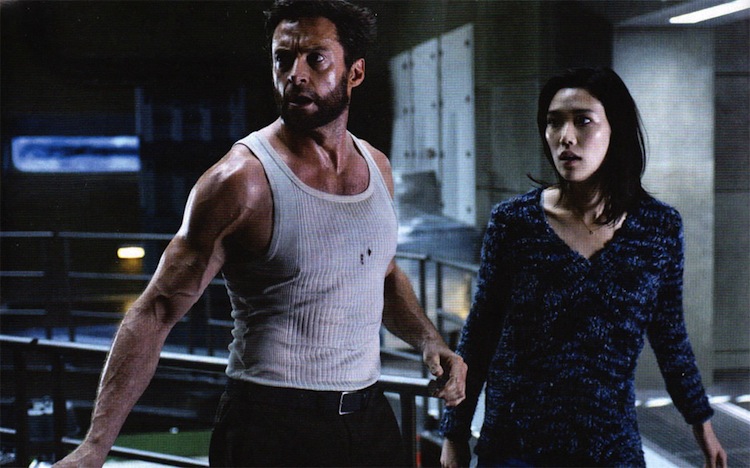
Logan/Wolverine (Hugh Jackman) running with Mariko (Tao Okamoto), trying to protect her from assassins working for... well that's anyone's guess.

Logan/Wolverine (Hugh Jackman) running with Mariko (Tao Okamoto), trying to protect her from assassins working for… well that’s anyone’s guess.

The Wolverine follows on from events in X3: The Last Stand. Logan/Wolverine (Hugh Jackman) is traumatised from having killed his lover, Jean Grey (Famke Janssen), and he spends his time nomadically walking around.

One night, he stumbles into a bar and meets Yukio (Rilo Fukushima), a random Japanese girl who has been trying to find him for a year. Yukio tells Logan that Shingen (Hiroyuki Sanada), someone Logan apparently saved at Nagasaki as the nuclear bomb went off in August 1945, is dying and wishes to see him one more time before he dies. Reluctantly, Logan agrees to go to Japan for a day to grant Shingen his wish.

But upon arrival, the paralysed Shingen informs Logan that he can end his immortality and pain. Logan declines. Shingen then begs Logan to protect his granddaughter, Mariko (Tao Okamoto), the heir to his company and fortune, from others wishing to kill her to seize everything for themselves, to which again Logan reluctantly agrees.

As is often the case with films with major production problems, The Wolverine’s dialogue is senseless and the plot is all over the place. A flashing red light should immediately go off in one’s mind upon realising that the film takes place after events in 2006’s panned X3, warning viewers of the train-wreck ahead. And also, when has it ever been mentioned in any of the other X-Men films that Logan spent time in Japan during World War II and survived a nuclear bomb? These oh so small details are merely the starting point for the film’s problems. That the film does not even bother to explain why Logan was in Japan/Nagasaki in 1945 or what his relationship with Shingen was in the first place merely adds to the sense that the movie lost its way long before filming started.

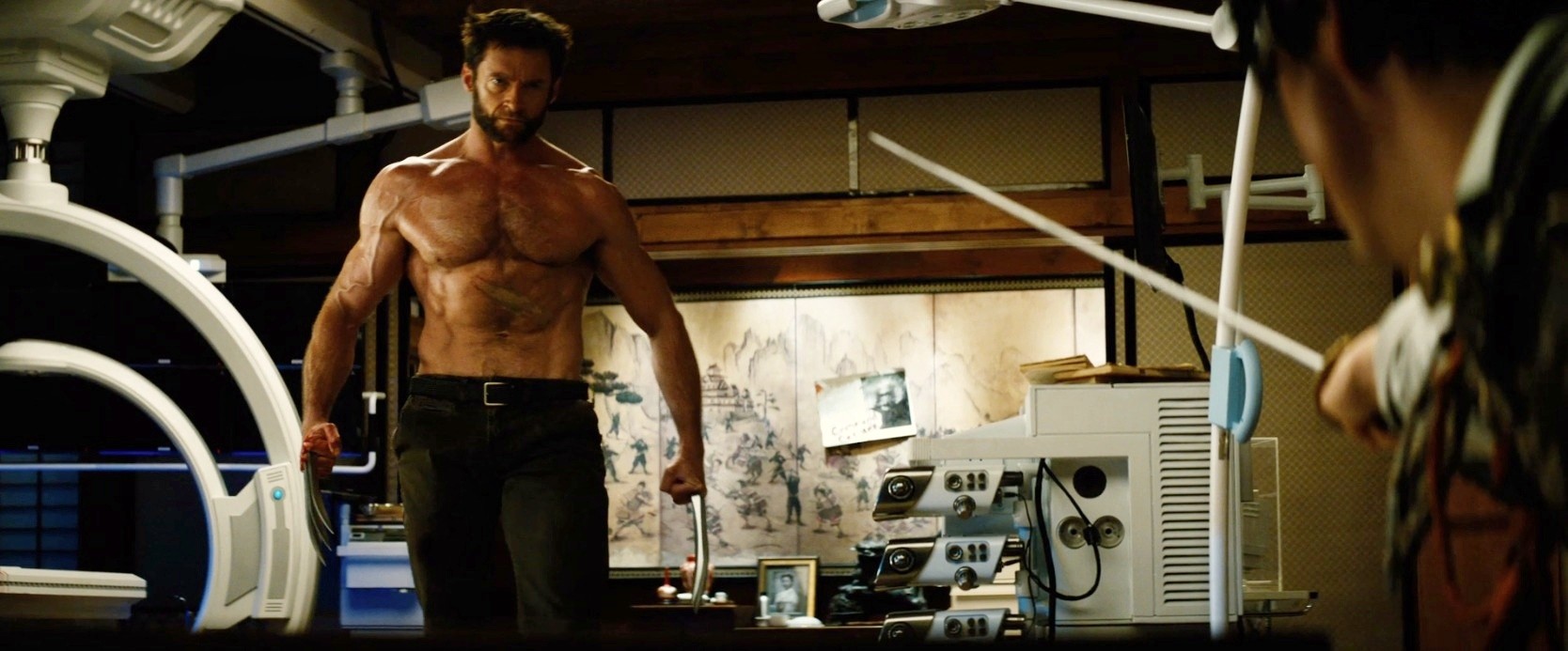
Logan with his claws out ready to fight a nameless, Japanese sword-wielding baddie.

Logan with his claws out ready to fight a nameless, Japanese sword-wielding baddie.

Yet, what is probably most disappointing about The Wolverine is that it feels like an irrelevant sideshow throughout its 126 minutes of running time and adds nothing to Logan’s personal story. 2009’s X-Men Origins: Wolverine might have been (rightly) ridiculed by fans and critics alike, but at least it showed audiences (albeit badly) how Logan acquired metal claws and why he has blanks in his memory.

The only positive aspect of The Wolverine’s storyline is Logan’s trauma. One must praise James Mangold for making Logan keep his psychological problem. But a trauma is a little bit more than half a dozen flashbacks to a deceased loved one. That the film doesn’t explore other angles of Logan’s psychological issues hints that the trauma was the idea of Darren Aranofsky, a specialist in films focussing on psychological problems and the initial director of The Wolverine, and that James Mangold carried on with the idea without having any real clue as to how to develop it.

Contending with this mess of a movie, Hugh Jackman does not do a bad job as the eponymous character. Whilst his performance is nothing special, Jackman at least makes us believe that the invincible Logan is suffering internally. Undoubtedly, Jackman is the film’s saving grace. The leading Japanese male actors do little more than shoot and swing swords (because that’s all Japanese men can do apparently), and the leading female actresses Rilo Fukushima and Tao Okamoto have no chemistry on set with Jackman/Logan and barely have an expression between them. Perhaps this is because Fukushima and Okamoto aren’t even actresses! They’re models (reminding us all of Rosie Huntington-Whiteley’s dreadful performance in Transformers III). Why couldn’t James Mangold find some qualified Japanese or Japanese-American actresses to do the jobs? What possible excuse is there for this?

Logan attempting to fend off the allure/threat of the sexy Viper (Svetlana Khodchenkova), one of several ambiguously-motivated, peripheral villains in the film.

Logan attempting to fend off the allure/threat of the sexy Viper (Svetlana Khodchenkova), one of several ambiguously-motivated, peripheral villains in the film.

One may argue that viewers do not go to see films like The Wolverine (or Transformers II) for the acting, but rather for the action and the special effects. If that is the case, The Wolverine won’t frustrate such people since there is a plethora of decent-looking (if inconsequential) fight scenes that fill the time. But it has all been seen and done before in the previous X-Men movies, making the fighting pointless and tedious.

All-in-all, The Wolverine’s troubles behind the scenes are reflected in the film’s end result. The plot goes to nowhere; the script makes no sense; the cast (with the exception of Hugh Jackman) are wooden; and the special effects and action scenes fail to flatter. Thus, but for the fact that the film is about Wolverine, arguably X-Men’s most well-known superhero, The Wolverine might as well as have been thrown in the bin.

PG’s Tips

Review – Man of Steel (12a) [2013]

Man of Steel - title banner

Star Rating: 2.5/5

Director:

Producer:

  • Christopher Nolan – The Prestige, Inception, The Dark Knight I-III, Transcendence

Cast:

Music Composer:

Zack Snyder, who became a major film director following 300, is renowned for making movies that are pleasing on the eye, but have little by way of substance. Watchmen attempted to be profound without much success, and the less said about Sucker Punch the better. But could the input of the exceptional Christopher Nolan give Snyder the tools to change his ways and make the reboot of Superman, Man of Steel, a masterpiece?

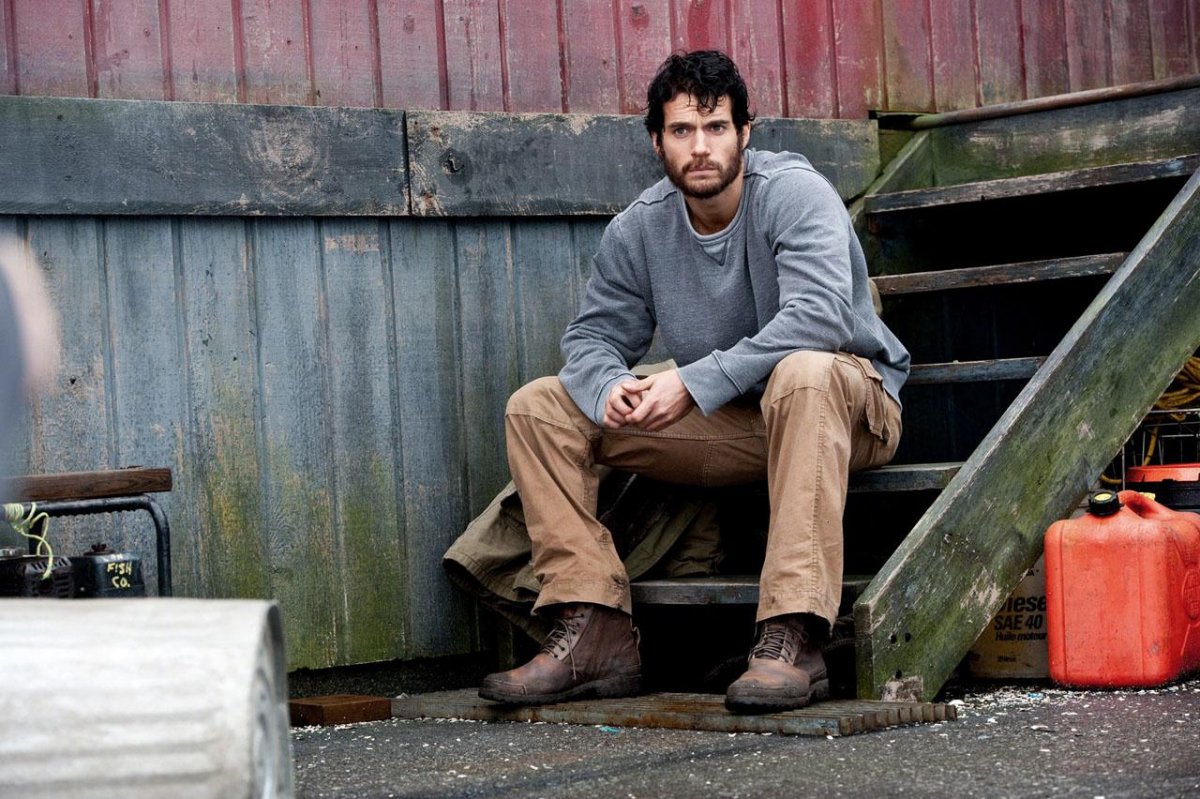
Clarke Kent (Henry Cavill) working as a blue-collar worker, unsure as to who he really is or where his life is taking him.

Clarke Kent (Henry Cavill) working as a blue-collar worker, unsure as to who he really is or where his life is taking him.

  Man of Steel begins with Jor’El (Russell Crowe) sending his baby son, Kal-El to Earth before Krypton implodes. On Earth, Kal-El grows up as Clarke Kent (Henry Cavill) in America, aware of his strengths, yet uncertain as to who he is.

However, when General Zod (Michael Shannon) threatens Earth with destruction unless they hand over the ‘alien among the people,’ Clarke learns of his past and that he must confront his father-on-Krypton’s enemy.

Man of Steel begins in an interesting way by briefly showing audiences the politics on Krypton and why the planet foundered. It is accompanied by some stunning special effects to give viewers a true feel for the nature of the planet itself, including how babies are born, which bears a striking resemblance to how people are formed in Aldous Huxley’s A Brave New World.

Following the prologue of Krypton’s self-destruction, the film goes back and forth, illustrating Clarke Kent’s confusion throughout his life, in the wake of him becoming Superman. The most interesting aspect of this development is when Clarke’s father-on-Earth, Jonathan Kent (Kevin Costner), asks/advises Clarke on the sort of man he wants to grow up to be. This attempts to give Clarke a third dimension, as well as some much needed depth to Man of Steel.

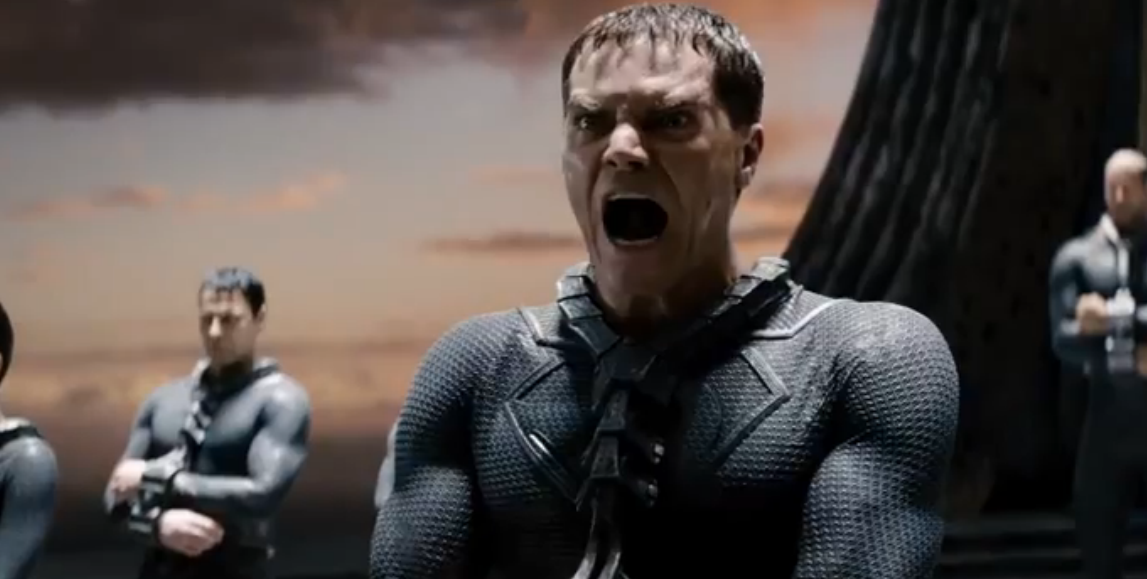
General Zod (Michael Shannon) declaring his strategy on Krypton.

General Zod (Michael Shannon) declaring his strategy on Krypton.

Alas, the movie otherwise lacks complexity and has the feel of Snyder’s Watchmen and, particular, Sucker Punch. Worse, as Snyder makes his eponymous character to be a God-like superhero, there is no sense of peril when watching Superman fight. Consequently, the half-dozen Matrix-style action scenes go on for far too long they become repetitive and boring quickly.

Length, in general, is a problem for Man of Steel. At 143 minutes, it is tediously long, especially as the plot only really starts when General Zod threatens Earth about an hour and fifteen minutes into the movie.

Furthermore, Man of Steel is not assisted by the characters. Although they’re all derived from the comic books, none of them are particularly interesting. That is not to say that the actors do a bad job with what they’re given, but the material does not allow them to excel. Henry Cavill fits the build and is adequate as Superman. But Superman lacks the charisma of Tony Stark/Iron Man or the multi-faceted personality of Bruce Wayne that Nolan superbly exploited in his Dark Knight Trilogy. Superman, in short, is just a traditional (ordinary) hero. The good, moral hero has been done to death, and viewers are right to demand more from filmmakers on this matter, even if the character is strictly in accordance with the comic books.

Similarly, Michael Shannon does a decent job as General Zod. Yet, Zod is more or less an old school, stereotypical villain, which is not interesting anymore. Kevin Costner and Russell Crowe playing as Clarke’s two fathers have the simplest roles in the film, but they are the most interesting characters by a distance (although Crowe’s part for much of the storyline is a deus ex machina, which is very frustrating).

Superman, flying in to save the city and the people from General Zod.

Superman, flying in to save the city and the people from General Zod.

Unusually, however, Amy Adams does not do herself justice as the journalist, Lois Lane. Whenever Lois speaks about Clarke’s supernatural/alien powers, Adams does not look like she believes in what she is saying, even though she attempts sincerity. (Then again, it is hard to criticise Adams on this matter, since the more serious one tries to be when talking about supernatural forces or aliens, the more laughable it appears.) And, strangely, the music by Hans Zimmer sounds average and unmemorable, which is most unusual for him, and that probably sums up Man of Steel.

Over-all, Man of Steel has a few stimulating ideas and some fantastic CGI that is worth seeing alone. However, the ideas are under-employed, and much of the film, including the major fight scenes are monotonous and boring. Thus, Man of Steel lacks what made Christopher Nolan’s Batman movies so engrossing, and it disappointingly bears the hallmarks of Zack Snyder’s films: all gloss and no substance.

PG’s Tips
Review – Star Trek II: Into Darkness 3D (12a) [2013]

Star Trek 2 - title banner

Star Rating: 3/5

Director:

  • JJ Abrams – Lost, Star Trek I-III, Star Wars: Episode VII

Producer:

  • Damon Lindeloff – Lost, Prometheus, The Leftovers

Cast:

  • Chris Pine – Unstoppable, This Means War, Jack Ryan
  • Zachary Quinto – Heroes, Margin Call, The Invitation
  • Zoe Saldana – Avatar I & II, Colombiana, Blood Ties
  • Karl Urban – The Lord of the Rings II & III, The Bourne Supremacy, Riddick
  • Simon Pegg – Paul, The World’s End, Mission: Impossible III-IV & V
  • Alice Eve – Entourage, Men In Black III, Cold Comes The Night
  • Benedict Cumberbatch – Tinker Tailor Soldier Spy, Sherlock, The Hobbit II
  • Bruce Greenwood – Barney’s Version, Super 8, Devil’s Knot
  • Peter Weller – The Sin Eater, 24, Dragon Eyes

Music Composer:

One of the most striking and farcical features of action movies is that there is much shooting, running and chasing, in one form or another, with key aspects of the plots taking place under such circumstances. The Die Hard, Mission: Impossible, and Fast and the Furious franchises all have this odd and surreal symptom. JJ Abrams and Damon Lindeloff, despite creating an enjoyable and watchable film, have taken this symptom to its zenith in Star Trek II: Into Darkness.

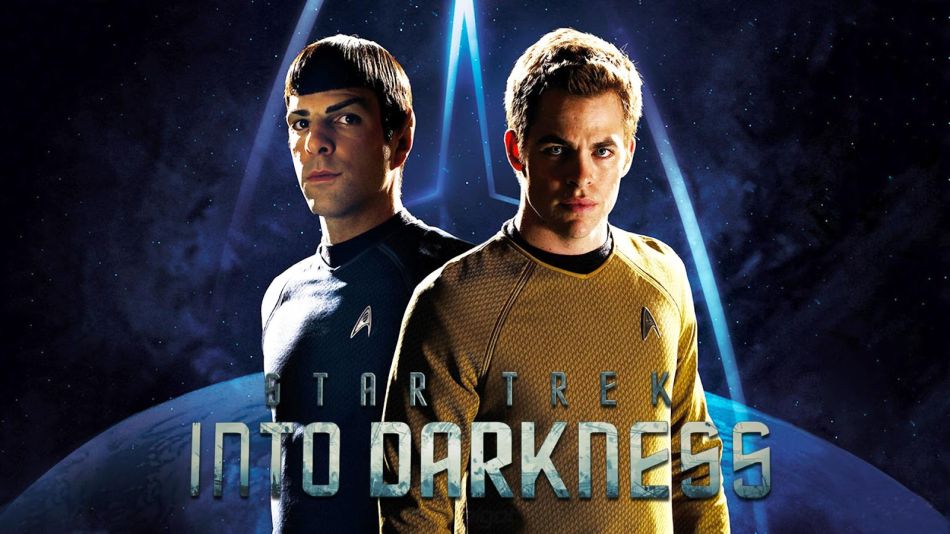
Captain James Kirk (Chris Pine) mulling over whether it would be a good idea to take Dr. Carol Marcus (Alice Eve) on board.

Captain James Kirk (Chris Pine) mulling over whether it would be a good idea to take Dr. Carol Marcus (Alice Eve) on board.

Star Trek II begins with the galaxy under threat from John Harrison (Benedict Cumberbatch), a former Starfleet agent. Captain James T. Kirk (Chris Pine) is ordered by Admiral Alexander Marcus (Peter Weller) to lead the USS Enterprise ship to Kronos and kill Harrison. Kirk takes with him Commander Spock (Zachary Quinto), Lieutenant Uhura (Zoe Saldana), Dr. Leonard ‘Bones’ McCoy (Karl Urban), Montgomery ‘Scotty’ Scott (Simon Pegg), and Dr. Carol Marcus (Alice Eve) for assistance.

In essence, that is the plot for Star Trek II: Into Darkness and it makes for an easy and entertaining 132 minutes, irrespective of whether one is a Star Trek fan or not, in the same way as the 2009 Star Trek film did. Moreover, the special effects in Into Darkness are terrific, and the 3D works a treat as well, especially in IMAX, which was designed for such films.

Commander Spock (Zachary Quinto) talking with his girlfriend, Uhura (Zoe Saldana).

Commander Spock (Zachary Quinto) talking with his girlfriend, Uhura (Zoe Saldana).

While Into Darkness has much in common with the 2009 Star Trek movie, the sequel has many more contrived aspects to its storyline than the prequel. One can almost draw the plot arch as the film goes along. Fans, though, are more likely to forgive such plot problems than non-fans. That is, if fans and non-fans have a chance to think about the issues with the storyline while watching the film. JJ Abrams and Damon Lindeloff have made every plot detail and element in Into Darkness be done either on the run or in the midst of a shoot-out. It is as if they knew that the movie’s storyline makes as much sense as Lost did by the end. Abrams (with his trademark lens-flare) and Lindeloff constantly distract viewers from being able to realise the plot’s deficiencies, here, in the same way that shoot-outs, explosions, chase scenes and stunts divert audiences’ attentions from the flaws in the various Die Hard, Mission: Impossible, and Fast and the Furious movies.

Provided one does not focus too much on the storyline of Into Darkness, one can enjoy the contrast in personalities between the impulsive Captain Kirk and the cold, rational Commander Spock, and both Chris Pine and Zachary Quinto play their respective roles very decently. There is also more humour than expected between the two of them, which is always welcome. The same can be said for Karl Urban’s performance as Bones and Simon Pegg’s as Scotty, as they play their roles well without being anything special.

Alas, the same cannot be said for Zoe Saldana as Uhura this time, or Alice Eve as Carol Marcus. Uhura’s role in Into Darkness, unlike in the prequel, is too peripheral and meaningless to be remembered, and Saldana does not do herself justice when on screen; and sad to say, the only thing of note that Eve does as Carol Marcus is to stand in front of Kirk in a bikini. (And the point of that scene was…?)

The villain, John Harrison (Benedict Cumberbatch), fighting against his adversaries who are out to kill him.

The villain, John Harrison (Benedict Cumberbatch), fighting against his adversaries who are out to kill him.

Yet, the real star of the film is Benedict Cumberbatch. His acting, as the villain, is head and shoulders above the rest of the cast. When Cumberbatch speaks, it does not matter what he says or how ludicrous it may sound because it is stated with authority to the extent that implausible matters are believable. Regardless of whether one is a Star Trek fan or not, one should almost watch Into Darkness for Cumberbatch’s performance alone.

Over-all, Star Trek II: Into Darkness is an entertaining film for Star Trek fans and non-fans alike. The special effects are excellent, the relationship between Kirk and Spock is funnier than ever, and Benedict Cumberbatch’s portrayal of the villain is outstanding. Indeed, one does not even need to get over the movie’s virtually non-existent storyline and the ridiculous way in which everything is done at a hundred miles an hour to make up for the plot’s numerous shortcomings to fully appreciate the movie for what it is.

PG’s Tips

Review – Iron Man III (12a) [2013]

Iron Man 3 - title banner

Star Rating 2.5/5

Director:

  • Shane Black – Lethal Weapon I-IV, Kiss Kiss Bang Bang, Doc Savage

Cast:

Music Composer:

  • Brian Tyler – Battle: Los Angeles, The Expendables I & II, Now You See Me

In The Avengers Assemble, Tony Stark (Robert Downey Jr.) showed his true colours by stating that he is a “genius, billionaire, playboy, philanthropist.” Indeed, one who has read the Marvel comic-books, or seen Iron Man I & II and The Avengers Assemble, or all of them, knows that Stark thinks highly of himself. But from the trailer of Iron Man III, it appeared that one would see the vulnerable side of Tony Stark for a change. Is this the case?

Tony Stark (Robert Downey Jr.) up at night, working on his numerous projects which he occupies himself with, since he cannot sleep.

Tony Stark (Robert Downey Jr.) up at night, working on his numerous projects which he occupies himself with, since he cannot sleep.

Iron Man III begins with a flashback to New Year’s Eve 1999/2000 when Tony Stark, with scientists Maya (Rebecca Hall) and Aldrich Killian (Guy Pearce), rejects an offer to invest in Extremis, an organisation that deals with experimental treatment to regenerate human limbs that have been severed.

Thirteen/fourteen years later, Stark is having nightmares about the alien invasion that occurred the previous year in The Avengers Assemble. He is suffering from insomnia and anxiety, whilst trying to love Pepper Potts (Gwyneth Paltrow). Yet, the Mandarin (Ben Kingsley) is wreaking havoc upon America with a string of terrorist attacks, using advanced weapons. Soon, he destroys Stark’s house, many of his Iron Man suits, and effectively sends Stark into the wilderness. Stark must find a way back and stop the Mandarin from unleashing more chaos, or else America will fall.

Iron Man III revolves round Tony Stark, and his quick, funny/brash responses. On the periphery, there is a plot (of some sort), some Transformers-style action scenes, plenty of explosions and fire-power, as well as sophisticated special effects in abundance. The problem is that audiences have seen all of these already, and it is starting to get very tedious.

At 133-minutes, Iron Man III is a long film that disappointingly doesn’t add anything new to the series. Worse, after 30 minutes the plausibility of the storyline ceases to exist, and it lazily goes from one plot contrivance to the next. If that doesn’t illustrate Shane Black’s contempt for the audience, the last scene renders all but the first 30 minutes of the movie as a waste of time. Couldn’t Black have just cut out all of the excess baggage and got straight to the chase? (Or, alternatively, forged a plot that actually works?)

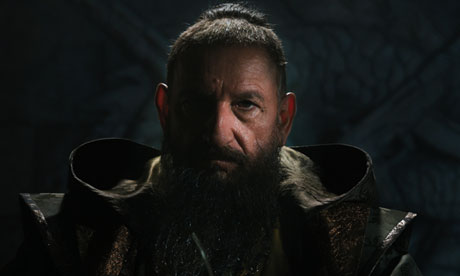
The Mandarin (Ben Kingsley), looking and preaching much like Osama Bin Laden, in a broadcast threatening to destory America if the country does not change its ways.

The Mandarin (Ben Kingsley), looking and preaching much like Osama Bin Laden, in a broadcast threatening to destory America if the country does not change its ways.

Iron Man III also suggests that the franchise is starting to suffer from the issues that are synonymous with other series, like Pirates of the Caribbean, Die Hard, and Fast and the Furious: notably, going on too long, laziness, repetitiveness, and going back in time to make (semi-)viable storylines. The very fact that Iron Man III starts by going back in time should set alarm bells ringing in one’s mind. If the franchise has not bothered until now to mention important things that the key character has done, why should viewers believe that they are significant?

With the exceptions of young Ty Simpkins, who is cute and amusing, and Ben Kingsley, who is brilliant as the terrifying (Osama Bin Laden-like) Mandarin, the rest of the cast could not be more two-dimensional if they tried. Robert Downey Jr. plays the same energetic, narcissistic character (himself) as he did in Iron Man I & II (not to mention in The Avengers Assemble, Sherlock Holmes I & II, and Due Date). Yes, Stark is smart, sharp and impertinent, and Downey Jr. does this well (as we know he can). But, in Iron Man III, Downey Jr. was meant to display his character suffering from insomnia and panic attacks. One is hard-pressed to find an instance of Stark genuinely looking like he was suffering from such problems, which is poor on Downey Jr.’s behalf. It is a shame, too, because one might have seen Downey Jr. actually challenging himself for a change.

Gwyneth Paltrow, playing as Stark’s secretary, is little more than a one-dimensional, pointless blonde doll. Despite loving a man who loves himself more than he loves her (or anyone else for that matter), it is difficult to empathise with Pepper as she is so bland.

Stark in a broken Iron Man suit and in the winter wilderness of Tennessee. How will he ever get back if he is to save the country he has sworn to protect?

Stark in a broken Iron Man suit and in the winter wilderness of Tennessee. How will he ever get back if he is to save the country he has sworn to protect?

Rebecca Hall’s performance suffers from similar problems as Maya’s character is not especially interesting, nor well defined, and her importance to the plot is dubious at best. Don Cheadle plays decently enough in his simple role as Stark’s (patient) understudy. Guy Pearce once again plays another egotistical, two-dimensional individual (he’s making a habit of this following his roles in The Count of Monte Cristo, The King’s Speech and Justice). At least, though, the cosmetic department did a fantastic job on him. In the first scene, Pearce is unrecognisable, which is a great contrast to Stark failing to even have bags under his eyes when (supposedly) suffering from major sleep deprivation. Would it have been so hard to have put eye shadow under Downey Jr.’s eyes?

Over-all, Iron Man III is much the same as the previous two Iron Man films. It follows Tony Stark being Tony Stark; Stark flies and fights in his Iron Man costume; and there are special effects galore that one’s seen before. The movie tries to show us some of Stark’s weaknesses, but fails miserably at this and the attempts at doing so are feeble. Moreover, the laziness of the entire production suggests that the franchise is drained of ideas and lost for care.

PG’s Tips
Review – The Gatekeepers (15) [2013]

The Gstekeepers - title banner2

Star Rating: 4/5

Director:

  • Dror Merah – Sharon

Cast:

  • Avraham Shalom Ben-Dor
  • Yaacov Peri
  • Carmi Gillon
  • Ami Ayalon
  • Avi Dichter
  • Yuval Diskin

Music Composer:

  • Regis Baillet
  • Jerome Chassagnard

There is great interest in the media regarding the Israeli-Palestinian conflict. Much of this interest focusses on the social and political aspect of the conflict. However, little regard is given to the security angle. Dror Merah’s Oscar-nominated The Gatekeepers explores this particular viewpoint superbly with openness and maturity.

Avraham Shalom, the most morally dubious of the six men, explaining his view on the 300 bus hijacking in 1984.

Avraham Shalom, the most morally dubious of the six men, explaining his view on the 300 bus hijacking in 1984.

The Gatekeepers is an Israeli documentary about the Shin Bet, the Israeli domestic intelligence-gathering security agency. Merah explains the role of the Shin Bet by interviewing six of the most recent heads of the organisation, including Avraham Shalom Ben-Dor (1981-86), Yaacov Peri (1988-94), Carmi Gillon (1994-96), Ami Ayalon (1996-2000), Avi Dichter (2000-05) and Yuval Diskin (2005-11). The documentary explores seven themes and analyses some contentious incidents and events between the 1980s and the 2000s, and how the Shin Bet dealt with them through a mixture of interviews and digital-reconstructions.

The Gatekeepers is an intellectually heavy film that deals with numerous controversial events. Merah does not shy away from asking his interviewees difficult questions, and the answers are unexpectedly candid on a range of incidents and events, such as what happened to the terrorists who hijacked the 300 bus in 1984; the mistakes the Shin Bet have made regarding targeted assassinations; the organisation’s lack of awareness vis-à-vis Jewish terrorism in the run-up to Prime Minister Yitzchak Rabin’s assassination in November 1995; and the lack of foresight regarding the Second Intifada between 2000-04, among many other issues.

Ami Ayalon, the most passionate of the six men, giving a political opinion on Israel's current security situation.

Ami Ayalon, the most passionate of the six men, giving a political opinion on Israel’s current security situation.

That the interviewees are who they are entails that one takes their opinions seriously. Much of what they say is deep, thought-provoking and utterly relevant to the Israeli-Palestinian conflict today. For them, invariably, moral and ethical conundrums were not merely academic debates, but life and death decisions that had to be made in minutes if they were lucky, but usually in seconds.

Having to make such decisions (of varying legality) on a regular basis, it would be easy to believe that these six men are so desensitised to taking life and abusing the law that they are now socio-psychopaths and virtually inhuman. But what is astonishing is that all six men have a burdening conscience. They are all extremely conscientious of the powers that they once held in the Shin Bet, and that their actions (or omissions) cost and saved lives.

However, while the former heads of Shin Bet give a political view or two (after-all, it would be impossible for them not to), the political context of their work is mostly absent from The Gatekeepers. This is understandable because to explore the politics of the Arab-Israeli conflict in any kind of depth would take much longer than the documentary’s 101 minutes. Yet, for anyone who does not know anything about Israel, the Israeli-Palestinian crisis, and the wider Middle East, The Gatekeepers is likely to be hard going, since he/she would have little idea as to why Israel invaded southern Lebanon in 1982, or why the Oslo Accords were signed in 1994, or what led to the outbreak of the Second Intifada in 2000, among other matters.

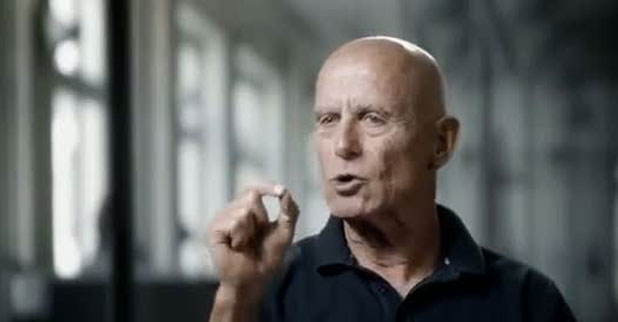
Avi Dichter, the most recent head of Shin Bet to be interviewed.

Avi Dichter, the most recent head of Shin Bet to be interviewed.

Nevertheless, regardless of whether one does or doesn’t know much about the Israeli-Palestinian conflict, one is unlikely to come out of the film thinking highly of either the Israelis or the Palestinians. The six former heads of the Shin Bet spare no-one from culpability, whether it be the politicians or the peoples.

Over-all, The Gatekeepers is a stimulating, if morbid, portrayal of what the Shin Bet has done and the problems that the organisation continues to face on a regular basis. The six former heads of the organisation are remarkably frank and honest about their deeds, and demonstrate how responsible they feel for their actions and omissions, as well as for the events that happened under their watch. But one thing the six men do not is believe that the Shin Bet’s efforts to safeguard the Jewish state from threats of violence and terrorism will be lessening any time soon.

PG’s Tips
Review – Trance (15) [2013]

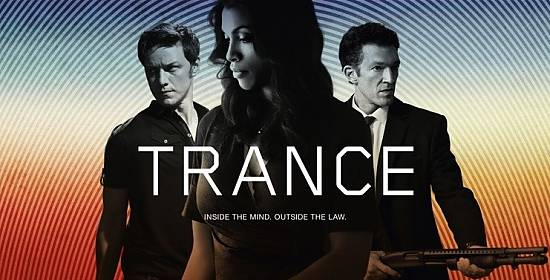
Trance - title banner

Star Rating: 3.5/5

Director:

Cast:

Music Composer:

  • Rick Smith – Breaking and Entering

Psychological thrillers, by their nature, are puzzling and mess with one’s mind. Inception, Shutter Island and Black Swan all did this with varying levels of charm, appeal and success. Danny Boyle’s impressive and sexy Trance adds something new to this testing sub-genre.

Simon (James McAvoy), unconscious after being bashed on the head by a batton. As a result, he cannot remember what he did with the painting.

Simon (James McAvoy), unconscious after being bashed on the head by a batton. As a result, he cannot remember what he did with the painting.

  Trance centres round Simon (James McAvoy), who works for a London-based company that auctions expensive paintings. The company has a security system in place to prevent the paintings from getting stolen, and Simon is part of the system.

However, when Franck (Vincent Cassel) leads a gang to steal a precious painting during an auction, the painting disappears. Simon, the last person to have handled the painting before its disappearance, was smacked on the head while he removed the painting. Since then, he has developed amnesia and so he can’t remember where he put the painting. In a desperate bid to find the painting, Franck decides that Simon must go to Elizabeth Lamb (Rosario Dawson), a hypnotherapist. Elizabeth believes that by hypnotising Simon, she can get him to recollect the location of the painting.

Trance’s plot is clever and innovative. The film is fast-paced from the off, intense, violent and engaging. It is complex and confusing too, since it constantly does back and forth in time, unravelling what happened to the painting as well as explaining the various (and sinister) motivations of the characters. Moreover, and similar to Black Swan, one is never sure in Trance when one is watching reality or a dream (or a memory or a possible memory). All of this keeps viewers firmly on their toes because no-one can be sure as to where the film is going.

Simon undergoing hypnotherapy with Dr. Elizabeth Lamb (Rosario Dawson) in an attempt to regain his memory regarding the painting.

Simon undergoing hypnotherapy with Dr. Elizabeth Lamb (Rosario Dawson) in an attempt to regain his memory regarding the painting.

Although, it is dubious as to whether Trance’s storyline actually makes sense. Again, this is not novel to the sub-genre: it is uncertain whether the plots for The Machinist or Shutter Island added up (but no-one would argue that those were atrocities to cinema, like Sucker Punch or The Lady In the Water); while Fight Club and Inception demanded that one see them twice (at least) before being able to appreciate (or understand) those movies, and few had reason to complain about those excellent films either. Perhaps, the latter is true for Trance. However, there are some quite significant plot issues that could undermine the film and its realism (if one believes in the effectiveness of hypnotism/hypnotherapy, of course), but these are not going to be discussed here as they would spoil the thrill for those who haven’t seen the movie.

The force of Trance’s storyline is matched by the three main (and more or less only) cast members; James McAvoy in particular. Far from his relaxed demeanour as Charles Xavier/Professor X in X-Men: First-Class, his performance as Simon resembles that of his (brilliant but crazed) stage performance as MacBeth. Nothing illustrates this similitude more than the intensity in Simon’s bombardier blue eyes, as the hypnotherapy, combined with his own problems take effect on him.

Similarly, Vincent Cassel and Rosario Dawson play well, but not with the same power as McAvoy. As Franck, Cassel does a decent job as a shady, amoral character. Yet, it is hard to classify him as the villain here since there is no-one who is particularly good in Trance (some people are just much worse than others). But if one does view Franck as the main antagonist, then one may not feel entirely satisfied with Cassel’s performance because he does not possess the look or the flair to make himself a dangerous villain on screen, unlike the cunning Liam Neeson in Batman Begins/The Dark Knight Rises, or the terrifying Michal Zurawski in In Darkness, or the flamboyant Javier Bardem in Skyfall.

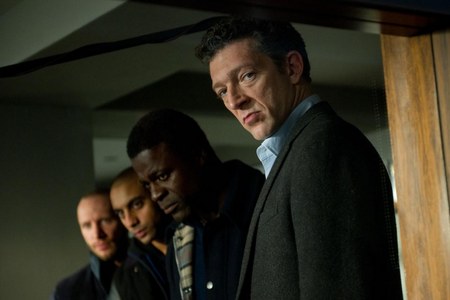
Franck (Vincent Cassel), furtherst right, keeping a worryingly close eye on Simon's treatement, with his group of thugs alongside him to illustrate the consequences for Simon if he fails to shake off his amnesia.

Franck (Vincent Cassel), furtherst right, keeping a worryingly close eye on Simon’s treatment, with his group of thugs at his side to illustrate the consequences for Simon if he fails to shake off his amnesia.

While as Elizabeth the hypnotherapist, the stunning Dawson wonderfully holds her patients (as well as the audience) under her spell, as if ravishingly embodying the psychological thrill of the movie and the sub-genre in one attempt.

Over-all, Trance is a mind-bending and gripping film that is a worthy addition to the sub-genre of psychological thrillers. The movie has its flaws, but to a limited extent these should be disregarded because Boyle’s film is original, appealing and stylish. Furthermore, like all noteworthy psychological thrillers, Trance takes one out of one’s comfort zone and, to its credit, keeps one in thought long after the film has ended.

PG’s Tips

Review – Side Effects (15) [2013]

Side Effects - title banner

Star Rating: 4/5

Director:

  • Steven Soderbergh – Traffic, Contagion, Behind the Candelabra

Cast:

  • Rooney Mara – A Nightmare On Elm Street, The Social Network, Her
  • Channing Tatum – The Eagle,White House Down21 & 22 Jump Street
  • Jude Law – The Imaginarium of Dr. Parnassus, Contagion, Dom Hemingway
  • Catherine Zeta-Jones – Traffic, Playing For Keeps, Red II
  • Vinessa Shaw – The Hills Have Eyes, 3:10 to Yuma, Siren
  • James Martinez – Gravity, The Sessions, An Artist’s Emblem

Music Composer:

Before taking medication, one has an idea that for all the positives of the medicine there is likely to be negative implications. These are better known as side effects, and doctors should always make their patients aware of them for reasons of liability. Side Effects, Steven Soderbergh’s second medical thriller in the space of eighteen months, soundly illustrates some of medicines’ many snags as well as the trouble doctors could find themselves in if they don’t make their patients aware of them.

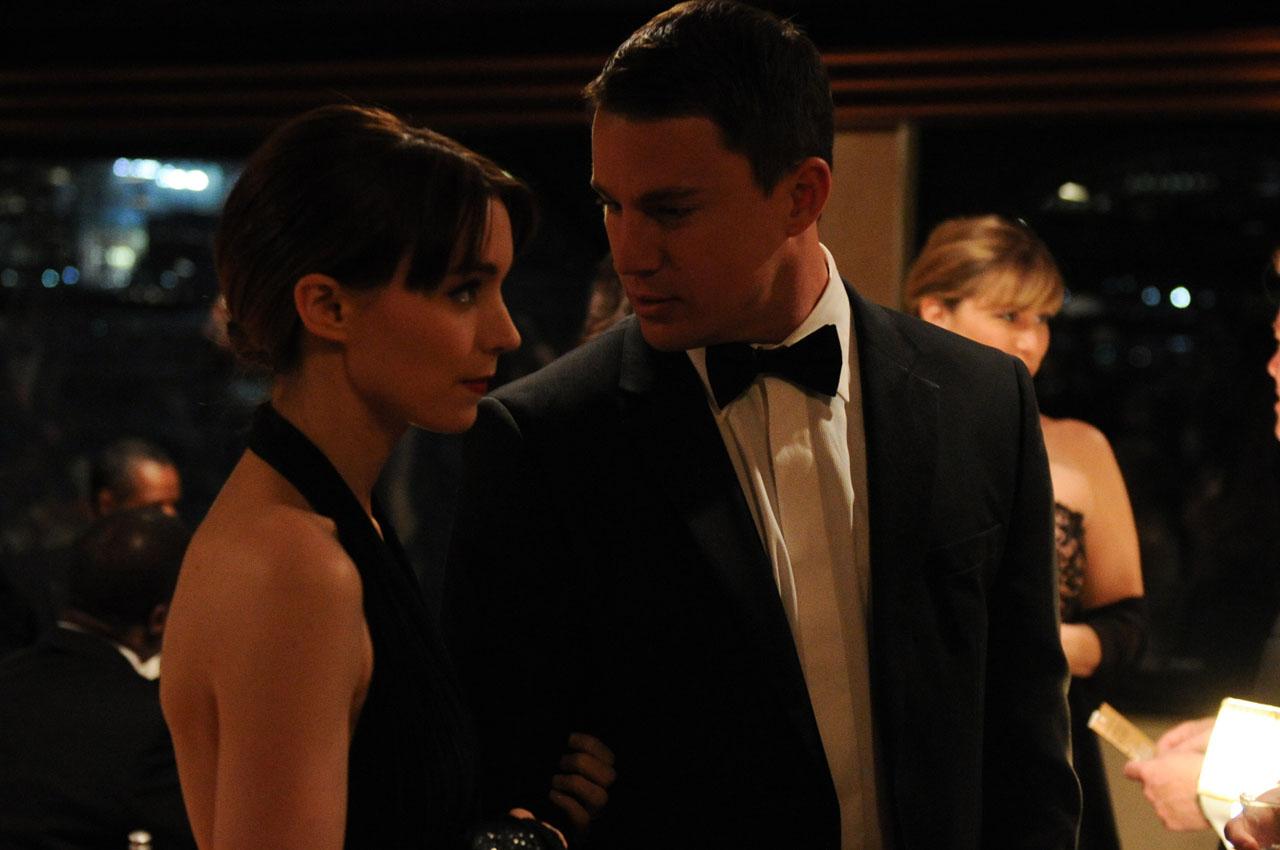
Martin (Channing Tatum) and Emily (Rooney Mara) looking like an aesthetically perfect couple, dressed smartly at a friend's party.

Martin (Channing Tatum) and Emily (Rooney Mara) looking like an aesthetically perfect couple, dressed smartly at a friend’s party.

Side Effects more or less begins with Martin (Channing Tatum) coming out of prison to be reunited with his wife, Emily (Rooney Mara). Emily, however, seemingly suffers from depression and other self-esteem issues, and appears unable to cope with life. So, after attempting suicide, she meets Dr. John Banks (Jude Law), who prescribes her a series of drugs to make her feel better, after consulting with Dr. Victoria Siebert (Catherine Zeta-Jones), Emily’s previous doctor.

The drugs work initially for Emily. But then the side effects kick in. And with consequences for Emily, Martin and Dr. Banks.

Side Effects is a slow-paced medical thriller that is mysterious and gripping for its apt 106 minute running time. Although the plot has several contrived moments, all of these are explained reasonably well, so the film does not feel like a patch-work for lazy script-writing. What’s more, the film has a generally unsettling ambience and leads to an unexpected conclusion that is most welcome.

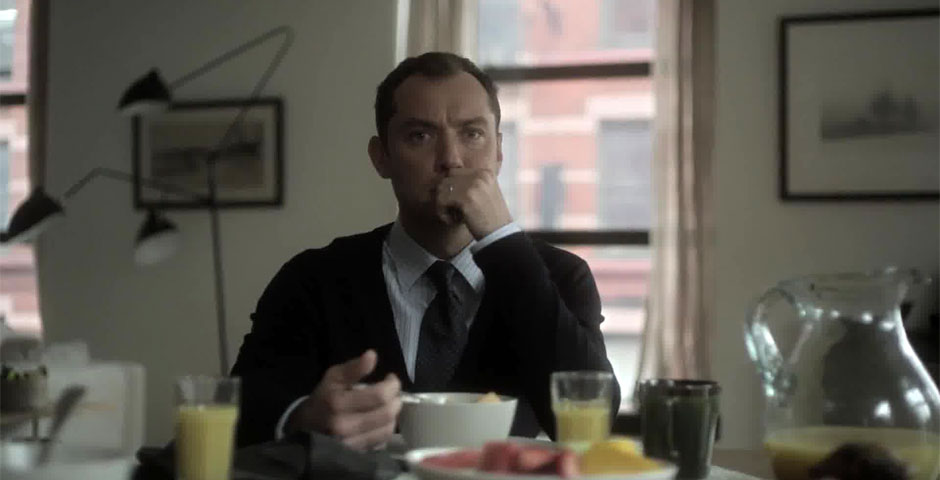
Dr. John Banks (Jude Law) chewing his breakfast, wondering how his world has turned upside down due to Emily's reaction to the drugs he prescribed her.

Dr. John Banks (Jude Law) chewing his breakfast, wondering how his world has turned upside down due to Emily’s reaction to the drugs he prescribed her.

In part, the disquieting atmosphere of Side Effects is due to the strange, yet thought-provoking music that is virtually on tape-loop during the movie. The other reason is due to good dialogue and acting, not least from Rooney Mara in the lead role. Invariably, her character seems to be permanently on a medically-prescribed drug or suffering from a drug’s drawback; in particular, the latter, and Mara plays it all troublingly well.

Surprisingly, Jude Law, as the doctor in danger of losing his career, performs decently too. He might show little compassion toward his wife, Deirdre (Vinessa Shaw), and son, but Law is certainly considerably better here than he is in (the mind-numbing) The Holiday and in Contagion, wherein he adopts a laughable Australian accent. (As if anyone would believe that Jude Law were Australian!)

The beautilful and manipulative, Dr. Victoria Siebert (Catherine Zeta-Jones), unaware that someone is looking at her through the window.

The beautilful and manipulative, Dr. Victoria Siebert (Catherine Zeta-Jones), unaware that someone is looking at her through the window.

Channing Tatum, in his comfort-zone as the handsome and charming husband, gives a standard demonstration of his acting skills, while Catherine Zeta-Jones, as arguably the villain of the movie, is just as cunning and classily appealing as she was a decade ago in Intolerable Cruelty.

Thus, Side Effects is an enjoyable film that is likely to take viewers by surprise. Granted, it has plot conveniences, yet one is likely to forgive the movie for these as the storyline is intelligent and keeps audiences in suspense. Furthermore, one is likely to be more wary of the downside of certain medications after watching the film; and doctors, if they did not already, are likely to become paranoid about being sued by their patients for prescribing them medications with foreseeable and unforeseeable side effects.

PG’s Tips