Tag Archives: film

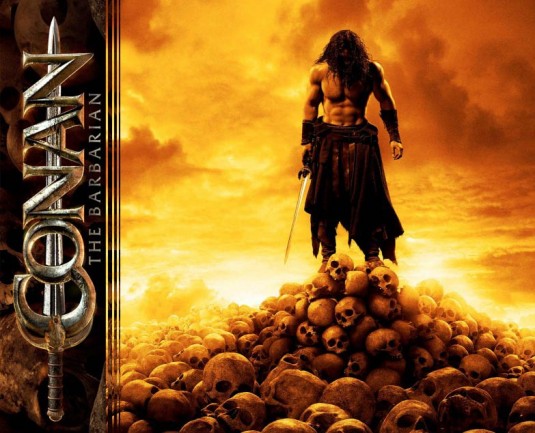
Review – Conan the Barbarian (15) [2011]

Star Rating: 3/5

Zack Snyder’s 300 was the ultimate guy’s film. The movie, essentially, was a two-hour blood bath, as 300 Spartans defended their ancient homeland against a million-strong Persian army during the Battle of Thermopylae (approximately 494 BC). Although devoid of the (inaccurate) historical elements, Conan the Barbarian should be put into the same category of film.
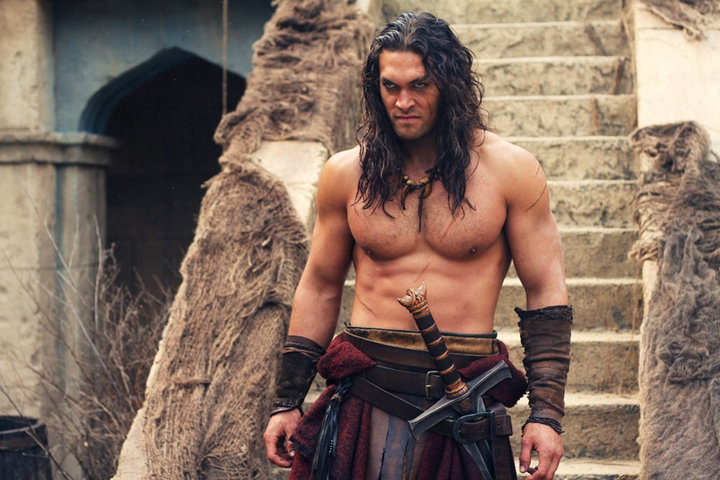
Conan, a beast of a man, relaxed and waiting for his opponent to make the first move, before he slaughtering him.

Conan the Barbarian is loosely based on the novel by Robert E. Howard, and is a remake of the 1982 film starring Arnold Schwarzenegger. Set in an alternate world called Hyborea (which looks much like Earth in medieval times), the movie centres round Conan, the eponymous character. As a young boy, Conan (Leo Howard – G.I. Joe: Rise of the Cobra, Shorts, Logan) is trained in the ways of the Samarian warrior cult by his father, Corin (Ron Perlman – Tangled, Season of the Witch, The Riot).

But not long into the movie, Corin is killed before his young son by Khalar Zym (Stephen Lang – Public Enemies, Avatar, Officer Down), a megalomaniac determined upon conquering all of Hyborea and reviving his dead wife. Khalar Zym will achieve these feats by putting back together all of the lost pieces of the Mask of Acheron. In time, Khalar also realises that he needs to sacrifice the last of the ‘pure blood’ of the sorcerers of Acheron, Tamara (Rachel Nichols – G.I. Joe: Rise of the Cobra, Star Trek, The Loop), to unleash the mask’s powers in order to take over the world. The balance of Hyborea rests in the sword-wielding abilities of the fully grown, muscular Conan (Jason Mamoa – Baywatch, Game of Thrones, Batman v Superman: Dawn of Justice), who is hell-bent on punishing those who killed his father.

Despite the strange names, the plot for Conan the Barbarian is not difficult to follow. Its rushed introduction has a Lord of the Rings-like feel to it, while the breaking up of the mask reminds one of Voldemort making Horcruxes of his soul in the Harry Potter series.

The villain, Khalar Zym, played by Stephen Lang, the trigger-happy military commander in Avatar.

Aside from this, the movie flows smoothly, and at just under two hours it is the right length for this type of film. Viewers are unlikely to become bored; after-all, a scene rarely goes by without someone (or a handful of people) being slashed to death by the merciless Conan. Just like in 300, there is no shortage of blood spilt by the heroes or villains. (And just like in 300, it beggars belief that in combat the protagonists do not wear armour and live to tell the tale.)

There is little sophistication in Conan the Barbarian’s storyline. Sometimes the simplicity is even comical. (Since when was child birth as trouble-free as sticking a knife into a womb and pulling out a baby, whilst looking away?) Similarly, the director, Marcus Nispel (The Texas Chainsaw Massacre, Friday the 13th, Pacemaker), does not attempt to make the characters anything but two-dimensional (which is not such a bad thing considering the nature of the film). As a result, the acting is far from memorable, and the dialogue is as risible as it was in the virtual disaster movie Season of the Witch.

The acting and the dialogue, though, were never going to be the most noteworthy aspects of Conan the Barbarian. Rather, the movie’s success was also going to lie in the action scenes and the special effects. In both respects, the film does not let the audience down. All the actors look like they were well drilled in swordplay, while imagination and care were certainly put into the CGI.

Marique (Rose McGowan), the witch-daughter of Khalar Zym, who helps her father find the last of the ‘pure blood’ of the sorcerors of Acheron.

Additionally, the music score is not terrible either. Even if it sounds much like a combined take-off from The Lord of the Rings and Pirates of the Caribbean, the music aids many of the scenes. In some instances, it gives the film the complexity that the acting, dialogue and plot sorely lack.

On the whole, Conan the Barbarian is as straightforward as its title. Just like with 300, Conan the Barbarian is very much a guy’s film. For it has a hulk of a main character, plenty of action, blood, and well-designed CGI. Yes, it has many noticeable and laughable defects, but viewers are unlikely to be bothered by them and will not go home disappointed.

PG’s Tips
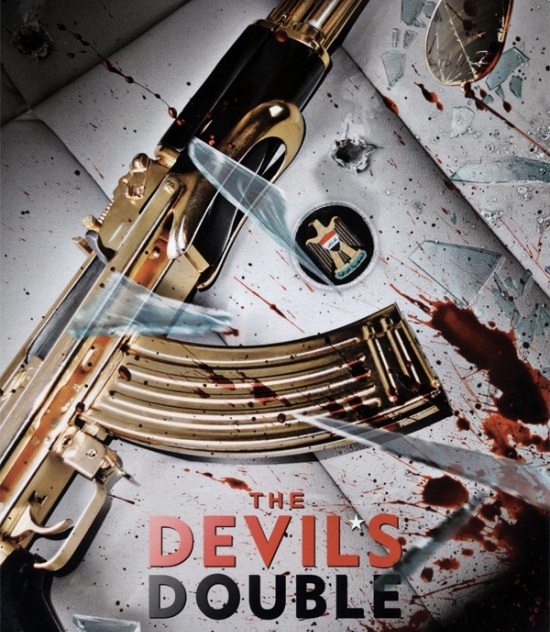
Review – The Devil’s Double (18) [2011]

Star Rating: 3/5

It is common for dictators and those close to them to have doubles (look-alikes), so that they can be in two places at once. (Not to mention making it harder for their opponents to assassinate them). But what exactly do ‘doubles’ do with their days? Well, The Devil’s Double gives viewers a brutal hint.

Latif with Uday before he has some minor surgery. Thw two men bear a striking resemblance. After surgery, the two men could be identical twins.

The film is based on the true (but embellished) story of how Latif Yahia (Dominic Cooper – Tamara Drewe, Captain America: The First Avenger, My Week With Marilyn) became a look-alike for Uday Hussein (also Dominic Cooper), the son of Saddam Hussein, the President (dictator) of Iraq, 1979-2003. The film is set between the late-1980s (during the latter years of the Iran-Iraq War, 1980-88) and up to December 1996.

Latif bears a striking resemblance to Uday. After some nasty threats and lashes, Latif agrees to become Uday’s double. Subsequently, Latif, to his disgust (and knowing that he could be shot on a whim at any moment), enters into Uday’s world of sadism, debauchery, drugs and murder. At what point will the ‘nice guy’ Latif draw the line?

The Devil’s Double makes for some gripping, if horrific, viewing. But, most noticeably, the film does not have much of a storyline. More often than not, scene after scene is just Latif following Uday to witness the latter’s next appalling act. Surprisingly though, this does not make the film any less absorbing to watch.

Latif being punished for not initially agreeing to become Uday's double.

The key reason for the movie being so engrossing is Dominic Cooper. The choreography may be jerky; the music may sound cheap and not totally in sync with the scenes; and the women may look distinctly Western and non-Arabic. Yet, particularly as Uday, Cooper makes the audience feel that their money has not been wasted. As Uday, Cooper plays an insane (in the true sense of the word), volatile, spoilt brat with an insatiable appetite for alcohol, drugs, women (of all ages) and malice. In almost every scene, Uday appears drunk, high and unpredictable. Uday makes us feel uneasy every time he appears on screen, which is a testament to Cooper’s acting abilities.

There is no doubt that Cooper plays well as Uday. But his performance is not quite in the same league as Christian Bale’s in The Fighter. This is because in The Devil’s Double, Uday is not given a third dimension. Also, from the film, one has little idea what Uday’s upbringing was like, or what his relationship was like with his father (which was apparently not great) and mother (whom he was supposedly close to), amongst other things. This is a real pity, as this could have shown Uday in a chillingly human light, as opposed to the animal that he is portrayed to be throughout the movie.

Whilst as Uday, Cooper is impressive, he is less so as Latif. This might be because Latif is too nice and normal relative to Uday. Nevertheless, one does not feel much sympathy for Latif, or his predicament. In this respect, Cooper could have done better. Then again, just as Uday has not been given much depth, nor has Latif. This is not Cooper’s fault. Rather, it is the fault of the director, Lee Tamahori (Die Another Day, xXx 2: The Next Level, Next), who should have given his two main characters more depth, even at the expense of making the film a little longer. At only 106 minutes, he had the time to do this.

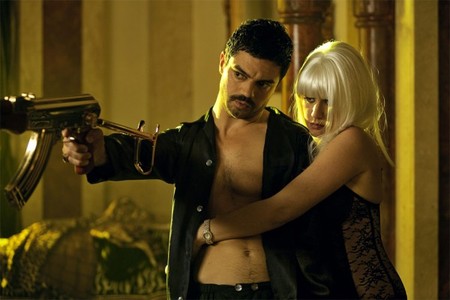
A common sight throughout the film - Uday holding a gun threateningly, with a girl (or two) around his waist. The girl here is Serrab (Ludivine Sagnier), supposedly his favourite.

Just as Uday and Latif lack complexity, so too do the other characters in The Devil’s Double, such as Munem (Raad Rawi – The Kingdom, Green Zone, Conan the Barbarian) and Kamel Hannah (Mem Ferda – Revolver, Legacy: Black Ops, Ill Manors), who are supposedly part of Saddam’s cruel regime. Too many of them, though, appear as ‘good guys in bad positions,’ which could not have been true. Repressive governments don’t exist because they’re packed with ‘good people’ under an ‘evil’ despot. Rather, they survive because they’re filled with murderous psychopaths, who are given positions to abuse (until they become victims of the system, of course). By doing this, Tamahori shamefully forsakes the chance to illustrate the true realities of Saddam Hussein’s Iraq to the detriment of the movie.

All-in-all, The Devil’s Double may be crude and the epitome of its own title, but it gives us a glimpse of what life as a double to a nasty, sadistic individual could be like. Almost by himself, Dominic Cooper, playing two very different people, makes this utterly brutal film worth watching. The Devil’s Double is not one for the feint-hearted, and will leave even the strongest of people feeling uncomfortable by the end.

PG’s Tips
Review – Sarah’s Key (12a) [2011]

Star Rating: 4/5

<<guest review by KJF>>

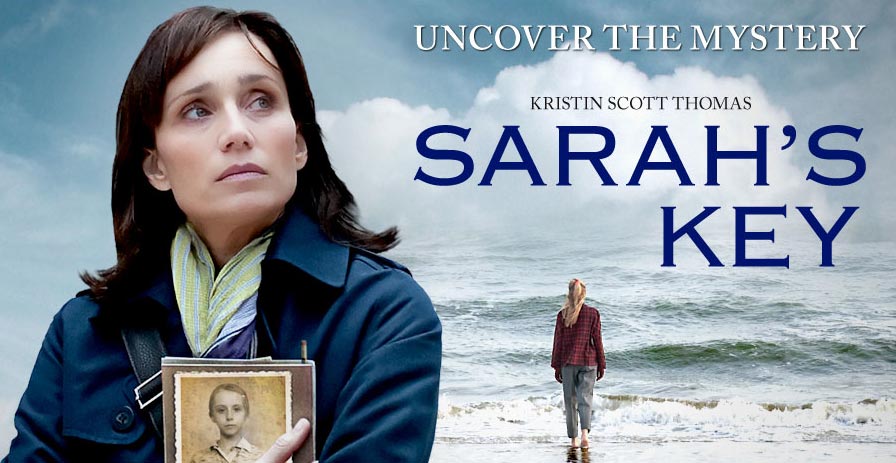
Sarah’s Key, directed by Gilles Paquet-Brenner (Pretty Things, Payoff, Walled In), is a powerful study of the impact of the Holocaust on one person’s life. Julia Jarmond (Kristin Scott-Thomas – Four Weddings and a Funeral, Nowhere Boy, Tell No One) is an American journalist living in Paris and married into a well-to-do French Family, with a teenage daughter. About to inherit a flat from her husband’s family, she gradually discovers that the flat has an unpleasant history – that it once belonged to a Jewish family until they were forcibly evicted and rounded-up by officials of the Nazi-collaborationist Vichy regime on 16th July 1942.

Julia (Kristin Scott-Thomas) make alarming discoveries about the past.

The film operates on two narrative levels – Julia’s own revelations in the present, coupled with the fate of that family seen through the eyes of 10 year-old Sarah Starzynski (Melusine Mayance – Ricky). Whereas some films that employ a multi-narrative focus can become confusing to the viewer, skilful editing allows the story here to be told in a straightforward and effective way.

Sarah’s story is truly a harrowing one. Before the French police can see them, she locks her younger brother in a bedroom cupboard, taking the key with her and determined to come back. She and her parents are taken to the sports stadium, the Velodrome d’hiver, which for three days became a makeshift concentration camp for thousands of Jews, until they were transferred to other internment facilities.

Without operating on a massive budget, Paquet-Brenner allows the viewer to be immersed in this terrible situation, providing a shocking snapshot of life within the ‘Vel d’hiver’ – the appalling sanitary conditions, the lack of space and the awful uncertainty faced by all the internees as they awaited their fate. There is occasional bravery and foolhardiness, as one inmate carries out a daring escape. Sarah’s fate, and the travails she has to endure are also portrayed with a hard-hitting immediacy. She and her parents are transferred to the Beane-la-Rolande camp outside Paris. After being separated from her parents, who are sent unknowingly to Auschwitz, she and another child escape the camp. Sarah finally achieves a kind of freedom.

But even in later life, she is haunted by the events of the past. Mayance plays Sarah with enormous charisma – we are totally engrossed in her fate. Charlotte Poutrel who plays Sarah in later life imbues her with both moving dignity and tangible personal trauma.

Sarah (Melusine Mayance) in happier times.

Meanwhile in the present, Julia faces her own struggles and is forced to re-evaluate her own life as she asks questions that her in-laws would prefer were not asked, representing the general unease felt in some areas of French society about the events of the 1940s.She also faces up to the reality of her unhappy marriage – she becomes pregnant, which her husband, preoccupied by work, is painfully indifferent about. She goes on a personal quest to find out more about the fate of Sarah and her family, which leads her to New York and Italy where she finally meets Sarah’s son, played by Aidan Quinn (Blink, Legends of the Fall, Unknown), who knows little of his mother’s fate.

Next year is the 70th anniversary of the round-up of French Jews, which has also prompted another film on the subject, La Rafle (The Round-Up). There, the narrative is squarely based in the 1940s and has more of a documentary-style feel as scenes depicting Hitler and Himmler, and machinations of the Vichy authorities are run alongside the awful fate of the Jewish families. That leads to an informative and disturbing film, but somewhat distant. Here the pain and stoicism Scott-Thomas portrays in her performance provides an intensely personal and unifying emotional core to the film. As the fate of Sarah unfolds for her, so it does for us, staying with us long after the cinema has been left.

KJF

Review – Rise of the Planet of the Apes (12a) [2011]

Star Rating: 3/5

In the last two hundred and fifty years, there have been revolutions in America, France and Russia, to name three of many. Now, due to the entertaining, if flawed, Rise of the Planet of the Apes, there has been an ‘Ape revolution’ to add to that (tragically) long list.

Baby Caesar, the future leader of the ‘Ape revolution.’

The film’s plot centres round Will (James Franco – 127 Hours, Your Highness, Sausage Party) and his incredibly bright pet chimpanzee, Caesar (played by Andy Serkis – The Lord of the Rings I, II & III, Burke & Hare, The Hobbit I ). Will is a scientist, who believes that he has found the cure for Alzheimer’s. He uses data readings from apes – Caesar in particular – to prove it. The cure also increases brain function and intelligence considerably. This enables Caesar to communicate with Will, as well as facilitate the former’s ability to learn compassion and love; not to mention help set up Will with the beautiful Caroline (Frieda Pinto – Slumdog Millionaire, You Will Meet A Tall Dark Stranger, Immortals).

Nevertheless, the cure also makes Caesar realise that he is different from humans. After being taken into captivity, and being maltreated by Dodge (Tom Felton – The Borrowers, Harry Potter I-VII(i) & VII(ii), The Apparition), Caesar uses his brain to the maximum. Then, in a Lenin-like moment, he calls upon all the apes of San Francisco (rather than the workers of the world) to unite and fight back against human rule. Thus, begins the ‘Ape revolution.’ But where will it end?

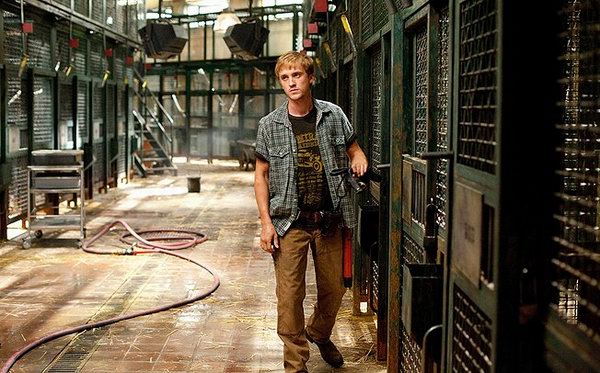
Dodge (Tom Felton) making sure that all the apes are locked in their cages.

For a little over an hour, the storyline and the dialogue for Rise of the Planet of the Apes is easy to follow, engaging and intelligent. Christopher Wyatt’s (The Escapist) film appears to hold great promise, but, alas, it goes badly off on a tangent for the last forty minutes. Several elements of the movie are left incomplete and unexplained; for example, at the sanctuary there are at most two dozen apes, but when Caesar leads the revolution there are hundreds. Where did they all come from, and how did they all become so intelligent?

The plot may have its flaws, but the acting by Andy Serkis makes the film worth watching. Serkis, in another Gollum-like role (albeit without the schizophrenia and dual-personality disorder), delivers another impressive performance. Using facial expressions, gesticulations and sign language, Serkis gives Caesar some very human characteristics that force viewers to empathise with Caesar’s situation (at least for the majority of the film).

Serkis’ performance is undoubtedly the best of the cast. Nevertheless, James Franco and John Lithgow (Shrek, Dreamgirls, New Year’s Eve), who plays Will’s father, don’t play badly either, even if their roles are not especially challenging. The same, though, cannot be said for Freida Pinto, Tom Felton and David Oyelowo (Derailed, The Last King of Scotland, The Help), who plays as Will’s boss at the laboratory. Again, none of their roles are challenging and they may not have much screen time. But when they do appear, they all have two-dimensional characters that sound awfully contrived. And, in Felton’s case, if he plays a character similar to Draco Malfoy once more he risks being type-casted.

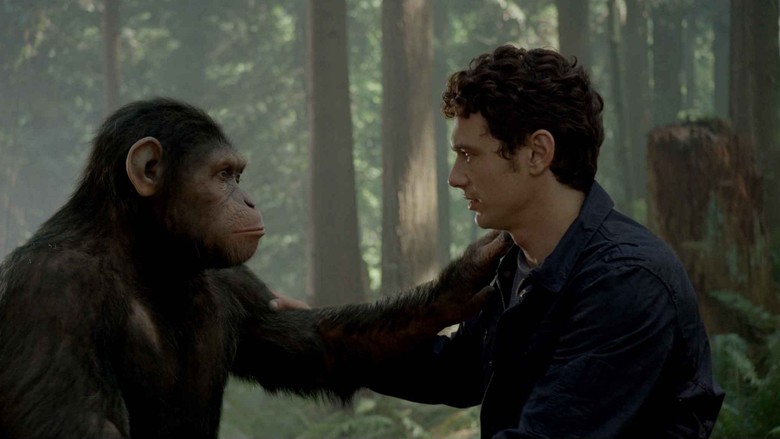
Brotherly love between the fully grown Caesar (played by Andy Serkis) and Will.

With the exception of Serkis, the acting may not be notable. Nevertheless, the music is uplifting and apt for every scene, thereby making the movie that bit more gripping. Similarly, the special effects throughout the film are pretty decent. More often than not, one would believe that it is a real chimpanzee climbing through the trees, rather than it being part-Serkis, part-CGI.

Rise of the Planet of the Apes is an enjoyable movie. Serkis delivers another sterling performance. With the aid of some brilliant CGI, he is able to give his ape a very human feel. It is a shame for him that most other aspects of the movie are not on the same level. In many ways, Rise of the Planet of the Apes epitomises revolutions in general. It loses its way.

PG’s Tips
Review – X-Men: First Class (12a) [2011]

Star Rating: 4/5

There is a theme currently in Hollywood not only to remake films, but also to make prequels of blockbusters, such as Batman and Hannibal. (Although, whether one would call Planet of the Apes a blockbuster is questionable.) X-Men: First Class is part of the wider X-Men Origins series that began with Wolverine two years ago. First Class is not as dark and gothic as Batman Begins; yet, it is an entertaining movie with strong moral messages.

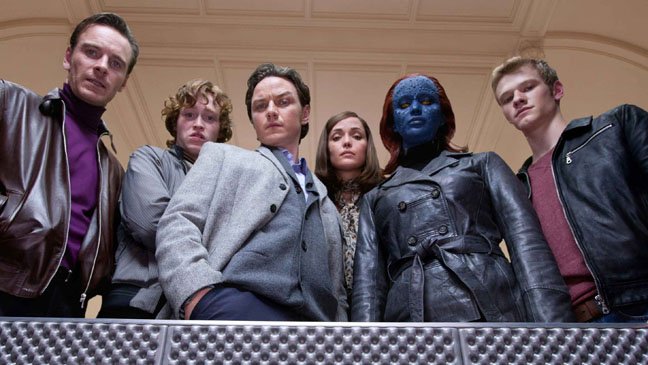
Erik, Sean/Banshee (Caleb Landry Jones), Charles, Moira, Raven/Mystique and Cyclops’ younger brother, Alex/Havoc (Lucas Till) all making observations during their time in CIA Headquarters.

Set mainly in early-1960s America, the film centres on the mutants Charles Xavier (James McAvoy – Atonement, Wanted, Trance), the future wheelchair-bound Professor X (played by Patrick Stewart in X-Men I, II & III), and Erik Lehnsherr (Michael Fassbender – 300, Inglorious Basterds, Shame), the future renegade Magneto (played by Ian McKellen in later films).

Whilst the storyline is about how the US and Soviet governments need their respective mutants for espionage and to avoid going to war over Cuba in the run up to the Cuban Missile Crisis (October 1962), the mutants spend much time discussing how they just want to fit into mainstream society, despite being different: ‘mutant and proud’ they say (sounds similar to ‘gay and proud’ if you ask me). Oh how such slogans must make Lady Gaga happy! Nevertheless, one cannot help but note the political message here in First Class. The movie takes place at the same time as black people in America were starting to demonstrate and riot for equal rights. That mutants would want the same rights is understandable.

Yet, despite the civil rights aspect and the revising of history with a fantastic conspiracy theory about how the Cuban Missile Crisis played itself out, First Class is more about the contrast in mentalities between Charles and Erik: two friends who would become adversaries.

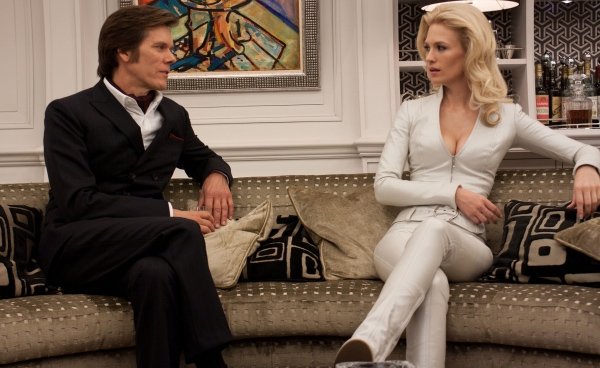
The mutant Sebastian Shaw (Kevin Bacon), formerly the Nazi, Mengele-like doctor who experimented on Erik when he was a boy, casually chatting with the beautiful Emma Frost/White Queen.

James McAvoy and Michael Fassbender both play well, without being brilliant. As a wise professor with little baggage, McAvoy has the easier of the two roles. Fassbender, without being crude or cliché, illustrates well Erik’s transformation into Magneto. (Arguably, more time could have been given to this, and it could have made for some fascinating psychological viewing. This is just a personal opinion though.) Alas, much of what Erik says is true; yet, undoubtedly, the crucial message of the film – ‘that killing will not bring you peace’ – is put across emphatically by Charles, who fears for his friend. If one thinks about an angry group of hate-filled people against the West in our own age, we might get a true understanding for who that message is really aimed at.

Charles and Erik are not, though, the only mutants seen in First Class. Although many of the bigger names of the later films do not feature, there are still some mutants that audiences may recognise. However, with exception of the beautiful, but insecure Raven/Mystique (Jennifer Lawrence – Winter’s Bone, The Beaver, The Hunger Games), none of the lesser characters are given much screen-time. Note though that all the women in the movie are gorgeous and sexy: Dr. Moira MacTaggart (Rose Byrne – 28 Weeks Later, Get Him to the Greek, Bridesmaids), Angel Salvadore (Zoe Kravitz – The Brave One, Californication) and, especially, Emma Frost/The White Queen (January Jones – Mad Men, Unknown, American Pie: The Wedding).

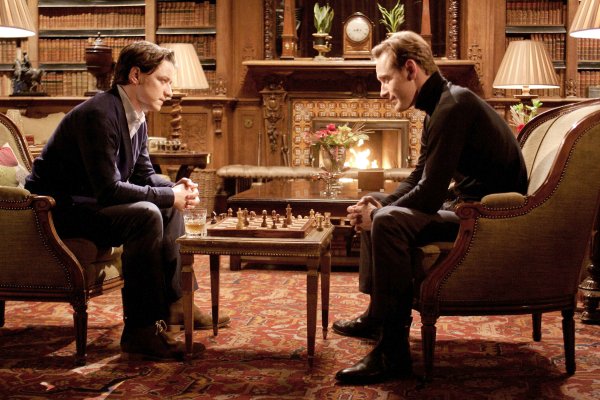
Two good friends happily playing chess. It is here that Charles voices his grave concern to Erik, regarding the latter’s desire for vengeance.

If the women and the differences between Charles and Erik are not enough to keep one entertained, the action scenes and the mutants’ supernatural powers should do the trick. The training sessions, wherein Charles teaches his mutant pupils how to control their abilities, are very funny. The special effects are not bad either. They may not always be great, but they adequately enhance the scenes.

All-in-all, First Class gives the viewers what they would want from this sort of film. It may not be as dark as other prequels; nonetheless, the movie has action, a good-looking cast, and poignant moral messages. Most importantly, the director, Matthew Vaughn (Kick-Ass, Stardust, Layer Cake) shows us how Charles and Erik became enemies and sets up the context for X-Men I, even if some of the major characters have yet to join.

PG’s Tips
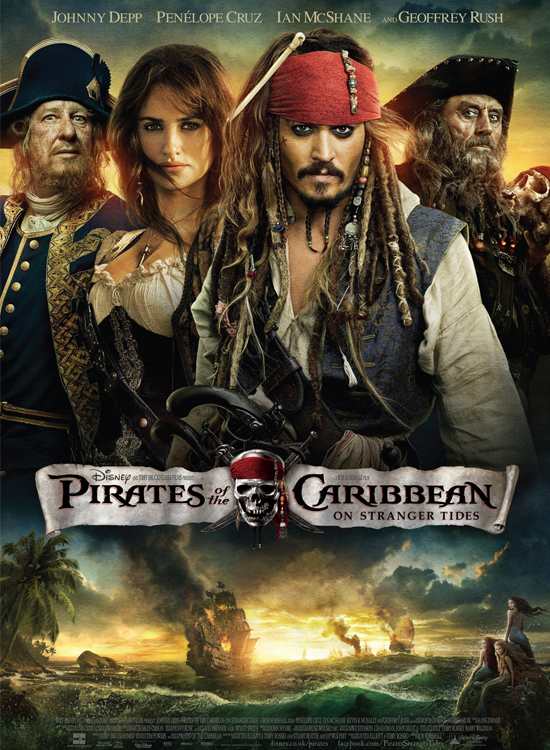
Review – Pirates of the Caribbean IV: On Stranger Tides 3D (12a) [2011]

Star Rating: 2.5/5

When it comes to a fourth movie in a franchise, a sceptic might wonder if it is merely an easy excuse to rake in money, ahead of taking a risk and dreaming up something innovative. Other fourth instalments, such as Die Hard 4 and Fast 4 (not to mention Fast 5), have lacked creativity in favour of the familiar themes and characters that audiences have come to love. The same can be said for Pirates of the Caribbean: On Stranger Tides. Despite director Rob Marshall’s (Memories of a Geisha, Nine, Chicago) attempts to spice up the Pirates of the Caribbean series, On Stranger Tides illustrates that it might have been better just to have ended the series after the third instalment, At World’s End.

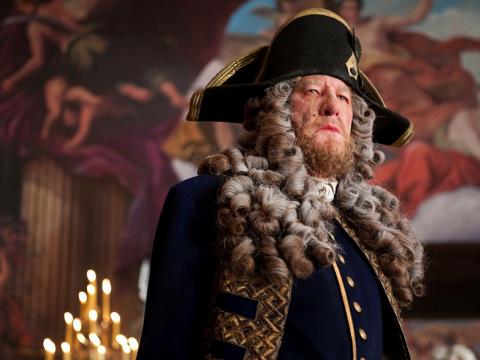
Captain Barbossa (Geoffrey Rush), the reformed pirate, dressed admirably as a respectable Royal Navy Officer.

On Stranger Tides is based on the book by Tim Powers and centres once again on Captain Jack Sparrow (Johnny Depp – Pirates of the Caribbean I, II & III, Charlie & The Chocolate Factory, The Tourist), as the droll pirate with warped logic and a twisted moral complexion. This time around, he is out to find the Fountain of Youth. The Spanish and the English are also in a race to find this place, and only Sparrow knows the way. (Although, whether Sparrow has actually been to the Fountain of Youth is, of course, a little dubious, due to his canny nature.)

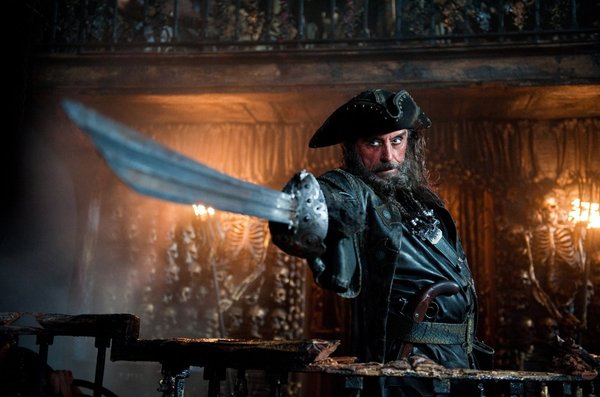
But to enter the fountain requires certain things that will not be simple to acquire. Plus, the feared and ruthless pirate, Blackbeard (Ian McShane – Kung Fu Panda, Coraline, The Golden Compass), is also hell-bent on reaching the fountain in order to preserve his life for many more years.

The plot is filled with twists and deceptions that have become a predictable feature of the series. The storyline is at times ridiculous; yet, one accepts it knowing that he/she has not gone to watch a serious or realistic film.

One of the new characters in the series, the feared pirate, Captain Blackbeard (Ian McShane).

However, the most disappointing aspect of On Stranger Tides is the script. It hampers the film and, primarily, sells the two main stars short. Whilst Johnny Depp gives another fine performance as Captain Sparrow, he lacks his trademark wittiness and oddities. Even his outrageous stunts no longer appear so outrageous anymore. Maybe we are too used to ‘witty Jack’ and expect too much from him. In fairness, it is almost impossible to light up the scene all the time with a brilliant comeback line. Nevertheless, the script for this movie is a far cry from that of Part I, The Curse of the Black Pearl, which had some fantastic lines.

Just as Depp has been let down, so too has Geoffrey Rush (Pirates of the Caribbean I, II & III, The Tailor of Panama, The King’s Speech). Rush returns as Captain Barbossa, who has now seemingly given up the life of a pirate for that of a respectable English naval officer. Barbossa’s character is a pale shadow of the one who entertained us so magnificently in the first three films. This is a real shame, as his rivalry with Sparrow in the past has made for terrific entertainment.

Captain Sparrow taking the beautiful Angelica to the Fountain of Youth via a river in the jungle.

Despite being conspicuously absent from this film, the characters played by Orlando Bloom and Keira Knightley are certainly not missed. Their performances in the series deteriorated with each movie. Alas, their replacements, Blackbeard and Angelica (Penélope Cruz – Vanilla Sky, Sahara, Nine), are hardly much better. McShane does not perform badly, even though Blackbeard’s character does not have the depth to be the ‘next Davie Jones’ (played by Bill Nighy in parts II, Dead Man’s Chest, & III in the series); whilst the sexy Cruz offers so much and delivers agonisingly little.

The special effects at least give the film a semi-redemptive feature. With the exception of one or two instances, they are pretty decent throughout the movie. Again though, they look hardly any different from scenes in the other films in the franchise, so viewers are unlikely to give producer Jerry Bruckheimer (Pirates of the Caribbean I, II & III, Black Hawk Down, National Treasure) much credit. The 3D is virtually non-existent too.

Over-all, On Stranger Tides continues the worsening trend of the Pirates of the Caribbean series, and of over-extended franchises in general. The fourth instalment appears tired and out of ideas, to the extent that not even Captain Sparrow can make us enjoy, or think much of the film. But hey, fans of the series will flock to cinemas worldwide in great numbers to see their favourite characters again, enabling those involved in the movie to make a fortune once more. And fans will probably do the same again when the fifth part comes out in a few years time.

PG’s Tips
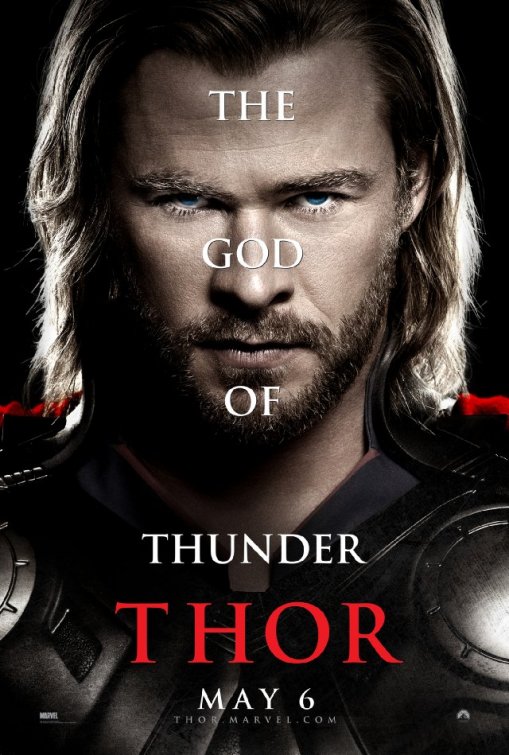
Review – Thor 3D (12a) [2011]

Star Rating 3.5/5

Another superhero movie? Haven’t we seen it all before? In fairness, one probably has seen a great deal of what Thor has to offer; especially if one is interested in this genre. Nevertheless, despite being a predominantly male-orientated film, Thor is an enjoyable movie with some awesome special effects.

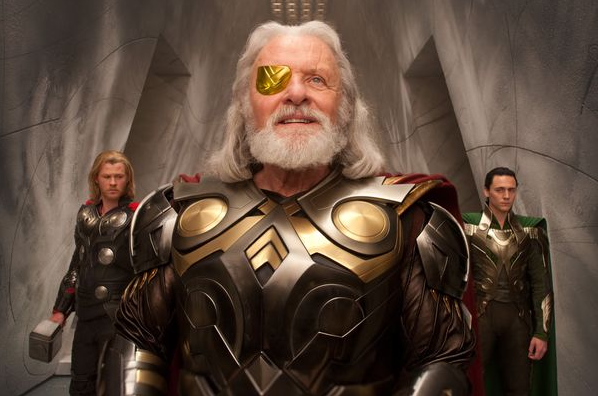
Thor, left, standing behind his father, King Odin, and alongside his brother, Loki as they approach their enemies..

Thor is about (surprise, surprise) a young man called Thor (Chris Hemsworth – Star Trek, Red Dawn, The Avengers Assemble). He is a ferocious, unnaturally powerful warrior and heir to the throne of Asgard. Yet, Thor is arrogant and cruel. After disobeying his father, King Odin (Anthony Hopkins – Hannibal series, Mission Impossible II, Fracture), he is stripped of his powers and his hammer (the source of his powers); and banished from Asgard.

He wakes up to find himself in the desert of New Mexico, America, to be surrounded by a scientist called Jane (Natalie Portman – Black SwanStar Wars IIII, Lawless), plus her assistants Darcy (Kat Dennings – The 40 Year Old Virgin, The House Bunny, Lives of the Saints) and Erik (Stellan Skarsgard – Pirates of the Caribbean II & III, Angels and Demons, The Avengers Assemble). Thor is determined to do whatever it takes to regain his god-like powers and return to Asgard. Meanwhile in Asgard, in Thor’s absence, a traitor increases his influence over the ailing Odin and his court. This will set Asgard to war, again, against the frost-people of Jotenheim.

Despite being about fictional realms, the plot for Thor is easy to follow. The director, Kenneth Branagh (Henry V, Frankenstein, Valkyrie), has structured the film well so that each scene flows nicely after the other and the pace of the film is just right. As a result, Thor is a very entertaining movie. Undoubtedly, the action scenes in the film are the highlight as they are superb and will leave viewers wanting more.

The movie may lack the goriness of Watchmen (not to mention the political connotations of that film); yet, Thor makes up for it in special effects. Regardless of whether they are accompanying the action scenes or are merely backgrounds for the fictional sceneries of the different worlds, the special effects throughout are fantastic. In some ways, they are so good they almost rival those in Avatar. It is a shame that Asgard is explored less than Pandora because some of the sceneries in Thor have the same ‘wow’ factor; particularly during the credits at the end. The 3D assists and makes the effects a little more spell-binding; however, on the whole, Thor is another example of a 2D film that has been converted, post-production, into 3D.

Thor promising Jane that he will return to Earth to see her.

Unlike the action scenes and the special effects, the acting in Thor is quite average. Chris Hemsworth performs adequately as the main character. But, as Thor, he is not given the depth of personality to make himself stand out in the same way as Christian Bale does as Batman. This results in him coming across as quite immature and superficial.

It is a shame that less attention is given to Thor’s younger brother, Loki (Tom Hiddleston – Conspiracy, Midnight In Paris, The Avengers Assemble), as it could have made for interesting viewing. But, alas, we are deprived of this. Instead, we have the standard ‘lesser’ brother who wants to emulate his older, more decorated sibling. The other characters, for better or worse, are not given much time on screen. Again, they all have little by way of depth and do not add much to the film. (Yes, even the gorgeous Natalie Portman.)

Ultimately, Thor may initially have the feel of ‘yet-another-superhero-movie.’ It may not have the violence of Watchmen or the deep characters of Christopher Nolan’s Batman trilogy, or the political nuances of those films. Nevertheless, Thor is a fun film with plenty of action and some awe-inspiring sci-fi-style special effects.

PG’s Tips

Review – Rio 3D (U) [2011]

Star Rating: 3/5

In recent times, there have been some exceptional animated films; the pick of the bunch being Toy Story 3. Kung-Fu Panda and Coraline have their merits for humour and horror, respectively; however, they lack the je ne sais quoi of Toy Story 3. For similar reasons, Rio falls short, despite being enjoyable and cute.

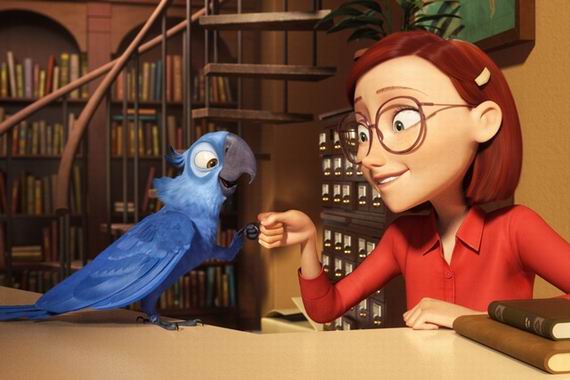
Blu and Linda showing that they are the best of friends

Rio is about a blue McCaw called Blu (voiced by Jesse Eisenberg – The Social Network, Zombieland, Batman v Superman: Dawn of Justice), a shy and dorky bird that can’t fly. At a young age, Blu is taken from his home in the Amazon and finds himself randomly in Minnesota. There, he is looked after by a young girl Linda (voiced by Leslie Mann – The Cable Guy, 17 Again, Knocked Up). Fifteen years later, Tulio (voiced by Rodrigo Santoro – 300, Che I & II, I Love You Philip Morris), a scientist, finds Linda and tells her that Blu is the last of his species. There is only one other blue McCaw and she is in Rio de Janeiro, Brazil. Thus, the only way to save the species is by taking Blu to Rio.

Once in Rio, Blu is put into a cage with the beautiful, but feisty Jewel (voiced by Anne Hathaway – The Devil Wears Prada, Love And Other Drugs, One Day). Yet, dark forces in the underworld of Rio desire these birds for profit. Not long after Blu and Jewel are caged up, they are stolen by smugglers; much to the consternations of Linda and Tulio. Blu and Jewel are determined to get out of captivity: the latter to fly freely through the Amazon; the former to find Linda. It will not be easy and being chained together makes matters harder for them.

There is nothing especially original about Rio’s plot. It moves at the right pace so as to keep its viewers interested, but it gets a bit naff towards the end. Nevertheless, there are many sweet and funny moments in the film; especially, the singing and rapping by Pedro (Will.i.am. – Madagascar 2, Knight And Day, Freedom Writers) and Nico (Jamie Foxx – Collateral, Law Abiding Citizen, Miami Vice). Anne Hathaway also has a surprisingly powerful voice. But, on the whole, Rio is not as funny as the hilarious Kung-Fu Panda (and perhaps Kung-Fu Panda 2, which is released later this year).

Blu and Jewel being shown the way by another bird who is willing to help them.  Alas, the director and script-writer, Carlos Saldanha (Ice Age I, II, III), has ensured that Rio is not a satire. This could have given the film a sophisticated edge. Additionally, the characters are very two-dimensional: Blu somehow looks and acts just as geeky as Jesse Eisenberg did in The Social Network; whilst Jewel acts throughout like a spoilt princess with no claim to royalty.

On another note, the graphics are fine for what the movie is; although, the 3D effects add little to the film. Indeed, Rio is not Avatar in the sense that, like Legend Of The Guardians and Alice In Wonderland, it was not made to be, primarily, a 3D movie.

All in all, Rio is a movie for children. It is cute and will put smiles on the faces of those who watch it. However, if one thinks that it’s going to be the next Toy Story 3 then disappointment will follow.

PG’s Tips

Review – Your Highness (15) [2011]

Star Rating: 2.5/5

We’ve had spoofs of horror films, action films and even vampire love-stories. Now, for the first time since the amusing Robin Hood: Men In Tights, there is a parody on a medieval-based kingdom; albeit, this movie has elements of fantasy and magic in it. Your Highness may not be the most hilarious film one will see this year, but it certainly has many funny moments.

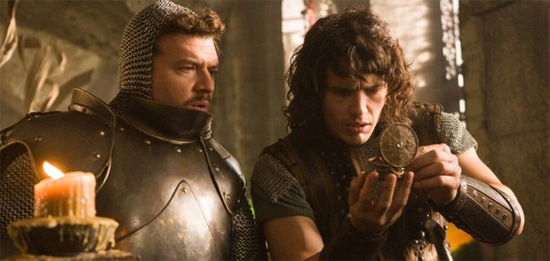
Thadeous (Danny McBride) watches as Fabious (James Franco) waits for the magical compass to indicate which way will lead them to the Sword of the Unicorn.

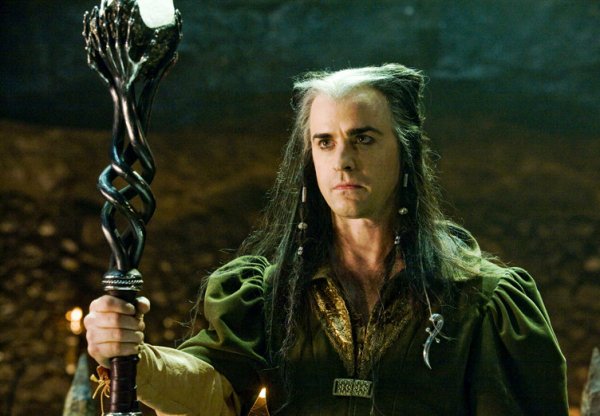
The film revolves around Thadeous (Danny McBride – Due Date, Despicable Me, Up In The Air), the fat and lazy second son of King Tallious (Charles Dance – Game of Thrones, Aliens 3). Thadeous is a stark contrast to his older brother, Fabious (James Franco – 127 Hours, Spiderman I, II & III, The Rise of Planet of The Apes), the handsome and athletic heir, who is the hero of the nation. Not long into the film, Fabious’ fiancée, Belladonna (Zooey Decshanel – Yes Man, 500 Days of Summer, The Hitchhiker’s Guide To The Galaxy), is taken by the evil sorcerer, Leezar (Justin Theroux – American Psycho, Megamind, Miami Vice). Fabious must rescue her, and do so before the two moons come together. Otherwise Leezar will defile Belladonna, impregnating her so she can give birth to a dragon that will enable him to take over the kingdom.

As Leezar is a powerful sorcerer, the only way Fabious can defeat him is with the mystical Sword of the Unicorn. Thus, Fabious, Thadeous and a couple of others go on a quest to find the fabled sword. En route, they come across the beautiful warrior Isabelle (Natalie Portman – Star Wars I-III, Black SwanThor), who has her own reasons for wanting to defeat Leezar.

The plot is ridiculous and amusing at the same time. Your Highness does not take itself remotely serious and nor do the actors. If one were expecting another award nominating display from James Franco and Natalie Portman, one should think again before seeing this movie. The actors see the film for what it is (a joke) and play their roles accordingly. Indeed, one wonders how they kept a straight face whilst they recited some of their cliché and ludicrously laughable lines.

The evil one, Leezar (Justin Theroux), smirking as he waits for the two moons to merge.

Nevertheless, the dialogue in Your Highness does make viewers laugh quite frequently. It is a very modern, crude dialogue though; devoid of any real reflection of the medieval era. This is not necessarily a criticism; however, if one were going into this film believing it to be a satire of a by-gone age then one will be disappointed.

There is little else to note about Your Highness. The structure of the film has been done reasonably well by the director, David Gordon Green (Pineapple Express, The Sitter, Joe), but the special effects are nothing special,  and the music is a comical mishmash between Pirates of the Caribbean and The Lord of the Rings (plus probably a handful of other scores from films that I am unaware of).

Ultimately, Your Highness makes people laugh and, as a comedy, it therefore fulfils its prime purpose without being anything noteworthy. One will not be in hysterical laughter throughout the entire film, but will find much of the movie amusing if one likes crude humour.

PG’s Tips

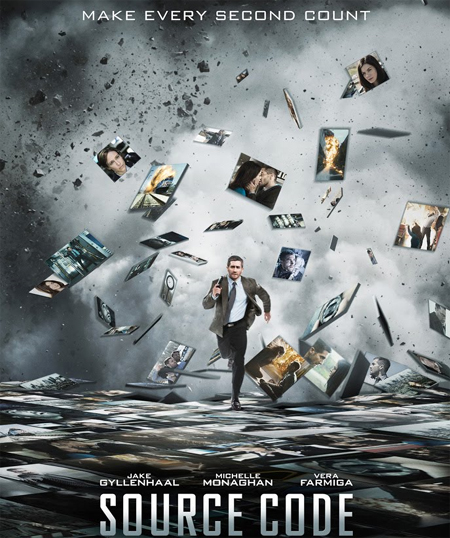
Review – Source Code (12a) [2011]

Star Rating: 3/5

A friend of mine billed Source Code as ‘The Matrix meets Minority Report.’ While this may be a tad broad, it is not an entirely inaccurate explanation of Source Code. Although a Sci-fi film at its core, Source Code is more enjoyable to the general public than many other titles in its genre and will leave one thinking afterwards too.

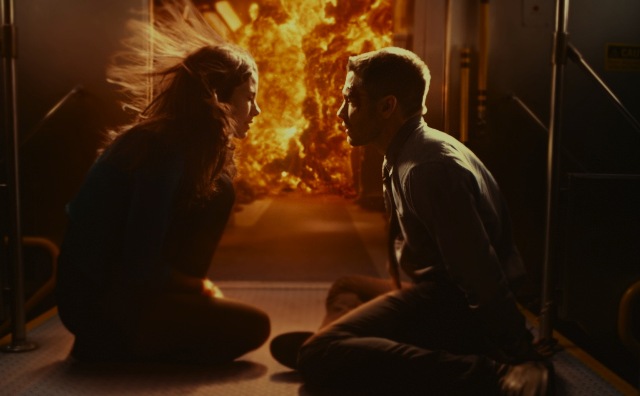
Source Code is about sending someone into a computer-regeneration of a specific incident in the past in order to find out (useful) information. Throughout the movie, Colter Stevens (Jake Gyllenhaal – Rendition, Brothers, Nocturnal Animals), a US soldier in a helicopter unit, is constantly sent into the Source Code for an eight-minute stint. Each time, Colter finds himself on a train sitting opposite the cute-looking Christina (Michelle Monaghan – Mission Impossible III, Eagle Eye, Due Date); and at the end of the eight minutes, the train blows up. Himself included.

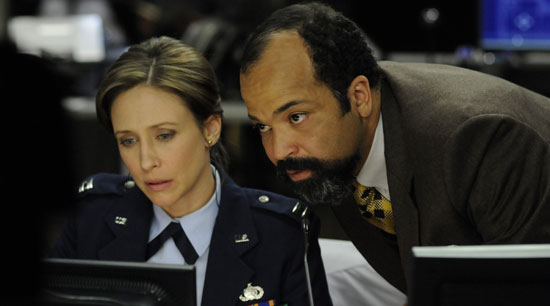
Earlier, a bomb went off on a train in Chicago and it is rumoured that another one will go off in the middle of the same city later that day. Colter’s task is to find the bomb and discover information about the bomber. His superiors, the pretty Captain Colleen Goodwin (Vera Farmiga – The Boy in the Striped Pyjamas, Up in the Air, The Judge) and Dr. Rutledge (Jeffrey Wright – Casino Royale, W., The Ides of March) believe that the information could be crucial in deterring the next attack. Yet, after going into the Source Code a few times, Colter’s motives change. He intends not only to complete his mission; but also to save the passengers on the train and ask out Christina.

Source Code’s plot has numerous holes that one can pick at without difficulty. It can also feel quite repetitive at times. The director, Duncan Jones (Moon), a relative novice to the industry, puts forward some interesting ideas that bring to mind tenuous comparisons to The Matrix for de facto teleporting someone into a computer-generated world; and Minority Report for preventing an incident from occurring by using highly futuristic and technologically advanced methods. Yet, Jones also leaves several aspects of the plot with a lot of explaining to do; most notably the paradox of time-travelling and the ending.

One thing, however, that works in Source Code’s favour is that it does not descend into a mushy love-story like so many other films. The dialogue is not bad either and there are humorous moments too. Again, Jones fails to explain the quantum physics behind the invention of the Source Code; but, speculatively-speaking, he has done this deliberately knowing that the majority of the film’s viewers will neither understand nor be interested in such terminology.

Captain Colleen Goodwin and Dr. Rutledge urging Colter to go back into the Source Code so as to unearth more information about the bomb and the bomber.

That Jake Gyllenhaul plays well as the main character gives the movie the credence the plot lacks. He is not given a particularly challenging role, but he still performs decently enough. The same can be said for the other members of the cast. Michelle Monaghan, Vera Farmiga and Jeffrey Wright may act competently; however, they are not given enough screen-time for their characters to be anything other than two-dimensional.

Alike the acting, the choreography is fine. For a movie that is cyclic and teleports the main character suddenly and regularly, it does not feel overly jerky to watch. This takes some skill and credit must go to Jones for this.

All-in-all, Source Code is a surprisingly entertaining film. It has a decent cast, some good jokes and clever ideas. Nevertheless, the storyline is deeply flawed and the ending rubber-stamps it. Ironically though, the film’s very flaws are what will keep viewers thinking long after the film finishes.

PG’s Tips