Category Archives: Drama

Review – Whiplash (15) [2015]

Whiplash - title banner2

Star Rating: 5/5

Director:

  • Damien Chazelle – Guy And Madeleine On A Park Bench, La La Land

Cast:

  • Miles Teller – Project X, 21 & Over, Divergent, La La Land
  • JK Simmons – Spiderman I-III, Harsh Times, Up In The Air, Terminator GenisysLa La Land
  • Paul Reiser – Aliens, Purpose, Life After Beth, 6 Miranda Drive
  • Melissa Benoist – Glee, Danny Collins, Billy Boyd
  • Austin Stowell – Dolphin Tale I & II, Love And Honour, Behaving Badly, Higher Power

Music Composer:

  • Juston Hurwitz – Guy And Madeleine On A Park Bench, La La Land

When one sees artistic greatness, whether it is in drawings, music, film, theatre, sport or otherwise, it is natural to gawp and marvel. Great artists, irrespective of their medium, always have stood and always will stand head and shoulders above their competitors. But what does it take to be an artistic great? How does one become a great in their respective field? Whiplash, Damien Chazelle’s absolutely brilliant film, may answer those questions.
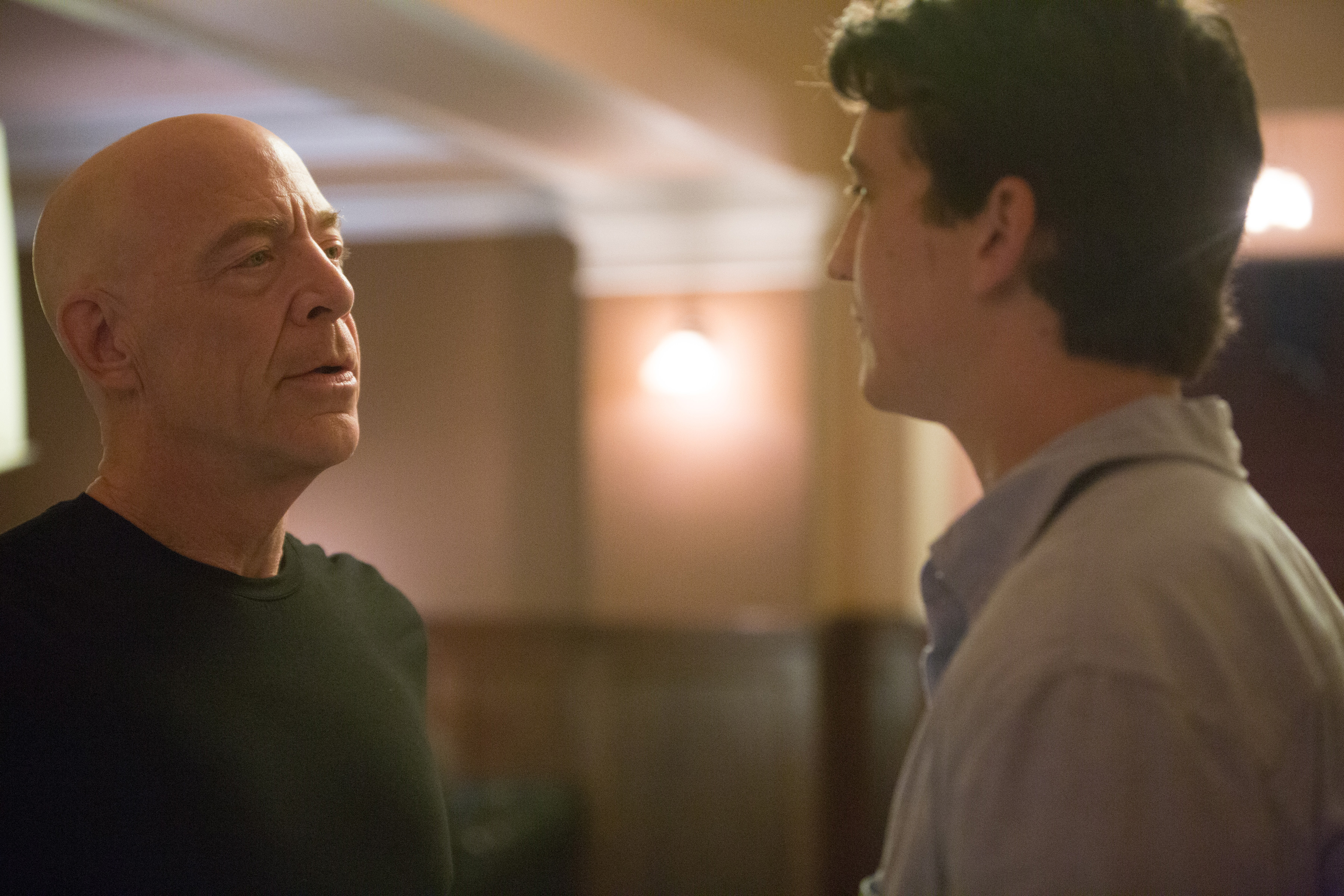
Andrew (Miles Teller) looking and listening to his mentor, the conductor Terence Fletcher (JK Simmons) as Fetcher gives him some advice.

Andrew (Miles Teller) looking and listening to his mentor, the conductor Terence Fletcher (JK Simmons) as Fetcher gives him some advice.

Whiplash is a drama, centred completely round Andrew (Miles Teller), a nineteen year old jazz-drummer who goes to Shaffer Conservatory, the best music school in America. There, he comes under the tutorship of conductor Terence Fletcher (JK Simmons), who pushes him hard, first, to enable Andrew to enter into his band, wherein they play a piece called ‘Whiplash’; and, second, in his attempts to make Andrew an artistic great.

Whiplash is an entertaining and pulsating film, with some exceptional performances. In an interview, Miles Teller spoke about the energy coming off the screen throughout the movie. And he’s right, although he also modestly downplayed his own role in making Whiplash come alive because Teller is superb as Andrew.

Samuel Delaney in About Writing explains that for one to achieve artistic excellence one must (metaphorically) punish oneself, make sacrifices, and suffer. In Whiplash, viewers witness Andrew punish himself, make sacrifices, and suffer as he pushes himself to breaking point to have a chance at becoming a great drummer. Better still, though, viewers feel Andrew’s agony as well as the sweat and blood dripping off him. It may have helped Teller that Whiplash was shot over nineteen (uber-intense) days, with him working eighteen to twenty hours under the camera’s gaze. When Andrew is exhausted and feeling the pressure it is probably genuine. At the same time, the intensity of the filming schedule could have hindered Teller. So, it is to Teller’s credit that he is able to perform to such a high standard under exhausting circumstances. He deserves his BAFTA nomination in the Rising Star category as, in part, he provides the energy that radiates from the screen during Whiplash.
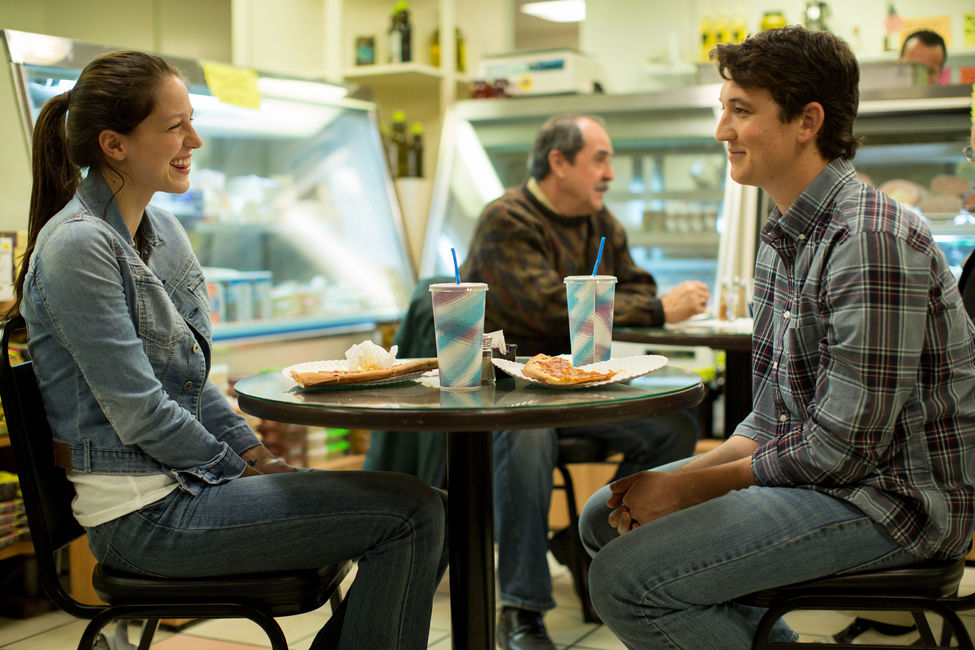
Andrew taking out Nicole (Melissa Benoist), and they discuss their respective ambitions in life

Andrew taking out Nicole (Melissa Benoist), and they discuss their respective ambitions in life

Yet, as good as Teller is, it is his character’s mentor who steals the limelight. JK Simmons is terrific as Terence Fletcher and it is no surprise that Simmons has been Oscar nominated for his performance as Fletcher. Fletcher is intelligent and passionate, yet he is also manipulative, nasty, vicious and utterly ruthless. When he walks into a room, one senses the fear he induces into his students. But is Fletcher a sadistic prick and a bully? Or is he a good mentor and an effective motivator? It would be easy to answer in the former. But Niccolo Machiavelli writes in The Prince that it is better for a leader to be feared than loved because fear forces people to go the extra mile when they wouldn’t otherwise. Additionally, one could believe that the motivational methods of Sir Alex Ferguson, the former Manager of Manchester United Football Club (MUFC), were not always too dissimilar to Fletcher’s, and the success Sir Alex achieved at MUFC between 1986-2013 was extraordinary. Therefore, one should bear in mind the writings of Machiavelli and the feats of Sir Alex before criticising Fletcher. There is logic behind his methods.

However, whatever one may think of Fletcher and his methods, it is worth noting that audiences only see him through Andrew’s eyes. In an interview, Simmons said that there were some scenes of Fletcher filmed without Andrew present. These (apparently) would have given audiences another perspective on Fletcher’s personality, but the scenes were cut from the movie so as to preserve Whiplash as solely Andrew’s story. Simmons suggests that the lack of these scenes does not detract from the film and even enhances it. This probably means that the scenes would not have significantly altered our understanding of Fletcher, so instead of wondering what these scenes beheld we should commend Damien Chazelle for having the resolve to take them out of the final cut of the movie.

The price Andrew pays in his attempts to make it to being a drummer of noteworthy repute: sweat and blood.

The price Andrew pays in his attempts to make it to being a drummer of noteworthy repute: sweat and blood.

Nevertheless, it is not just for taking those scenes out that Chazelle should be commended. He should also be applauded for writing vivid dialogue and for giving the actors room to improvise in scenes to make the scenes more realistic. Similarly, Justin Hurwitz should be clapped for writing some wonderful music that builds on the tension that Andrew (and the audience) endures in Andrew’s attempts to reach the dizzying heights of artistic greatness.

All-in-all, Whiplash is a flawless and exhilarating film, with two phenomenal stand-out performers. On the surface, the movie is about the relationship between a pupil and his mentor, seen exclusively from the pupil’s angle. Yet, Whiplash has a deeper layer. It illustrates the level of dedication and self-torture one must go through to become a great in one’s artistic field and the type of mentor that may be required to attain artistic superiority over one’s rivals.

PG’s Tips

Review – Big Eyes (15) [2014]

Big Eyes - title banner3

Star Rating: 4/5

Director:

  • Tim Burton – Edward Scissorhands, Mars Attacks!, Corpse Bride, Alice In Wonderland I & II

Cast:

Music Composer:

  • Danny Elfman – The Simpson’s, Spiderman I & II, Corpse Bride, The Next Three Days, Fifty Shades of Grey

When it comes to predatory animals, one knows to stay well away. Yet, when it comes to predatory people, for one reason or another, one does not always act with the same haste or caution. The consequences of this lack of haste or caution can be damaging to the predator’s prey. Tim Burton, back to his best with Big Eyes, shows what can happen to an individual who falls prey to a person with a predatory nature.

Walter (Christoph Waltz) standing over Margaret (Amy Adams) and admiring her work.

Walter (Christoph Waltz) standing over Margaret (Amy Adams) and admiring her work.

Big Eyes is a true story based on what happened to the artist Margaret Keane in America, in the 1950s and early-1960s. Margaret (Amy Adams), is a single mother to Jane (when small played by Delaney Raye; when older played by Madeleine Arthur), who draws children with unusually large eyes as a hobby to earn a bit of money.

At an art fair one day, Margaret meets the smooth-talking Walter (Christoph Waltz), another artist who claims that she has talent and that she could make fortunes from her work. Margaret becomes enchanted by Walter. Soon, they are married and work together to make serious amounts of money. But the more time Margaret spends with Walter, the more it becomes apparent that Walter is not all that he seems. Eventually, this leads to a courtroom battle over royalty fees for the drawings.

Big Eyes is a really enjoyable film. It has a well written script that is surprisingly humorous, and the two lead actors play their parts brilliantly. Amy Adams (as ever) plays her role convincingly; this time as a callow woman with low self-esteem, who is pressured into a situation whereby she allows herself to be downtrodden by her husband. Similarly, Christoph Waltz (as ever) is a joy to watch, despite being a domineering husband who takes advantage of a vulnerable woman for the sake of making a waterfall of money. The leering, Cheshire cat-like grin never leaves his face and the words that roll off his silver-tongue underlie why predatory people are as dangerous as their beastly cousins in the wild. (Both devour their prey, just in different ways.)

An example of the sort of drawings Margaret draws.

An example of the sort of pictures Margaret draws.

Nevertheless, it is not just the two lead actors that make Big Eyes so watchable. The film has the feel of a director who loved creating it. The topic of the movie is the perfect fit for Tim Burton. Several of his films, like The Nightmare Before Christmas, Mars Attacks!, James And The Giant Peach, Corpse Bride and Alice In Wonderland, all consist of characters with unusually (and creepily) big eyes. Consequently, Burton’s passion radiates from the screen, elevating Big Eyes to make it a more pleasurable.

One may feel Burton’s passion throughout the film, but that does not mean it is flawless, sadly. First, Burton uses the (jarringly) antiquated technique of a narrator at the beginning of the movie and at random points throughout it, to put forward information to the viewers. (If these pieces of information said by the voiceover are so critical to the story, why couldn’t they have been incorporated into the dialogue like everything else?) Second, certain elements of Walter’s life are never properly explored and are dropped as quickly as they are brought up. This is brow-raising to say the least.

Margaret, who by this point has drawn so many pictures with abnormally big eyes that she is beginning to them (maddeningly) in her own reflection.

Margaret, who by this point has drawn so many pictures with abnormally big eyes that she is beginning to them (maddeningly) in her own reflection.

And, third, although Big Eyes is based on a true story, there is no way that the scenes in the courtroom are what truly happened. The courtroom scenes are too ludicrous and too camp to have been true. But, in fairness to Burton, they are absolutely hilarious. And while one cannot ignore the unreality of the scenes, one must applaud Burton for his alterations as they enhance the scenes and the film’s enjoyment factor.

All-in-all, Big Eyes is a very entertaining and satisfying film. The movie is funny, has a good script, an even better cast, and a director who is in love with the subject-matter at the heart of the tale. Burton could have neatened Big Eyes further by using some more modern techniques to convey information, by tying up some of the movie’s loose ends, and by not making the film camp enough to slot into the 1980s.

But to focus on these matters too much is to do the film a disservice. Instead, one should focus on the primary moral of the story: notably, to stay away from predatory people because they can only have a detrimental impact on one’s confidence, one one’s self-esteem, and on one’s life in general, as Margaret Keane found.

PG’s Tips

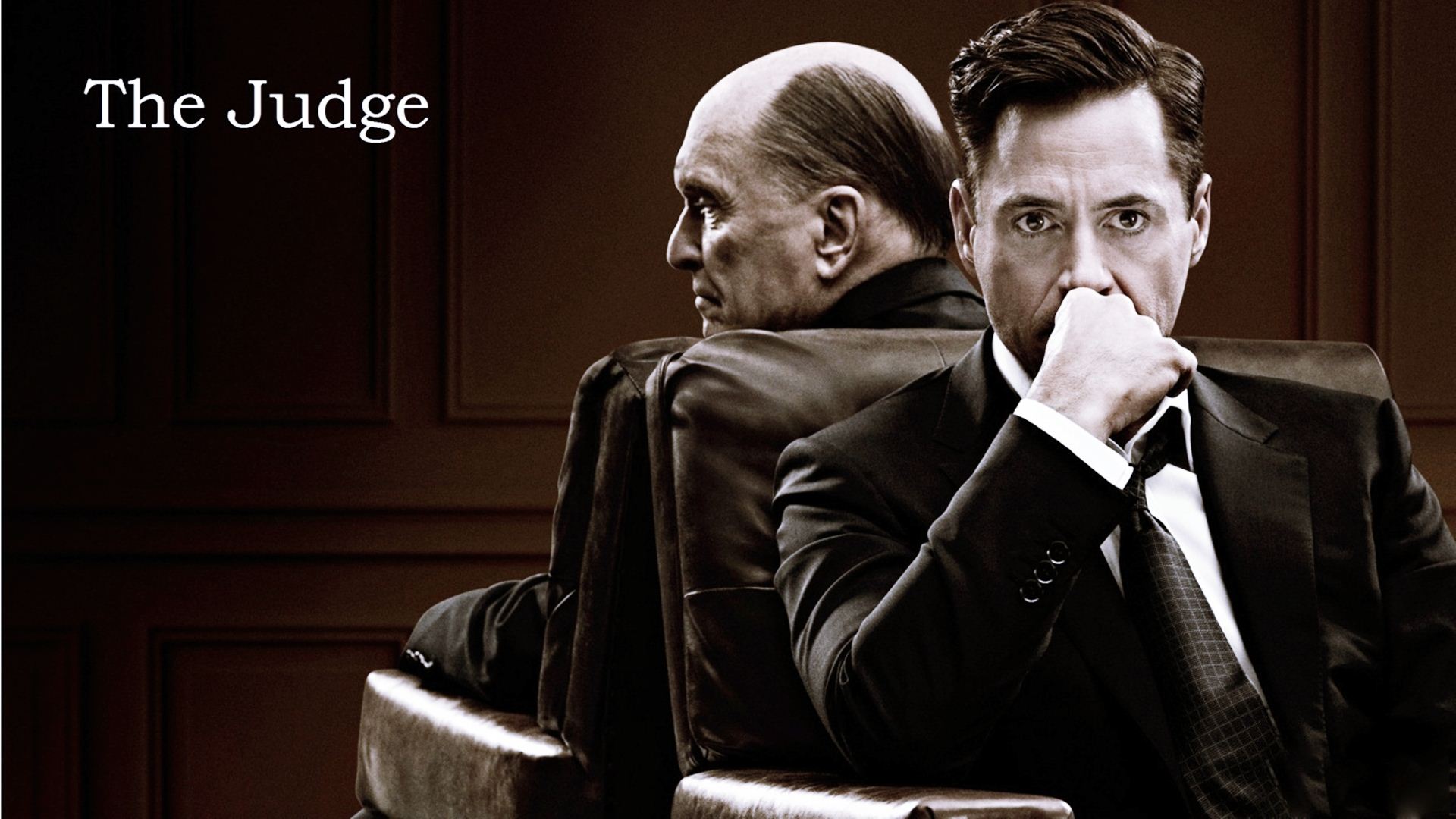
Review – The Judge (15) [2014]

The Judge - title banner

Star Rating: 3.5/5

Director:

  • David Dobkin – Wedding Crashers, Fred Claus, The Change-Up

Cast:

  • Robert Duvall – The Godfather I-II, Deep Impact, Jack Reacher, Racing Legacy
  • Robert Downey Jr – Chaplin, Zodiac, Iron Man I-III, The SoloistThe Avengers Assemble I & II, Captain America III
  • Vera Farmiga – Dust, Source Code, Safe House, The Conjuring I-II
  • Billy Bob Thornton – Armageddon, Monster’s Ball, Eagle Eye, London Fields
  • Leighton Meester – Gossip Girl, Date Night, The Roommate, By The Gym
  • Vincent D’Onofrio – Guy, Men In Black, Escape Plan, Jurassic World
  • Jeremy Strong – The Happening, Lincoln, Zero Dark Thirty, Selma
  • Ken Howard – Melrose Place, Michael Clayton, Rambo, The Wedding Ringer
  • Emma Tremblay – Elysium, The Giver, Santa’s Little Ferrets
  • Sarah Lancaster – Saved By The Bell: New Class, Everwood, Dr Vegas, The Good Doctor
  • David Krumholtz – Sausage Party

Music Composer:

All parent-child relationships are fraught with layers and complexities. Regardless of whether a parent and child have a good, bad or ambivalent relationship, the relationship is always coloured by past events and the personalities of the individuals involved. Despite The Judge being ostensibly about a judge in the docks, the film interestingly tells us more about a difficult father-son relationship than about being a judge.

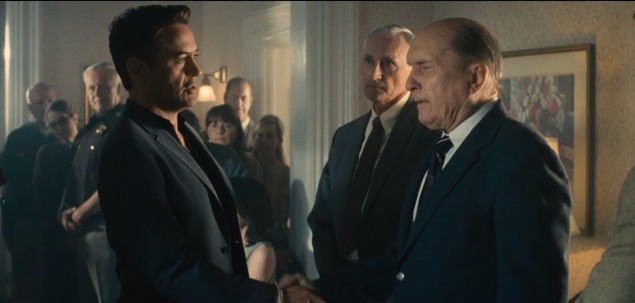
Hank (Robert Downey Jr) reunites with his father, Judge Joseph (Robert Duvall), who virtually shuns him.

Hank (Robert Downey Jr) reunites with his father, Judge Joseph (Robert Duvall), who virtually shuns him.

The Judge begins with Hank Palmer (Robert Downey Jr), a defence barrister in Chicago, learning that his mother has died and that he must return to Calinville, a small town in Indiana, for the funeral. In Calinville, Hank reunites with his brothers, Glen (Vincent D’Onofrio) and Dale (Jeremy Strong), as well as his father, Judge Joseph Palmer (Rubert Duvall), whom Hank has a problematic relationship with, and vice-versa.

However, one night, Judge Joseph comes home with the side of his car damaged with blood stains on it. Soon, the police come round and question him about a dead body. Then, they charge Judge Joseph with murder. That is when Hank steps in to defend his father.

The Judge is a stimulating film with much going for it. The dialogue is well written and the acting is brilliant across the board; especially, Robert Downey Jr and Robert Duvall. Both are fantastic and the two men have a great, if challenging, rapport. Downey Jr may (inevitably) dominate the film with his trademark fast-talk and arrogance. But unlike his (pathetic) attempts at giving himself a weakness in Iron Man III, in The Judge he genuinely shows audiences vulnerability in his character; not least in his fractured relationship with his on-screen father. Reflexively, Duvall gives viewers an interesting take on the difference in being a good judge and a good father due to Judge Joseph’s relationship with Hank.

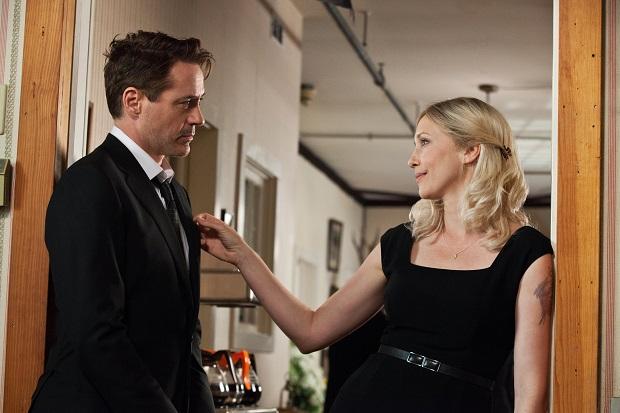
Hanks meets Samantha (Vera Farmiga) for the first time in two decades, to put some spark back into their long lost romance.

Hanks meets Samantha (Vera Farmiga) for the first time in two decades, to put some spark back into their long lost romance.

Downey Jr and Duvall aside, the rest of the cast all play their roles decently. However, there are too many extraneous characters that add little to the storyline, or rather the storylines because The Judge tries to be three films in one. That The Judge cannot determine what sort of film it wishes to be is the root of its problems.

Predominately, it is a family drama. This plot is the strongest of the plots and the one with the most detail. Arguably, if the movie had just stuck to being about the Palmer family (and its dynamics) it would have made for a fascinating (and succinct) hundred minutes. But instead, The Judge has elements of a legal thriller and a romantic comedy about it, which bloat the movie’s running time to 141 minutes.

The legal thriller storyline feels like a side issue throughout the film, which is odd considering the movie’s title. Relatively little time is given to this particular plot, but all the same it is an intriguing and worthwhile storyline; it gives one an insight into how difficult it must be for a judge to work out what is (and what is not) the truth of a case (which holds great significance currently in light of the conclusion of the Oscar Pistorius sentencing); and, moreover, some of the courtroom duels between Hank and Prosecutor Dwight Dickman (Billy Bob Thornton) are highly entertaining. Credit must also be given to Director David Dobkin for giving the central protagonist a worthy adversary and not a second-rate nitwit, like in other legal thrillers, such as The Lincoln Lawyer.

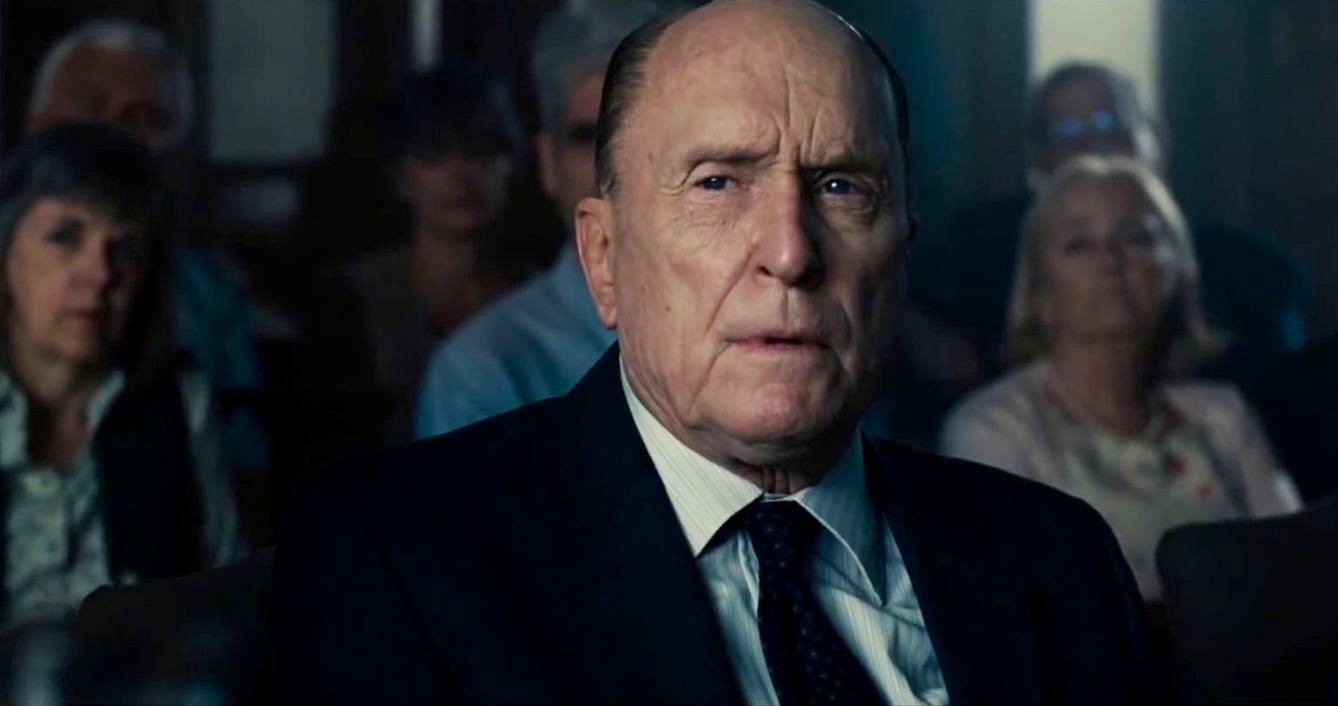
Judge Joseph, in the unfamiliar position of being on the receiving end of questions while in the dock.

Judge Joseph, in the unfamiliar position of being on the receiving end of questions while in the dock.

Nevertheless, if the legal thriller elements of the film feel like a sideshow, the romantic comedy sub-plots feel pointless and often inappropriately timed. Sarah Lancaster’s, Vera Farmiga’s and Leighton Meester’s characters add an (inane) contrivance that The Judge would have been better without, while some of the (otherwise brilliant) exchanges between Hank and Judge Joseph should have occurred at more suitable times and places. Inane contrivances and revelations at unsuitable times are clichés that romantic comedies regularly adopt to make their stories more interesting than they really are, and Dobkin knows this all too well from having directed 2011’s (the forgettable) The Change-Up. The Judge would have made for a far more realistic film, with a more consistent tone, if Dobkin had focussed the film on the family drama and added more to the legal thriller elements, and not felt the need to dabble again in the mire of a romantic comedy.

All-in-all, The Judge is a very good film. It has been well directed, written and acted; the handicap is that Dobkin could not make up his mind as to what genre of film he wanted to make. Otherwise, the movie would have been among the best of 2014. Despite that, The Judge gives audiences some terrific performances and scenes, as well as an appreciation for a complex and layered father-son relationship. Above-all, The Judge illustrates that one can be a don in their profession, but that does not necessarily make one a good mother/father, and that past experiences with one’s kids can have a great impact on one’s personal and professional career.

PG’s Tips
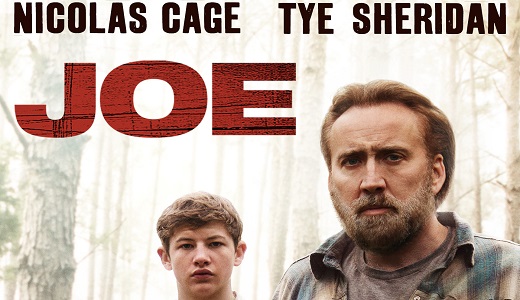
Review – Joe (15) [2014]

Joe - title banner2

Star Rating: 3.5/5

Director:

  • David Gordon Green – George Washington, Pineapple Express, Your Highness, Manglehorn

Cast:

  • Nicolas Cage – Leaving Las Vegas, Face/Off, Season of the Witch, Left Behind
  • Tye Sheridan – The Tree of Life, Mud, Dark Places
  • Gary Poulter
  • Ronnie Gene Blevins – A Beautiful Life, Kiss the Abyss, The Dark Knight Rises, Then There Was
  • Anna Niemtschk

Music Composer:

  • Jeff McIlwain – Snow Angels, The Sitter
  • David Wingo – George Washington, Take Shelter, The Sitter, Mangelhorn

Whatever happened to the acting career of Nicolas Cage? In 1996, he won an Oscar for Leaving Las Vegas and in 2003 he was nominated for an Oscar for Adaptation., so Cage clearly can act. But since starring in the reboot of The Wickerman in 2006, Cage seemingly set his career on fire with laughable performances in critic kick-bags, such as Ghost Rider I & II, Knowing, The Sorcerer’s Apprentice, Season of the Witch and Drive Angry, to name six from the catalogue. Therefore, upon Joe, the question was: could Cage’s career sink any lower or was going to (finally) rise from the ashes?

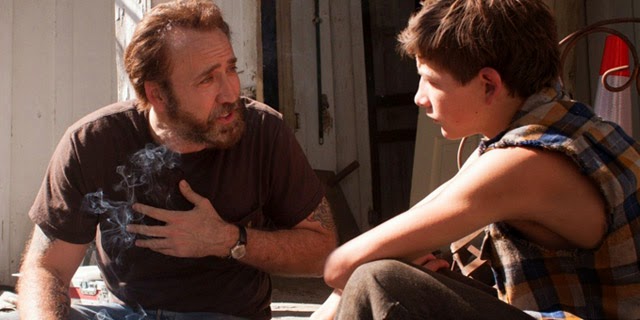
Joe (Nicolas Cage) giving some good, worldly advice to young Gary (Tye Sheridan).

Joe (Nicolas Cage) giving some good, worldly advice to young Gary (Tye Sheridan).

Joe is an indie drama set in the rural, Deep South of America, and is an adaptation of Larry Brown’s 1991 novel of the same title. The film predominantly centres round Joe (Nicolas cage), an ex-convict who runs a business demolishing trees for development sites. One day, Gary (Tye Sheridan), a teenager new to the area, finds Joe and asks if he and his father, Wade (Gary Poulter), can work for him as they need money. Joe agrees, but soon discovers that Wade is an alcoholic with a dreadful character. Upon realising Wade’s ways, Joe takes on the mantle of a father figure for Gary.

Joe is a very decent raw and grisly film about poverty in the Deep South, and about ruin and redemption in general. In a similar way to Mud (also starring Tye Sheridan, plus the reborn Matthew McConaughey), not a lot happens (and what does happen is a tad predictable). But the dialogue in Joe is fantastic and the acting is superb across the board.

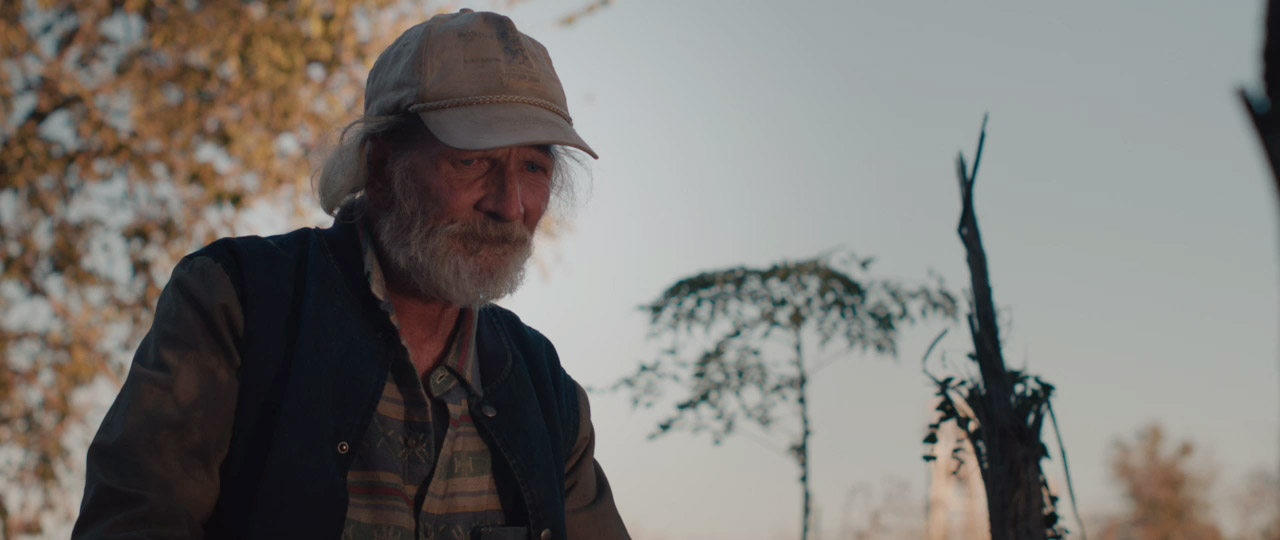
Wade (Gary Poulter), Gary's alcoholic father, looking like the homeless man he was in real life (until it was sadly cut short a few months after filming ended).

Wade (Gary Poulter), Gary’s alcoholic father, looking like the homeless man he was in real life (until it was sadly cut short a few months after filming ended).

Nicolas Cage shows us that he is more than just a mercenary willing to cash in on his name. For once, Cage looks like he actually wanted to get up in the morning for filming, as there is more to him in a role than merely a bland expression, a monotone for a voice, and an occasional half-hearted smile to make him your average, likeable guy (as if anyone was going to believe that Nicolas Cage was your ‘average Joe’). In Joe, Cage’s southern accent is refreshingly real, and his grizzled face reflects a man constantly holding back his pent up rage in order to stay on the right side of the law. Moreover, the way Cage’s character takes Gary under his wing is wonderful to watch and enables viewers to empathise with Joe, despite Joe otherwise being rough-around-the-edges, with a drink-driving habit and a history of violence. (If anything, it would have been nice to learn where this violent streak comes from and to find out more about Joe’s background.)

But it is not just Cage that is wonderful to behold in Joe. Like in Mud, Tye Sheridan again demonstrates that he has a long acting career ahead of him. Here, Sheridan performs magnificently as a teenager willing to work hard to put bread on the table for his family, since his father won’t do it. And, speaking of his father in the film, Gary Poulter’s performance, as the horrible alcoholic family-beater, is brilliant and worryingly realistic. What makes Poulter’s performance even more remarkable is that he was not even an actor by trade: he was a hobo! (The casting of a non-actor is not surprising for a David Gordon Green film as the director regularly picks locals for roles in his movies.)

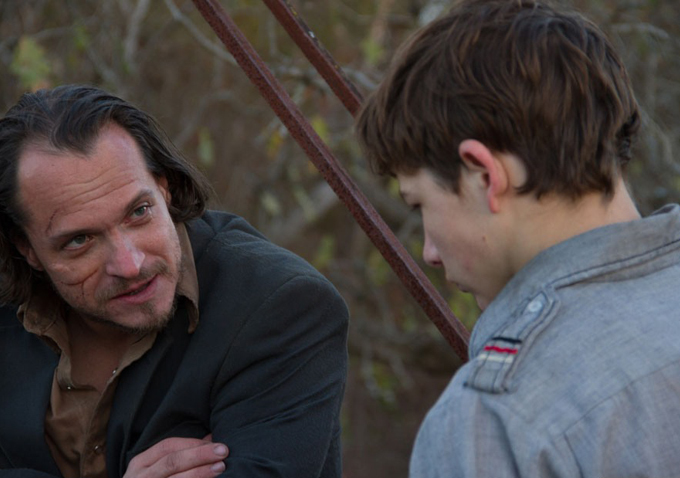
Gary speaking with Willie-Russell (Ronnie Gene Blevins). There is a reason why he has a scar under his right eye and Willie-Russell wants revenge against the man who did it.

Gary speaking with Willie-Russell (Ronnie Gene Blevins). There is a reason why he has a scar under his right eye and Willie-Russell wants revenge against the man who did it.

However, it is not just the acting and dialogue that is fantastic in Joe, since the cinematography is equally good and fitting. From the broken homes (metaphorically and literally); to the trucks people drive; to the dirtiness and dusty nature of the region, the rural poverty of the Deep South and the type of people who inhabit it are well depicted. No-one in Joe personifies the place and the complexities of living in such a place more than Nicolas Cage’s character.

Over-all, Joe is a solid film that is very realistic representation of the Deep South of America. The movie may have little by way of action and plot-twists. Nevertheless, one can easily engage with the characters in the film, not least due to the dialogue and the vivid performances from the cast. Surprisingly, this includes Nicolas Cage; for in Joe he reminds us that his Oscar win and nomination, all those (many) years ago, were no flukes and that truly he can act. It might be a little early to say that Cage’s renaissance has begun. But maybe, just maybe, Cage will use Joe (as Matthew McConaughey did with The Lincoln Lawyer and Mud) as a springboard to re-launch his career.

PG’s Tips
Review – Concussion (15) [2014]

Concussion - title banner

Star Rating: 2/5

Director:

  • Stacie Passon – Strange Things Started Happening

Cast:

  • Robin Weigart – Deadwood, The Sessions, Explosion
  • Julie Fein Lawrence – Farewell Miss Fortune
  • Maggie Siff – Then She Found Me, Nipp/Tuck, Mad Men, Sons of Anarchy
  • Johnathan Tchaikovsky – Descent, Ice Age: Dawn of the Dinosaurs
  • Claudine Ohayon – Flushed

Music Composer:

  • Barb Morrison

In any artistic medium, there is a simple formula: show don’t tell. Invariably, whenever film directors, artists or writers show audiences the message they wish to portray in the medium, it has a far greater emotional weight upon audiences than if the same message were recanted by someone. Stacie Passon sadly does not appear to have taken this formula on board and her interesting debut film, Concussion, suffers because of it.

Kate (Julie Fein Lawrence) with  her wife, Abby (Robin Weigart), after Abby gets hit by a baseball.

Kate (Julie Fein Lawrence) with her wife, Abby (Robin Weigart), after Abby gets hit by a baseball.

Concussion is a low-budget, indie drama set in present day, up-market, suburban New York. The movie starts with Abby (Robin Weigart) getting hit by a baseball in the side of the head. She suffers minor concussion from it.

Upon waking up, Abby, an interior designer/decorator by trade, who spends most of her time at the gym or in Pilates classes, becomes disillusioned with her life; especially, with regards to her loveless, lesbian marriage to Kate (Julie Fain Lawrence). With the help of her co-worker, Justin (Johnathan Tchaikovsky) Abby decides to become a high-class lesbian escort.

Concussion’s plot is simple, grounded and (almost solely) revolves round Abby, whom audiences can empathise with to a degree. In addition, the acting is decent, the setting is apt, and Passon treats the storyline’s subject matter in a non-judgmental way. This is commendable as it would have been easy to turn Concussion into a whore bashing exercise or a gratuitous light-porn film (like the four-hour dirge Nymphomaniac or the impressive Blue Is The Warmest Colour).

Abby being gentle with one of her clients, Lisa (Claudine Ohayon).

Abby being gentle with one of her clients, Lisa (Claudine Ohayon).

Although, strangely, by Passon treating the subject-matter with such maturity, she brings up some other issues. The thought of working/non-working women going off during the day to pay for sex suggests that people have good reason not to trust their wives, which is both worrisome and (hopefully) wrong… Unless Passon believes this issue to be more common than is generally known.

The subject-matter might be dealt with sensibly; however, apart one instance near the end of the film, Concussion lacks depth in its plot developments. Part of the problem is that the film does more telling than showing. For example, viewers are told that Abby was hit by a baseball and suffers concussion, but we are not shown either of these. Likewise, viewers are told that Abby is very involved with her local synagogue, yet we don’t see her ever go to synagogue or do anything remotely Jewish-related.… Hang on a moment, Passon herself is Jewish and is in a lesbian relationship. Is Abby merely Passon’s avatar? Or is Concussion Passon’s way of illustrating her marital problems and/or her (repressed?) sexual desires?

Regardless of what Passon’s motive behind Concussion might have been, it is understandable that Passon cannot show everything due to budgetary constraints. Nevertheless, the consequences of showing audiences too little is that the extent to which audiences can become emotionally invested in the characters is frustratingly limited; especially, as there is clearly more to the characters than is divulged.

Abby with another one of her clients, Sam (Maggie Siff).

Abby with another one of her clients, Sam (Maggie Siff).

Abby, her clients and Kate probably all have interesting back-stories. And it would have been intriguing to gain a deeper understanding as to why they are the way they are; why Kate shows Abby little love; and why each of Abby’s clients come to her, as they all have their reasons. Yet, (with the exception of Sam, played by Maggie Siff), all of these details and depths are sadly missing from the film; to its detriment.

Over-all, Concussion is a frustrating and disappointing movie. The film’s premise has not been touched upon before and the movie deals with it in an adult manner. It also has a cast that buys into the subject-matter. All the same, Stacie Passon unfortunately misses the boat on Concussion. The film’s Achilles-heal is that viewers are unlikely to care about the characters and their situations. This is because the movie does too much telling and not enough showing.

PG’s Tips
Review – Philomena (12a) [2013]

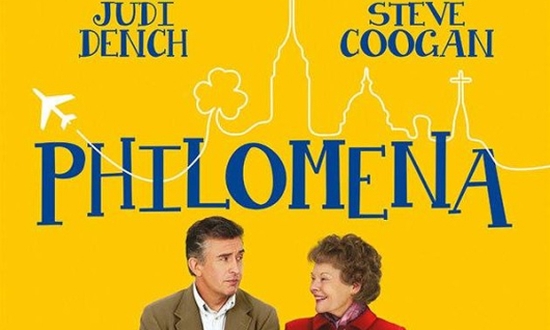
Philomena - title banner

Star Rating: 3.5/5

Director:

  • Stephen Frears – The Queen, Tamara Drewe, Untitled Lance Armstrong Biopic

Cast:

  • Judi Dench – Shakespeare In LoveMy Week With Marilyn, Skyfall, The Best Exotic Marigold Hotel I & IISpectre
  • Michelle Fairley – The Others, Harry Potter VII(i), Game of Thrones, Ironclad II
  • Steve Coogan – Tropic Thunder, What Maisie Knew, Northern Soul
  • Sophie Kennedy Clark – Dark Shadows, Nymphomaniac
  • Sean Mahon – Line of Fire, Reign of the Gargoyles, Dark Shadows
  • Charlie Murphy – Love/Hate, 71, Northmen: A Viking Saga

Music Composer:

Take Shelter, My Week With Marilyn and Shadow Dancer had solid premises and the potential to be very good films. Alas, they all shared the characteristics of being flat, lacking in character development, and running out of steam long before the end. It resulted in their latter scenes being overly predictable or trite, or both. Similarly, despite being a decent film, Philomena suffers from the same traits.

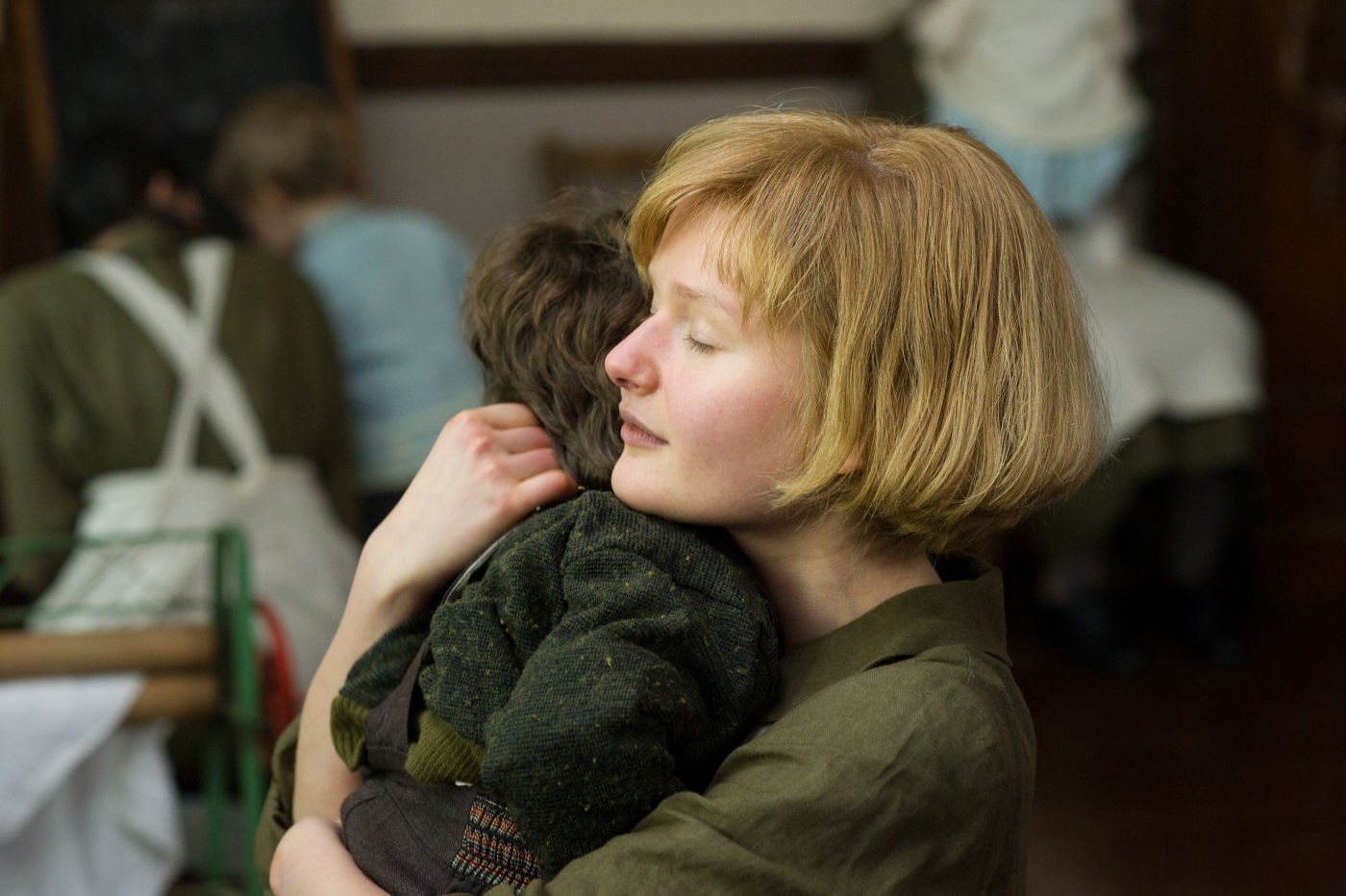
Young Philomena (Sophie Kennedy Clark) holding her son tightly in the sole hour a day that she is given free time at the nunnery.

Young Philomena (Sophie Kennedy Clark) holding her son tightly in the sole hour a day that she is given free time at the nunnery.

Philomena is a British drama set in 2003. The movie is based on the true story of how an elderly Irish lady, Philomena Lee (when young, played by Sophie Kennedy Clark; when old, by Judy Dench), came to find her son, Anthony (when adult, played by Sean Mahon).

Anthony was taken away from Philomena in the 1950s when he was a toddler by the nuns at a Catholic nunnery, while Philomena lived there as punishment for her sin of becoming pregnant outside of wedlock. But now she has the help of a journalist in Martin Sixsmith (Steve Coogan), who has just lost his job as a Labour government advisor and a BBC reporter. He wants to write a story that will reinvigorate his career (as a Russian history author of all things) and helps Philomena to find out what happened to her son.

Philomena’s storyline is straightforward, logical and saddening, yet done with wittiness and dignity. The film wastes little time in getting the two main actors on screen together and moving them in the right direction, which is positive. Quaint Ireland is portrayed in a genial, green way, with cheerful locals down at the local pubbie, while a nasty side of the country is shed light upon by revealing some of the crimes of Catholic nunneries. (Naturally, the particular nunnery involved claim that Philomena distorts the truth and is misleading. As they would.)

Yet, Philomena rapidly feels tired, which is disappointing as one expects more from it. The movie is only 98 minutes long, but it feels longer. All the best jokes are in the trailer, so they lose their panache when said in the film. But in general the humour, which is far from dumb or slapstick, lacks the cutting edge of Woody Allen’s recent Blue Jasmine.

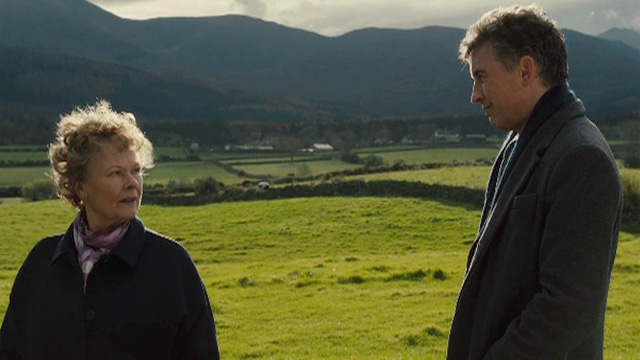
Philomena in her senior years (played by Judi Dench) talking about her past with Martin Sixsmith (Steve Coogan) in the Irish countryside.

Philomena in her senior years (played by Judi Dench) talking about her past with Martin Sixsmith (Steve Coogan) in the Irish countryside.

Moreover, Philomena has little character development and, like My Week With Marilyn, none of the characters seem to go anywhere either. This is despite the characters and the movie taking the correct (and predictable) steps towards the film’s (inevitable) conclusion, which is a strange and an unrewarding sensation as a viewer.

The lack of character arches is a real pity as some of the characters had the potential to be very interesting. Consequently, the acting lacks meat, even though all of the performances are good. Judi Dench is fine as the quirkily charming, if socially odd Philomena in her old age. But Dench’s performance is undermined by the fact that no-one believes she’s Irish. It does not help that Dench’s accent in the film flips between that of a Dubliner and the Queen’s English. In addition, as Dench is playing a role not too dissimilar to many of her past performances, audiences are invariably reminded that she’s English (in case they needed any reminding).

Steve Coogan plays decently as the disillusioned (and discourteous) man trying to find his way again after becoming unemployed in middle age. And Michelle Fairley, playing in a very different role to the dutiful Lady Catelyn Stark in Game of Thrones, gives a good and amusing performance (with the little screen time she has) in her native Irish accent as the ruthless editor, manipulating all the facts that Martin Sixsmiths relays to her in order to create a more enticing story for her newspaper.

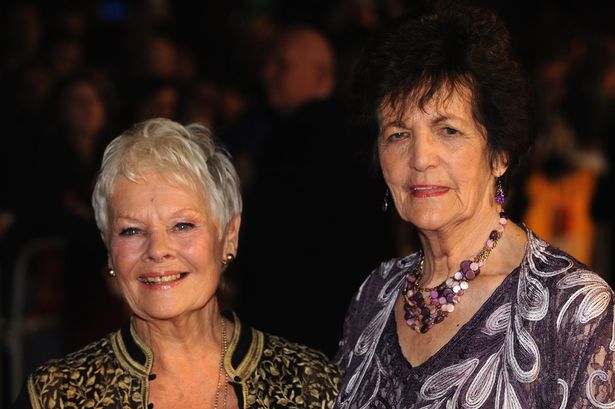
Judi Dench (left) with the real Philomena Lee (right) at the premier.

Judi Dench (left) with the real Philomena Lee (right) at the premier.

However, arguably the best performance of the film is from Sophie Kennedy Clark, as the young Philomena. In spite of the harsh living conditions in the nunnery, Clark demonstrates a mother’s true happiness when she holds her young son in her arms, as well as a mother’s brokenness when her son is taken away. Like Fairley, Clark is not in the film for very long. But the scenes with her on screen are the only emotional ones in this otherwise quite dull movie.

All-in-all, Philomena is a fine film. The movie provides audiences with a decent insight into the mean, inner workings of Catholic nunneries in Ireland in the 1950s, and has a good cast that deliver their lines well enough. Yet, Philomena lacks energy and runs out of puff long before its running time is over. Likewise, the film’s humour, general flatness, and lack of character development makes viewers feel like they’re cutting meat with a blunt knife. All the key ingredients to Philomena should have been sharper and more engaging as the film’s premise is a fascinating one.

PG’s Tips
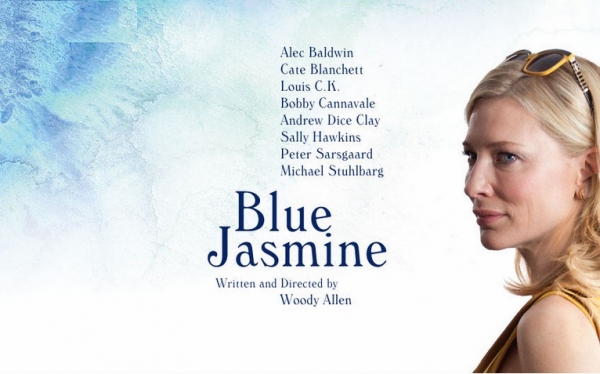
Review – Blue Jasmine (12a) [2013]

Blue Jasmine - title banner

Star Rating: 4.5/5

Director:

Cast:

  • Cate Blanchett – The Lord of the Rings I-III, The Aviator, Notes On A Scandal, The Hobbit I, II & III
  • Alec Baldwin – Pearl Harbour, The Aviator, The Departed, Still Alice
  • Sally Hawkins – Layer Cake, An Education, Great Expectations, Godzilla
  • Andrew Dice Clay – Whatever It Takes, Foolish, Point Doom, Entourage
  • Bobby Carnavale – The Bone Collector, Snakes On A Plane, Parker, Imagine
  • Peter Saarsgard – Rendition, An Education, Orphan, Pawn Sacrifice
  • Daniel Jenks
  • Max Rutherford

Midnight In Paris was a renaissance for Woody Allen. After half a decade without making a decent film, Midnight In Paris won him another Oscar for Best Writing. More importantly, the film reminded us of his talents. Blue Jasmine continues Allen’s re-emergence as a brilliant film director and script writer.

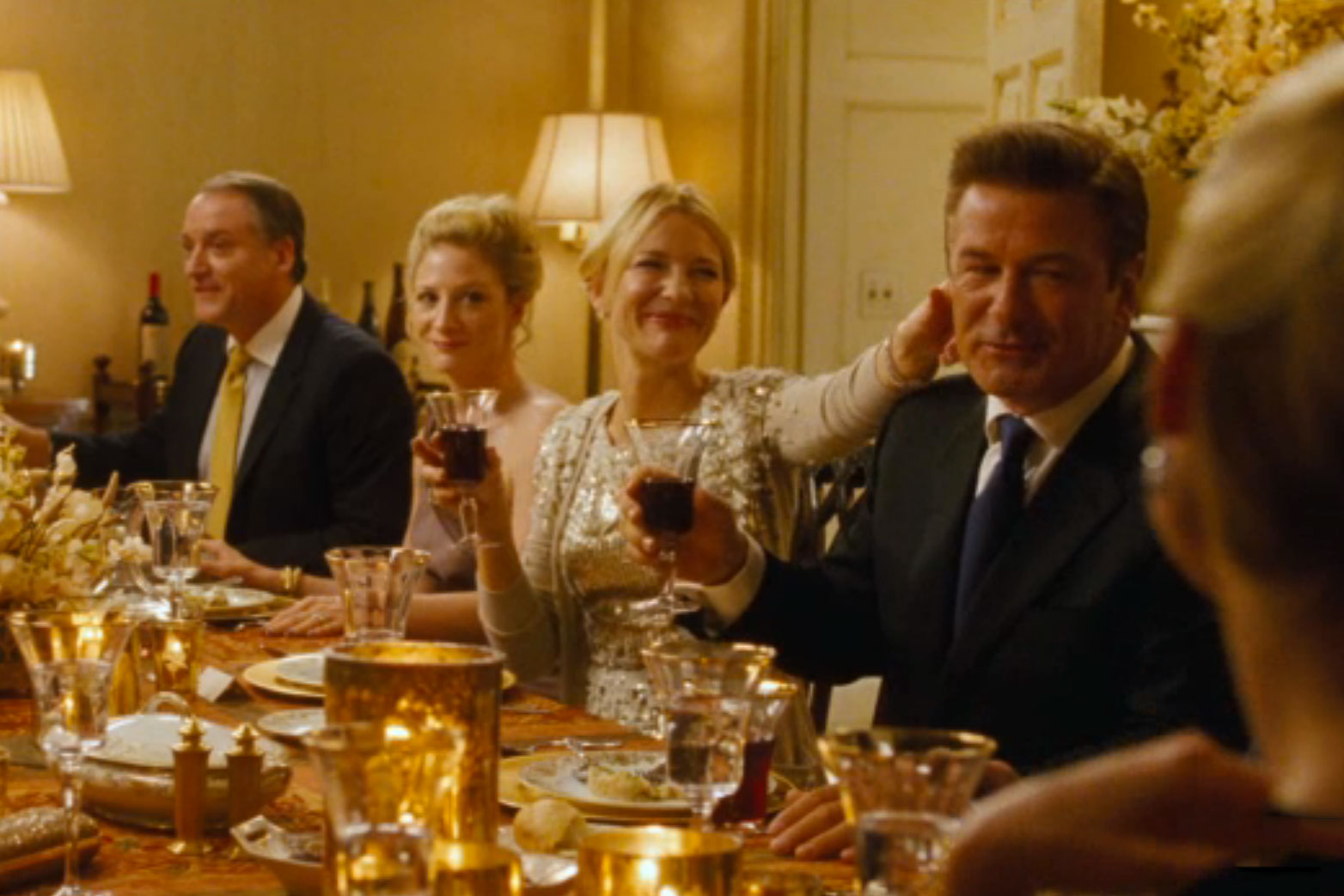
Jasmine (Cate Blanchett), dressed to stun, and living the good life with her husband, Hal (Alec Baldwin), and so-called friends.

Jasmine (Cate Blanchett), in stunning garb, living the good life with her husband, Hal (Alec Baldwin), and their (so-called) friends.

Blue Jasmine centres round the fine-looking Jasmine (Cate Blanchett), who is struggling to come to terms with how her life has turned upside down. From living the glamorous life with her former husband, Hal (Alec Baldwin), in New York, Jasmine takes a few steps down in the world and moves in with her adopted sister, Ginger (Sally Hawkins). Ginger lives in a small, cluttered apartment in San Francisco with her two sons from her previous marriage to Augie (Andrew Dice Clay), whilst doing a menial day-job and having a relationship with the loutish Chili (Bobby Carnavale).

With Jasmine’s situation hardly to her liking, she finds it difficult to sort herself out. In fact, after so many years of living the high life without doing or needing to do a day’s work, Jasmine is in the midst of a nervous breakdown that worsens with every passing day.

Blue Jasmine’s storyline is simple and well thought through. In a typical Allen way, like Midnight In Paris, Blue Jasmine skips back and forth between the (dour) present and the (glitzy) not-too-distant past, dishing us out with the necessary revelations at the opportune moments about why Jasmine left New York and Hal. This style may seem confusing at first. But one adapts to it quite quickly, and soon enough the movie’s approach becomes formulaic and predictable; not that these take anything away from the film.

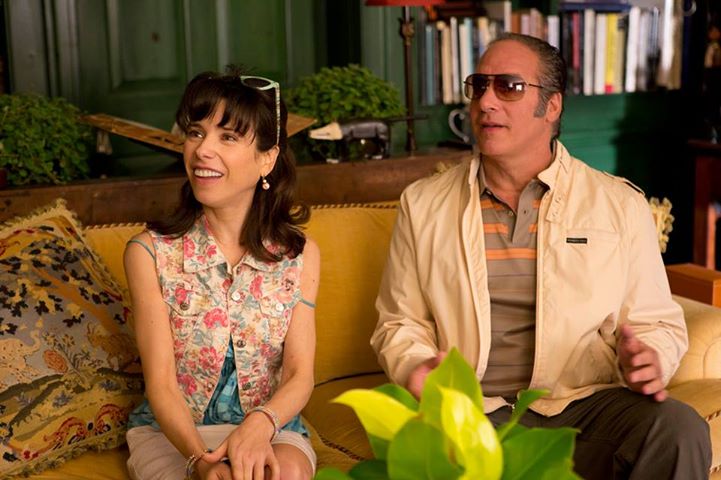
Ginger (Sally Hawkins) and Augie (Andrew Dice Clay), Jasmine's low-class adopted sister and brother-in-law. Jasmine and Ginger are so different, it is hard to believe that they were brought up by the same parents.

Ginger (Sally Hawkins) and Augie (Andrew Dice Clay), Jasmine’s low-class adopted sister and brother-in-law. Jasmine and Ginger are so different, it is hard to believe that they were brought up by the same parents.

Blue Jasmine is intelligent, well-written and surprisingly amusing. Despite taking a detailed and dispiriting view on serious matters like cheating, fraud and (to an under-employed extent) people trying to make ends meet, the movie is littered with wry and cutting humour that many people, rich or poor, can empathise with and find funny. That Blue Jasmine is only 98 minutes long works in the film’s favour too. It answers all of its own questions efficiently and does not drag (unlike blockbuster bore-fests, such as Transformers III, Prometheus and Man of Steel).

Unquestionably, Blue Jasmine‘s script is superb and delivered with panache by the cast. Cate Blanchett’s performance is the most magnetic of them all. Blanchett encapsulates Jasmine’s ability to look wonderful, yet never be far from looking like a nervous wreck; to enjoy her lifestyle, yet turn a blind eye to the things she doesn’t want to see; and to be a melodramatic alcoholic about her existence, yet lie pathologically when she sniffs a chance to escape it. That Blanchett pulls this off so as to make Jasmine’s character (and breakdown) seem realistic, much like Joaquin Phoenix did in The Master, is noteworthy. One only has to look at how Natalie Portman’s (Oscar winning) breakdown in Black Swan became farcical by the end to realise the remarkableness of Blanchett’s skills, and that is without needing to compare it to Robert Downey Jr.’s feigned attempt at a nervous breakdown in Iron Man III.

While Blanchett is likely to take most of the plaudits for Blue Jasmine, the supporting cast play their parts to make the film noteworthy too. Sally Hawkins exemplifies an (immature) younger sibling, filled with inferiority-complexes, believing that none of her mother’s good genes were passed on to her. Alec Baldwin typifies a smooth-talking (slimy) businessman that has echoes of Bernie Madoff. Bobby Carnavale portrays a coarse, blue-collar working, beer-drinking, lad’s man in a down to earth manner. And Andrew Dice Clay plays the embittered (and somewhat broken), former husband well enough, although, he’s hardly in the movie; and when he does appear, he always has something significant to add to the plot that has a semi-contrived feel.

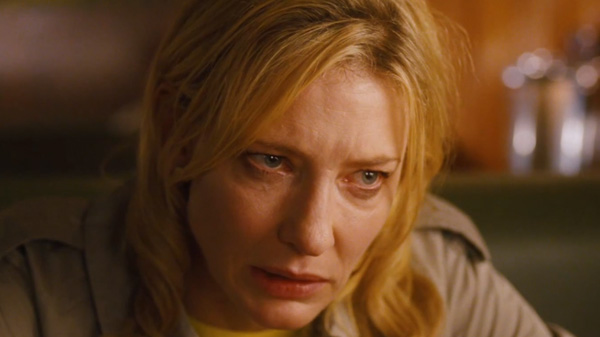
Jasmine, looking terrible after losing her wealth and status, looking like she's on the verge of a nervous breakdown.

Jasmine, looking terrible after losing her wealth and status, looking like she’s on the verge of a nervous breakdown.

The only characters who are not detailed are Ginger’s two children, Matthew (Daniel Jenks) and Johnny (Max Rutherford). These two add little to the story, which begs the question of why they are in the film. A similar argument could be made toward the music that Allen adopts. The movie is set within the last decade, but the music sounds like it is from between the 1930s-50s, which is an odd choice as it appears out of place. But none of these issues should detract from what is otherwise a great film.

All-in-all, Woody Allen’s Blue Jasmine is a smart, satisfying and entertaining movie about sombre issues. With a magnificent and engaging central character, and a convincing supporting cast, Allen’s excellent script is delivered with great sincerity and sardonic humour. Above-all, Blue Jasmine confirms Allen’s renaissance and cements his position as one of the best film directors and script writers that Hollywood has at its disposal. Long may the rebirth continue!

PG’s Tips
Review – Zero Dark Thirty (15) [2013]

Zero Dark Thirty - title banner2

Star Rating: 3.5/5

Director:

  • Kathryn Bigelow – The Loveless, The Weight of Water, The Hurt Locker

Cast:

Music Composer:

When it comes to films about historical events, like Titanic, The Assassination of Jesse James by the Coward Robert Ford and Lincoln, one knows how they will end before even starting them. Yet, such movies can be just as, if not more entertaining and gripping than movies where one does not know what is going to happen. The same is true for the arresting Zero Dark Thirty, which also sends out a potent message to America’s enemies.

The film is a politico-historical drama based around real events. ‘Zero dark thirty’ is a military codename for half past midnight, and it is the time that the operation to kill Osama Bin Laden took place on the night of 1st/2nd May 2011 in Abbottabad, Pakistan.

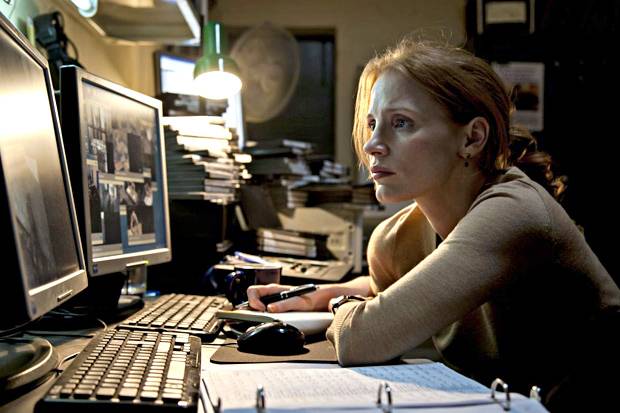
Maya (Jessica Chastain), baggy-eyed as she watches countless interrogations of detainees in her attempts to find a lead to Osama Bin Laden's location.

Maya (Jessica Chastain), baggy-eyed as she watches countless interrogations of detainees in her attempts to find a lead to Osama Bin Laden’s location.

Zero Dark Thirty is all about the CIA’s attempts to find the world’s most wanted man following his masterminding of the terrorist attack on the Twin Towers on 11th September 2011, and his subsequent vanishing. The film is an unhurried, yet captivating thriller that does not feel like it is 157 minutes long. Like with The Hurt Locker, it has a grounded feel, and therefore lacks the hyperbole and surrealism of 24. Even the ending mirrors this mood, which is rare and noteworthy for Hollywood.  It is too early to know how true Zero Dark Thirty is to the reality, but it feels like a realistic and fair representation of events. First, it illustrates how dangerous it is for Americans to be in Afghanistan/Pakistan, thereby emphasising how heroic they are being out there. Second, it demonstrates some of the difficulties CIA agents face operating in the field, trying to unearth information about their targets (who have multiple identities and never seem to stay in the same place twice). Third, the movie shows the CIA adopting dubious torture methods and degrading treatment upon suspected and actual terrorists in undisclosed locations in their desperate bid to find leads on Bin Laden.

There has been much controversy over Kathryn Bigelow’s depiction of torture adopted by US personnel in 2002 and afterward (when it was officially outlawed). Arguably, the film enables Bigelow to reveal her anti-American/anti-war bias again, like she did so painfully in the critically-acclaimed The Hurt Locker. Yet, it is doubtful that she glorifies torture here. Instead, she lets viewers decide for themselves, in a similar vein to Rendition, if torture is ever necessary or useful, which is an intelligent way of kicking off a moral debate on an important and current subject.

CIA agent Dan (Jason Clarke) arguing with his and Maya's boss, Joseph (Kyle Chandler), as he tries to help Maya in anyway he can.

CIA agent Dan (Jason Clarke, right) arguing with his and Maya’s boss, Joseph (Kyle Chandler, left), as he tries to help Maya in anyway he can.

But what is even more striking than the portrayal of ‘enhanced interrogations’ in Zero Dark Thirty is how the film has painted the War on Terror as merely Osama Bin Laden. Yes, he is the figurehead of modern-day Jihadi terrorism and his death is a symbolic hammer-blow to the cause. But by 2011 it is dubious how influential Bin Laden was to the pursuit of world Jihadism, due to the emergence of numerous Al-Qaeda splinter groups, such as Al-Aqaeda in the Arabian Peninsula (AQAP) and Al-Shabaab, among others. Yet, these other terrorist groups are barely given a mention, which is strange considering the security threat they pose to the world.

Additionally, Zero Dark Thirty does not explore, even for the sake of context, the complex and conflicting relationships between America, Afghanistan and Pakistan, not to mention the contradictory nature of the Pakistani state itself. (Anyone remember David Cameron saying that Pakistan looks “both ways” on terrorism?)

However, if one can ignore the lack of political background, one can enjoy strong performances from all the cast. At the forefront, is Jessica Chastain, who demonstrates, for the first time, that she can play a leading role just as solidly as she can a supporting one when given the chance. Her single-minded character, Maya, is given the central task of finding Bin Laden. Maya might get her way sometimes in a contrived manner for reasons of plot, but Chastain looks so natural in the role, and the way Maya changes under the circumstances is indicative of Chastain’s talent.

Patrick (Joel Edgerton) enjoying banter with his marine companions before leading them to into combat to kill Bin Laden.

Patrick (Joel Edgerton) enjoying banter with his marine companions before leading them to into combat to kill Bin Laden.

Maya’s solemnity is in mild contrast to her two main colleagues, the tough-yet-amusing Dan (Jason Clarke) and the bitchy Jessica (Jennifer Ehle). Both Clarke and Ehle play well, and are more empathetic than Maya. Nevertheless, they are both outshone by Chastain’s performance.

Over-all, Zero Dark Thirty is a sincere and honest attempt to recreate the finding and killing of Osama Bin Laden. That one knows how the movie will end is irrelevant, as it is an engrossing and tense watch. The film might be devoid of much of the current context vis-à-vis the War on Terror, and it might be overly-simplified; yet, what it lacks on those fronts, it makes up for in compelling performances, not least from Jessica Chastain. Furthermore, Zero Dark Thirty sends out a stark message to America’s enemies: it doesn’t matter where they hide or for how long they hide, America will find them and bring them to justice.

PG’s Tips
Review – Rust And Bone (15) [2012]

Star Rating: 3.5/5

Director:

  • Jacques Audiard – Read My Lips, The Beat That My Heart Skipped, A Prophet

Cast:

Music Composer:

In August 2012, London held the Paralympics event. More than anything, the paralympians illustrated that people with crippling injuries can be full of life and can excel in the face of much adversity. Yet, the tournament did not display the hardships that such people face on a daily basis. Rust and Bone does so, and in a particularly gritty and unglamorous way.

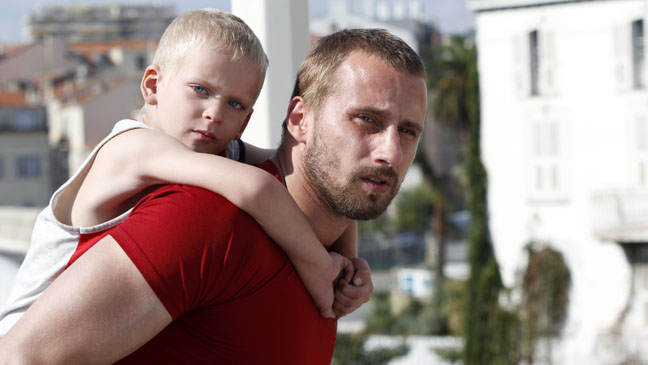
Ali (Matthias Schoenaerts) giving his young son, Sam (Armand Verdure), a piggy-back. Ali, however, is not necessary the most responsible of parents.

Rust and Bone is a French film based on the book by Craig Davidson with the same title. The movie centres round Alain (Matthias Schoenaerts), a man of dubious morality, who is seemingly in sole custody of his young son, Sam (Armand Verdure). As Alain is unemployed, he leaves Belgium to go to live with his sister, Anna (Corinne Masiero), in the Antibes, where he hopes to find work. Using his skills as a former bare-fist boxer, he gets a job as a bouncer at a nightclub.

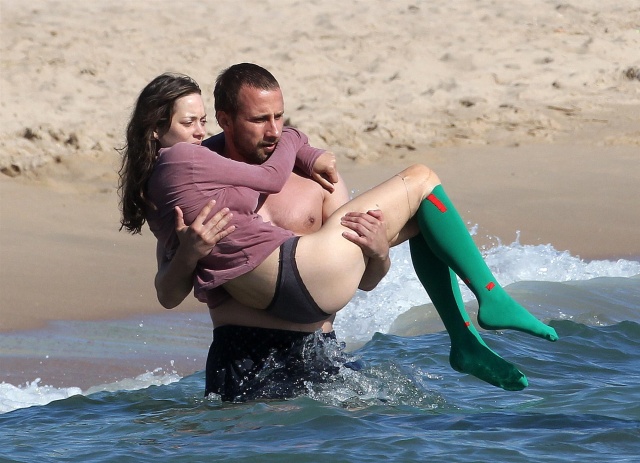
There, Alain meets a drunken Stephanie (Marion Cotillard), a killer-whale stunt trainer. After she falls over and cuts herself badly outside the club, he takes her home. Yet, it is not until Stephanie loses both her legs when a stunt goes horribly wrong that she and him form a close relationship.

Rust and Bone is a 120-minute unhurried, art-house film with a very serious atmosphere. Much of the movie is played out in under-privileged dismal areas, akin to those in Harry Brown. The aesthetics, as well as the silence (with the exception of the loud and brash Katy Perry song, Firework, for the Killer Whale stunts) emphasise the severity of the movie’s tone.

Ali carrying Stephanie (Marion Cotillard) into the sea, following her crippling injury, wherein she had to have her legs amupatated from the knee.

The stark manner of Rust and Bone is reflected in the generally unpleasant characters in the film. Due to a lack of action or intrigue in the plot, the movie relies heavily on the characters, and the relationships that they have with one another, to maintain viewers’ interests. This is not an issue, per se, but as none of the characters are particularly amiable, it is hard for one to truly empathise with their situations.

Alain, for one, is a scummy and untrustworthy individual, with a violent side as well. Indeed, if it were not for his (almost) wonderful treatment toward Stephanie after her injury, Alain would have no redemptive qualities and would be utterly detestable. Despite the nature of Alain’s character, though, credit must go Matthias Schoenaerts. It would have been easy for Schoenaerts to turn Alain into a stereotypical thug. Yet, Schoenaerts doesn’t do this. Rather, he makes Alain unlikeable, but at the same time human, realistic and understandable, which is far from a simple task.

Similarly, Marion Cotillard does a good job as Stephanie, an ordinary girl coming to terms with a crippling injury. Cotillard’s performance in the wheel-chair leaves out nothing, including the struggle of doing something as mundane as making a coffee or going to the bathroom. Cotillard truly makes viewers sympathise with Stephanie’s predicament. Furthermore, and arguably what makes Rust and Bone so unique is that director Jacques Ardiard is not scared to have Stephanie discuss (and perform) sex or swimming in the sea. By doing these, and making Stephanie feel better for it, Audiard demonstrates that Stephanie, and anyone else with a crippling injury for that matter, is a human being. It is a tribute to Cotillard’s skills that she is able to illustrate Stephanie’s feelings so naturally, and without it seeming odd either.

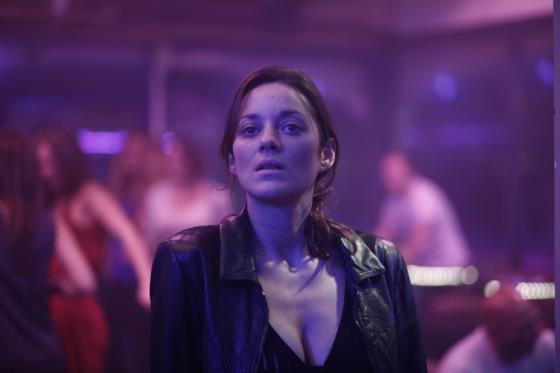
Stephanie looking good and enjoying herself in a nightclub, demonstrating that amputatees know how to have a good time like the rest of us.

Unlike with Schoenaerts and Cotillard, it is hard to overly praise or fault the rest of the cast for their performances. Since the film is dominated by Alain and Stephanie, and how their relationship develops, Armand Verdure, Corinne Masiero and Bouli Lanners (who plays as Martial, Alain’s friend and part-mentor, who is also a gambler of unofficial violent sports among the underclasses) are not given much time on screen. What little we see of them shows us, plausibly, that they are normal people with problems, facing the issues that normal people face, while living in a terrible area.

Over-all, Rust and Bone is a slow-paced and sombre film, but an impressive one in its own right. The movie may not be shot in aesthetically pleasing places, and it may not contain particularly nice characters either. Nevertheless, the film does not do what the authorities of the London 2012 Paralympic games did, and shy away from tackling the harsh realities that arise from crippling injuries. Marion Cotillard’s Stefanie embodies how difficult it can be for people with such injuries to pick themselves up. What’s more, Cotillard’s performance emphasises that a little support from even the most improbable of individuals can help to steer an injured person onto the path of becoming more comfortable with their new and forced lifestyle.

PG’s Tips
Review – In Darkness (15) [2012]

Star Rating: 4.5/5

In Jerusalem’s Holocaust Memorial Museum, Yad VaShem, there is a section honouring the Righteous Gentiles/the Righteous Among The Nations. During World War II (WWII), it is known that almost twenty-four thousand non-Jewish people risked their lives in Nazi-occupied Europe to hide and save Jews from Hitler’s murderous Final Solution. Leopold/Poldek Socha was one such courageous individual. In a powerful but unflattering portrayal of Poldek, the Jews he saved, and the era, In Darkness commemorates the bravery of this unconventional hero.

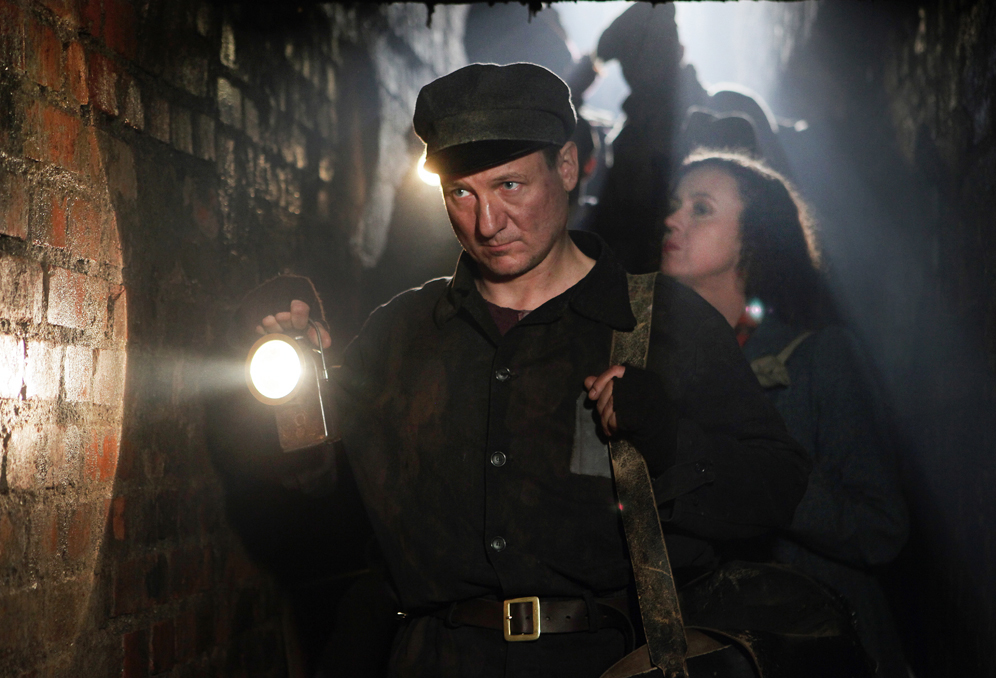
Poldek Socha (Robert Wieckiewicz) leads thirteen Jews through the caverns of the stinking sewers to find them a safe haven from their Nazi persecutors.

In Darkness is a low-budget Polish film that centres round Poldek Socha (Robert Wieckiewicz – The Dark House, Zero, Lech Walesa), a Polish sewer worker in Lvov. Using his extensive knowledge of the town’s sewer system, he hides thirteen Jews in the sewers just before the Lvov Ghetto is liquidated by the Nazis. For fourteen months, Poldek cares for his Jews. He brings them food and other essentials, until the Soviets liberate Lvov in July 1943, when he leads them to safety.

The storyline for In Darkness is straightforward and well put together. At 145 minutes, the film might seem a little long and repetitive, but the distressing nature of the movie ensures that it is not tedious at all.

The intensity of the Jew-hatred, the noise of rapid firing machine-guns and the sight of brutality against innocent people creates an intimidating atmosphere. Like tension in a string, one can feel the Jews’ fear of the Nazis and the local Polish population. The darkness of the sewers and the shaking of the camera enhance the film’s edginess by making the movie seem claustrophobic. At times, notably when Poldek moves the Jews from one excrement-running tunnel to another, the movie becomes almost unbearable to watch.

Poldek's friend, Bortnik (Michal Zurawski). Bortnik is the feared leader of the Ukrainian Nazis in Lvov.

Yet, the ending is probably the most awful and poignant part of the film. As the euphoria of saving the thirteen Jews is at its height, one learns how Poldek died and what was said at his funeral. It should leave anyone with decency sickened! Alas, it’s as unsurprising as it is shocking; a reflection of the profound levels of antisemitism in pre- and post-WWII Poland.

But was Poldek not part of the same society? In Darkness sheds light on his personality and shows him to be a very different kind of hero to Oscar Schindler (played superbly by Liam Neeson in the brilliant 1993 film, Schindler’s List). Whilst Schindler was the dashing businessman who became horrified by the Nazis’ treatment of the Jews, Poldek was not handsome and was quite indifferent to the cruelty dished out by the Nazis. Indeed, director Agnieszka Holland (The Secret Garden, The Wire) reveals on numerous occasions during the film that Poldek was just an ordinary man doing his mundane job and held deep-rooted antisemitic views.

It is not even clear why Poldek ends up hiding and saving the thirteen Jews. Is it because they pay him nicely, so he can afford jewellery for his wife, Wanda (Kinga Preis – The Dark House)? Is it because Poldek knows the unspeakable fate that awaits him and his family if he informs the authorities of the Jews? Or is it out of a sense of moral righteousness? Perhaps not even Poldek, himself, knew. Robert Wieckiewicz vividly captures Poldek’s constant vacillations, as well as his fear of being found out by the local Poles and the Nazis, both of which are always eager to turn in more Jews and their collaborators.

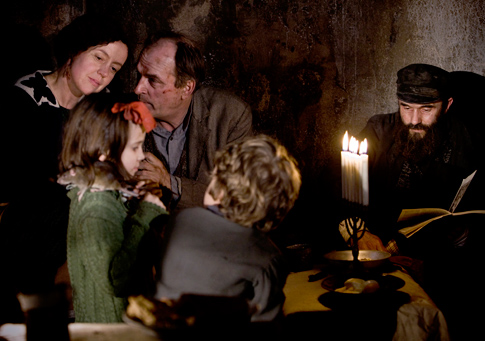
They may be holed up in the dank sewers, but the Jews still manage to celebrate the festival of Hannukkah right under the noses of the Nazis.

Although the cast play very well, Poldek, the people of Lvov and the Nazis are all given critical depictions throughout the movie. But what is more interesting is that Holland has not left the terrified Jews off the hook either. She shows them to be people who are grateful and ungrateful to Poldek; treacherous and edgy among themselves; plus lustful, amongst other things. Hence, In Darkness portrays the thirteen Jews as real people, feeling the pressures of their situation. Again, this is a stark contrast to the Jews in Schindler’s List and other Holocaust movies, like The Pianist or The Boy With The Striped Pyjamas, which depicts them as models of immaculate behaviour.

Over-all, In Darkness is an exceptional but harrowing film. It not only enables us to understand the period, it forces us to experience the torment that the thirteen Jews in the sewers endured for fourteen months. Above-all, In Darkness points out why Poldek Socha should be immortalised among the Righteous Gentiles in Yad VaShem. Despite his antisemitic sentiments and morally dubious reasons for initially hiding the Jews, he showed himself to be a hero. Not a fashionable hero like Oscar Schindler, but one who was willing to stand up to evil and put his, and his family’s, life on the line to save innocent people. Amen!

PG’s Tips