Category Archives: Action

Review – The Hobbit II: The Desolation of Smaug (12a) [2013]

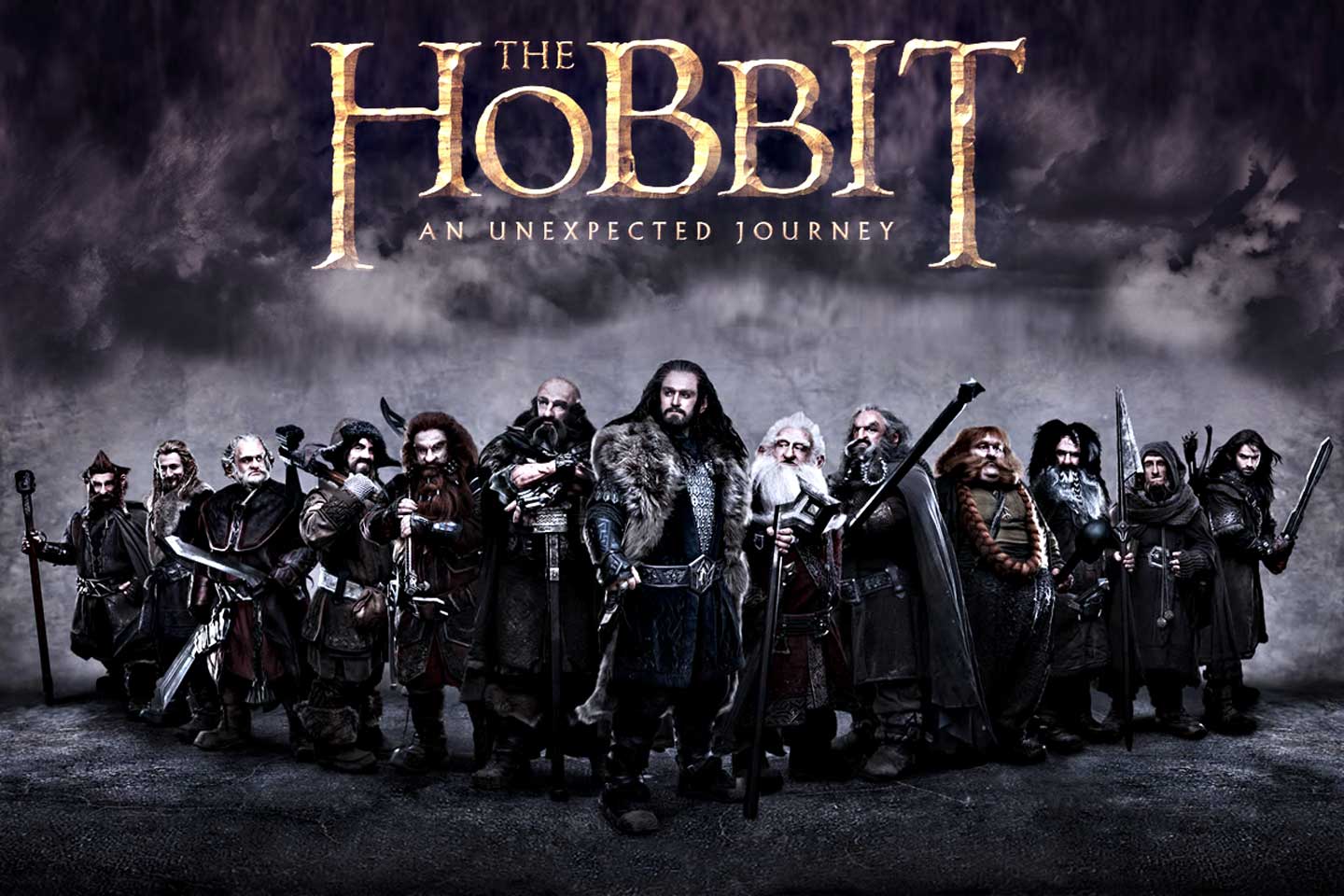
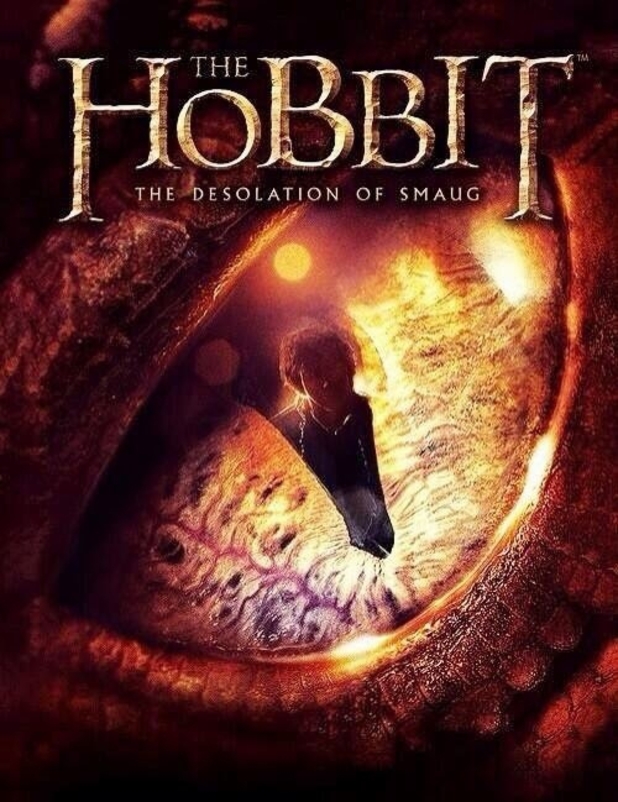
The Hobbit II - title banner

Star Rating: 3/5

Director:

  • Peter Jackson – Lord of the Rings Trilogy, The Lovely Bones, The Hobbit IIII, The Adventures of Tintin II

Cast:

  • Martin Freeman – The OfficeThe World’s End, Sherlock, Fargo
  • Ian McKellen – Apt PupilLord of the Rings TrilogyX-Men I-IIIX-Men: Days of Future Past
  • Cate Blanchett – Notes On A ScandalBlue Jasmine, Cinderella
  • Richard Armitage – Captain America: The First AvengerBlack Sky, Into The Storm
  • Aiden Turner – Alarm, The Mortal Instruments: City of Bones
  • Ken Scott – Casanova, Charlie Wilson’s War, One Day
  • Graham McTavish – Rambo, 24: Day 8, Columbiana
  • Benedict Cumberbatch – Tinker Tailor Soldier Spy, Star Trek II: Into Darkness, The Fifth Estate, 12 Years A Slave
  • Orlando Bloom – The Lord of the Rings I-III, The Kingdom of Heaven, The Good Doctor, Zulu
  • Lee Pace – The Fall, Twilight IV: Breaking Dawn: Part II, Lincoln, Untitled Lance Armstrong Biopic
  • Evangeline Lilly – Lost, The Hurt Locker, Real Steel
  • Luke Evans – Clash of the Titans, Immortals, The Raven, Dracula Untold
  • Stephen Fry – V For Vendetta, Alice In Wonderland, Sherlock Holmes II: A Game of Shadows, Once Upon A Time In The Kitchen

Music Composer:

  • Howard Shore – Lord of the Rings TrilogyHugo, A Dangerous MethodThe Hobbit IIII

In December 2012, Peter Jackson started audiences on another nine-hour trilogy into Middle Earth, nine years after the last one ended. But anyone expecting The Hobbit Trilogy to be of the same quality as The Lord of the Rings Trilogy should have looked at the size of their respective source materials. With The Hobbit book having less than a third of the pages of The Lord of the Rings, it was unsurprising that The Hobbit I: An Expected Journey was overly-stretched, self-indulgent and stuffed with scenes that added little to the adventure. Well (predictably), The Hobbit II: The Desolation of Smaug suffers from the same syndrome, but it is a vast improvement on its predecessor.
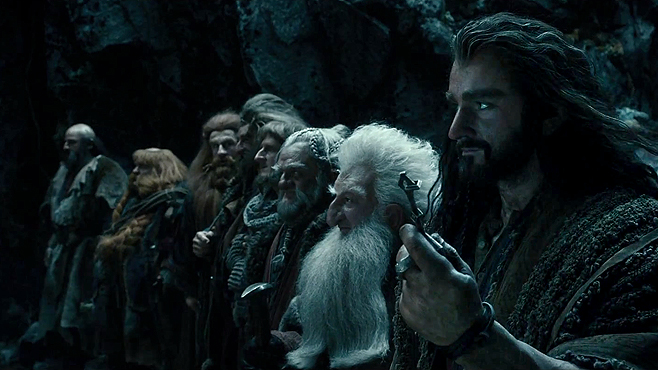
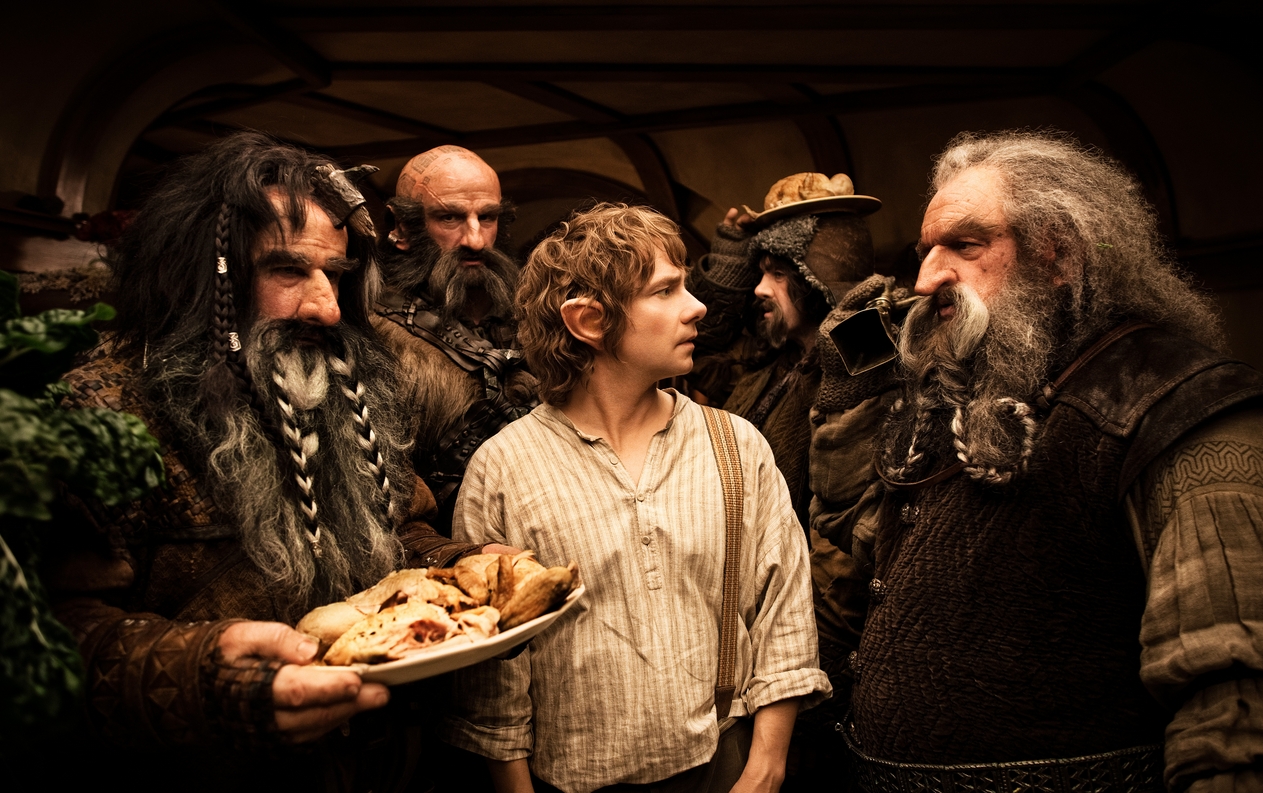
Thorin (Richard Armitage), Balin (Ken Scott) and Dwalin (Graham McTavish, furthest left) looking for a the secret entrance.

Thorin (Richard Armitage), Balin (Ken Scott) and Dwalin (Graham McTavish, furthest left) looking for a the secret entrance.

In The Hobbit I, Bilbo (Martin Freeman) left the Shire to help Gandalf (Ian McKellen) and the dwarves of Erebor reclaim their gold and homeland from Smaug the Dragon. By the end of An Unexpected Journey, after a long and dull trek (that mimicked the journey of the fellowship in The Fellowship of the Ring), some chases, and some fights with goblins and orcs, the eagles rescued Gandalf, Bilbo and the dwarves, and flew them to within sight of the Lonely Mountain and the ruins of Erebor.

Now, it is up to our new fellowship to make their way to the Lonely Mountain and retrieve the Arkenstone, the legitimising gem for the dwarf king. Yet, in order to regain this precious pearl, someone will have to be brave enough to snatch it from under the clasp of a dragon…

The plot for The Desolation of Smaug is straightforward and fun. The storyline also runs at a much faster pace than that of An Unexpected Journey, which is a good thing (since last time out it took 43 minutes just for Bilbo to leave the Shire).

Another noteworthy matter is that Peter Jackson has somewhat rectified two of the faults of the last film by adding in a major (albeit made up) female character (Tauriel, played by Evangeline Lilly); and by giving some personality to Balin, Dwalin and Kili so that they can differentiate themselves from Thorin ‘wannabe Aragorn’ Oakenshield and the other nine (synonymous) dwarves.
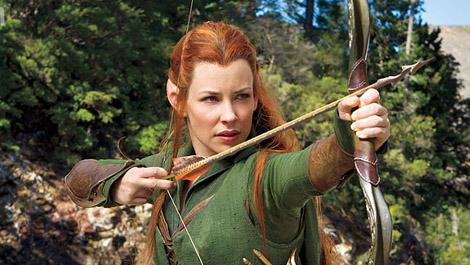
Tauriel (Evangeline Lilly), the uniquely badass elf, showing the orcs what she's made of.

Tauriel (Evangeline Lilly), the uniquely badass elf, showing the orcs what she’s made of.

Moreover, the dragon has been done superbly well. The special effects, combined with Benedict Cumberbatch’s rich, rumbling voice make the scenes with Smaug some of the most creative dragon scenes ever seen in a movie. Undoubtedly, the arrival of Smaug is one of the best features of The Desolation of Smaug and makes the film worthwhile.

However, in a similar vein to An Unexpected Journey, at 161 minutes The Desolation of Smaug is long. (Couldn’t the eagles have flown the protagonists to the Lonely Mountain and spared us two hours?). Worse, The Hobbit II is bloated with the disapplication of the laws of physics, an overuse of CGI, too many fight scenes, some (Logger’s Leap-style) fairground rides, irrelevant sub-plots from old and new characters, and an unnecessary love triangle (stolen from that wreckage of a pentology known as Twilight) to cap it all. All of these add nothing to the story and should have been edited out.

Yes, the water rides might be as entertaining as the love triangle is contrived and pointless. But there is something troubling about the continued mowing down of the orcs by the protagonists. Why couldn’t Peter Jackson have had our heroes at least try to negotiate peace with the orcs? Is it because the orcs look deformed that they can’t be negotiated with?

One may argue that as no negotiations take place in the source material, it cannot happen in the films. But, first, we are in 2014 (not the 1930s when the book was published, or the 1960s when the book became a sensation, or even 2001 when the first of The Lord of the Rings films came out). And in 2014 peace negotiations with peoples different to our own must be given every chance to succeed. Second, Jackson has changed so much from the book that merely to state the excuse of ‘not in the source material’ is neither convincing nor valid.
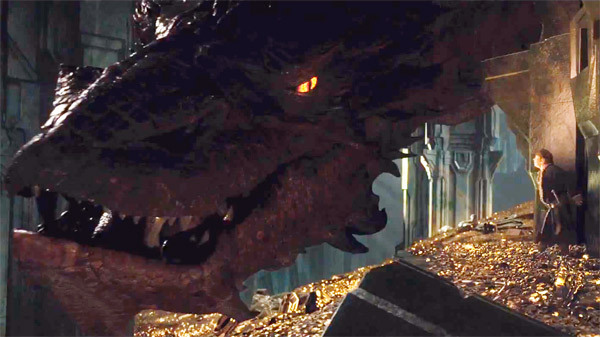
Smaug (voiced by Benedict Cumberbatch), usurper and desolator of Erebor, awakening from his slumber to reveal his awe-inspiring (and frightening) size.

Smaug (voiced by Benedict Cumberbatch), usurper and desolator of Erebor, awakening from his slumber to reveal his awe-inspiring (and frightening) size.

Perhaps, if Bilbo had posed the above-mentioned questions, it would have enriched the story and given the film a deeper moral dimension. More to the point, it would have been in character with Martin Freeman’s excellent portrayal of Bilbo and made The Desolation of Smaug a more gratifying and thought-provoking film.

Over-all, The Hobbit II: The Desolation of Smaug is a step up from An Unexpected JourneyThe Desolation of Smaug moves at a decent pace; has some, if too many, enjoyable and imaginative action scenes; and a fantastic looking and aptly sounding dragon to make for an entertaining spectacle. Nevertheless, there is no getting away from The Hobbit II’s swollen running time. The Desolation of Smaug, like An Unexpected Journey before it, is burdened by the numerous, purposeless, Jackson-invented side-stories that have ruined all that is good about the first two instalments of The Hobbit Trilogy, and that are also surreptitiously sullying The Lord of the Rings Trilogy.

PG’s Tips
Review – Captain Phillips (12a) [2013]

Captain Phillips - title banner

Star Rating: 4/5

Director:

  • Paul Greengrass – Resurrected, Green Zone, Bourne II-III & V

Cast:

  • Tom Hanks – Philadelphia, Toy Story I-III, Saving Mr Banks
  • Catherine Keener – The 40-Year-Old Virgin, Into The Wild, Nailed
  • Barkhad Abdi – Eye In The Sky
  • Barkhad Abdirahman
  • Faysal Ahmed
  • Mahat M Ali
  • Michael Churnus – Love & Other Drugs, Men In Black III, Glass Chin
  • David Warshofsky – Public Enemies, Unstoppable, Now You See Me
  • John Megaro – The Big Short

Music Composer:

Piracy at sea is nothing new. Ships have been hijacked since the dawn of time and the problem is still rife in many parts of the world today. Paul Greengrass’ Captain Phillips shows us superbly what it can feel like when a ship gets taken over by a gang with guns.

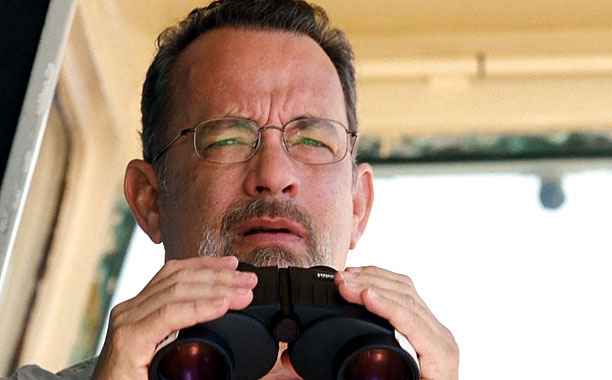
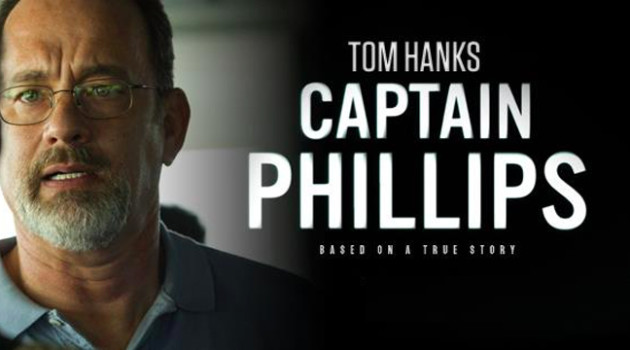
Captain Phillips (Tom Hanks) on the look out for pirates... and worried by how quickly they're advancing toward his ship.

Captain Phillips (Tom Hanks) on the look out for pirates… and worried by how quickly they’re advancing toward his ship.

Captain Phillips is based on the true story which occurred in 2009 and the book, which came out the following year called A Captain’s Duty: Somali Pirates, NAVY seals, and Dangerous Days at Sea by Captain Richard Phillips, himself. The film is about when the Maersk Alabama, a large cargo ship, is seized by Somali pirates near the Horn of Africa, and the crew are taken hostage.

The plot for Captain Phillips is straightforward, grounded and gets to the crux within 20 of its 134 minute running time. From them on the film is tense; so tense, one’s heart pounds in sync with the background beats, and one’s arms shake almost as much. Also, as the film is long, one feels as if the situation is being drawn out in real time. This is despite no lawyers appearing in the film, and little attention given to events behind the scenes in instances of hostages at sea (unlike the very good Danish film, A Hijacking).

The pirates on their little speed boat, eager to seize Maersk Alabama and gain a reward for it back in Somalia.

The pirates on their little speed boat, eager to seize Maersk Alabama and gain a reward for it back in Somalia.

That Somali piracy is a current and serious issue enhances the horror of the situation for Captain Rich Phillips and his crew, and the close up shots (Greengrass’ trademark) enable viewers to see the fear of captain and crew at hand. Although, there is a law suit presently being waged against Captain Phillips, claiming that the movie does not portray events aboard the Maersk Alabama in the run up and during the hijacking truthfully, the film feels (for the most part) chillingly realistic. Some may argue that the realism becomes less convincing as the movie goes on; for example, neither captain nor crew complain of hunger throughout the ordeal. But in the main, Captain Phillips seems sincere, irrespective of the outcome of the lawsuit.

Captain Phillips’ genuineness is helped by the pirates looking bloody scary and behaving in a frenzied fashion. Tom Hanks is likely to gain much of the plaudits come Oscar season, and his display is absolutely brilliant as the heroic (though this point is legally being disputed) and beleaguered captain; indeed, the grimmer the situation becomes, the better Hanks performs. However, the actors playing the pirates do just as much, if not more, to make the film as thrilling (stressful) as it is, since viewers are never sure how the pirates are going to react to movement on the ship, or outside of it.

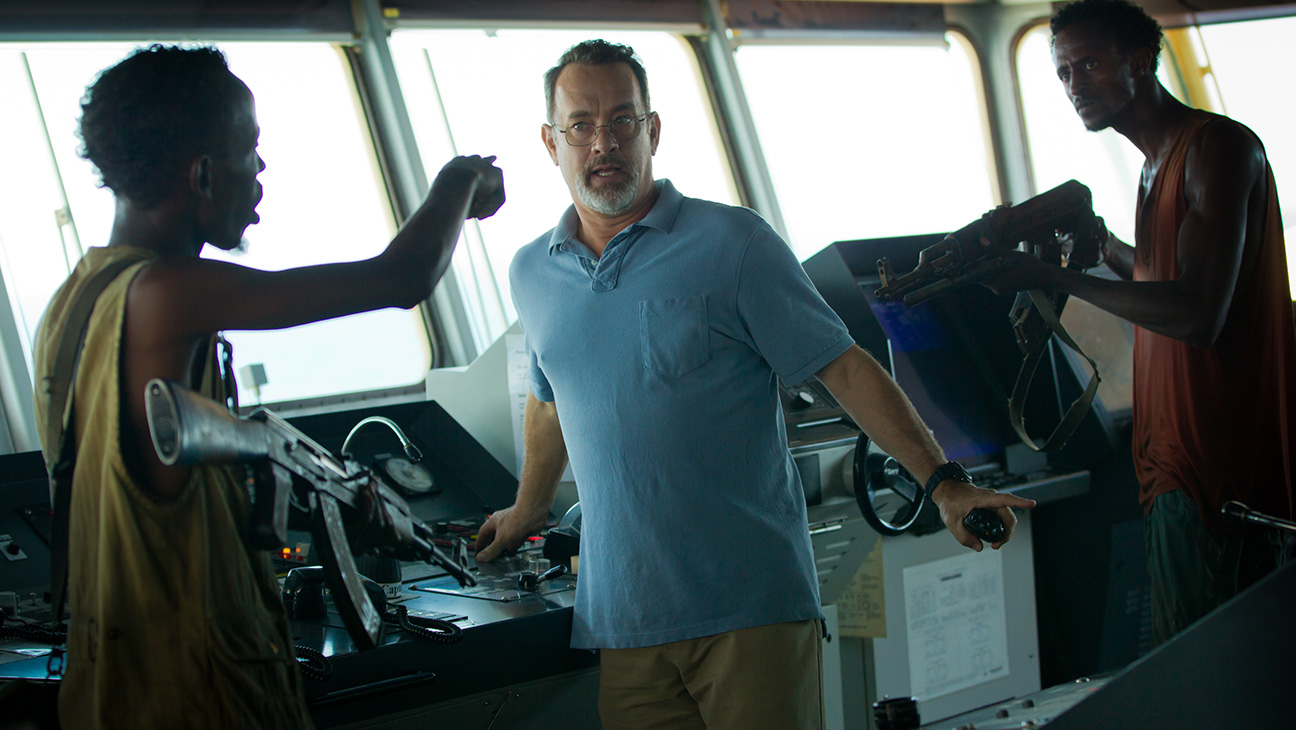
The pirates, having taken the ship and Captain Phillips hostage, telling the captain that they're in charge.

The pirates, having taken the ship and Captain Phillips hostage, telling the captain that they’re in charge.

What is quite remarkable is that the film makes us empathise with the pirates’ predicament. Barkhad Abdi, Barkhad Abdirahman, Faysal Ahmed and Mahat M Ali, the four men playing the pirates (lacking all the glamour and savvy of Johnny Depp’s Captain Jack Sparrow or Geoffrey Rush’s Captain Barbossa from Pirates of the Caribbean I-IV), show us why some Somalis turn to piracy, as well as the problems that await them should they return home without large sums of money, or at least with a great bargaining chip to acquire large amounts of money. One almost comes to pity the pirates’ plight… but for the small matter of them holding a crew (and Tom Hanks) hostage.

All-in-all, Captain Phillips is a nerve-shredding, finger-biting thriller. Granted, the film almost exclusively focusses upon events on the ship and little else. But the movie is grounded and, regardless of its factual accuracy, it feels honest in every respect. Furthermore, Captain Phillips makes viewers experience the terror of modern-day pirates seizing a vessel at sea.

PG’s Tips
Review – Elysium (15) [2013]

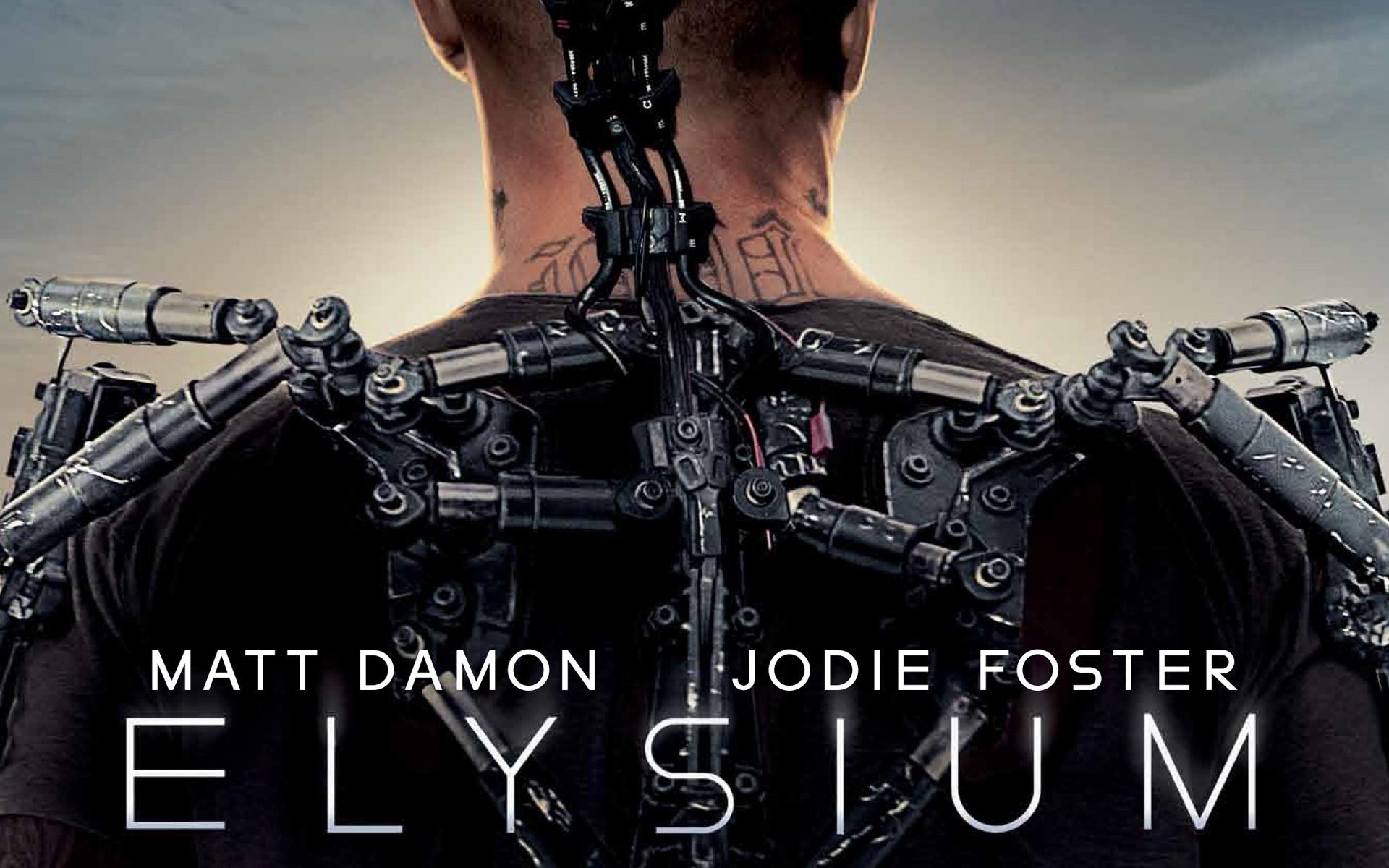
Elysium - title banner

Star Rating: 2.5/5

Director:

  • Neil Blomkamp – District 9, Chappie

Cast:

  • Matt Damon – True Grit, The Adjustment Bureau, ContagionInterstellar
  • Jodie Foster – The Silence of the Lambs, Flightplan, Carnage
  • Alice Braga – I Am Legend, The Rite, Kill Me Three Times
  • Diego Luna – The Terminal, Criminal, Milk
  • William Fichtner – Crash, The Dark Knight, Teenage Mutant Ninja Turtles
  • Sharlto Copley – District 9, The A-Team, Chappie
  • Emma Tremblay – The Judge

Music Composer:

  • Ryan Aman

Science fiction films set in the future have a knack for painting a bleak picture for humanity. That is, until an American hero decides that he’s had enough and rips up the regime as he knows it. In I Am Legend, a cure for cancer led to a mutation that practically wiped out humanity, bar Will Smith who tried to save mankind; in In Time, the poor scrounged in squalor in confined areas until their short-lived clocks ran out, while the rich lived forever in their luxurious areas, until Justin Timberlake broke the system; and in Oblivion, a victorious war against aliens led to the Earth being uninhabitable, until Tom Cruise saved it. Elysium also portrays a depressing picture for mankind, only this time it’s Matt Damon playing the predictable protagonist.

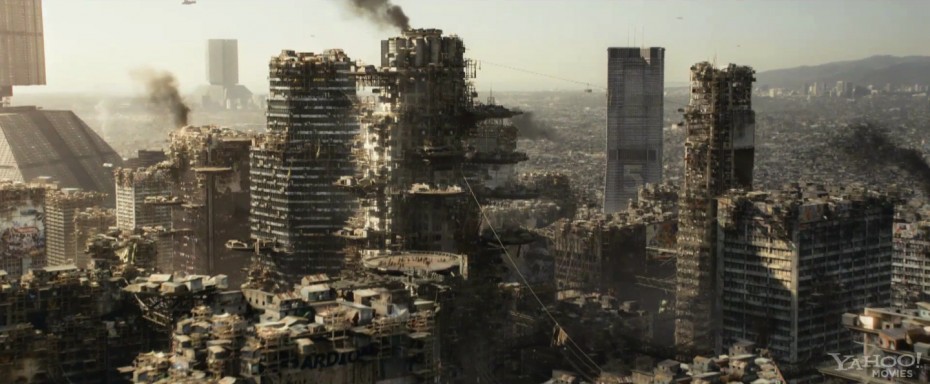
Los Angeles in 2154, depicting a run-down, third world city in which crime is rampant and dogs must eat dogs to survive.

Los Angeles in 2154, depicting a run-down, third world city in which crime is rampant and dogs must eat dogs to survive.

Elysium is based in the year 2154 and centres round Max (Matt Damon). Max lives on the overcrowded Earth, along with all the poor people, while the rich live on a luxurious space station called Elysium. Working in a factory, Max sustains an (avoidable) injury at work. He is told he has only five days to live.

But there is an alternative. Max must go to Elysium, where his ailments can be cured because the rich on Elysium are so far advanced that they have found cures for all health problems. The difficulty for Max is getting to Elysium as he can only travel there illegally. But to do so, he has to get past the aggressive androids that control Earth, as well as Jessica Delacourt (Jodie Foster), the Secretary of Defence for Elysium, who kills anyone attempting to illegally reach Elysium by using her mercenaries on Earth, such as Kruger (Sharlto Copley), to do her dirty work.

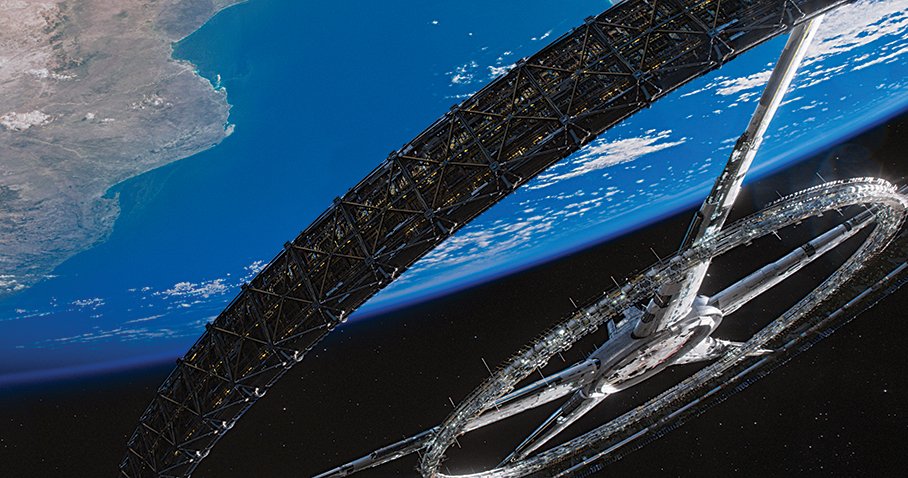
The premise for Elysium is good. Issues like why Elysium was built; how people came to be on Elysium; as well as class divisions and the practicalities of class mobility are fantastic starting points to engage audiences. Moreover, the special effects are brilliant. They look natural and give one a true feel for the world that director Neil Blomkamp has created.

The space station, Elysium, in which the crème of the crop of humanity dwell, with an awesome view of Earth to marvel over instead of a landscape.

The space station, Elysium, in which the crème of the crop of humanity dwell, with an awesome view of Earth to marvel over instead of a landscape.

But, oddly, Elysium fails to engross its viewers. The dialogue is cliché-ridden from three minutes in to the final scene, none of the above-mentioned matters are dealt with properly (if at all), and much of the plot is unoriginal and has been seen before; for example, emotionless (anal) robots controlling whole populations. This was handled in i,Robot (and Will Smith sorted out the problem back in 2004).

Apart from being derivative of other movies, Elysium’s plot rapidly descends into farce before the predictable futuristic ray-gun fight between the hero and the villain, and all the antagonists (all white as it happens) are unimaginative, one-dimensional swines.

The fact that all the villains in Elysium are white raises another problem with the film: its shamefully contrite thinly-veiled racist elements. All the poor, the ill-educated, and the criminals are either Mexican or black (bar Matt Damon), while the elites on Elysium are white with either English, French or white South African accents. Haven’t we moved on since the 19th-century? (Colonialism has ended after-all.)

Matters of racism aside, the acting is mixed by the cast. For the protagonists: Matt Damon does a decent job as the central protagonist without being noteworthy; Alice Braga plays okay as Max’s love interest/damsel-in-distress/the caring mother of Matilda (Emma Tremblay); and Diego Luna is fine as the leading gangster of the illegal (Mexican) underworld.

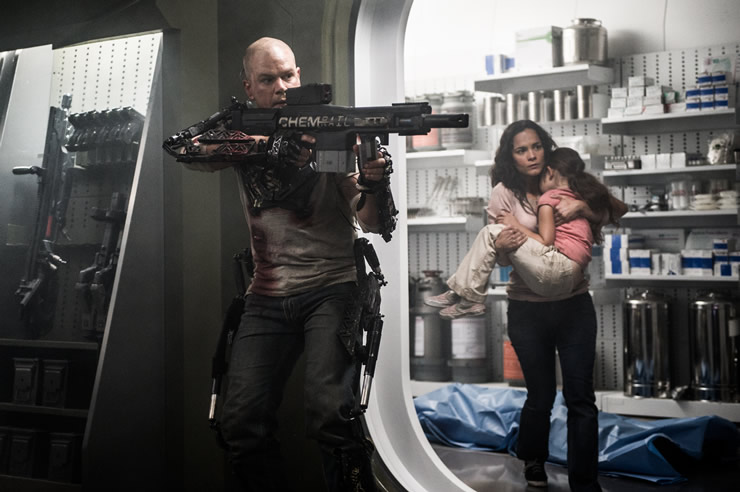
Max (Matt Damon) trying to help Frey (Alice Braga) and her daughter Matilda (Emma Tremblay) from aggressive androids and others.

Max (Matt Damon) trying to help Frey (Alice Braga) and her daughter Matilda (Emma Tremblay) from aggressive androids and others.

For the antagonists: Jodie Foster gives an unusually wooden performance, adopting an unnecessary English accent that looks like it has been bizarrely dubbed post-production (evidently her lines were not contrived enough first time round); William Fichtner is awful as… (I’m not really sure what his role was meant to be); yet, Sharlto Copley is absolutely brilliant as the psychopathic henchman. Granted, his role is that of a sadistic villain that one has generally seen before, but Copley plays it frighteningly well and makes his audience feel uncomfortable whenever he’s on the screen, which is an achievement. Unsurprisingly, Copley is the star of this average movie.

Over-all, Elysium is alright. The film has superb special effects and a solid basis with which to make a genuinely interesting movie, even if it is a miserable portrait of a future for mankind. However, Elysium fails to build on its strong foundations and, instead, is stuffed with clichés, subtle racism, standard storyline developments and stereotypical characters for the genre. And to top it up, Elysium has Matt Damon playing the role that Will Smith and Tom Cruise have made their own: the all American hero.

PG’s Tips

Review – The Wolverine (12a) [2013]

The Wolverine - title banner

Star Rating: 2/5

Director:

  • James Mangold – Girl, Interrupted, 3:10 To Yuma, Knight & Day, Three Little Words

Cast:

  • Hugh Jackman – X-Men I-III, X-Men Origins: Wolverine, Les Misérables, X-Men: Days of Future Past
  • Famke Janssen – Goldeneye, X-Men I-III, Taken I-II, In The Woods
  • Rilo Fukushima
  • Tao Okamoto
  • Hiroyuki Sanada – The Last Samurai, Rush Hour III, The Railway Man
  • Svetlana Khodchenkova – No Love In The City, Tinker Tailor Soldier Spy, The Royal Killer

Music Composer:

Troubled productions can take on many forms. The Wolfman needed to reshoot scenes after completing filming; Transformers II: Revenge of the Fallen did not have script three weeks before filming; and Margaret had numerous post-production problems that led to the movie coming out six years after it was shot. Suffice to say, all of these movies were a mess when they arrived at cinemas. The same is true for The Wolverine, which had a change of director and several delays at pre-production stages.

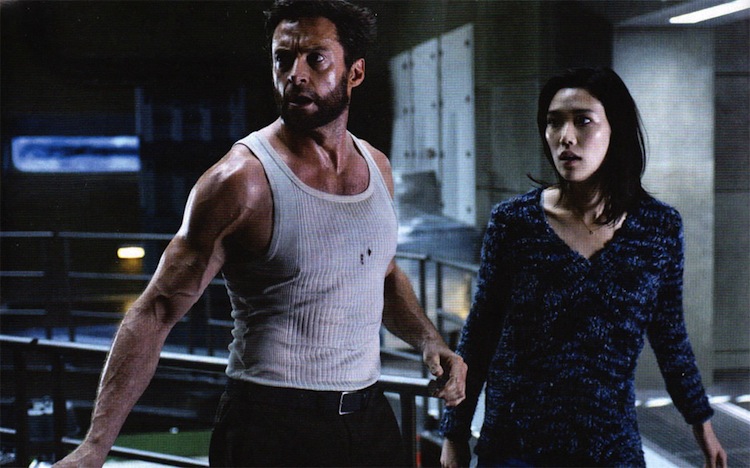
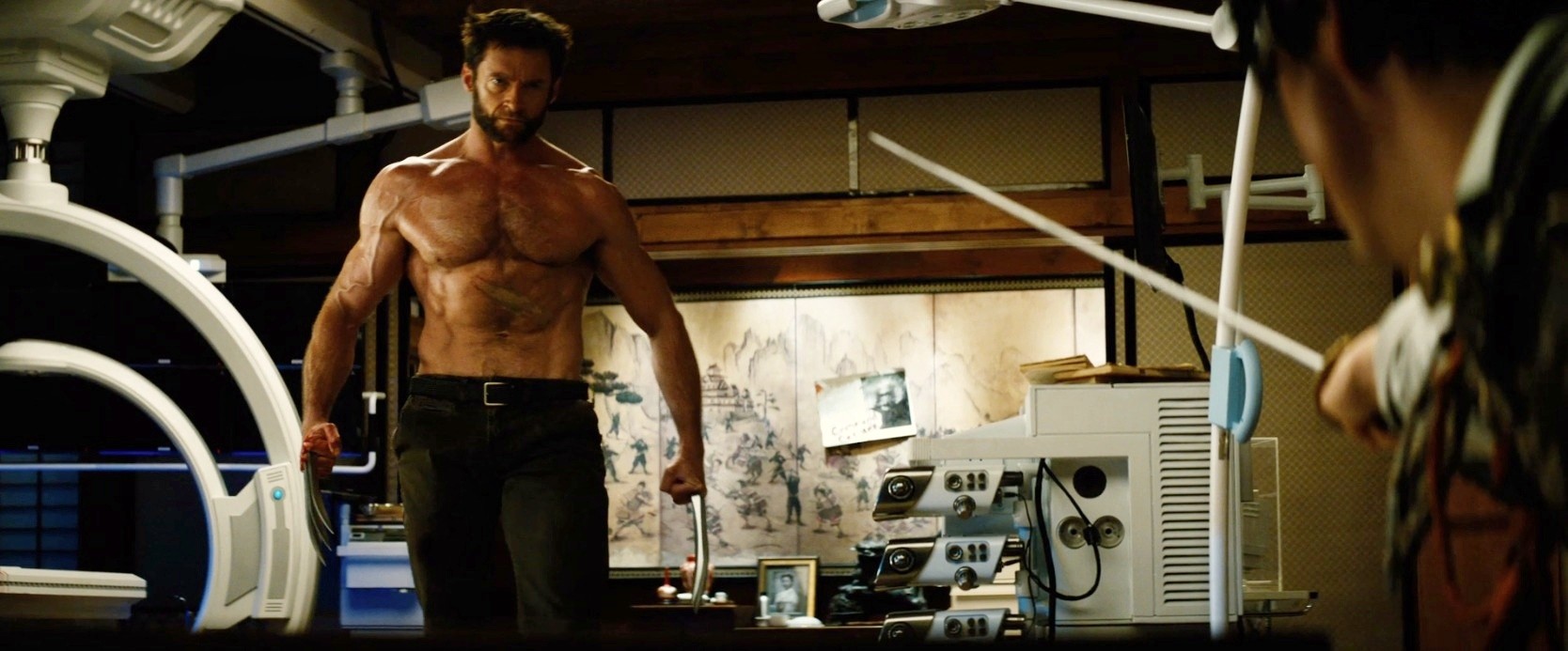
Logan/Wolverine (Hugh Jackman) running with Mariko (Tao Okamoto), trying to protect her from assassins working for... well that's anyone's guess.

Logan/Wolverine (Hugh Jackman) running with Mariko (Tao Okamoto), trying to protect her from assassins working for… well that’s anyone’s guess.

The Wolverine follows on from events in X3: The Last Stand. Logan/Wolverine (Hugh Jackman) is traumatised from having killed his lover, Jean Grey (Famke Janssen), and he spends his time nomadically walking around.

One night, he stumbles into a bar and meets Yukio (Rilo Fukushima), a random Japanese girl who has been trying to find him for a year. Yukio tells Logan that Shingen (Hiroyuki Sanada), someone Logan apparently saved at Nagasaki as the nuclear bomb went off in August 1945, is dying and wishes to see him one more time before he dies. Reluctantly, Logan agrees to go to Japan for a day to grant Shingen his wish.

But upon arrival, the paralysed Shingen informs Logan that he can end his immortality and pain. Logan declines. Shingen then begs Logan to protect his granddaughter, Mariko (Tao Okamoto), the heir to his company and fortune, from others wishing to kill her to seize everything for themselves, to which again Logan reluctantly agrees.

As is often the case with films with major production problems, The Wolverine’s dialogue is senseless and the plot is all over the place. A flashing red light should immediately go off in one’s mind upon realising that the film takes place after events in 2006’s panned X3, warning viewers of the train-wreck ahead. And also, when has it ever been mentioned in any of the other X-Men films that Logan spent time in Japan during World War II and survived a nuclear bomb? These oh so small details are merely the starting point for the film’s problems. That the film does not even bother to explain why Logan was in Japan/Nagasaki in 1945 or what his relationship with Shingen was in the first place merely adds to the sense that the movie lost its way long before filming started.

Logan with his claws out ready to fight a nameless, Japanese sword-wielding baddie.

Logan with his claws out ready to fight a nameless, Japanese sword-wielding baddie.

Yet, what is probably most disappointing about The Wolverine is that it feels like an irrelevant sideshow throughout its 126 minutes of running time and adds nothing to Logan’s personal story. 2009’s X-Men Origins: Wolverine might have been (rightly) ridiculed by fans and critics alike, but at least it showed audiences (albeit badly) how Logan acquired metal claws and why he has blanks in his memory.

The only positive aspect of The Wolverine’s storyline is Logan’s trauma. One must praise James Mangold for making Logan keep his psychological problem. But a trauma is a little bit more than half a dozen flashbacks to a deceased loved one. That the film doesn’t explore other angles of Logan’s psychological issues hints that the trauma was the idea of Darren Aranofsky, a specialist in films focussing on psychological problems and the initial director of The Wolverine, and that James Mangold carried on with the idea without having any real clue as to how to develop it.

Contending with this mess of a movie, Hugh Jackman does not do a bad job as the eponymous character. Whilst his performance is nothing special, Jackman at least makes us believe that the invincible Logan is suffering internally. Undoubtedly, Jackman is the film’s saving grace. The leading Japanese male actors do little more than shoot and swing swords (because that’s all Japanese men can do apparently), and the leading female actresses Rilo Fukushima and Tao Okamoto have no chemistry on set with Jackman/Logan and barely have an expression between them. Perhaps this is because Fukushima and Okamoto aren’t even actresses! They’re models (reminding us all of Rosie Huntington-Whiteley’s dreadful performance in Transformers III). Why couldn’t James Mangold find some qualified Japanese or Japanese-American actresses to do the jobs? What possible excuse is there for this?

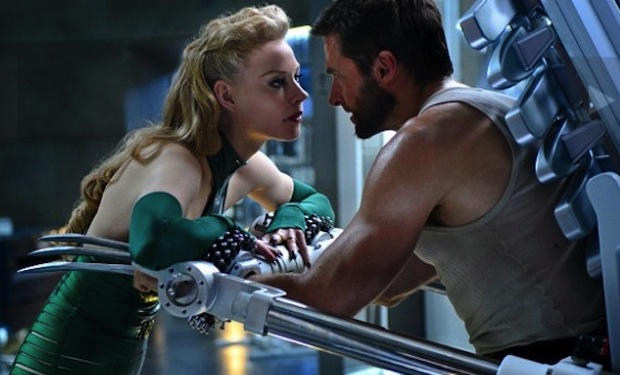
Logan attempting to fend off the allure/threat of the sexy Viper (Svetlana Khodchenkova), one of several ambiguously-motivated, peripheral villains in the film.

Logan attempting to fend off the allure/threat of the sexy Viper (Svetlana Khodchenkova), one of several ambiguously-motivated, peripheral villains in the film.

One may argue that viewers do not go to see films like The Wolverine (or Transformers II) for the acting, but rather for the action and the special effects. If that is the case, The Wolverine won’t frustrate such people since there is a plethora of decent-looking (if inconsequential) fight scenes that fill the time. But it has all been seen and done before in the previous X-Men movies, making the fighting pointless and tedious.

All-in-all, The Wolverine’s troubles behind the scenes are reflected in the film’s end result. The plot goes to nowhere; the script makes no sense; the cast (with the exception of Hugh Jackman) are wooden; and the special effects and action scenes fail to flatter. Thus, but for the fact that the film is about Wolverine, arguably X-Men’s most well-known superhero, The Wolverine might as well as have been thrown in the bin.

PG’s Tips
Review – Man of Steel (12a) [2013]

Man of Steel - title banner

Star Rating: 2.5/5

Director:

Producer:

  • Christopher Nolan – The Prestige, Inception, The Dark Knight I-III, Transcendence

Cast:

Music Composer:

Zack Snyder, who became a major film director following 300, is renowned for making movies that are pleasing on the eye, but have little by way of substance. Watchmen attempted to be profound without much success, and the less said about Sucker Punch the better. But could the input of the exceptional Christopher Nolan give Snyder the tools to change his ways and make the reboot of Superman, Man of Steel, a masterpiece?

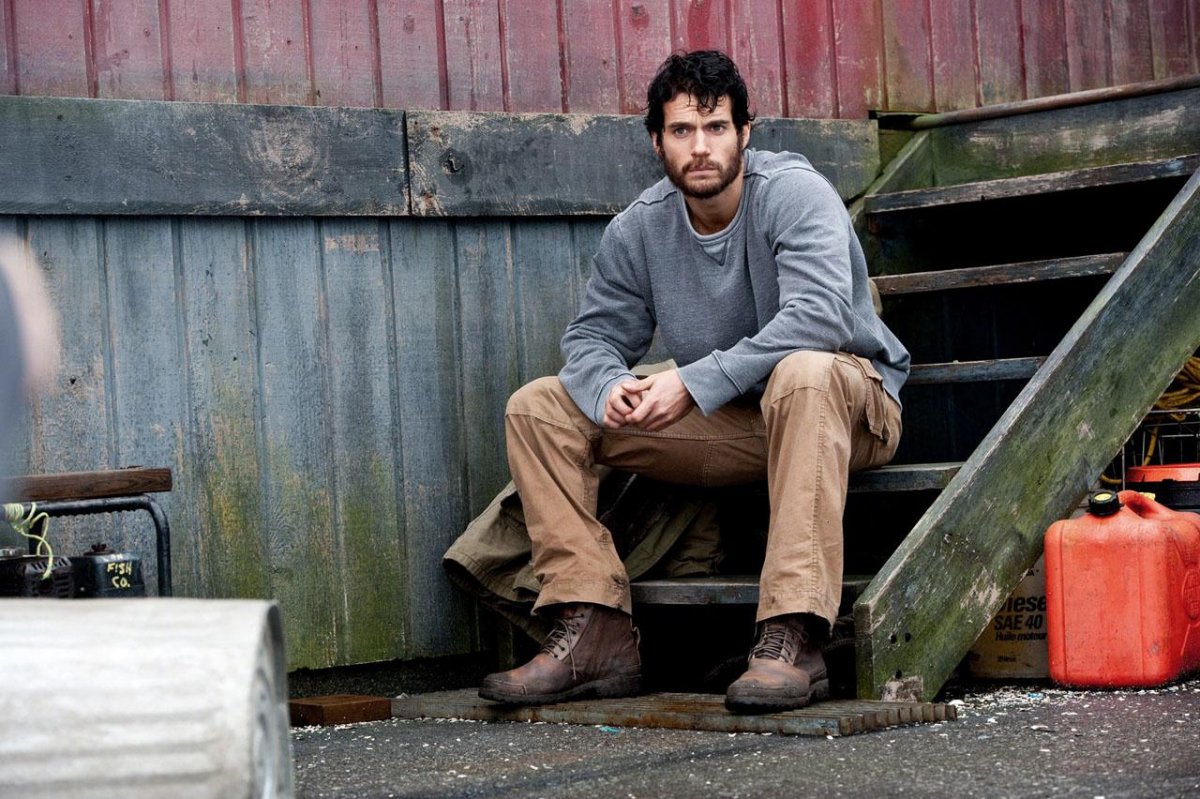
Clarke Kent (Henry Cavill) working as a blue-collar worker, unsure as to who he really is or where his life is taking him.

Clarke Kent (Henry Cavill) working as a blue-collar worker, unsure as to who he really is or where his life is taking him.

  Man of Steel begins with Jor’El (Russell Crowe) sending his baby son, Kal-El to Earth before Krypton implodes. On Earth, Kal-El grows up as Clarke Kent (Henry Cavill) in America, aware of his strengths, yet uncertain as to who he is.

However, when General Zod (Michael Shannon) threatens Earth with destruction unless they hand over the ‘alien among the people,’ Clarke learns of his past and that he must confront his father-on-Krypton’s enemy.

Man of Steel begins in an interesting way by briefly showing audiences the politics on Krypton and why the planet foundered. It is accompanied by some stunning special effects to give viewers a true feel for the nature of the planet itself, including how babies are born, which bears a striking resemblance to how people are formed in Aldous Huxley’s A Brave New World.

Following the prologue of Krypton’s self-destruction, the film goes back and forth, illustrating Clarke Kent’s confusion throughout his life, in the wake of him becoming Superman. The most interesting aspect of this development is when Clarke’s father-on-Earth, Jonathan Kent (Kevin Costner), asks/advises Clarke on the sort of man he wants to grow up to be. This attempts to give Clarke a third dimension, as well as some much needed depth to Man of Steel.

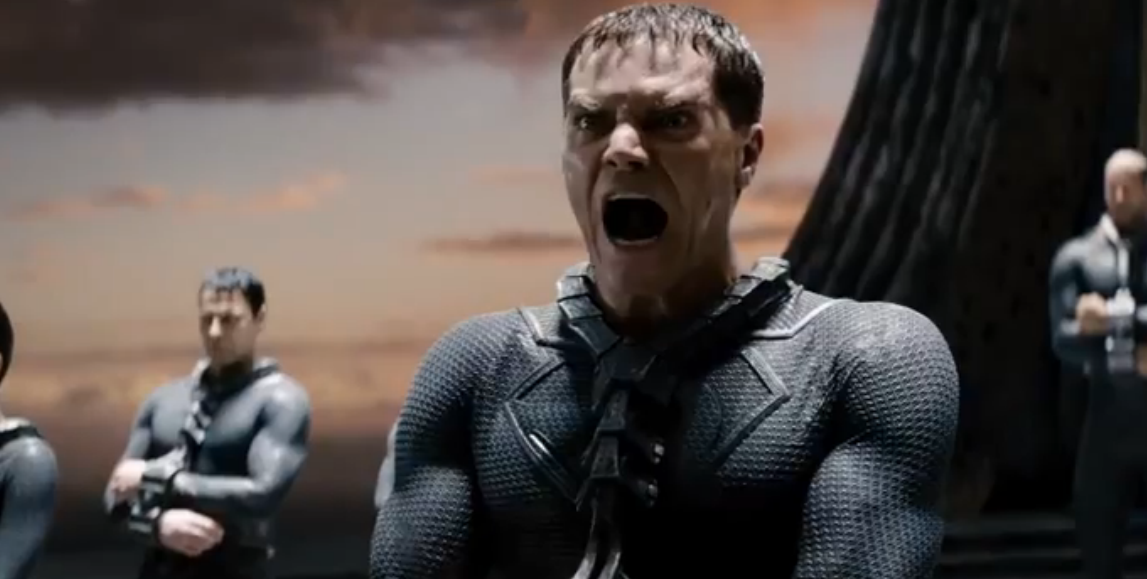
General Zod (Michael Shannon) declaring his strategy on Krypton.

General Zod (Michael Shannon) declaring his strategy on Krypton.

Alas, the movie otherwise lacks complexity and has the feel of Snyder’s Watchmen and, particular, Sucker Punch. Worse, as Snyder makes his eponymous character to be a God-like superhero, there is no sense of peril when watching Superman fight. Consequently, the half-dozen Matrix-style action scenes go on for far too long they become repetitive and boring quickly.

Length, in general, is a problem for Man of Steel. At 143 minutes, it is tediously long, especially as the plot only really starts when General Zod threatens Earth about an hour and fifteen minutes into the movie.

Furthermore, Man of Steel is not assisted by the characters. Although they’re all derived from the comic books, none of them are particularly interesting. That is not to say that the actors do a bad job with what they’re given, but the material does not allow them to excel. Henry Cavill fits the build and is adequate as Superman. But Superman lacks the charisma of Tony Stark/Iron Man or the multi-faceted personality of Bruce Wayne that Nolan superbly exploited in his Dark Knight Trilogy. Superman, in short, is just a traditional (ordinary) hero. The good, moral hero has been done to death, and viewers are right to demand more from filmmakers on this matter, even if the character is strictly in accordance with the comic books.

Similarly, Michael Shannon does a decent job as General Zod. Yet, Zod is more or less an old school, stereotypical villain, which is not interesting anymore. Kevin Costner and Russell Crowe playing as Clarke’s two fathers have the simplest roles in the film, but they are the most interesting characters by a distance (although Crowe’s part for much of the storyline is a deus ex machina, which is very frustrating).

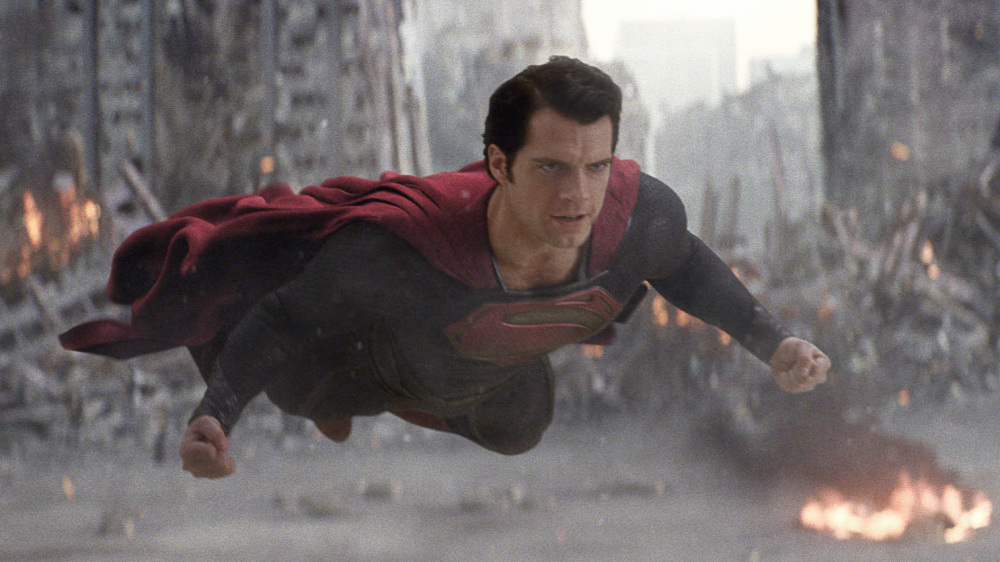
Superman, flying in to save the city and the people from General Zod.

Superman, flying in to save the city and the people from General Zod.

Unusually, however, Amy Adams does not do herself justice as the journalist, Lois Lane. Whenever Lois speaks about Clarke’s supernatural/alien powers, Adams does not look like she believes in what she is saying, even though she attempts sincerity. (Then again, it is hard to criticise Adams on this matter, since the more serious one tries to be when talking about supernatural forces or aliens, the more laughable it appears.) And, strangely, the music by Hans Zimmer sounds average and unmemorable, which is most unusual for him, and that probably sums up Man of Steel.

Over-all, Man of Steel has a few stimulating ideas and some fantastic CGI that is worth seeing alone. However, the ideas are under-employed, and much of the film, including the major fight scenes are monotonous and boring. Thus, Man of Steel lacks what made Christopher Nolan’s Batman movies so engrossing, and it disappointingly bears the hallmarks of Zack Snyder’s films: all gloss and no substance.

PG’s Tips
Review – Star Trek II: Into Darkness 3D (12a) [2013]

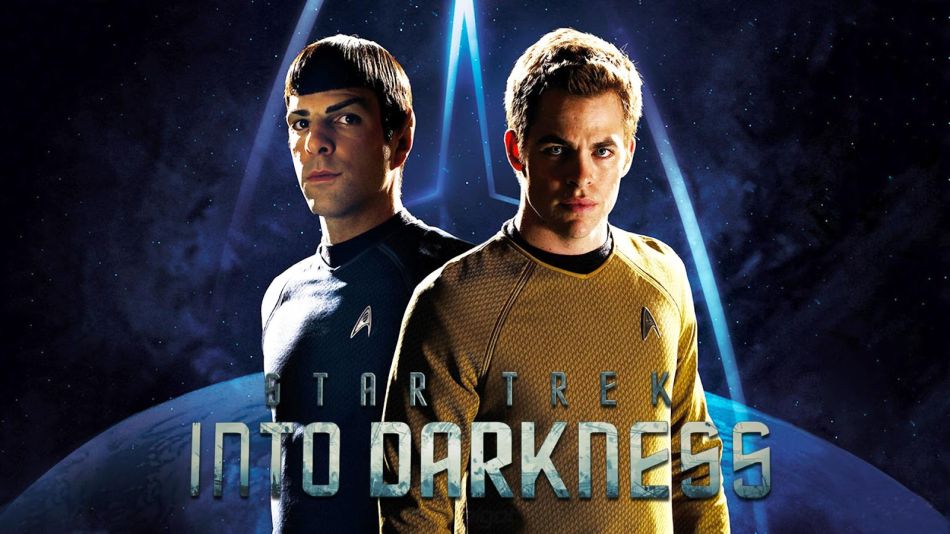
Star Trek 2 - title banner

Star Rating: 3/5

Director:

  • JJ Abrams – Lost, Star Trek I-III, Star Wars: Episode VII

Producer:

  • Damon Lindeloff – Lost, Prometheus, The Leftovers

Cast:

  • Chris Pine – Unstoppable, This Means War, Jack Ryan
  • Zachary Quinto – Heroes, Margin Call, The Invitation
  • Zoe Saldana – Avatar I & II, Colombiana, Blood Ties
  • Karl Urban – The Lord of the Rings II & III, The Bourne Supremacy, Riddick
  • Simon Pegg – Paul, The World’s End, Mission: Impossible III-IV & V
  • Alice Eve – Entourage, Men In Black III, Cold Comes The Night
  • Benedict Cumberbatch – Tinker Tailor Soldier Spy, Sherlock, The Hobbit II
  • Bruce Greenwood – Barney’s Version, Super 8, Devil’s Knot
  • Peter Weller – The Sin Eater, 24, Dragon Eyes

Music Composer:

One of the most striking and farcical features of action movies is that there is much shooting, running and chasing, in one form or another, with key aspects of the plots taking place under such circumstances. The Die Hard, Mission: Impossible, and Fast and the Furious franchises all have this odd and surreal symptom. JJ Abrams and Damon Lindeloff, despite creating an enjoyable and watchable film, have taken this symptom to its zenith in Star Trek II: Into Darkness.

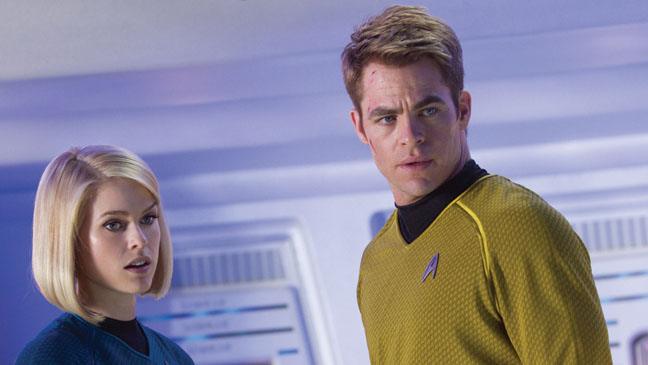
Captain James Kirk (Chris Pine) mulling over whether it would be a good idea to take Dr. Carol Marcus (Alice Eve) on board.

Captain James Kirk (Chris Pine) mulling over whether it would be a good idea to take Dr. Carol Marcus (Alice Eve) on board.

Star Trek II begins with the galaxy under threat from John Harrison (Benedict Cumberbatch), a former Starfleet agent. Captain James T. Kirk (Chris Pine) is ordered by Admiral Alexander Marcus (Peter Weller) to lead the USS Enterprise ship to Kronos and kill Harrison. Kirk takes with him Commander Spock (Zachary Quinto), Lieutenant Uhura (Zoe Saldana), Dr. Leonard ‘Bones’ McCoy (Karl Urban), Montgomery ‘Scotty’ Scott (Simon Pegg), and Dr. Carol Marcus (Alice Eve) for assistance.

In essence, that is the plot for Star Trek II: Into Darkness and it makes for an easy and entertaining 132 minutes, irrespective of whether one is a Star Trek fan or not, in the same way as the 2009 Star Trek film did. Moreover, the special effects in Into Darkness are terrific, and the 3D works a treat as well, especially in IMAX, which was designed for such films.

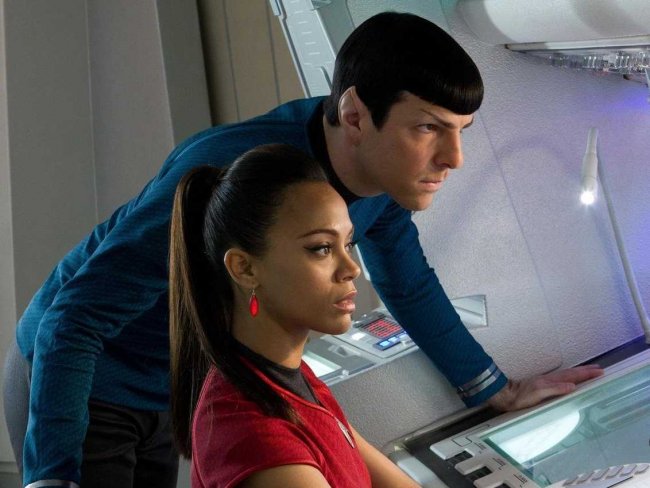
Commander Spock (Zachary Quinto) talking with his girlfriend, Uhura (Zoe Saldana).

Commander Spock (Zachary Quinto) talking with his girlfriend, Uhura (Zoe Saldana).

While Into Darkness has much in common with the 2009 Star Trek movie, the sequel has many more contrived aspects to its storyline than the prequel. One can almost draw the plot arch as the film goes along. Fans, though, are more likely to forgive such plot problems than non-fans. That is, if fans and non-fans have a chance to think about the issues with the storyline while watching the film. JJ Abrams and Damon Lindeloff have made every plot detail and element in Into Darkness be done either on the run or in the midst of a shoot-out. It is as if they knew that the movie’s storyline makes as much sense as Lost did by the end. Abrams (with his trademark lens-flare) and Lindeloff constantly distract viewers from being able to realise the plot’s deficiencies, here, in the same way that shoot-outs, explosions, chase scenes and stunts divert audiences’ attentions from the flaws in the various Die Hard, Mission: Impossible, and Fast and the Furious movies.

Provided one does not focus too much on the storyline of Into Darkness, one can enjoy the contrast in personalities between the impulsive Captain Kirk and the cold, rational Commander Spock, and both Chris Pine and Zachary Quinto play their respective roles very decently. There is also more humour than expected between the two of them, which is always welcome. The same can be said for Karl Urban’s performance as Bones and Simon Pegg’s as Scotty, as they play their roles well without being anything special.

Alas, the same cannot be said for Zoe Saldana as Uhura this time, or Alice Eve as Carol Marcus. Uhura’s role in Into Darkness, unlike in the prequel, is too peripheral and meaningless to be remembered, and Saldana does not do herself justice when on screen; and sad to say, the only thing of note that Eve does as Carol Marcus is to stand in front of Kirk in a bikini. (And the point of that scene was…?)

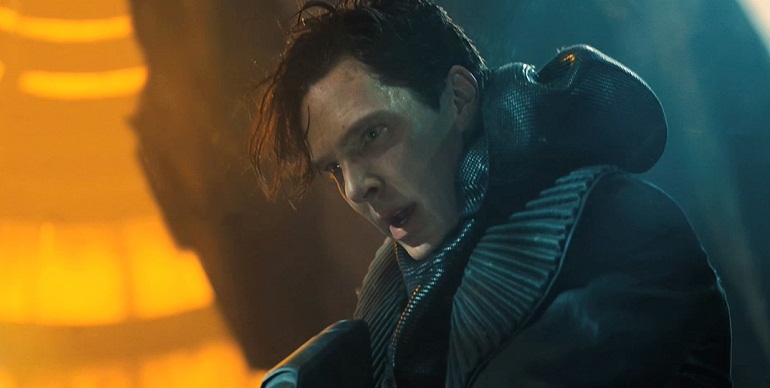
The villain, John Harrison (Benedict Cumberbatch), fighting against his adversaries who are out to kill him.

The villain, John Harrison (Benedict Cumberbatch), fighting against his adversaries who are out to kill him.

Yet, the real star of the film is Benedict Cumberbatch. His acting, as the villain, is head and shoulders above the rest of the cast. When Cumberbatch speaks, it does not matter what he says or how ludicrous it may sound because it is stated with authority to the extent that implausible matters are believable. Regardless of whether one is a Star Trek fan or not, one should almost watch Into Darkness for Cumberbatch’s performance alone.

Over-all, Star Trek II: Into Darkness is an entertaining film for Star Trek fans and non-fans alike. The special effects are excellent, the relationship between Kirk and Spock is funnier than ever, and Benedict Cumberbatch’s portrayal of the villain is outstanding. Indeed, one does not even need to get over the movie’s virtually non-existent storyline and the ridiculous way in which everything is done at a hundred miles an hour to make up for the plot’s numerous shortcomings to fully appreciate the movie for what it is.

PG’s Tips
Review – Iron Man III (12a) [2013]

Iron Man 3 - title banner

Star Rating 2.5/5

Director:

  • Shane Black – Lethal Weapon I-IV, Kiss Kiss Bang Bang, Doc Savage

Cast:

Music Composer:

  • Brian Tyler – Battle: Los Angeles, The Expendables I & II, Now You See Me

In The Avengers Assemble, Tony Stark (Robert Downey Jr.) showed his true colours by stating that he is a “genius, billionaire, playboy, philanthropist.” Indeed, one who has read the Marvel comic-books, or seen Iron Man I & II and The Avengers Assemble, or all of them, knows that Stark thinks highly of himself. But from the trailer of Iron Man III, it appeared that one would see the vulnerable side of Tony Stark for a change. Is this the case?

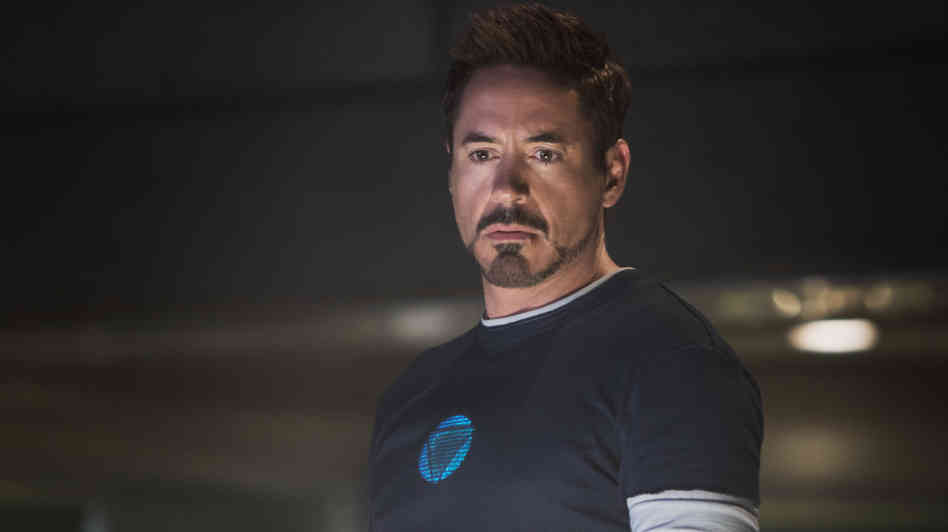
Tony Stark (Robert Downey Jr.) up at night, working on his numerous projects which he occupies himself with, since he cannot sleep.

Tony Stark (Robert Downey Jr.) up at night, working on his numerous projects which he occupies himself with, since he cannot sleep.

Iron Man III begins with a flashback to New Year’s Eve 1999/2000 when Tony Stark, with scientists Maya (Rebecca Hall) and Aldrich Killian (Guy Pearce), rejects an offer to invest in Extremis, an organisation that deals with experimental treatment to regenerate human limbs that have been severed.

Thirteen/fourteen years later, Stark is having nightmares about the alien invasion that occurred the previous year in The Avengers Assemble. He is suffering from insomnia and anxiety, whilst trying to love Pepper Potts (Gwyneth Paltrow). Yet, the Mandarin (Ben Kingsley) is wreaking havoc upon America with a string of terrorist attacks, using advanced weapons. Soon, he destroys Stark’s house, many of his Iron Man suits, and effectively sends Stark into the wilderness. Stark must find a way back and stop the Mandarin from unleashing more chaos, or else America will fall.

Iron Man III revolves round Tony Stark, and his quick, funny/brash responses. On the periphery, there is a plot (of some sort), some Transformers-style action scenes, plenty of explosions and fire-power, as well as sophisticated special effects in abundance. The problem is that audiences have seen all of these already, and it is starting to get very tedious.

At 133-minutes, Iron Man III is a long film that disappointingly doesn’t add anything new to the series. Worse, after 30 minutes the plausibility of the storyline ceases to exist, and it lazily goes from one plot contrivance to the next. If that doesn’t illustrate Shane Black’s contempt for the audience, the last scene renders all but the first 30 minutes of the movie as a waste of time. Couldn’t Black have just cut out all of the excess baggage and got straight to the chase? (Or, alternatively, forged a plot that actually works?)

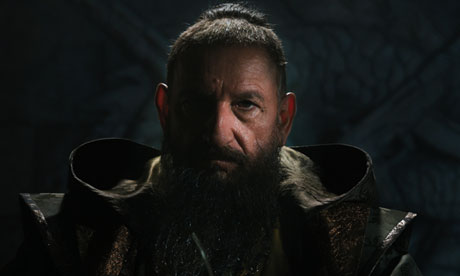
The Mandarin (Ben Kingsley), looking and preaching much like Osama Bin Laden, in a broadcast threatening to destory America if the country does not change its ways.

The Mandarin (Ben Kingsley), looking and preaching much like Osama Bin Laden, in a broadcast threatening to destory America if the country does not change its ways.

Iron Man III also suggests that the franchise is starting to suffer from the issues that are synonymous with other series, like Pirates of the Caribbean, Die Hard, and Fast and the Furious: notably, going on too long, laziness, repetitiveness, and going back in time to make (semi-)viable storylines. The very fact that Iron Man III starts by going back in time should set alarm bells ringing in one’s mind. If the franchise has not bothered until now to mention important things that the key character has done, why should viewers believe that they are significant?

With the exceptions of young Ty Simpkins, who is cute and amusing, and Ben Kingsley, who is brilliant as the terrifying (Osama Bin Laden-like) Mandarin, the rest of the cast could not be more two-dimensional if they tried. Robert Downey Jr. plays the same energetic, narcissistic character (himself) as he did in Iron Man I & II (not to mention in The Avengers Assemble, Sherlock Holmes I & II, and Due Date). Yes, Stark is smart, sharp and impertinent, and Downey Jr. does this well (as we know he can). But, in Iron Man III, Downey Jr. was meant to display his character suffering from insomnia and panic attacks. One is hard-pressed to find an instance of Stark genuinely looking like he was suffering from such problems, which is poor on Downey Jr.’s behalf. It is a shame, too, because one might have seen Downey Jr. actually challenging himself for a change.

Gwyneth Paltrow, playing as Stark’s secretary, is little more than a one-dimensional, pointless blonde doll. Despite loving a man who loves himself more than he loves her (or anyone else for that matter), it is difficult to empathise with Pepper as she is so bland.

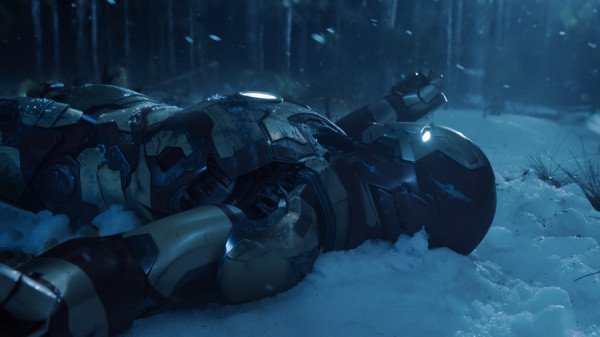
Stark in a broken Iron Man suit and in the winter wilderness of Tennessee. How will he ever get back if he is to save the country he has sworn to protect?

Stark in a broken Iron Man suit and in the winter wilderness of Tennessee. How will he ever get back if he is to save the country he has sworn to protect?

Rebecca Hall’s performance suffers from similar problems as Maya’s character is not especially interesting, nor well defined, and her importance to the plot is dubious at best. Don Cheadle plays decently enough in his simple role as Stark’s (patient) understudy. Guy Pearce once again plays another egotistical, two-dimensional individual (he’s making a habit of this following his roles in The Count of Monte Cristo, The King’s Speech and Justice). At least, though, the cosmetic department did a fantastic job on him. In the first scene, Pearce is unrecognisable, which is a great contrast to Stark failing to even have bags under his eyes when (supposedly) suffering from major sleep deprivation. Would it have been so hard to have put eye shadow under Downey Jr.’s eyes?

Over-all, Iron Man III is much the same as the previous two Iron Man films. It follows Tony Stark being Tony Stark; Stark flies and fights in his Iron Man costume; and there are special effects galore that one’s seen before. The movie tries to show us some of Stark’s weaknesses, but fails miserably at this and the attempts at doing so are feeble. Moreover, the laziness of the entire production suggests that the franchise is drained of ideas and lost for care.

PG’s Tips
Review – The Hobbit I: An Unexpected Journey HFR 3D (12a) [2012]

The Hobbit - title banner

Star Rating: 2.5/5

Director:

  • Peter Jackson – Brain Dead, Lord of the Rings Trilogy, King Kong, The Hobbit II & III

Cast:

  • Martin Freeman – The Office, Love, Actually, Svengali
  • Ian McKellen – Apt Pupil, Lord of the Rings Trilogy, X-Men I-III, X-Men: Days of Future Past
  • Cate Blanchett – Elizabeth: The Golden Age, Lord of the Rings Trilogy, Blue Jasmine
  • Barry Humphries – The Dame Edna Treatment, Finding Nemo, Justin & The Knights of Valour
  • Hugo Weaving – The Matrix Trilogy, Lord of the Rings Trilogy, Captain America: The First AvengerTransformers I-III
  • Christopher Lee – Lord of the Rings Trilogy, Season of the Witch, The Girl From Nagasaki
  • Richard Armitage – Spooks, Captain America: The First Avenger, Black Sky
  • Ian Holm – Lord of the Rings I & III, Lord of War, Ratatouille
  • Elijah Wood – Lord of the Rings Trilogy, Green Street, Open Windows
  • Andy Serkis – Lord of the Rings Trilogy, King Kong, Rise of the Planet of the Apes

Music Composer:

  • Howard Shore – Lord of the Rings Trilogy, Hugo, The Hobbit II & III

<<guest review by KJF>>

Eleven years after the first of Peter Jackson’s magnificent two Lord of the Rings-related trilogies hit our screens, its prequel has finally arrived. What has alarmed many viewers even before getting into auditoriums to see The Hobbit:  An Unexpected Journey is that it is three hours long, and only the first of a proposed nine-hour trilogy covering the events of JRR Tolkien’s beloved, but not particularly lengthy children’s book, first published in 1937. The result is that An Unexpected Journey is a lengthened, over-indulgent spectacle that will be welcomed by Middle Earth addicts, but might alienate the average cinemagoer.

Bilbo (Martin Freeman) bewildered as the dwarves invade his home unexpectedly and immediately make themselves at home by gobbling down his food and liquer.

Bilbo (Martin Freeman) bewildered as the dwarves invade his home unexpectedly and immediately make themselves at home by gobbling down his food and liquor.

Bilbo Baggins (Martin Freeman) is the home-loving hobbit of the title, living in a cozy hole in the ground in the Shire, a rural idyll in the western part of Tolkien’s vast imaginary world. Bilbo’s part of a community of small beings with hairy feet who love the good life, preferring nothing better than eating, drinking, smoking and sleeping.

Bilbo’s personal tranquility is interrupted by the arrival of the wizard, Gandalf ‘the Grey’ (Ian McKellen), followed hot on his heels by a gang of dwarves, led by Thorin Oakenshield (Richard Armitage). The dwarves are desperate to recover their homeland, the kingdom of Erebor, from the clutches of the evil dragon, Smaug, who rather inconsiderately destroyed it all, and who now spends his days drenched in all its treasure. So Bilbo is recruited into the party – as a ‘burglar’ of all things – and the adventure begins.

The early part of the film manages, quite successfully, to recreate the gentle humour of the book. Freeman, so good at playing the everyman (as in TV’s The Office), is an inspired choice as Bilbo, looking on in wondrous, mostly wordless amazement as Gandalf and the dwarves take over his home; the latter gang eating him out of house and hole. But then as events progress (at the aggravating pace of a snail), spectacle and action take over and the early charm is lost.

Yet, the spectacle is truly spectacular! The detailed recreation of Smaug’s attack on Erebor is a wonder to behold, filling the screen with the terrifying destruction he reaps, while only tantalisingly giving us a glimmer of what the monster looks like. There’s much else to goggle at with all the scrapes Bilbo and the party get into: dodging trolls, wargs and orcs overground; as well as goblins underground in the depths of the MistyMountains.

Jackson has, of course, been here before and it’s to be expected that the mise-en-scene of Middle Earth has been beautifully and lavishly re-created. Jackson again fully utilises the picturesque New Zealand landscapes to his advantage.

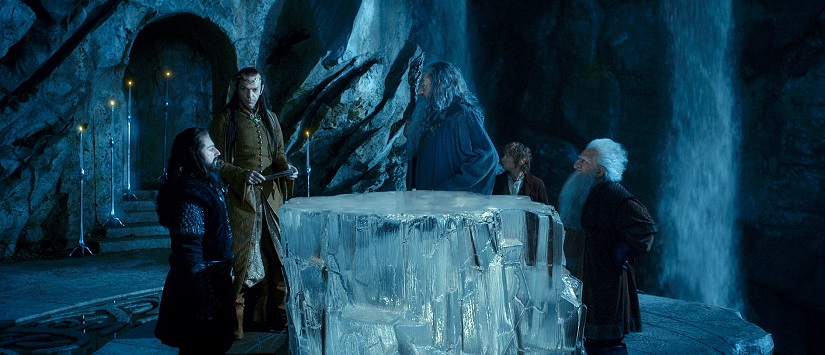
Bilbo attending a secret council in Rivendell, the home of the elves, along with Thorin (Richard Armitage), Elrond (Hugo Weaving), Gandalf (Ian McKellen) and another dwarf.

Bilbo attending a secret council in Rivendell, the home of the elves, along with Thorin (Richard Armitage), Elrond (Hugo Weaving), Gandalf (Ian McKellen) and another dwarf.

Nevertheless, unlike with Lord of the Rings, Jackson has shot The Hobbit: An Unexpected Journey at 48-frames-per-second, known as the Higher Frame Rate (HFR), rather than the standard 24-frames-per-second. Although the HFR was meant to make everything appear more realistic, it is more likely to bring about the peculiar feeling of watching a TV programme with a substantially greater budget. Actors might appear very clearly in the foreground, but the computer-generated backgrounds come across as just that: computer-generated! This sadly lessens the ‘reality’ that Jackson was aiming for, and the 3D element doesn’t add much either (other than a few quid onto the ticket price).

It’s a shame that with all the technical innovations Jackson hasn’t focused more on ramping up his creative approach. There are some nice sops to Lord of the Rings fans, particularly having the elder Bilbo (Ian Holm) and Frodo (Elijah Wood) appear at the beginning. After a while though, a sense of déjà-vu creeps in, whether it is in the use of musical riffs from the original trilogy, or the overlong focus on the re-introduction of Gollum (Andy Serkis).

What further acts as a ballast for the film’s 169-minute running time are events and characters not in the original narrative, but picked out from other of Tolkien’s writings. One would have thought that if Jackson had wanted to be so cavalier with the original source material, he would have done something that was truly necessary, such as putting in some more prominent female characters to spice up the narrative. Yet, aside from Cate Blanchett’s brief reprisal as a more-youthful Galadriel, other women in the movie are virtually non-existent. Indeed, Jackson has seemingly forgotten to even put them in the background for the orcs and goblins (which naturally prompts some interesting questions on procreativity).

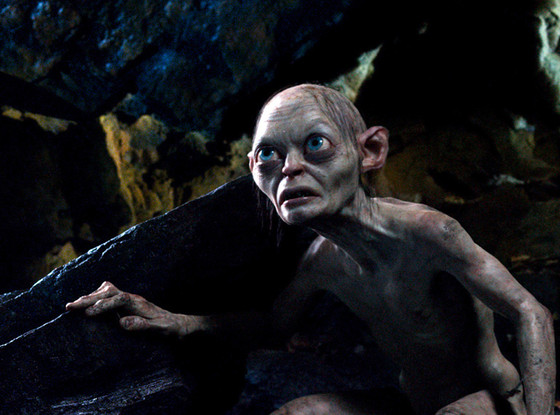
Gollum (Andy Serkis), enhanced thanks to modern technology, playing a game of riddles with Bilbo.

Gollum (Andy Serkis), enhanced thanks to modern technology, playing a game of riddles with Bilbo.

In all of this, it is also hard to pick out distinctive characters throughout the film. Martin Freeman is superb as Bilbo, Ian McKellen once again gives a magisterial performance as Gandalf, and Barry Humphries is great as the voice of the Goblin King. Yet, aside from grumpy Thorin ‘wannabe-Aragorn’ Oakenshield, it’s hard to tell one dwarf from another, since they all seem as one-dimensional, hairy and gruff as the next. Considering that The Hobbit is about the dwarves trying to reclaim their homeland, this is not sufficient.

Thus, Part I of The Hobbit has started us on another unexpected journey through Middle Earth. Already though, after almost three hours (and with another six to go), it feels like we are on a long and bloated trek that possibly has the power to undo all that was good about Lord of the Rings.

KJF

Review – Skyfall (12a) [2012]

Star Rating: 3.5/5

Director:

  • Sam Mendes – American Beauty, Road To Perdition, Revolutionary RoadSpectre

Cast:

Music Composer:

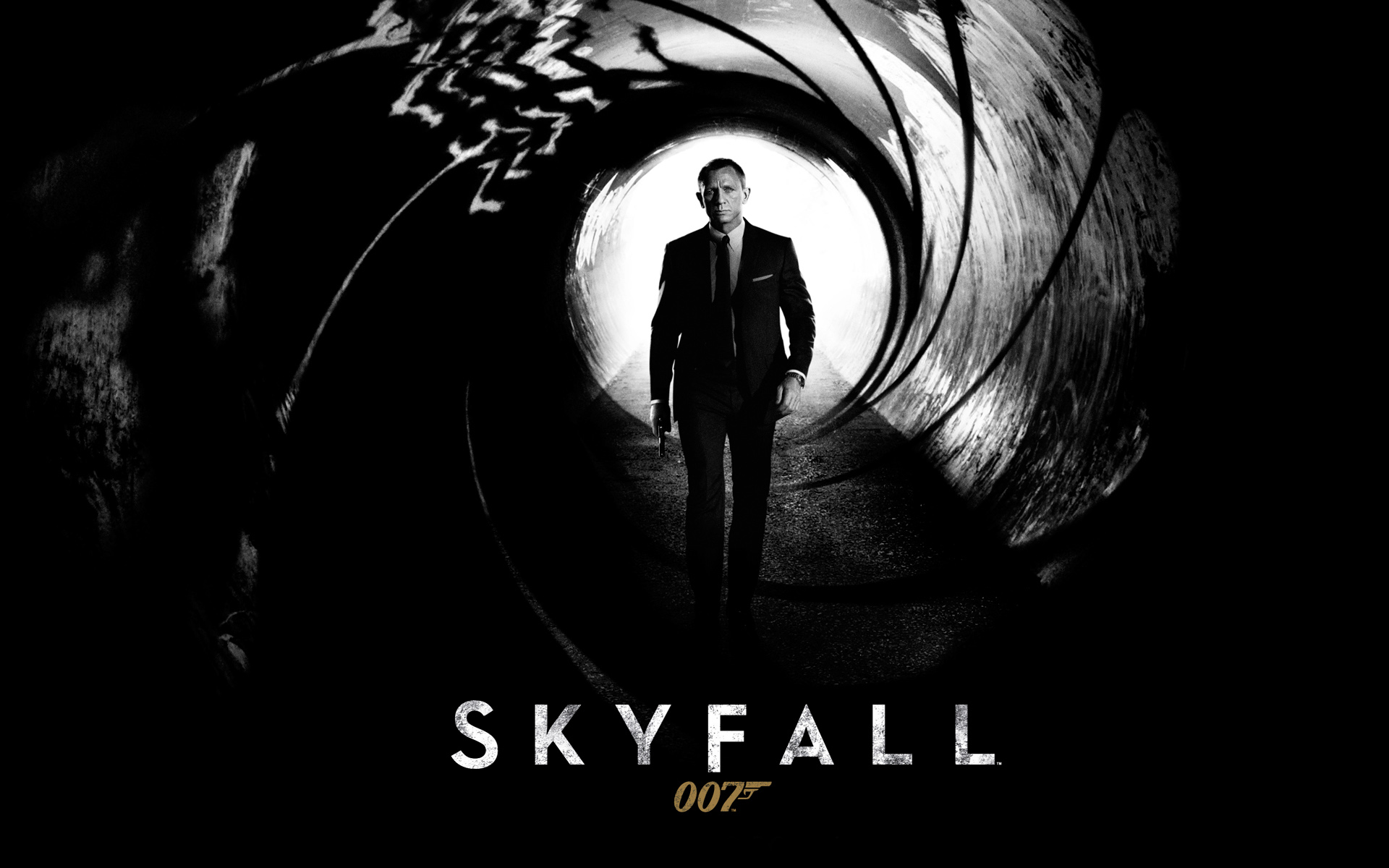
The 1990s was a pretty decent era for James Bond. Goldeneye, Tomorrow Never Dies and The World Is Not Enough were all very acceptable Bond films. But then, in 2002, Die Another Die ruined it all. Subsequently, MGM, the owners of the 007 franchise, completely changed the direction of Bond to make it more original, as Casino Royale (2006) and The Quantum of Solace demonstrate. Skyfall cleverly continues this trend, but not without hitches.

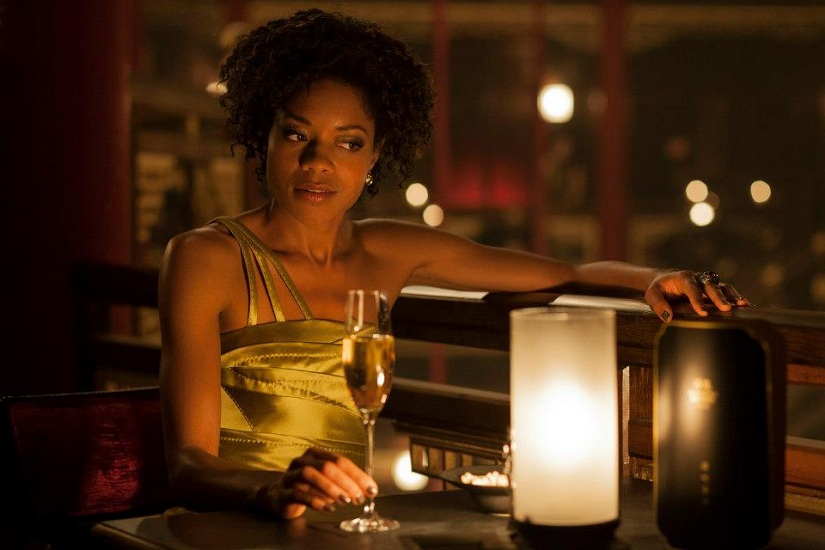
The stunning and enigmatic Sévérine (Bérénice Malohe). Her style and dangerous background make her an apt fit for Bond’s affections.

Skyfall begins with M (Judi Dench) coming under intense pressure to resign, following a failed mission in Turkey. After meeting with Gareth Mellory (Ralph Fiennes), the British Intelligence and Security Committee Chairman, M discovers that the computer in her office in MI6 has been hacked and a bomb explodes in MI6 headquarters. M subsequently turns to her secret agents, Eve (Naomi Harris) and James Bond (Daniel Craig), who is suffering from psychological problems following events in Turkey, to find out who was behind the attack.

There is much to admire about Skyfall. That a significant proportion of it is filmed in Britain is bold; it gives us a hint at how MI6 might work in the event of war on British soil; and the last scene of the movie is very clever. Also, for the first 100 minutes or so, the plot is logical and intelligent. Cyber-terrorism is a very current issue, and director Sam Mendes conveys the threat well.

It is just a shame that the last 44 minutes drag and has only a tenuous link to the first part of the film. Indeed, it renders the purpose of going to exotic Shanghai pointless (not that that was ever more than a cynical attempt to tap into the Chinese market) and, worse, it throws up plagiarism issues with the exceptionally magnificent Batman Begins.

Eve (Naomi Harris) dressed classily, while in the midst of an MI6 operation.

Moreover, Skyfall appears to be torn in several directions. Sir Ian Fleming wrote James Bond as a satire on the British secret service. Yet, because MGM now want Bond to be more grounded (and even bleed), the fundamental element of 007 has been lost. Additionally, if MGM truly want to make Bond plausible, they should look toward Tinker Tailor Soldier Spy and Shadow Dancer, and remove the Expendables-/Mission: Impossible-style stunts and action scenes. Those always look ridiculous and undermine all attempts at realism. (Besides, those scenes have become so clichéd that one is unlikely to miss them.)

The change of direction for 007 movies has also greatly impacted upon the appearance and character of James Bond, himself. Nevertheless, it is not Craig’s blond hair and lighter features that differentiate him from his predecessors, Roger Moore and Pearce Brosnan. Rather, it is his black humour, as well as his lack of suave and touché lines. That is not to say that Craig performs badly as the Bond he’s been asked to perform; actually, he’s rather good. But that doesn’t make him seem any more like the James Bond of old.

Yet, it is not just Craig’s Bond that has been given a new lease of life; the villains have too. Silva, embraced whole-heartedly and delightfully by the Oscar-winning Javier Bardem, is by far the most flamboyant and hilarious Bond baddie. However, it is blatantly obvious that Sam Mendes drew his inspiration from the villains in Christopher Nolan’s The Dark Knight (and he didn’t need to spell it out in an interview either). Mendes should have been aware that stepping onto the haloed territory of the Joker and, to a lesser extent, Two-Face is like trying to win a game of ice-hockey while skating on thin ice. Can anyone really say with conviction that Bardem’s Silva was on a par with Heath Ledger’s Joker?

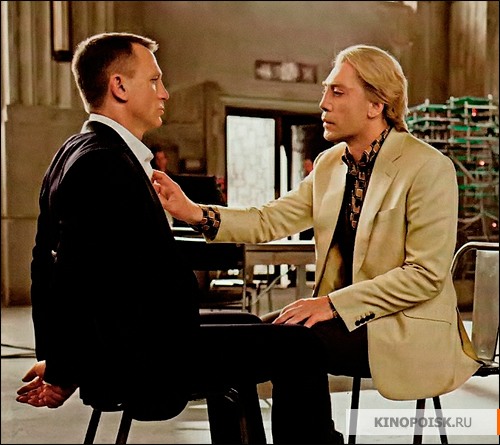
The blond-haired villain, Silva (Javier Bardem), teases Bond, while the latter is tied up. Haven’t we seen such a scenario before?

Craig and Bardem aside, the performances from Ralph Fiennes and Judi Dench are typically strong and down to earth. The same can be said for Ben Whishaw, who plays the young, new Q with much spirit and humour to make himself, potentially, the long-term successor to the late Desmond Llewelyn.

Conversely, Naomi Harris, as Eve, never convinces that she’s a secret agent, unlike Jessica Chastain in The Debt or Julia Roberts in Duplicity. Harris’ Eve also lacks chemistry with Craig’s Bond. Maybe both of those things are deliberate, but if that is true then MI6 would never have sent her into the field, thereby revealing another flaw in the movie’s attempt at realism.

All-in-all, Skyfall is not a bad film and continues the interesting trend of Casino Royale and The Quantum of Solace. Skyfall has intelligence and a cast that does justice to the more credible, if unconventional direction that MGM have taken Bond toward. This does not mean that the film is problem-free, aside from being too long and recycling parts of Nolan’s Dark Knight Trilogy. No, if MGM truly wish for 007 to depart from the approach of the 1990s Bond films, they must not stand half-way as they have here: they must make James Bond chillingly realistic.

PG’s Tips
Review – The Dark Knight Rises (12a) [2012]

Star Rating: 5/5

Director:

Cinematographer:

Cast:

Music Composer:

Once in a decade, perhaps, are audiences treated to a trilogy wherein the three films are not only worthy of five stars each, but also raise the bar over the movie that preceded it. Ten years ago, it was Peter Jackson’s The Lord of the Rings, which culminated beautifully in the epic The Return of the King. Now, it is the turn of Christopher Nolan and his Dark Knight Legend saga, which has climaxed spectacularly with The Dark Knight Rises.

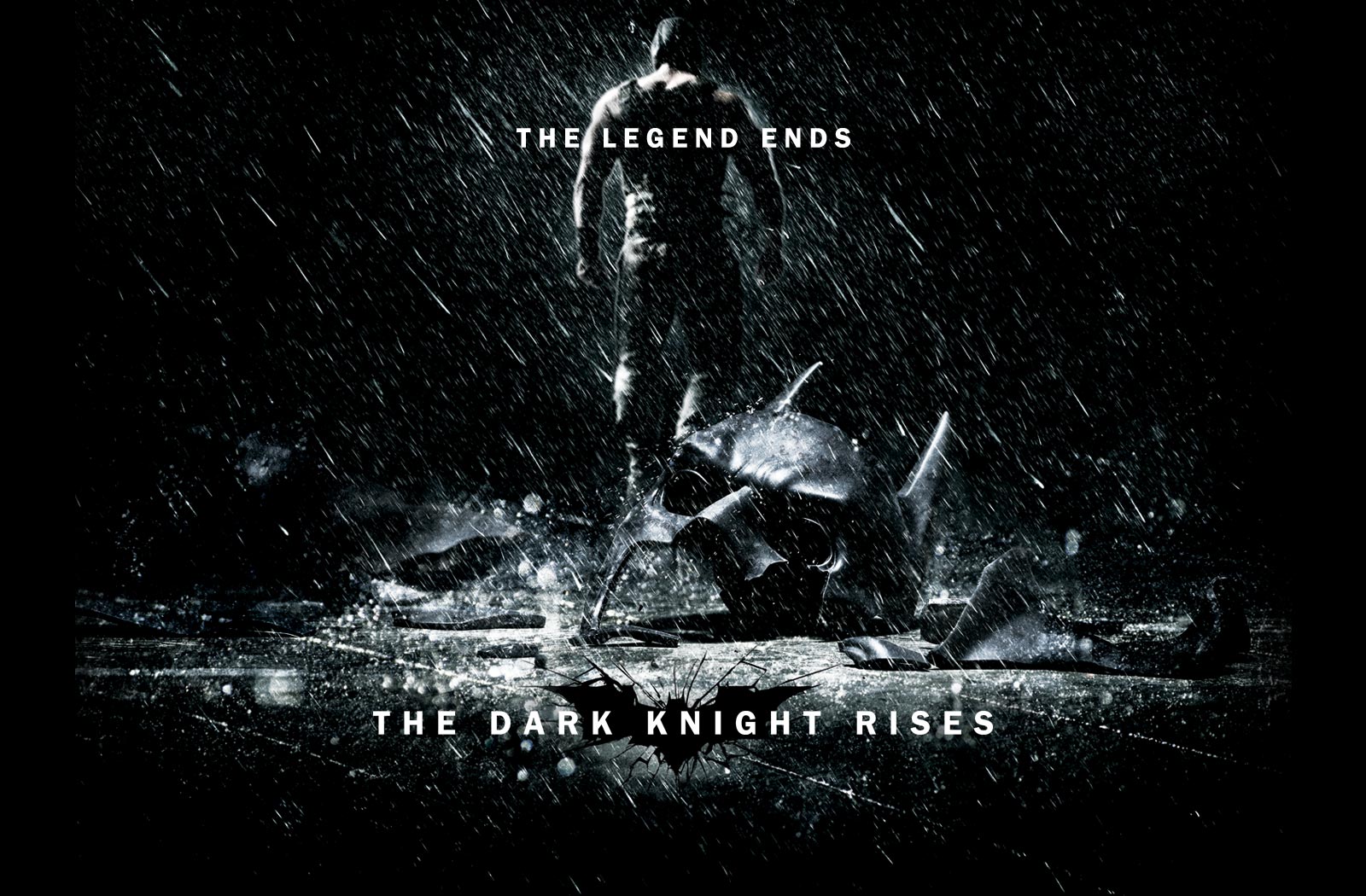
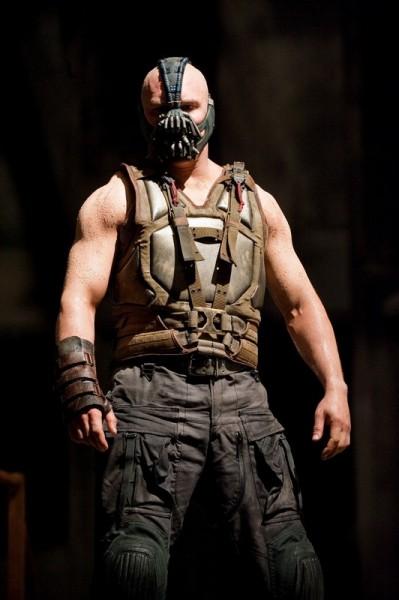
The monstrous-looking, hulking Bane (Tom Hardy). Ra’s Al Ghul’s successor intends to finish off Gotham once and for all, forcing Batman to come out of his virtual retirement.

Eight years have passed since Bruce Wayne/Batman (Christian Bale) defeated the Joker, killed the District Attorney, Harvey Dent, and disappeared. Since then, Gotham has branded Batman an enemy, after he took responsibility for Dent’s crimes to uphold the reputation of the ‘White Knight.’ Whilst away from his former exploits, Bruce has been a recluse, investing some of his considerable wealth in peaceful nuclear energy and the Wayne Foundation, where he uses the expertise of Miranda Tate (Marion Cotillard) to good effect.

However, Gotham now faces a new threat. The League of Shadows has returned and is led by the masked, super-strong Bane (Tom Hardy), who is out to destroy Gotham and Batman with it. After Commissioner James Gordon (Gary Oldman) is wounded trying to take out Bane, leaving the police almost solely in the hands of the young idealist officer, John Blake (Joseph Gordon-Levitt), Bruce feels that the time has come to don the bat-gear again. But how will Gotham take to his return? And what will Batman do with the criminal Selina Kyle/Catwoman (Anne Hathaway), who has a mysterious interest in Wayne Manor and Wayne Enterprise?

Rises’ plot might be slow-moving for the first hour and it certainly requires great levels of concentration for the entire 164 minutes; yet, the film is intellectually-stimulating, absorbing and multi-layered. It also builds up to a stunning, well-thought-through climax, ensuring that those who give the movie their full attention will be rewarded.

One of the most satisfying aspects of the storyline is that Nolan cleverly links Rises with Batman Begins and The Dark Knight, the two previous instalments in the series. He does this by making the caped crusader rise to a new mental and physical challenge, which is a direct result of his prior victory over the League of Shadows; and by illustrating the relevance of Batman and Harvey Dent as symbols of hope against injustice and corruption. (Not to mention demonstrating how susceptible the fabrics of society are to implosion when the symbols are smashed.)

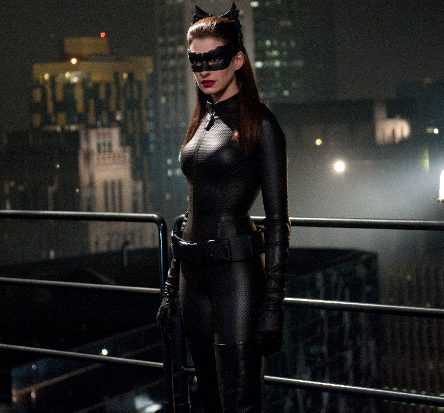
Selina Kyle (Anne Hathaway) wearing her figure-revealing ‘cat’ outfit while she steals what she needs at night and fights her way out of trouble.

Furthermore, Nolan intelligently incorporated genuine, present-day issues and analogies into the previous two films to make them relatable to the epoch. He does it again in Rises. Like in The Dark Knight, he throws in moral and ethical dilemmas here to illustrate just how tough and messy decisions can be for our political leaders (in the war on terror). And, like in Batman Begins, Nolan underlines how sophisticated, scientific technology can be used as weapons. In the first film in the series, it was the dangers of microwave emitters. In the third, it’s the threat posed by ‘peaceful’ nuclear programs (Iran) and what happens should they fall into the wrong hands.

Arguably, Rises lacks a character with the charisma of the Joker, especially as he is Batman’s traditional nemesis. Nevertheless, the astuteness of the plot and the excellence of the cast make up for this absence. Christian Bale superbly reveals the psychological torment and the multifaceted nature of Bruce Wayne that makes all other comic-book based protagonists, such as those in Fantastic Four, The Avengers Assemble and Spiderman appear immature and superficial by comparison; Anne Hathaway looks as eye-catching in tightly-fitted latex as she plays; Michael Caine again gives a touching performance as Alfred, Bruce’s wise fatherly butler, as does Morgan Freeman as the humorous Lucius Fox, the head of Wayne Enterprise; and, lastly, Tom Hardy is terrifying as Bane.

Just as Nolan did with the villains Scarecrow, the Joker and Two-Face in the other movies, he’s turned Bane from a pantomime fool (as was seen in the unwatchable 1997 Batman & Robin) into a complex and sinister character, with a distressing backstory. It is not merely Bane’s brute strength and intelligence that’s scary, it’s also the glint of frightening fanaticism in his eyes which was probably last seen with Ayatollah Khomeini, the late leader of the 1979 Iranian Revolution.

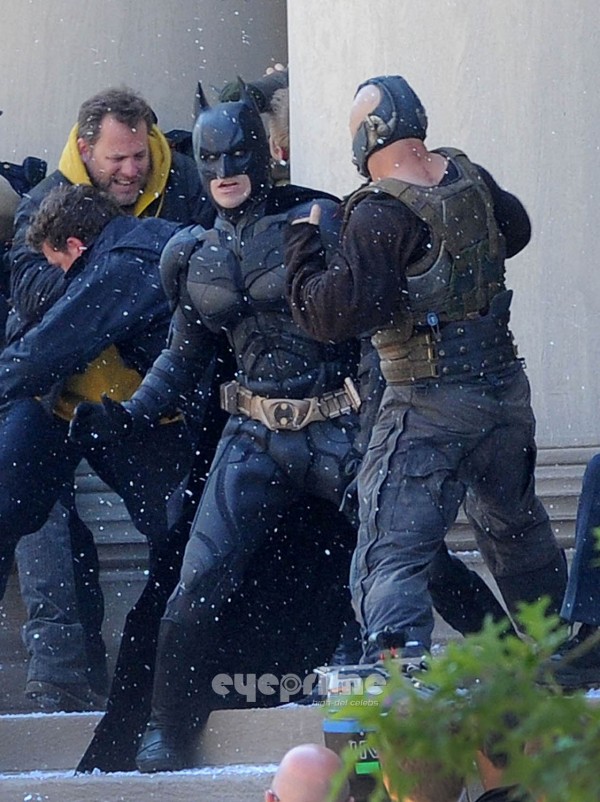
Batman (Christian Bale), with renewed vigour, battling it out with Bane to save Gotham from destruction.

While the actors do their parts splendidly, so too do the special effects team and Hans Zimmer. The effects look so real, viewers have to remind themselves that CGI was used. Similarly, the score may not be as grand or uplifting as the one composed by Howard Shore for The Lord of the Rings; nonetheless, the dark disposition of Rises entails that Zimmer’s gothic-style music is apt and augments the scenes exponentially.

Over-all, The Dark Knight Rises is an engrossing and special conclusion to an exceptional trilogy. Christopher Nolan has transformed the Batman story from a joke into a dark and very human tale that has relevance to the current era, making all other comic-book based movies seem light and casual in contrast. Once more, Nolan has used intelligence and a phenomenal cast to outdo himself in the same way that Peter Jackson did almost a decade ago. Heaven knows, it might be another ten years before we see a series of such brilliance again.

PG’s Tip