Yearly Archives: 2014

Review – The Hobbit III: The Battle of the Five Armies HFR 3D (12a) [2014]

The Hobbit III - title banner

Star Rating: 2/5

Director:

  • Peter Jackson – Lord of the Rings TrilogyThe Lovely BonesThe Hobbit I & IIThe Adventures of Tintin II

Additional Writer:

  • Guillermo Del Toro – Pan’s Labyrinth, Hellboy I-III, Mama, Pinnochio

Cast:

  • Martin Freeman – The OfficeThe World’s EndSherlockFargo, Captain America III
  • Ian McKellen – Lord of the Rings TrilogyX-Men I-IIIX-Men: Days of Future Past, Mr Holmes
  • Cate Blanchett – Notes On A ScandalBlue JasmineCinderella
  • Richard Armitage – Captain America: The First AvengerBlack SkyInto The Storm
  • Aiden Turner – AlarmThe Mortal Instruments: City of Bones
  • Ken Scott – CasanovaCharlie Wilson’s WarOne Day
  • Graham McTavish – Rambo24: Day 8ColumbianaCreed
  • Benedict Cumberbatch – Tinker Tailor Soldier SpyStar Trek II: Into DarknessThe Fifth Estate12 Years A Slave
  • Orlando Bloom – The Lord of the Rings I-IIIThe Kingdom of HeavenThe Good DoctorZulu
  • Lee Pace – The FallTwilight IV: Breaking Dawn: Part IILincoln, Untitled Lance Armstrong Biopic
  • Evangeline Lilly – LostThe Hurt LockerReal Steel
  • Luke Evans – Clash of the TitansImmortalsThe RavenDracula Untold
  • Stephen Fry – V For VendettaAlice In WonderlandSherlock Holmes II: A Game of Shadows, Once Upon A Time In The Kitchen
  • Ian Holm – Lord of the Rings I IIILord of WarRatatouille
  • Christopher Lee – Lord of the Rings TrilogySeason of the WitchThe Girl From Nagasaki
  • Hugo Weaving – The Matrix TrilogyLord of the Rings TrilogyCaptain America: The First AvengerTransformers I-III, Strangerland

Music Composer:

  • Howard Shore – Lord of the Rings TrilogyHugoA Dangerous MethodThe Hobbit I II, Denial

(Please read my reviews of The Hobbit I: An Unexpected Journey and The Hobbit II: The Desolation of Smaug for context, as I won’t be going over points I’ve already made, such as the problems with the High Frame Rate, negotiations with the orcs, and the alterations that Jackson has made to the trilogy from the source material.)

Peter Jackson’s The Lord of the Rings (LOTR) trilogy was one of the greatest trilogies of all time. It was beautifully put together and held phenomenal emotional weight that made viewers care about the characters in the story. The same, however, cannot be said for the first two volumes of the prequel trilogy. Nevertheless, could the final volume of the prequel trilogy, The Battle of the Five Armies, redeem The Hobbit trilogy?

Smaug the Dragon (voiced thunderously by Benedict Cumberbatch) is our of the Lonely Mountain and torching Laketown.

Smaug the Dragon (voiced thunderously by Benedict Cumberbatch) is our of the Lonely Mountain and torching Laketown.

The Hobbit III starts where The Desolation of Smaug ended: with Smaug (voiced by Benedict Cumberbatch) unleashing his fury upon Laketown. But with the dragon now out of the Lonely Mountain, there is a huge treasure of gold to be had. The greedy leader of the dwarves, Thorin Oakenshield (Richard Armitage), may not want to share it, but the people of Laketown, as well as armies of elves, orcs, and other dwarves come for their share of the treasure all the same. Thus, the battle of the five armies begins…

The Hobbit III is the shortest of The Hobbit films at 144 minutes and that is one of the movie’s saving graces. Well, that, the opening scene when the Cumberdragon burns Laketown, and the ending itself. The desolation of Laketown is done well, particularly as it’s given the right length of time, as well as the right amount of comedy, action and special effects for it to be spectacular.
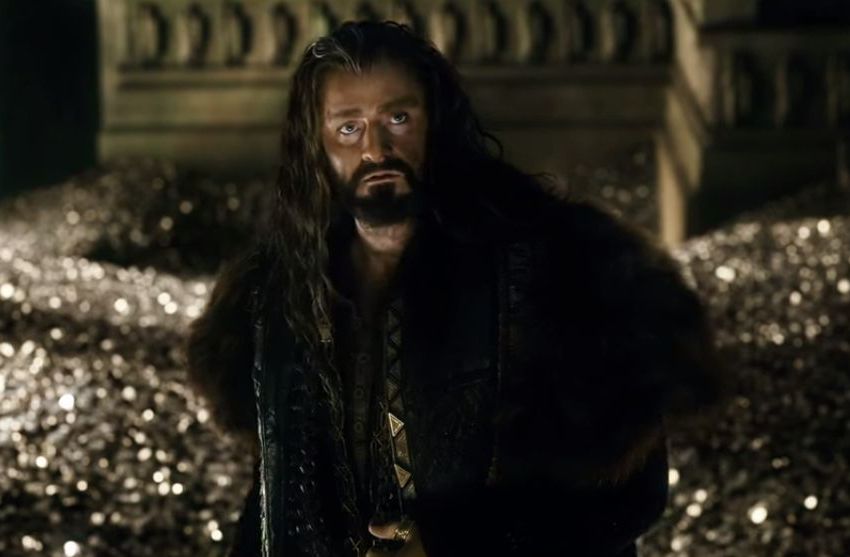
Thorin (Richard Armitage) looking for the Arkenstone within a vault of gold so deep he could swim in it like Scrooge McDuck.

Thorin (Richard Armitage) looking for the Arkenstone within a vault of gold so deep he could swim in it like Scrooge McDuck.

It is a shame that the ‘epic’ titular battle, itself, is neither spectacular nor given the right amount of time. It is 45-minutes of repetitive, pleasure-seeking action, devoid of the laws of physics, emotional weight, and should have been cut in half. One does not care what happens to the dwarves or the CGI orcs as they’re all synonymous and lifeless. Plus, if Jackson had comprehended the problems of the hour-long battle in Transformers III or the 40-minute fight in Man of Steel he would not have allowed his ‘epic’ battle go on for so long because it loses its sense of timing. Without the crucial ingredient of timing, the battle becomes snooze-inducing. But then again, the dwarves have always been synonymous throughout the trilogy, the (dark-skinned, deformed) orcs have been there merely to be slaughtered, and more or less every scene in An Unexpected Journey and The Desolation of Smaug went on for too long, had no sense of timing and ignored the laws of physics. So there really was no hope Jackson learning his lessons and making The Battle of the Five Armies an emotionally fulfilling, succinct masterpiece.
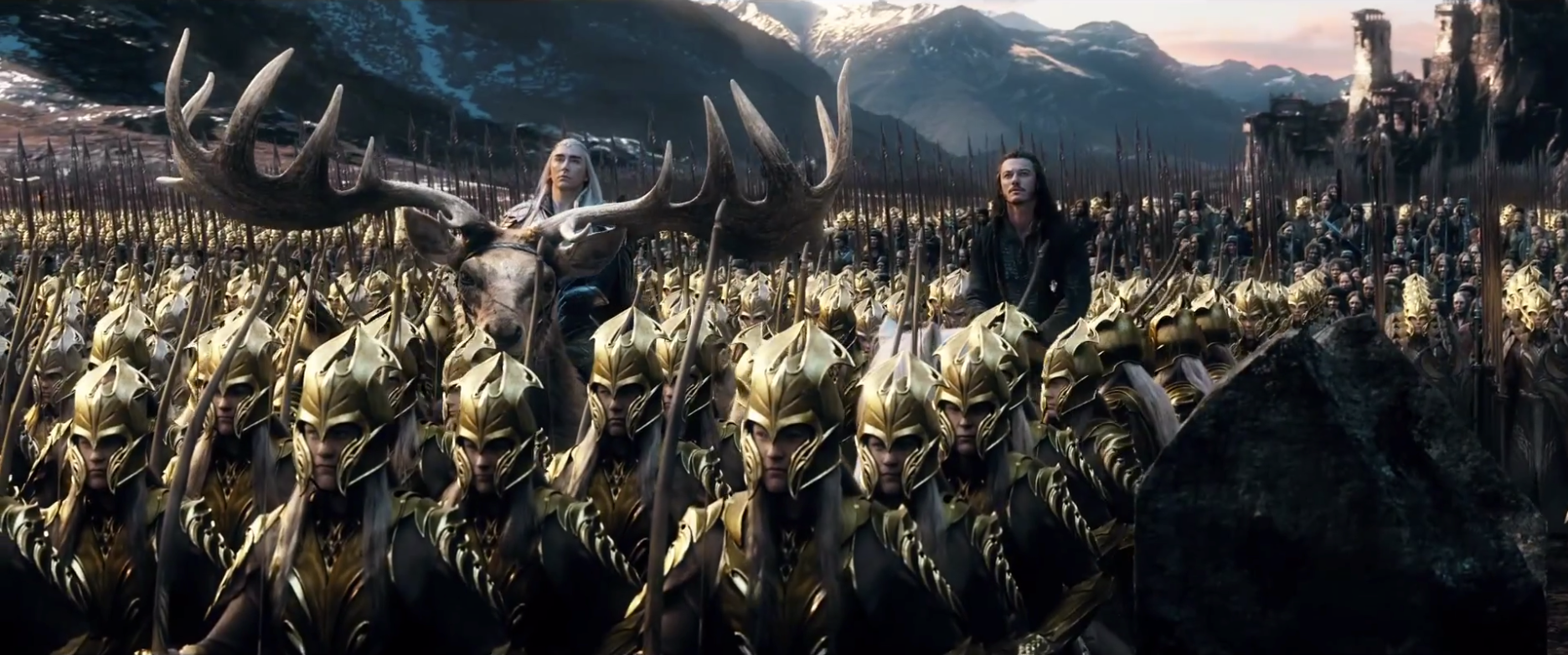
Bard (Luke Evans) on a mule and the King of the Elves, Thranduil (Lee Pace), on a... reindeer? Anyway, they have arrived among an army of elves and men to claim their shares of the treasures in the Lonely Mountain.

Bard (Luke Evans) on a mule and the King of the Elves, Thranduil (Lee Pace), on a… reindeer? Anyway, they have arrived among an army of elves and men to claim their shares of the treasures in the Lonely Mountain.

And like the muddled titular battle, the rest of The Hobbit III is dispiritingly all over the place. That The Hobbit has had a troubled production history might go some way to elucidating why The Hobbit III, in particular, is so bad. (A film based on The Hobbit book was supposed to have been written shortly after the successful conclusion of the LOTR in 2003, but didn’t materialise. Guillermo Del Toro was appointed to direct The Hobbit at some point in the late-2000s, but stepped down for unspecified reasons. Jackson, subsequently, came to the rescue of the project, only for Del Toro to come back on board in some capacity. And, then, after initially deciding to make two films out of the 300-page book, Jackson decided to split the second film in two and shoot new scenes in 2012/13 to make The Hobbit into a trilogy in post-production.) But is the film’s troubled history truly a reason for why the dialogue is so clunky; for why the aftermath of Laketown goes on for too long; for why storylines (unforgivably) do no conclude; for why the central premises of the film/trilogy are (inexcusably) forgotten; and for why the eponymous character of the trilogy, Bilbo Baggins (played with charm by Martin Freeman), feels like a peripheral figure in the concluding chapter of his own story, among other things? The Hobbit III is so unsatisfying that the answers cannot boil down solely to a troubled production history, especially as Viggo Mortensen (Aragorn) claimed earlier this year that the LOTR had a chaotic production too. This entails that the film’s/trilogy’s faults lie with Jackson, who has done nothing of significance since the LOTR and has now shown that he can muck up something he loves if he is not controlled.
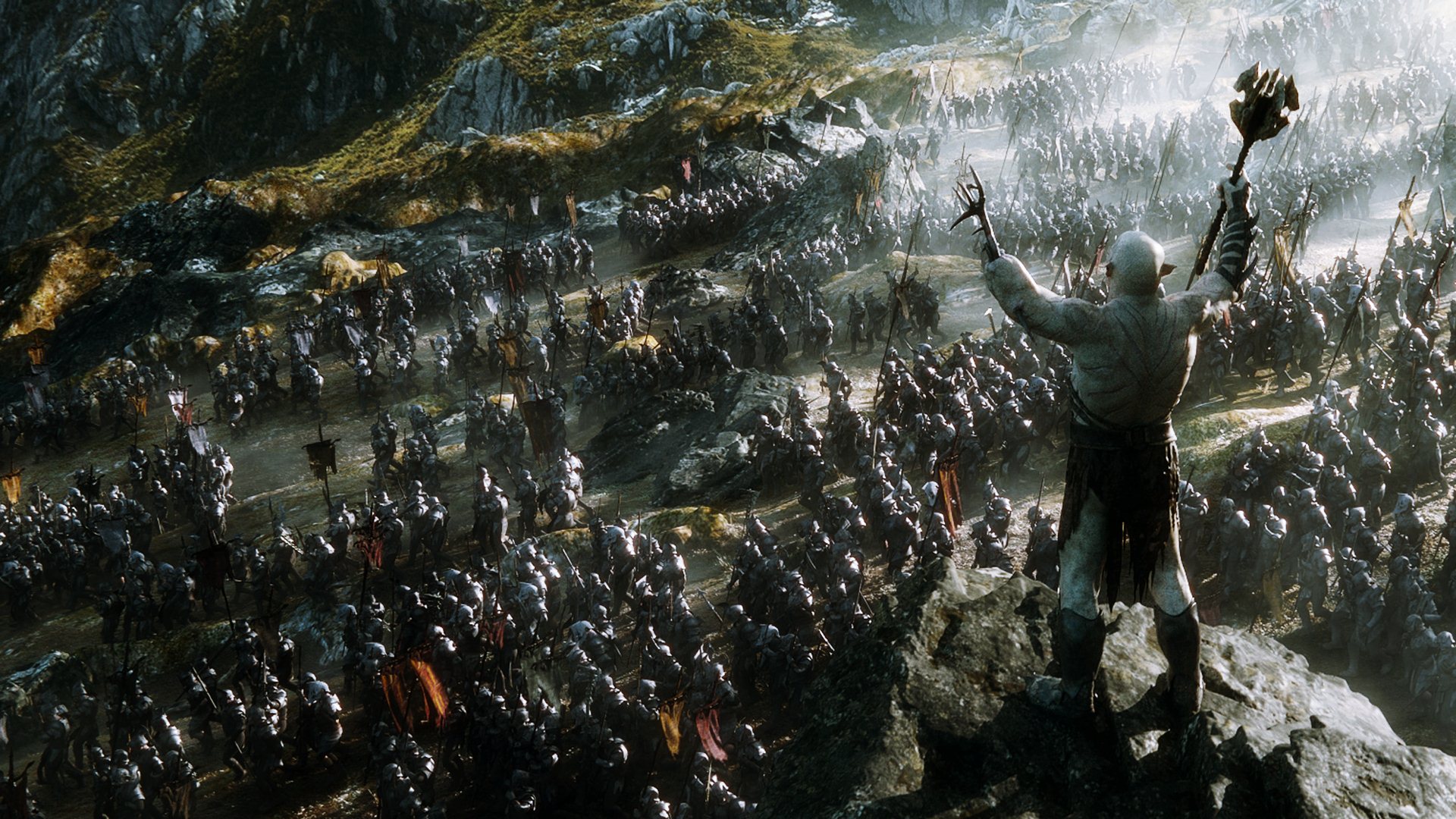
Azog the Defiler (Manu Bennett) roaring an army of orcs toward the Lonely Mountain to kill the dwarves and everyone else.

Azog the Defiler (Manu Bennett) roaring an army of orcs toward the Lonely Mountain to kill the dwarves and everyone else.

One might have pardoned Jackson for some of the aforementioned errors in The Hobbit III (and the trilogy as a whole) if he had added something innovative to Tolkien’s universe. It would have made for interesting viewing if he had given audiences details of the backgrounds, cultures and religions of the peoples of Middle-Earth that Tolkien, himself, failed to put into his stories, or put in a Machiavellian-style character (like Littlefinger from Game of Thrones). But no, Jackson (depressingly) doesn’t do any of this, meaning that people go away from this bloated film/trilogy knowing nothing more about the wizards, men, elves, dwarves and orcs of Middle-Earth than they did after the LOTR. Simply put: this is not good enough, Jackson.

Over-all, one can breathe a sigh of relief that The Hobbit trilogy is over. While The Battle of the Five Armies has a couple of good moments, like the opening scene and the end credits, it is a mess and suffers from the same issues as The Hobbit I & II: notably, its swollen length to accommodate the extreme self-indulgence, tedium and sameness. Whilst watching The Hobbit III, it feels like one is watching a glutton stuff his/her face, whilst the problems within The Hobbit trilogy as well as the problems surrounding the trilogy’s production illuminate before one’s eyes. Worse, The Hobbit III and the trilogy as a whole show up the problems within Tolkien’s works, including the LOTR. Peter Jackson, how could you go so wrong?

PG’s Tips
Review – Interstellar (12a) [2014]

Interstellar - title banner

Star Rating: 3.5/5

Director:

Cast:

Music Composer:

There are some directors whose movies are simply a cut above the rest. Steven Spielberg, David Fincher, Alfonso Cuarón and Martin Scorsese do not necessarily make films often, but when they do their films are invariably of the highest quality. Christopher Nolan rightly has a place among these filmmaking giants and his latest movie, Interstellar, confirms this despite the film’s problems.

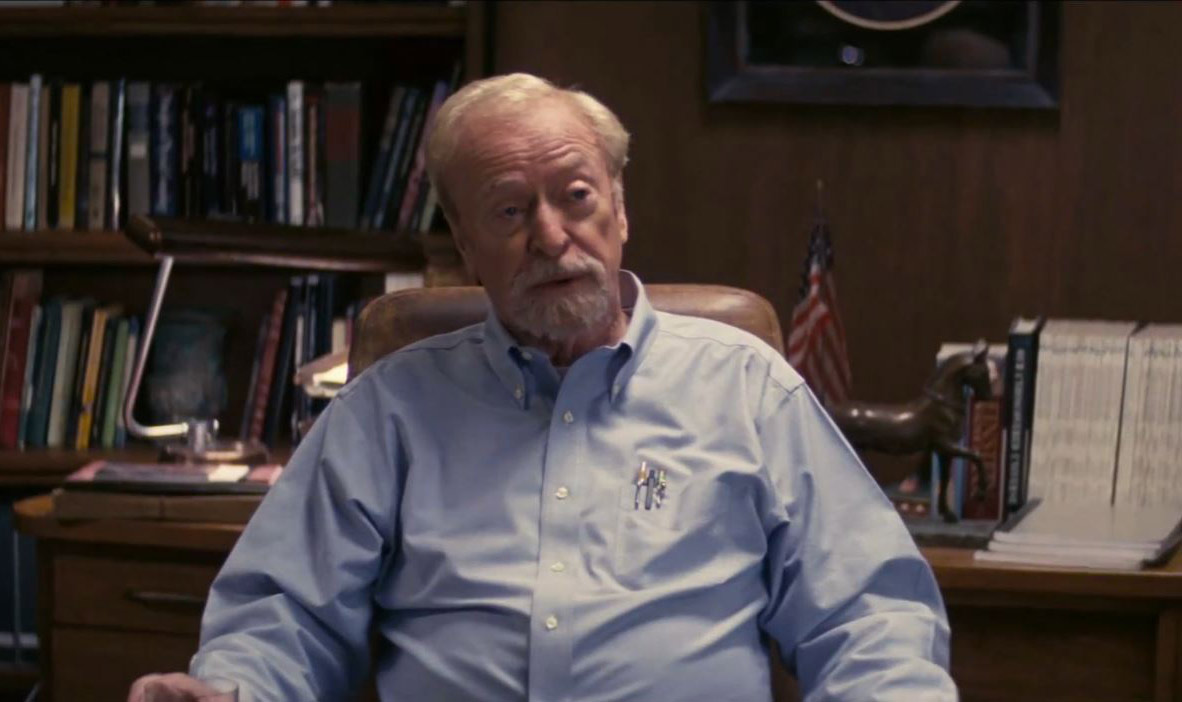
Professor Brand (Michael Caine) explaining the mission and its purpose to Cooper (Matthew McConaughey)

Professor Brand (Michael Caine) explaining the mission and its purpose to Cooper (Matthew McConaughey)

Interstellar is set in the not-too-distant future. The Earth will soon be unable to sustain life due to crop failures. Mankind needs to find a new planet in order to survive. With the situation desperate, Cooper (Matthew McConaughey) leads a team of astronauts into space so as to find another planet that can sustain habitable life.

Interstellar is an ambitious, innovative and stimulating movie. Like The Dark Knight Trilogy, The Prestige and Inception, Interstellar is a film full of ideas such as Murphy’s Law, gravity, love, and how time bends in space to name but four. These ideas keep viewers fully occupied throughout the film’s 167-minute running time. As in the above-mentioned films, Nolan again illustrates his intelligence by writing an ingenious script that holds much realism and does not fall into the generic (and dull) intergalactic ray-gun war between men and monsters. Nolan must be applauded for it and for not patronising his audience (harrumph Michael Bay).

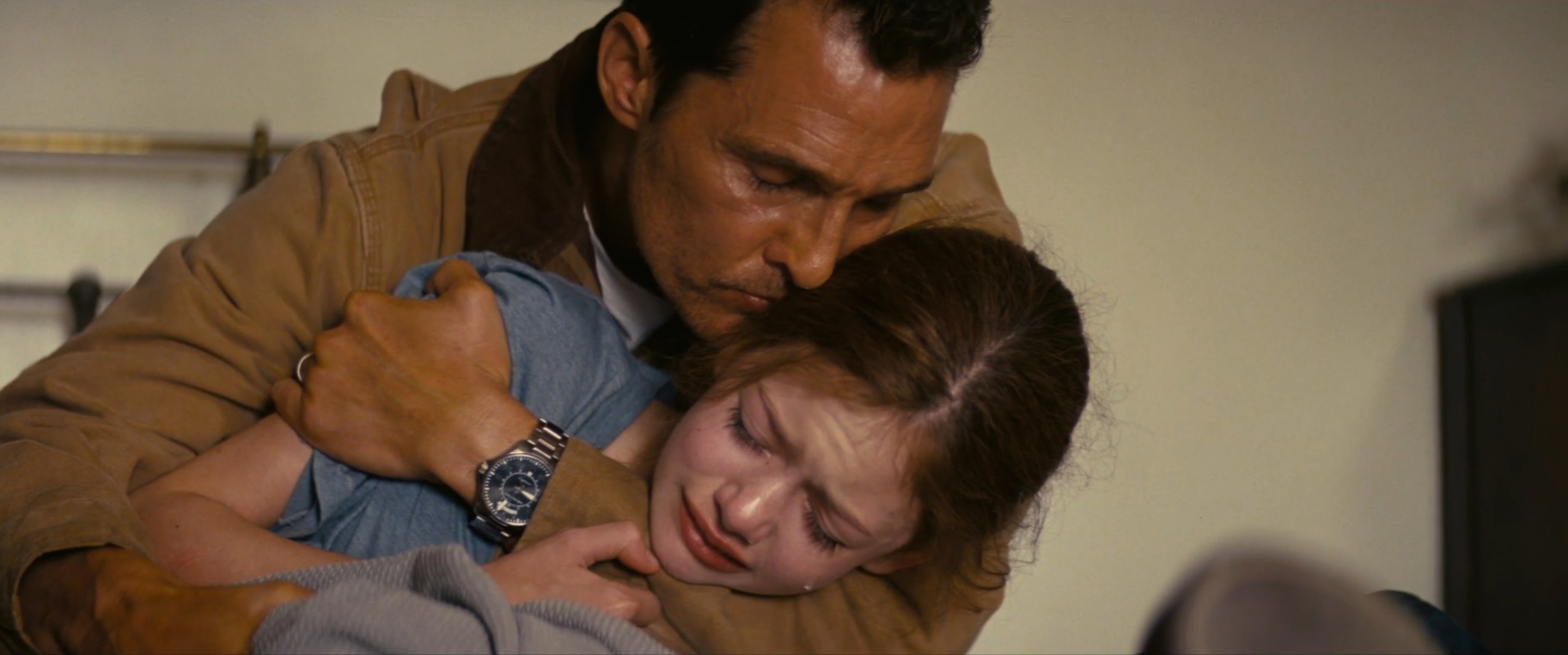
Cooper saying goodbye to his little daughter, Murphy (Mackenzie Foy) before he goes on the mission.

Cooper saying goodbye to his little daughter, Murphy (Mackenzie Foy) before he goes on the mission.

Granted, most viewers probably will not completely comprehend Interstellar’s dialogue as one may need to be a quantum physics professor and an astrophysics nerd for that. If viewers are neither of those and find the dialogue difficult to grasp, they can still easily enjoy the film simply by sitting back and admiring the awesome sceneries, the breath-taking special effects, and the phenomenal music. The CGI and the music, in particular, make audiences feel like they’re on a wonderful rollercoaster ride through space, and the length of the film enhances this riveting sensation.

However, not even this terrific sensation can override or conceal the gaping holes in Interstellar’s storyline (as a train could fit through them). These holes stem from moments of tension that are there solely for the sake of tension (and filler) rather than advancement of the storyline; and from the ending being too rushed and contrived for the movie to make sense. With most directors, viewers would generally accept these plot holes as par for the course. But with Nolan, viewers expect better. Scenes of tension in his previous films have had consequence(s) upon the storylines, and he has given us some of the most original, thought-provoking and satisfying endings in movie history. To see his film suffer from similar problems as those of (cheesy) action films and (second-rate) sci-fi movies feels wrong as Nolan is too smart a man to fall into such holes.

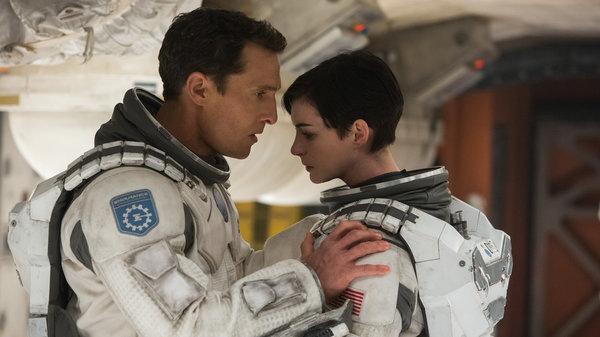
Cooper speaking with Amelia (Anne Hathaway) as they try to determine what to do next as they search for a habitable planet.

Cooper speaking with Amelia (Anne Hathaway) as they try to determine what to do next as they search for a habitable planet.

Yet, the above-mentioned holes are not the only issues staring back at Interstellar. Like Inception, Interstellar is so plot heavy it has no time for character development. For any film, it is excusable not to give peripheral characters proper story-arcs since that bloats the film’s running time unnecessarily and can render a film with a terribly swollen cast (like Interstellar) impractical to make. But what is not excusable for any film, including Interstellar, is for the major characters to not have proper story-arcs. This is because one of the most fascinating parts of a film is the journey the main characters go on and watching how the journey affects them, for good or ill. Without such story-arcs for the major characters, Interstellar feels like a large plate with little food on it: somewhat unsatisfying.

Over-all, Interstellar is a very ambitious, intelligent and challenging movie. Yes, it has plenty of plot problems. And, yes, it does not give its characters enough time for sincere character growth. On the flip side, though, the movie is made worthwhile by the stunning landscapes, the spectacular special effects, the spellbinding music, and the interesting ideas that are seldom explored in films. Suffice to say, Interstellar does not make for an easy 167-minutes and the film would have ended up as a total mess if it were to have been directed by anyone other than a master of his/her craft. This underlines why Christopher Nolan is such an extraordinary director and why he rightly stands among the best in the business in Hollywood.

PG’s Tips
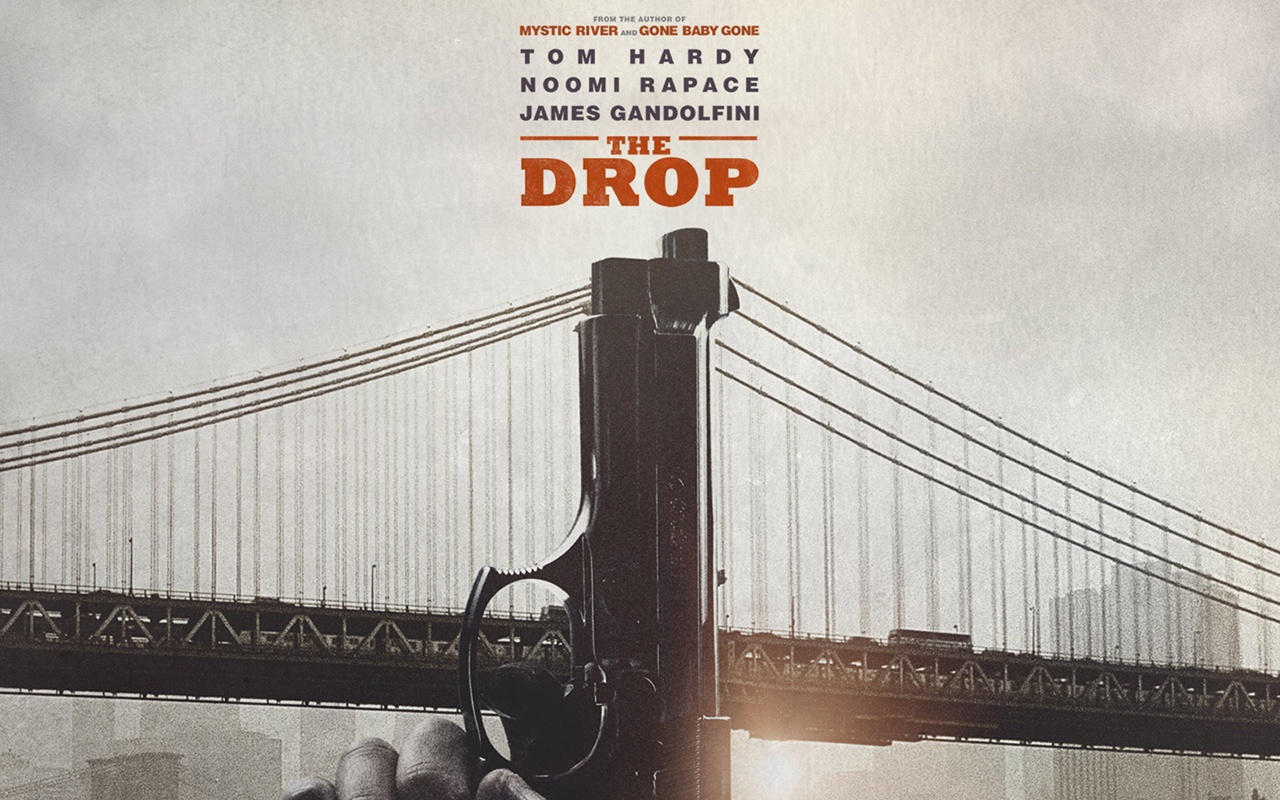
Review – The Drop (15) [2014]

The Drop - title banner

Star Rating: 4/5

Director:

  • Michael R. Roskam – Bullhead

Cast:

Music Composer:

The engine to every story/film is its characters. Without characters, viewers have no means of entering the story and so cannot enjoy the story. But do characters have to be likeable for viewers to enjoy the story? Rust And Bone and The Wolf Of Wall Street demonstrated that characters could be repugnant, yet the story/film could still be enjoyed. Michael R. Roskam’s The Drop adds further evidence to this theory.

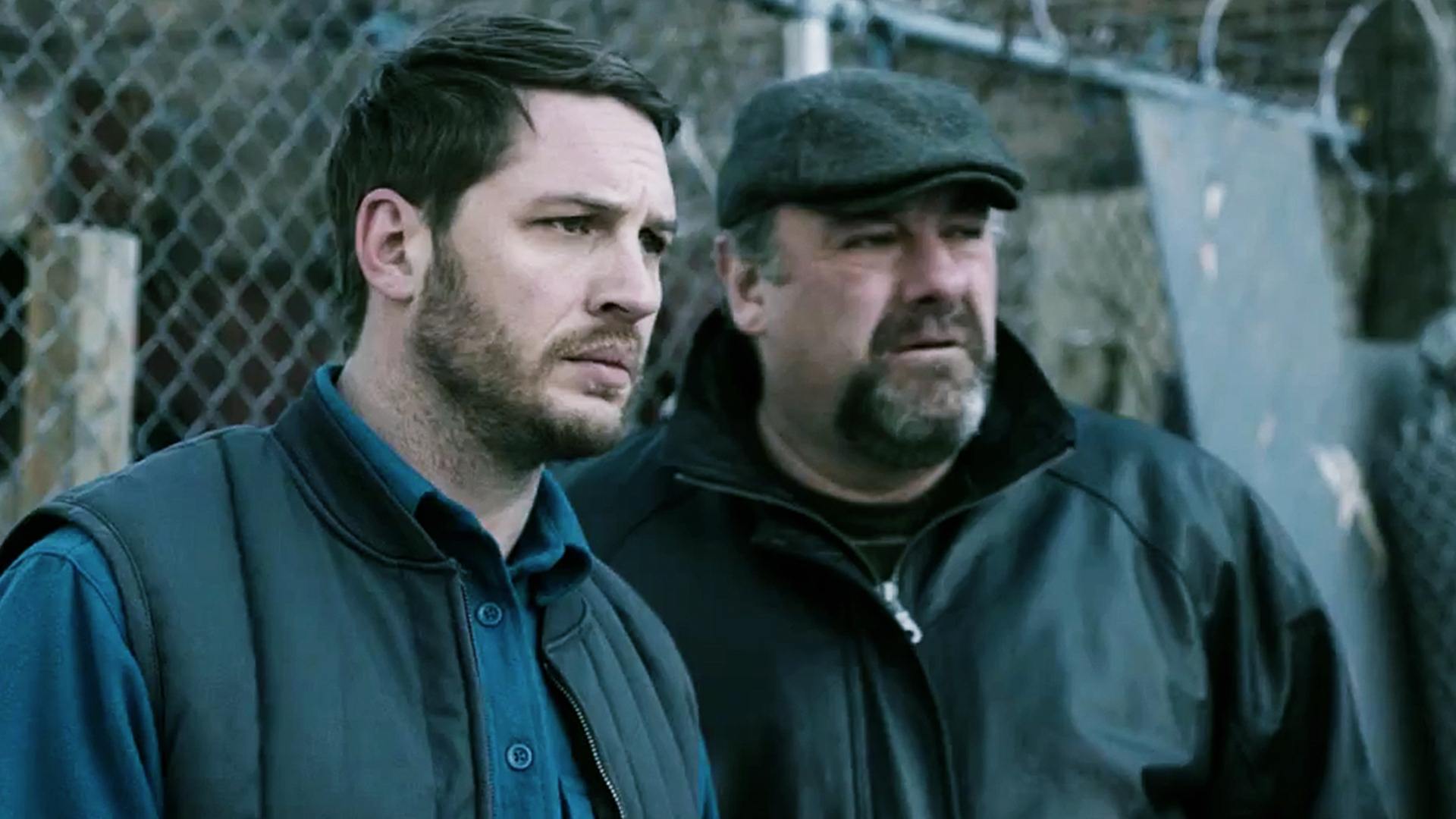
Bob (Tom Hardy) with his boss and cousin, Marv (James Gandolfini, in his final role before his death) outside the back of Cousin Marv's, listening to their Chechen gangster boss.

Bob (Tom Hardy) with his boss and cousin, Marv (James Gandolfini, in his final role before his death) outside the back of Cousin Marv’s, listening to their Chechen gangster boss.

The Drop is based on the short story Animal Rescue by Dennis Lehane. The film is about two intertwining stories that take place in a poor part of Brooklyn, New York. Bob (Tom Hardy) is a bartender who works for his cousin Marv (James Gandolfini) at the latter’s former bar. Cousin Marv, as the bar is called (even though Marv no longer owns it), is a drop box for local gangsters to put brown envelopes of cash into. However, one night, the bar is robbed by gunmen and Marv’s boss, a Chechen gangster called Chovka (Michael Aranov), wants to know where his money has gone. Or else.

At the same time, Bob walks home from the bar one night, only to overhear a dog whimpering in the dustbin of a neighbour, Nadia (Noomi Rapace). Bob opens the bin to find a maltreated pit-bull puppy in it. Between him and Nadia, they take care of the puppy. Nevertheless, one day when Bob is playing with the dog in the park, the notorious Eric Deeds (Matthias Schoenaerts) finds him and tells him that the dog belongs to him. Bob insists that he is not giving up the dog, and that is when Eric tells him that if he does not pay him $10,000 by the next day for the dog, he promises to kill him, maltreat the puppy again, and do worse to Nadia.

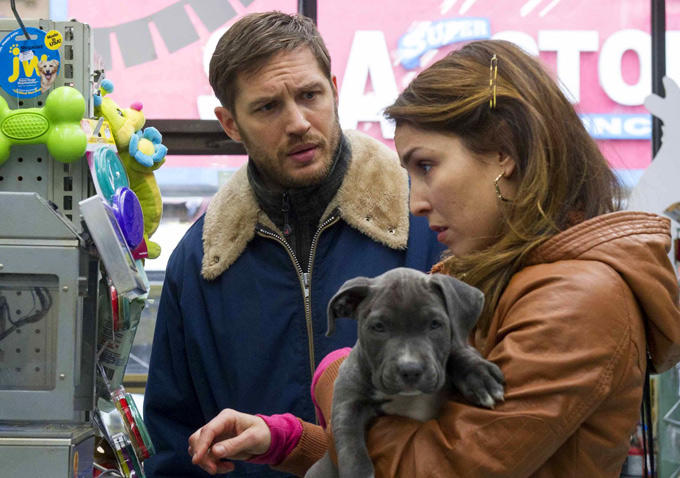
Bob with Nadia (Noomi Rapace), buying stuff for the pitbull puppy, Rocco.

Bob with Nadia (Noomi Rapace), buying stuff for the pitbull puppy, Rocco.

The Drop is a slow-burning, increasingly tense thriller. The film feels less like a Hollywood production and more like a British one due to the gloomy mood throughout the movie’s 106-minute running time. Indeed, if it weren’t for the accents and the design of the houses, one might have mistaken it for a British production due to the constant grim, grey sky and the run down state of the homes in the area. Such features are typical of British productions like Harry Brown, Tyrannosaur and the Channel 4 TV series Top Boy, and enable viewers to feel the brooding atmosphere of a place in which something nasty is going to happen.

One senses that something nasty is going to happen because the area in which The Drop is located in is full of nasty people, ready to do (and cover up) their dirty work. The nasty people are all brought to life vividly by a cast with less than a handful of redemptive features between them. Tom Hardy commands a strong performance in the central role. He personifies the brooding atmosphere of the film with his perpetual frown, and few actors have Hardy’s rare ability to convey so much with just a bland stare.

Of the rest of the cast, Noomi Rapace does a good job with Nadia, even if she does not have a lot to work with other than being low on confidence and insecure. Similarly, Matthias Schoenaerts plays well (and with worrying realism) in his familiar role as a scum bug. At least in Rust And Bone, Schoenaerts’ character had one redemptive feature. In The Drop, his character has none! Yet, none of the characters are as ostensibly interesting as the one performed by James Gandolfini in his final role. Gandolfini’s character, Marv, may not be a nice person. But he is the most layered and complex character in the film and this makes viewers want to see more of him/Gandolfini as, arguably, it is Marv that makes the movie tick.

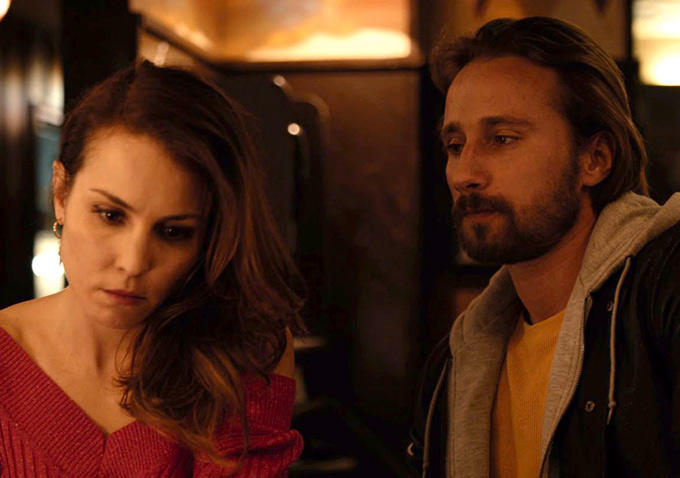
Nadia, looking good but ditressed with Eric Deeds (Matthias Schoenaerts) at Cousin Marv's.

Nadia, looking good but ditressed with Eric Deeds (Matthias Schoenaerts) at Cousin Marv’s.

The setting and the acting are top-notch in The Drop. However, other than those (very important) elements, the film does not have much else to ride on. The plot raises several questions that go unanswered, which is annoying because the questions do not seem especially difficult to answer. Additionally, some of the key moments in the movie take place off-screen, which is again annoying. There is a rule in art: show, don’t tell. That The Drop ignores this rule is its major hindrance as otherwise it is a very solid film.

Over-all, The Drop consists of most things that one could want from a slow-burning thriller. For certain, it has some plot holes that could have been handled better. Nevertheless, the dismal and threatening atmosphere of the film; the gradual rise in tension; and the fine acting of the cast all make the movie thoroughly worthwhile and enjoyable. Thus, The Drop illustrates once more that a film with dislikeable characters can still be enjoyed.

PG’s Tips

Review – Fury (15) [2014]

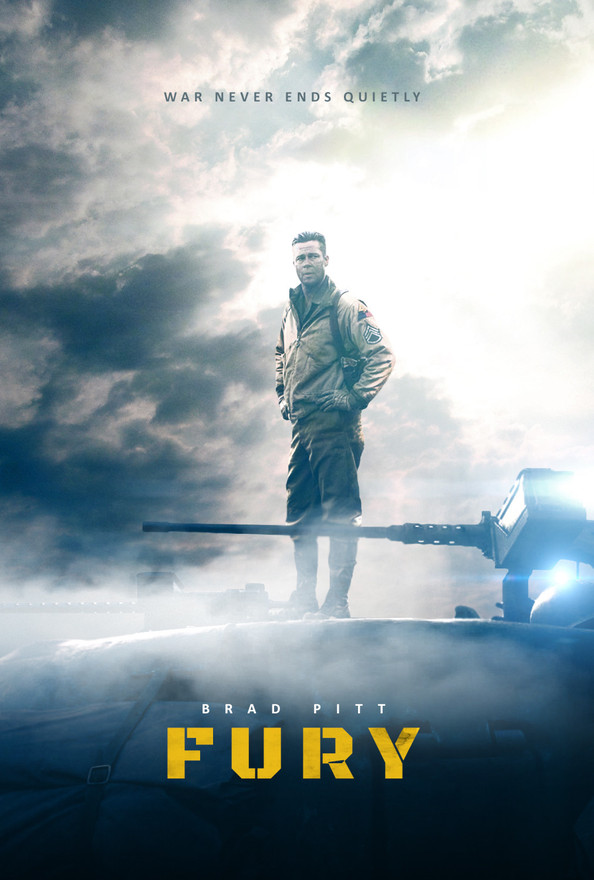
Fury - title banner

Star Rating: 3/5

Director:

  • David Ayer – Harsh Times, End Of Watch, Sabotage

Cast:

  • Brad Pitt – Snatch, Mr & Mrs Smith, 12 Years A Slave, The Big Short
  • Shia Lebeouf – Disturbia, Transformers I-III, Nymphomaniac I-II, Man Down
  • Logan Lerman – 3:10 To Yuma, The Perks Of Being A Wallflower, Percy Jackson I-II, Noah
  • Michael Peña – Crash, End Of Watch, The Lincoln Lawyer, The Martian
  • Jon Bernthal – The Air I Breathe, The Ghost, The Wolf Of Wall Street, Sicario
  • Jason Isaacs – Black Hawk Down, Windtalkers, Harry Potter I-VII(i) & VII(ii), Stockholm, Pennsylvania

Music Composer:

  • Steven Price – The World’s End, Gravity

The topic of World War II (WWII) is well trodden territory in Hollywood. Seeing stellar American soldiers gunning down Nazis and ‘Japs’ has been revisited on many, many occasions as Saving Private Ryan, Pearl Harbour, Band Of Brothers, Flags Of Our Fathers, and Red Tails testify, to name a handful. Unsurprisingly, after such a high volume of movies on the topic in the last two decades alone, there is a sterile and samey feel to WWII films, unless a new film adds something unseen to the genre. Alas, Fury does not do this.

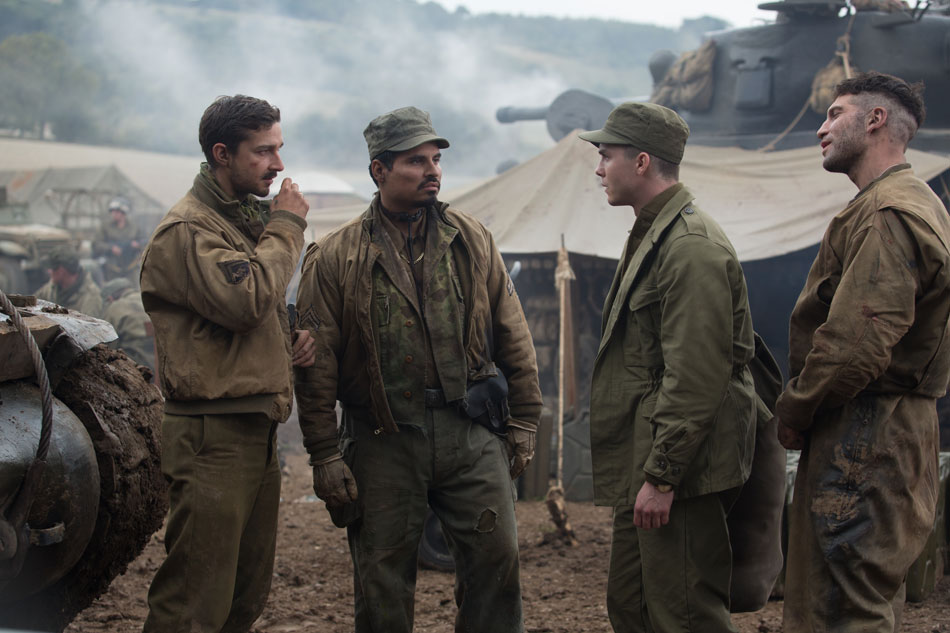
Young Norman Ellison (Logan Lerman, inside right) joining his crew of tank-men, and being derided for his inexperience by Boyd (Shia Lebeouf), 'Gordo' (Michael Peña) and 'Coon-Ass' (Jon Bernthal).

Young Norman Ellison (Logan Lerman, inside right) joining his crew of tank-men, and being derided for his inexperience by Boyd (Shia Lebeouf), ‘Gordo’ (Michael Peña) and ‘Coon-Ass’ (Jon Bernthal).

The film is fictional and begins in 1945. The Allies are advancing into Nazi Germany, and Fury, the name of the tank led by Sergeant ‘Wardaddy’ Collier (Brad Pitt), is in one of the regiments leading the assault into the Fatherland. Including Sergeant Collier, the tank consists of a five man crew: Boyd ‘Bible’ Swan (Shia Lebeouf), Grady ‘Coon-Ass’ Travis (Jon Bernthal), Trini ‘Gordo’ Garcia (Michael Peña), and newcomer Norman Ellison (Logan Lerman).

As the crew push deeper into Germany, Sergeant Collier takes it upon himself to educate young Ellison about the brutal nature of war and how to deal with it, as the personality of the enemy sinks to ever more depraved levels.

Fury’s premise is simple and the film sticks to it rigidly. Fury has a raw, muddy, and claustrophobic feel to it. One gains a true insight into what it must have been like (and probably still is like) for a group of soldiers inside a tank while fighting in a war. The movie shows how the crew’s situation turns from uneventful to frenzied chaos upon the rippling of a machine gun or the boom of an explosion. Suffice to say, there is plenty of both and all the action scenes are well done.

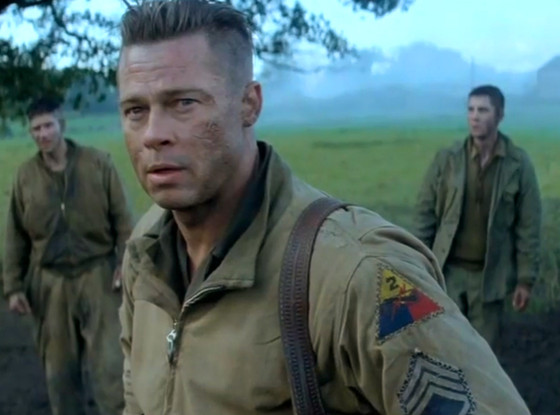
Sergeant 'Wardaddy' Collier (Brad Pitt) thinking over a key decision that he has to make.

Sergeant ‘Wardaddy’ Collier (Brad Pitt) thinking over a key decision that he has to make.

Another aspect of Fury that’s done well is the developing relationship between Sergeant Collier/Brad Pitt and Norman Ellison/Logan Lerman. This is because David Ayer’s script is good and the actors perform their roles well, particularly Pitt as the grizzled but caring war-veteran. To Pitt’s credit, in a film which he dominates, he manages to hold viewer’s attention, whether it is with Ellison, the other members of his band of brothers, other American soldiers, or Germans. Pitt’s/Collier’s character is most interesting and revealing when he is teaching Ellison/Lerman about the nature of the Nazi enemy as audiences get to see the complexities in his character.

Yet, as a corollary of Pitt dominating the film, the rest of the non-peripheral members of the cast don’t get enough screen time to illustrate that they are much more than (lazy) personifications of their nicknames. (Nevertheless, they do get time enough to praise Sergeant Collier/Brad Pitt. For which film starring Brad Pitt wouldn’t give the supporting cast time to applaud him?) That the other characters are not given adequate screen time is a bit of a shame as the actors all do good jobs with what they’re given; even, shockingly, the much-derided Shia Lebeouf!

Other than Fury being (yet another) glorification of Brad Pitt, the film lacks direction and the storyline does not go anywhere as a result. Arguably, the movie never intends to build up to a climax (although it half does); and, instead, merely goes out to highlight the grisly, ghastly and inhumane horrors of war, merely from the angle of tank crewmen. Yet, if this were the case, Fury does not go far enough. Many criminal elements and horrors of war/WWII are not shown in the film, especially in comparison to the harrowing Schindler’s List and The City Of Life And Death.

What a surprise! Sergeant Collier/Brad Pitt takes off his shirt, gives himself a wash, and shows off his abs to put most men to shame. Haven't we seen this before? (Fight Club? Troy?)

What a surprise! Sergeant Collier/Brad Pitt takes off his shirt, gives himself a wash, and shows off his abs to put most men to shame. Haven’t we seen this before? (Fight Club? Troy?)

Additionally, Fury lacks depth. There are several occasions when some of the cast talk about criminal acts they’ve committed during the war. They may talk about it with remorse, but no-one ever questions their actions. This renders the scene frustrating because the film misses the chance to explore the moral conscience of each character, and pointless because it means that such scenes have no consequence (positive or negative) on the rest of the movie.

Indeed, frustration and pointlessness sum up Fury. It is a film that has a lot going for it due to a good script; solid acting from all the cast; the a muddy set which enables one to feel what it must have been like (and what it probably still be like) to be inside a tank during war; and the graphic way that warfare is depicted is gruesome and sickening. However, ultimately, the above-mentioned positives of Fury are not enough to satisfy viewers, considering that WWII has been portrayed in films so many times over the last two decades alone. Thus, Fury has the sterile and samey feel of so many other WWII movies which not even the dominant display of Brad Pitt (and his abs) can overcome.

PG’s Tips
Review – The Babadook (15) [2014]

Babadook - title banner

Star Rating: 4/5

Director:

  •  Jennifer Kent – Monster

Cast:

  • Essie Davis – The Matrix Reloaded & Revolutions, Australia, Legend of the Guardians: The Owls of Ga’Hoole, Assassin’s Creed
  • Noah Wiseman – The Gift
  • Tim Purcell
  • Daniel Henshall – The Snowtown Murders, Not Suitable For Children, These Final Hours, Fell
  • Benjamin Winspear – The Last Goodbye, Breeding In Captivity
  • Hayley McElhinney
  • Barbara West

Music Composer:

  •  Jed Kurzel – The Snowtown Murders, Dead Europe, Macbeth

In recent years, the ineptitude of the horror genre has been documented on this blog. The Woman In Black, The Possession and Mama did not induce enough fear into viewers and illustrated, to the point of a rule, that the horror genre has become a joke. Nevertheless, Jennifer Kent’s latest film The Babadook wonderfully proves otherwise and shows that the horror genre still has the power to terrify viewers.

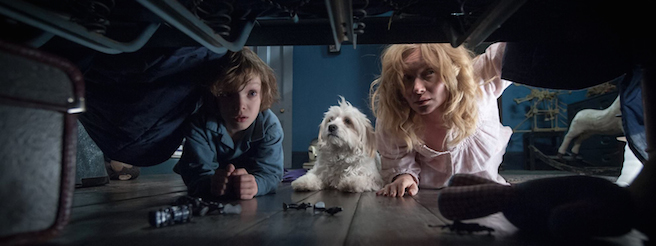
Amelia (Essie Davis) with her son, Samuel (Noah Wiseman), looking under the bed to make sure that no monsters are there.

Amelia (Essie Davis) with her son, Samuel (Noah Wiseman), looking under the bed to make sure that no monsters are there.

  The Babadook is a low-budget Australian movie. Amelia (Essie Davis) is a nurse/carer in an old people’s home by day and a single mother the rest of the time. Her son, Samuel (Noah Wiseman), is a difficult child who believes to the point of obsession that he sees a monster (the Babadook) in the closet. He creates improvised weapons to deal with the monster when the correct moment arises. At first, Amelia believes that Samuel’s unusually obsessive behaviour is not an in issue. But soon she realises, to her consternation, that a sinister presence might be lurking in the house…

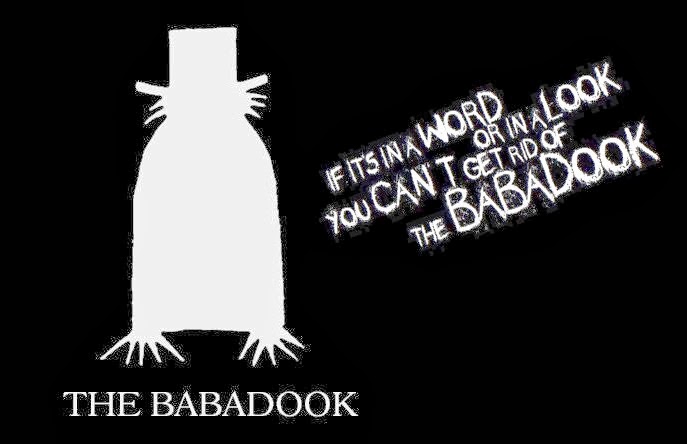
The Babadook is a brilliant horror film that is sincerely scary. At its core, the movie is about a supernatural being haunting a house in need of renovation. But, amazingly, the movie does not fall into the current horror genre trope of quiet, quiet, quiet, quiet… BANG to quicken one’s heart rate. Instead, in a similar vein to The Shining and We Need To Talk About Kevin, The Babadook messes with one’s instincts and emotions in a very natural and unsettling way.

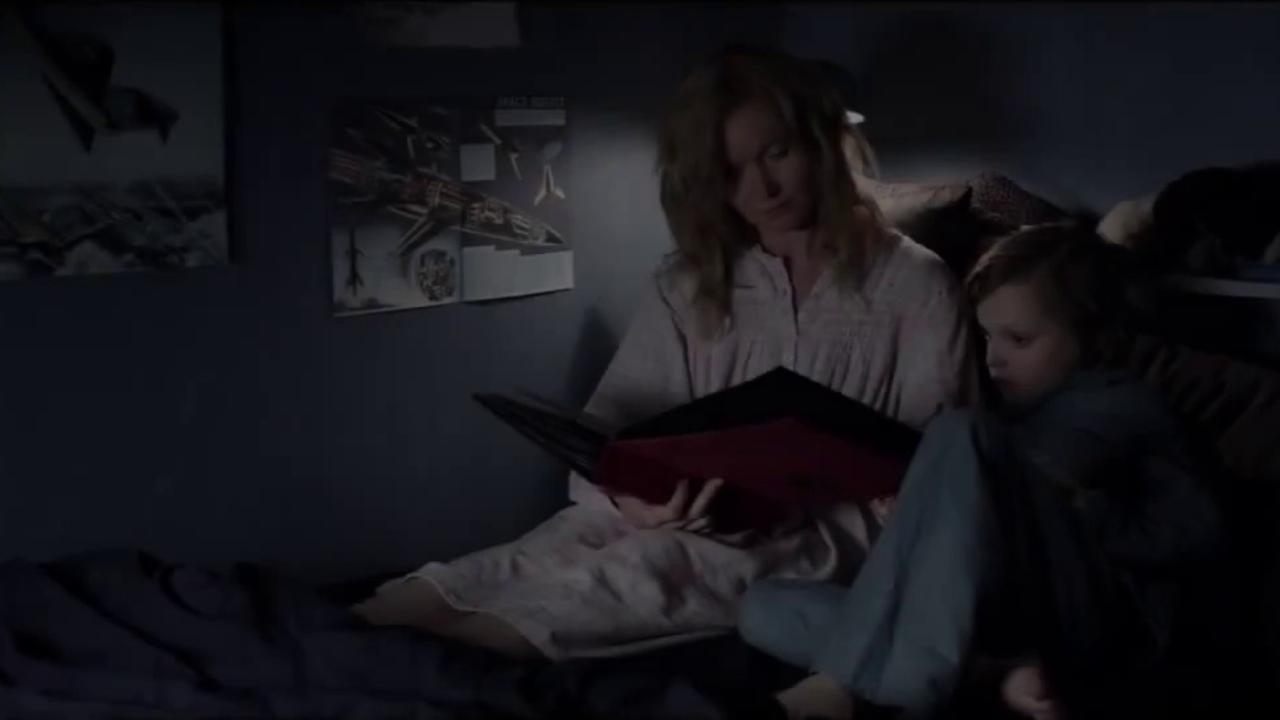
Amelia reading Sam a book to help him go to sleep. Only, without realising it, she is reading to him the poetry book written by the Babadook.

Amelia reading Sam a book to help him go to sleep. Only, without realising it, she is reading to him the poetry book written by the Babadook.

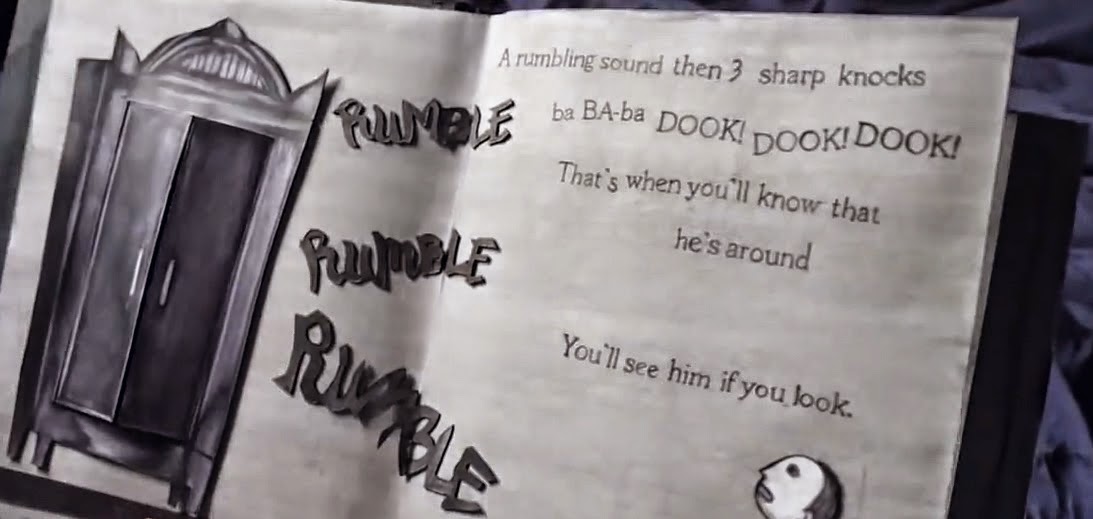
The director, Jennifer Kent, does this by four means: one, through the use of discomforting poetry; two, through the use of ethereal sounds like thud, dook and the crawl of insects to build tension; three, by creating a situation whereby a mother is as fearful for her child as she is fearful of her child (and his disturbing behaviour); and, four, by inflection by making both the mother and the son, in different ways, look more and more like the Babadook as the film goes on. All four of these factors are executed exceptionally well and ensure that one feels a knot gradually tightening in their stomachs.

Undoubtedly, one would not be able to feel this way if the two lead actors, Essie Davis and Noah Wiseman, had not put in such strong performances. Yet, at the same time, both actors have been privileged with richly complex, three-dimensional characters. For this, one must applaud Jennifer Kent for writing such believable characters and a brilliantly written script in general.

A page from the Babadook's actual book. The poetry is as fantastic as it is unsettling.

A page from the Babadook’s actual book. The poetry is as fantastic as it is unsettling.

Nevertheless, the script (sadly) does not hold out for the whole of The Babadook’s 94 minutes. Arguably, the climactic scene near the end of the movie veers away from the direction that the film had seemed to be going down for more than three quarters of the film. This is a shame as the scenes near the end feel a little jarring and out of sync with the rest of the movie. In addition, the special effects look amateurish at times, which may undermine the scare element of the film. However, one should not put too much stress on these flaws because that would be to take away what is a delightfully accomplished horror film.

Over-all, The Babadook is a superb and genuinely scary horror movie. As a whole, the film is well-written, superbly acted, and deeply unsettling in a very normal way despite the supernatural element within the film. One might nitpick and say that the special effects are not great. Yet, at a time when the horror genre has become a laughing stock, Jennifer Kent demonstrates with The Babadook that there is more to the horror genre than the base (and boring) denominator of quiet, quiet, quiet… BANG, and that horror films still have the potential to scare people.

PG’s Tips
Review – Gone Girl (18) [2014]

Gone Girl - title banner2

Star Rating: 4.5/5

Director:

  • David Fincher – Fight Club, The West Wing, The Social Network, The Girl With The Dragon Tattoo

Cast:

  • Ben Affleck – Pearl Harbour, Paycheck, Argo, Batman v Superman: Dawn of Justice
  • Rosamund Pike – Die Another Day, An Education, Wrath of the Titans, Return To Sender
  • Neil Patrick Harris – Starship Troopers, Beastly, Cloudy With A Chance of Meatballs, The Good Dinosaur
  • Carrie Coon – The Leftovers
  • Tyler Perry – Why Did I Get Married?, I Can Do Bad All By Myself, Good Deeds, The Single Mom’s Club
  • Emily Ratajkowski – Entourage, We Are You Friends
  • Kim Dickens – Red, Lost, The Blind Side, Sons of Anarchy
  • Sela Ward – Independence Day II: Resurgence

Music Composers:

  • Trent Resner – The Social Network, The Girl With The Dragon Tattoo, Brainport: Soul of a City
  • Atticus Ross – The Book of Eli, The Social Network, The Girl With The Dragon Tattoo, Blackhat

When people get married, they make a vow to one another to stay together for life. At the time of making their vows, couples believe that their bonds are strong and that any hurdles they face in their marriage will be overcome. Nevertheless, there are some hurdles that cannot always be overcome, whether it is due to the behaviour of one or both of the spouses, or due to factors beyond a couple’s control. David Fincher’s excellent new film, Gone Girl, dramatically explores what couples maybe can and cannot endure in a marriage when certain fundamental aspects of any relationship/marriage are tested to the limit.

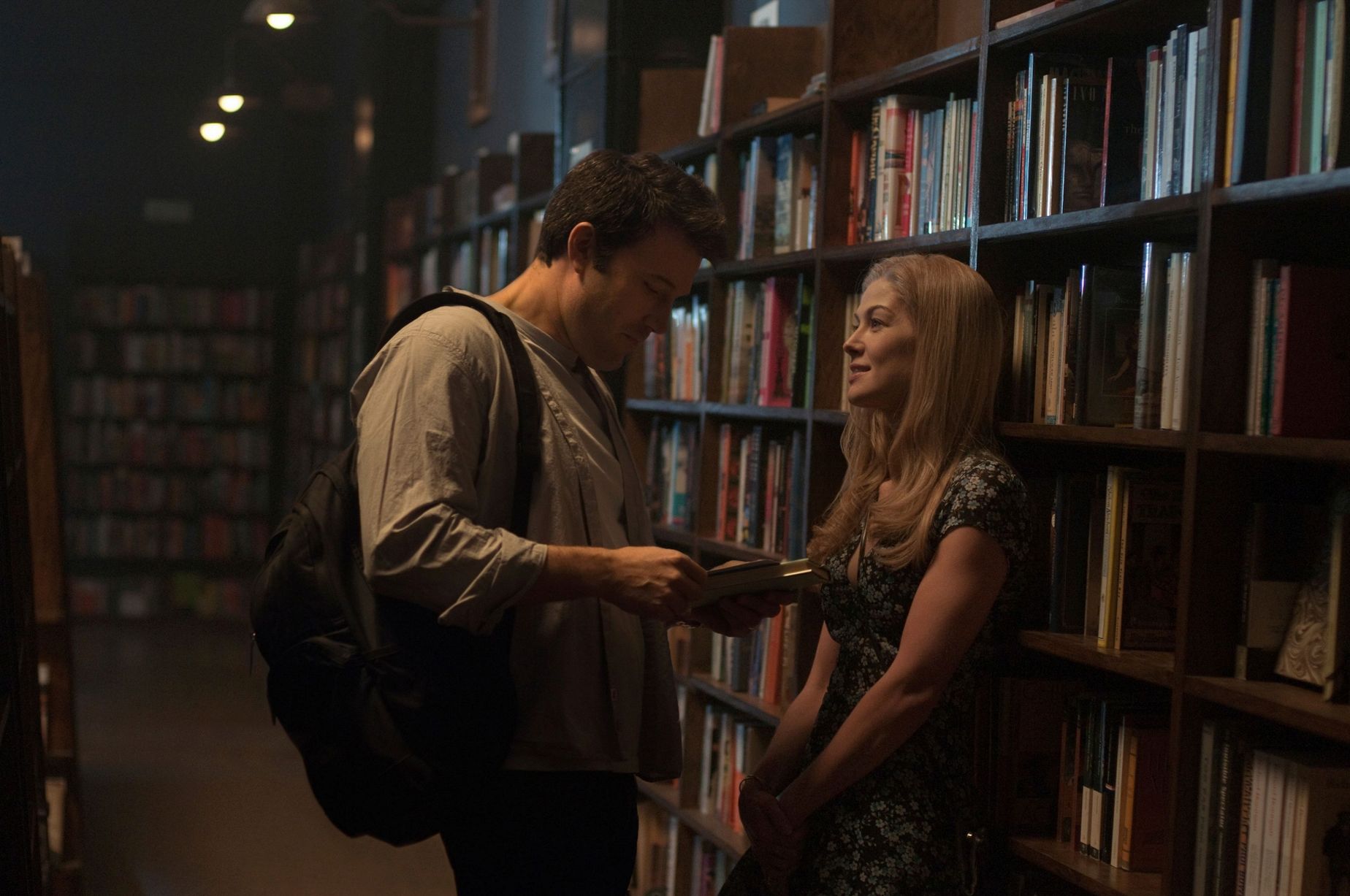
Nick (Ben Affleck) and Amy (Rosamund Pike) happily married, looking for books in a library.

Nick (Ben Affleck) and Amy (Rosamund Pike) happily married, looking for books in a library.

Gone Girl is a psychological thriller, adapted from the 2012 novel with the same title by Gillian Flynn. Nick and Amy Dunne are a young, happily married couple. But on the day of their fifth wedding anniversary, Nick (Ben Affleck) comes home to find that his wife Amy (Rosamund Pike) has vanished. Nick reports his wife as missing to the police. But as the investigation gets under way, the shadier sides of Nick’s personality are uncovered, leaving the police to question whether he is guilty of something sinister.

Gone Girl is a fascinating film that looks into Amy’s disappearance in detail. Like with Fincher’s critically acclaimed The Social Network, Gone Girl gives each side a fair amount of time to tell their version of events throughout its 150-minute running time. Cleverly, in between flash backs, the movie dangles carrots of information before viewers, so they jump to conclusions, only to be given new pieces of information that force them to rethink all that they previously knew (or thought they knew) about Nick and Amy. Impressively, this continues in a mature way right up to and including the final scene.

Nick going to the tavern to speak with his twin-sister, Margo (Carrie Coon), about how his relationship with Amy is almost non-existent.

Nick going to the tavern to speak with his twin-sister, Margo (Carrie Coon), about how his relationship with Amy is almost non-existent.

Suffice to say, Gone Girl is an intense movie in which one cannot go to the bathroom for a break at any point. Scenes move quickly; too quickly, perhaps. Yet, each scene is crucial, not just in terms of plot, but in terms of the important issues the film raises because they affect normal people in relationships/marriage. Issues such as trust in a partner/spouse, the extent that one can believe any side of a story, the façade of a happy marriage, the gradual change of personality in one’s partner/spouse, the strain of economic hardships on a relationship/marriage, the strain on a relationship/marriage of having to move city or country for one reason or another, the prejudices of the police during investigations, and the role other people and the media can play over local (and international) opinions. That the film handles these issues in a neutral, adult way is a credit to the film that will leave audiences enthralled and unsure as to who is the hero and who is the villain.

Two reasons why audiences will be enthralled is due to the quality of the dialogue and the acting. Fincher’s trademark fast-talking dialogue is pulled off with aplomb by the talented cast, all of whom play superbly well. Significantly, the two main actors, Ben Affleck and Rosamind Pike, are outstanding and have great chemistry together. Yet, of the two, it is Pike who steals the show with a career-changing performance. The film may rush Amy’s character development, but Pike handles this well enough to guarantee that anything that is missing from Amy’s nature is of inconsequence.

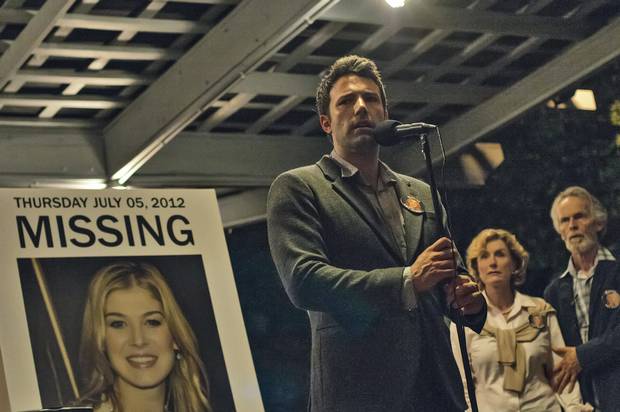
Nick appealing to the public to help him find Amy, with posters of her missing to raise awareness about the situation.

Nick appealing to the public to help him find Amy, with posters of her missing to raise awareness about the situation.

Pike and Affleck’s superb performances aside, what also keeps Gone Girl so vivid is the suburban setting of the movie and the movie’s music score. The ordinariness of the location and the raw feel of the music add to the unnerving quality of the film because they compound the sense that (at least some of) what happens to Nick and Amy could happen to absolutely anyone.

Over-all, Gone Girl is a terrific and thought-provoking film that has been cleverly executed by a world-class director. The film sensibly deals with some profound issues that can derail and break even the strongest of marriages. Indeed, the level of profundity is intensified by the film’s location, the film’s music, and the film’s grounded and absorbing performances from the cast; in particular, from Rosamund Pike. All of the above will ensure that audiences will remain mesmerised long after Gone Girl has ended as viewers will not only be wondering who of the cast was (more?) to blame for the situation that unfolds in the film, but also whether or not one’s own relationship/marriage would survive if he/she were faced with similar circumstances.

PG’s Tips
Review – The Judge (15) [2014]

The Judge - title banner

Star Rating: 3.5/5

Director:

  • David Dobkin – Wedding Crashers, Fred Claus, The Change-Up

Cast:

  • Robert Duvall – The Godfather I-II, Deep Impact, Jack Reacher, Racing Legacy
  • Robert Downey Jr – Chaplin, Zodiac, Iron Man I-III, The SoloistThe Avengers Assemble I & II, Captain America III
  • Vera Farmiga – Dust, Source Code, Safe House, The Conjuring I-II
  • Billy Bob Thornton – Armageddon, Monster’s Ball, Eagle Eye, London Fields
  • Leighton Meester – Gossip Girl, Date Night, The Roommate, By The Gym
  • Vincent D’Onofrio – Guy, Men In Black, Escape Plan, Jurassic World
  • Jeremy Strong – The Happening, Lincoln, Zero Dark Thirty, Selma
  • Ken Howard – Melrose Place, Michael Clayton, Rambo, The Wedding Ringer
  • Emma Tremblay – Elysium, The Giver, Santa’s Little Ferrets
  • Sarah Lancaster – Saved By The Bell: New Class, Everwood, Dr Vegas, The Good Doctor
  • David Krumholtz – Sausage Party

Music Composer:

All parent-child relationships are fraught with layers and complexities. Regardless of whether a parent and child have a good, bad or ambivalent relationship, the relationship is always coloured by past events and the personalities of the individuals involved. Despite The Judge being ostensibly about a judge in the docks, the film interestingly tells us more about a difficult father-son relationship than about being a judge.

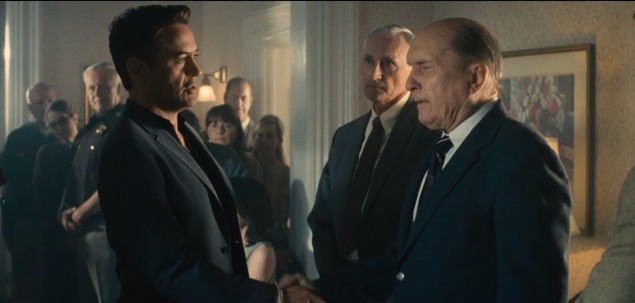
Hank (Robert Downey Jr) reunites with his father, Judge Joseph (Robert Duvall), who virtually shuns him.

Hank (Robert Downey Jr) reunites with his father, Judge Joseph (Robert Duvall), who virtually shuns him.

The Judge begins with Hank Palmer (Robert Downey Jr), a defence barrister in Chicago, learning that his mother has died and that he must return to Calinville, a small town in Indiana, for the funeral. In Calinville, Hank reunites with his brothers, Glen (Vincent D’Onofrio) and Dale (Jeremy Strong), as well as his father, Judge Joseph Palmer (Rubert Duvall), whom Hank has a problematic relationship with, and vice-versa.

However, one night, Judge Joseph comes home with the side of his car damaged with blood stains on it. Soon, the police come round and question him about a dead body. Then, they charge Judge Joseph with murder. That is when Hank steps in to defend his father.

The Judge is a stimulating film with much going for it. The dialogue is well written and the acting is brilliant across the board; especially, Robert Downey Jr and Robert Duvall. Both are fantastic and the two men have a great, if challenging, rapport. Downey Jr may (inevitably) dominate the film with his trademark fast-talk and arrogance. But unlike his (pathetic) attempts at giving himself a weakness in Iron Man III, in The Judge he genuinely shows audiences vulnerability in his character; not least in his fractured relationship with his on-screen father. Reflexively, Duvall gives viewers an interesting take on the difference in being a good judge and a good father due to Judge Joseph’s relationship with Hank.

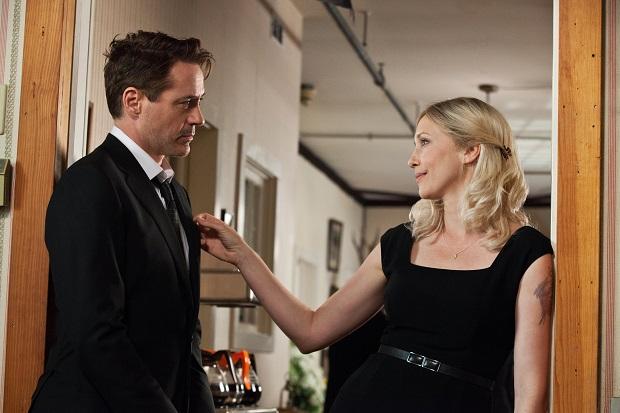
Hanks meets Samantha (Vera Farmiga) for the first time in two decades, to put some spark back into their long lost romance.

Hanks meets Samantha (Vera Farmiga) for the first time in two decades, to put some spark back into their long lost romance.

Downey Jr and Duvall aside, the rest of the cast all play their roles decently. However, there are too many extraneous characters that add little to the storyline, or rather the storylines because The Judge tries to be three films in one. That The Judge cannot determine what sort of film it wishes to be is the root of its problems.

Predominately, it is a family drama. This plot is the strongest of the plots and the one with the most detail. Arguably, if the movie had just stuck to being about the Palmer family (and its dynamics) it would have made for a fascinating (and succinct) hundred minutes. But instead, The Judge has elements of a legal thriller and a romantic comedy about it, which bloat the movie’s running time to 141 minutes.

The legal thriller storyline feels like a side issue throughout the film, which is odd considering the movie’s title. Relatively little time is given to this particular plot, but all the same it is an intriguing and worthwhile storyline; it gives one an insight into how difficult it must be for a judge to work out what is (and what is not) the truth of a case (which holds great significance currently in light of the conclusion of the Oscar Pistorius sentencing); and, moreover, some of the courtroom duels between Hank and Prosecutor Dwight Dickman (Billy Bob Thornton) are highly entertaining. Credit must also be given to Director David Dobkin for giving the central protagonist a worthy adversary and not a second-rate nitwit, like in other legal thrillers, such as The Lincoln Lawyer.

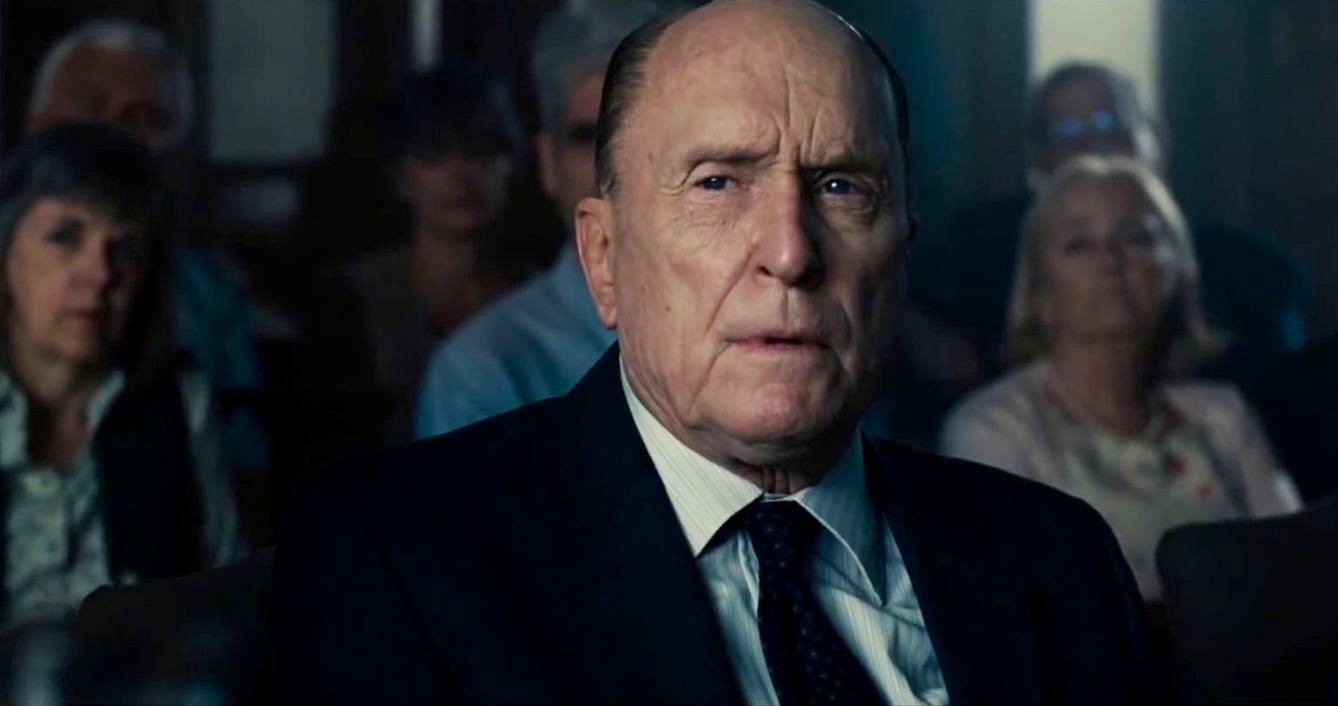
Judge Joseph, in the unfamiliar position of being on the receiving end of questions while in the dock.

Judge Joseph, in the unfamiliar position of being on the receiving end of questions while in the dock.

Nevertheless, if the legal thriller elements of the film feel like a sideshow, the romantic comedy sub-plots feel pointless and often inappropriately timed. Sarah Lancaster’s, Vera Farmiga’s and Leighton Meester’s characters add an (inane) contrivance that The Judge would have been better without, while some of the (otherwise brilliant) exchanges between Hank and Judge Joseph should have occurred at more suitable times and places. Inane contrivances and revelations at unsuitable times are clichés that romantic comedies regularly adopt to make their stories more interesting than they really are, and Dobkin knows this all too well from having directed 2011’s (the forgettable) The Change-Up. The Judge would have made for a far more realistic film, with a more consistent tone, if Dobkin had focussed the film on the family drama and added more to the legal thriller elements, and not felt the need to dabble again in the mire of a romantic comedy.

All-in-all, The Judge is a very good film. It has been well directed, written and acted; the handicap is that Dobkin could not make up his mind as to what genre of film he wanted to make. Otherwise, the movie would have been among the best of 2014. Despite that, The Judge gives audiences some terrific performances and scenes, as well as an appreciation for a complex and layered father-son relationship. Above-all, The Judge illustrates that one can be a don in their profession, but that does not necessarily make one a good mother/father, and that past experiences with one’s kids can have a great impact on one’s personal and professional career.

PG’s Tips
Review – Before I Go To Sleep (15) [2014]

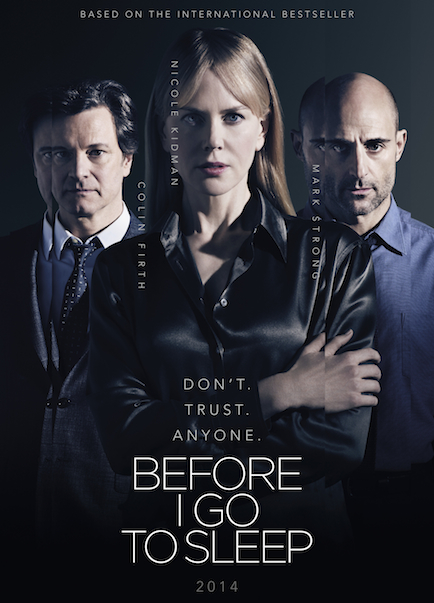
Before I Go To Sleep - title banner

Star Rating: 3/5

Director:

  • Rowan Joffe – Brighton Rock

Cast:

Music Composer:

  • Ed Shearmur – Cruel Intentions, Derailed, Miss Congeniality, Masters of Horror

In my review of last year’s Trance, I wrote about how psychological thrillers mess with the mind and how they tend to be enjoyable and very intense, with semi-plausible plot twists that keep audiences guessing long after the conclusion of the film. Before I Go To Sleep is more of the same and a credit to the genre.

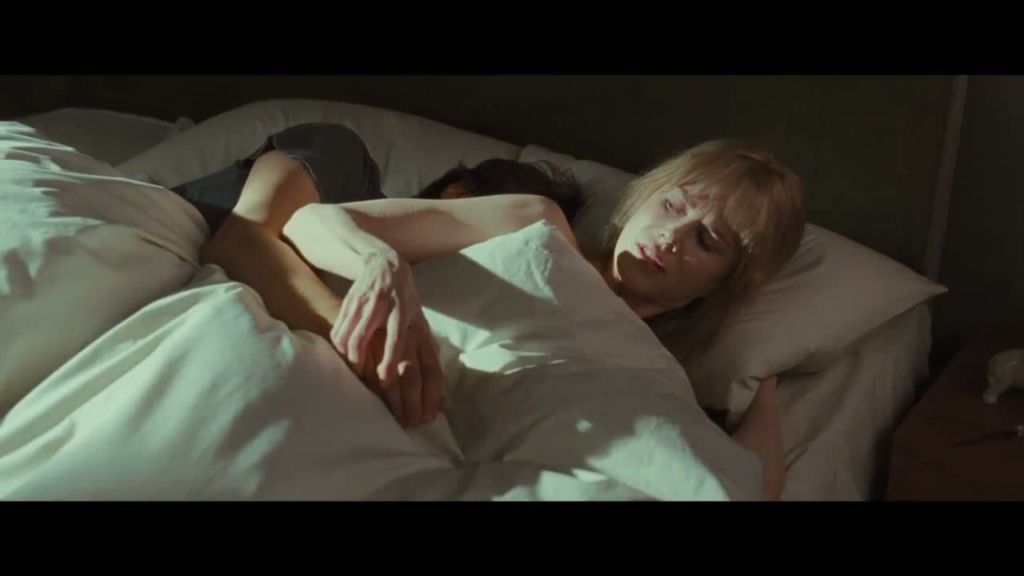
Christine (Nicole Kidman) wakes up, as she does every morning, not knowing who she is or her husband, Ben (Colin Firth), sleeping next to her.

Christine (Nicole Kidman) wakes up, as she does every morning, not knowing who she is or her husband, Ben (Colin Firth), sleeping next to her.

Before I Go To Sleep is based on the 2011 novel with the same title by SJ Watson. The film centres round Christine (Nicole Kidman), an amnesiac unable to remember a thing from one day to the next, to the despondency of her husband, Ben (Colin Firth). Dr Nash (Mark Strong) calls Christine every morning to make her watch a video recording of herself from the previous day. This way Christine can remind herself of what she did the previous day in an attempt to cure herself of her amnesia and, more importantly, so that she can figure out/remember the truth about the incident that gave her amnesia.

Before I Go To Sleep is an intense and entertaining film. It is not as complex as Trance, but Before I Go To Sleep still holds audience’s attention with great success throughout its relatively short, 92-minute running time. What makes the movie so absorbing is the way the film slowly (and deliberately) dangles carrots of information to viewers, so that they naturally form conclusions in their heads as to how Christine became an amnesiac. This adds to the thrill of the story and guarantees that when the twist comes, it is a genuine surprise in a good way.

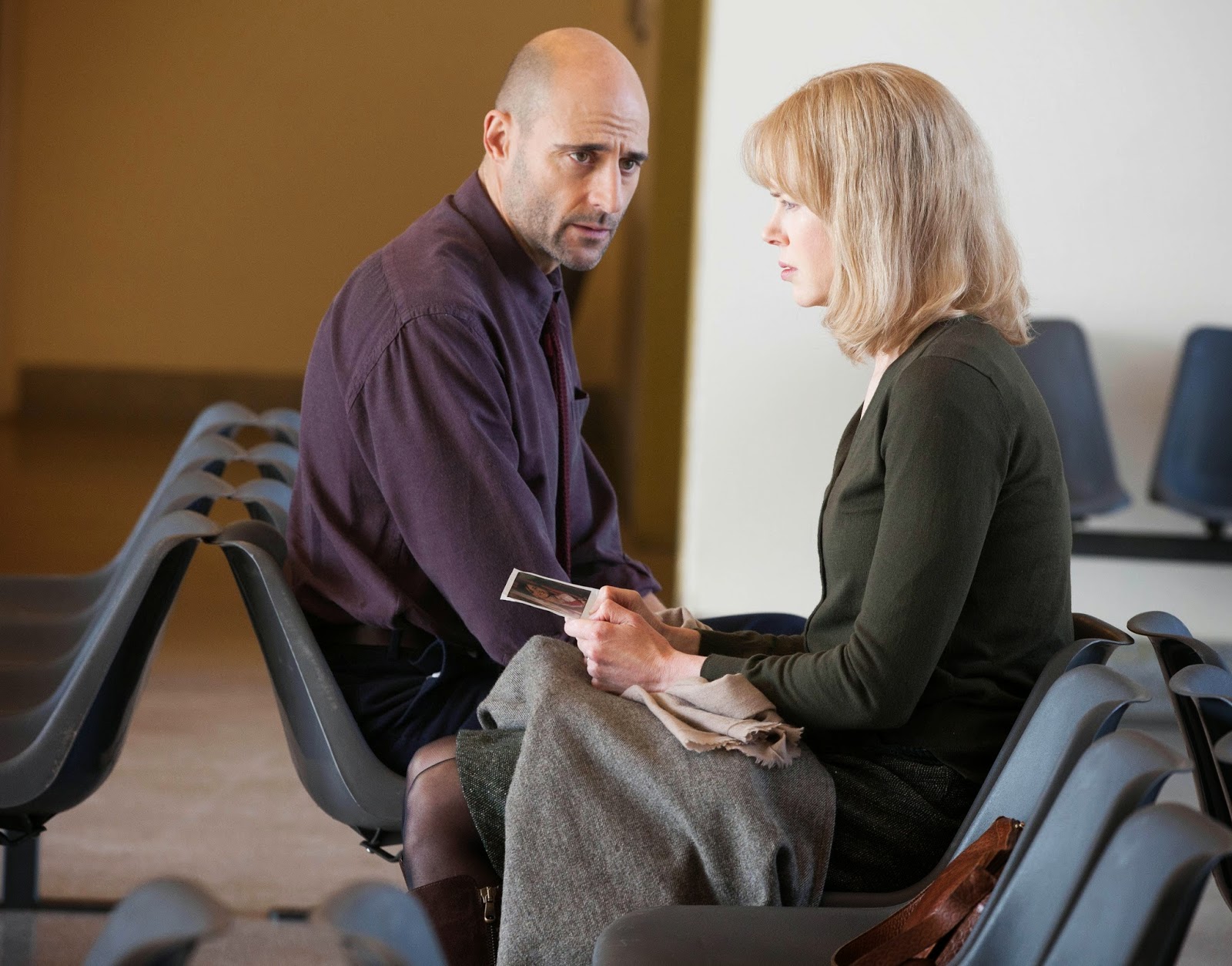
Christine having a meeting with Dr Nash (Mark Strong), without Ben's knowledge or consent.

Christine having a meeting with Dr Nash (Mark Strong), without Ben’s knowledge or consent.

However, whether the twist makes plausible sense upon looking back on the film is highly questionable. One of the problems with the twist is that viewers are not given a crucial piece of information midway through the film. While it is common in psychological thrillers not to reveal vital pieces of information about events prior to the starting point of the film (timeline-wise) until the final revelation, it is another thing entirely for information to be (cynically and sinfully) withheld from viewers from the start of the movie’s timeline. This feels like the director has cheated on his audience and not in a good way.

Putting the plot twist aside, the dialogue throughout the film has been well written and the acting is decent, without being outstanding. Nicole Kidman plays believably as the anxious and emotionally distraught central character. She looks the part: gaunt, skinny, vulnerable and confused. More could time been devoted to her backstory, but that is not the real issue with Kidman’s performance. The real issue is that her performance carries the odour from her last film: the ill-fated The Grace of Monaco. With this mephitic whiff emanating from Kidman, it is hard to watch her in Before I Go To Sleep without feeling that her career has fallen and that she is trying (hard) to get herself back on track again.

The same odour, however, does not affect from the performances of the two main members of the supporting cast. Both Colin Firth and Mark Strong do good jobs with the material that they are given. If anything, the material and screen-time that they are given lets them down. Neither Firth nor Strong are given enough time on screen and the movie does not explore their personalities and their motives deeply enough.

Christine watching and recording herself in secret to try and remind herself who she is and what did the previous day.

Christine watching and recording herself in secret to try and remind herself who she is and what did the previous day.

Apart from the acting, Ed Shearmur’s score is not outstanding but it is atmospheric and unsettling. This helps to mess with one’s mind and helps to make Before I Go To Sleep a good film and a worthwhile addition to its genre.

All-in-all, Before I Go To Sleep is a thoroughly enjoyable and intense psychological thriller. It has a much simpler plot than other films in its genre, but that is not to the movie’s detriment due to the force of the storyline, the dialogue and the acting. Before I Go To Sleep’s plot twist is suspect, yet it will certainly take viewers by surprise and, therefore, like Trance, will keep audiences thinking long after the film has finished.

PG’s Tips
Review – The Inbetweeners II (15) [2014]

The Inbetweeners 2 - title banner2

Star Rating: 3/5

Directors/Writers:

Cast:

Music Composer:

  • David Arnold – Independence Day, The World Is Not Enough, Paul, Sherlock, Bond 24
  • Michael Price – The Judge, Wild Target, Horrid Henry: The Movie, Sherlock, Tell The World

2011’s The Inbetweeners Movie was a phenomenal success both narratively and at the box office. On the back of the hilarious TV series audiences, with delight, followed their four favourite misfits on holiday in Greece. But the 2011 film was supposed to be a last stand for the cast. A sequel had not been intended at the outset and, to some extent, this is to the detriment of The Inbetweeners II.

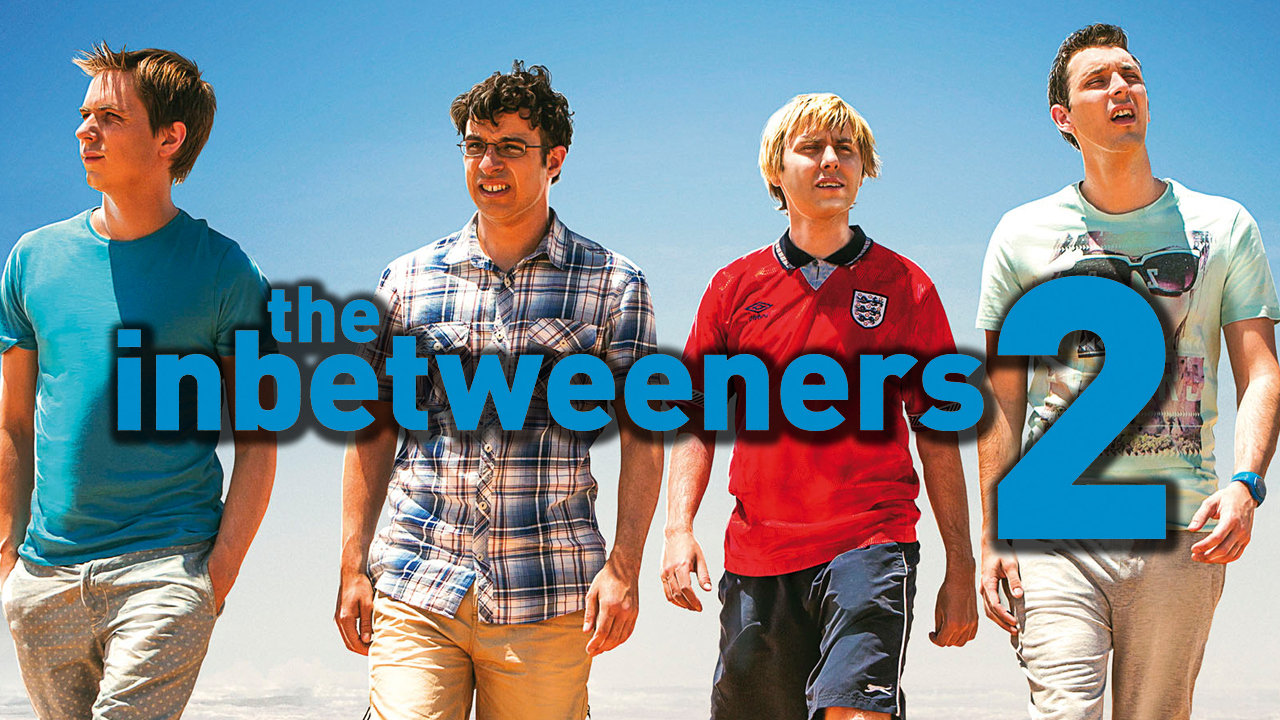
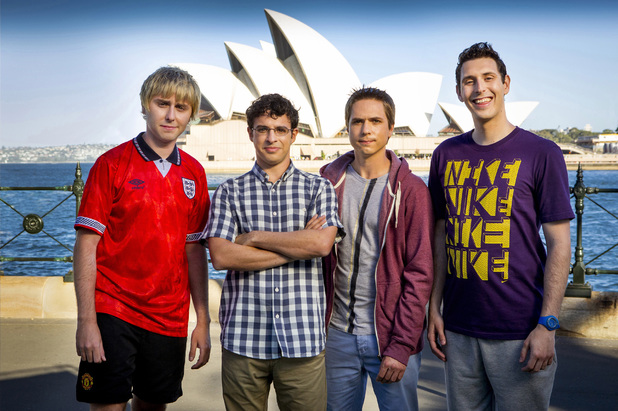
Jay (James Buckley), Will (Simon Bird), Simon (Joe Thomas) and Neil (Blake Harrison posing in front of Sydney Harbour to prove that they actually did go to Australia.

Jay (James Buckley), Will (Simon Bird), Simon (Joe Thomas) and Neil (Blake Harrison posing in front of Sydney Harbour to prove that they actually did go to Australia.

The Inbetweeners II revolves round the four losers known as Will (Simon Bird), Simon (Joe Thomas), Neil (Blake Harrison) and Jay (James Buckley). Will and Simon are at university, while Neil is doing the odd job here and there. Jay, however, has taken some time out and has gone to Australia for a gap year. After reading a message from the teller of tall tales himself, Will, Simon and Neil decide to visit Jay to see for themselves how great Jay’s life is going down under.

The Inbetweeners II is a funny film. Its humour might be juvenile, crude and vulgar (not to mention misogynistic); yet, the movie delivers on its promise to make viewers laugh regularly and often. Like the TV series and the 2011 movie, the script has been superbly written and the four main losers have great chemistry between them. Arguably, the best parts of The Inbetweeners II are when the four of them are together in a car or walking around talking because, in more ways than one, viewers know people with similar characteristics to them (which is what made the TV series and the first film so amusing).

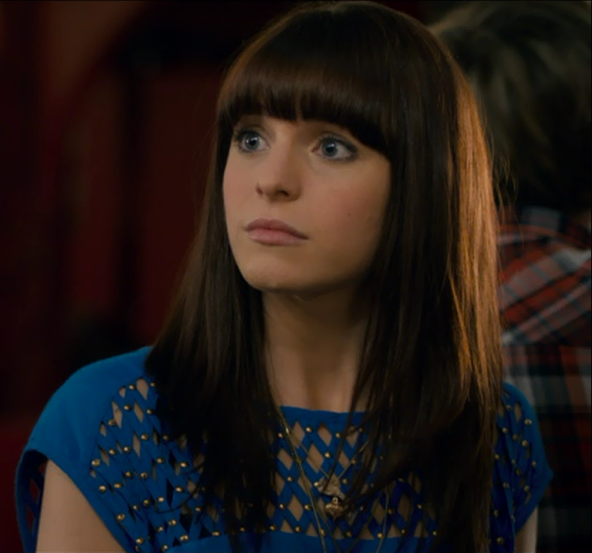
Will meets Kate (Emily Berrington), an old classmate of his from primary school, and immediately (and unsurprisingly) takes  a liking to her.

Will meets Kate (Emily Berrington), an old classmate of his from primary school, and immediately (and unsurprisingly) takes a liking to her.

However, watching the four loners make the same (hackneyed) jokes outside their small (crappy) town somehow dilutes the jokes’ effects. In the same way that one cannot take Hogwarts out of a Harry Potter film and expect the movie to have the same magical effect on audiences (Harry Potter VII(i)), one cannot take the inbetweeners out of their unique setting as half the gags no longer work.

Additionally, narratively, The Inbetweeners II runs out of gas between two-thirds and three quarters of the way through movie. Symbolically, this happens when Jay’s car runs out of petrol in the middle of nowhere. Yet, by that point old jokes have been rehashed, and the directors have cranked up many of the other jokes to eleven in the (forlorn) belief that making something louder and cruder equals funnier (which is always the sign of desperation and the exhaustion of ideas).

Simon's girlfriend, Lucy (Tamla Kari), who has turned psychotic since the last film for... reasons.

Simon’s girlfriend, Lucy (Tamla Kari), who has turned psychotic since the last film for… reasons.

Worse, the sequel does not develop the four oddballs. This entails that we don’t learn anything new about them and that they have not changed or grown up. This is disappointing as there have been events that have happened off-screen to the boys since the last film and some of these must have had consequences on their personalities. But, no: little of these events are divulged on screen and the corollaries of these events even less so to the disadvantage of the film and the Inbetweeners phenomena itself.

All-in-all, The Inbetweeners II is a highly amusing film. The humour may have plunged to shamefully depraved levels, but it will still have audiences laughing more often than not. Nevertheless, one cannot help but feel that the directors did not plan for this sequel and only green lit it upon the success of the 2011 movie. Whether it is the storyline; the direction of the film and the characters; or even the jokes themselves, The Inbetweeners II goes flat long before the end. Interestingly, in a recent interview, the directors said that they were ‘killing’ the Inbetweeners with this film and that this was to be the boys’ last outing. It would be no surprise if the directors get their wish this time.

PG’s Tips

Review – Joe (15) [2014]

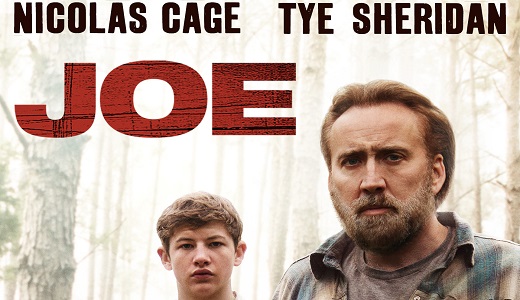
Joe - title banner2

Star Rating: 3.5/5

Director:

  • David Gordon Green – George Washington, Pineapple Express, Your Highness, Manglehorn

Cast:

  • Nicolas Cage – Leaving Las Vegas, Face/Off, Season of the Witch, Left Behind
  • Tye Sheridan – The Tree of Life, Mud, Dark Places
  • Gary Poulter
  • Ronnie Gene Blevins – A Beautiful Life, Kiss the Abyss, The Dark Knight Rises, Then There Was
  • Anna Niemtschk

Music Composer:

  • Jeff McIlwain – Snow Angels, The Sitter
  • David Wingo – George Washington, Take Shelter, The Sitter, Mangelhorn

Whatever happened to the acting career of Nicolas Cage? In 1996, he won an Oscar for Leaving Las Vegas and in 2003 he was nominated for an Oscar for Adaptation., so Cage clearly can act. But since starring in the reboot of The Wickerman in 2006, Cage seemingly set his career on fire with laughable performances in critic kick-bags, such as Ghost Rider I & II, Knowing, The Sorcerer’s Apprentice, Season of the Witch and Drive Angry, to name six from the catalogue. Therefore, upon Joe, the question was: could Cage’s career sink any lower or was going to (finally) rise from the ashes?

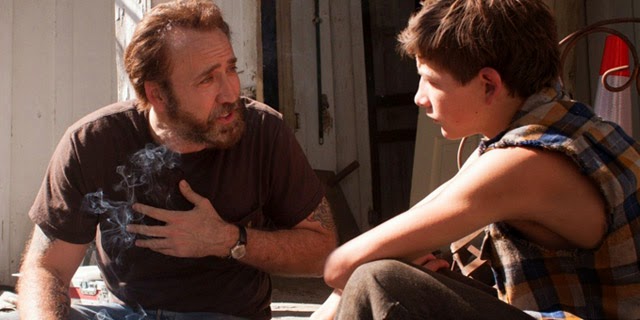
Joe (Nicolas Cage) giving some good, worldly advice to young Gary (Tye Sheridan).

Joe (Nicolas Cage) giving some good, worldly advice to young Gary (Tye Sheridan).

Joe is an indie drama set in the rural, Deep South of America, and is an adaptation of Larry Brown’s 1991 novel of the same title. The film predominantly centres round Joe (Nicolas cage), an ex-convict who runs a business demolishing trees for development sites. One day, Gary (Tye Sheridan), a teenager new to the area, finds Joe and asks if he and his father, Wade (Gary Poulter), can work for him as they need money. Joe agrees, but soon discovers that Wade is an alcoholic with a dreadful character. Upon realising Wade’s ways, Joe takes on the mantle of a father figure for Gary.

Joe is a very decent raw and grisly film about poverty in the Deep South, and about ruin and redemption in general. In a similar way to Mud (also starring Tye Sheridan, plus the reborn Matthew McConaughey), not a lot happens (and what does happen is a tad predictable). But the dialogue in Joe is fantastic and the acting is superb across the board.

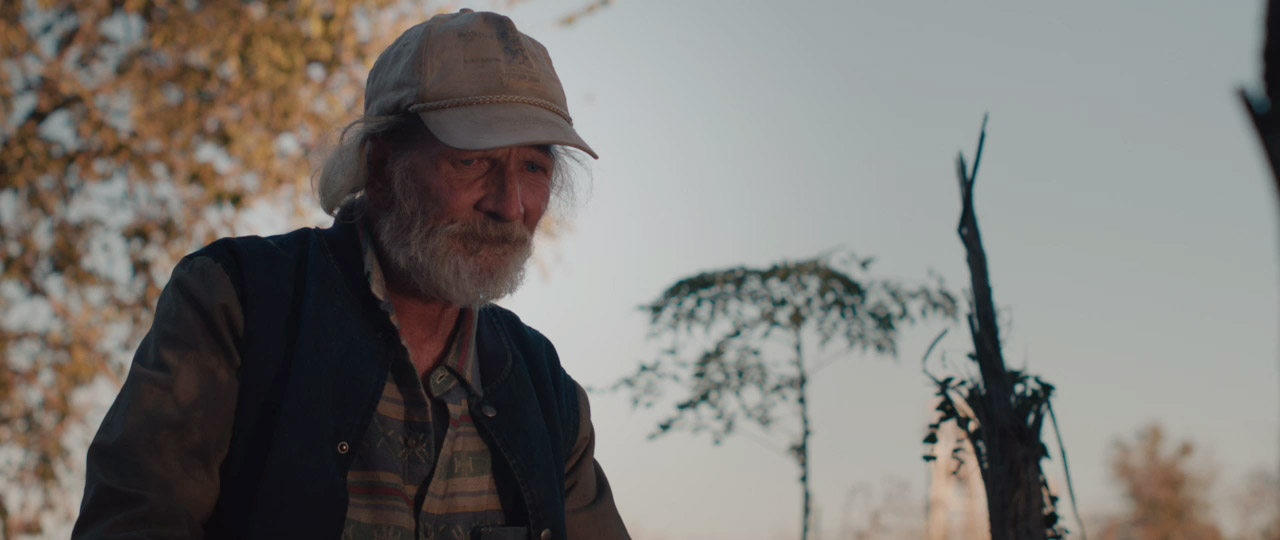
Wade (Gary Poulter), Gary's alcoholic father, looking like the homeless man he was in real life (until it was sadly cut short a few months after filming ended).

Wade (Gary Poulter), Gary’s alcoholic father, looking like the homeless man he was in real life (until it was sadly cut short a few months after filming ended).

Nicolas Cage shows us that he is more than just a mercenary willing to cash in on his name. For once, Cage looks like he actually wanted to get up in the morning for filming, as there is more to him in a role than merely a bland expression, a monotone for a voice, and an occasional half-hearted smile to make him your average, likeable guy (as if anyone was going to believe that Nicolas Cage was your ‘average Joe’). In Joe, Cage’s southern accent is refreshingly real, and his grizzled face reflects a man constantly holding back his pent up rage in order to stay on the right side of the law. Moreover, the way Cage’s character takes Gary under his wing is wonderful to watch and enables viewers to empathise with Joe, despite Joe otherwise being rough-around-the-edges, with a drink-driving habit and a history of violence. (If anything, it would have been nice to learn where this violent streak comes from and to find out more about Joe’s background.)

But it is not just Cage that is wonderful to behold in Joe. Like in Mud, Tye Sheridan again demonstrates that he has a long acting career ahead of him. Here, Sheridan performs magnificently as a teenager willing to work hard to put bread on the table for his family, since his father won’t do it. And, speaking of his father in the film, Gary Poulter’s performance, as the horrible alcoholic family-beater, is brilliant and worryingly realistic. What makes Poulter’s performance even more remarkable is that he was not even an actor by trade: he was a hobo! (The casting of a non-actor is not surprising for a David Gordon Green film as the director regularly picks locals for roles in his movies.)

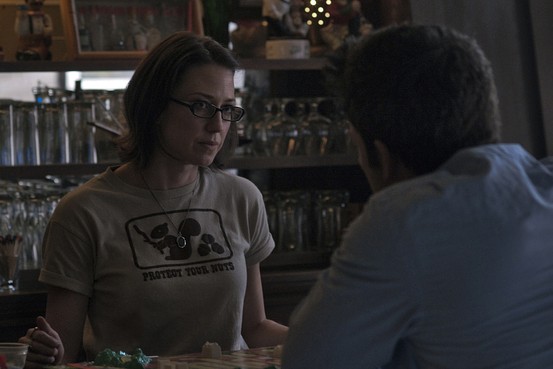
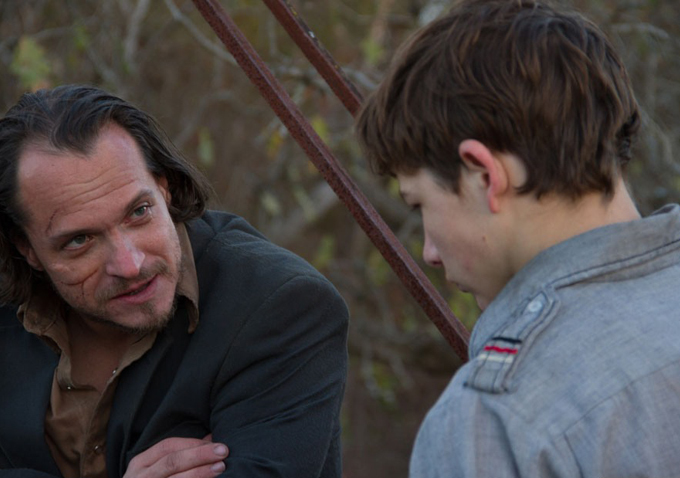
Gary speaking with Willie-Russell (Ronnie Gene Blevins). There is a reason why he has a scar under his right eye and Willie-Russell wants revenge against the man who did it.

Gary speaking with Willie-Russell (Ronnie Gene Blevins). There is a reason why he has a scar under his right eye and Willie-Russell wants revenge against the man who did it.

However, it is not just the acting and dialogue that is fantastic in Joe, since the cinematography is equally good and fitting. From the broken homes (metaphorically and literally); to the trucks people drive; to the dirtiness and dusty nature of the region, the rural poverty of the Deep South and the type of people who inhabit it are well depicted. No-one in Joe personifies the place and the complexities of living in such a place more than Nicolas Cage’s character.

Over-all, Joe is a solid film that is very realistic representation of the Deep South of America. The movie may have little by way of action and plot-twists. Nevertheless, one can easily engage with the characters in the film, not least due to the dialogue and the vivid performances from the cast. Surprisingly, this includes Nicolas Cage; for in Joe he reminds us that his Oscar win and nomination, all those (many) years ago, were no flukes and that truly he can act. It might be a little early to say that Cage’s renaissance has begun. But maybe, just maybe, Cage will use Joe (as Matthew McConaughey did with The Lincoln Lawyer and Mud) as a springboard to re-launch his career.

PG’s Tips