Category Archives: Action

Review – Spectre (12a) [2015]

Spectre - title banner

Star Rating: 3/5

Director:

  • Sam Mendes – American Beauty, Revolutionary Road, Skyfall

Cast:

  • Daniel Craig – The Trench, Casino Royale, Quantum of Solace, Defiance, Skyfall
  • Ben Whishaw – The International, Cloud Atlas, Skyfall, Suffragette, The Danish Girl
  • Naomi Harris – Trauma, Pirates of the Caribbean II-III, The First Grader, Skyfall, Our Kind of Traitor
  • Ralph Fiennes – Harry Potter IV-VII(i) & VII(ii), Coriolanus, Wrath of the Titans, Skyfall, Hail, Caesar!
  • Léa Seydoux – Inglorious Basterds, Robin Hood, Mission: Impossible IV, Blue Is The Warmest Colour, Gambit
  • Monica Bellucci – The Matrix II-III, The Passion of the Christ, The Sorceror’s Apprentice, On The Milky Road
  • Christoph Waltz – Inglorious Basterds, Carnage, Django Unchained, Big Eyes, Tarzan
  • Dave Bautista – WWE Smackdown, WWF Raw, Guardians of the Galaxy, Warrior’s Gate
  • Andrew Scott – The Scapegoat, Pride, Alice In Wonderland II, Denial
  • Rory Kinnear – Quantum of Solace, Broken, Skyfall, Penny Dreadful, Trespass Against Us
  • Jesper Christensen – Casino Royale, Quantum of Solace, The Debt, The King’s Choice
  • Judi Dench – Bond 17-23, Shakespeare In Love, Notes On A Scandal, My Week With Marilyn, Philomena, Tulip Fever

Music Composer:

What is the role of secret agents, and in particular, James Bond in the current era? Sir Ian Fleming, the author of the Bond novels, wrote Casino Royale in 1952. That was at the height of the Cold War between the USA and the USSR, when espionage involving personnel was at its zenith. But in 2015, the USSR no longer exists and espionage involving personnel has been downgraded due to technology. So, again, what is the role secret agents/James Bond nowadays? Spectre, Bond’s 24th outing, deals with this question in typical Bond fashion.
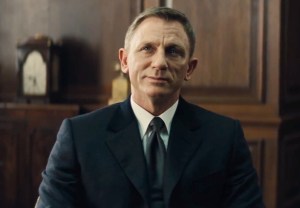
James Bond (Daniel Craig), looking worn and tired after an eventful trip to Mexico, gets a dressing down from M (Ralph Fiennes) upon his return to London.

James Bond (Daniel Craig), looking worn and tired after an eventful trip to Mexico, gets a dressing down from M (Ralph Fiennes) upon his return to London.

  Spectre opens up in Mexico City, wherein James Bond (Daniel Craig) acquires a ring bearing an octopus insignia. Upon returning to London, M (Ralph) demands that Bond explain what he was doing in Mexico. Bond refuses to explain, which leads to M indefinitely taking him off duty as a secret agent. Upon returning home, Bond re-watches a recording from his former superior, reminding him about a mysterious organisation called ‘Spectre.’ Despite having been removed from duty, Bond leaves London to unearth more about this shadowy organisation.

Meanwhile, in London, M:I-6 has a new intelligence officer, C (Andrew Scott). C has his own plans to take M:I-6 forward; one of which is to dismantle the ‘00’ programme, putting him on a collision course with M.

Spectre, in many ways, is an archetypal Bond movie. Does it have a spectacular opening sequence? Yes. Is there a trademark song afterward it? Yes. Does Spectre have some witty (touché) dialogue? Yes. Does the film have a glamorous-looking cast along with breath-taking locations? Yes. Does the movie have some brilliant stunts, action sequences, and cool explosions? Yes. Does it have a weak storyline in which viewers have to suspend their disbelief to go through with it, without laughing at it? Absolutely! Therefore, Spectre delivers on its (formulaic) expectations for a Bond movie.

Dr Madeleine Swann (Léa Seydoux), looking glamorous, joins Bond for dinner.

Dr Madeleine Swann (Léa Seydoux), looking glamorous, joins Bond for dinner.

However, in two ways, Spectre differs from most other Bond films. One, it makes enough references to other Bond films for it to be an homage to the Bond franchise; particularly, to those of the Craig era. And, two, Spectre is conspicuously slow-burning. Bond films tend to be fast-paced and filled with action to keep viewers interested during the supposedly less interesting parts of the film i.e. when Bond travels from one dazzling place to another, to find out information for the mission. Yet, at 150-minutes, Spectre has so much (often pointless) travelling that even the action sequences cannot keep viewers interested. In short, the movie needed to be cut by 30-45 minutes, especially during the middle hour where little happens. But because it has not been edited sufficiently, Spectre borders on boring at times, which is very unlike a Bond film.

Nevertheless, during these ‘boring’ parts, one gets to explore a different (vulnerable?) side of Bond’s character; notably, whether James Bond actually enjoys being James Bond. Not only is this elucidated adeptly, but due to Daniel Craig’s aging appearance it seems entirely apt to have these questions raised. Indeed, Craig looks old and worn in Spectre, as if the strain of being Bond has taken its toll on him. Still, he is marvellous, tough and wryly humorous as Bond; probably more so than in Skyfall.

Likewise, Ben Whishaw is a joy to watch as the funny and smart Q, as is Christolph Waltz as the mysterious, villainous Oberhauser; and as is Ralph Fiennes as the serious M. Léa Seydoux plays quite well, too, as Bond’s temperamental love-interest, Dr Madeleine Swann. Surprisingly, she has been given considerable character depth for a Bond Girl. Seydoux may lack chemistry with Craig on screen, but her character often drives Bond and the plot forward in interesting ways.
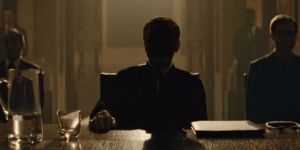
Bond's cunning nemesis, Oberhauser (Christoph Waltz), the shadowy figure at the head of a clandestine organisation, known as 'Spectre.'

Bond’s cunning nemesis, Oberhauser (Christoph Waltz), the shadowy figure at the head of a clandestine organisation, known as ‘Spectre.’

Between her and Bond, and M and C), Spectre tries to intellectually tackle important questions that have become extremely relevant to Western politics since 9/11. Fascinatingly, the movie discusses the role of secret agents and technology, hinting at how times have changed since the Cold War; and how much power spy organisations should be given regarding the surveillance of ordinary citizens. Granted, Spectre only tackles these questions on superficial levels (and with answers that one could have guessed from a Bond film). But at least the movie brings up these questions. They also add a layer of depth to the storyline, which is always welcome.

Over-all, Spectre is an all right James Bond movie. It is quite long, but fun and entertaining in ways that are reminiscent of so many other, previous films in the franchise. Nonetheless, Spectre differentiates itself from other Bond films by winking at fans with self-reference; by giving Bond and the other characters some depth; and, most notably, by trying to address complex issues that have plagued Western governments since the turn of the 21st-century. Spectre makes some valid arguments on the role of spies, technology, and the extent to which security organisations should be permitted to use surveillance in the current era. All of which enrich the Bond experience and will leave audiences thinking about them after the film has ended.

PG’s Tips
Review – Mission: Impossible V – Rogue Nation (12a) [2015]

MI-V - Title banner

Star Rating: 3.5/5

Director:

  • Christopher McQuarrie – The Usual Suspects, Valkyrie, Jack Reacher, Edge of Tomorrow

Cast:

  • Tom Cruise – Eyes Wide Shut, Valkyrie, Mission: Impossible I-IV, Jack Reacher I & II
  • Jeremy Renner – SWAT, Mission: Impossible IV, The Avengers Assemble I & II, , Captain America III
  • Alec Baldwin – The Aviator, To Rome With Love, Blue Jasmine, Still Alice, Caught Stealing
  • Rebecca Ferguson – Drowning Ghost, The White Queen, Hercules, Despite The Falling Snow
  • Ving Rhames – Pulp Fiction, Surrogates, Mission: Impossible I-IV, Operator
  • Simon Pegg – Big Nothing, Mission Impossible III-IV, Paul, Star Trek I, II & III
  • Sean Harris – Harry Brown, The Borgias, Prometheus, ‘71, Macbeth
  • Simon McBurney – The Last King of Scotland, Harry Potter VII(i), The Borgias, The Theory of Everything
  • Tom Hollander – Enigma, Pirates of the Caribbean II-III, American Dad!, Jungle Book: Origins
  • Jens Hultén – The Border, Skyfall, Ragnorak, Johan Falk: Lockdown

Music Composer:

  • Joe Kraemer – The Thirst, Confession of A Gangster, Jack Reacher, Titans of Justice

What has become of the Mission: Impossible franchise? The first film was a proper espionage thriller with a tough mission and the odd elaborate action stunt to give credence to the film’s title. But by the second film, the espionage element had given way to entertaining, if unfeasible action stunts and the veneration of Tom Cruise’s alter ego, Ethan Hunt. And by the fourth film, the storyline had given way to even more entertaining, unfeasible action stunts and venerated Tom Cruise’s alter ego to the point of deification. So what could one expect from Mission: Impossible V – Rogue Nation (M:I-V)? Well, more of the same really!

Ethan Hunt (Tom Cruise) and William Brandt (Jeremy Renner) working together to uncover the Syndicate.

Ethan Hunt (Tom Cruise) and William Brandt (Jeremy Renner) working together to uncover the Syndicate.

M:I-V centres round Ethan Hunt (Tom Cruise, who else?) hunting down the Syndicate, an international criminal organisation, and its leader Solomon Lane (Sean Harris). However, the Impossible Mission Force (IMF) that Ethan is part of is being closed down by CIA Director Alen Hunley (Alec Baldwin). The CIA believes that the Syndicate does not exist and that the IMF is causing embarrassment to the CIA/America due to its unorthodox methods. They want Ethan to turn himself in.

But rather than hand himself in, Ethan chooses to go rogue so as to uncover the Syndicate and to find Lane, himself. And he will start by going after Ilsa Faust (Rebecca Ferguson).

That is the vague outline of M:I-V’s plot. But, in truth, M:I-V has no plot. The film flagrantly does not care for the spy thriller ingredient that made the first film so interesting. Instead, M:I-V prefers to go from one entertaining, over-the-top action stunt to another. Indeed, it wouldn’t matter which order the action stunts occurred as the storyline and the dialogue make no sense at all; although, having the first stunt as the one where Ethan hangs off a taking-off aeroplane does set the tone for the rest of the movie. And, astonishingly, Director Christopher McQuarrie manages to maintain this tone for its entire duration. The stunts get ever more outlandish and creative to the extent that one has to question who came up with these ideas (and how) because they are ingenious.

Isla Faust (Rebecca Ferguson) on a bike and in possession of something Ethan needs. Thus, a high-speed bike chase is about to begin...

Isla Faust (Rebecca Ferguson) on a bike and in possession of something Ethan needs. Thus, a high-speed bike chase is about to begin…

However, M:I-V does not solely consist of ingenious, if totally unrealistic action stunts. The film consists of a good amount of banter between the protagonists (more so than in previous instalments), and gives viewers the sense that a family unit is developing within the IMF now that Tom Cruise and Ving Rhames has been in all five films, Simon Pegg has been in them since the third one, and Jeremy Renner since the fourth. Each member of the team has a particular role and whether it is Cruise as Action Man come again and the mastermind who exposes the movie’s villain(s); Rhames as Ethan’s reliable sidekick Luther; Simon Pegg as Ethan’s reliable but goofy, tech-nerd Benji; or Renner as Ethan’s boss Brandt (who Ethan regularly disobeys to ever positive results), each one of them looks like they are enjoying their roles and they make some funny puns whilst they’re at it as well.

Unsurprisingly, Cruise, Rhames, Pegg and Renner all play well in M:I-V even if they do nothing spectacular. Rather, it is the newcomers that arguably make the most impressions on viewers. Rebecca Ferguson, as the ambiguous Ilsa Faust, makes the greatest impression of them all. She is beautiful, sexy and can kick arse! That she holds up against Tom Cruise (and may, heaven forbid, outshine him in his own film) speaks volumes for her talents as an actress.

Yet, the rest of the cast do not have the same impact on viewers. Sean Harris plays decently as the main villain, Solomon Lane. Harris/Lane is cold, unflinching and meant to be scary. But because he is given little screen time or background story, audiences don’t get the chance to feel much for him by the end. For similar reasons, one feels little for Alec Baldwin as the CIA director and Simon McBurney as the head of the British secret services, even if neither of them play badly with the material or time they’re given.

Solomon Lane (Sean Harris), the ice-cold, sociopathic villain at the head of the Syndicate.

Solomon Lane (Sean Harris), the ice-cold, sociopathic villain at the head of the Syndicate.

It would have been intriguing to learn more about these characters as they seem, ostensibly, to have depth and more to say for themselves. But to explore them would have meant that the film-makers would have had to come up with a genuine storyline and spent less time showing us how awesome Tom Cruise is. And that would have defeated the whole purpose of M:I-V.

Over-all, M:I-V is a highly enjoyable action film. It has little place for clever espionage and has a veneer of a storyline that does not work at any level. Nevertheless, the movie glorifies Tom Cruise; has plenty of action sequences; several implausible action stunts; good chemistry and humour from the returning cast; and includes a gorgeous, strong female character that could fit seamlessly into any Marvel comic-book film. Thus, M:I-V delivers unashamedly on everything it sets out to achieve.

PG’s Tips

Review – Spooks: The Greater Good (15) [2015]

Spooks - title banner

Star Rating: 3.5/5

Director:

  • Bharat Nalluri – Killing Time, The Crow, Spooks, The Player

Cast:

  • Kit Harington – Pompeii, A Testament of Youth, Seventh Son, Game of Thrones
  • Peter Firth – The Hunt For Red October, Pearl Harbour, Spooks, Risen
  • Jennifer Ehle – The King’s Speech, The Ides of March, Contagion, Zero Dark Thirty, A Quiet Passion
  • Tuppence Middleton – Cleanskin, The Imitation Game, Jupiter Ascending, War And Peace
  • Elyes Gabel – Game of Thrones, World War Z, A Most Violent Year, Scorpion
  • Tim McInnerny – Spooks
  • Eleanor Matsuura – Alan Partridge, The Love Punch, Residue, Burn Burn Burn
  • Michael Wildman – Family Affairs, A Bunch of Amateurs, Act of Godfrey, London Has Fallen
  • Lara Pulver – Spooks, True Blood, Edge of Tomorrow, A Patch of Fog
  • David Harewood – The Ruby In The Smoke, Homeland, Grimsby

Music Composer:

  • Dominic Lewis – Free Birds, The DUFF, The Player

When one watches a TV series from the beginning, one usually becomes emotionally invested in the characters. Whether it is Jack Bauer from 24, Homer Simpson from The Simpsons, the inbetweeners from The Inbetweeners, or the leading police officers from 21 Jump Street, viewers usually acquire affection (or disdain) for the characters, and normally they carry their sentiments on into the film adaptation(s) or spin-off(s). But what if one has not watched the TV series that a film is based on? Can one still enjoy the film to the same extent as if one had watched the show? Spooks: The Greater Good may give us an answer.

Harry (Peter Firth) convincing Will Holloway (Kit Harington), an ex-agent, to trust him and to rejoin M:I-5.

Harry (Peter Firth) convincing Will Holloway (Kit Harington), an ex-agent, to trust him and to rejoin M:I-5.

Spooks is based on the British TV series with the same title that aired between 2002-11 (although it was also called M:I-5 in some circles). The film is a spy thriller. At the start of the movie, Adam Qasim (Elyes Gabel), a terrorist wanted by US authorities, is in the hands of M:I-5. He is on his way to being handed over to the CIA in London when the vehicles driving him are attacked in a heist. Threatened with the deaths of agents in the streets, M:I-5 orders the agents to hand over Qasim to the armed attackers.

Now free, Qasim plans a terrorist attack on London. While M:I-5 looks for him and determines what he intends to do, Harry Pearce (Peter Firth) disappears. He is convinced that there is a traitor in M:I-5 who let Qasim free, and he re-recruits Will Holloway (Kit Harrington), an ex-agent, to help him find out who the traitor is.

Spooks is a solid espionage thriller. The film is quite grounded and beguiling with good acting and humorous dialogue. For one who has not watched an episode of Spooks the TV series, there are probably some subtleties that go unseen. But not seeing these does not make the film any less entertaining. Furthermore, the film is written in such a way that the allegiances (and rivalries) between key personnel in the upper echelons of M:I-5 are spelled out quite early on in the film. So, one should not have a problem understanding who is on whose side… until they switch sides, of course. But that happened in the TV series regularly, like in 24, and is also part and parcel of the spy genre in general. How much emotional investment in Spooks one needs prior to watching the film is debatable.

June (Tuppence Middleton), an M:I-5 agent, going in with a fellow agent to take out some terrorists.

June (Tuppence Middleton), an M:I-5 agent, going in with a fellow agent to take out some terrorists.

Yes, it may have helped to know what the shifty Harry Pearce, played well by Peter Firth, is like before going into the film in the same way it may have helped to watch The Simpsons on TV to appreciate what makes the blundering Homer Simpson so endearing before watching The Simpsons Movie. Similarly, watching Spooks the TV show may have helped to get to know supporting cast members played by Tim McInnerney and Lara Pulver. Both reprise their roles from the show well but are given little screen time during the movie (especially compared to Peter Firth’s character).

Nevertheless, for every actor reprising their character, there are a handful of new characters. Jennifer Ehle, Tuppence Middleton, Eleanor Masuura and, chiefly, Kit Harington were never part of the TV series. Suffice to say, all of them have a role in the film and add something different to the plot. Fans (and non-fans) of the show cannot have known these characters or anticipate their motives prior to the movie. This means that the film is going to deviate from the show and that whatever happened previously in the TV series is unlikely to be crucial.

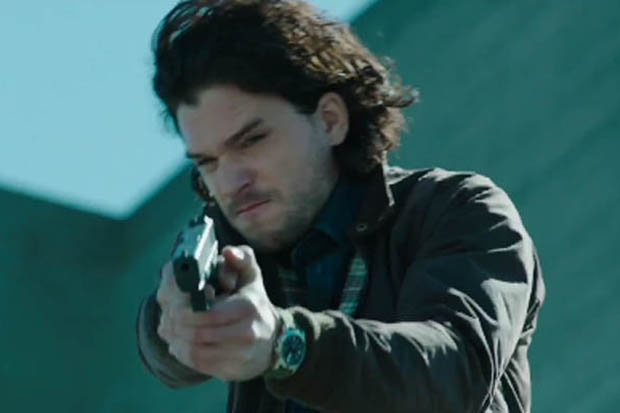
Jon Snow... I mean, Will Holloway being the hero and using a gun to take out a foe instead of a sword.

Jon Snow… I mean, Will Holloway being the hero and using a gun, instead of a sword, to take out a foe.

Yet, if fans (and non-fans) are arguing over how alike Spooks the film is to Spooks the TV series, they are arguing over the wrong issue. How closely the film resembles the show pales in comparison to the problem of the film’s tone. Director Bharat Nalluri cannot make up his mind if he wants the film to be taken seriously, like Tinker Tailor Soldier Spy, or as a spoof, like Kingsman: The Secret Service. Bearing in mind the title of the movie reads and sounds close to ‘spoof,’ it may have been logical to make the film as a satire, as James Bond was pre-Daniel Craig. (Or maybe that conclusion is borne from not watching the TV series?) Either way, Spooks’ tone is confusing. Add in the (numerous) implausible plot twists and it is understandable that viewers get into a fuddle as to what sort of a film they’re watching.

Over-all, Spooks is an enjoyable spy thriller. It has been put together well enough to ensure that viewers who have not watched the TV series that preceded the movie are not worse off than those who did. The tone of the film may be puzzling and some of the Byzantine-like scheming makes no sense. However, Spooks: The Greater Good has got good acting, dialogue and intrigue, with semi-grounded action. Thus, like any film with such ingredients, Spooks is a decent movie and worth a watch.

PG’s Tips
Review – Seventh Son (12a) [2015]

Seventh Son - Title Banner

Star Rating: 1.5/5

Director:

  • Sergey Bodrov – Prisoner of the Mountains, Nomad: The Warrior, Mongol: Rise of Genghis Khan, Fool’s Game

Cast:

  • Julianne Moore – The Big Lebowski, The Hours, Maps To The Stars, Still Alice, Freeheld
  • Jeff Bridges – The Big Lebowski, Iron Man, True Grit, RIPD, The Emperor’s Children
  • Kit Harrington – Game of Thrones, Testament of Youth, Pompeii, Spooks: The Greater Good
  • Olivia Williams – The Sixth Sense, Maps To The Stars, Anna Karenina, Man Up
  • Ben Barnes – The Chronicles of Narnia II & III, Dorian Gray, By The Gun, Sons of Liberty
  • Alicia Vikander – A Royale Affair, Anna Karenina, Testament of Youth, Ex Machina, The Danish Girl
  • Djimon Hounsou – Gladiator, Eragon, Blood Diamond, Guardians of the Galaxy, Furious 7
  • Antje Traue – Pandorum, 5 Days of War, Man of Steel, Woman In Gold

Music Composer:

There are some films that can be boxed into the category of ‘laughably terrible.’ Batman & Robin, Birdemic, Season of the Witch, Conan The Barbarian, Sharknado, and Pompeii are all awful films, yet they all have the saving grace of being amusing in their awfulness. Sergey Bodrov’s Seventh Son is another such movie.

Mother Malkin (Julianne Moore), having returned, she is now back at home, planning her evil ambitions for the world.

Mother Malkin (Julianne Moore), having returned, she is now back at home, planning her evil ambitions for the world.

Seventh Son is based on the first book in The Wardstone Chronicles (although it is called The Last Apprentice series in America) by Joseph Delaney. Delaney’s website, Spooksbooks, defines the plot for Seventh Son as: ‘In a time long past, an evil is about to be unleashed that will reignite the war between the forces of the supernatural and humankind once more. John Gregory (Jeff Bridges) is a Spook, a person who fights against the Dark, who had imprisoned the malevolently powerful witch, Mother Malkin (Julianne Moore), centuries ago. But now she has escaped and is seeking vengeance. Summoning her followers of every incarnation, Mother Malkin is preparing to unleash her terrible wrath on an unsuspecting world. Only one thing stands in her way: John Gregory.

‘In a deadly reunion, Gregory comes face to face with the evil he always feared would someday return. Now he has only until the next full moon to do what usually takes years: train his new apprentice, Tom Ward (Ben Barnes), to fight a dark magic unlike any other. Man’s only hope lies in the seventh son of a seventh son.’

Yes, the plot is that laughable. It is plodding and silly, with predictable twists and a waterfall of fantasy clichés thrown into the mire. Indeed, there are so many fantasy clichés in Seventh Son that it is hard to believe that the film is anything other than an inferior derivative of other (better) fantasy stories. But unlike with other (irredeemably bad) fantasy films, like Reign of Fire and Rise of the Shadow Warrior, at least with Seventh Son one can enjoy pointing out where James Delaney/Sergey Bodrov have gained their inspiration from. In some scenes, the inspiration is so blatant one might as well re-watch or reread the works JRR Tolkien, Susan Cooper and David Eddings, and Dungeons & Dragons and Season of the Witch for good measure (to name but five). Some of the ideas in those stories might be bad or badly executed by today’s standards. But they were originals, if not classics, in their time.

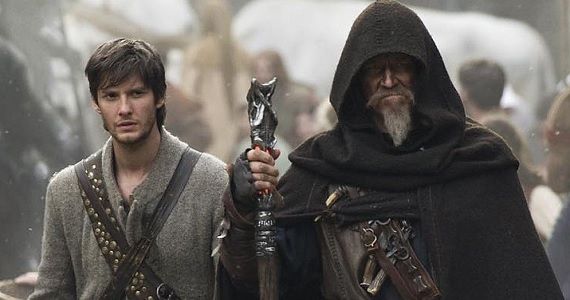
Tom (Ben Barnes) and John Gregory (Jeff Bridges), pupil and mentor, going from place to place in classic fantasy style.

Tom (Ben Barnes) and John Gregory (Jeff Bridges), pupil and mentor, going from place to place in classic fantasy style.

Yet, if one thought the storyline for Seventh Son was the most ludicrous element of the movie, it pales in comparison to the dialogue. Unsurprisingly, the dialogue is lazily-written, clunky and hackneyed. But, at times, it is delivered with a campiness that one cannot help but laugh at, with Jeff Bridges being the Offender-in-Chief. Playing a cross between Gandalf and Rooster Cogburn, Bridges is barely comprehensible. Yet, he has a smile on his face for the entire film and looks like he is enjoying himself enormously in spite of (or maybe because of) the paucity of the script.

The same, however, cannot be said for the rest of the cast. Julianne Moore, habitually brilliant (and particularly so in the recent Still Alice), is shockingly dreadful as the one-dimensional, wicked witch. Appearing as a cut-rate cross between Queen Ravenna from Snow White and a latex rip-off of Melisandre from Game of Thrones, Moore looks bored at best and embarrassed at worst whenever she is on screen. Olivia Williams, Kit Harrington, Alicia Vikander, Djimon Hounsou and Ben Barnes all wear similar expressions during Seventh Son. It is as if this predominantly talented cast all know that they’re in a movie that stinks to the stratosphere and are just pleading for their scenes to be over so they can pick up their pay-checks and move on.

Alice (Alicia Vikander) rising seductively in the lake to entrance someone (I wonder who?) with her beauty.

Alice (Alicia Vikander) rising seductively in the moonlight to entrance someone (I wonder who?) with her beauty.

Likely, the cast had moved on and forgotten about this car-crash of a movie… until it returned to haunt them with its release in cinemas recently. Seventh Son was filmed in 2012 and was in post-production for more than two and a half years. The movie was supposed to have come out in 2013 and then in 2014, but was delayed on three occasions due to post-production troubles. Oddly, though, Seventh Son does not feel like a troubled production (unlike Transformers II, The Wolverine and The Hobbit III). It just feels wretched, pitifully comical and cheap, especially when it comes to the CGI. For a film which cost Legendary studios near $100million to make, one expects to watch a better movie, and consequently it is no surprise that the film has flopped. (Legendary studios expect to make an $85million loss on the movie.)

All-in-all, Seventh Son is an all-round awful film. From the script, to the acting, to the CGI, the movie is abysmal and filled with enough fantasy clichés to stuff a duvet. Nevertheless, the film has one saving grace: it is unintentionally hilarious. Thus, Seventh Son can be boxed into the category of ‘laughably terrible’ and can be enjoyed for the atrocity that it is alongside Batman & Robin, Birdemic, Season of the Witch, Conan The Barbarian, Sharknado, and Pompeii.

PG’s Tips
Review – Kingsman: The Secret Service (15) [2015]

Kingsman - title banner2

Star Rating: 3.5/5

Director:

Writer:

Cast:

Music Composer:

Matthew Vaughn and Jane Goldman make an awesome screen-writing couple. Together, they wrote the hilarious Kick-Ass and the first-rate reboot of the X-Men franchise. Now, they are back in comical fashion with the secret service spoof, Kingsman: The Secret Service.

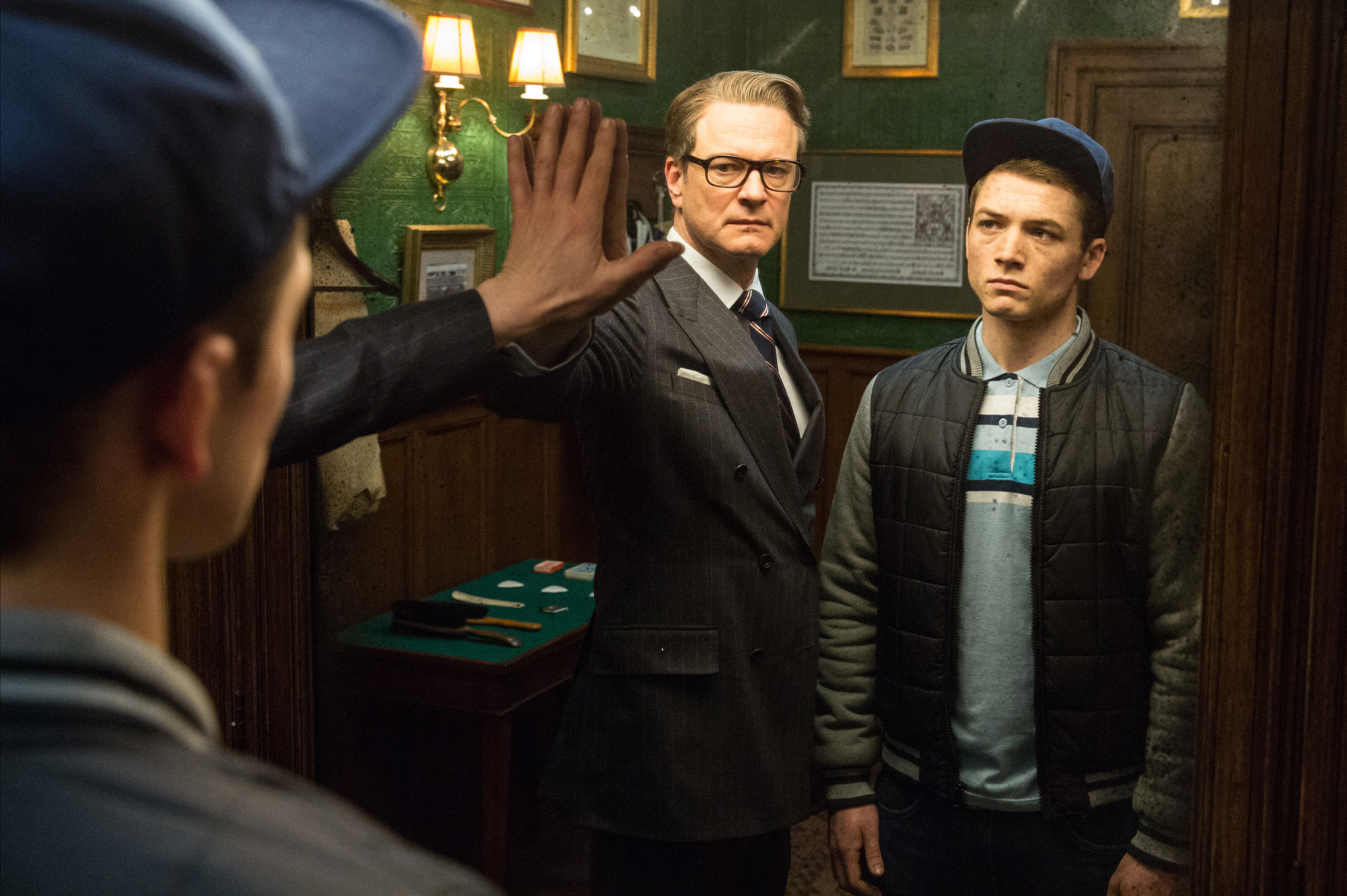
harry (Colin Firth) showing Eggsy (Taron Egerton) the secret way of entering the world of a Kingsman.

harry (Colin Firth) showing Eggsy (Taron Egerton) the secret way of entering the world of a Kingsman.

Kingsman is based on the comic-book by Mark Millar. It is about a young man from South London called Eggsy (Taron Egerton), who is descending into a life of violence, drink, drugs and crime when secret agent Harry (Colin Firth) pays him an unexpected visit. Harry offers him the chance, which Eggsy accepts, to train and become a secret agent/Kingsman to stop Valentine (Samuel L Jackson) from making the world anew with his new invention.

Kingsman is a stylish and entertaining film. At its core, the movie is a satire on the spy thriller genre and James Bond in particular (which, itself, was a satire on the world of espionage until Daniel Craig’s Bond hijacked the franchise). Yet, Kingsman has a (charming) stick-two-fingers-up attitude that most spy thrillers and James Bond films would never dare employ. This attitude has a strangely endearing quality and hints at why Vaughn turned down directing X-Men: Days of Future Past in favour of making Kingsman. This attitude not only makes the film worthwhile-viewing, it reminds audiences of why they loved Kick-Ass so much back in 2010.

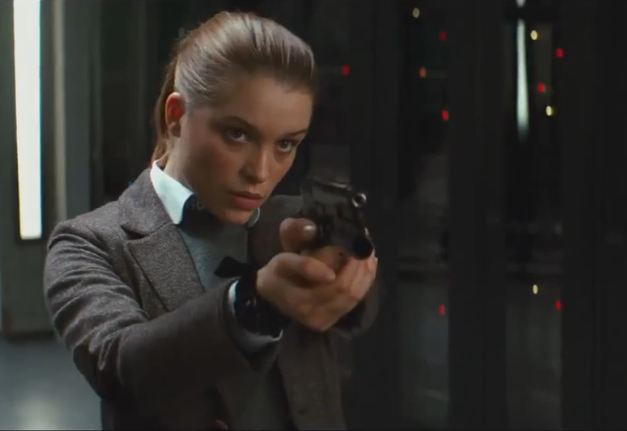
Roxy (Sophie Cookson), the obligatory babe, trying her luck to become a Kings(wo)man.

Roxy (Sophie Cookson), the obligatory babe, trying her luck to become a Kings(wo)man.

It also helps that Kingsman is ludicrously funny. Vaughn and Goldman have an impeccable understanding of the most essential ingredient for comedy: timing. As a result, the numerous jokes, touché lines, exaggerated action sequences, and amusing special effects all work throughout the film’s 129-minute running time. Indeed, one is likely to be so amused by the ridiculousness of the movie that one is unlikely to care that the plot is cliché and overblown, or that the actors take themselves as disingenuously as their counterparts did in Knight and Day, Mission: Impossible IV and This Means War.

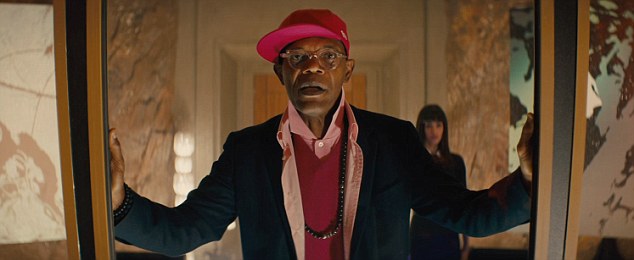
Valentine (Samuel L Jackson) looking laughably ridiculous as the utterly camp villain, wanting to start the world anew.

Valentine (Samuel L Jackson) looking laughably ridiculous as the utterly camp villain, wanting to start the world anew.

No-one epitomises the preposterous nature of the storyline and the acting as much as Samuel L Jackson (SLJ), as the camp, 1980s-dressed, lisp-impaired villain of the film (named Valentine to cap it all). When one is used to watching SLJ as the stern and authoritative Coach Carter and Nick Fury, one has to blink repeatedly (and with disbelief) to remember that Valentine is the same man. But credit to SLJ: he performs insincerely admirably as Valentine without disgracing himself. The same can be said for Colin Firth, Michael Caine, Mark Strong, Taron Egerton and Sophie Cookson, even if their roles are far less humiliating than SLJ’s.

Over-all, Kingsman: The Secret Service is an enjoyable film, provided it is taken with a handful of salt. The movie is absurd and over-the-top in all departments. But it is a very funny and entertaining spoof on James Bond and the spy genre in general. Thus, like with Kick-Ass and X-Men: First Class before, Matthew Vaughn and Jane Goldman have scored again with Kingsman, and long may they keep scoring.

PG’s Tips
Review – Exodus: Gods And Kings (12a) [2014]

Exodus - title banner

Star Rating: 3/5

Director:

Cast:

  • Christian Bale – The Machinist, The Fighter, The Dark Knight I-III, American Hustle, The Big Short
  • Joel Edgerton – Smokin’ Aces, Warrior, Zero Dark Thirty, The Gift
  • John Turturro – Anger Management, Transformers I-III, The Taking of Pelham 123, Hands of Stone
  • Aaron Paul – Mission: Impossible III, The Last House On The Left, Breaking Bad, Need For Speed, Eye In The Sky
  • Sigourney Weaver – Alien I-V, Ghostbusters I & II, Paul, The Cabin In The Woods, A Monster Calls
  • Ben Mendelsohn – The New World, Killing Them Softly, The Dark Knight Rises, Mississippi Grind
  • María Valverde – Body Confusion, The Anarchist’s Wife, The Liberator, Broken Horses
  • Ben Kingsley – Schindler’s List, Prince of Persia: Sands of Time, Hugo, Iron Man III, The DictatorKnight of Cups
  • Indira Varma – Rome, Basic Instinct II, Silk, Game of Thrones, Caesar
  • Hiam Abbass – Munich, Lemon Tree, A Bottle In The Gaza Sea, Nothing Escapes My Eyes

Music Composer:

In my review of Prometheus in 2012, I wrote that since Gladiator came out in 2000 all of Ridley Scott’s films have not been good enough for a director who once made Alien, Blade Runner and Gladiator. Since 2000, Scott has consistently made disappointing films like Kingdom of Heaven, Robin Hood and Prometheus, while 2013’s The Counsellor was rotten to the core. So bearing in mind Scott’s portfolio over the last fourteen years, what could one expect with Exodus: Gods And Kings?

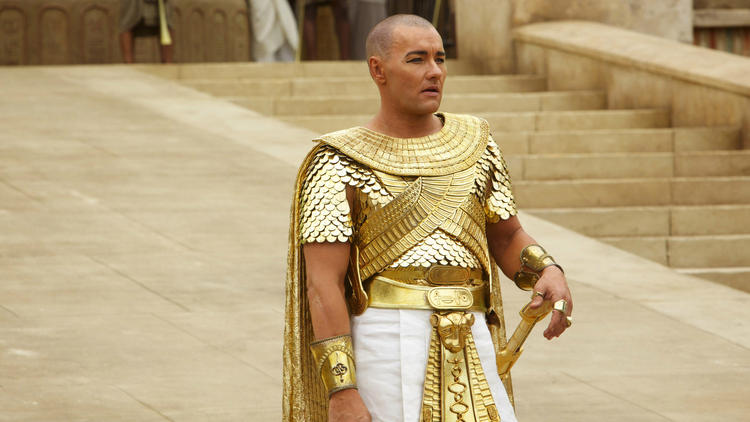
Pharaoh Rameses II (Joel Edgerton), the villain of the Exodus story, looking splendid and glorious.

Pharaoh Rameses II (Joel Edgerton), the villain of the Exodus story, looking splendid and glorious.

The film starts with (the anachronistic method) of a transcript, giving viewers the political context of the movie, as well as Moses’ position in Ancient Egypt. Subsequently, the film centres round Moses of the Torah and we follow him (Christian Bale) as a young adult living among the elites in Cairo; through his exile and marriage to Zipporah (María Valverde); to finally taking his place as the first leader of the enslaved Israelite/Jewish people and leading them out of Ancient Egypt via the Red Sea.

Exodus: Gods And Kings is a lively adaptation of the famous Biblical tale. The film is not absolutely historically accurate (especially if one swears by the Quran) and contains much artistic license. Some of the inaccuracies are avoidable, for example the number of years that the Israelites were enslaved for. But others inaccuracies are unavoidable and require the artistic license that Scott employs because there is no historical record of it; for example, where and what Moses did in exile.

If one can overcome these inaccuracies, one can appreciate many of the enjoyable elements of the movie. Scott impressively designs Ancient Egypt to give viewers a feel for how ancient Cairo and the slave city of Piton probably looked like; the battle at the start of the film is really good (although, strikingly similar to the battle in the opening scenes of Gladiator); the splitting of the Red Sea is refreshingly different from the conventional story (although, one recently saw a better example of what the film achieves in Interstellar); and the CGI plagues and godly miracles are emphatic and vividly memorable.

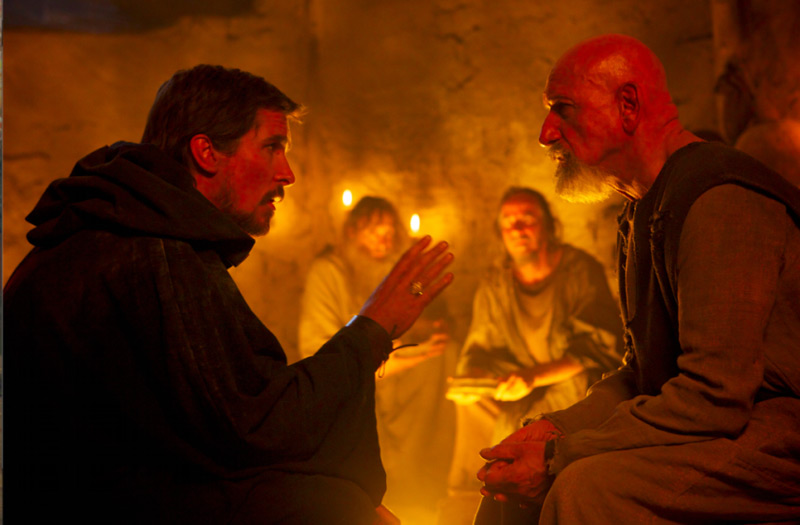
Moses (Christian Bale) speaking with Nun (Ben Kingsley), one of the enslaved leaders of the Jewish tribes in Piton, about the need to escape Egypt.

Moses (Christian Bale) speaking with Nun (Ben Kingsley), one of the enslaved leaders of the Jewish tribes in Piton, about the need to escape Egypt.

Furthermore, Exodus depicts Moses in an innovative and interesting way that is seldom discussed. This is important as Moses was a human being (who we know little about), so his (real or possible) flaws should be laid bare for us so we can assess what sort of a man he was. Exodus does this in a pseudo-intelligent manner and Scott should rightly be recognised for trying to do something different.

However, sadly, Scott undermines his idea of Moses, as well as the other key individuals from this period, with his poor choice of casting. Forget the racism issue (which Scott daftly fuelled with his lamentable responses); none of the actors in the main roles look their part. Christian Bale, Joel Edgerton, Ben Mendelsohn, Aaron Paul and Sigourney Weaver do not look like they are Ancient Egyptian or Mediterranean, and no amount of spray tan and make-up can change that. And, also, what was Scott thinking when he chose Christian Bale to be Moses? How can Batman be Moses? It just isn’t believable, and if viewers cannot believe in the characters, it is an uphill struggle for the cast to come across convincingly.

In fairness to the cast, they are handicapped by the wretchedly written script that relegates all, but Moses, to one-dimensional characters. The biggest victim of the script is the main villain: Pharaoh Rameses II, played by Joel Edgerton. If Scott’s intention had been to make Rameses be Exodus’s Commodus, Scott fails miserably. One may have loathed Commodus by the end of Gladiator, but that was only because Scott gave him/Joaquin Phoenix the chance to be loathed. Scott does not give Rameses/Edgerton such a chance, consigning Rameses to a pathetic, ranting idiot, who is unfit to rule. This is a shame (and gratingly frustrating) because it is a waste of a talent like Edgerton, because it is contrary to history, and most significantly because one feels nothing towards Rameses by the end.

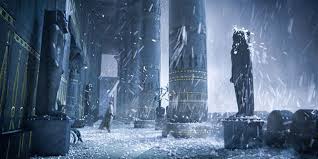
The plague of hail. This is one of the ten plagues that rains down on Egypt after Rameses refuses Moses' request to let his people go.

The plague of hail. This is one of the ten plagues that rains down on Egypt after Rameses refuses Moses’ request to let his people go.

Speaking of the end, it takes an Earth’s turn to get there. One cares so little for the characters in Exodus that the movie’s 150-minutes running-time feels like double that. To think that Gladiator, at 155-minutes, was longer than Exodus, is surprising as it felt shorter. This speaks volumes for just how much of a masterpiece Gladiator was, and how far Scott’s stock has fallen as a director since 2000.

Overall, Exodus: Gods And Kings is not a terrible film. One may object to the historical inaccuracies within the film, yet this cannot be helped due to the limited amount of source material available on the subject. Instead, one should enjoy the aspects of the movie that have been done well. That is, if one can overcome Scott’s glaring casting errors and the poverty of the script that leaves even Christian Bale, one of the most talented actors of the current era, struggling for conviction. But, then again, what did one expect from Exodus? Another film of Gladiator’s quality? Don’t be ridiculous! Just be grateful that Exodus is not another Prometheus.

PG’s Tips
Review – The Hobbit III: The Battle of the Five Armies HFR 3D (12a) [2014]

The Hobbit III - title banner

Star Rating: 2/5

Director:

  • Peter Jackson – Lord of the Rings TrilogyThe Lovely BonesThe Hobbit I & IIThe Adventures of Tintin II

Additional Writer:

  • Guillermo Del Toro – Pan’s Labyrinth, Hellboy I-III, Mama, Pinnochio

Cast:

  • Martin Freeman – The OfficeThe World’s EndSherlockFargo, Captain America III
  • Ian McKellen – Lord of the Rings TrilogyX-Men I-IIIX-Men: Days of Future Past, Mr Holmes
  • Cate Blanchett – Notes On A ScandalBlue JasmineCinderella
  • Richard Armitage – Captain America: The First AvengerBlack SkyInto The Storm
  • Aiden Turner – AlarmThe Mortal Instruments: City of Bones
  • Ken Scott – CasanovaCharlie Wilson’s WarOne Day
  • Graham McTavish – Rambo24: Day 8ColumbianaCreed
  • Benedict Cumberbatch – Tinker Tailor Soldier SpyStar Trek II: Into DarknessThe Fifth Estate12 Years A Slave
  • Orlando Bloom – The Lord of the Rings I-IIIThe Kingdom of HeavenThe Good DoctorZulu
  • Lee Pace – The FallTwilight IV: Breaking Dawn: Part IILincoln, Untitled Lance Armstrong Biopic
  • Evangeline Lilly – LostThe Hurt LockerReal Steel
  • Luke Evans – Clash of the TitansImmortalsThe RavenDracula Untold
  • Stephen Fry – V For VendettaAlice In WonderlandSherlock Holmes II: A Game of Shadows, Once Upon A Time In The Kitchen
  • Ian Holm – Lord of the Rings I IIILord of WarRatatouille
  • Christopher Lee – Lord of the Rings TrilogySeason of the WitchThe Girl From Nagasaki
  • Hugo Weaving – The Matrix TrilogyLord of the Rings TrilogyCaptain America: The First AvengerTransformers I-III, Strangerland

Music Composer:

  • Howard Shore – Lord of the Rings TrilogyHugoA Dangerous MethodThe Hobbit I II, Denial

(Please read my reviews of The Hobbit I: An Unexpected Journey and The Hobbit II: The Desolation of Smaug for context, as I won’t be going over points I’ve already made, such as the problems with the High Frame Rate, negotiations with the orcs, and the alterations that Jackson has made to the trilogy from the source material.)

Peter Jackson’s The Lord of the Rings (LOTR) trilogy was one of the greatest trilogies of all time. It was beautifully put together and held phenomenal emotional weight that made viewers care about the characters in the story. The same, however, cannot be said for the first two volumes of the prequel trilogy. Nevertheless, could the final volume of the prequel trilogy, The Battle of the Five Armies, redeem The Hobbit trilogy?

Smaug the Dragon (voiced thunderously by Benedict Cumberbatch) is our of the Lonely Mountain and torching Laketown.

Smaug the Dragon (voiced thunderously by Benedict Cumberbatch) is our of the Lonely Mountain and torching Laketown.

The Hobbit III starts where The Desolation of Smaug ended: with Smaug (voiced by Benedict Cumberbatch) unleashing his fury upon Laketown. But with the dragon now out of the Lonely Mountain, there is a huge treasure of gold to be had. The greedy leader of the dwarves, Thorin Oakenshield (Richard Armitage), may not want to share it, but the people of Laketown, as well as armies of elves, orcs, and other dwarves come for their share of the treasure all the same. Thus, the battle of the five armies begins…

The Hobbit III is the shortest of The Hobbit films at 144 minutes and that is one of the movie’s saving graces. Well, that, the opening scene when the Cumberdragon burns Laketown, and the ending itself. The desolation of Laketown is done well, particularly as it’s given the right length of time, as well as the right amount of comedy, action and special effects for it to be spectacular.

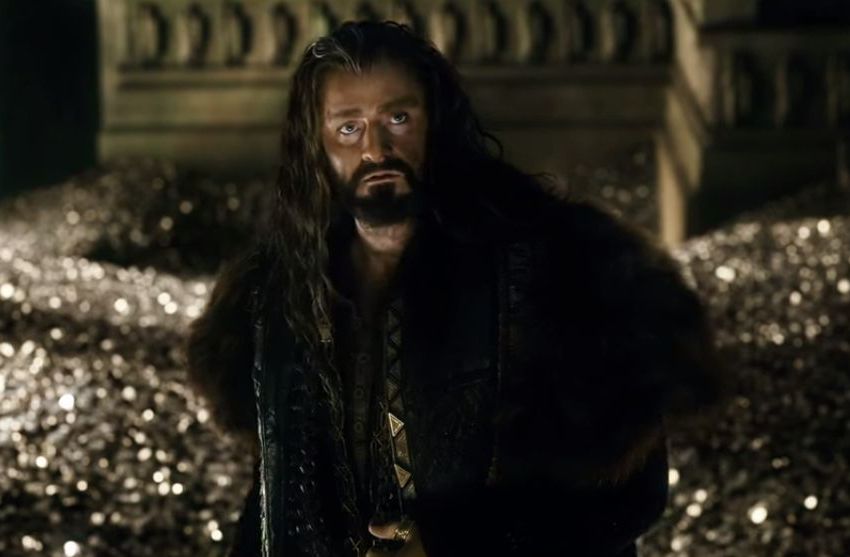
Thorin (Richard Armitage) looking for the Arkenstone within a vault of gold so deep he could swim in it like Scrooge McDuck.

Thorin (Richard Armitage) looking for the Arkenstone within a vault of gold so deep he could swim in it like Scrooge McDuck.

It is a shame that the ‘epic’ titular battle, itself, is neither spectacular nor given the right amount of time. It is 45-minutes of repetitive, pleasure-seeking action, devoid of the laws of physics, emotional weight, and should have been cut in half. One does not care what happens to the dwarves or the CGI orcs as they’re all synonymous and lifeless. Plus, if Jackson had comprehended the problems of the hour-long battle in Transformers III or the 40-minute fight in Man of Steel he would not have allowed his ‘epic’ battle go on for so long because it loses its sense of timing. Without the crucial ingredient of timing, the battle becomes snooze-inducing. But then again, the dwarves have always been synonymous throughout the trilogy, the (dark-skinned, deformed) orcs have been there merely to be slaughtered, and more or less every scene in An Unexpected Journey and The Desolation of Smaug went on for too long, had no sense of timing and ignored the laws of physics. So there really was no hope Jackson learning his lessons and making The Battle of the Five Armies an emotionally fulfilling, succinct masterpiece.

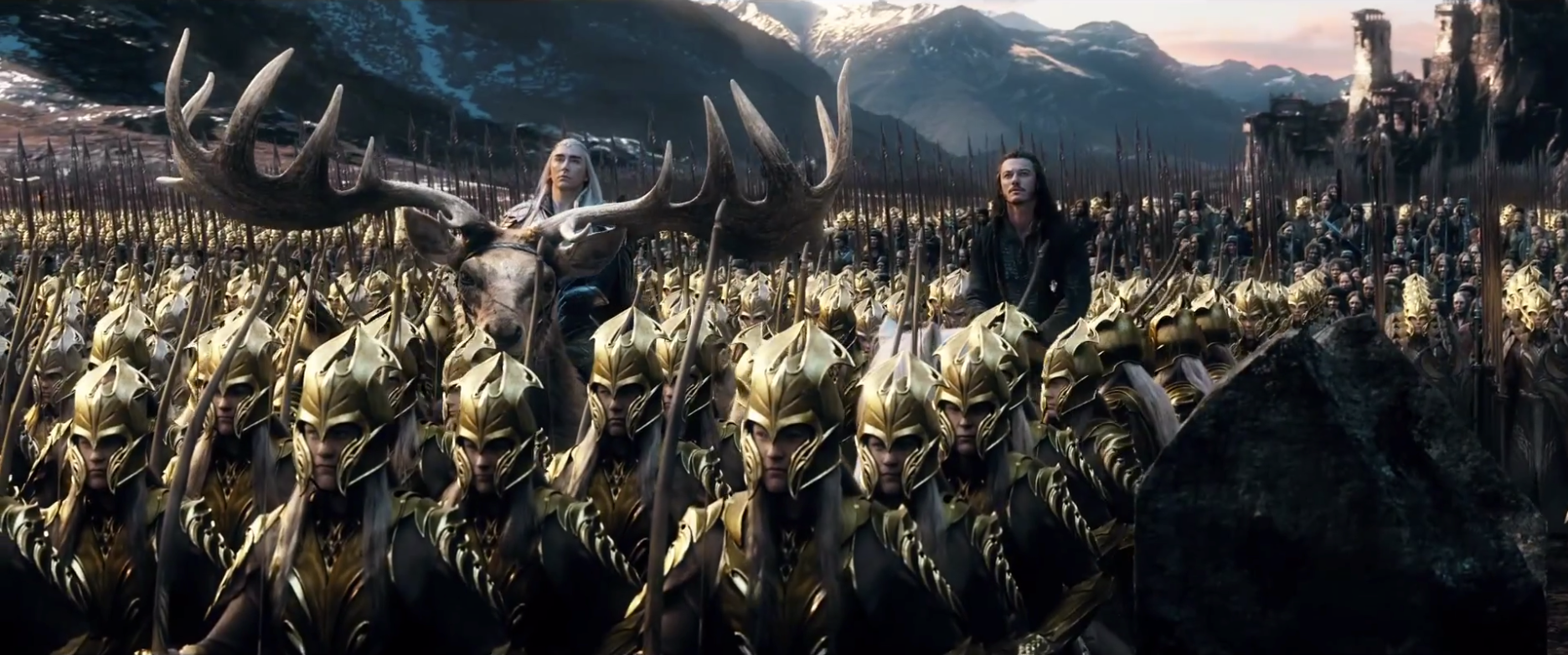
Bard (Luke Evans) on a mule and the King of the Elves, Thranduil (Lee Pace), on a... reindeer? Anyway, they have arrived among an army of elves and men to claim their shares of the treasures in the Lonely Mountain.

Bard (Luke Evans) on a mule and the King of the Elves, Thranduil (Lee Pace), on a… reindeer? Anyway, they have arrived among an army of elves and men to claim their shares of the treasures in the Lonely Mountain.

And like the muddled titular battle, the rest of The Hobbit III is dispiritingly all over the place. That The Hobbit has had a troubled production history might go some way to elucidating why The Hobbit III, in particular, is so bad. (A film based on The Hobbit book was supposed to have been written shortly after the successful conclusion of the LOTR in 2003, but didn’t materialise. Guillermo Del Toro was appointed to direct The Hobbit at some point in the late-2000s, but stepped down for unspecified reasons. Jackson, subsequently, came to the rescue of the project, only for Del Toro to come back on board in some capacity. And, then, after initially deciding to make two films out of the 300-page book, Jackson decided to split the second film in two and shoot new scenes in 2012/13 to make The Hobbit into a trilogy in post-production.) But is the film’s troubled history truly a reason for why the dialogue is so clunky; for why the aftermath of Laketown goes on for too long; for why storylines (unforgivably) do no conclude; for why the central premises of the film/trilogy are (inexcusably) forgotten; and for why the eponymous character of the trilogy, Bilbo Baggins (played with charm by Martin Freeman), feels like a peripheral figure in the concluding chapter of his own story, among other things? The Hobbit III is so unsatisfying that the answers cannot boil down solely to a troubled production history, especially as Viggo Mortensen (Aragorn) claimed earlier this year that the LOTR had a chaotic production too. This entails that the film’s/trilogy’s faults lie with Jackson, who has done nothing of significance since the LOTR and has now shown that he can muck up something he loves if he is not controlled.

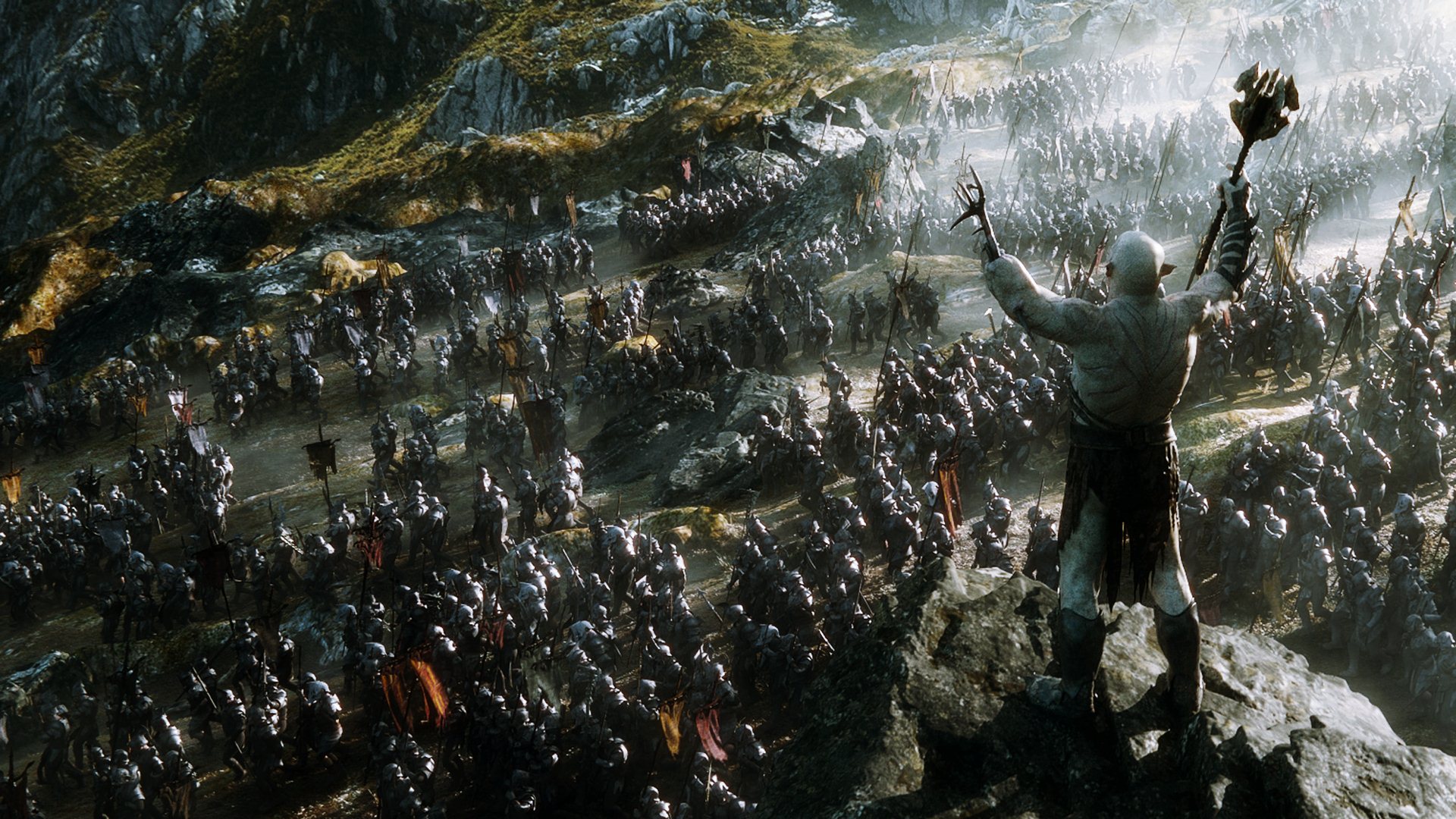
Azog the Defiler (Manu Bennett) roaring an army of orcs toward the Lonely Mountain to kill the dwarves and everyone else.

Azog the Defiler (Manu Bennett) roaring an army of orcs toward the Lonely Mountain to kill the dwarves and everyone else.

One might have pardoned Jackson for some of the aforementioned errors in The Hobbit III (and the trilogy as a whole) if he had added something innovative to Tolkien’s universe. It would have made for interesting viewing if he had given audiences details of the backgrounds, cultures and religions of the peoples of Middle-Earth that Tolkien, himself, failed to put into his stories, or put in a Machiavellian-style character (like Littlefinger from Game of Thrones). But no, Jackson (depressingly) doesn’t do any of this, meaning that people go away from this bloated film/trilogy knowing nothing more about the wizards, men, elves, dwarves and orcs of Middle-Earth than they did after the LOTR. Simply put: this is not good enough, Jackson.

Over-all, one can breathe a sigh of relief that The Hobbit trilogy is over. While The Battle of the Five Armies has a couple of good moments, like the opening scene and the end credits, it is a mess and suffers from the same issues as The Hobbit I & II: notably, its swollen length to accommodate the extreme self-indulgence, tedium and sameness. Whilst watching The Hobbit III, it feels like one is watching a glutton stuff his/her face, whilst the problems within The Hobbit trilogy as well as the problems surrounding the trilogy’s production illuminate before one’s eyes. Worse, The Hobbit III and the trilogy as a whole show up the problems within Tolkien’s works, including the LOTR. Peter Jackson, how could you go so wrong?

PG’s Tips

Review – Fury (15) [2014]

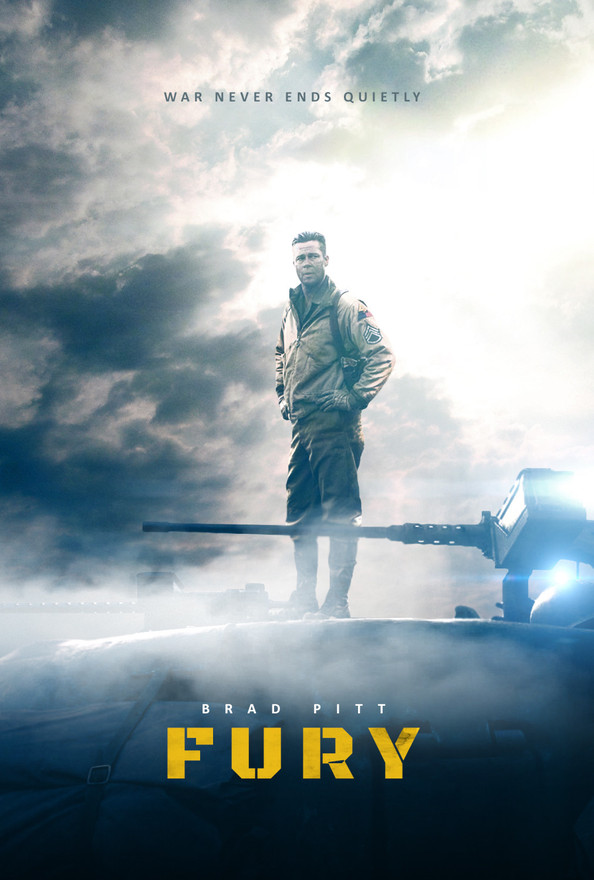
Fury - title banner

Star Rating: 3/5

Director:

  • David Ayer – Harsh Times, End Of Watch, Sabotage

Cast:

  • Brad Pitt – Snatch, Mr & Mrs Smith, 12 Years A Slave, The Big Short
  • Shia Lebeouf – Disturbia, Transformers I-III, Nymphomaniac I-II, Man Down
  • Logan Lerman – 3:10 To Yuma, The Perks Of Being A Wallflower, Percy Jackson I-II, Noah
  • Michael Peña – Crash, End Of Watch, The Lincoln Lawyer, The Martian
  • Jon Bernthal – The Air I Breathe, The Ghost, The Wolf Of Wall Street, Sicario
  • Jason Isaacs – Black Hawk Down, Windtalkers, Harry Potter I-VII(i) & VII(ii), Stockholm, Pennsylvania

Music Composer:

  • Steven Price – The World’s End, Gravity

The topic of World War II (WWII) is well trodden territory in Hollywood. Seeing stellar American soldiers gunning down Nazis and ‘Japs’ has been revisited on many, many occasions as Saving Private Ryan, Pearl Harbour, Band Of Brothers, Flags Of Our Fathers, and Red Tails testify, to name a handful. Unsurprisingly, after such a high volume of movies on the topic in the last two decades alone, there is a sterile and samey feel to WWII films, unless a new film adds something unseen to the genre. Alas, Fury does not do this.

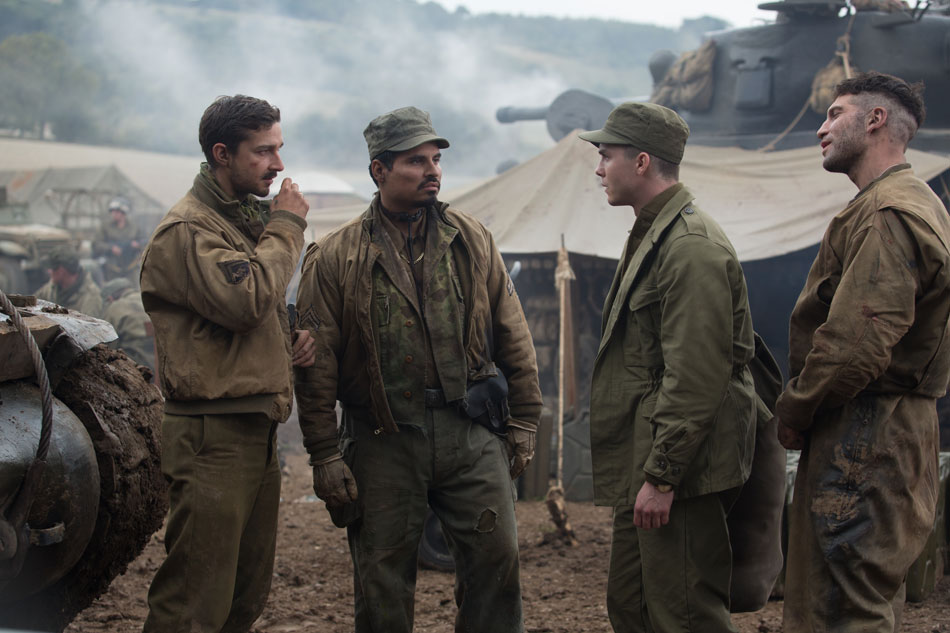
Young Norman Ellison (Logan Lerman, inside right) joining his crew of tank-men, and being derided for his inexperience by Boyd (Shia Lebeouf), 'Gordo' (Michael Peña) and 'Coon-Ass' (Jon Bernthal).

Young Norman Ellison (Logan Lerman, inside right) joining his crew of tank-men, and being derided for his inexperience by Boyd (Shia Lebeouf), ‘Gordo’ (Michael Peña) and ‘Coon-Ass’ (Jon Bernthal).

The film is fictional and begins in 1945. The Allies are advancing into Nazi Germany, and Fury, the name of the tank led by Sergeant ‘Wardaddy’ Collier (Brad Pitt), is in one of the regiments leading the assault into the Fatherland. Including Sergeant Collier, the tank consists of a five man crew: Boyd ‘Bible’ Swan (Shia Lebeouf), Grady ‘Coon-Ass’ Travis (Jon Bernthal), Trini ‘Gordo’ Garcia (Michael Peña), and newcomer Norman Ellison (Logan Lerman).

As the crew push deeper into Germany, Sergeant Collier takes it upon himself to educate young Ellison about the brutal nature of war and how to deal with it, as the personality of the enemy sinks to ever more depraved levels.

Fury’s premise is simple and the film sticks to it rigidly. Fury has a raw, muddy, and claustrophobic feel to it. One gains a true insight into what it must have been like (and probably still is like) for a group of soldiers inside a tank while fighting in a war. The movie shows how the crew’s situation turns from uneventful to frenzied chaos upon the rippling of a machine gun or the boom of an explosion. Suffice to say, there is plenty of both and all the action scenes are well done.

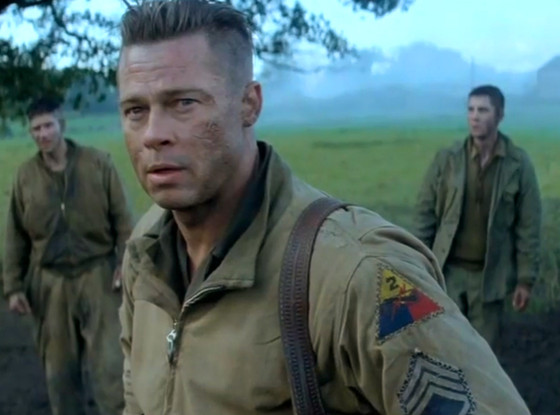
Sergeant 'Wardaddy' Collier (Brad Pitt) thinking over a key decision that he has to make.

Sergeant ‘Wardaddy’ Collier (Brad Pitt) thinking over a key decision that he has to make.

Another aspect of Fury that’s done well is the developing relationship between Sergeant Collier/Brad Pitt and Norman Ellison/Logan Lerman. This is because David Ayer’s script is good and the actors perform their roles well, particularly Pitt as the grizzled but caring war-veteran. To Pitt’s credit, in a film which he dominates, he manages to hold viewer’s attention, whether it is with Ellison, the other members of his band of brothers, other American soldiers, or Germans. Pitt’s/Collier’s character is most interesting and revealing when he is teaching Ellison/Lerman about the nature of the Nazi enemy as audiences get to see the complexities in his character.

Yet, as a corollary of Pitt dominating the film, the rest of the non-peripheral members of the cast don’t get enough screen time to illustrate that they are much more than (lazy) personifications of their nicknames. (Nevertheless, they do get time enough to praise Sergeant Collier/Brad Pitt. For which film starring Brad Pitt wouldn’t give the supporting cast time to applaud him?) That the other characters are not given adequate screen time is a bit of a shame as the actors all do good jobs with what they’re given; even, shockingly, the much-derided Shia Lebeouf!

Other than Fury being (yet another) glorification of Brad Pitt, the film lacks direction and the storyline does not go anywhere as a result. Arguably, the movie never intends to build up to a climax (although it half does); and, instead, merely goes out to highlight the grisly, ghastly and inhumane horrors of war, merely from the angle of tank crewmen. Yet, if this were the case, Fury does not go far enough. Many criminal elements and horrors of war/WWII are not shown in the film, especially in comparison to the harrowing Schindler’s List and The City Of Life And Death.

What a surprise! Sergeant Collier/Brad Pitt takes off his shirt, gives himself a wash, and shows off his abs to put most men to shame. Haven't we seen this before? (Fight Club? Troy?)

What a surprise! Sergeant Collier/Brad Pitt takes off his shirt, gives himself a wash, and shows off his abs to put most men to shame. Haven’t we seen this before? (Fight Club? Troy?)

Additionally, Fury lacks depth. There are several occasions when some of the cast talk about criminal acts they’ve committed during the war. They may talk about it with remorse, but no-one ever questions their actions. This renders the scene frustrating because the film misses the chance to explore the moral conscience of each character, and pointless because it means that such scenes have no consequence (positive or negative) on the rest of the movie.

Indeed, frustration and pointlessness sum up Fury. It is a film that has a lot going for it due to a good script; solid acting from all the cast; the a muddy set which enables one to feel what it must have been like (and what it probably still be like) to be inside a tank during war; and the graphic way that warfare is depicted is gruesome and sickening. However, ultimately, the above-mentioned positives of Fury are not enough to satisfy viewers, considering that WWII has been portrayed in films so many times over the last two decades alone. Thus, Fury has the sterile and samey feel of so many other WWII movies which not even the dominant display of Brad Pitt (and his abs) can overcome.

PG’s Tips

Review – X-Men: Days of Future Past (12a) [2014]

X-Men 2 - title banner

Star Rating: 4/5

Director:

Cast:

Music Composer:

  • John Ottman – X-Men II, House of Wax, Fantastic 4 I-II, Valkyrie, Non-Stop, X-Men: Apocalypse

The Batman and X-Men franchises have undergone similar arcs and reboots in relatively recent times. 1997’s Batman & Robin and 2006’s X-Men 3: The Last Stand were so bad that the franchises were torn up and magnificently re-started in the form of 2005’s Batman Begins and 2011’s X-Men: First Class. And just as 2008’s The Dark Knight was a great sequel to Batman Begins, so Bryan Singer’s return to the X-Men franchise with X-Men: Days of Future is a great continuation of First Class.

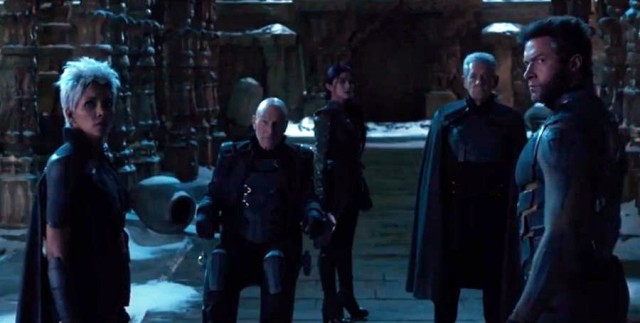
Storm (Halle Berry), Professor X (Patrick Stewart), Blink (Blingbling Fan), Magneto (Ian McKellen) and Wolverine (Hugh Jackman) decide upon their plan of action, whilst watching in horror as the Sentinels attack.

Storm (Halle Berry), Professor X (Patrick Stewart), Blink (Blingbling Fan), Magneto (Ian McKellen) and Wolverine (Hugh Jackman) decide upon their plan of action, whilst watching in horror as the Sentinels attack.

X-Men: Days of Future Past is loosely based on the comic-book with the same title. The movie starts in the apocalyptic, present day or the near future. Led by the reunited Charles Xavier/Professor X (Patrick Stewart) and Erik Lehnsherr/Magneto (Ian McKellen), the last handful of mutants are trying desperately to hold out against the invincible, changeable Sentinels.

With the situation hopeless, Professor X, via Kitty Pryde (Ellen Page), sends Logan/Wolverine (Hugh Jackman) back in time to 1973. Professor X’s hope is that Wolverine can persuade a younger, mentally-broken Charles (James McAvoy) to re-establish his friendship with Erik (Michael Fassbender) and stop Dr. Bolivar Trask (Peter Dinklage) from creating the Sentinels.

X-Men: Days of Future Past has an engaging storyline that interlinks the two time-periods within the film nicely, if not without problems for some of the other X-Men films. Indeed, Days of Future Past may come at the expense of some elements of the three original X-Men movies and may even black-out the existence of the two Wolverine spin-offs (but that is probably for the best).

Moreover, Days of Future Past involves itself in crucial events in history, in the same way that First Class did with the Cuban Missile Crisis and the Civil Rights movement in America in the 1960s. Like with its prequel, Days of Future Past does this in a smart and hilarious way. This, combined many in-jokes and phenomenal special effects, makes Days of Future Past very enjoyable to watch.

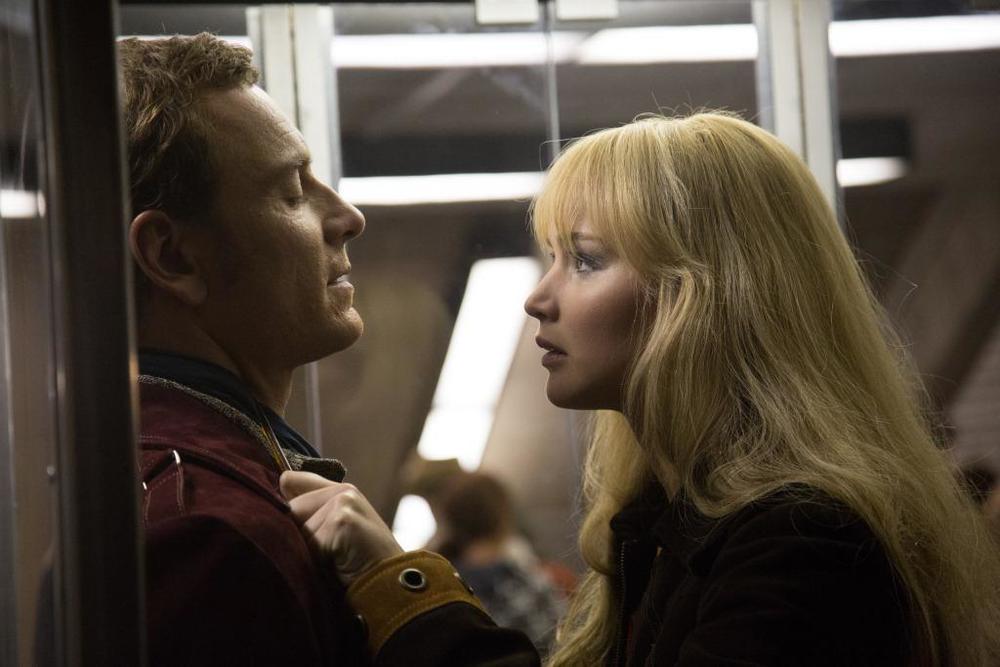
Raven/Mystique (Jennifer Lawrence) finds Erik Lehnsherr/Magneto (Michael Fassbender), who finds out that she is still furious with him about something that happened off-screen in the past.

Raven/Mystique (Jennifer Lawrence) finds Erik Lehnsherr/Magneto (Michael Fassbender), who finds out that she is still furious with him about something that happened off-screen in the past.

Nevertheless, what makes (First Class and) Days of Future Past so interesting is that it is not about a showdown between Good and Evil; it is about the friendship/rivalry of Professor X and Magneto. These two characters may not have the depth or the darkness of Bruce Wayne in Christopher Nolan’s Dark Knight Trilogy, but their personalities and differing ideologies make for a refreshing change to the crash, bang, boom nature of other superhero movies like all five Spiderman films, Iron Man III and Captain America II among countless others.

Additionally, the dialogue and acting in the latter two X-Men films is significantly better than in those above-mentioned superhero movies, with the exception of The Dark Knight Trilogy. All the actors in Days of Future Past (old and new) are brilliant without fail. Whether it is Sir Ian McKellen or Michael Fassbender, Magneto is played with the same vigour and damaged personality as in First Class; Jennifer Lawrence is wonderful as the vulnerable Mysterique, whose unhappiness in her own skin has led her to take vengeance against anyone who takes a dislike to mutants; Hugh Jackman once again shows that he owns the Wolverine character; Patrick Stewart and James McAvoy play magnificently as Charles Xavier, although McAvoy undoubtedly has the more demanding parts of the role; and Peter Dinklage is great as Dr. Trask, even if his accent switches from his normal New Jersey accent to Tyrion Lannister’s English accent for no obvious reason.

The above-mentioned characters may dominate Days of Future Past, but they are only a minority of the swollen cast. Consequently, a great many characters are not given much screen time, including new mutants like Blink (Bingbing Fan), Sunspot (Adan Canto) and Warpath (Booboo Stewart). These mutants have a back-story and it would have been good to hear it.

Otherwise, in the eleven years between the end of First Class and the beginning of Days of Future Past (1962-73), viewers are told of many interesting developments that have occurred off-screen. It would have been nice to have been shown these. (Then again, another film in between these two movies would have been needed for that.)

Dr. Bolivar Trask (Peter Dinklage) explaining why he needs to create the Sentinels.

Dr. Bolivar Trask (Peter Dinklage) explaining why he needs to create the Sentinels (which come to look remarkably like the machine-monster Thor fights in Thor I).

And, lastly, the film deviates quite significantly from the same-named comic-book; for example, in the comics, it is Kitty Pryde who goes back in time, not Wolverine. But if comic-book geeks are honest, even they would accept that Kitty Pryde cannot dominate the screen (or hold viewer’s attention) in the same way that Wolverine can. And besides, these alterations should not knock down a film that achieves so much by way of its ambition and is so entertaining.

Over-all, X-Men: Days of Future Past is a really good film. It has its flaws and it would have been nice to learn more about the non-central characters, and to see some of the events that happened off-screen. But, on the whole, Days of Future Past is amusing; it deals well with its two competing time-periods; continues the conflict maturely between Charles Xavier and Erik Lehnsherr; and is a credible sequel to X-Men: First Class. Now all the franchise needs, like with The Dark Knight Trilogy, is a satisfying conclusion in its third instalment, X-Men: Apocalypse.

PG’s Tips
Review – Captain America II: The Winter Soldier (12a) [2014]

Captain America 2 - title banner

Star Rating: 3/5

Directors:

Cast:

Music Composer:

Titular characters are usually (and unsurprisingly) the main characters in their films. Bruce Wayne/Batman is the lead character in Batman Begins, Conan is the central performer in Conan the Barbarian, and Tony Stark/Iron Man is the dominant personality of the Iron Man franchise. Yet, in some movies the titular character is usurped by a member of the supporting cast. This is what happens in Captain America II: The Winter Soldier, and in this case it makes for a better spectacle.

Natasha Romanoff/Black Widow (Scarlett Johansson) bent over a computer, uploading data as part of her mission.

The saucy Natasha Romanoff/Black Widow (Scarlett Johansson) bent over a computer, uploading data as part of her mission.

Captain America II is the third instalment of Marvel’s ‘Phase II’ and takes place two years after the events of The Avengers Assemble I. With military and spy technology having evolved, Steve Rogers/Captain America (Chris Evans) has become increasingly uncomfortable with how SHIELD is operating. Believing that there is something underhand at SHIELD, Captain America and his fellow Avenger, Natasha Romanoff/Black Widow (Scarlett Johansson), go on the run to find out who or what might be behind SHIELD’s worrying change of direction. And that is when they come up against the powerful Winter Soldier…

Captain America II is a significant improvement on Captain America I. Its storyline is much more enjoyable and it justifies its 136 minute running time. Unlike the lacklustre and simplistic plots of Captain America I, Iron Man III and Thor II (the latter-two films being the previous two instalments of Marvel’s ‘Phase II’), Captain America II’s storyline tries to be complex and raises some thought-provoking moral dilemmas. Issues, such as the use of drones, and how far government agencies are permitted to use technology to gather intelligence about its citizens (and foreign ones) are matters that are greatly relevant to the present era, and the film should be commended for bringing them up.

However, Captain America II lacks the stamina to maintain these complicated themes as the film goes on. This is because the movie does not have the maturity of Tinker Tailor Soldier Spy, so it falls into laughable stereotypes and senselessness; all of which is a shame to a degree, yet do not affect the film’s entertainment value.

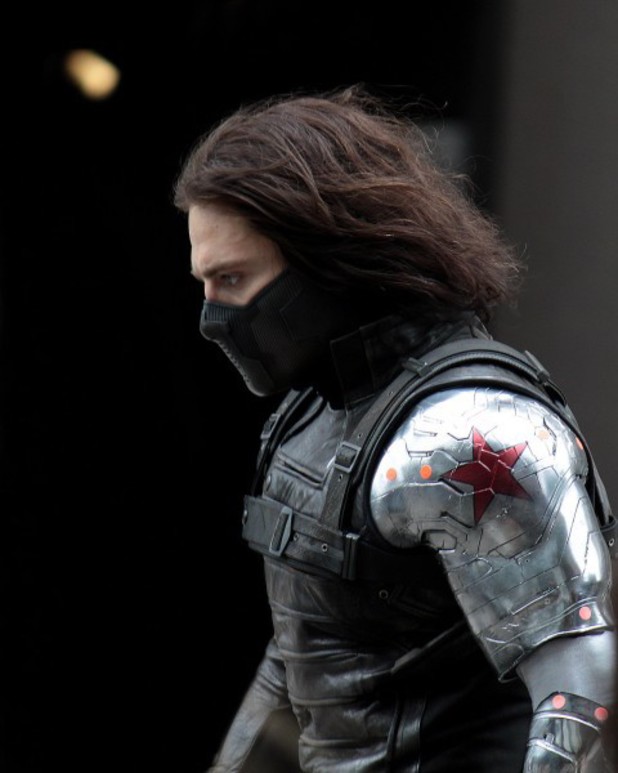
The part-masked and super-powerful Winter Soldier, whose identity and motives are unknown to SHIELD.

The part-masked and super-powerful Winter Soldier, whose identity and motives are unknown to SHIELD.

Chiefly, this is because of the role of Black Widow, played wonderfully by Scarlett Johansson. Black Widow has appeared in Iron Man II and The Avengers Assemble I; nevertheless, it is only in Captain America II that Black Widow is given proper screen time to express herself and she does not disappoint. In a similar vein to the Joker in The Dark Knight, Christian Bale’s Dicky in The Fighter, and Loki in Thor I & II, when Black Widow is not on screen viewers long for her return. It is not just due to her skin-tight costume, her excellent kick-ass skills, and Johansson’s tantalising good looks (although those are inordinately influential); it is Black Widow’s astuteness, savviness and (somewhat) enigmatic personality that makes audiences want to see more of her, since she keeps one guessing as to what her agenda is throughout the movie. (Indeed, it’s pity that there is not more of her.)

Black Widow undoubtedly overshadows the titular Captain America. This is not surprising since Captain America is the least talented and the least interesting of all the Marvel heroes. Captain America is merely the archetypal soldier without a bad bone in his body, which (as lovely as it sounds) makes for dull viewing (which was probably why Captain America I was so boring and why the directors included Black Widow this time around). This is not to say that Chris Evans does a bad job with the material he’s been given; it’s just that the material doesn’t have enough substance to it and wastefully does not develop Captain America’s character. The same is true for Nick Fury (Samuel L Jackson), while the villains (none of whom I’ll name for fear of spoiling the film) are even less fleshed out and significantly more trite.

Trite is also how one can describe the dialogue in Captain America II. For the heroes, the dialogue is lazily written; for the villains, it is pitifully comical.

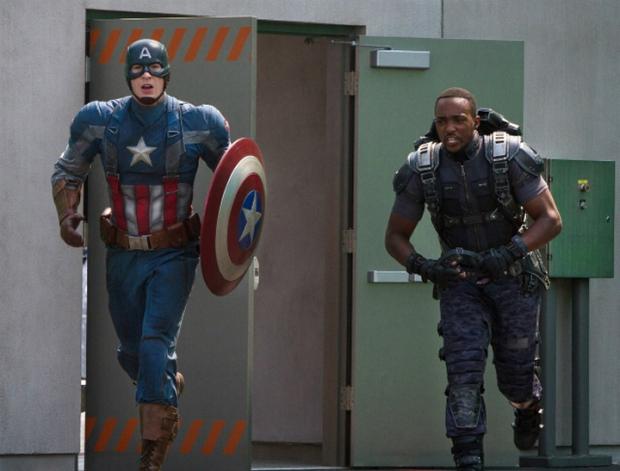
Steve Rogers/Captain America (Chris Evans), in full garb, ready to take out his (and America's) enemies, alongside the Falcon (Anthony Mackie).

Steve Rogers/Captain America (Chris Evans), in full garb, ready to take out his (and America’s) enemies, alongside the Falcon (Anthony Mackie).

But dialogue aside, the many (but thankfully not too many) stunts and action scenes are well choreographed. Those, in addition to the decent CGI and the uplifting music score, make Captain America II an enjoyable watch.

All-in-all, Captain America II: The Winter Soldier is an entertaining comic-book hero movie. Its attempts to be complicated, both on a plot and on a moral level, may become silly as the movie goes on. Yet, the film holds its audiences interest throughout its over two-hour running time. Unquestionably, this is because of Natasha Romanoff/Black Widow. In Captain America’s own movie, Black Widow steals his thunder (pardon the Thor pun), so much so that the film should not be called Captain America II: The Winter Soldier, but Black Widow: The Savvy Avenger.

PG’s Tips